Remarks by SFST at Bloomberg Family Office Summit 2026 (English Only)
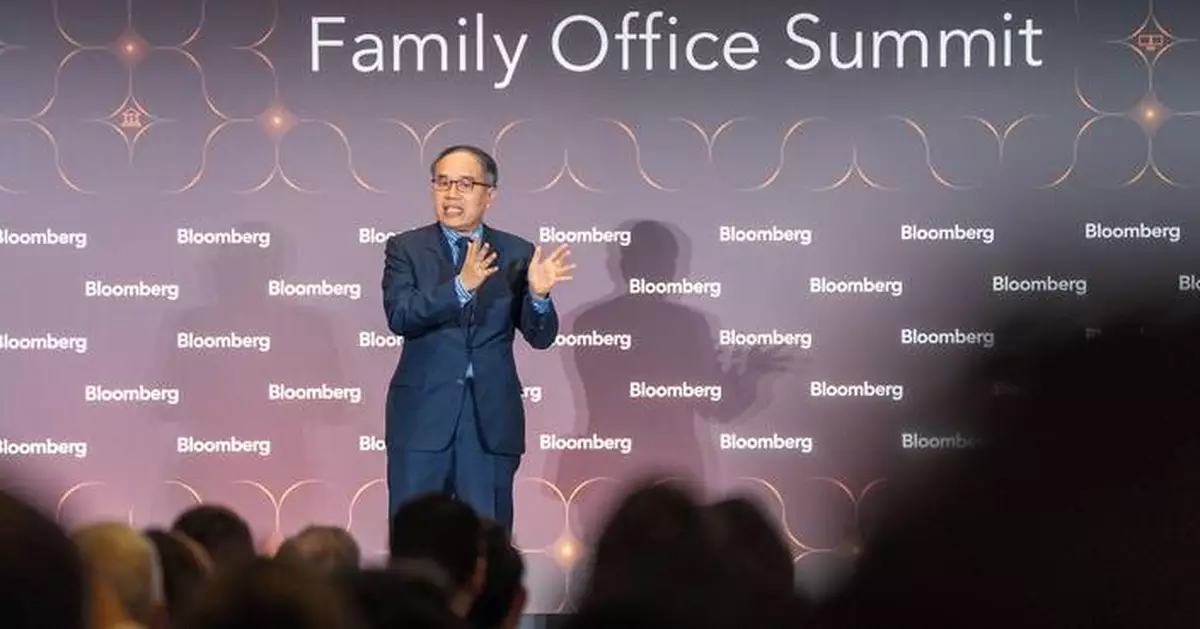
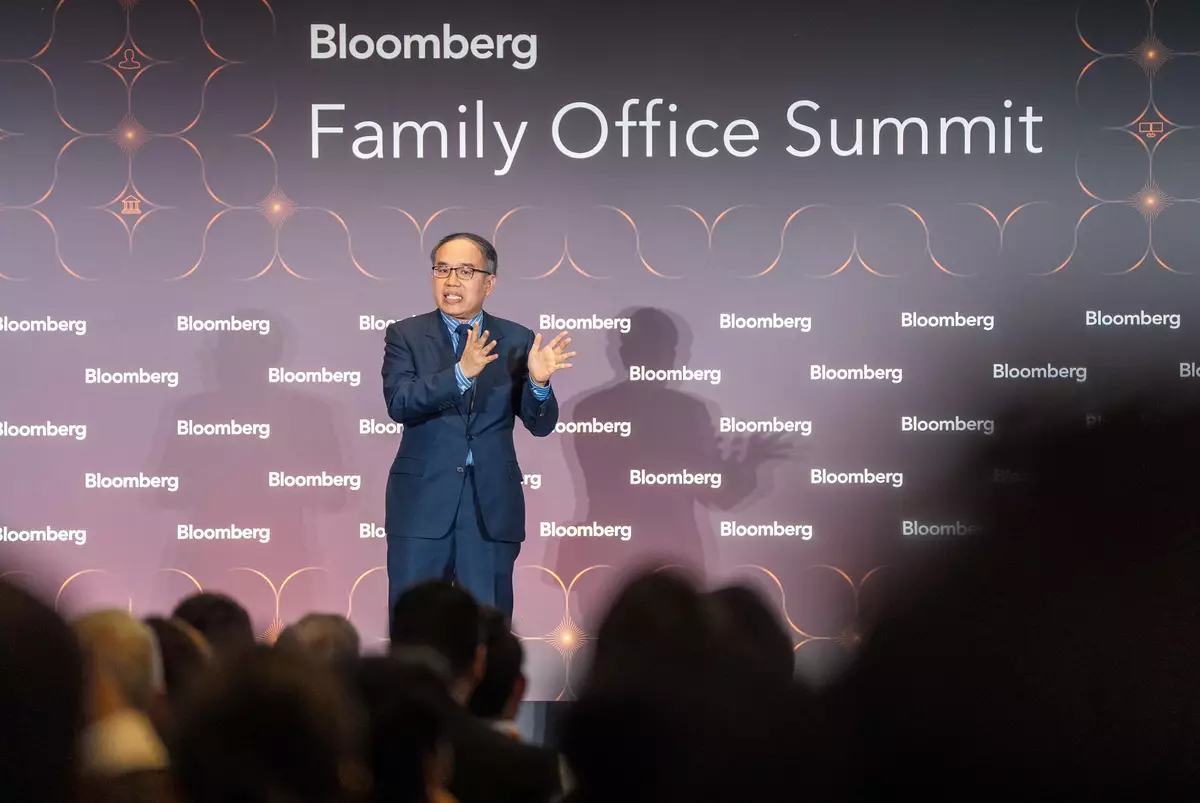
Following are the remarks by the Secretary for Financial Services and the Treasury, Mr Christopher Hui, at the Bloomberg Family Office Summit 2026 today (March 25):
Ladies and gentlemen,
Good afternoon. First of all, a big welcome to this summit even though it is not hosted by us. But I think we share a lot of commonalities between Bloomberg and the FSTB (Financial Services and the Treasury Bureau) in terms of collaboration on financial services, in particular family offices. Just now most of the speech by Bing (Head of Asia Pacific at Bloomberg, Mr Bing Li) covered financial services or family offices but I must say, as we see things now, it's worthwhile to go a little bit further, in terms of how this whole journey has started, and in terms of Hong Kong building a family office ecosystem.
Without boring all of you, if you recall the year 2023, this Government issued a policy statement on how we want to develop Hong Kong into a family office ecosystem. It was a time when we had COVID and also there was a lot of uncertainty about how the world may unfold. But against that backdrop, we have eight measures being introduced, including tax concessions for family offices, New Capital Investment Entrant Scheme, the decision to set up an Academy for Wealth Legacy (Hong Kong Academy for Wealth Legacy) and ways to streamline our approval process for charities in Hong Kong. In that year of 2023, it was also the very first year we hosted the Wealth for Good in Hong Kong Summit. It was a time when nobody knew exactly what it is because people thought most wealthy individuals or families want to stay low-profile, that they don't want to be seen. I was warned by many people around me that the summit is going to be a failure because those people don't want to be seen, don't want to be heard, and that's why no one will come. That said, we had a very successful inaugural event in 2023. Time goes on and now it comes to the fourth edition.
As I highlighted, it's really a journey. After 2023, you may wonder what happened? Just now Bing mentioned our collaboration, and it's exactly in the year 2024 that we have a Family Office Nexus with Bloomberg in terms of articulating what Hong Kong's proposition is for family offices, in particular what we can offer to each other in terms of growing this ecosystem. Before that Nexus collaboration, I had the opportunity to meet Michael (Founder of Bloomberg LP and Bloomberg Philanthropies, Mr Michael Bloomberg) and also Kevin (Global Head of External Relations of Bloomberg LP, Mr Kevin Sheekey) back then in New York, thanks to Bing's arrangement. What I was impressed most are two things.
First of all, Michael is really a person that's very approachable. I recall that when I went to his office, it was just like a normal desk for a clerk. I thought I was in the waiting room but actually it's not a waiting room; that is his office and he served me tea and fruits. Number two is the fact that he has a lot of insights, in particular how he can put his personal wealth and energy to good causes, in particular his foundation. It actually inspires me a lot in terms of what family offices can do, not just for wealth preservation or creation, but more on what you can do for the community. Thereafter, we had this arrangement where we have this Nexus (Hong Kong Family Office Nexus) and soon after that we have this rulebook (Digital Knowledge Hub) issued by Bloomberg, basically a one-stop shop on the Bloomberg terminal, allowing everybody who would like to learn about Hong Kong's licensing and requirements for family offices, the investment landscape in Hong Kong and other information to get access to it. I was told that there are a lot of entries and also a lot of usages in that rulebook, which is promising and enlightening.
Soon after and during that year, we had a number of good news. Number one is that we announced that there are 2 700 single family offices in Hong Kong. What I want to clarify is that even though we fixated on that number, it's not just the number that we get from our Invest Hong Kong. It actually includes the number that Deloitte, which is the independent consultant that we asked to do this research, provides us with in terms of single family offices in Hong Kong, and it hasn't included the multiple family offices in Hong Kong. So that's why the ecosystem in terms of number is actually bigger than 2 700. Number two, if you look at how we have come about, as I said, the journey through 2024 and 2025, just very recently, in the early part of this year, we announced another figure, which is 3 380, representing an increase of 680 on the number of family offices, as well as almost a 25 per cent growth.
That number again is just a number that was given by an independent survey. We expect the number to be more because the reason that we have this number is that we didn't really count other family offices which just come by without government support. Many of them just come here, get their company listed and form a family office and we don't really know. But that said, I think the 3 380, which is quite an auspicious number, is like a good indication in terms of how vibrant and also how robust we are as an ecosystem for family offices. At the same time, I think one thing that we all try to do throughout these years is apart from the number we want to grow; we also want to make sure that the family office system, as it grows, is benefitting the overall community. That's why in a latest survey apart from indicating this number of 3 380 single family offices, we also have a few figures.
First of all, we estimated there are around 10 000 individuals or professionals working in this sector in Hong Kong. I suppose most of them are here.
Another figure that we produced is that, annually we expect the family office ecosystem is benefitting Hong Kong in terms of GDP by around HK$13 billion. We want to illustrate that family offices are not just an elite group in Hong Kong; rather they are penetrating and benefitting the overall community.
Of course, being journalists and being Bloomberg, you are very critical people. Every time I quote this number, people will ask, okay, a good number to quote. But that's it. How about the size, the AUM (assets under management) of these family offices? I can also share with you in this report that, as we estimated, among these 3 380 single family offices, more than half are managing assets or AUM beyond US$50 million and the smallest that we get is around US$10 million. So I would say it is really quite an impressive report in terms of how the ecosystem has been faring, at the same time how it has grown about developing this financial service area. This is where we are now in numbers.
But the next question to ask, being journalists, I'm going to put myself into your shoes, is how about going forward? Where should we go from here? And it's my firm belief that we should really get our family office 2.0 or this ecosystem deeper and more integrated. I think it should be integrated or deeper in three senses. Number one is to get the local or the indigenous family offices in Hong Kong to try being more integrated with the regional and global ones. It's very illustrative in our Wealth for Good in Hong Kong Summit that took place yesterday. We had a very good dialogue among the long-established family offices in Hong Kong like Hysan (Hysan Development Company Limited); with the new ones or with the very well-established ones from Germany, for example, we have Leica (Leica Camera AG) and also at the same time those from Europe, the US and Australia. So this is number one in terms of integration that we want to see.
Another type of integration is to see how family offices can get more embedded in different economic or financial activities of Hong Kong, including technology, green, social enterprises, etc. I suppose that's the reason Kevin and Bing are having this conference - to make sure that these topics will basically penetrate throughoutthis coming summit.
The final integration that I want to see is that the ecosystem is not just benefitting the so-called Wall Street, but also the Broad Street. That's why philanthropic activities are so essential. In that regard, right now we have more than 10 000 registered charities in Hong Kong and we're looking forward to seeing more. In particular, we are very eager to see how this family office ecosystem can really benefit the underprivileged in the community. That's why the Academy for Wealth Legacy that we set up a few years ago is very eager to see how we have all these kinds of local and regional charity projects coming together to share experiences, learn from each other and also encourage more similar acts by family offices here, also regionally and globally. Right now, they have engaged around 700 family participants. I definitely want to push them to do more. And in that regard, I look forward to further collaborating with Bing and Bloomberg, to getting this ecosystem more integrated, deeper in the three senses I mentioned: East and West, finance and other economic activities, and also finance with broader social and philanthropic endeavours.
I suppose my time is up because I saw the red light flashing. At the same time, I look forward to more insights and also more sharing from the speakers to come. Thank you.
Remarks by SFST at Bloomberg Family Office Summit 2026 (English Only) Source: HKSAR Government Press Releases