EL SEGUNDO, Calif.--(BUSINESS WIRE)--Mar 25, 2026--
Pacific Defense today announced the launch of the DSP3100VP, a next-generation digital signal processing module engineered to bring advanced artificial intelligence and machine learning (AI/ML) capabilities to the edge. Built on the AMD Versal™ AI Edge Series Gen 2 adaptive SoC, the DSP3100VP combines heterogeneous compute, adaptive acceleration, and deterministic real-time control to meet the growing demand for intelligent, data-driven systems in both defense and commercial markets.
This press release features multimedia. View the full release here: https://www.businesswire.com/news/home/20260325837947/en/
Engineered for modern mission environments, the DSP3100VP combines traditional CPU and FPGA fabric processing with next-generation AI acceleration to deliver powerful, low-latency performance. With 144 AI Engine-ML v2 tiles and more than 2,000 DSP engines, the platform provides the parallel compute required for AI-driven applications such as electronic warfare, signal intelligence, autonomous systems, and real-time detection and tracking.
“The DSP3100VP brings together AI acceleration, high-speed data movement, and open standards compliance to directly address the needs of modern mission systems,” said Pedja Mitrovic, VP of Modular Products at Pacific Defense. “It enables our customers to deploy intelligent capabilities at the edge with the performance, efficiency, and flexibility required for real-time decision-making.”
Aligned with U.S. Army CMOSS and SOSA™ standards, the DSP3100VP ensures interoperability and rapid integration into open architecture systems while supporting deployment in size, weight, and power constrained environments.
Key Features of the DSP3100VP include:
The DSP3100VP is delivered as a complete, AI-ready platform that reduces integration complexity and facilitates faster deployment for next-generation intelligent systems.
For more information, visit the product page here.
About Pacific Defense
Pacific Defense is purpose-built to drive the open-systems transformation required to unlock rapid innovation and the power of commercial technology. Specializing in Command, Control, Communications, Computers, Cyber, Intelligence, Surveillance, and Reconnaissance (C5ISR) and Electronic Warfare (EW) solutions for mission-critical environments, Pacific Defense applies Modular Open Systems Approach (MOSA), aligning with the Sensor Open Systems Architecture (SOSA) technical standard, and integrating capabilities through the C5ISR/EW Modular Open Suite of Standards (CMOSS) to deliver flexible, upgradeable technology that enables warfighters to stay ahead of emerging threats. Learn more at www.pacific-defense.com and on LinkedIn.

Pacific Defense's DSP3100VP Plug in Card, a next-generation digital signal processing module engineered to bring advanced artificial intelligence and machine learning (AI/ML) capabilities to the edge
COPENHAGEN, Denmark (AP) — Denmark’s foreign minister and his centrist party are expected to decide who will lead the Scandinavian country’s next government after Tuesday’s parliamentary elections ended without a clear majority for any party or bloc.
Center-left Prime Minister Mette Frederiksen could survive for a third term, despite a disappointing result. But she will need to negotiate a deal with the kingmaker, Foreign Minister Lars Løkke Rasmussen, if she is to lead a new coalition.
The campaign focused on bread-and-butter issues rather than the crisis over U.S. President Donald Trump's ambitions toward Greenland.
The outgoing government resigned Wednesday. Leaders from each party debated their positions in a roundtable setting and are expected to later meet with Danish King Frederik X to discuss the country’s future.
Denmark’s single-chamber parliament, the Folketing, is elected for a four-year term. Lawmakers from Denmark hold 175 of its seats, while two each go to representatives from thinly populated Greenland and the kingdom’s other semiautonomous territory, the Faroe Islands.
More than 4.3 million people were eligible to vote in a country of 6 million people. Nearly 84% of the electorate cast their ballots.
Here's what to know:
Official results showed that Frederiksen’s center-left Social Democrats lost ground compared with the last election in 2022, as did her two partners in the outgoing government.
No single party won a majority in parliament, which was expected. Denmark’s system of proportional representation typically produces coalition governments, traditionally made up of several parties from either the “red bloc” on the left or the “blue bloc” on the right, after weeks of negotiations.
Frederiksen’s outgoing administration was the first in decades to straddle the left-right divide, and she said she is ready to stay on as prime minister for a third term. Her Social Democrats remained the biggest single party by some distance but Defense Minister Troels Lund Poulsen, the best-placed center-right challenger to Frederiksen, made clear that he and his Liberal party don’t intend to go into government with the Social Democrats again.
Still, Danish election expert Rune Stubager believes Frederiksen will survive as prime minister.
“Whether it will be in a new centrist coalition or a government based mostly on votes from the red bloc, that is up to the negotiations,” Stubager, who co-heads the Danish National Election Study, said Wednesday.
The 48-year-old Frederiksen is known for strong support of Ukraine in its defense against Russia’s invasion and for a restrictive approach to migration — continuing what has become a tradition in Danish politics.
Because neither the left-leaning nor right-leaning blocs won a majority, Løkke Rasmussen is now in the role of kingmaker. His centrist Moderate party, with 14 lawmakers in the 179-seat parliament, is in a position to determine whether Frederiksen can serve a third term at the helm of the European Union and NATO country. It takes 90 seats to form a majority.
Løkke Rasmussen called on rivals on the left and right to climb down from some of the positions they staked out in the campaign, and “come and play with us.”
Neither of the blocs are able to form a majority without the Moderates' support, making them the only real winner of the election. Stubager said they will be able to force concessions from each party's campaign promises to reach their goal — a centrist government.
“As far as I can see it, it's not possible to form a government if all these tripwires are intact,” Stubager said. “So somebody will have to go back on a promise in order for there to be a government.”
Part of the Moderates' success can be attributed to Trump and Greenland, Stubager said. Late last year, the party was polling poorly, but then got a major bump from Løkke Rasmussen, the government’s foreign minister, through his diplomatic work to calm the tensions with the U.S. that included a headline-grabbing trip to Washington.
“Donald Trump put up a stage on which Lars Løkke could perform, and he performed well in the eyes of most Danes,” he said.
Frederiksen also was banking on Greenland. Her own polls earlier this year showed an increase in support, prompting her to call the election in February — several months before she had to. She apparently hoped that her resolute image in the standoff would help her with voters.
The early election was not necessarily a failed gamble, as the Social Democrats’ support had been lower before the crisis spiked.
Frederiksen warned in January that an American takeover of Greenland would amount to the end of NATO. But the crisis has simmered down, at least for now.
Trump backed down on threats to impose tariffs on Denmark and other European countries that opposed the U.S. taking control of the vast Arctic island, and the U.S., Denmark and Greenland started technical talks on an Arctic security deal. The discussions are ongoing.
Dazio reported from Berlin.
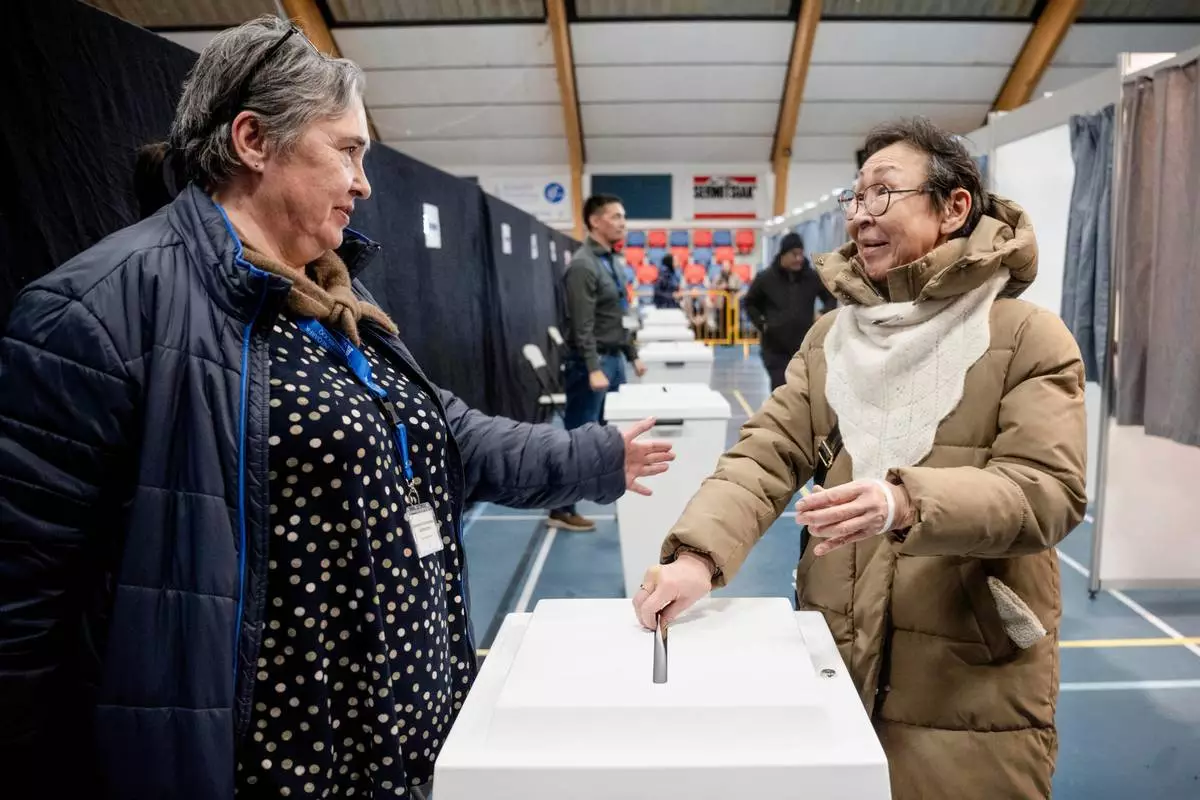
The polling station in Nuuk closes and the Greenlandic votes are counted in Nuuk, Greenland, Tuesday, March 24, 2026. Greenland is represented in the Danish Parliament with two mandates, which are elected every four years in a single electoral district. (Oscar Scott Carl/Ritzau Scanpix via AP)
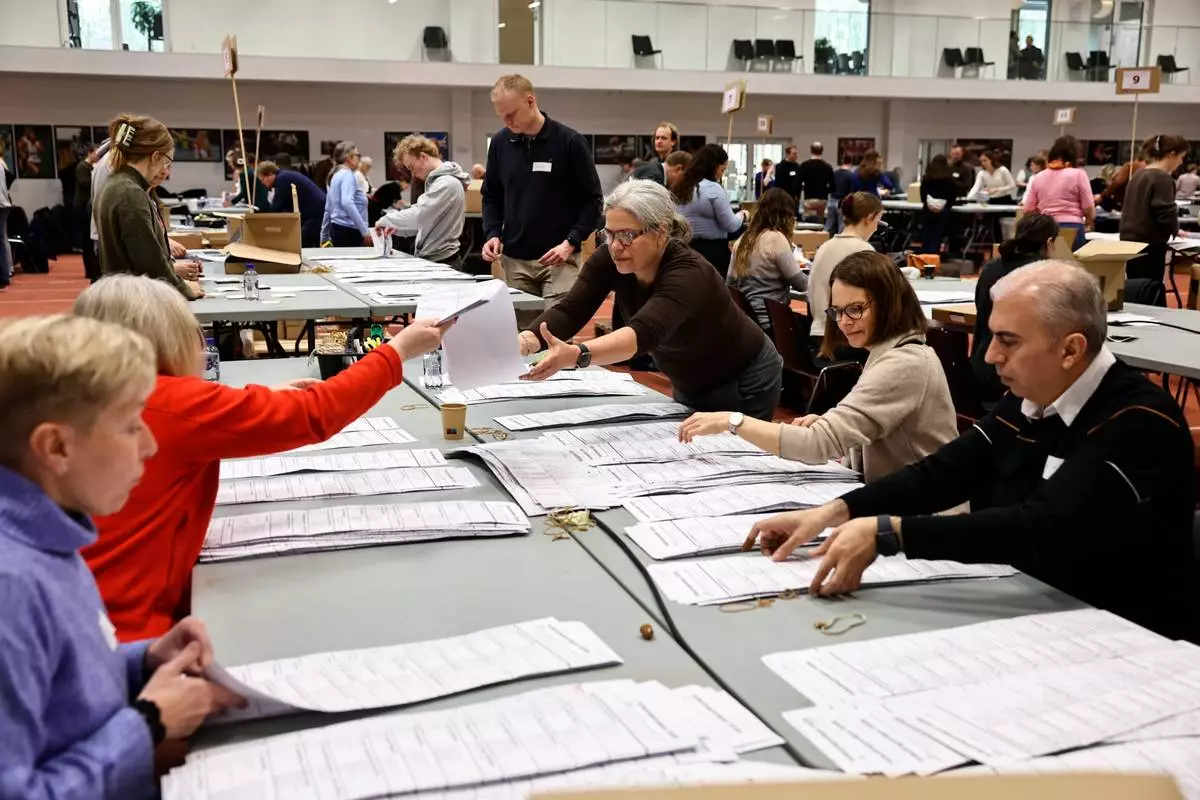
People recount votes for the parliamentary election held one day ago, in Aarhus, Denmark, Wednesday, March 25, 2026. (Mikkel Berg Pedersen/Ritzau Scanpix via AP)
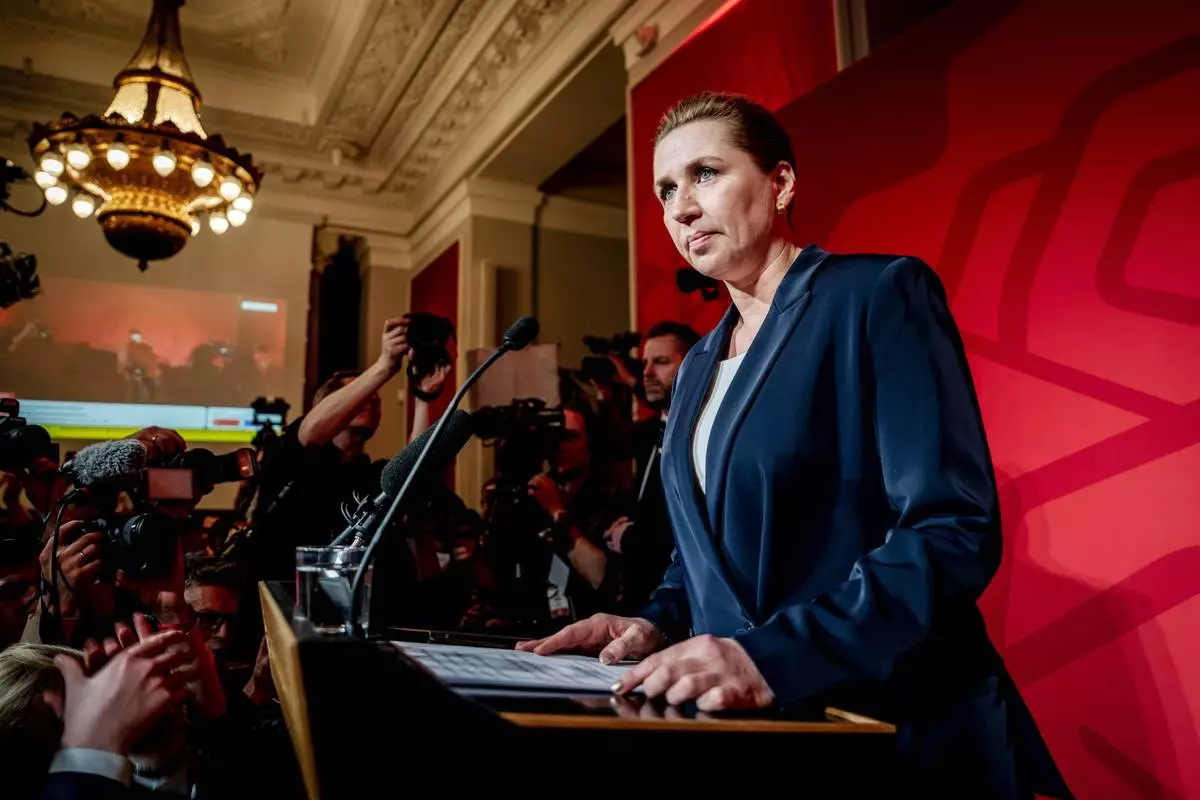
Denmark's Prime Minister and chairperson of the Social Democrats, Mette Frederiksen, speaks during the election celebration in the Common Hall at Christiansborg, in Copenhagen, early Wednesday, March 25, 2026. (Mads Claus Rasmussen/Ritzau Scanpix via AP)
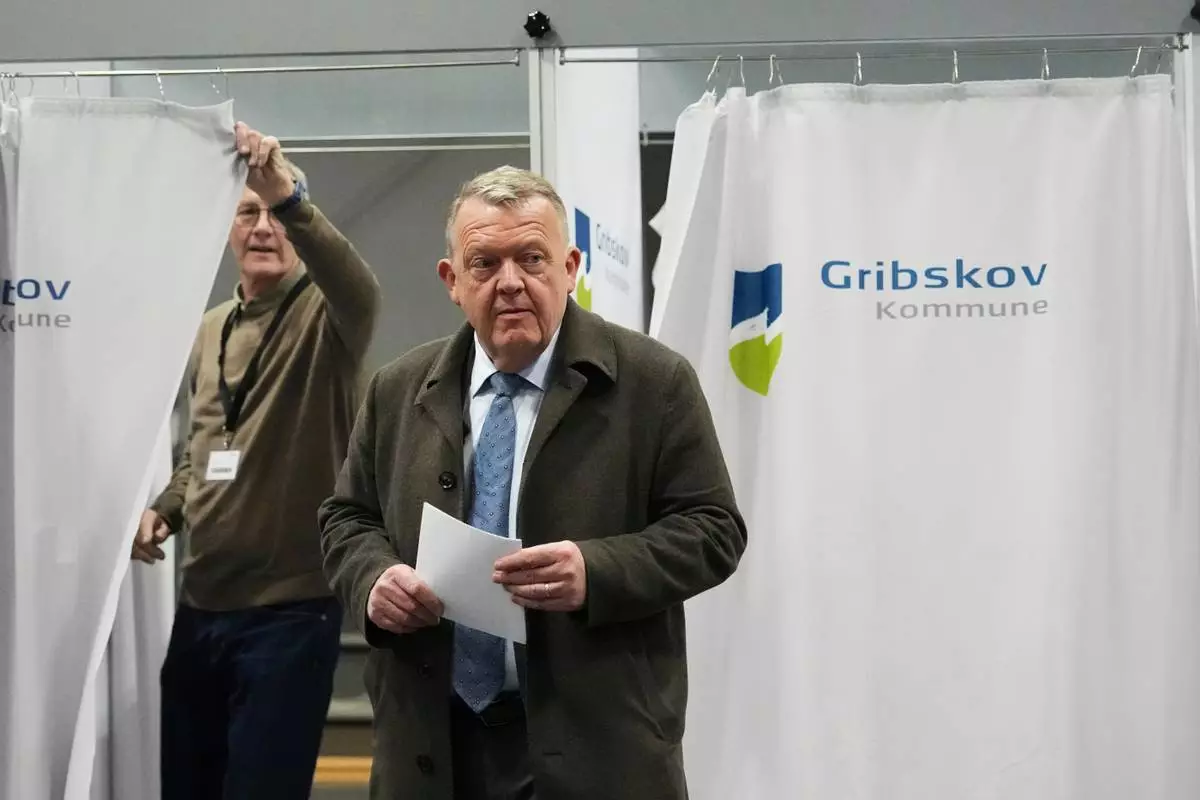
Chairman of the Moderates party and Denmark's Foreign Minister Lars Loekke Rasmussen holds his ballot at a poling station in Græsted, Denmark, on Tuesday, March 24, 2026, during the general election. (AP Photo/Sergei Grits)