CLEVELAND, Ohio (AP) — Below Cleveland, in a subterranean world many surface dwellers don’t know exists, miners extract a crucial winter mineral — salt.
The Whiskey Island salt mine, owned by food giant Cargill, helps supply road salt across the Northeast and Great Lakes, where a colder, snowier-than-usual winter has driven demand. Many municipalities exhausted supplies that typically last through spring, said Cargill spokesperson Emily Tangeman.
Click to Gallery
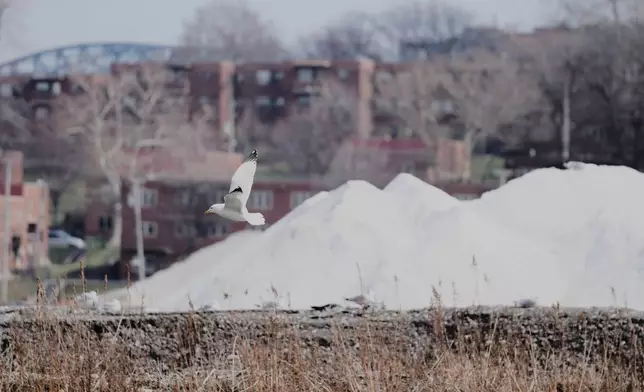
A seagull flies past piles of the finished product, de-icing solution - rock salt - at the Cargill Cleveland salt mine on Whiskey Island before being distributed by truck, rail and boat to Ohio, Pennsylvania, New York, Indiana and Minnesota, in Cleveland, Ohio, Thursday, March 19, 2026. (AP Photo/Sue Ogrocki)
A seagull flies past piles of the finished product, de-icing solution - rock salt - at the Cargill Cleveland salt mine on Whiskey Island before being distributed by truck, rail and boat to Ohio, Pennsylvania, New York, Indiana and Minnesota, in Cleveland, Ohio, Thursday, March 19, 2026. (AP Photo/Sue Ogrocki)
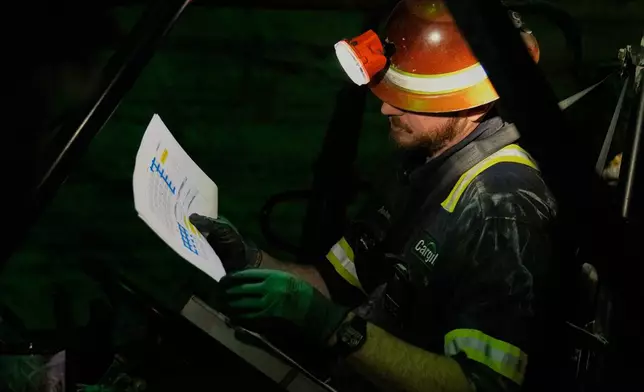
The absolute darkness of the mine is broken as supervisor Andrew Adkins uses a headlamp to lookover a map of drilling sites at the Cargill Salt Mine, 1,800 feet below the surface of Lake Erie, in Cleveland, Ohio, Thursday, March 19, 2026. (AP Photo/Sue Ogrocki)
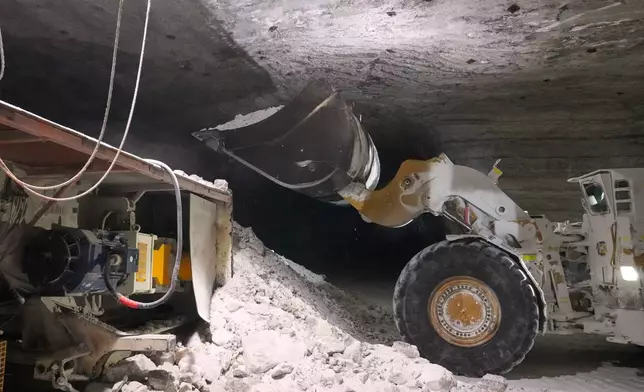
The salt, formed 440 million years ago, is mucked up and loaded onto a conveyor belt 1,800 feet below Lake Erie in Cleveland, Ohio, Thursday, March 19, 2026. (AP Photo/Sue Ogrocki)
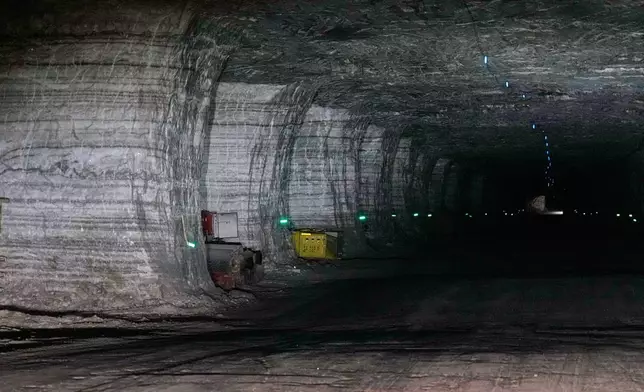
Salt pillars, left behind for support during mining, line the tunnels in the Cargill salt mine in, 1,800 feet below the surface of Lake Erie on Whiskey Island in Cleveland, Ohio, Thursday, March 19, 2026. (AP Photo/Sue Ogrocki)
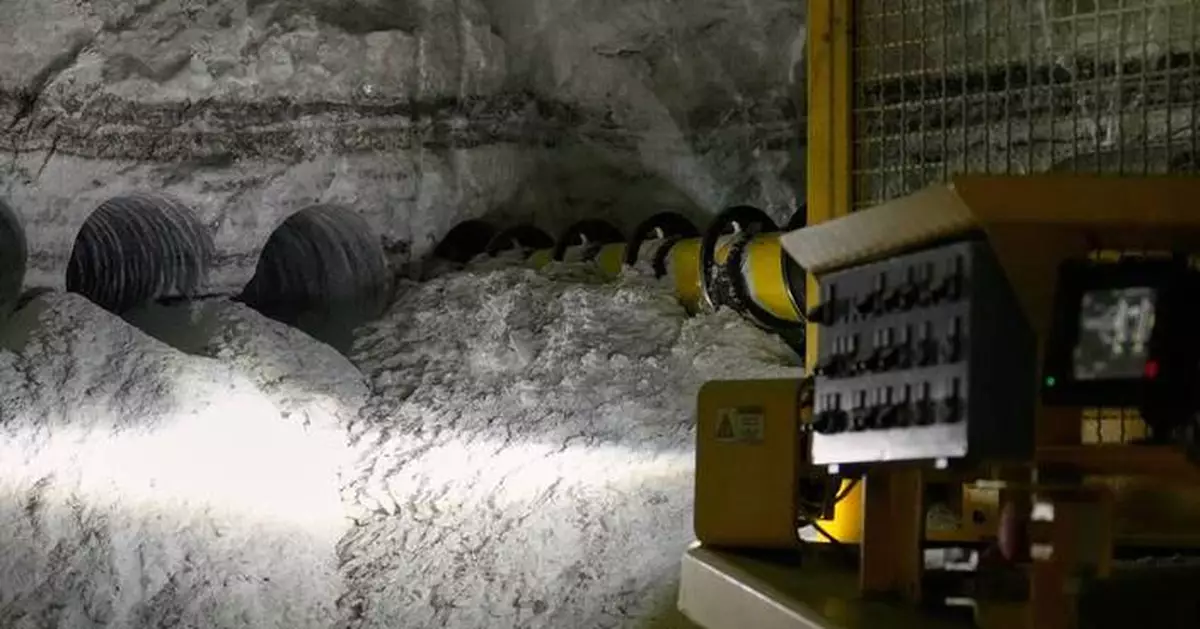
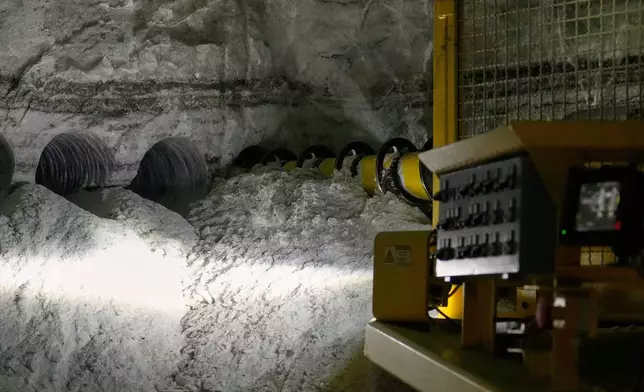
Relief holes are drilled into a face in the Cargill salt mine, 1,800 feet below the surface of Lake Erie, in Cleveland, Ohio, Thursday, March 19, 2026. (AP Photo/Sue Ogrocki)
“Our teams have been working overtime since September to support customers across the snowbelt,” Tangeman said in a statement, noting that early, persistent winter weather boosted demand across the industry.
The mine beneath Lake Erie, one of the world’s largest, produces 3 million to 4 million tons (2.7 million to 3.6 million metric tons) annually, although that can fall short of demand in especially harsh winters.
Located 1,800 feet (549 meters) underground, it's accessed from Whiskey Island, an industrial area on the shore right beside downtown Cleveland. The mine opened in the 1960s and operates year-round, with salt extracted by drilling and blasting through vast tunnels formed from an ancient inland sea that dried up millions of years ago.
Inside, the mine is a maze of roughly rectangular caverns with chalky white walls and ceilings that extend for miles. It’s dimly lit and often pitch-black beyond the glare of headlamps and floodlights. Heavy machinery and conveyer belts rumble as small ATVs whisk miners around.
Maintenance superintendent George Campbell said operations are continuous, with downtime used for upkeep and repairs to keep production steady. Cargill said it is prioritizing shipments to ensure salt reaches the areas of greatest need as winter lingers in some regions. Frequent smaller storms also increase usage, Tangeman said in the statement, requiring repeated salting and creating logistical challenges.
A return to harsher conditions across the Eastern U.S. meant some cities — including Boston; Bangor, Maine; and Ithaca, New York — shivered through their coldest seasons in more than a decade. And winter weather is still not over in some parts of the country, so it’s not over in the Cleveland mine, either.
Campbell said there’s still decades of salt left to be extracted.
“I think that we have enough reserves to continue to keep people working for a long time,” Campbell said.
Whittle reported from Portland, Maine.
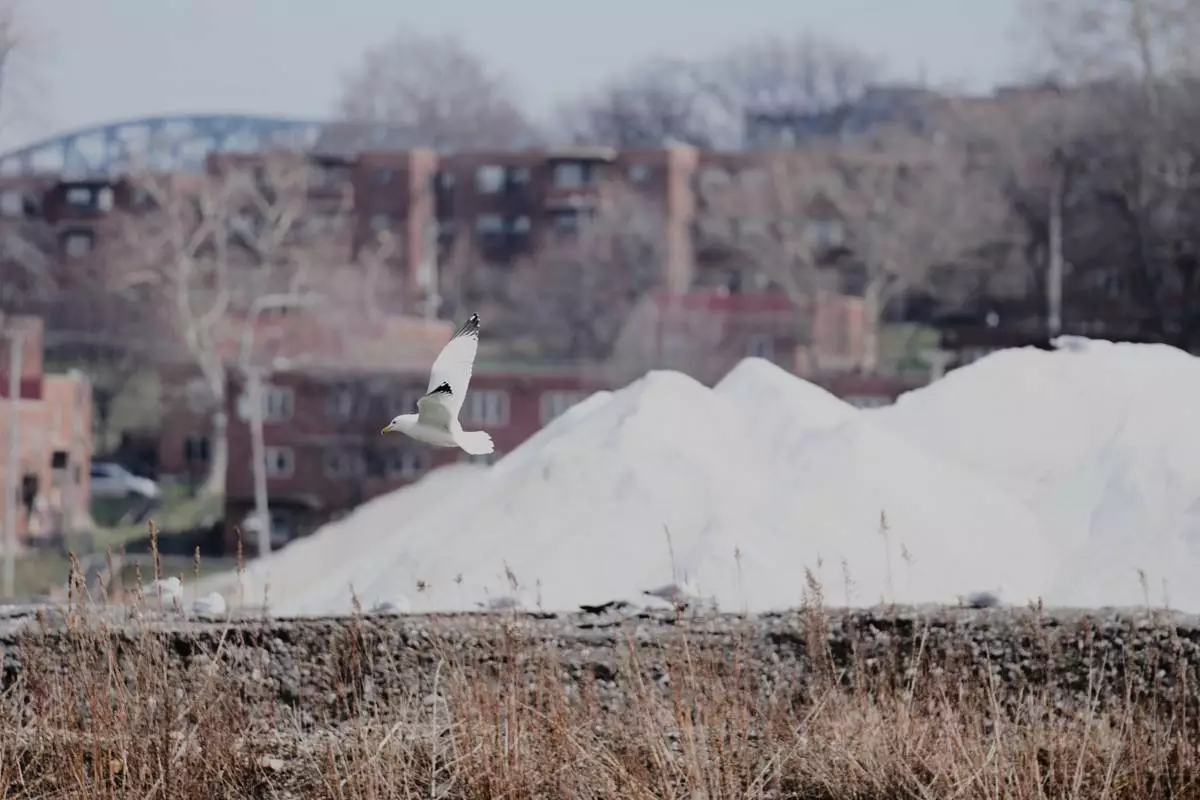
A seagull flies past piles of the finished product, de-icing solution - rock salt - at the Cargill Cleveland salt mine on Whiskey Island before being distributed by truck, rail and boat to Ohio, Pennsylvania, New York, Indiana and Minnesota, in Cleveland, Ohio, Thursday, March 19, 2026. (AP Photo/Sue Ogrocki)
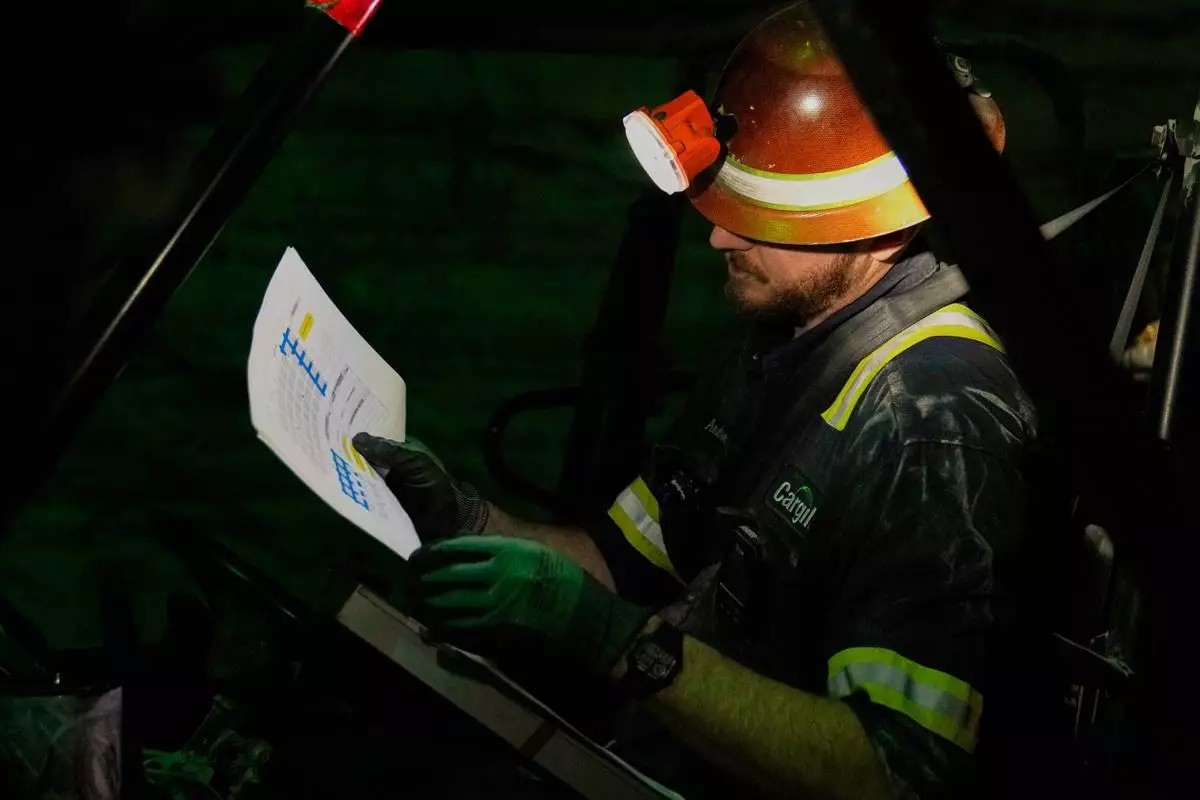
The absolute darkness of the mine is broken as supervisor Andrew Adkins uses a headlamp to lookover a map of drilling sites at the Cargill Salt Mine, 1,800 feet below the surface of Lake Erie, in Cleveland, Ohio, Thursday, March 19, 2026. (AP Photo/Sue Ogrocki)
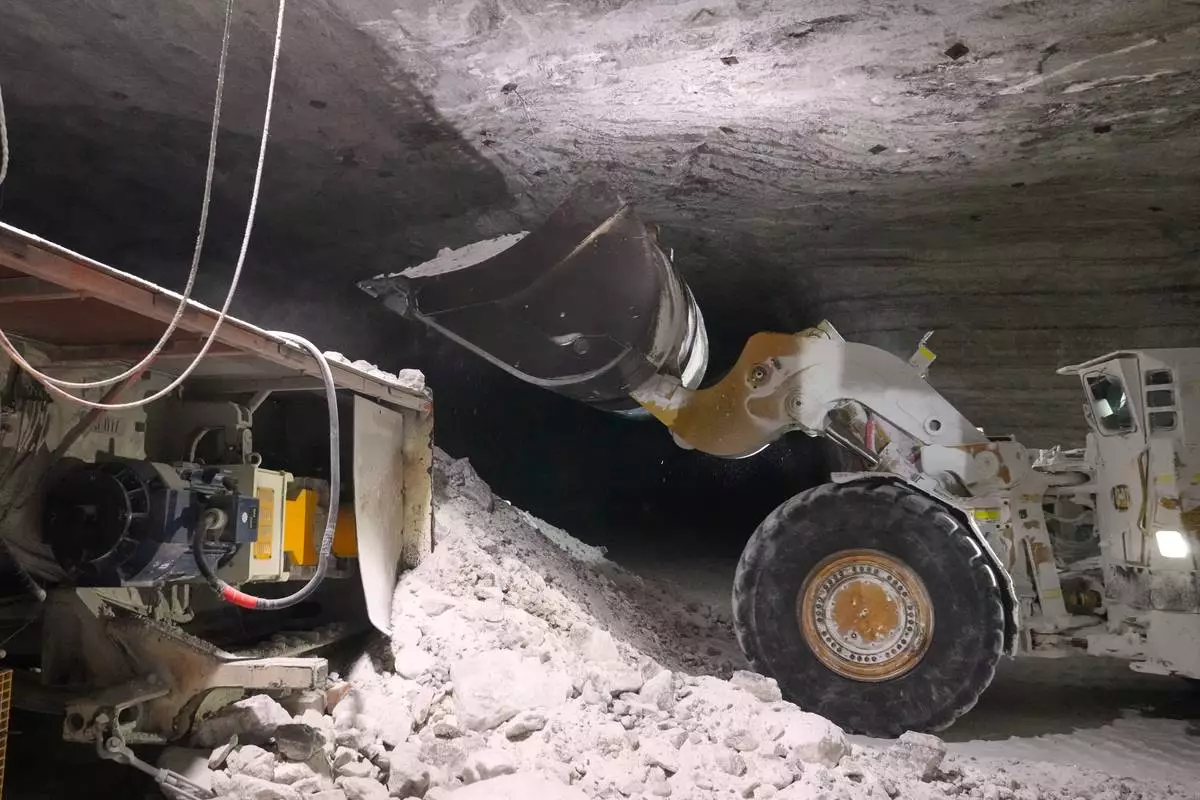
The salt, formed 440 million years ago, is mucked up and loaded onto a conveyor belt 1,800 feet below Lake Erie in Cleveland, Ohio, Thursday, March 19, 2026. (AP Photo/Sue Ogrocki)
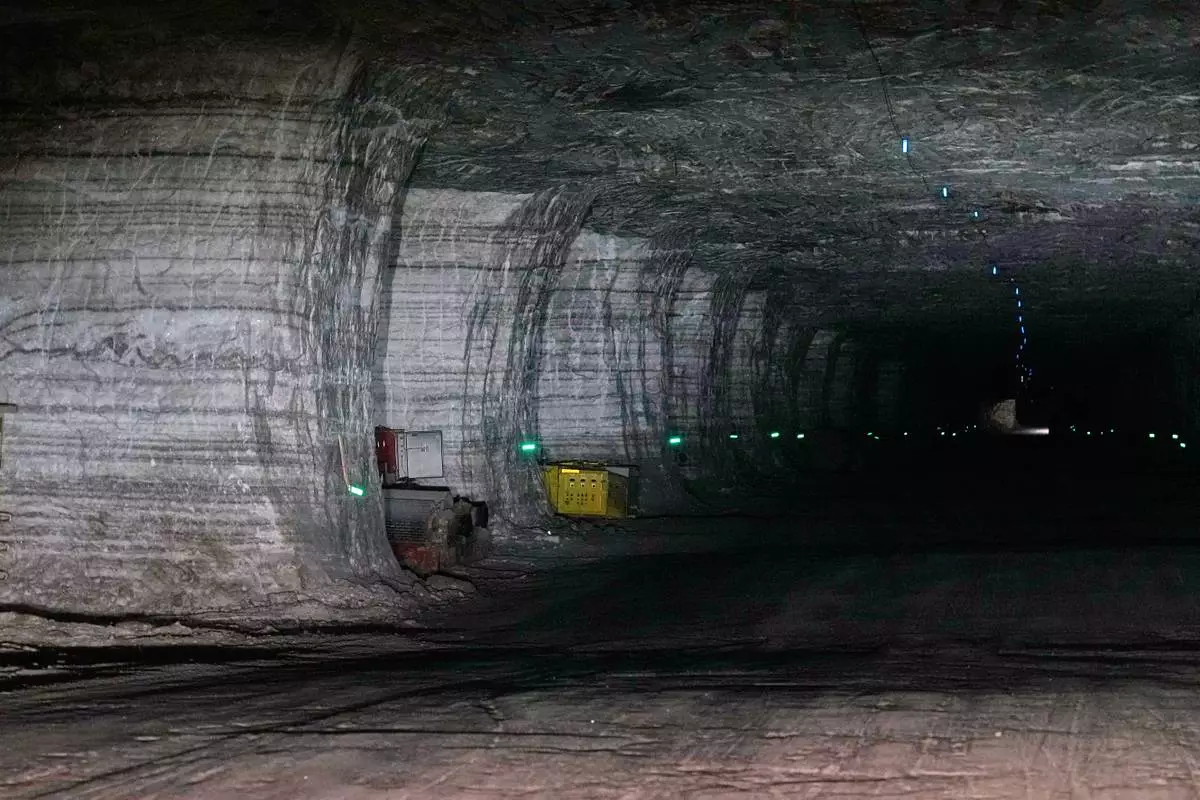
Salt pillars, left behind for support during mining, line the tunnels in the Cargill salt mine in, 1,800 feet below the surface of Lake Erie on Whiskey Island in Cleveland, Ohio, Thursday, March 19, 2026. (AP Photo/Sue Ogrocki)
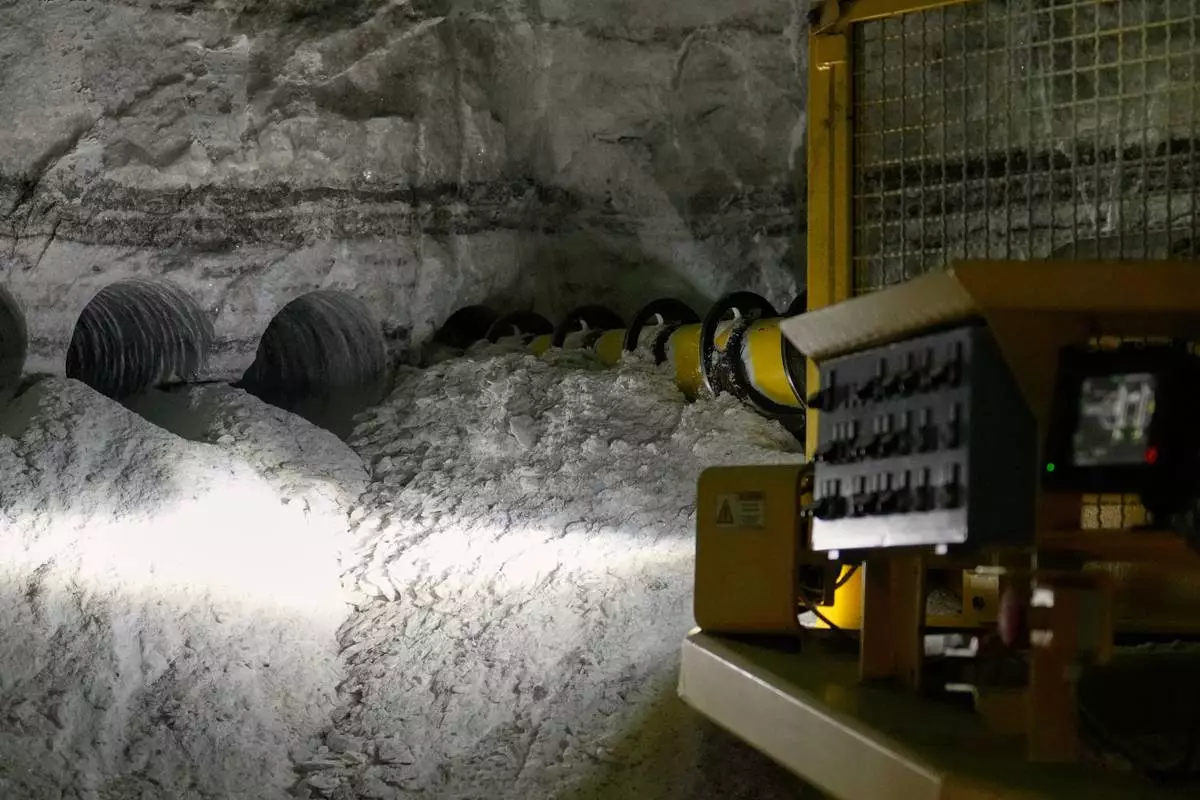
Relief holes are drilled into a face in the Cargill salt mine, 1,800 feet below the surface of Lake Erie, in Cleveland, Ohio, Thursday, March 19, 2026. (AP Photo/Sue Ogrocki)
PARIS (AP) — Not since Rafael Nadal was winning his record 14 French Opens had a player come to Roland Garros as such an overwhelming favorite to win the clay-court Grand Slam.
Jannik Sinner had won everything there was to win in tennis over the past three months: five straight Masters 1000 titles — three of them on clay — and 30 straight matches.
And with Carlos Alcaraz, his biggest rival, out due to an injured right wrist, it seemed almost a foregone conclusion that Sinner would raise the Coupe des Mousquetaires trophy and complete a career Grand Slam.
That’s why Sinner’s meltdown amid the Paris heat wave was so stunning Thursday — especially after he came within just one game of concluding his second-round match in straight sets when he led 5-1 in the third.
The top-ranked Sinner struggled with dizziness and was beaten by 56th-ranked Juan Manuel Cerundolo 3-6, 2-6, 7-5, 6-1, 6-1 after wasting two chances to serve for the match.
“I didn’t feel very well on court,” Sinner said. “I struggled, starting to feel very dizzy, very low on energy. ... In the beginning, I was hitting very clean, very good, and then I just kind of hit the wall.
"I didn’t have energy, really. I was very, very flat. The whole body. I don’t remember last time I felt this weak,” Sinner added.
Sinner said that when he woke up on Thursday he “didn’t feel very well.”
Sinner bent over on the clay court in apparent exhaustion multiple times and was hardly even running for shots as the match wore on, resorting to drop shots and serve-and-volley tactics to try and shorten the points.
He attempted to cool himself with a hand-held fan on changeovers and put bags of ice around his neck.
The temperature at the start of the match was 29 degrees C (84 F) and rose to 32 C (90 F).
“It was warm but not crazy warm,” Sinner said. “I feel like it was quite OK to play. Really it was nothing against the heat, nothing against the weather. It was just me today, but it happens.”
Cerundolo didn’t celebrate too much when it was over, just producing a little wave to the crowd.
“It’s tough for him,” Cerundolo said. “I couldn’t win more than three games by set. So I think I was a little bit lucky. … He was deserving to win in this match. But then I don’t know what happened. … I feel sorry for him and hope he recovers.”
When Sinner served for the match a second time at 5-4 in the third set, he bent over at 0-40 and then walked to his chair. He asked for assistance and left the court. His entire light blue outfit was soaked through with sweat.
After losing the set 7-5, Sinner received medical attention and left the court. Minerals were added to his drink when he returned but Sinner wasn't able to recuperate.
Sinner lost 18 of the last 20 games. Asked if he considered retiring before the match ended, Sinner said that in the “fifth set we all know everything can happen. I was in a tough spot."
Sinner's previous loss came Feb. 19 in the Qatar Open quarterfinals. He had won five straight Masters titles while dropping just three sets.
“We’ll definitely do some tests to be sure of what happened today," he said.
“Let’s hope we’re ready for Wimbledon,” Sinner added. “To be ready there, we need to recuperate well and do things right now.”
But Sinner has a history of struggling in the heat. He admitted he was lucky at the Australian Open in January against Eliot Spizzirri when the roof was closed and the third-round match swung his way. And he had to retire from a match in Shanghai in October that was contested amid extreme humidity.
“Shanghai was very tough. Humidity very high. Australia was very, very warm,” Sinner said. “Here, I mean it was warm, but it was OK. It was not like I was dying because of the heat. I think today was completely different scenario.
“It’s tough to accept, of course, because of the position where I’ve been in and everything considered,” added Sinner, who sportsbooks had listed at around -300 to win the tournament.
On the same Court Philippe Chatrier last year, Sinner wasted three match points against Alcaraz and lost an epic final.
In other matches, 17-year-old Frenchman Moise Kouame became the youngest man to reach the third round of a Grand Slam since Rafael Nadal was also 17 at 2003 Wimbledon. Kouame beat Adolfo Daniel Vallejo 6-3, 7-5, 3-6, 2-6, 7-6 (8).
Felix Auger-Aliassime — at No. 4 the highest-seeded player left in the top half of the draw after Sinner's exit — beat Roman Andres Burruchaga 4-6, 6-0, 7-5, 6-1.
Fifth-seeded Ben Shelton was upset by 62nd-ranked Belgian opponent Raphael Collignon 6-4, 7-5, 6-4; and Frances Tiafoe required nearly five hours to overcome Hubert Hurkacz 6-7 (5), 7-6 (5), 6-4, 6-7 (1), 6-4.
Also, Cerundolo’s older brother, Francisco, beat Hugo Gaston 2-6, 6-4, 6-2, 6-1.
In women’s action, Naomi Osaka put on another fashion show for her walk-on before beating Donna Vekic 7-6 (1), 6-4.
Defending champion Coco Gauff beat Mayar Sherif 6-3, 6-2; and top-ranked Aryna Sabalenka — the runner-up last year — defeated Elsa Jacquemot 7-5, 6-2.
AP Sports Writers Samuel Petrequin and Jerome Pugmire contributed to this report.
AP tennis: https://apnews.com/hub/tennis
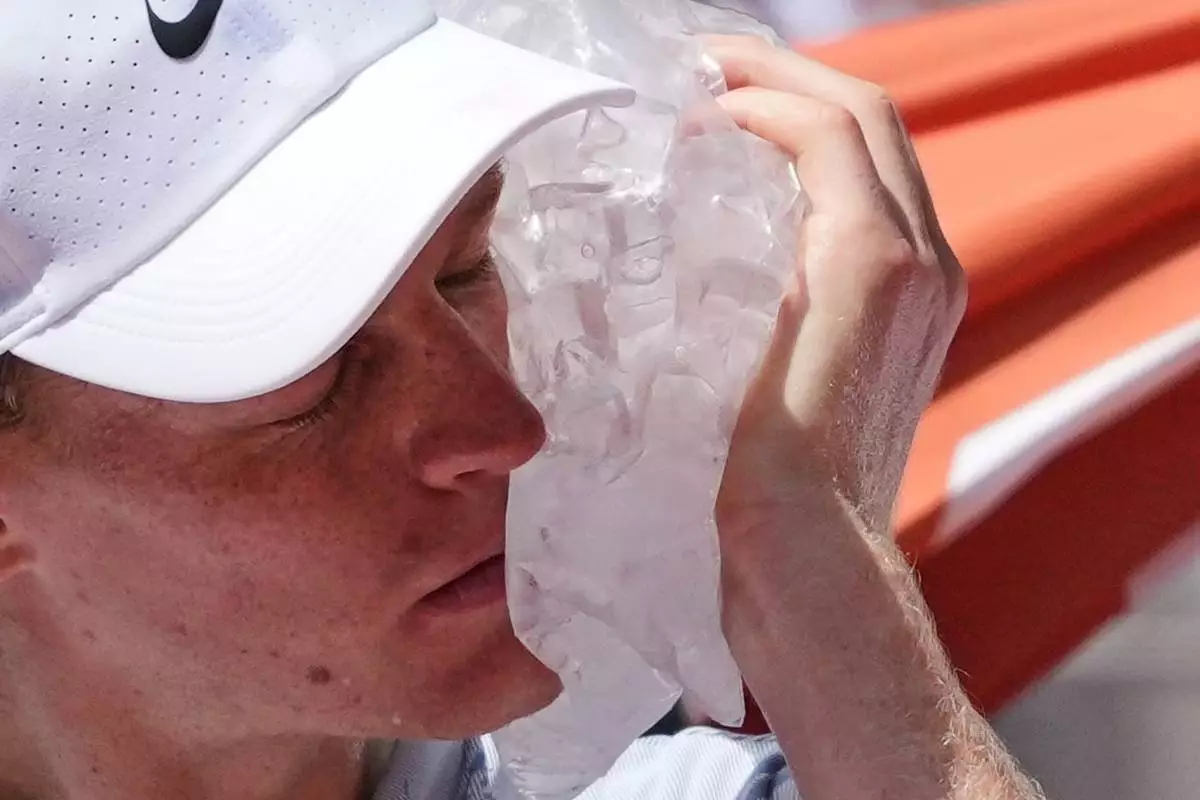
Jannik Sinner of Italy cools himself with the ice during the second round men's singles tennis match against Juan Manuel Cerundolo of Argentina at the French Open tennis tournament in Paris, Thursday, May 28, 2026. (AP Photo/Thibault Camus)
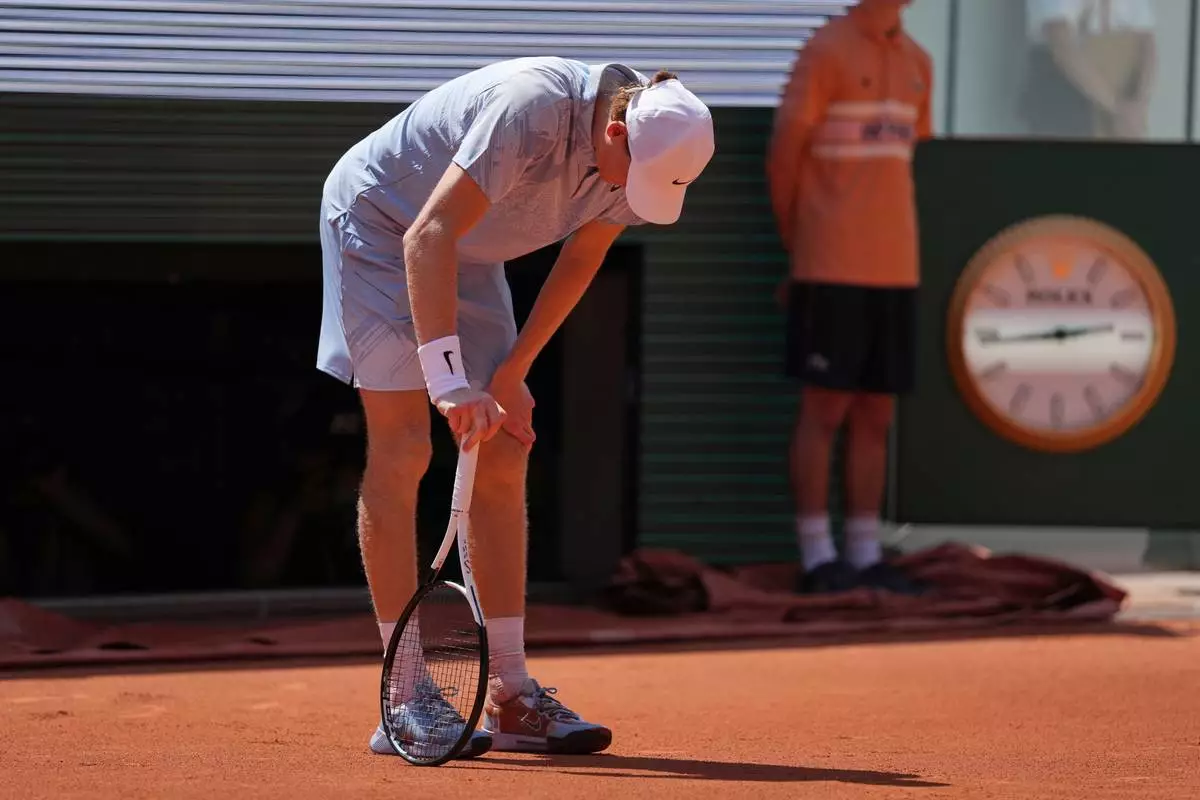
Jannik Sinner of Italy reacts as he plays against Juan Manuel Cerundolo of Argentina during their second round men's singles tennis match at the French Open tennis tournament in Paris, Thursday, May 28, 2026. (AP Photo/Thibault Camus)
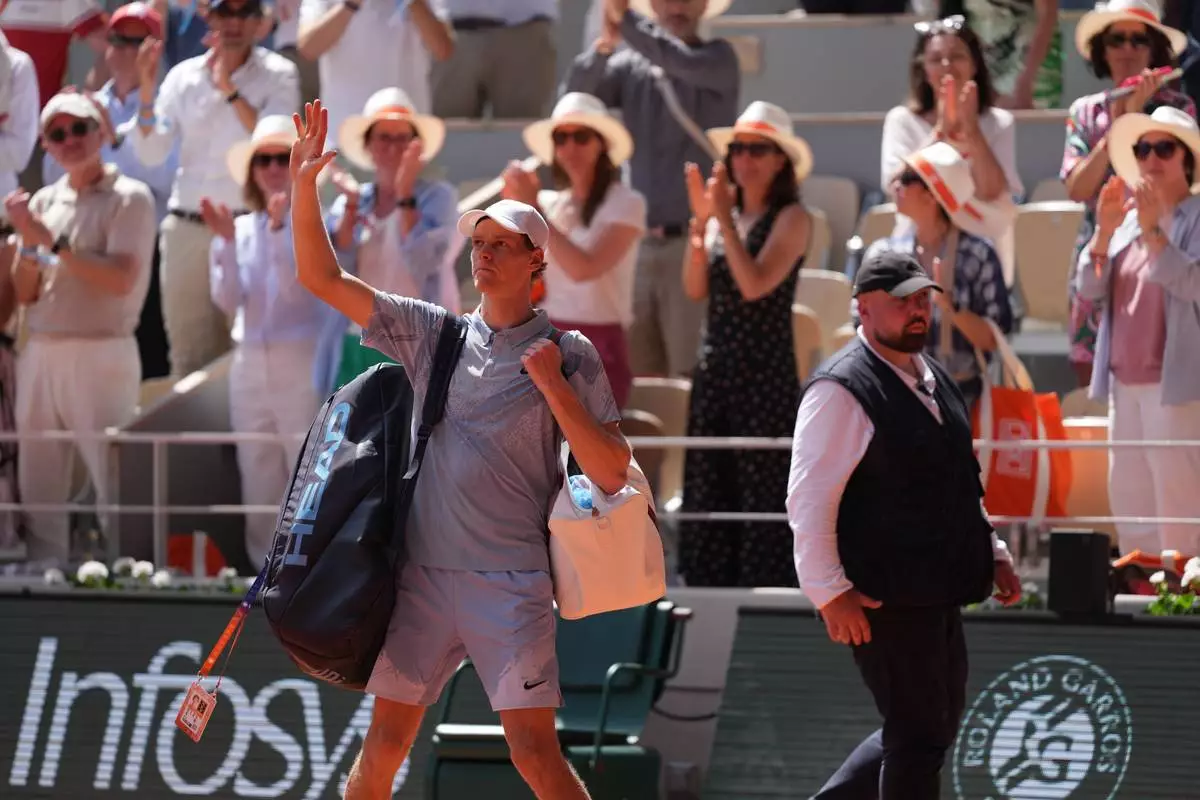
Jannik Sinner of Italy waves as he leaves the court after the second round men's singles tennis match against Juan Manuel Cerundolo of Argentina at the French Open tennis tournament in Paris, Thursday, May 28, 2026. (AP Photo/Thibault Camus)
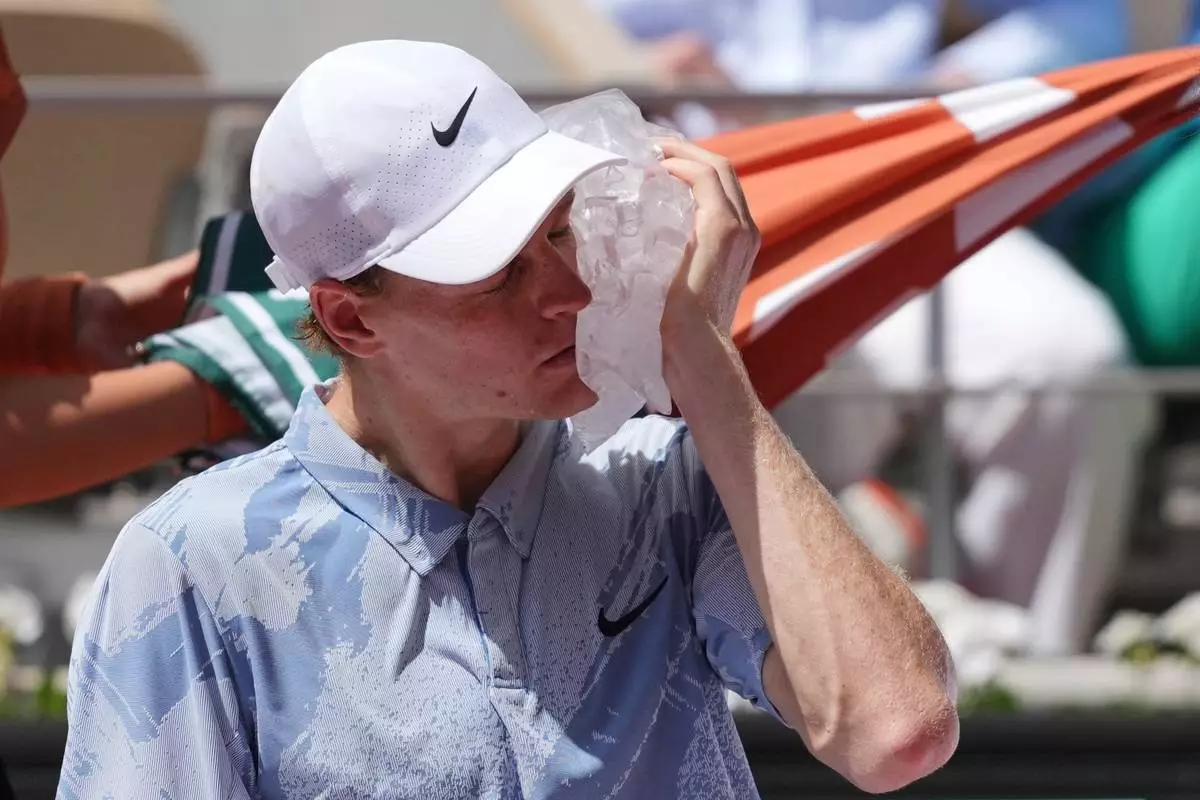
Jannik Sinner of Italy cools himself with the ice during the second round men's singles tennis match against Juan Manuel Cerundolo of Argentina at the French Open tennis tournament in Paris, Thursday, May 28, 2026. (AP Photo/Thibault Camus)
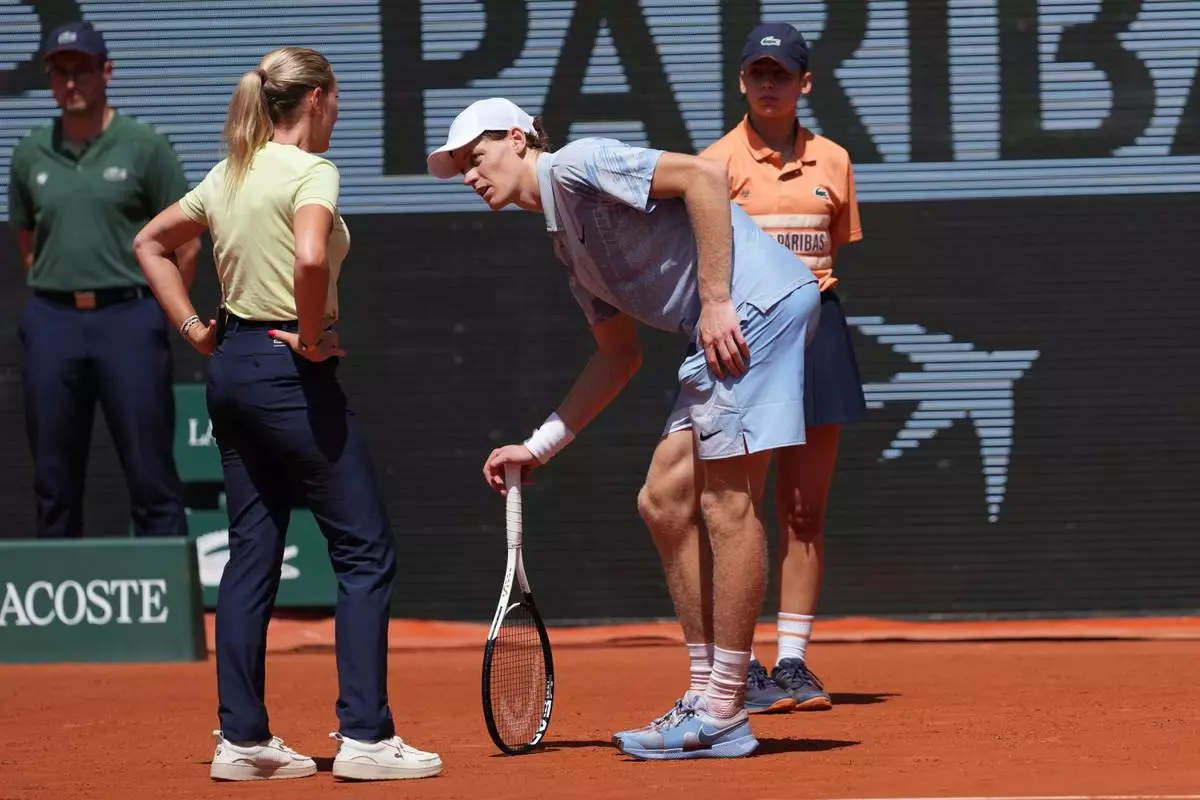
Jannik Sinner of Italy talks with the referee during the second round men's singles tennis match against Juan Manuel Cerundolo of Argentina at the French Open tennis tournament in Paris, Thursday, May 28, 2026. (AP Photo/Thibault Camus)
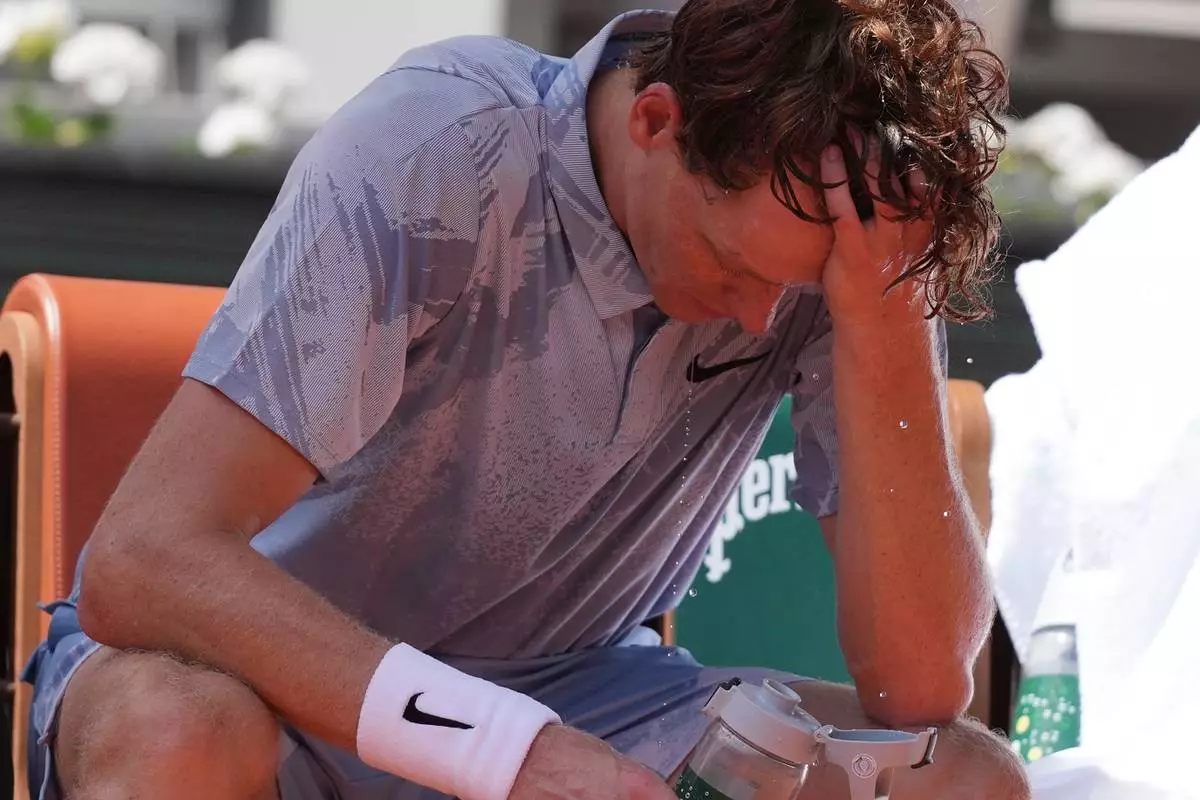
Jannik Sinner of Italy reacts as he cools himself with the water during a break at the second round men's singles tennis match against Juan Manuel Cerundolo of Argentina at the French Open tennis tournament in Paris, Thursday, May 28, 2026, as temperature rises up to 33 C (91 F). (AP Photo/Thibault Camus)