Chinese Vice Premier Ding Xuexiang on Wednesday outlined a three-point proposal for building a global science and technology community with joint efforts from all countries.
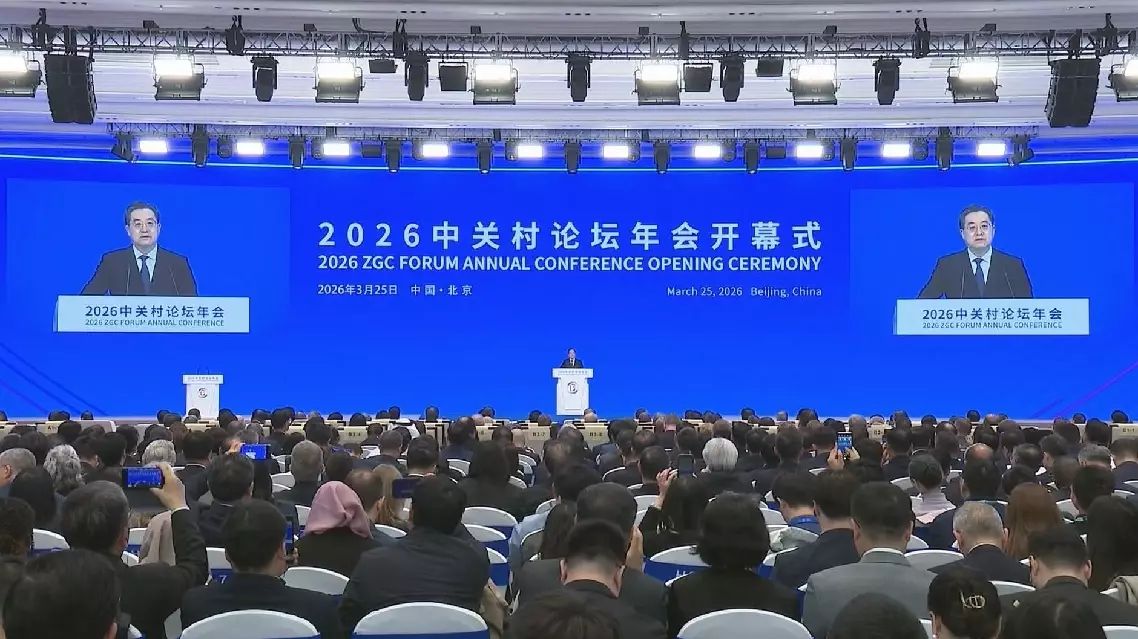
Addressing the opening ceremony of the 2026 Zhongguancun Forum (ZGC Forum) Annual Conference in Beijing, Ding, also a member of the Standing Committee of the Political Bureau of the Communist Party of China Central Committee, said that during the 15th Five-Year Plan period (2026-2030), China will move faster to achieve greater self-reliance and strength in science and technology, with a focus on building international centers for scientific and technological innovation.
He said these centers will together serve as a strategic fulcrum for making China strong in science and technology.
President Xi Jinping has made important arrangements for developing Beijing and the broader Beijing-Tianjin-Hebei region in north China, the Yangtze River Delta in east China, and the Guangdong-Hong Kong-Macao Greater Bay Area in south China into international centers for sci-tech innovation, Ding said, adding that the three centers will play a pivotal role in driving China's modernization by pooling original innovation capacity, high-end industries, and human resources in the sci-tech sector.
China stands ready to work with all parties to build a global science and technology community, he said, putting forward the three-point proposal to this end.
Firstly, the vice premier said, efforts should be made to build a more open and inclusive global innovation network and to strengthen cooperation among all players in sci-tech innovation.
Secondly, he stressed, it is imperative to carry out more extensive and diverse scientific and technological cooperation to empower the economic and social development of all countries.
And thirdly, he said, it is essential to promote more equitable and inclusive global science and technology governance and properly address any regulatory conflicts, societal risks, and ethical challenges that may arise from the advancement of science and technology.
After the opening ceremony, Ding visited the permanent exhibition at the Zhongguancun exhibition center.
About 1,000 people, including Chinese and foreign scientific and technological professionals, business leaders and government officials, as well as heads of international organizations, attended the opening ceremony.
Founded in 2007 with the permanent theme "Innovation and Development," the ZGC Forum has grown into a global, open, and high‑level platform for advancing global science and technology innovation.
Chinese vice premier outlines three-point proposal for building global sci-tech community