The U.S. Department of Health and Human Services estimates that more than half people over age 65 will need help with daily activities such as bathing, dressing or eating at some point, either for an extended period or the rest of their lives. Some research suggests that share may be as high as two-thirds.
Yet relatively few older Americans have private long-term care coverage. AHIP, a trade association representing the U.S. health insurance industry, estimates that only 3% to 4% of Americans over 50 have an active policy that covers extended care. Medicare, the main health insurance program for older Americans, generally does not pay for continuing support services in a nursing home or assisted-living community.
As the youngest baby boomers approach their mid-60s, many families, couples and individuals may be planning to rely on savings, unpaid caregiving arrangements or Medicaid, the joint state and federal assistance program for the poor. The first two options can prove inadequate, while qualifying for residential care under Medicaid is difficult due to the program's low income and asset limits.
Eldercare experts say an approach to consider, especially if the person needing care is middle-class or of modest means, is to deliberately, but systematically, put yourself or a relative into poverty so Medicaid picks up the costs of a nursing home or assisted living services sooner than later.
This is known as a Medicaid “spend down” strategy.
In order to get someone qualified for Medicaid for nursing home care, families need to systematically, and transparently, use a family member’s assets on appropriate costs in order for the strategy to work. One example would be using an older family member’s dwindling assets to prepay for a funeral or to buy a burial plot.
Deliberately reducing a person's income and savings to qualify for Medicaid can sound daunting. But without planning, the high cost of long-term care can quickly drain savings anyway. Assisted living and nursing home care can cost thousands of dollars a month, often forcing families to exhaust their resources before qualifying for assistance.
A 2024 study by insurance company Genworth Financial found that a home health aide cost an average of roughly $78,000 a year, while the average cost of semiprivate room in a nursing home was roughly $111,000. This is compared to the median retirement savings of 65 to 74-year-olds of $200,000, according to data from the Federal Reserve. An unplanned long-term stay in a nursing home will eat up those savings within a couple of years.
“There’s a reasonably high likelihood that you’ll need nursing care for a period of their lives, and there’s a good chance you may need it for a long period of time,” said Eric Carlson, director of long-term services and supports advocacy with Justice in Aging, a national nonprofit legal advocacy organization focused on older Americans. Carlson has worked on these issues for 35 years.
Medicaid eligibility for long-term or skilled nursing care is generally limited to people with low incomes and minimal assets, though the exact thresholds vary by state. In most states, an individual must have monthly income below $2,800 to $3,000 a month. A person can have no more than in $2,000 in assets for an individual, excluding certain property such as a primary residence, a vehicle and personal belongings.
Due to the complicated nature of Medicaid eligibility, experts say it’s best to work with eldercare specialists to make sure an individual’s assets are used appropriately and you don’t inadvertently disqualify the person who needs assistance from accessing Medicaid.
For example, families do not want to just transfer the assets of a person needing nursing care to the bank accounts of relative to appear poor on paper. Medicaid applications often have what is known as a five-year “look back" policy, which assigns examiners to review an applicant's assets and bank accounts to see if there might have been improper transfers out of the individual's bank accounts
It's important to keep track of nursing home expenses that could be applied to a spend down. They include paying out of pocket for nursing home care, hospital bills as well as personal items and clothing. An applicant can also use their remaining assets to pay down their mortgage, or other debts.
“People shouldn’t be doing ‘do it yourself’ financial planning in these matters. It can create significant problems with a person’s estate,” Carlson said. “You don’t want to wait until the day nursing care is absolutely necessary to make these sorts of decisions.”
Because Medicaid is a joint state and federal program, states administer these programs in different ways. In New York, for example, residents whose income exceeds Medicaid limits can still qualify through an ‘excess income’ or spend-down program, deducting medical expenses such as doctor visits, prescriptions or home care from their income until they meet eligibility thresholds. Once that amount is reached, Medicaid covers additional care for the rest of the month.
Similar ‘medically needy’ programs exist in more than 30 states, allowing people with high health care costs to qualify even if their income is initially too high.
Carlson recommends using resources like Justice for Aging, the Kaiser Family Foundation and other eldercare advocates at the state and local level to help navigate these issues. There are also liaisons in cities and states that work with Medicaid to walk a family through the process.
For those who are years off from needing nursing care, make sure to create a long-term plan for this type of care, especially since most Americans are likely to need assistance with daily living eventually. One option is to buy a long-term care policy, which is typically bought by individuals or families in their late 40s or early 50s. A policy of a couple hundred dollars a month could end up paying for care that's tens of thousands of dollars a year in the future.

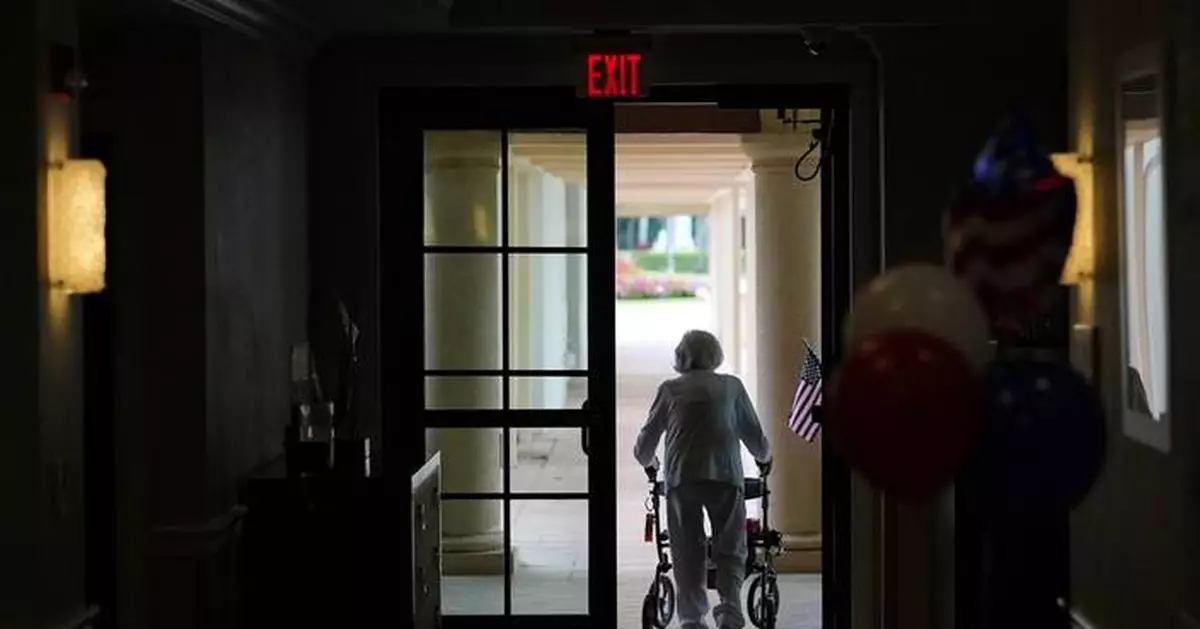
FILE - A woman uses a walker as she exits an assisted living building, July 4, 2025, in Boca Raton, Fla. (AP Photo/Rebecca Blackwell, File)
WASHINGTON (AP) — Travel disruptions deepened Tuesday as senators raced to salvage a proposal to end the Homeland Security shutdown by funding much of the department, including airport workers going without pay, but excluding immigration operations that have been core to the dispute.
The sudden sense of urgency comes as U.S. airports are snarled by long security lines, with travelers being told to arrive hours before their flights in Houston, Atlanta and Baltimore/Washington International. Routine Department of Homeland Security funding was halted in mid-February ahead of the busy spring travel season. Nearly 11% of Transportation Security Administration workers who were scheduled to report for duty Monday — more than 3,200 — missed work, and at least 458 have have quit altogether since the shutdown began, according to DHS.
Democrats are refusing to fund the department without restraints on Trump's immigration enforcement and mass deportation operations after federal agents killed two citizens in Minneapolis.
“The time to end this is now,” said Senate Majority Leader John Thune, R-S.D.
But Democrats panned the offer as insufficient. And President Donald Trump himself was noncommittal.
“I think any deal they make, I’m pretty much not happy with it,” Trump said at an event at the White House swearing in his new Homeland Security Secretary Markwayne Mullin.
Airport conditions have become increasingly unpredictable with swelling crowds seen in major hubs. Travelers headed to LaGuardia and John F. Kennedy airports in New York — as well as Newark Liberty International in neighboring New Jersey — still couldn’t check online TSA wait times Tuesday morning.
Immigration and Customs Enforcement agents were spotted in terminals, including at Philadelphia International Airport, where a protester was seen at one of the checkpoints holding a sign criticizing ICE. In Houston, passengers at George Bush Intercontinental Airport spent hours Tuesday navigating meandering security lines that twisted and turned across multiple floors.
Acting TSA administrator Ha McNeill said multiple airports are experiencing greater than 40% call out rates, according to prepared remarks she will give Wednesday to the House Committee on Homeland Security.
She is also expected to tell lawmakers of the personal toll the shutdown has had on TSA workers who “are running out of options to keep a roof over their head and put food on the table.”
The contours of the deal emerged once a group of Republican senators met with Trump at the White House late Monday, after he upended talks and deployed federal immigration officers at certain airport security checkpoints — a move some lawmakers warned could lead to heightened tensions.
The proposal would fund most of Homeland Security, but not one main part of ICE — the enforcement and removal operations that are core to Trump's deportation agenda.
Under the plan, ICE's Homeland Security Investigations would be funded as well as Customs and Border Protection, and it would include funding for officers to wear body cameras, but few other restraints.
The proposal was not substantially different from one the two sides had already agreed on before the deaths sparked demands for more changes, according to a person granted anonymity to discuss the details, which have not been publicly released.
For example, there was no mandate that immigration officers wear identification or other changes the White House had floated earlier in talks, including a ban on immigration enforcement at schools, churches, hospitals and other sensitive places, the person said.
While the ICE officers manning airports are going without face-covering masks, the Democratic demand that they go unmasked during immigration operations does not appear to be part of the deal.
“We need strong, strong reforms and we need to rein in ICE," said Senate Democratic Leader Chuck Schumer.
Since so much of ICE is already funded through Trump's big tax breaks bill, immigration officers are still receiving paychecks despite the shutdown.
Congress is controlled by the Republican president's party, and House Democratic Leader Hakeem Jeffries said his party members insist on “bold” changes to ICE.
On Tuesday, Delta Air Lines confirmed it was suspending its specialty services for members of Congress amid the shutdown, meaning those who fly with the carrier will be treated like other passengers based on their SkyMiles status. The Atlanta Journal-Constitution first reported the suspension.
Efforts to end the standoff stalled when Trump linked any deal to his push to pass the so-called SAVE America Act, a strict proof-of-citizenship and voter ID bill that has stalled in the Senate ahead of the midterm elections. Some GOP senators have pitched him on the idea of tackling it in another legislative package.
“It’s not a perfect deal but I think it works,” said Sen. Lindsey Graham, R-S.C., who met with Trump and thinks the president is on board. “If you’re waiting in line four hours in Atlanta, this madness needs to come to an end."
The White House on Tuesday stressed that conversations were ongoing. But it also said an agreement to split off immigration enforcement funding, while addressing Trump’s elections bill separately, “seems to be acceptable.”
Sen. Chris Coons, D-Del., said his understanding was that there was a “sense of urgency” coming from the talks as the airport disruptions worsen.
The deal could provide a political exit from the standoff over the embattled Department of Homeland Security, which was created in the aftermath of the Sept. 11, 2001, attacks but has come to symbolize Trump’s aggressive mass deportation agenda, with its goal of removing 1 million immigrants this year.
Under mounting political pressure, Trump ousted Homeland Security Secretary Kristi Noem amid the public outcry over the immigration operations, and senators late Monday confirmed Mullin, one of their own, as the president's handpicked replacement.
Mullin, a former Oklahoma senator aligned with Trump's agenda, provides a potentially new face for the department. He told senators during his confirmation hearing that he supported another key demand of Democrats — ensuring a judge has signed off on warrants that immigration officers use to search people's homes, rather than simply relying on administrative warrants issued by the department.
“This is significant,” Sen. Peter Welch, D-Vt., said about the progress toward changes. "Noem is gone. That’s a big deal.”
ICE’s budget grew under last year’s bill by $75 billion, which has been untouched by the shutdown. Rather, its routine annual funding, some $10 billion, would be cut almost in half under the proposal.
This story was first published on March 24, 2026. It was updated on March 25, 2026 to correct the spelling of the surname of the acting TSA administrator. It is McNeill, not McNeil.
Associated Press writers Rio Yamat in Las Vegas, Wyatte Grantham-Philips in New York, Lekan Oyekanmi in Houston and Kevin Freking, Seung Min Kim and Stephen Groves in Washington contributed to this report.

An Immigration and Customs Enforcement (ICE) agent works at the baggage check at O'Hare International Airport in Chicago, Tuesday, March 24, 2026. (AP Photo/Nam Y. Huh)

President Donald Trump listens as Homeland Security Secretary Markwayne Mullin during the swearing-in at the Oval Office of the White House, Tuesday, March 24, 2026, in Washington. (AP Photo/Alex Brandon)
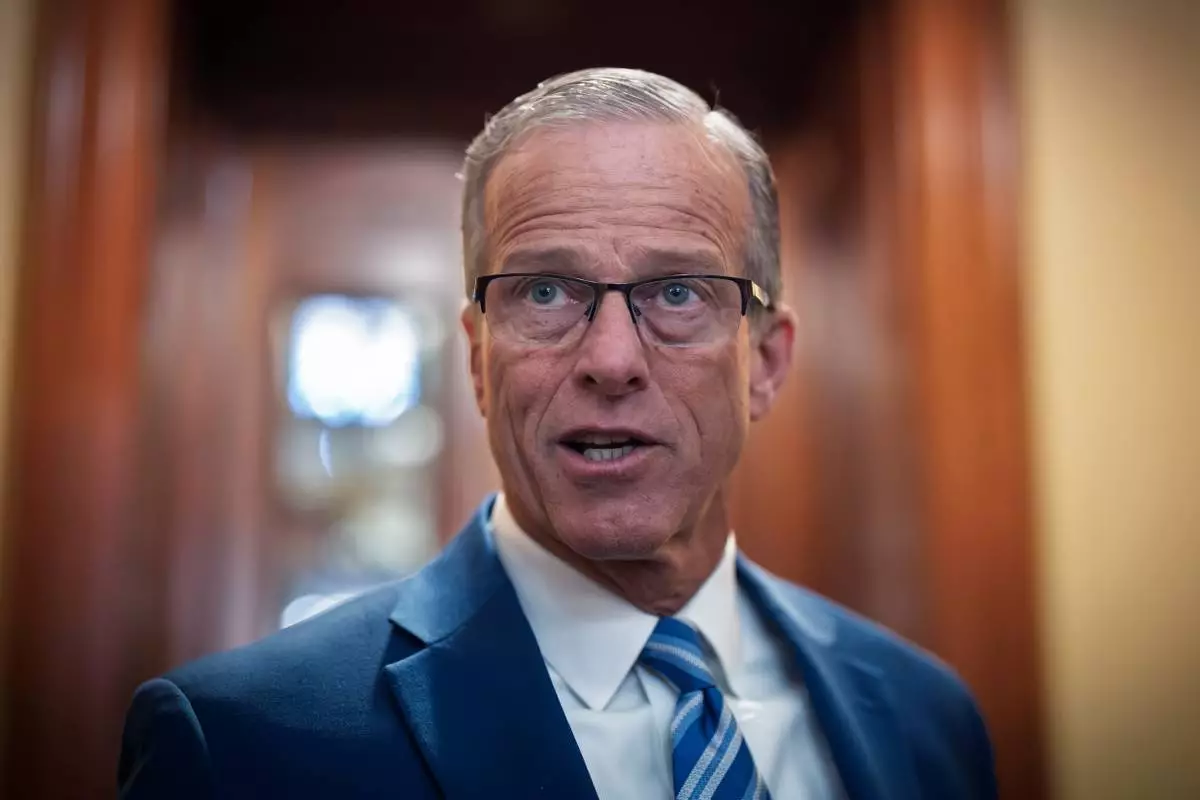
Senate Majority Leader John Thune, R-S.D., talks with reporters asking about a proposal to end the Homeland Security budget stalemate, at the Capitol in Washington, Tuesday, March 24, 2026. (AP Photo/J. Scott Applewhite)
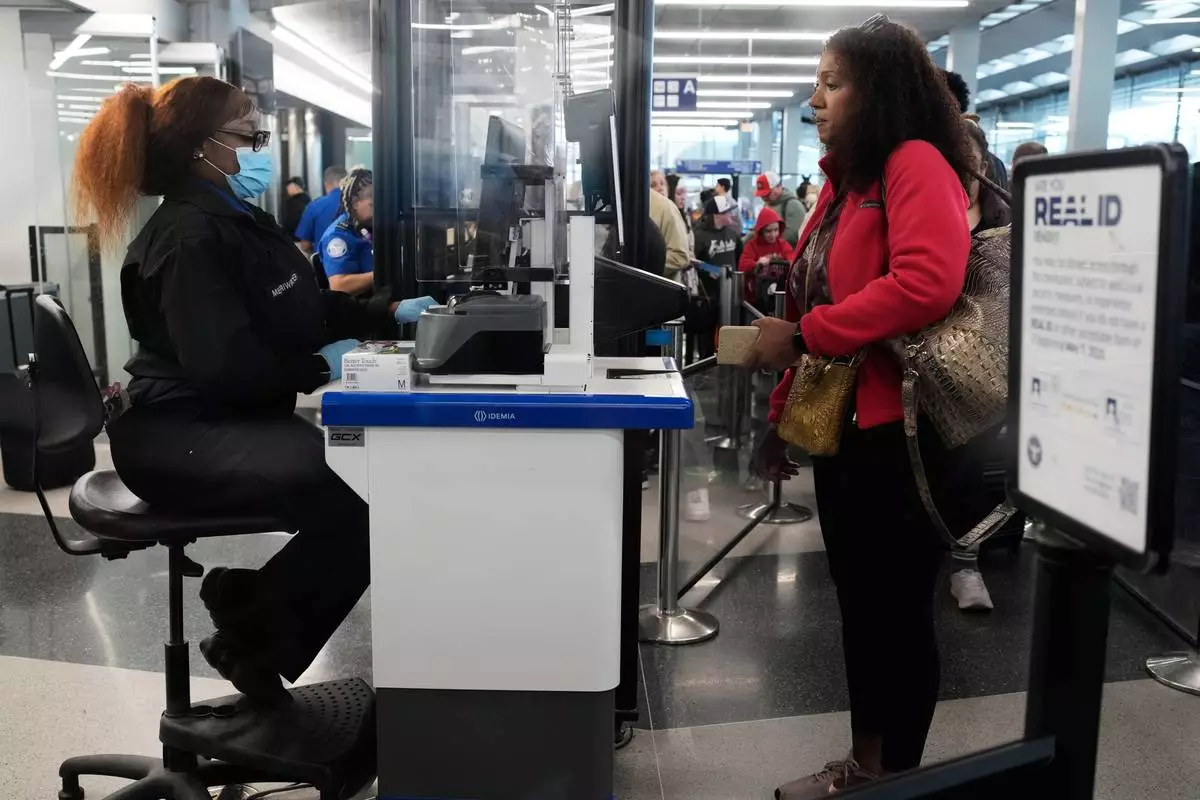
A TSA worker, left, screens an airline passenger at O'Hare International Airport in Chicago, Tuesday, March 24, 2026. (AP Photo/Nam Y. Huh)
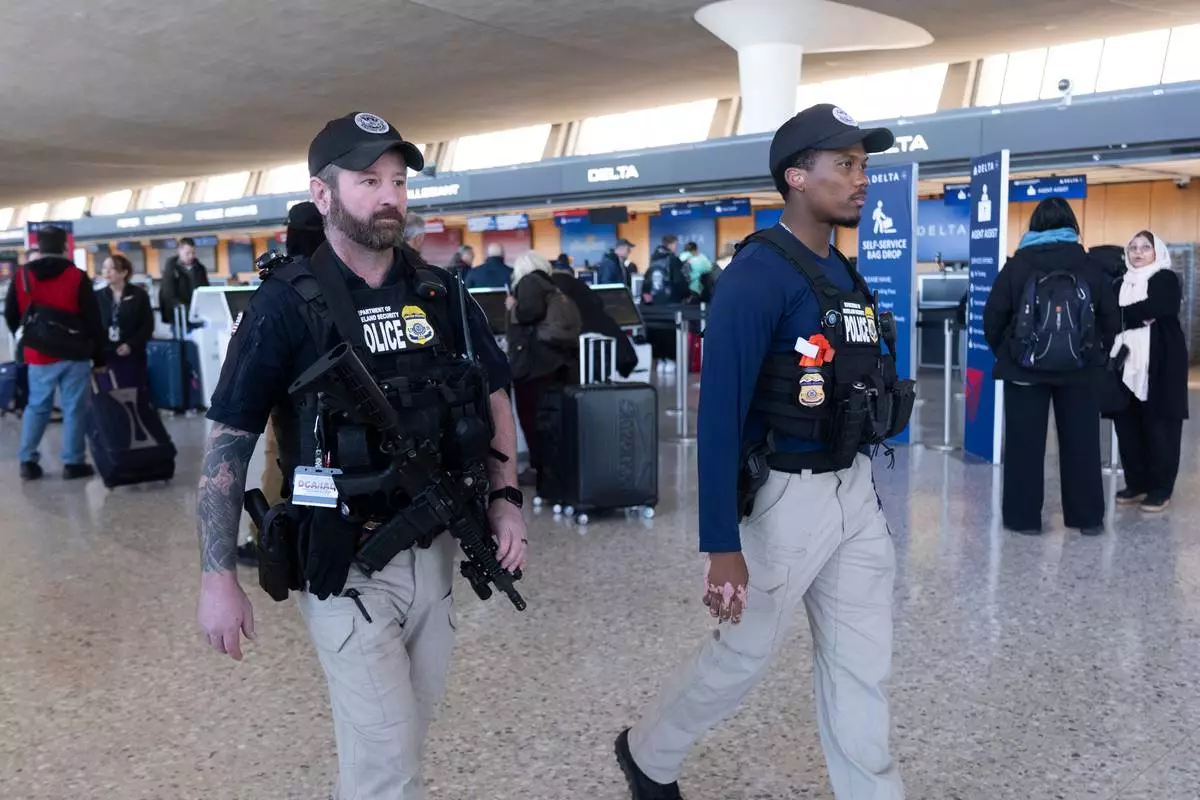
Department of Homeland Security, Transportation Security Administration, Federal Air Marshals, patrol around Washington Dulles International Airport, in Chantilly, Va., Tuesday, March 24, 2026. (AP Photo/Manuel Balce)
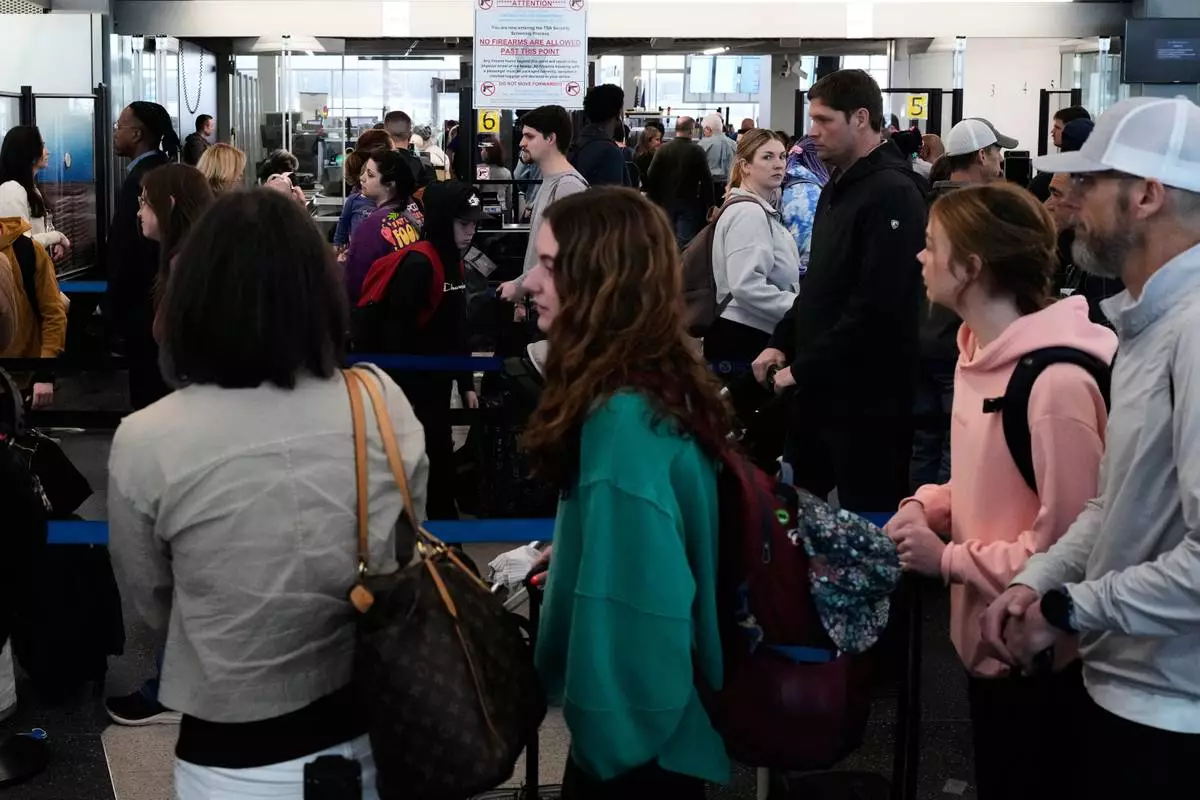
Travelers line up at a TSA checkpoint at O'Hare International Airport in Chicago, Tuesday, March 24, 2026. (AP Photo/Nam Y. Huh)
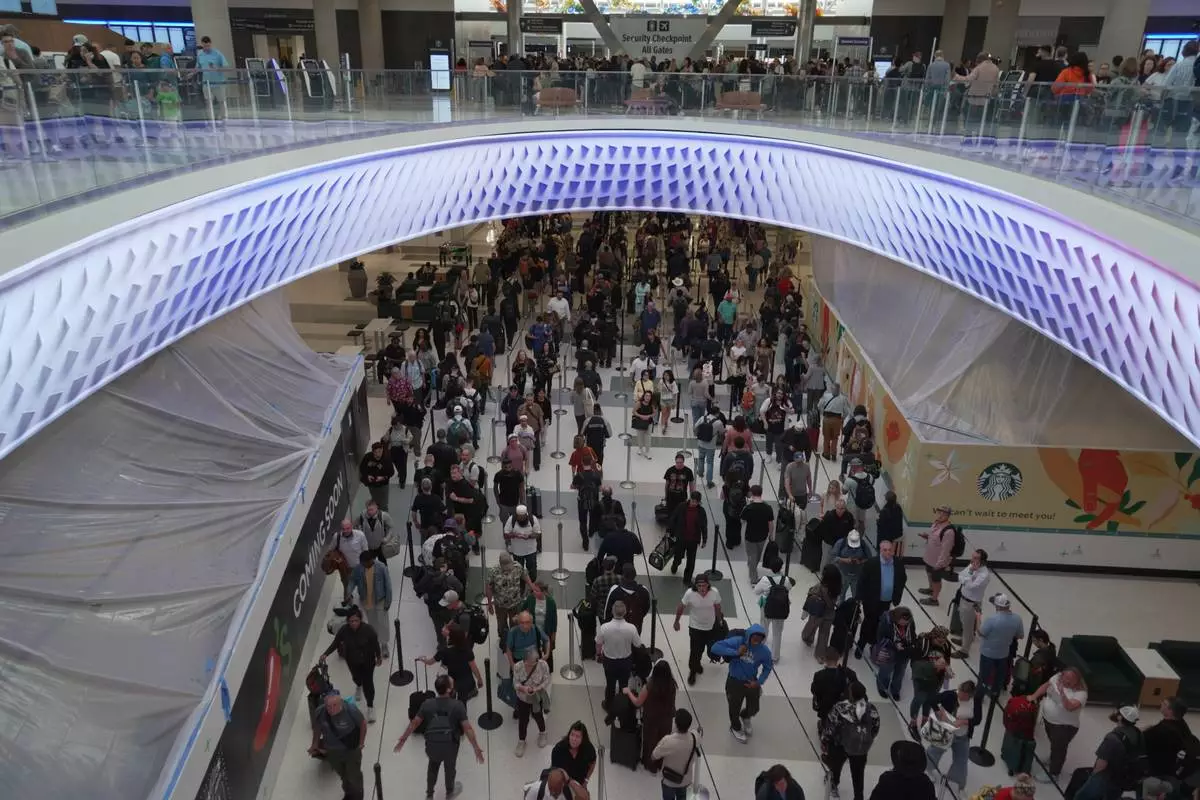
Travelers line up at a TSA checkpoint at George Bush Intercontinental Airport in Houston, Tuesday, March 24, 2026. (AP Photo/Lekan Oyekanmi)
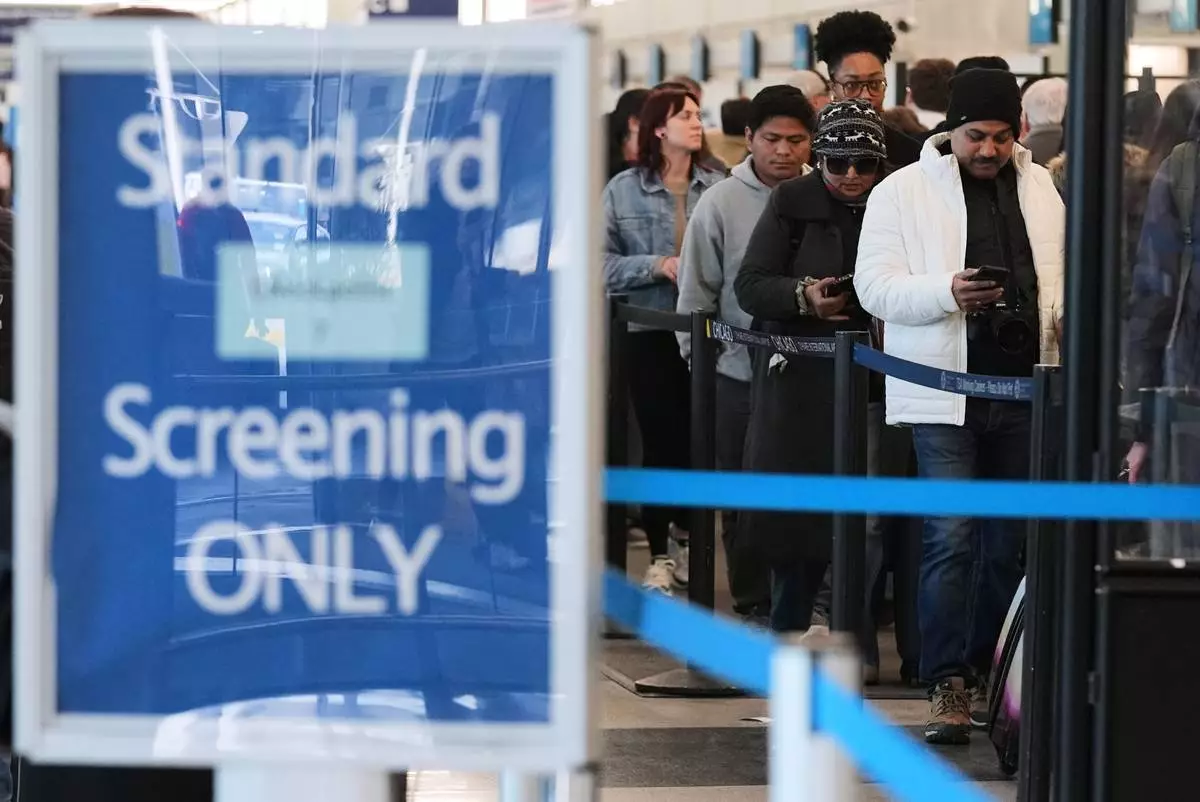
Travelers line up at a TSA checkpoint at O'Hare International Airport in Chicago, Tuesday, March 24, 2026. (AP Photo/Nam Y. Huh)
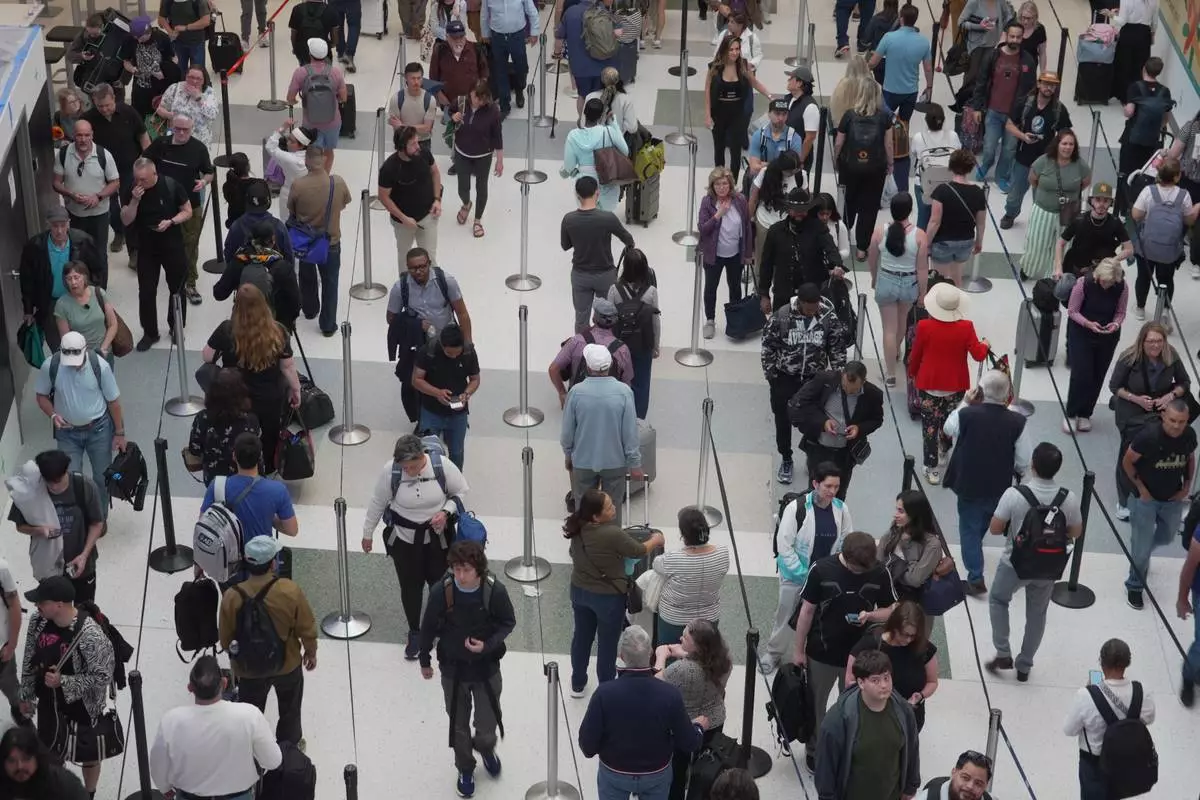
Travelers line up at a TSA checkpoint at George Bush Intercontinental Airport in Houston, Tuesday, March 24, 2026. (AP Photo/Lekan Oyekanmi)
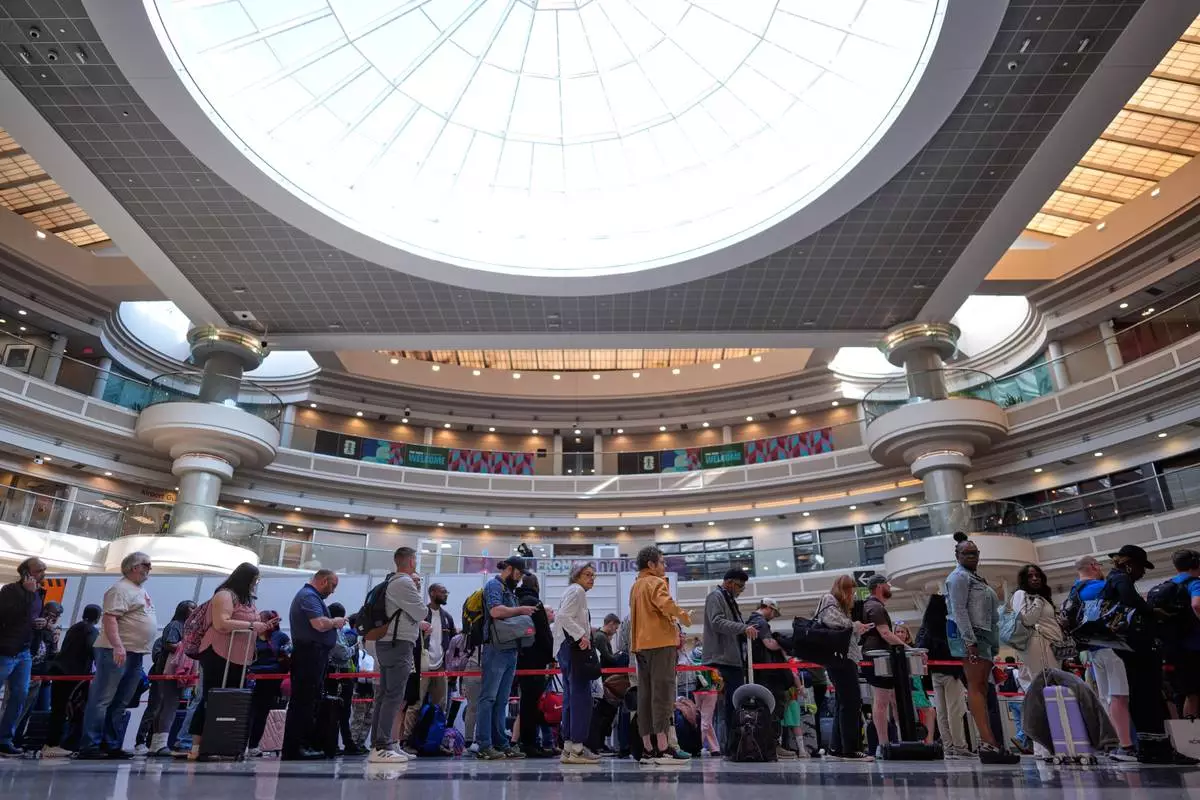
People wait in a TSA line at the Hartsfield-Jackson Atlanta International Airport, Monday, March 23, 2026, in Atlanta. (AP Photo/Mike Stewart)
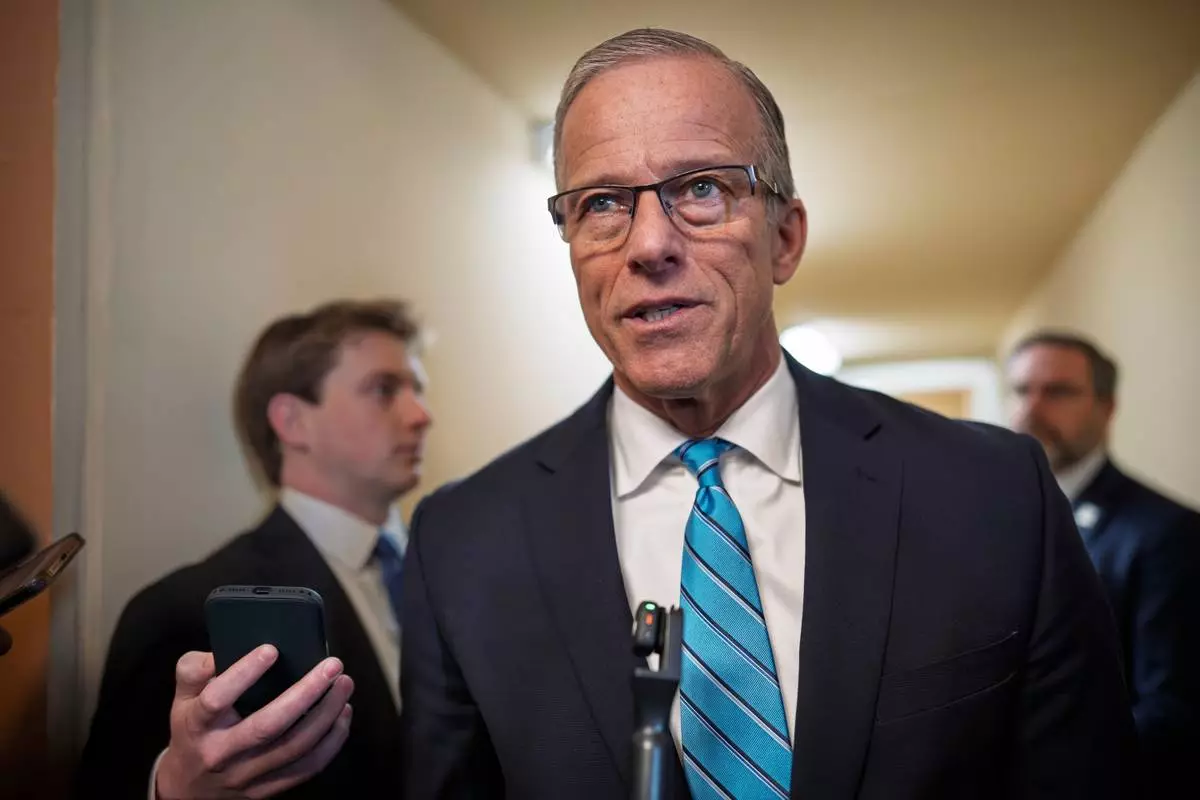
Senate Majority Leader John Thune, R-S.D., talks to reporters about a funding bill to end the shutdown of the Department of Homeland Security shutdown that began more than a month ago, at the Capitol in Washington, Monday, March 23, 2026. (AP Photo/J. Scott Applewhite)