Skip to Content Facebook Feature Image

Bastille's Story: Pen as Scalpel – Dissecting the Struggles of Contemporary Women

HK

HK

HK

Bastille's Story: Pen as Scalpel – Dissecting the Struggles of Contemporary Women

2026-03-28 09:00

At this year's Hong Kong International Literary Festival (HKILF), Thai writer Thammika Songkaeo presented her newest novel, Stamford Hospital. Published in April of 2025, the book was not only selected by Prestige as one of the women empowerment books recommended to read on International Women’s Day,  but also achieved the praise of Elle Singapore as "Dissecting motherhood, marriage, and the cost of selfhood with razor-sharp precision."

In an interview with Bastille Post, Thammika stated that she hopes to raise awareness among readers about the current plight of women through the rough patches of the protagonist, Tarisa, and the confined setting of the hospital in the novel.
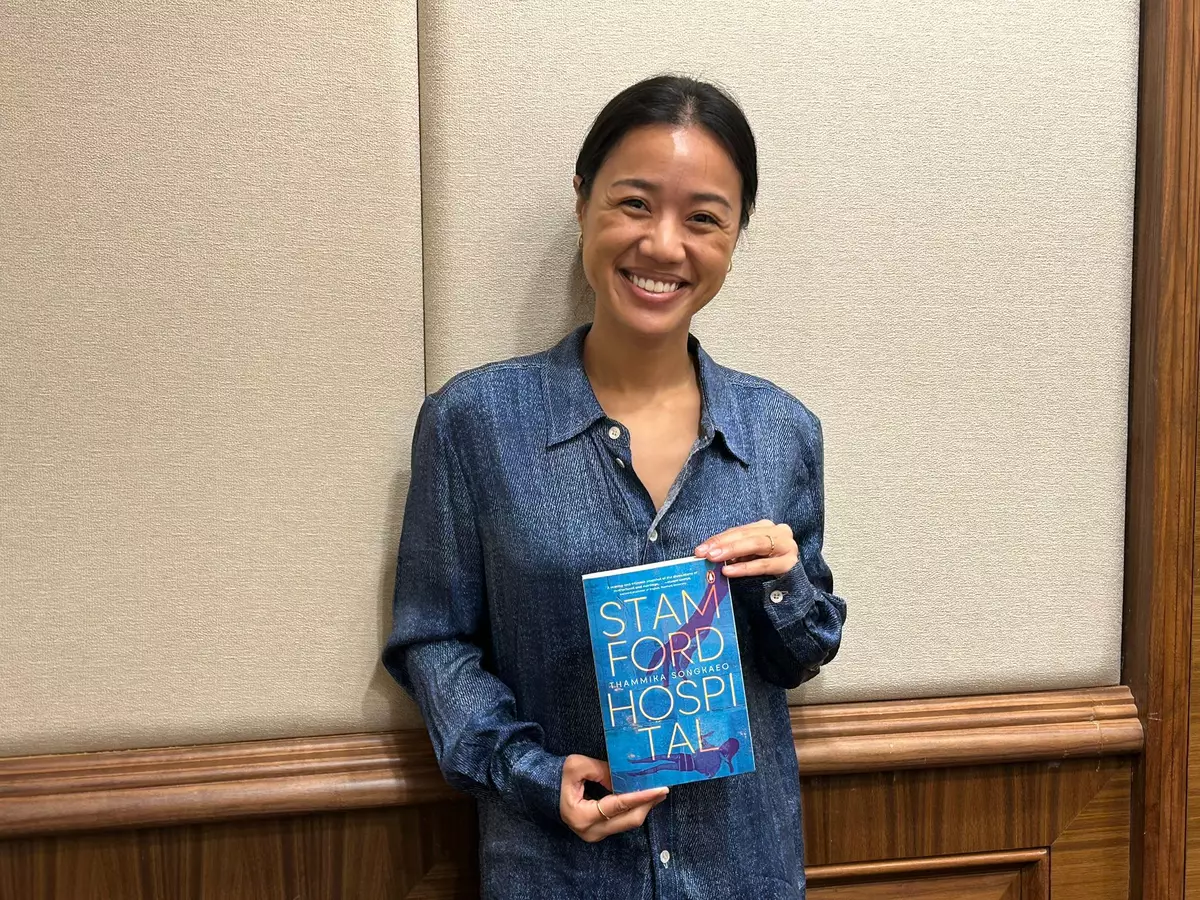
Thammika Songkaeo, Photo by Bastille Post

Thammika Songkaeo, Photo by Bastille Post

Confined Hospital Space, Bound Women's Lives

Stamford Hospital centers on the life of Tarisa. Trapped in her marriage and emotionally estranged from her husband, she shares little intimacy with him beyond the common responsibilities of maintaining the family and raising their children. Her ambitions for the future have gradually been eroded by the increasing burden of housework and childcare. Highly educated, she had once hoped to create a world of her own, but the pressures and burdens of life slowly robbed her of the freedom to pursue her dreams, making her yearn for personal space amidst the daily grind of family care.
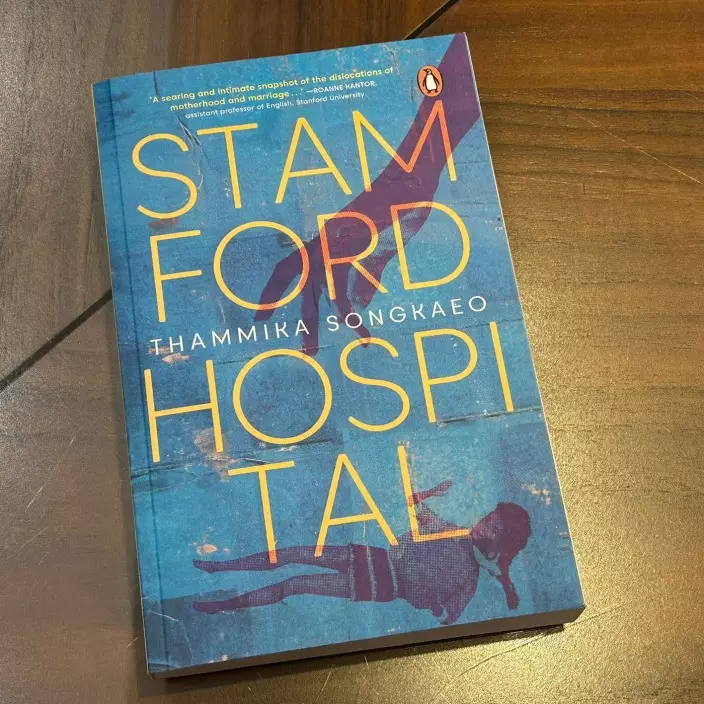
Stamford Hospital, Photo by Bastille Post

Stamford Hospital, Photo by Bastille Post

When her daughter Mia is hospitalized for a minor infection, Tarisa finally gets a brief reprieve from the constraints of motherhood, and Stamford Hospital, where the nurses tend to Mia with care, becomes a rare sanctuary for her. During Mia's hospitalization, Tarisa is no longer solely responsible for everything, enabling her to reflect on her previous life path and contemplate the meaning and value of family, kinship, and marriage to herself in the moments of burden relief.

Discussing the design of the character and setting in the novel, Thammika stated that she hopes to use the protagonist's rough patches and the confined hospital space to raise readers' awareness of the struggles faced by contemporary women.

In the story, Tarisa—despite being a well-educated woman—gradually finds herself caught between the dilemma of family and career stagnation within her marriage, feeling lost and uncertain about her future. In Thammika's view, such a protagonist setting was intended to show readers that behind the glamorous facade of women often lie untold struggles and confusion, which is now a common challenge faced by many women.

She hopes that through the character of Tarisa, female readers who share similar life experiences will feel that they are not alone in facing challenges in family and daily work. Others would also share the same situation, understand their difficulties, and stand with them in the arduous journey to find a way out of their predicaments.

As the story's setting, the hospital's confined space further highlights the oppressive nature of Tarisa's daily life. Thammika stated that as the three-day, two-night storyline unfolds within the hospital, Tarisa feels trapped in an inescapable cage, constantly confronting her inner confusion and fear, until she finally erupts with a long-suppressed struggle, reflecting on her situation within her marriage and family.

"Voice-First" Workshop: Unearthing the Unique Voice in Writing

At the HKILF this year, Thammika hosted a workshop titled "Voice-First", dedicated to helping literature enthusiasts find the unique "voice" of their own works.

Thammika at the HKILF this year, Photo source: Amara Communications

Thammika at the HKILF this year, Photo source: Amara Communications

In her view, when crafting story plots, it would be easy for everyone to come up with similar tropes. To stand out in the highly competitive literary market, the key lies in the uniqueness of the work—that is, the ability of the words to convey the author's distinct values.

Thammika suggests that when writing a story, writers can try to listen to their inner voice, infusing their own insights and reflections on life into the text, allowing the characters to speak for them and convey their perspectives. "What truly moves readers is not the twists and turns of the plot, but the unique charm of the characters." According to Thammika, the charm is inseparable from the personal qualities the author imbues in their works. After all, techniques can be learned, and plots can be imitated, but a sincere and unique heart is always a rare resource in the literary world.

PARIS (AP) — Rafael Nadal, Coco Gauff and Jessica Pegula were among those paying tribute to Associated Press tennis writer Howard Fendrich as players gathered at Roland Garros for a French Open that’s now missing one of the sport’s most-respected journalists.

Fendrich, a regular at Roland Garros and all the tennis majors since 2002, died Thursday, less than three months after being diagnosed with cancer.

The news elicited a social media outpouring that included a Friday morning post from Nadal, whose record 14 French Open victories were chronicled in rich and colorful detail by Fendrich. “Tennis loses one of its great journalists,” Nadal said.

Gauff, whose title last year at Roland Garros was her second major singles championship, opened her pre-tournament news conference with a shout-out to Fendrich, the award-winning writer who spent 24 of his 33 years with AP on the tennis beat.

“I just wanted to start this off just recognizing a deep loss that I think we all have experienced as a community with Howard,” Gauff said. “He was someone I always enjoyed having conversations with. One of my favorite faces to see in the room.”

Fendrich died Thursday at Johns Hopkins Hospital in Baltimore. He was diagnosed with cancer in February shortly after returning from Milan, where he covered his 11th Olympics. He was 55.

The Women’s Tennis Association wrote a tribute to Fendrich, recalling that “His classic opening before a question, ‘soooo, I’m curious ...’ always set a comfortable tone of kindness in interviews.”

The fifth-ranked Pegula, a member of the WTA Players’ Council, sent her condolences.

“Howard was one of the most respected journalists in our sport and someone players trusted because he always approached his work with honesty, professionalism and fairness,” she said.

Roger Federer, Billie Jean King and Patrick McEnroe, a former player and the current president of the International Tennis Hall of Fame, were among those who honored Fendrich on Thursday.

Other tributes streamed in from Fendrich’s press box colleagues. Washington-based Adam Kilgore called him “the best person to see at a game, in a press room, at a dinner after an event.” They also came from across Fendrich’s home base, where, when not covering tennis, he was a regular in press boxes at Commanders, Nationals and Capitals games.

“His contributions to and impact on sports journalism extend far beyond that of the Nationals press box,” the baseball team said. “He will be dearly missed.”

Fendrich was based in Washington and the city’s football and hockey teams — the Commanders and Capitals — also extended their condolences.

Fendrich is survived by his wife, Rosanna Maietta; his mother, Renée; his brother, Alex; and two sons, Stefano and Jordan.

AP tennis: https://apnews.com/hub/tennis

Associated Press sports reporters, from left, Howie Rumberg, Howard Fendrich, Graham Dunbar and Tim Dahlberg pose for a photo at the Winter Olympics in Pyeongchang, South Korea, on Feb. 20, 2018. (AP Photo/Howie Rumberg) CORRECTION: Dunbar, not Dunber

Associated Press sports reporters, from left, Howie Rumberg, Howard Fendrich, Graham Dunbar and Tim Dahlberg pose for a photo at the Winter Olympics in Pyeongchang, South Korea, on Feb. 20, 2018. (AP Photo/Howie Rumberg) CORRECTION: Dunbar, not Dunber

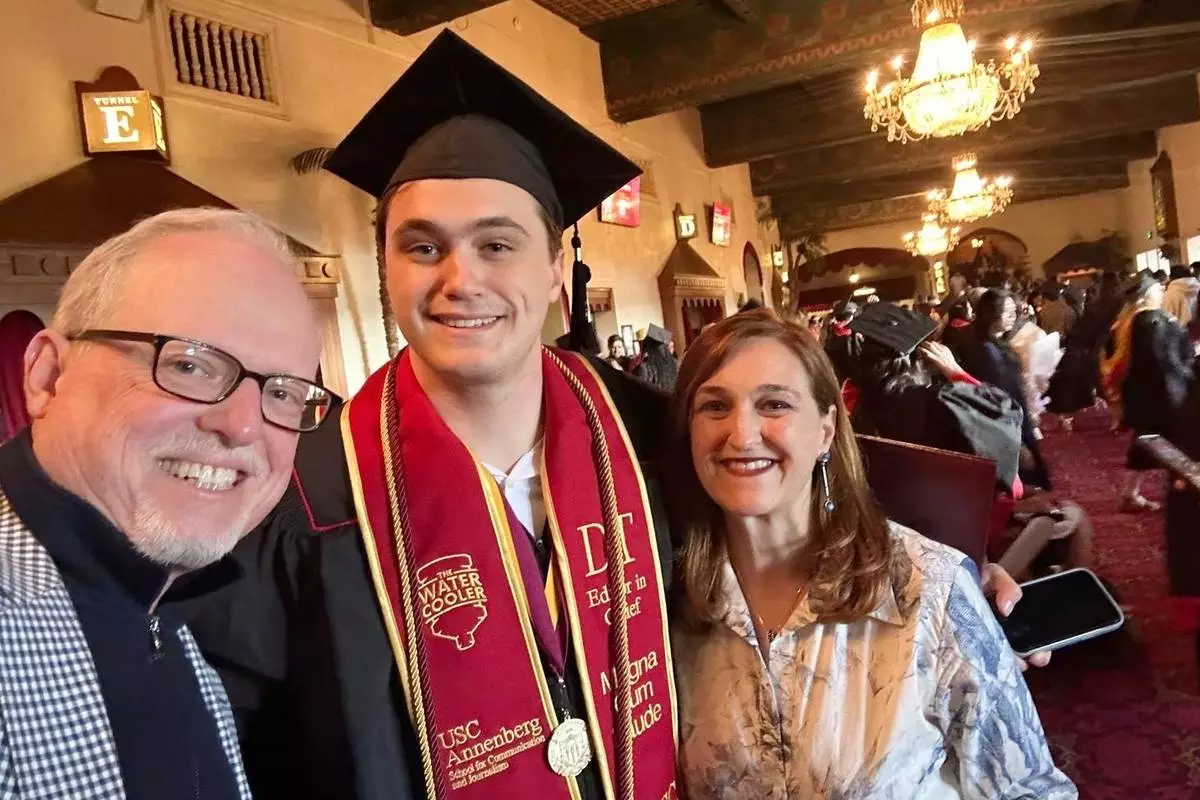
Associated Press sports writer Howard Fendrich, left, his son Stefano Fendrich and wife Rosanna Maietta pose for a selfie, May 15, 2025, in Los Angeles. (AP Photo/Howard Fendrich)

Associated Press sports writer Howard Fendrich, left, his son Stefano Fendrich and wife Rosanna Maietta pose for a selfie, May 15, 2025, in Los Angeles. (AP Photo/Howard Fendrich)

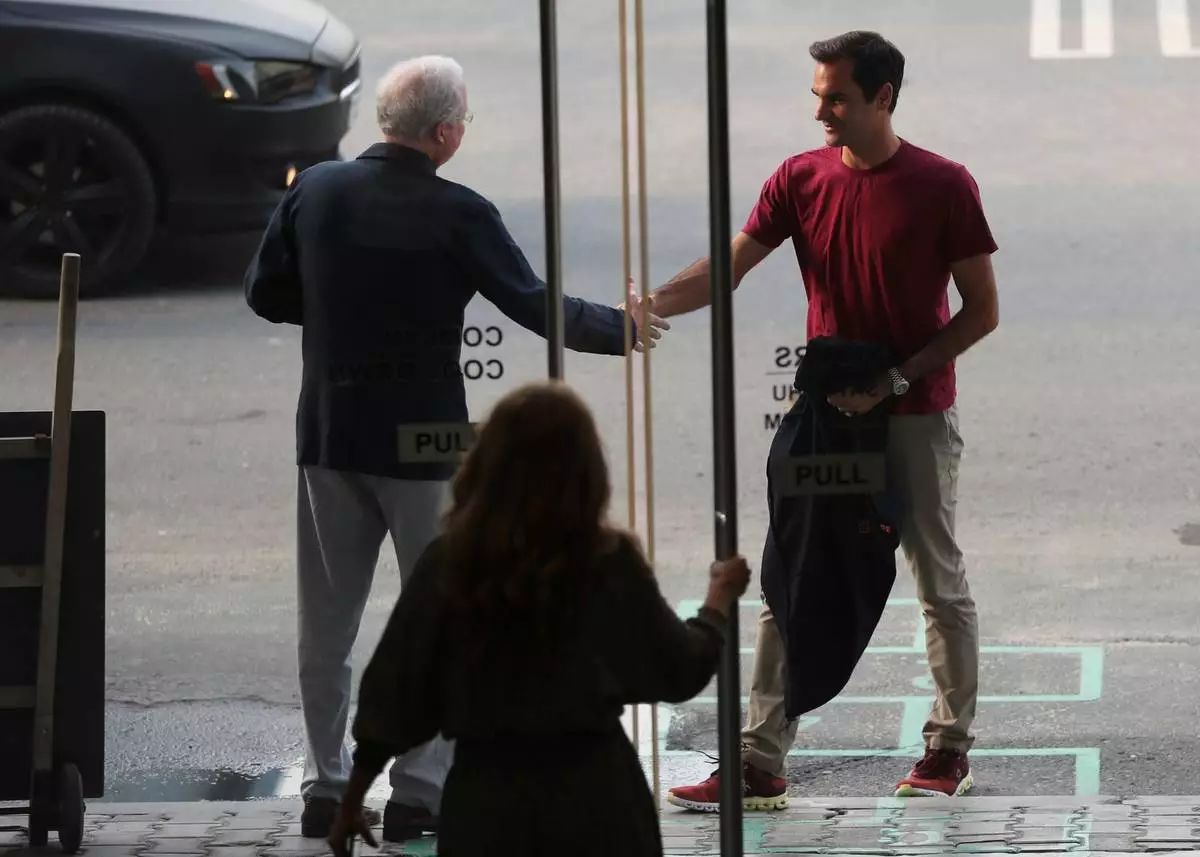
FILE - In this Sunday, Dec. 15, 2019 photo, Roger Federer, right, shakes hands with the Associated Press reporter Howard Fendrich upon his arrival for an exclusive interview in Dubai, United Arab Emirates. (AP Photo/Kamran Jebreili, File)

FILE - In this Sunday, Dec. 15, 2019 photo, Roger Federer, right, shakes hands with the Associated Press reporter Howard Fendrich upon his arrival for an exclusive interview in Dubai, United Arab Emirates. (AP Photo/Kamran Jebreili, File)

FILE - Associated Press sports writer Howard Fendrich is shown in this undated file photo. (AP Photo/File)

FILE - Associated Press sports writer Howard Fendrich is shown in this undated file photo. (AP Photo/File)

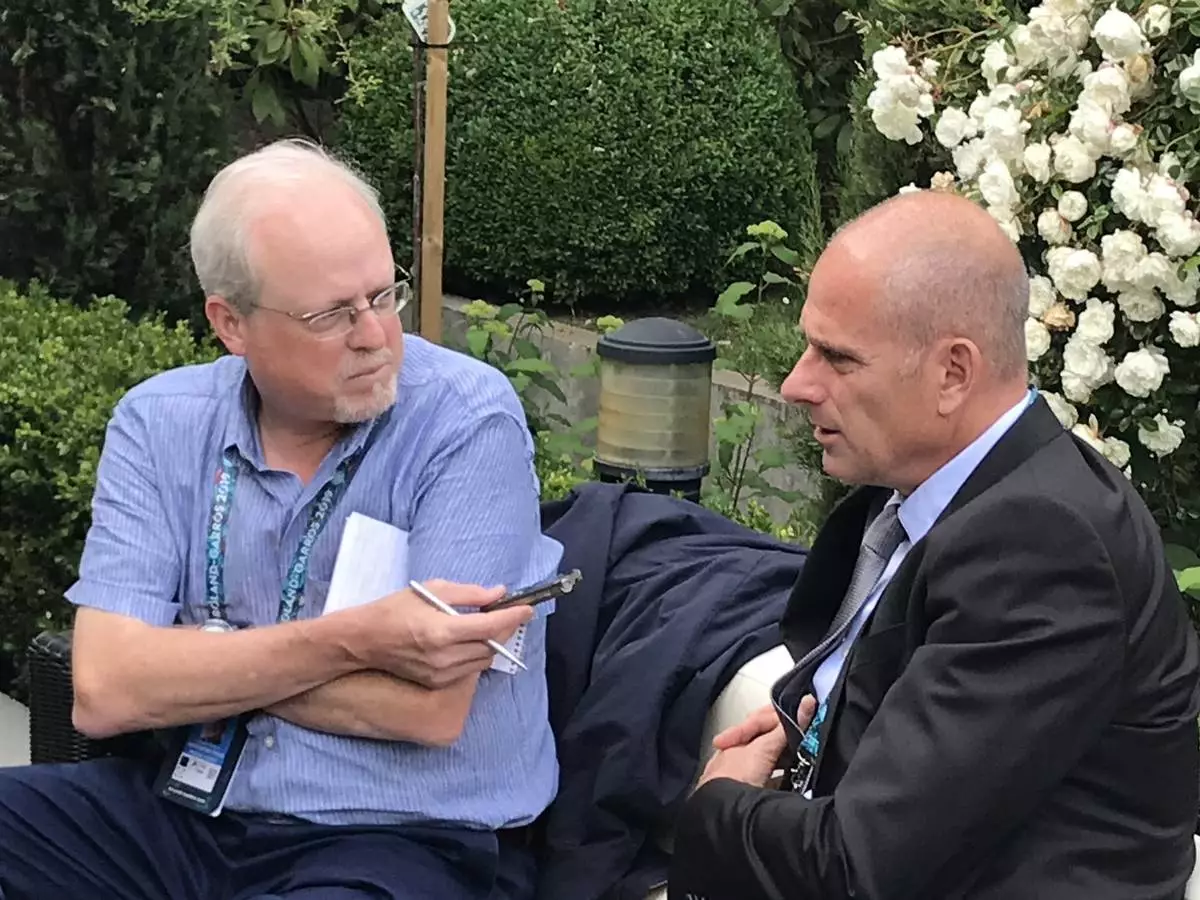
Howard Fendrich, left, Associated Press national sports writer, interviews former French tennis player Guy Forget at the 2019 French Open tennis tournament in Paris. (AP Photo/Andrew Dampf)

Howard Fendrich, left, Associated Press national sports writer, interviews former French tennis player Guy Forget at the 2019 French Open tennis tournament in Paris. (AP Photo/Andrew Dampf)

Recommended Articles