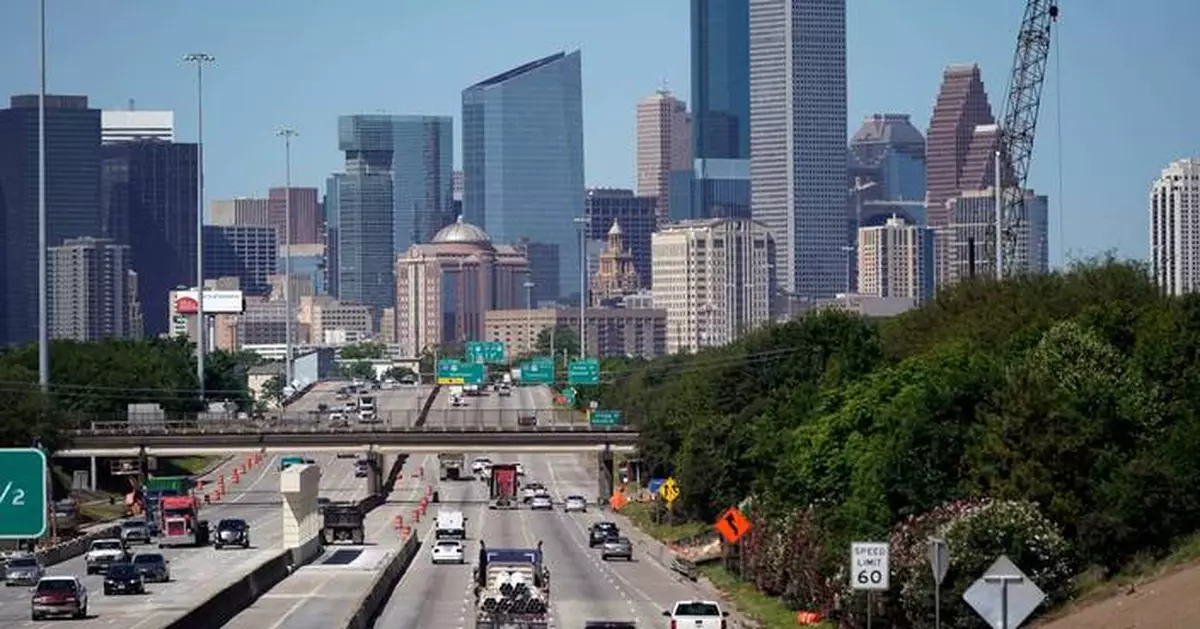
Growth rates in U.S. metro areas dropped the steepest in communities along the U.S.-Mexico border last year because of declines in immigrants while counties along Florida's Gulf Coast lost residents due to a series of hurricanes, according to new population estimates released Thursday by the U.S. Census Bureau.
The estimates showed that a majority of metro areas and counties had slower population gains last year, which the bureau attributed primarily to a slowdown in international migration, compared to the previous year when an influx of immigrants had helped urban areas recover from the COVID-19 pandemic a few years earlier.
The average growth rate for metro areas fell from 1.1% in 2024 to 0.6% in 2025.
The figures, covering one year through July 2025, reflect the initial months of President Donald Trump's second term and the beginning of his administration’s immigration crackdown, With an aging America and birth rates in the U.S. declining over the past two decades, immigration has become an important source of growth in many communities.
“With so little natural increase, migration determines whether an area grows or declines, particularly in the big metro cores that have continuous domestic out-migration and are dependent on immigration,” said Kenneth Johnson, senior demographer at the University of New Hampshire.
Three metro areas along the U.S-Mexico border stretching from Arizona to Texas had the steepest drops in population growth rates in 2025, according to the Census Bureau.
The growth rate in Laredo, Texas, dropped from 3.2% to 0.2%. It went from 3.3% to 1.4% in Yuma, Arizona, and declined from 1.2% into negative territory at -0.7% in El Centro, California. All three experienced growth in 2024 because of an influx of thousands of immigrants.
“That pattern suggests a sharper rise-and-fall effect in border regions, where international migration plays a more central role in year-to-year population change,” said Helen You, interim director of the Texas Demographic Center.
As in 2024, the top destinations for immigrants in pure numbers in 2025 were counties that are home to Houston, Miami and Los Angeles. But the drop in immigrant numbers in those counties was stark. Nine out of 10 U.S. counties had lower levels of immigration in 2025 compared to 2024, according to the Census Bureau.
Two destructive hurricanes, Helene and Milton, tore through Gulf Coast counties in Florida in fall 2024, leaving behind tens of billions of dollars in damage. The storms also caused residents to leave, according to the population estimates.
Pinellas County, which is home to St. Petersburg, lost almost 12,000 residents, the second most in the U.S., trailing only Los Angeles County, which has been losing residents all decade. Pinellas County relies on migration for growth because deaths outpace births more than in any county in the U.S.
Taylor County, a tiny community ravaged by the hurricanes in Florida's Big Bend area, had the steepest growth rate decline among U.S. counties last year, with a -2.2% drop.
But the hurricane migration wasn't limited to Florida. In the Blue Ridge Mountains, the county that is home to Asheville, North Carolina, had more than 2,000 residents leaving in the months after the remnants of Hurricane Helene destroyed homes and cut off power and communications to mountain towns.
The New York metro area slid from growing by the most people in 2024 to ranking No. 13 in 2025 because of the drop in immigrants.
Instead, two perennial growth powerhouses this decade, the Houston and Dallas-Fort Worth metro areas, were at the top of the list, followed by the Atlanta, Phoenix and Charlotte, North Carolina, metro areas.
Several midsize metros in Florida and South Carolina had the largest growth rates. Ocala, Florida, located 80 miles (129 km) northwest of Orlando and known for its horse farms, led the nation at 3.4%. It was followed by: metro Myrtle Beach, South Carolina, which has become a retirement haven; Spartanburg, South Carolina; Lakeland, Florida, located between the much larger metros of Tampa and Orlando; and Punta Gorda, Florida, about 35 miles (56.3 km) north of Fort Myers.
The far-out suburbs were top destinations among those who had moved from somewhere else in the United States.
They were led by Collin County, Texas, outside Dallas; Montgomery County, Texas, outside Houston; Pinal County, Arizona, outside Phoenix; and Pasco and Polk counties outside Tampa.
The rapid growth of far-flung exurbs is an after-effect of the COVID-19 pandemic, according to the Census Bureau. Rising housing costs drove people farther from cities, and remote work allowed many to do their jobs from home at least part of the week.
Even though New York had more people moving out than moving in, births allowed the metro area to gain more than 32,000 residents. The New York metro area led the nation in natural increase, or births outpacing deaths, followed by the Dallas-Fort Worth and Houston metros.
The metros where deaths outpaced births in the greatest numbers were Pittsburgh, Pennsylvania, and several Florida communities with large senior populations — the Sarasota, Daytona Beach and Tampa metro areas.
The two Texas metro areas topped the charts in natural increase because of their age structure and the fact that they have gained more people than anywhere in the U.S., You said.
“Decades of domestic and international in-migration have produced relatively young populations, with a large share of residents in childbearing ages, alongside comparatively smaller proportions of senior populations,” she said.
Follow Mike Schneider on the social platform Bluesky: @mikeysid.bsky.social.
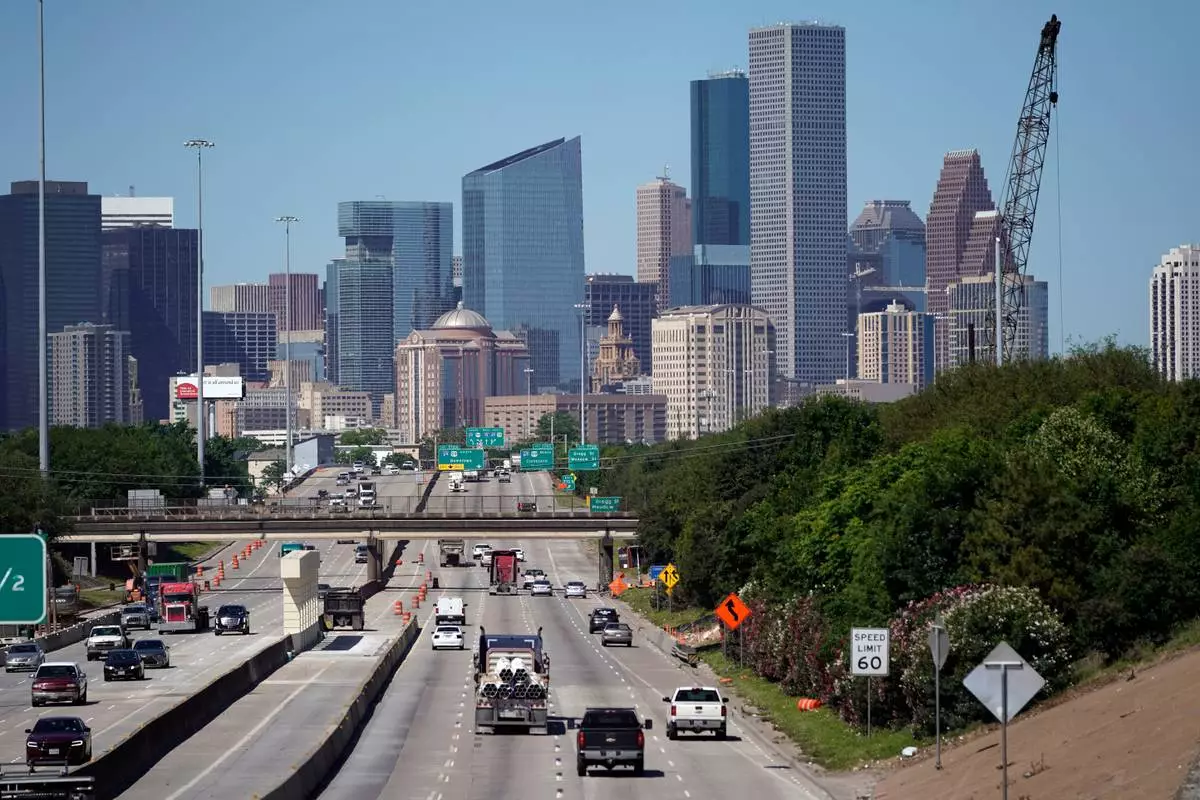
FILE - Traffic moves along Interstate 10 near downtown Houston, April 30, 2020. (AP Photo/David J. Phillip, File)
U.S. President Donald Trump said Wednesday that a deal to end the Iran war is near, after Tehran dismissed his 15-point ceasefire plan and issued its own sweeping demands to stop fighting as it launched more attacks on Israel and Gulf Arab countries.
Two officials from Pakistan described the 15-point U.S. proposal broadly, saying it included sanctions relief, a rollback of Iran’s nuclear program, limits on missiles and reopening the Strait of Hormuz, through which a fifth of the world’s oil is normally shipped.
Iran issued its own plan via state TV, which includes a halt to killings of its officials, means to make sure no other war is waged against it, reparations for the war, the end of hostilities, and Iran’s sovereignty over the Strait of Hormuz.
“No negotiations have happened with the enemy until now, and we do not plan on any negotiations,” Iran’s foreign minister later told state TV.
Trump insisted at a Republican fundraiser Wednesday night that talks were underway with Iran's leaders.
“They are negotiating, by the way, and they want to make a deal so badly, but they’re afraid to say it because they figure they’ll be killed by their own people,” Trump said.
The death toll from the war has risen to more than 1,500 people in Iran, nearly 1,100 people in Lebanon, 20 in Israel and 13 U.S. military members, as well as a number of civilians on land and sea in the Gulf region. Millions of people in Lebanon and Iran have been displaced.
Here is the latest:
Australia has temporarily restricted some Iranians from traveling to the country for fear that they would be unwilling or unable to return to their homeland because of the war.
The restrictions apply from Thursday for six months to Iranian Visitor (Subclass 600) visa holders.
These visas have been issued to more than 7,000 Iranians who intend to visit Australia for tourism, business or to see family.
“When you get a sudden conflict like has happened with Iran, who have a large number of people who’ve been issued visas who, if they applied now, would in fact not be eligible,” Immigration Minister Tony Burke told Parliament on Thursday.
Authorities will use the six months to reassess visa applicants. An unknown number will be exempt.
Activists in Iran reported heavy strikes early Thursday morning around Isfahan, a city some 330 kilometers (205 miles) south of Iran’s capital, Tehran.
The pro-reform newspaper Ham Mihan reported online about strikes in the area.
Isfahan is home to a major Iranian air base and other military sites, as well as one of the nuclear sites bombed by the United States during the 12-day war between Israel and Iran in June.
The semiofficial Fars news agency, close to the paramilitary Revolutionary Guard, described the attacks as targeting “two residential areas,” without elaborating.
Earlier, Israel’s military said it had completed “a wide-scale wave of strikes” across Iran, including in Isfahan.
A missile alert sounded on mobile phones in Dubai, United Arab Emirates, on Thursday morning.
Saudi Arabia’s Defense Ministry said it intercepted multiple drones over its oil-rich Eastern Province on Thursday morning.
Kuwait reported it was working to intercept incoming Iranian fire early Thursday morning.
Bahrain sounded its missile alert sirens early Thursday morning.
The United Arab Emirates air defenses early Thursday also worked to intercept incoming fire.
U.S. forces have hit more than 10,000 targets so far in the Iran war, the head of the American military’s Central Command said.
U.S. Navy Adm. Brad Cooper made the comments in a video released early Thursday by Central Command.
“If you combine what we’ve accomplished with the success of our Israeli ally, together, we have struck thousands more,” Cooper said. “Our precision strikes have overwhelmed Iranian air defenses and our combat flights are having tangible effects.”
Cooper added that the U.S. has destroyed 92% of “the Iranian navy’s largest vessels.”
“They’ve now lost the ability to meaningly project naval power and influence around the region and around the world,” Cooper said.
Iran maintains its chokehold on the Strait of Hormuz, the narrow mouth of the Persian Gulf, through drone and missile attacks on shipping, however.
Cooper also said the U.S. has struck over two-thirds of Iran’s munitions plants.
“Today, we have damaged or destroyed over two-thirds of Iran’s missile, drone and naval production facilities and shipyards — and we’re not done yet,” he said. “We are on a path to completely eliminate Iran’s wider military manufacturing apparatus.”
Satellite photos analyzed by The Associated Press, though delayed by two weeks by Planet Labs PBC, have shown Israeli and U.S. strikes targeting shipyards and missile facilities.
Iran has not acknowledged any of its materiel losses through the war.
German Defense Minister Boris Pistorius described the Iran war as an economic “catastrophe” and said Germany did not want to get “sucked into” the conflict.
Pistorius said on Thursday Germany was ready to help secure any peace once that was achieved and appealed for a ceasefire as soon as possible.
“To make it crystal clear, this war is a catastrophe for the world’s economies,” Pistorius told reporters at the Australian Parliament House.
“From the beginning on, we have not been consulted before. Nobody asked us before. It’s not our war and therefore we don’t want to get sucked into that war,” Pistorius added.
Pistorius addressed the media in the national capital Canberra following a meeting with his Australian counterpart Richard Marles.
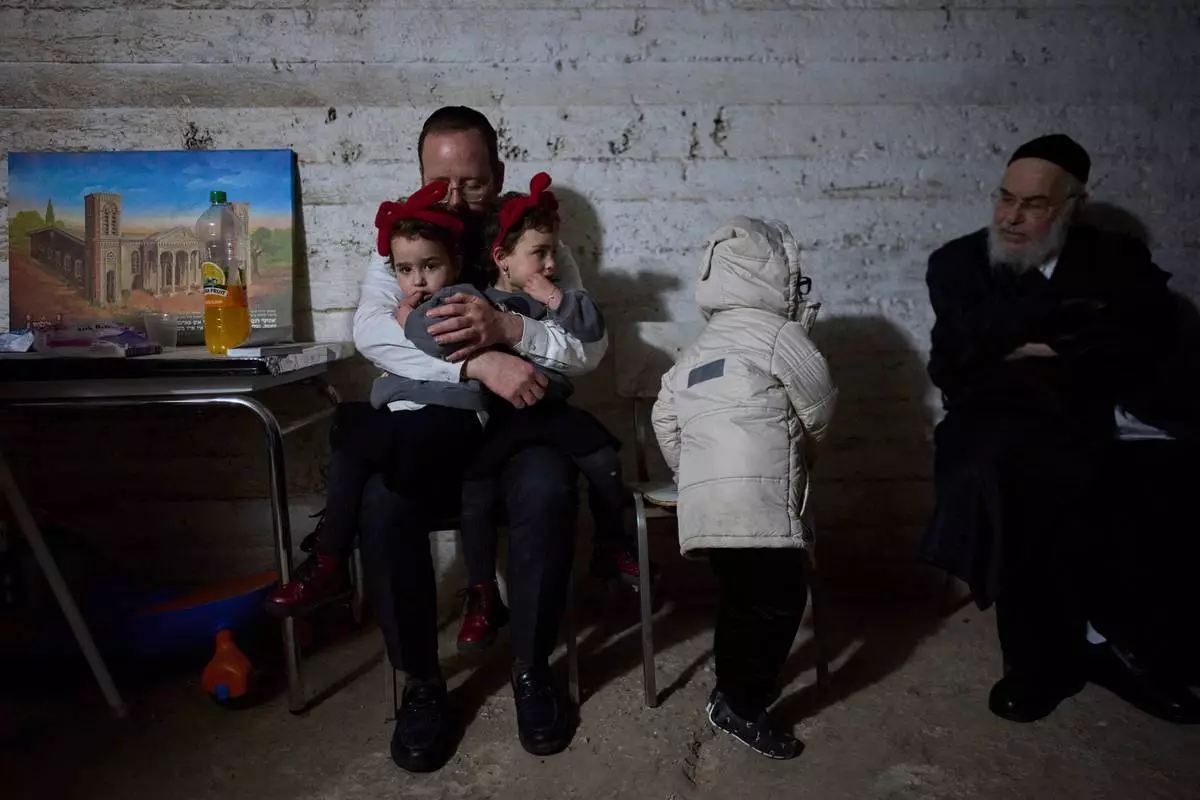
People take cover in a bomb shelter as air raid sirens warn of incoming Iranian missile strikes in Bnei Brak, Israel, Wednesday, March 25, 2026. (AP Photo/Ohad Zwigenberg)
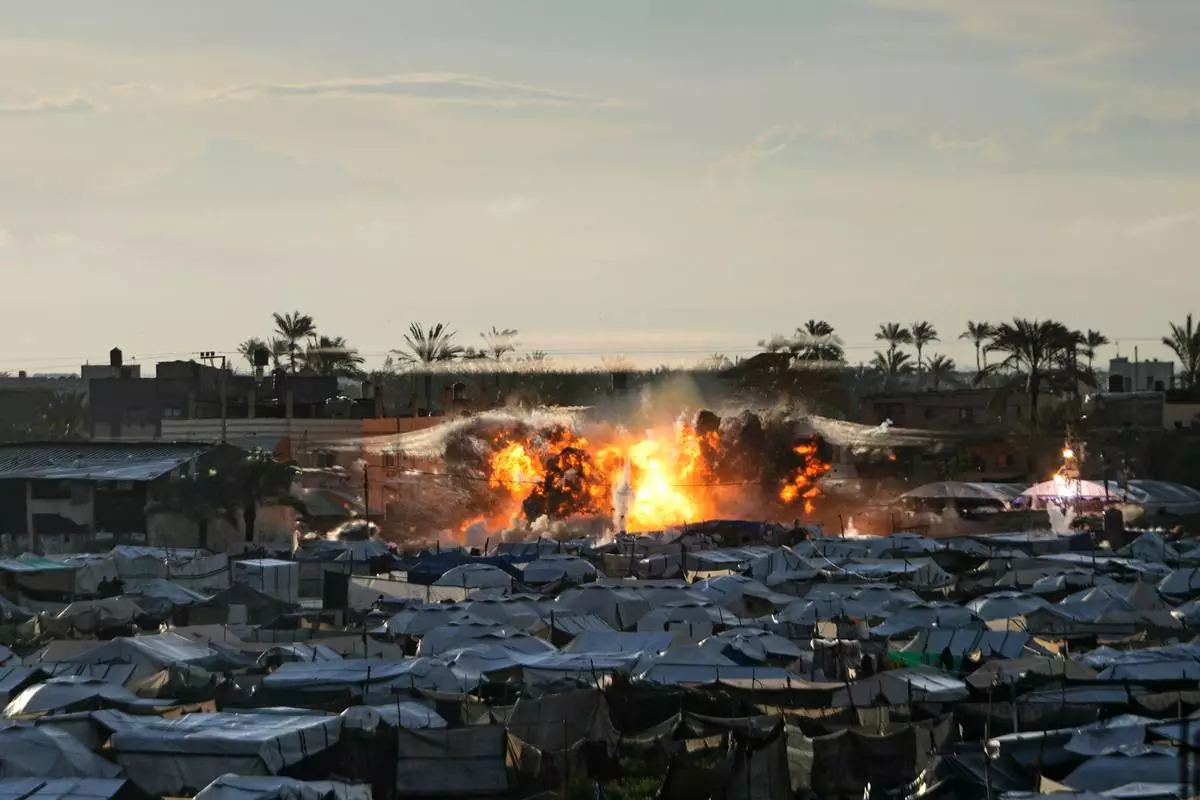
Smoke and flames rise following an Israeli military strike on a target in Deir al-Balah, central Gaza Strip, Wednesday, March, 25, 2026.(AP Photo/Abdel Kareem Hana)

Members of the displaced Abd el-Hajj family, and two of their cousins, right, who fled Israeli strikes in southern Lebanon, sit inside a tent used as a shelter in Beirut, Lebanon, Wednesday, March 25, 2026. (AP Photo/Emilio Morenatti)
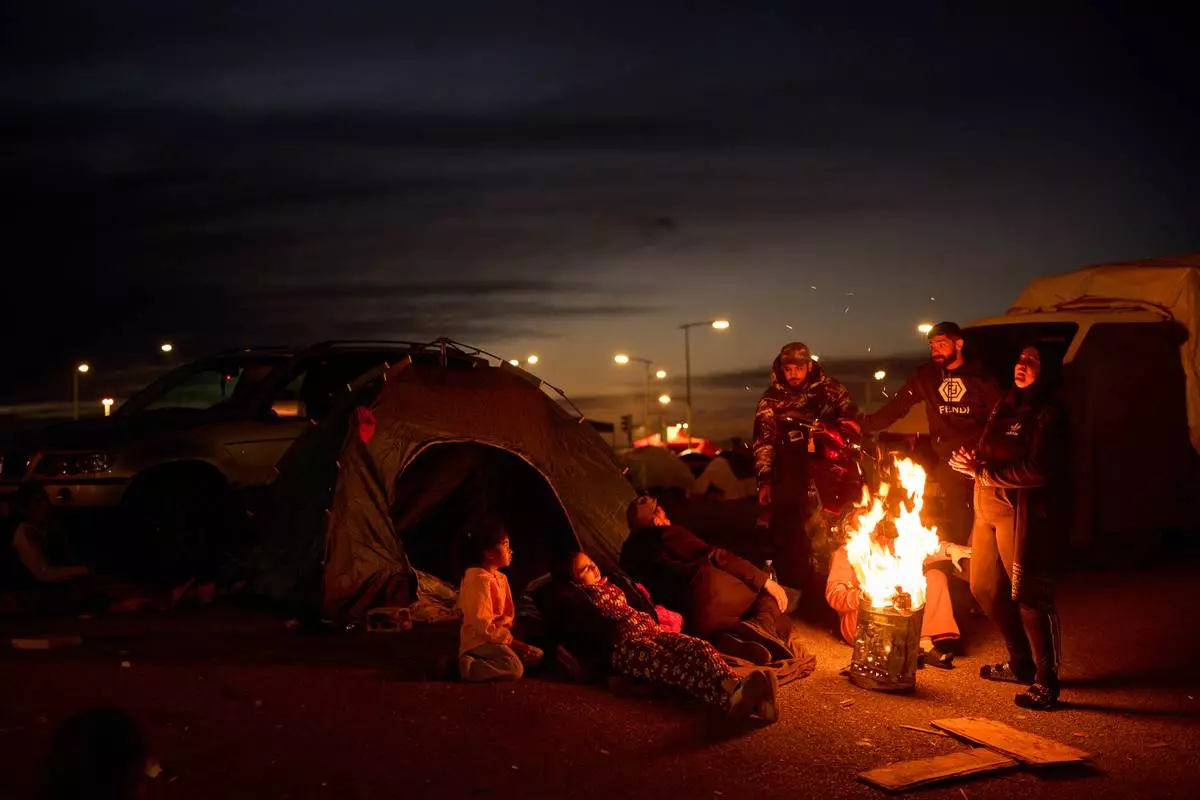
Members of a family, who fled Israeli strikes in southern Lebanon, sit around a bonfire outside a tent used as a shelter in Beirut, Lebanon, Wednesday, March 25, 2026. (AP Photo/Emilio Morenatti)

Pro-government supporters chant slogans and wave Iranian flags during a rally, in a square in western Tehran, Iran, Wednesday, March 25, 2026. (AP Photo/Vahid Salemi)