ZAGREB, Croatia--(BUSINESS WIRE)--Mar 26, 2026--
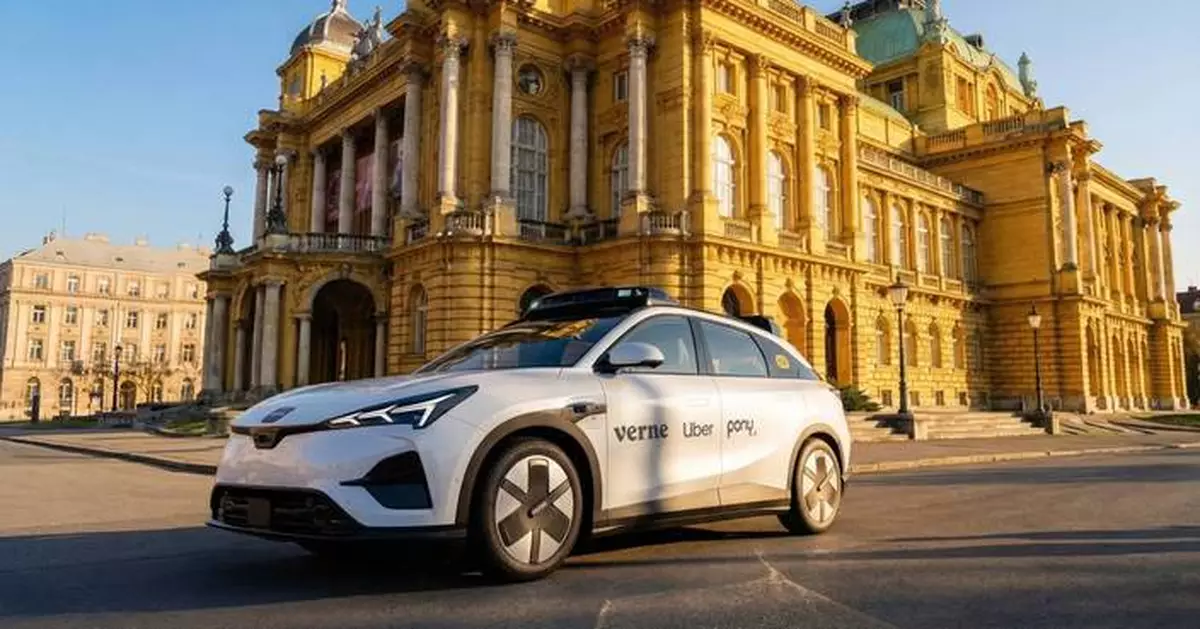
Verne, Pony AI Inc. (“Pony.ai”) (NASDAQ: PONY; HKEX: 2026), a global leader in the large-scale commercialization of autonomous driving technology, and Uber Technologies, Inc. (NYSE: UBER), today announced a strategic partnership to launch the first commercial robotaxi service in Europe, beginning in Zagreb soon, with initial deployment work already underway, including public-road validation.
This press release features multimedia. View the full release here: https://www.businesswire.com/news/home/20260326938590/en/
The three companies plan to collaborate on the deployment of a commercial robotaxi service, combining Pony.ai’s autonomous driving system, Uber’s global mobility platform, and Verne’s service ecosystem and operational framework. Under this model, Pony.ai will provide its autonomous driving solution; Verne will act as fleet owner and service operator; and Uber will integrate the service into its global ride-hailing network, complementing Verne’s own customer-facing platform. Together, the companies aim to build a scalable path toward commercial robotaxi services in Zagreb and, over time, potentially into additional European cities and other markets, with plans to scale to a fleet of thousands of robotaxis over the next few years.
As part of this collaboration, the companies have already begun on-road testing in Croatia’s capital, Zagreb, using Pony.ai’s Gen-7 autonomous driving system, deployed on the Arcfox Alpha T5 Robotaxi. With preparations for fare-charging services underway, Zagreb is emerging as the first market for commercial robotaxi service in Europe.
Verne will lead the process of ensuring market readiness and obtaining European regulatory approval for these launches, while coordinating the deployment of Pony.ai’s robotaxis across both Verne and Uber’s networks. This approach ensures consistent performance, safety, and experience, and establishes a scalable framework for expansion into additional markets. As part of the partnership, Uber intends to invest in Verne and support future expansion as a strategic partner.
“Partnering with Uber and Verne represents an important milestone as we continue to expand autonomous mobility globally,” said Dr. James Peng, Founder and CEO of Pony.ai. “In China, our Gen-7 has achieved meaningful commercial scale, including unit economics breakeven in Guangzhou and Shenzhen, demonstrating the readiness of our technology and business model. By leveraging this experience, we are well-positioned to accelerate commercialization internationally, combining our technology with Uber’s global platform and Verne’s role in enabling multi-market deployment, to build a scalable and sustainable autonomous mobility ecosystem.”
“Europe needs autonomous mobility that can move from testing to a real service,” said Marko Pejkovic, CEO of Verne. “At Verne, we are bringing together the technology, platform, and operational capabilities required to make this a reality, starting in Zagreb before expanding to new markets.”
“Through a strong ecosystem of partnerships, autonomous mobility can both scale globally and more effectively,” said Dara Khosrowshahi, CEO of Uber. “By bringing together Pony.ai’s proven autonomous driving technology, Verne’s operational and market expertise, and Uber’s global platform, we’re taking an important step toward making autonomous ride-hailing available to more riders in more places.”
About Pony AI Inc.
Pony AI Inc. is a global leader in achieving large-scale commercialization of autonomous mobility. Leveraging its vehicle-agnostic Virtual Driver technology, a full-stack autonomous driving technology that seamlessly integrates Pony.ai's proprietary software, hardware, and services, Pony.ai is developing a commercially viable and sustainable business model that enables the mass production and deployment of vehicles across transportation use cases. Founded in 2016, Pony.ai has expanded its presence across China, Europe, East Asia, the Middle East and other regions, ensuring widespread accessibility to its advanced technology.
About Verne
We are named after Jules Verne, who imagined journeys enabled by technologies long before they existed. Verne is building the operational layer for autonomous mobility in Europe and beyond. Since 2019, we’ve worked on deploying autonomous ride hailing in complex urban environments through operations, integration, and regulatory enablement, making it part of everyday life. At the core, we design how it works and how it feels, keeping the human in mind.
About Uber Technologies, Inc.
Uber's mission is to create opportunity through movement. We started in 2010 to solve a simple problem: how do you get access to a ride at the touch of a button? More than 72 billion trips later, we're building products to get people closer to where they want to be. By changing how people, food, and things move through cities, Uber is a platform that opens up the world to new possibilities.
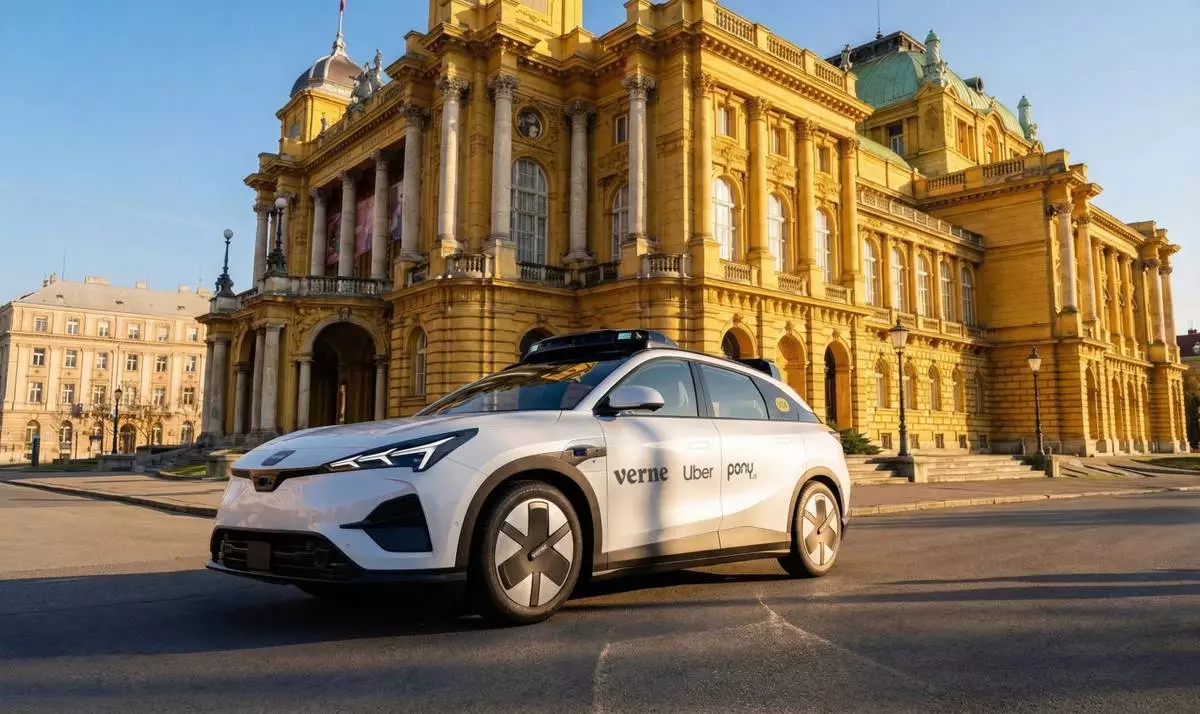
Uber, Pony.ai, and Verne partner to launch Europe’s first commercial Robotaxi service, beginning soon in Zagreb
The World Cup final is finally here, and it's going to stoppage time. Lionel Messi — the most prolific goal scorer in the tournament’s history — and defending champion Argentina are taking on Spain’s defensive juggernaut in East Rutherford, New Jersey.
Follow along for key moments, analysis and highlights.
It looked like Spain had scored in extra time, when Nico Williams finally put the ball into Argentina’s net. But the referee ruled that Mikel Merino stepped on one of Nicolás Otamendi’s feet prior to the goal, prompting a foul call.
Three previous World Cup finals were scoreless after 90 minutes of regulation time: Brazil against Italy in 1994, Spain against the Netherlands in 2010 and Germany against Argentina in 2014. Only the 1994 final remained scoreless after extra time, and Brazil won the penalty shootout.
Argentina and Spain are scoreless after regulation. Spain has been the dominant side but has yet to find its way past Argentina goalkeeper Emiliano Martinez.
Now comes two 15-minute periods of extra time. If the game is still undecided, it will go to penalty kicks.
Argentina won the 2022 World Cup on penalty kicks against France. Spain’s 2010 title came on a goal in the 116th minute. Argentina is down to 10 players after a late red card to Enzo Fernández.
Argentina was down to 10 men after Enzo Fernández was shown a yellow card in stoppage time, his second of the game. That means an automatic red card and ejection. Fernández had scored the tying goal in Argentina’s semifinal win over England.
Spain and Argentina have reached stoppage time in the World Cup final that remains scoreless. There are four minutes on the board. If neither team scores, there will be 30 minutes of extra time in two 15-minute increments.
Midfielder Enzo Fernández was upset that he didn’t get a foul call and was booked for dissent with the referee.
Spain’s leading World Cup scorer was subbed out after a missed opportunity.
Coach Luis de la Fuente took out Mikel Oyarzabal a few minutes after Oyarzabal made a nice pass to Fabián Ruiz inside Argentina’s box but then stopped running. Had Oyarzabal followed his pass, Ruiz had laid it off for what would have been a good scoring opportunity.
Oyarzabal scored from the penalty spot against France in the semifinals, his fifth goal of the tournament.
Spain putting Nico Williams and Mikel Merino into the game adds some potential scoring punch. Merino has scored two late go-ahead goals in this tournament.
Williams is on for midfielder Álex Baena, and Merino is on for midfielder Dani Olmo.
After a series of corner kicks for Spain, Rodrigo De Paul got a header on net, only to be denied by Argentina goalkeeper Emiliano Martínez in the 67th minute. The second-half hydration break followed with the score still 0-0.
After the break, Argentina forward Giuliano Simeone exited for defender Rodrigo De Paul and defender Facundo Medina was subbed out for defender Cristian Romero in 70th minute.
Mikel Oyarzabal, who scored in the semifinal against France, has been replaced by Ferran Torres. And Fabián Ruiz came out for Pedri. The chess match is taking shape as the teams try to break a scoreless draw. Argentina has yet to take a shot.
Another sub for Argentina in the 58th minute. Defender Nahuel Molina is on for defender Gonzalo Montiel. That’s the third of five substitutions available to coach Lionel Scaloni and it comes as Spain continues to press the attack in Argentina’s end.
Leandro Paredes, who just came on at the start of the second half, was shown a yellow card in the 52nd minute. It came after a testy confrontation and a shove on Spain’s Dani Olmo while a Spain player was down on the field.
There were just three total shots in the first half. That’s the fewest in the first half of a World Cup final since records are available dating to 1966, according to Opta. Argentina became the second team with no shots in the opening half of a World Cup final since the records started, after France in 2022.
Midfielder Leandro Paredes is on for forward Nico González to start the second half. That’s two subs now for Argentina. It has three left.
The second half of the World Cup final has begun after a break of a little over 27 minutes. Argentina and Spain remain scoreless.
Argentina coach Lionel Scaloni has some halftime adjustments he could make after Spain controlled roughly 65% of the possession and had three shots on net and another scoring chance.
Giving Nicolás Tagliafico some help might be a good start after the defender struggled to stay in front of and contain Lamine Yamal, the 19-year-old who many think will eventually supplant Lionel Messi as the world’s best player. Argentina has zero shots of any kind, so generating more offense is also on the docket.
The longer-than-usual halftime came up at Spain’s news conference on Friday. Coach Luis de la Fuente brought up how he talked to players and staff about all the peculiarities of the tournament and how they would not be affected.
“Everyone’s proud of being here,” de la Fuente said. “Everything that we consider to be strange or odd nowadays — hydration breaks, this 30-minute halftime — maybe within 30 years will become normality. Maybe football is developing that way. We don’t know. It is what it is. This is the situation we have. We need to adapt, and we need to accept those things that you cannot change. We can’t change that, so we’ll have to enjoy it.”
The song from Shakira and Burna Boy has played before all 104 kickoffs at the World Cup. The duo, who also performed at the opening ceremony in Mexico, performed it live during the halftime show.
Played in by an homage to Norway’s rowing tradition, BTS performed “Dynamite.” Up next, Jason Sudeikis and Brendan Hunt in character as Ted Lasso and Coach Beard hyped up Justin Bieber, who sang “Everything Hallelujah” with an acoustic guitar.
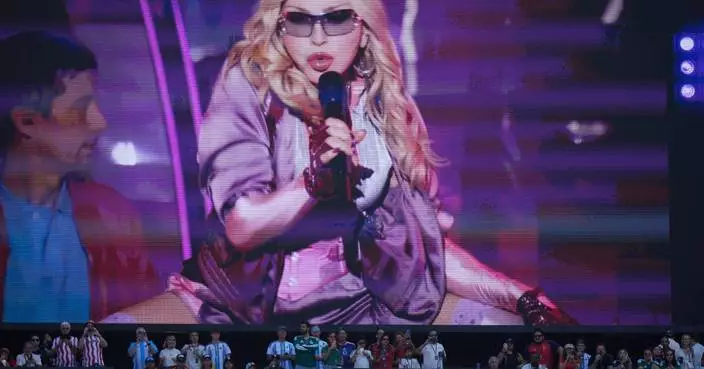
The first halftime show at a World Cup final started with Madonna flanked by former Brazil stars Ronaldo and Ronaldinho.
They gave way to a rendition of The White Stripes’ “Seven Nation Army,” performed by several Muppets and an orchestra conducted by Gustavo Dudamel.
Spain has controlled the ball and the tempo, and has put the clamps on Argentina and Lionel Messi. The 39-year-old star has had few creative chances on the ball.
Argentina may feel lucky to not be down a goal. Goalkeeper Emiliano Martínez made two saves for Argentina. Spain’s Lamine Yamal had the best chance for a goal in the opening minutes.
Argentina has already made a substitution, with Nicolás Otamendi coming on for defender Lisandro Martínez just before halftime.
Minutes after getting a yellow card, Lisandro Martínez is out of the game because of an injury. Argentina made the substitution late in the first half, bringing in experienced defender Nicolas Otamendi.
Argentina’s Lisandro Martínez received the game’s first yellow card for a late tackle of Mikel Oyarzabal near midfield in the 41st minute.
With Argentina in the attacking half of the field for one of just a few times so far, its fans started singing again. The joy was short-lived, as Spain quickly recovered and went the other way.
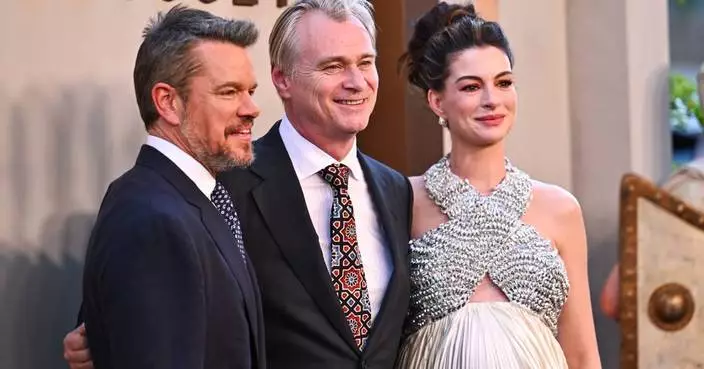
Matt Damon was in the stadium on a weekend when his film “The Odyssey” opened with a colossal global box office total of $264.1 million.
He was with his wife Luciana Damon, who was clad in the colors of her native Argentina.
Will Ferrell, Pharrell Williams, Mick Jagger and Adrien Brody were among the other stars in the crowd.
The match reached the first-half hydration break past the 23-minute mark, with no goals from Argentina or Spain. The Argentina fans who were loud and rambunctious before the game have been quieted a bit by Spain controlling much of the possession and having two corner kicks. Lionel Messi has touched the ball just six times.
With the exception of a few plays, Spain is dominating. Lionel Messi got taken down and took a free kick for Argentina, but this has been the Lamine Yamal show early on. The 19-year-old budding star put a shot on goal and created another scoring chance.
The World Cup trophy was shown to President Donald Trump as he watched the game in a suite. Video footage showed Trump smiling and patting the gold trophy as someone held it up to him.
It’s not his first time seeing the trophy. FIFA president Gianni Infantino brought it to the Oval Office during a White House visit last year.
Argentina goalkeeper Emiliano Martínez turning aside Spain’s Lamine Yamal in the fifth minute happened right in front of the biggest contingent of Argentina fans, who make up at least 70% of the crowd. The back-and-forth cheering and singing from Argentina and Spain fans has stopped only for yells and groans for fouls and that save.
Spanish Brass, a horn quintet that has played since 1989, performed the Spanish national anthem, known as “La Marcha Real.”
Argentine pop singer Maria Becerra sang her nation’s anthem with a loud sing-along accompaniment from the audience.
Other than the opening ceremonies in each host country, the national anthems before kickoff have been piped in, with players and fans supplying the lyrics. For the final, the anthems went live.
The match is underway. Argentina and 39-year-old Lionel Messi are facing Spain and 19-year-old Lamine Yamal to decide the World Cup champion.
British pop singer Robbie Williams performed his World Cup-themed anthem “Desire,” wearing a blue bedazzled track suit. He was joined by Pussycat Dolls member Nicole Scherzinger and Italian singer Laura Pausini.
Tom Cruise followed them with a speech. He wore a polo shirt and jeans.
“Today only two teams remain, España! y Argentina!” Cruise said. “Let us celebrate a tournament that brought the world together."
World Cup fans were strongly urged not to walk to MetLife Stadium. Some did it anyway.
Videos being widely shared on social media showed groups of fans dashing across a multi-lane highway in between speeding cars near the venue in East Rutherford, New Jersey.
The stadium is located across the Hudson River from Manhattan in a marshland known as the Meadowlands that is largely inaccessible to pedestrians.
World Cup organizers advised those attending matches not to attempt walking to the stadium. Fans were told to use mass transit, including special shuttle buses and trains.
You’ve seen them at every match. They walk onto the field before the game, often holding hands with some of the biggest stars in the sport like Argentina’s Lionel Messi and Spain’s Lamine Yamal.
The tradition has been an official part of the World Cup since 2002 when FIFA partnered with UNICEF to promote children’s rights to healthy recreation and quality education.
When the program was launched, FIFA said the children on the pitch are supposed to remind soccer enthusiasts they have a major role to play in building the world for future generations.
The children at the matches in the U.S. were chosen through a partnership between sponsor Quaker Oats and Common Goal, a collective of soccer-based community organizations across the country.
President Donald Trump was shown on video screens at the stadium, prompting boos from fans in attendance. Trump appeared at the end of the U.S. national anthem.
Jennifer Hudson sang the U.S. national anthem. The Emmy, Grammy, Oscar and Tony winner wore a white suit with red, white and blue trim. She stood in front of a bank of flags of the world, singing a cappella at first before she was joined by a brass band.
Tickets to the World Cup final, which were selling for tens of thousands of dollars, dropped to as low as $2,334.50 in the hours before the game on FIFA’s resale site. FIFA still had list price tickets on sale the morning of the game for $10,990.
Argentina is the defending champion and has Lionel Messi, but Spain is the favorite to lift the World Cup trophy at -165. That means bettors would have to risk $165 to win $100. Anyone who likes Argentina to win in regulation time can get it at 5-2 odds.
The U.S. president this week called the 2026 World Cup “the most successful sports even, maybe in the history of the world,” heading into its final weekend.
Mexico President Claudia Sheinbaum, whose country was co-host of the tournament with the U.S. and Canada, said she will also attend the final at Trump’s invitation.
Sheinbaum did not attend the World Cup’s opening match in Mexico City, when her national team beat South Africa 2-0. Instead, she gave her ticket to a young Indigenous woman.
Spain’s King Felipe VI is also expected to attend. Argentine President Javier Milei said he won’t attend because of superstition, and will watch the match from home.
Players are on the field for pregame warmups, and it’s clear who has the crowd advantage. Spain got loud applause when La Roja got introduced. Then it was thunderous applause when Lionel Messi and his Argentina teammates ran out of the tunnel. Most of the lower bowl is full with more than a half-hour till kickoff.
Donald Trump has a message for FIFA President Gianni Infantino: Bring the World Cup back to the U.S.
“I had a great idea for Gianni: You have to do two countries. Announce us again next time, and then announce another country after that. It’ll take out some of the anger and the shock,” Trump said on Fox Sports. “I think it’s a great idea. Based on the numbers, we will be requesting it again immediately. ... We have to do this again, and we have to do it while I’m around. You hear that, Gianni?”
The presidential helicopter, Marine One, flew over the stadium hosting the World Cup final, heralding the arrival of President Donald Trump.
The flyover of MetLife Stadium occurred roughly an hour before kickoff. Trump was given 10 tickets to the match by FIFA President Gianni Infantino.
Spain made no changes to its starting lineup for the final, sticking with the squad that beat France in the semifinals. That includes 19-year-old Lamine Yamal.
Unai Simón is in goal behind defenders Pedro Porro, Aymeric Laporte, Pau Cubarsí and Marc Cucurella. In midfield are Fabián Ruiz, Álex Baena and Rodri. At forward are Yamal, Mikel Oyarzabal and Dani Olmo.
The field for the final at the stadium in East Rutherford, New Jersey is grass with synthetic fibers stitched in to reduce the risk of divots and tears. It has drawn mixed reviews from players through the first seven tournament games played there.
Stadium staff has had nearly two weeks to get it in the best condition possible for Sunday’s final. Neither Spain nor Argentina have played on it yet.
Teams in previous matches have said the field plays fast, but also called it hard and rigid and could be good for teams, like Spain, who like to possess the ball.
Some liked it better when it got wet. The area around the stadium was notably pelted by rain storms on Saturday.
Argentina’s lineup for the final features Emiliano Martínez in goal behind defenders Gonzalo Montiel, Cristian Romero, Lisandro Martínez and Nicolás Tagliafico; midfielders Rodrigo De Paul, Enzo Fernández, Alexis Mac Allister and Nico González; and forwards Lionel Messi and Julián Álvarez.
The changes from the semifinal win over England are Montiel for Nahuel Molina on the back line and De Paul for Giuliano Simeone and Gonzales for Leandro Paredes in midfield.
In an interview with Fox, President Donald Trump was asked to predict a winner between Spain and Argentina. He hedged on that, but seemed enamored with Argentina star Lionel Messi.
“I would say it’s hard to bet against Messi,” Trump said, noting Messi’s assist on Argentina’s winning goal in the semifinal against England.
“The pass was exactly perfect,” Trump said. “I won’t pick sides … It’s just hard to bet against Messi.”
Entering the World Cup final against Argentina, Spain’s soccer federation has released motivational videos on social media promoting the motto “¿Y por qué no?” -- “And why not?”
The phrase refers to the answer given by defender Aymeric Laporte after a reporter asked him during the 2022 World Cup whether Spain could win the tournament.
The federation released a video with players who helped Spain win the World Cup in 2010 all saying the phrase repeatedly. Another video mentions the motto while showing people wearing Spain’s jersey around New York to the beat of the song “Empire State of Mind” by Jay-Z and Alicia Keys.
Democratic New Jersey Gov. Mikie Sherrill said she does not expect to meet with President Donald Trump during the World Cup final. But she stressed that officials have a “really great” plan to get the Republican president in and out of MetLife Stadium with as little disruption to fans as possible.
“It’s like the wedding is here after you’ve had family in town for a week,” she said about the anticipation for the game. “We’re excited, but also looking forward to some peace when they leave.”
Sherrill said she’s rooting for Argentina and even she tried her hand at Spanish, saying it’s better than it was a few months ago but that it needed more work.
“Or something like that,” the governor said in English after tripping through her Spanish.
Former Spain defender Joan Capdevila has made it to the United States to watch the World Cup final after being denied authorization to travel a decade after playing in an exhibition game in Iran.
U.S. Customs and Border Protection said in an email to The Associated Press that it received a request to allow Capdevila into the country. It said it reviewed the request and Capdevila arrived in the U.S. on Sunday.
Capdevila had addressed President Donald Trump in a social media post, saying his application for visa-free entry was denied. He also sent a message to U.S. Secretary of State Marco Rubio and tagged the Spanish government’s ministry of sport in his post.
In 2010, Capdevila helped Spain win its only World Cup title, starting in the final against the Netherlands. He was also part of the team that won the 2008 European Championship.
As rain fell in Buenos Aires at midday, hundreds of Argentines gathered ahead of the World Cup final between Argentina and Spain.
At the FIFA Fan Festival in Plaza Francisco Seeber, songs by Argentine pop groups Bandana and Miranda! played over loudspeakers. Fans waved Argentine flags, painted their faces in the nation’s blue and white colors, and lined up early to secure a spot in front of the giant screen that will broadcast the match.
“People are happy. It’s raining, but people are here together; with friends, with strangers, with foreigners,” said Franco Pavalo, 21.
Shin Truong, 20, said the final carries greater significance because it’s expected to be the last World Cup appearance for 39-year-old Lionel Messi.
“He’s mythical,” Truong said. “We couldn’t ask for anything more from him.”
Big screens have been set up across Spanish cities for the World Cup final, with 20,000 people expected at the one installed at Plaza Colon in Madrid. About 15,000 fans were expected at the Madrid Rio location.
Similar viewing areas were set up in Barcelona and other cities. Fans in Madrid will also be able to watch the match at the Movistar Arena, where some 15,000 people were expected. Tickets were sold out in advance.
Argentina’s capital, Buenos Aires, was at a near standstill Sunday morning.
Streets were adorned with blue-and-white flags. Cars were honking, announcing the arrival of the World Cup final between Argentina and Spain. Businesses were closed, as were museums, theaters and cinemas. Bars opened early.
It’s winter in the Southern Hemisphere, but fans gathered in the chilly wind and rain in parks and plazas around the city. Street vendors blew plastic horns and hawked jerseys and umbrellas with the name of superstar Lionel Messi.
Even after the Americans were eliminated in the round of 16 against Belgium, viewership has remained strong in the U.S.
The match between England and Mexico was the most-watched World Cup game not involving the U.S. broadcast in English in the country’s history, according to Fox. The network said an average of more than 21.7 million tuned in to watch England’s 3-2 victory in Mexico City on July 5.
The 2022 World Cup final — which was in Qatar — was viewed by a then-record 16.7 million.
Meteorologists say the thunderstorms that passed through the New Jersey area should clear out the smoke from Canadian wildfires that left a haze over the Northeast U.S. for several days.
While experts say there could be some lingering smoke to make things a bit hazy Sunday, it will likely be faint and not cause the poor air quality warnings issued in recent days.
Temperatures are forecast to be around 80 degrees Fahrenheit (27 degrees Celsius), with light breezes and low humidity for the start of the final.
Players and coaches have fielded a lot of questions about the pitch in East Rutherford, New Jersey, before and after World Cup games there. Opinions have varied.
Brazil’s Vinicius Junior was not a fan. France coach Didier Deschamps called it special — and not in a good way. Norway’s Ståle Solbakken was asked several times about the surface before coaching his first game on it and came away more pleased about it than he expected.
While entirely different than the turf surface at the stadium that has been maligned by NFL players, the grass field with synthetic fibers stitched in to reduce the risk of divots and tears has drawn mixed reviews through the first seven games of the tournament there. After a nearly two-week break for staff to get it in the best condition possible, the most important game takes place there Sunday when Argentina and Spain meet in the final.
Neither team has played at the Meadowlands stadium yet, adding another element of uncertainty to the matchup.
▶ Read more
Lionel Messi once held baby Lamine Yamal in his arms. Now they will battle for the World Cup title
Almost two decades ago, photographer Joan Monfort didn’t think much of his photo shoot of a teenage Lionel Messi bathing a cute baby boy in a plastic bathtub. Not until the remarkable twist of fate became clear years later, when that infant blossomed into Lamine Yamal.
Now those images of the long-haired Messi, his hands covered in soap suds as if anointing Yamal as soccer’s Next Big Thing, have become the most talked about — and gawked about — in the runup to Sunday’s World Cup final, when Messi’s Argentina will play Yamal’s Spain for the biggest trophy in the sport.
“I have never been a believer or thought that anything was destined to occur, but I am beginning to have my doubts. This is beyond all reasonable explanations,” Monfort told The Associated Press from his home in Barcelona on Friday.
Monfort, who works as a freelance photojournalist for the AP, took the photos in 2007 as part of a charity calendar produced by local newspaper Sport and UNICEF.
▶ Read more
The tournament grew from 32 teams to 48 for the 2026 World Cup and the prize money hit record amounts as well.
FIFA says the winner of the Argentina-Spain final will receive $51 million. That’s up from the $42 million paid to Argentina for winning the 2022 tournament in Qatar.
The runner-up will get $34 million.
The total prize pool for the tournament staged in the United States, Mexico and Canada is $871 million, up from $440 million in 2022.
All 48 teams were guaranteed at least $12.5 million.
The best offense. The best defense.
The World Cup final will be a clash of styles. Lionel Messi — the most prolific goal scorer in the tournament’s history — and defending champion Argentina will take on Spain’s defensive juggernaut on Sunday in East Rutherford, New Jersey.
Spain beat France in one semifinal on Tuesday; Argentina, the comeback king of this tournament, rallied to beat England 2-1 in the other semifinal on Wednesday.
Argentina is seeking its fourth title and is looking to become the first back-to-back World Cup champion since Brazil pulled off the feat in 1958 and 1962. Spain is looking for its second title, after winning in 2010.
Something will have to give on Sunday, when the biggest World Cup ever — a 48-team, 104-match extravaganza spread out over the U.S., Canada and Mexico — comes to an end.
It’s not Finalissima. It’s going to be better.
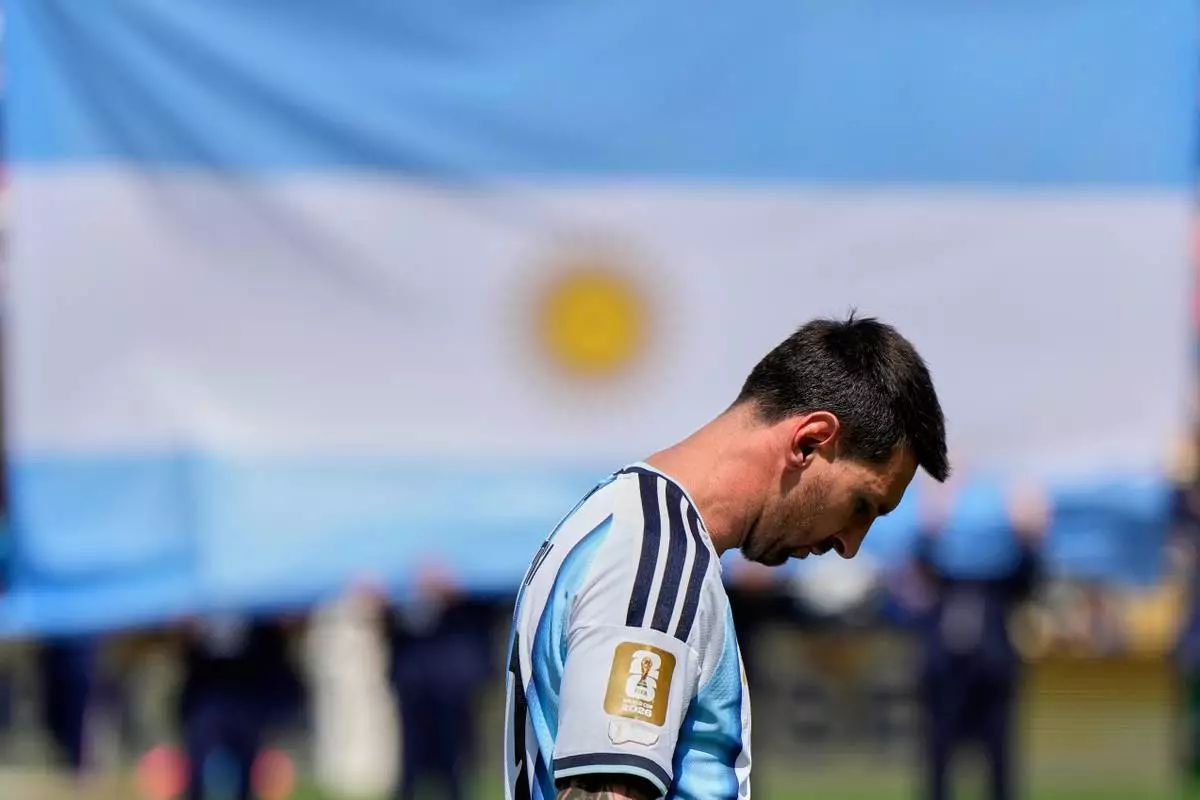
Argentina's Lionel Messi walks across the pitch before the World Cup final soccer match between Spain and Argentina in East Rutherford, N.J., near New York, Sunday, July 19, 2026. (AP Photo/Ashley Landis)
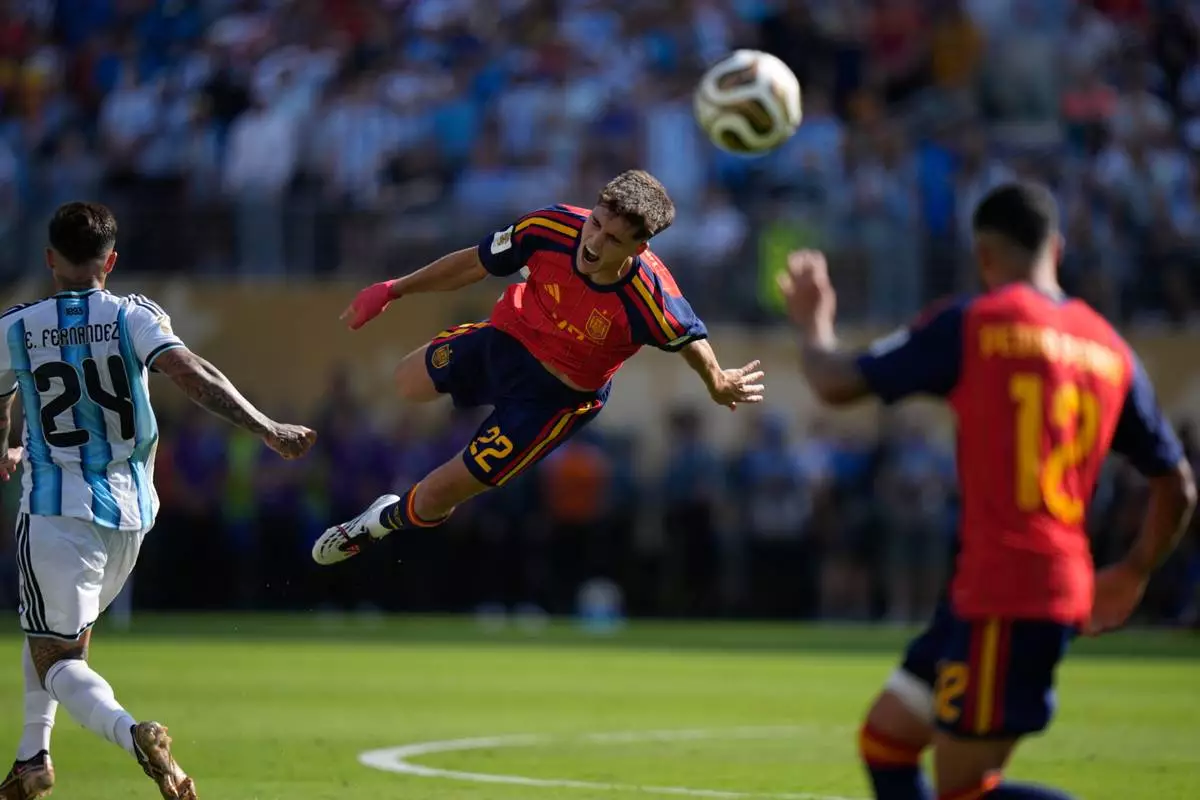
Spain's Pau Cubarsi (22) leaps in the air after he is fouled by Argentina's Enzo Fernandez (24) during the World Cup final soccer match between Spain and Argentina in East Rutherford, N.J., near New York, Sunday, July 19, 2026. (AP Photo/Frank Franklin II)
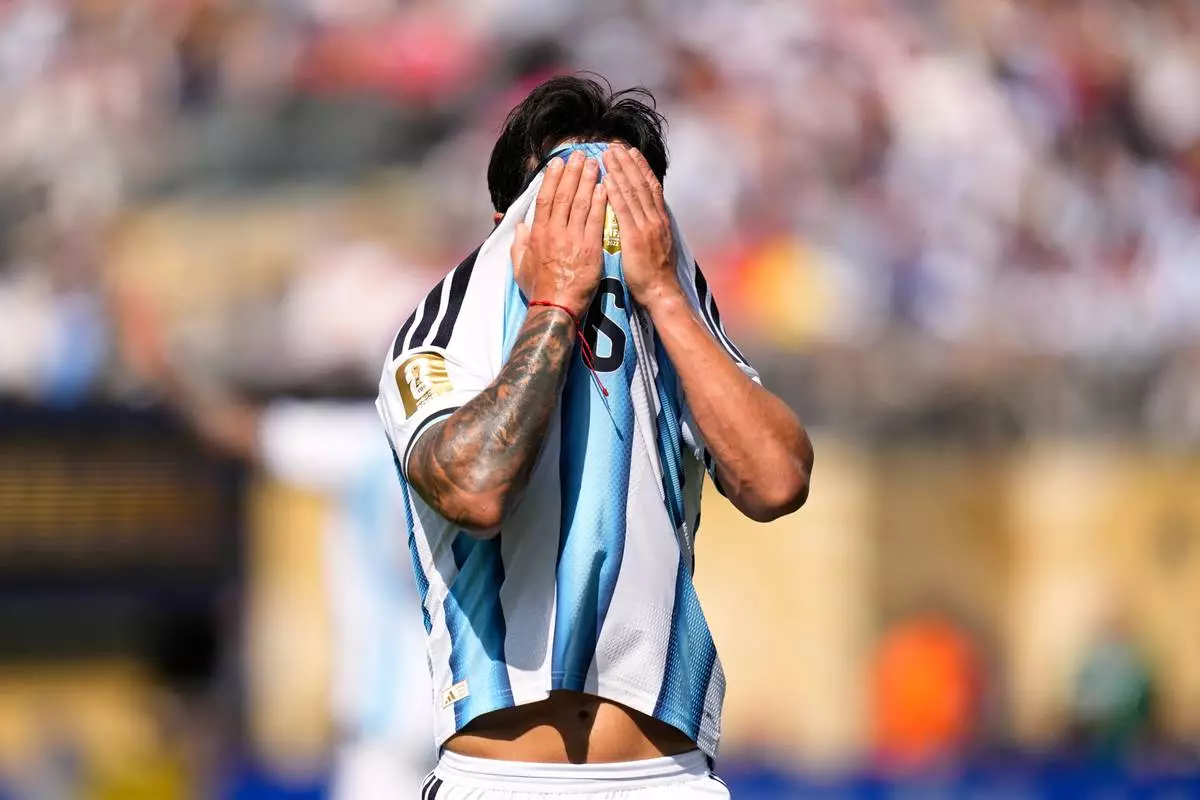
Argentina's Lisandro Martinez reacts when leaving the pitch after getting injured during the World Cup final soccer match between Spain and Argentina in East Rutherford, N.J., near New York, Sunday, July 19, 2026. (AP Photo/Ashley Landis)
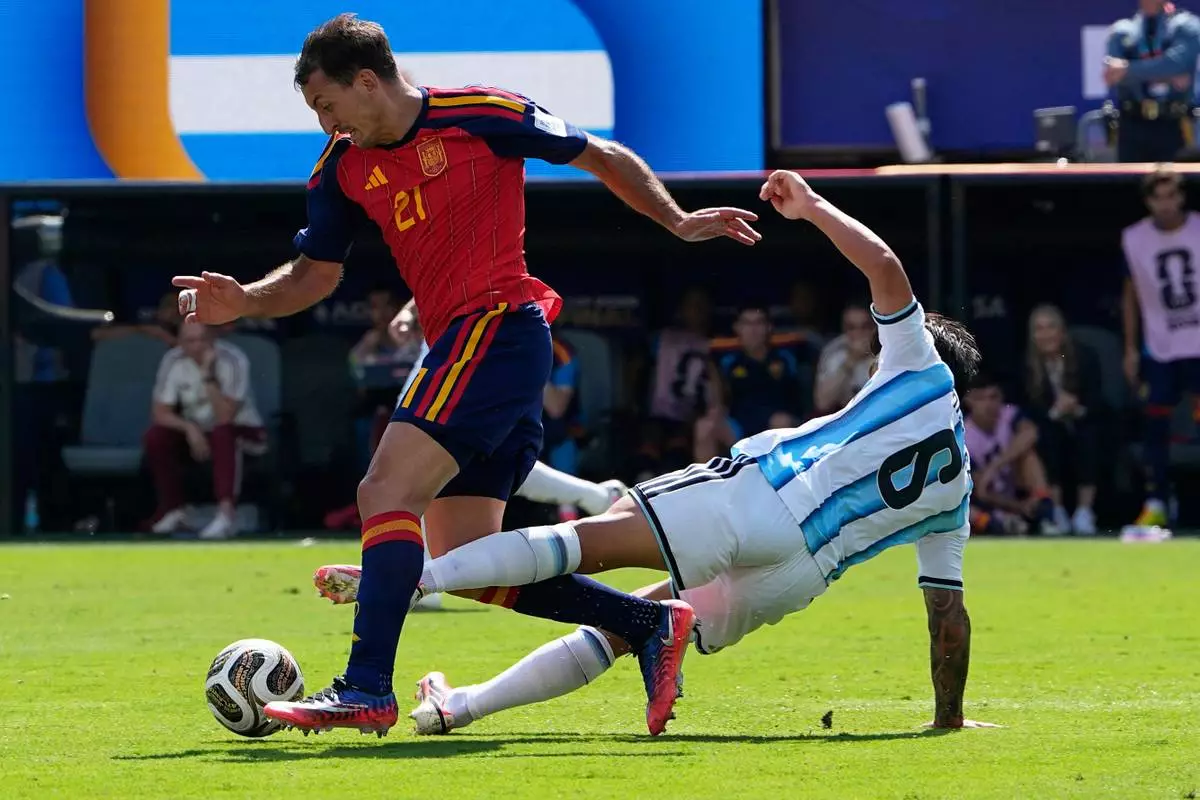
Spain's Mikel Oyarzabal (21) is challenged by Argentina's Lisandro Martinez (6) during the World Cup final soccer match between Spain and Argentina in East Rutherford, N.J., near New York, Sunday, July 19, 2026. (AP Photo/Frank Franklin II)
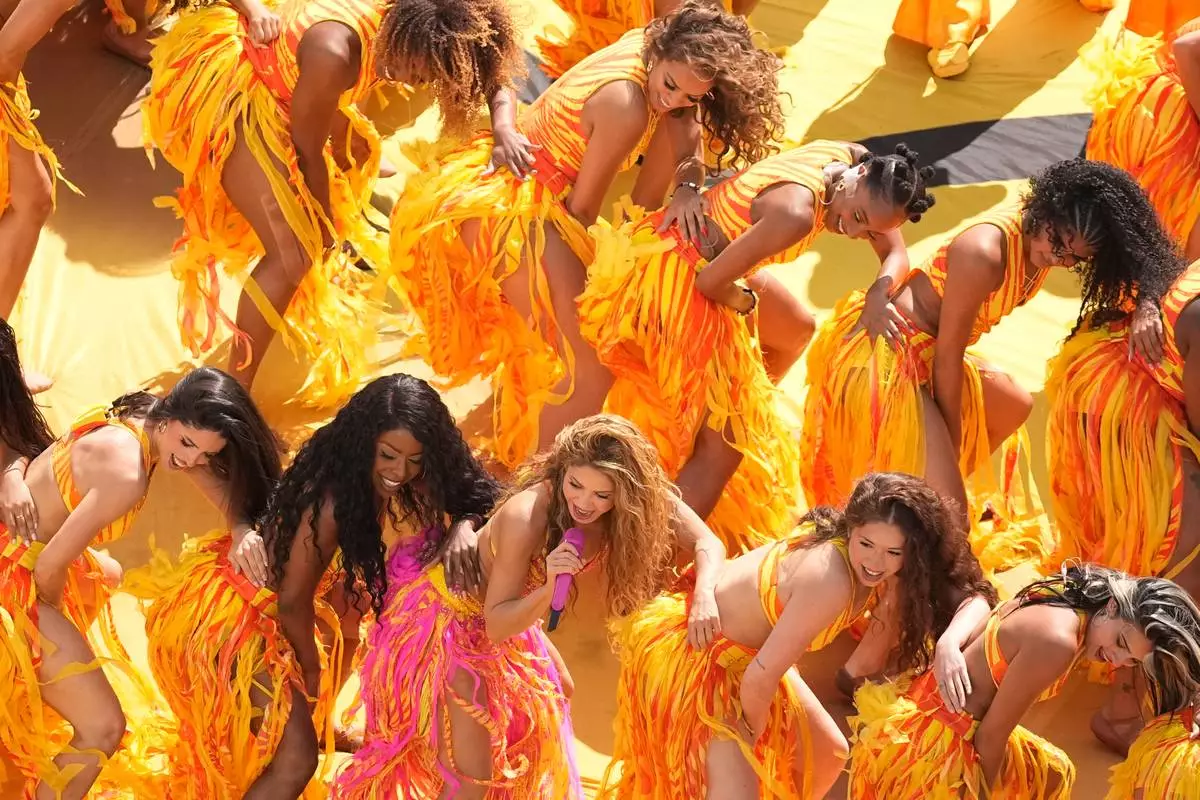
Shakira performs during halftime during the World Cup final soccer match between Spain and Argentina in East Rutherford, N.J., near New York, Sunday, July 19, 2026. (AP Photo/Matt Slocum)
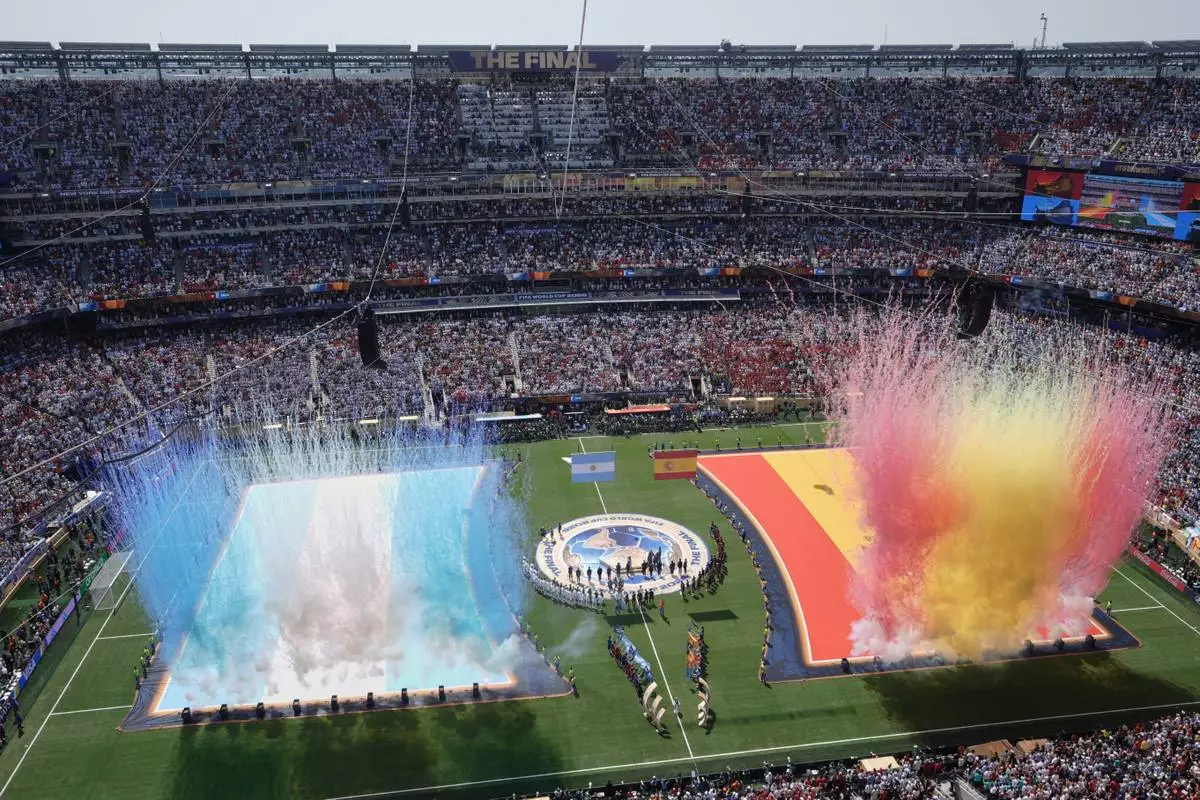
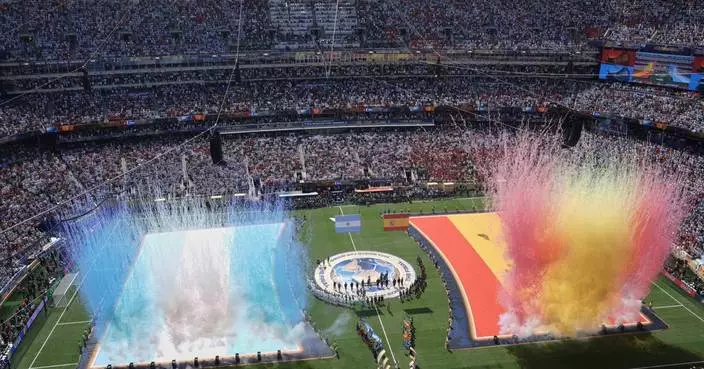
Fireworks go off before World Cup final soccer match between Spain and Argentina in East Rutherford, N.J., near New York, Sunday, July 19, 2026. (AP Photo/Matt Rourke)
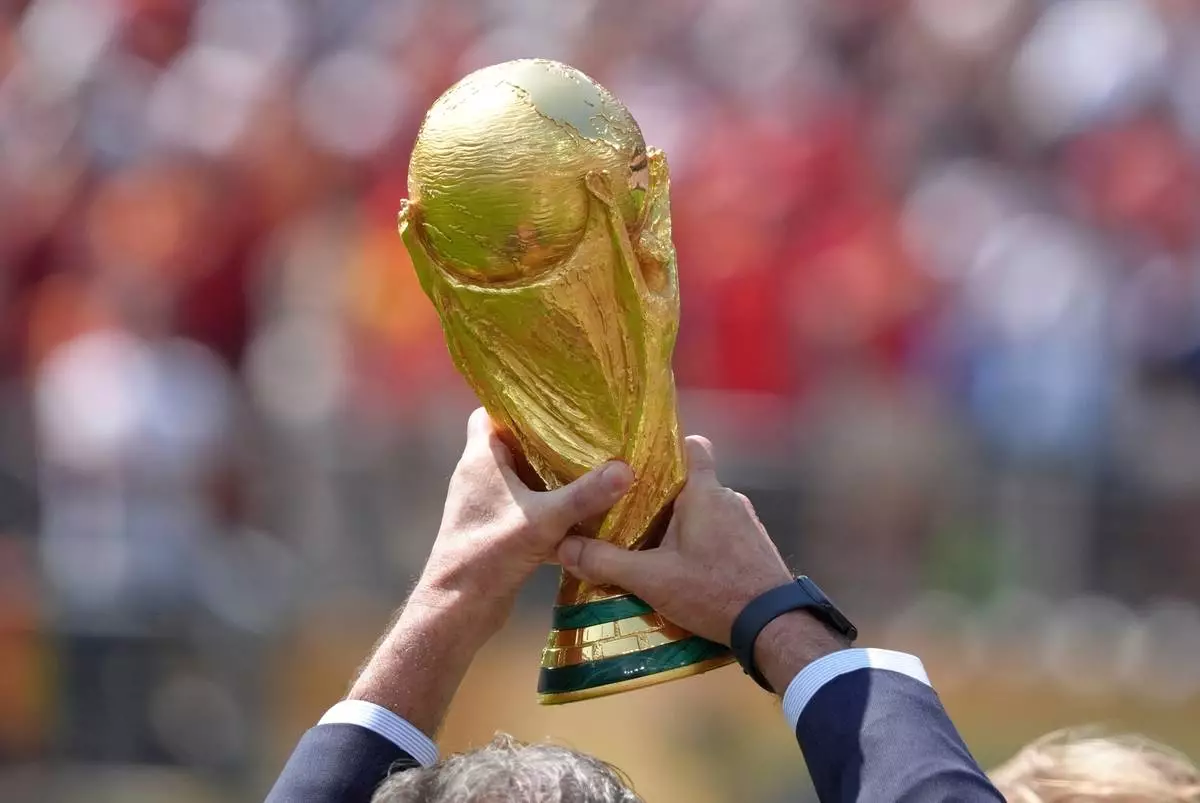
Mario Kempes holds the trophy before the start of the World Cup championship final soccer match between Spain and Argentina in East Rutherford, N.J., Sunday, July 19, 2026. (AP Photo/Jacquelyn Martin)
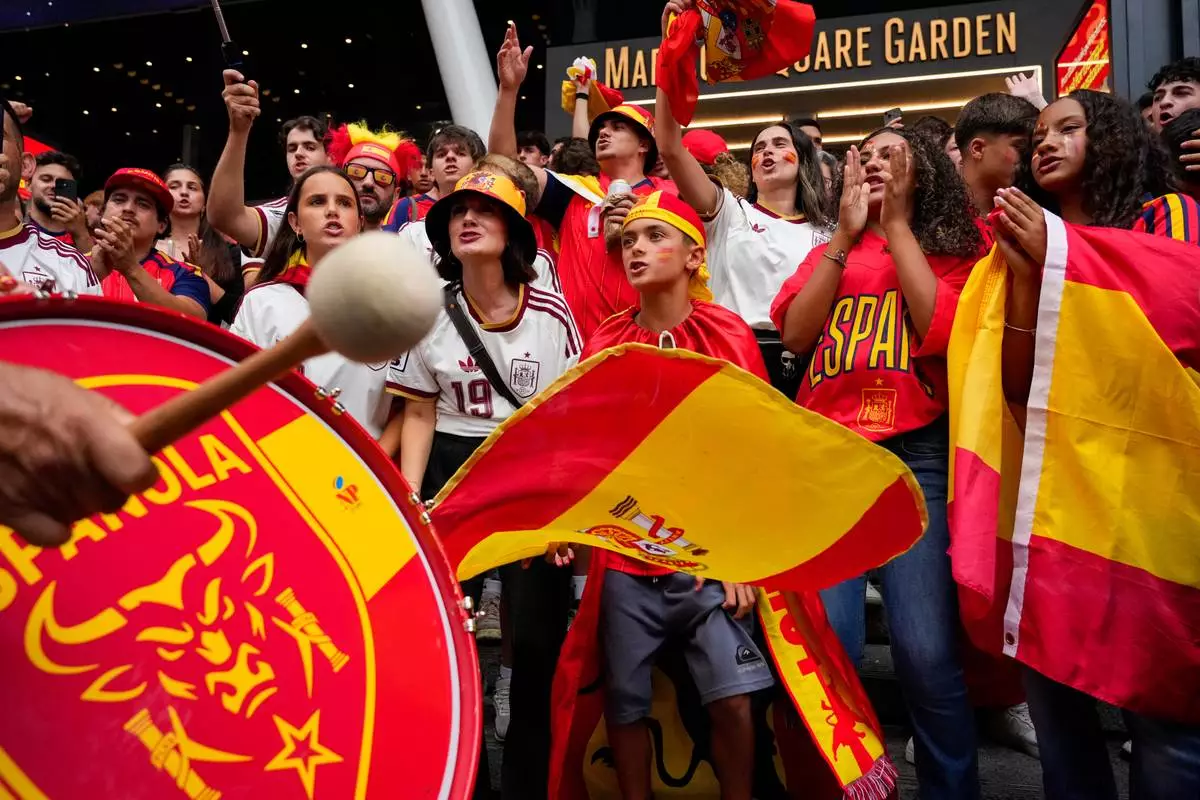
Spain fans gather for a rally on the eve of the World Cup final soccer match in New York's Times Square, Saturday, July 18, 2026 (AP Photo/Yuki Iwamura)
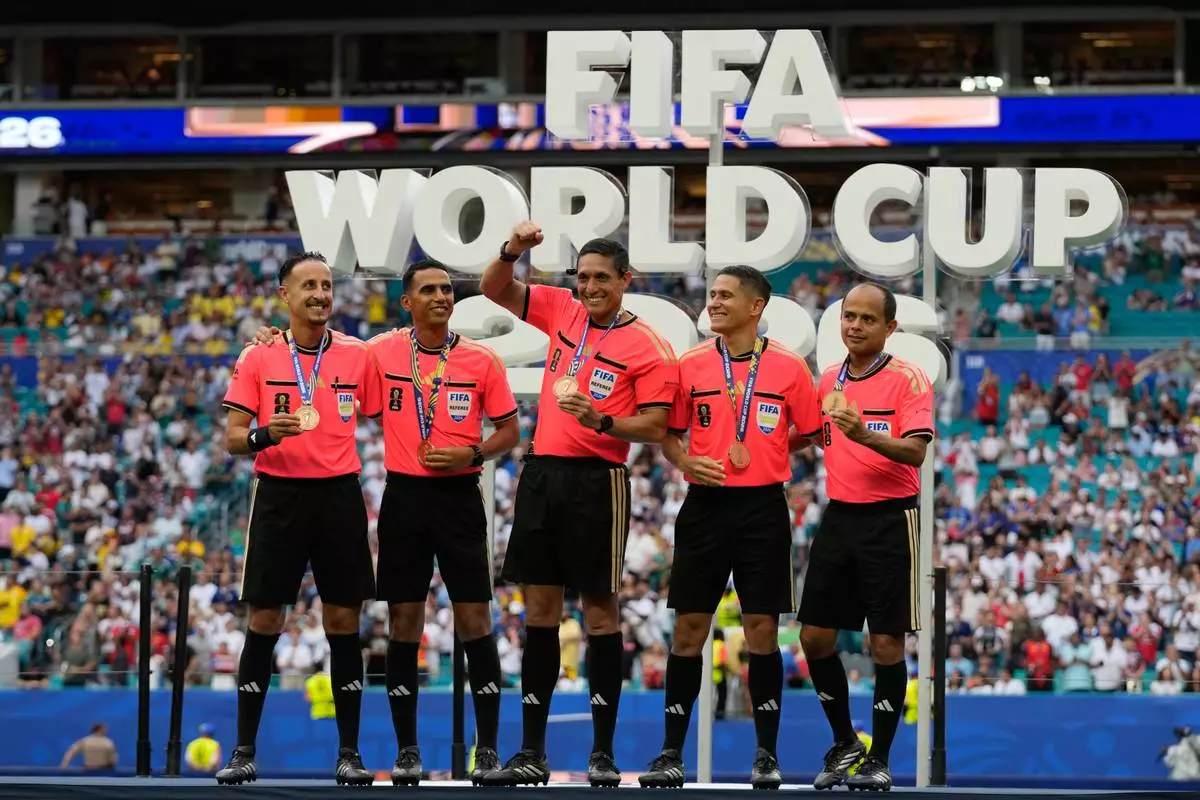
Referee Jesus Valenzuela Saez, center, of Venezuela, and his team pose with their medals after the World Cup third-place playoff soccer match between France and England in Miami Gardens, Fla., Saturday, July 18, 2026. (AP Photo/Lynne Sladky)
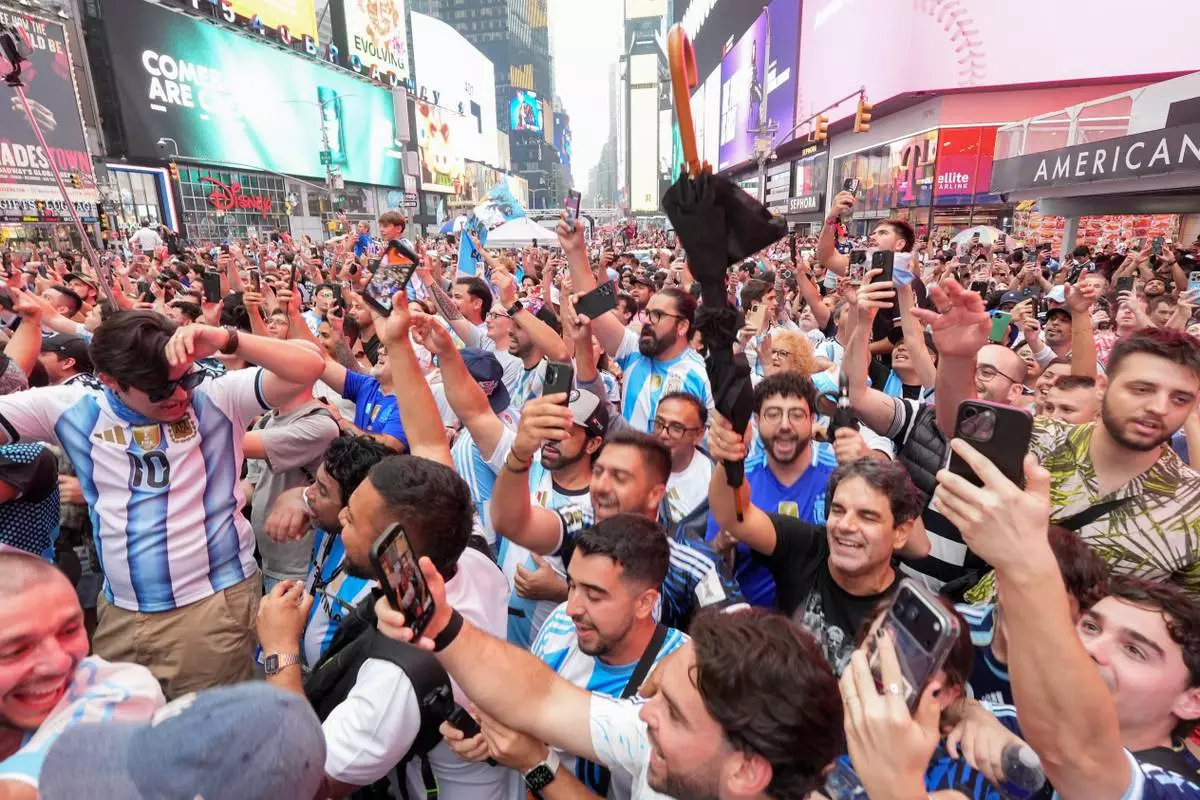
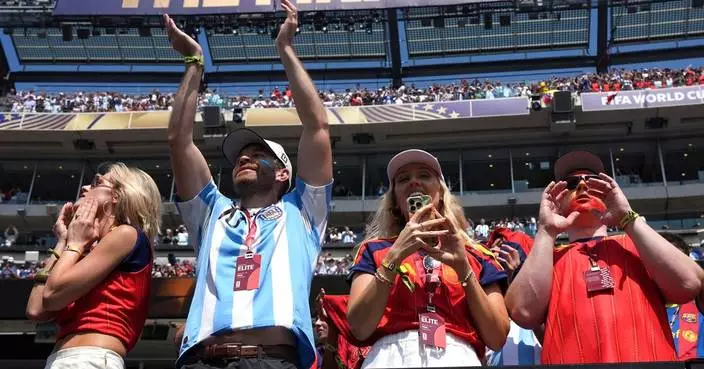
Argentina fans gather for a rally on the eve of the World Cup final soccer match in New York's Times Square, Saturday, July 18, 2026 (AP Photo/Frank Franklin II)