Passengers have reported long waits and inconvenience at Reagan International Airport in Arlington, Virginia, as Immigration and Customs Enforcement (ICE) agents assist at busy security checkpoints amid Transportation Security Administration (TSA) staff shortages.
Hundreds of TSA security workers have either quit or are working without pay, as the Department of Homeland Security, which funds the agency, has been shut down for more than a month.
"It's very frustrating for everybody, especially families, families with small kids waiting in line three to four hours, it's really hard. And even for people with travel and meetings, we're missing flights, we're missing important meetings for work. So it's terrible on everybody. It's an inconvenience that could really be solved pretty quickly if things would get approved. I came from Phoenix, so the ICE agents were there, they were checking ID or, sending people to different areas in the airport, helping the line go a little bit faster. But it was still a good hour wait," said a passenger.
The Trump administration's decision to use ICE personnel to supplement TSA functions has drawn mixed reactions from travelers.
"I don't think it's necessary. I think that TSA should be getting paid for their job. And I think some of the funding should be at TSA, not ICE," said a traveler.
"My thoughts are, if we need to fill a gap, we need to fill it appropriately and with this being TSA, I would assume we would do our best to backfill these roles and-or pay what they deserve," said another traveler.

US passengers blame political gridlock for travel disruption
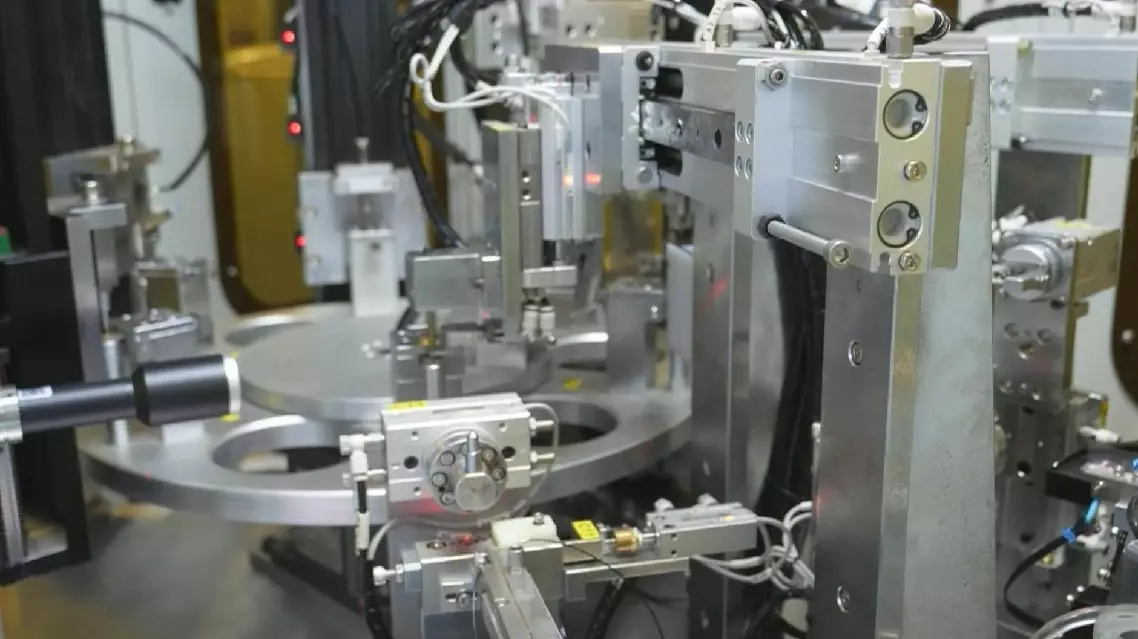
China's machinery sector showed steady, positive performance in the first two months of this year, with growth in both production and market demand, said the China Machinery Industry Federation (CMIF) on Wednesday.
The five major machinery subsectors all posted year-on-year gains in January-February period. Value added in general purpose machinery, special-purpose machinery, automotive manufacturing, electrical machinery and equipment, and instruments and meters rose 8.9 percent, 8.8 percent, 3.4 percent, 8.7 percent, and 7.8 percent, respectively.
It is notable that the equipment manufacturing sector showed strong growth, with value-added output rising 9.3 percent year on year, 3 percentage points faster than the growth rate of value-added output for all industrial enterprises above designated size in the first two months.
Xu Niansha, president of the CMIF, said that as the first year of the 15th Five-Year Plan, the year of 2026 will see the equipment manufacturing sector focus on intelligent, green and integrated development, aiming to build a modern industrial system anchored by advanced manufacturing.
"China will focus on three aspects in terms of the future development of equipment manufacturing. First, we will reinforce the reshaping of industrial foundations by addressing weaknesses in industrial machine tools, high-end chips, and foundational software. Second, we will boost research and development of major equipment, advancing flagship products such as high-end medical devices, precision instruments, and advanced agricultural machinery. Third, we will enhance quality and branding to improve international reputation of 'Made in China'," said Xu.
China's machinery industry posts steady growth in first two months