Prospective homebuyers who have invested in certain cryptocurrencies will be able to use their holdings as collateral to fund their down payment on a home as part of a new mortgage offering.
Real estate services company Better Home & Finance Holding Co. plans to roll out the crypto-backed mortgage sometime in the next three months in a partnership with crypto trading platform Coinbase, the companies said in a press release Thursday.
“Better was founded to make homeownership more accessible for all Americans, and this partnership with Coinbase introduces a new pathway to realizing the American Dream for the 52 million Americans who own digital assets,” said Vishal Garg, Better’s CEO, said in the release.
Use of cryptocurrency for buying a home remains generally limited. Among the respondents in a National Association of Realtors survey of people who bought a home between July 2024 and June 2025, only 1% of those who made a down payment said they used proceeds from the sale of crypto.
However, the crypto-backed mortgage from Better would not require borrowers to sell their crypto investments to fund their down payment. Instead, borrowers who qualify for the mortgage would only have to pledge such holdings and transfer them to Coinbase as collateral for their down payment.
This allows the crypto investor to not have to lose out on potential future gains in the value of their crypto the way they would if they sold their holdings for cash.
Should their crypto drop in value, the mortgage terms remain unchanged and no additional collateral is required, the companies noted in the release. However, borrowers’ crypto collateral would be at risk of liquidation if they fail to make their mortgage payments for 60 days.
The only type of cryptocurrencies that borrowers will be able to offer up as collateral for Better’s crypto-back mortgage are Bitcoin and USDC, a type of cryptocurrency typically bought and sold for $1, the companies said.
Better noted that the crypto-backed mortgage is “designed in accordance with Fannie Mae guidelines.” That means they can be guaranteed by the mortgage giant, which makes them eligible for “significantly lower interest rates,” than those of other crypto-backed loans, the companies said.
Fannie Mae and Freddie Mac, which have been under government control since the Great Recession, buy mortgages that meet their risk criteria from banks, which helps provide liquidity for the housing market.
Banks seeking to make mortgages that qualify for purchase by the mortgage giants have not typically considered a borrower’s crypto holdings until they were sold, or converted, to dollars.
Last June, the head of the Federal Housing Finance Agency, which oversees Fannie and Freddie, ordered the agencies to prepare a proposal for consideration of crypto as an asset for reserves when they assess risks in single-family home loans.
Shares in Better Homes & Finance Holding rose 5.4% Thursday. Coinbase fell 4.3%.
FILE - The Coinbase app icon is seen on a smartphone, Feb. 28, 2023, in Marple Township, Pa. (AP Photo/Matt Slocum, File)

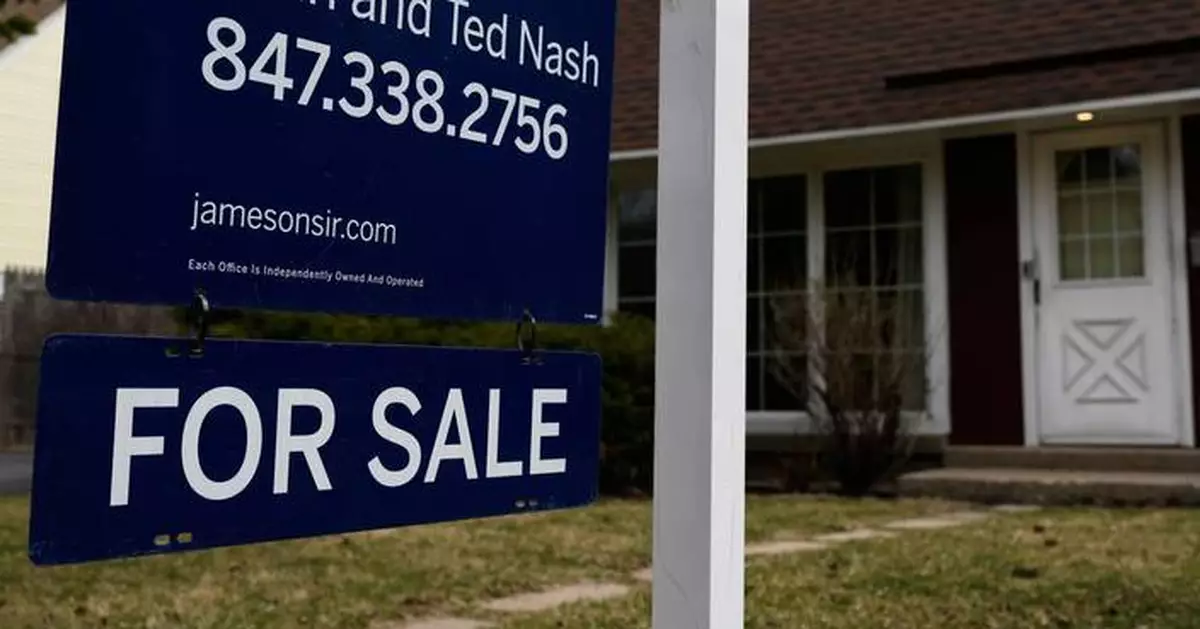
A House For Sale sign is displayed in front of a home in Evanston, Ill.,Wednesday, March 25, 2026. (AP Photo/Nam Y. Huh)
BALTIMORE (AP) — Federal prosecutors announced charges Tuesday in the 2024 collapse of Baltimore’s Francis Scott Key Bridge, accusing the Singapore-based operator of a ship and a key employee of making critical decisions that led to the disaster and the deaths of six people.
The indictment names Synergy Marine Pte Ltd., based in Singapore, and Synergy Maritime Pte Ltd., based in Chennai, India. Radhakrishnan Karthik Nair, 47, an Indian national who was technical superintendent for the Dali container ship, was also charged.
The Dali crashed into the Francis Scott Key Bridge on March 26, 2024, killing six construction workers who had been filling potholes.
“The collapse of the Francis Scott Key Bridge was a preventable tragedy of enormous consequence,” said Acting Attorney General Todd Blanche.
The companies and Nair are charged with conspiracy, willfully failing to immediately inform the U.S. Coast Guard of a known hazardous condition, obstruction of an agency proceeding and false statements.
An FBI investigation into the crash focused on the vessel’s operations and whether the crew knew of critical systems issues before leaving port.
The National Transportation Safety Board found last year that two electrical blackouts — one caused by a loose wire aboard the Dali and another by problems with a fuel pump — disabled the controls of the huge cargo ship before it crashed into the bridge.
The Dali was leaving Baltimore bound for Sri Lanka when its steering failed because of the power loss. The ship crashed into a supporting column of the bridge at about 1:30 a.m.
Maryland officials estimate it could cost between $4.3 billion and $5.2 billion to replace the bridge, which is expected to be open to traffic in late 2030.
But the true cost of the collapse was far greater, according to the Maryland Attorney General’s Office. It halted shipping at the Port of Baltimore, disrupted the livelihoods of thousands, rerouted road traffic through communities already bearing disproportionate burdens and triggered economic problems statewide.
The indictment comes on the heels of a settlement in principle between the State of Maryland, Synergy Marine and Grace Ocean Private Limited, the Singapore-based ship owner, Attorney General Anthony Brown announced in April.
That lawsuit alleged the crash was the result of negligence, mismanagement and the reckless operation of a vessel that was not seaworthy and should never have left port. Plaintiffs include the families of the six construction workers who died, owners of cargo that was on the ship and local governments seeking damages for economic losses. The details of the settlement haven’t been disclosed and some portions of the lawsuit remain unresolved.
The state sought damages on behalf of its agencies for the destruction of the bridge, harm to the Patapsco River and surrounding environment, lost revenues and economic losses to Maryland and its residents.
The settlement does not resolve any claims the state has against the shipbuilder, Hyundai, the attorney general’s office said in April.
The bridge, a longstanding Baltimore landmark, was a vital piece of transportation infrastructure that allowed drivers to easily bypass downtown. The original 1.6-mile (2.6-kilometer) steel span took five years to build and opened to traffic in 1977.
White reported from Detroit.
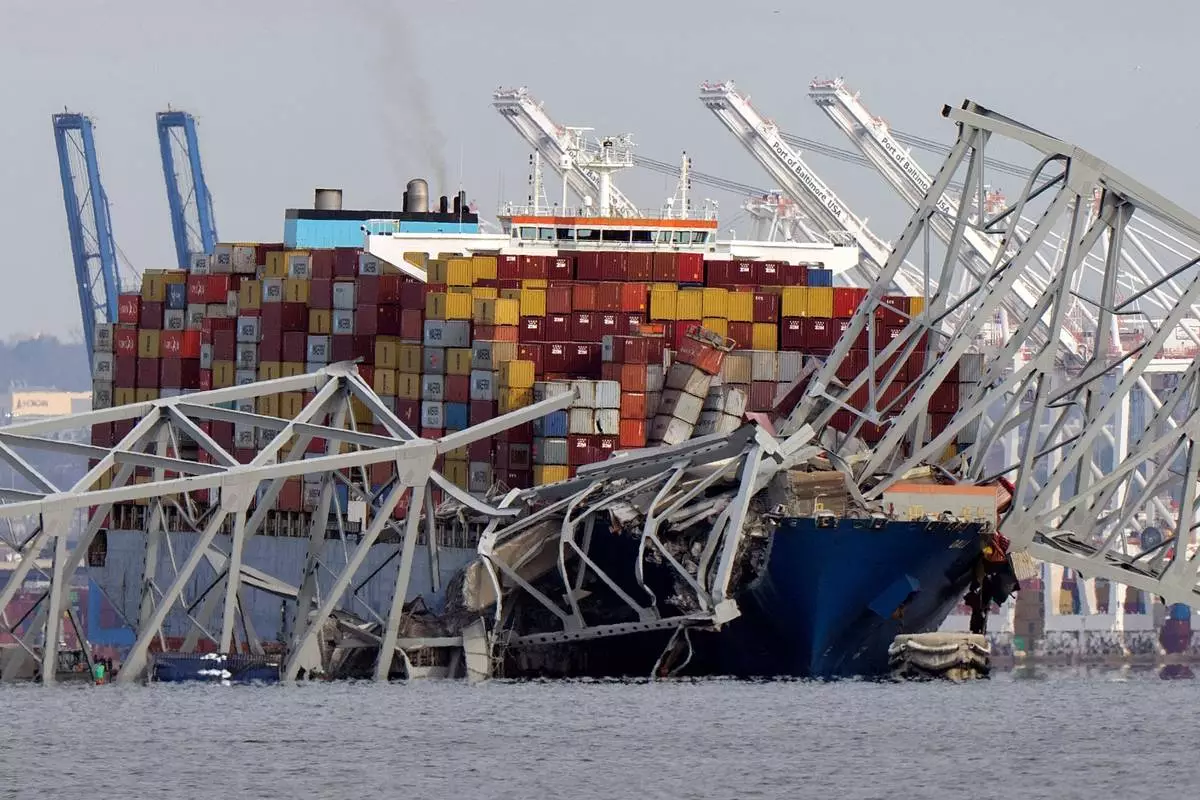
FILE - The cargo ship Dali is stuck under part of the Francis Scott Key Bridge after the ship hit the bridge, March 26, 2024, as seen from Pasadena, Md. (AP Photo/Mark Schiefelbein, File)