Skip to Content Facebook Feature Image

The war in Iran sparks a global fertilizer shortage and threatens food prices

News

The war in Iran sparks a global fertilizer shortage and threatens food prices
News

News

The war in Iran sparks a global fertilizer shortage and threatens food prices

2026-03-27 10:26 Last Updated At:15:50

HANOI, Vietnam (AP) — Farmers around the world are feeling the squeeze of the Iran war. Gas prices have shot up and fertilizer supplies are waning due to Tehran's near shutdown of the Strait of Hormuz in retaliation for U.S. and Israeli bombing.

The fertilizer shortage is putting the livelihood of farmers in developing countries — already troubled by rising temperatures and erratic weather systems — further at risk, and could lead to people everywhere paying more for food.

The poorest farmers in the Northern Hemisphere rely on fertilizer imports from the Gulf, and the shortage comes just as planting season begins, said Carl Skau, deputy executive director of the World Food Program.

“In the worst case, this means lower yields and crop failures next season. In the best case, higher input costs will be included in food prices next year.”

Baldev Singh, a 55-year-old rice farmer in Punjab, India, says smallholders — the bulk of the country's farmers — may not survive if the government cannot subsidize fertilizers when demand peaks in June.

“Right now, we are waiting and hoping,” he said.

Iran is seriously limiting shipments through the Strait of Hormuz, a narrow passage that usually handles about a fifth of the world’s oil shipments and nearly a third of global fertilizer trade.

Nitrogen and phosphate — two major fertilizer nutrients — are under immediate threat from the blockade.

Supplies of nitrogen including urea, the most widely traded fertilizer that helps plants grow and boosts yields, are the hardest hit because of shipping delays and the soaring price of liquefied natural gas — an essential ingredient.

The conflict has restricted about 30% of global urea trade, said Chris Lawson of CRU Group, a London-based commodities consultancy.

Some countries are already facing critical shortages, according to Raj Patel, a food systems economist at the University of Texas. For example, Ethiopia gets over 90% of its nitrogen fertilizer from the Gulf through Djibouti, a supply route that was strained even before the war began in February.

“The planting season is now,” Patel said. “The fertilizer isn’t there.”

Phosphate supplies, which support root development, are also under pressure. Saudi Arabia produces about a fifth of the world’s phosphate fertilizer, and the region exports more than 40% of the world's sulfur, a key ingredient and byproduct of oil and gas refining, Lawson said.

Even after the war ends, producers in the Gulf would need clear security guarantees before resuming shipments through the strait, and insurance costs would almost certainly rise, said Owen Gooch, an analyst with London-based Argus Consulting Services.

In India, the government has prioritized urea supplies for domestic use and provides fertilizer manufacturers with about 70% of their natural gas needs. Some plants are still running below capacity, leading to lower output.

“The food system is fragile, and it depends on stable fertilizer supply chains to ensure farmers can produce the food the world relies on,” said Hanna Opsahl-Ben Ammar of Yara International, one of the world’s largest fertilizer companies.

Fertilizers are generally applied just before or at planting, so crops miss key early growth stages and yields can fall when deliveries are delayed, even if supplies improve later.

The impact is already being felt in the United States and Europe, where the main planting season is underway, and it is expected to hit the first planting season in much of Asia in the coming months.

“Our crops out in the field need nitrogen now — the sooner the better — so they can get off to a good start, helping them establish themselves and build up reserves for the harvest later this summer,” said Dirk Peters, an agricultural engineer who runs a farm outside Berlin.

Fertilizer prices are below the peaks seen after Russia’s invasion of Ukraine, but grain prices were higher then, helping farmers absorb the costs, said Joseph Glauber of the International Food Policy Research Institute. Grain prices are lower now meaning margins are tighter and farmers may have to switch to less fertilizer-intensive crops — such as soybeans in the U.S. — or apply less fertilizer, reducing yields. Lower yields can lead to higher consumer prices.

Other nations likely won't make up the shortfall. China, the world’s largest producer of nitrogen and phosphate fertilizers, is prioritizing domestic supply, and urea shipments probably won't resume until May, Lawson said. Plants in Russia, another major producer, are already running near full capacity, he said.

The disruptions are already being felt across Africa, where many farmers rely on fertilizer imported from the Middle East and Russia.

Early heavy rains in East Africa have left farmers with about a week of dry weather to prepare fields and apply fertilizer, said Stephen Muchiri, a Kenya maize farmer and CEO of the Eastern African Farmers Federation, which represents 25 million smallholders.

Fertilizer shortages and price hikes hit farmers hard, forcing them to use less and leading to reduced yields. Even short delays can reduce maize yields by about 4% in a season, Patel said, citing research from Zambia.

Governments can intervene by applying subsidies, promoting domestic production and controlling exports.

India already subsidizes fertilizer to ease the financial strain on farmers, but those subsidies leave less money for long-term farming investments. It has budgeted $12.7 billion this year for urea subsidies alone, according to the U.S.-based Institute for Energy Economics and Financial Analysis.

Efforts to produce domestic urea have increased India's dependence on imported gas, and excessive urea use has harmed local soil, said Purva Jain of IEEFA, who supports the use of organic fertilizers.

Less reliance on imported fertilizers could protect farmers and consumers from energy price swings and climate shocks, said Oliver Oliveros, executive coordinator of the Agroecology Coalition.

“This could be a turning point,” he said.

Olingo reported from Nairobi, Kenya. Associated Press writer Jamey Keaten in Geneva and Kerstin Sopke in Berlin contributed.

The Associated Press’ climate and environmental coverage receives financial support from multiple private foundations. AP is solely responsible for all content. Find AP’s standards for working with philanthropies, a list of supporters and funded coverage areas at AP.org.
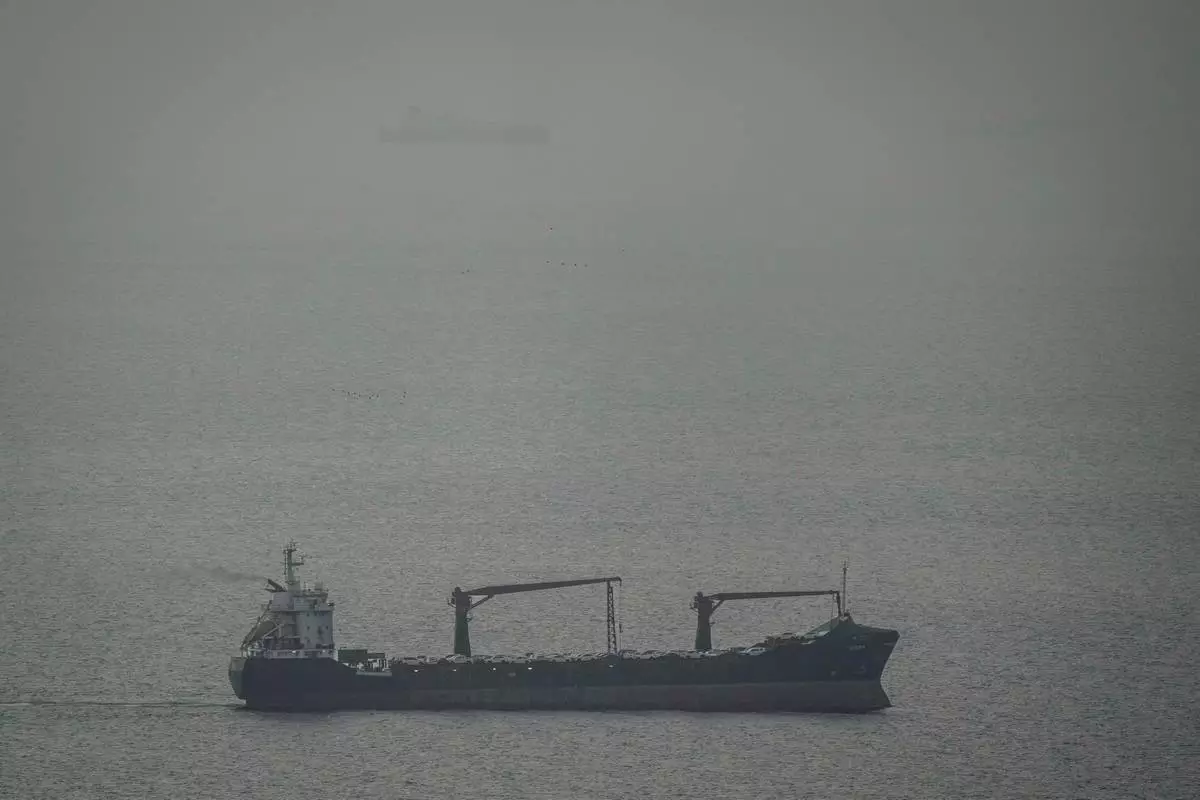
A cargo ship carrying vehicles sails through the Arabian Gulf toward the Strait of Hormuz in the United Arab Emirates, Sunday, March 22, 2026. (AP Photo)
A cargo ship carrying vehicles sails through the Arabian Gulf toward the Strait of Hormuz in the United Arab Emirates, Sunday, March 22, 2026. (AP Photo)

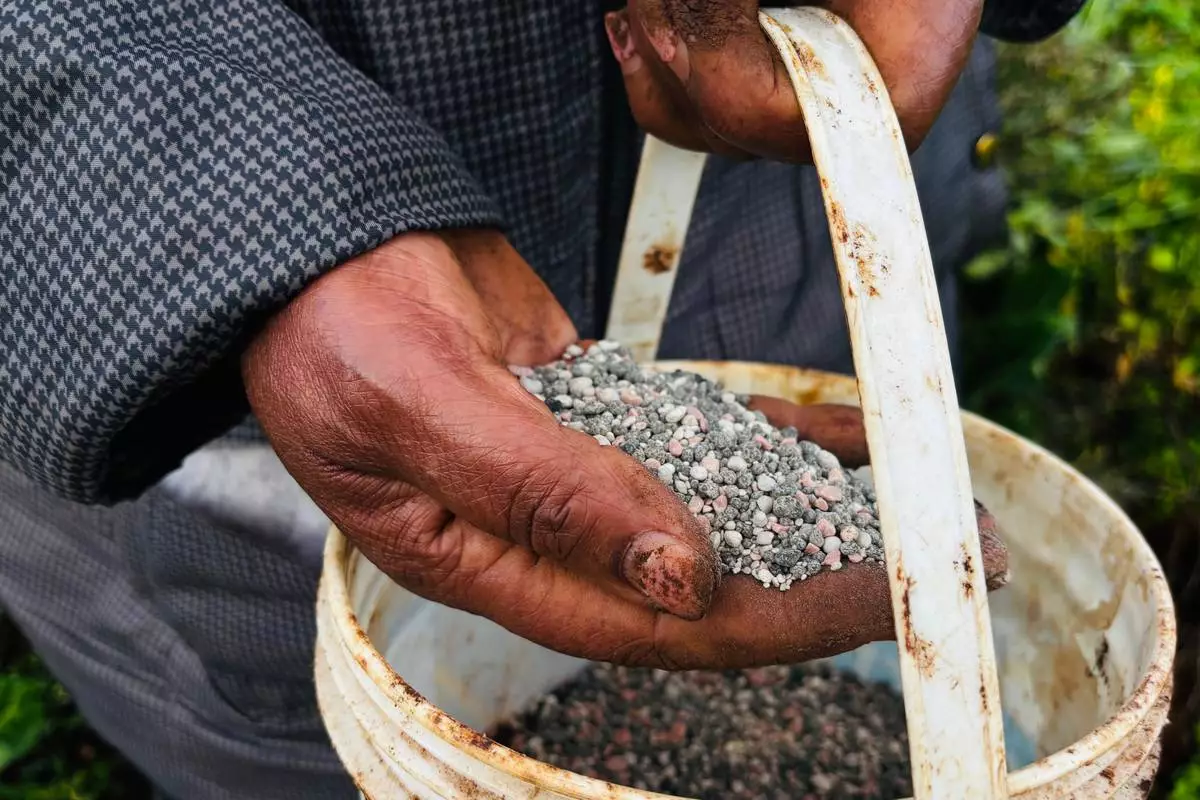
Elizabeth Wangua applies fertilizer to her land in Limuru, Kenya Wednesday, March 25, 2026. (AP Photo/Jackson Njehia)
Elizabeth Wangua applies fertilizer to her land in Limuru, Kenya Wednesday, March 25, 2026. (AP Photo/Jackson Njehia)

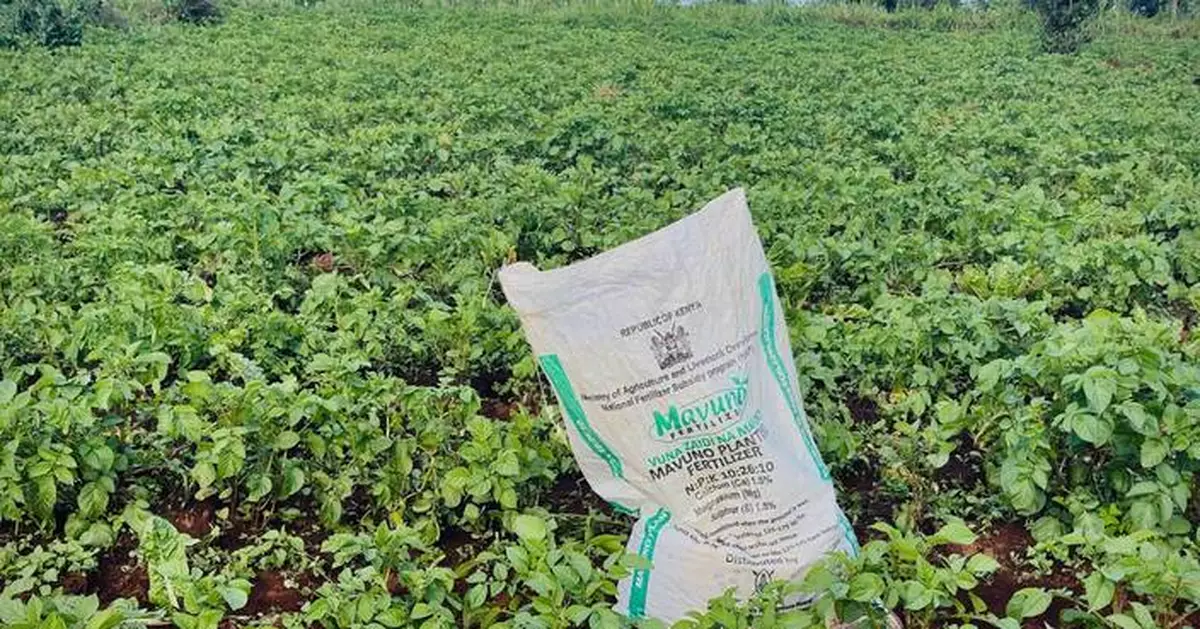
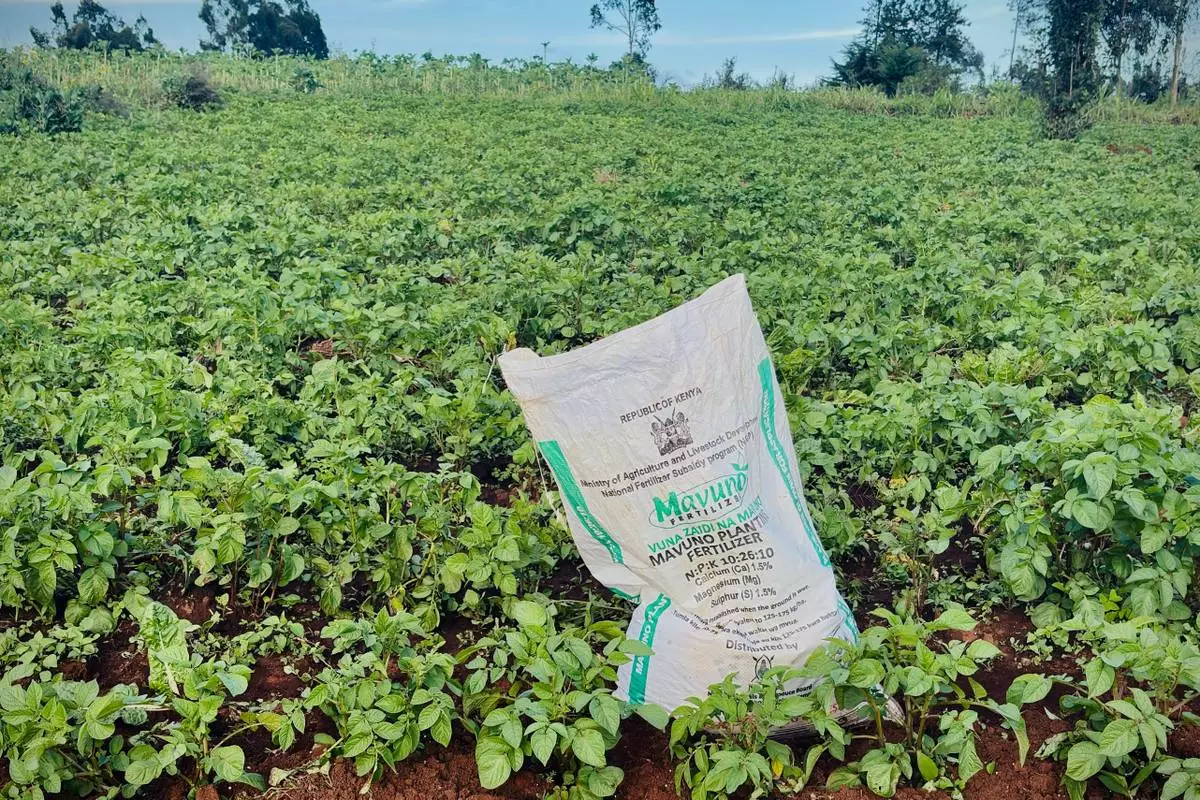
A bag of fertilizer is ready to be used on Elizabeth Wangua's land in Limuru, Kenya Wednesday, March 25, 2026. (AP Photo/Jackson Njehia)

A bag of fertilizer is ready to be used on Elizabeth Wangua's land in Limuru, Kenya Wednesday, March 25, 2026. (AP Photo/Jackson Njehia)
Israel’s military said early Friday it had conducted a wave of strikes “in the heart of Tehran” while smoke was seen billowing in the Beirut skyline after U.S. President Donald Trump delayed his threat to obliterate Iran’s energy plants over its effective closure of the Strait of Hormuz.

Israel has moved thousands of troops across the border into Lebanon, where Israeli officials said they want to take control of the entire area south of the Litani River — some 20 miles (about 30 kilometers) north of the border.

Facing a convulsing stock market, Trump on Thursday extended a deadline for reopening the Strait of Hormuz until April 6, saying Iran asked for the grace period and that talks were going “very well,” despite the fact Iran continues to publicly insist it is not negotiating with the White House on a 15-point proposal to end the conflict

The war has killed more than 1,900 people in Iran and nearly 1,100 in Lebanon. Eighteen people have died in Israel, while three Israeli soldiers have also been killed in Lebanon. Thirteen U.S. military members have died, as well as a number of civilians on land and sea in the Gulf region. Millions of people in Lebanon and Iran have been displaced.

Here is the latest:

Israel’s military said Friday morning that Iran launched a new wave of missiles toward the country

Islamabad isn’t often called on to act as an intermediary in high-stakes diplomacy, but it’s stepped into the role this time for a number of reasons, both because it has relatively good ties with both Washington and Tehran and because it has a lot at stake in seeing the war resolved.

Pakistani government officials have said that their public peace effort follows weeks of quiet diplomacy, though they have provided few details. They have also said that Islamabad stands ready to host talks between representatives from the U.S. and Iran.

According to Pakistani officials, U.S. messages are being passed to Iran and Iranian responses relayed to Washington. They did not specify how the process is being handled or who is directly communicating with whom. Pakistan’s Foreign Minister Ishaq Dar said this week that Turkey and Egypt are also working behind the scenes to bring the sides to the negotiating table.

Russian Foreign Minister Sergey Lavrov said that Russia and Iran have a military-technical cooperation agreement, and Moscow “supplied Iran with certain types of military products.”

“But we can’t accept the accusations that we’re helping Iran with intelligence,” Lavrov said in an interview to France Television on Thursday night.

He added that “everyone knows” the coordinates of U.S. military bases in the region. “It’s public information. I’m not surprised that Iran is attacking them,” Lavrov said.

The Saudi Embassy in Beirut said in a statement Friday that the decision is related to the “repercussions of the current events” taking place in Lebanon.

The embassy added that Saudi Arabia’s travel ban to Lebanon has been in place for years.

Israel has moved thousands of troops across the border into Lebanon, and Israeli forces and Iran-backed Hezbollah militants have been fighting on the ground for at least three weeks.

Bahrain sounded its missile alert siren late Friday morning over an incoming Iranian attack.

Qatar, which had not seen a major attack in days, also sounded its alerts Friday.

Kuwait said Friday its Shuwaikh Port in Kuwait City came under attack and sustained “material damage.” It said no one was hurt in the attack but offered no other details.

A Thai-flagged cargo ship that came under attack from Iran in the Strait of Hormuz and was abandoned by its crew has run aground, Iranian media reported Friday.

Thailand’s Foreign Ministry said Friday that the Iranian and Omani authorities were able to reach the Mayuree Naree on a rescue mission as three sailors remain unaccounted for. The ship came under attack March 11.

The semiofficial Tasnim and Fars news agencies, believed to be close to Iran’s paramilitary Revolutionary Guard, reported that the ship ran aground near the village of Ramchah on Qeshm Island.

Finance Minister Nicola Willis outlined Friday a four-tier plan for future fuel shortages, which at its most severe levels includes limits on buying gasoline and its prioritization for life-preserving services.

Willis disclosed criteria, including export restrictions and the state of domestic fuel stocks, that would guide movement between the four levels.

Willis said that the current designation was phase one, the lowest level, but that it was important for New Zealanders to know the possible extent of future restrictions.

There are no restrictions currently enacted on gasoline use or purchasing in New Zealand.

Israeli soldiers carry the flag-draped casket of Staff Sgt. Ori Greenberg who was killed in combat in Lebanon, during his funeral at Mount Herzl military cemetery in Jerusalem Thursday, March 26, 2026. (AP Photo/Mahmoud Illean)

Israeli soldiers carry the flag-draped casket of Staff Sgt. Ori Greenberg who was killed in combat in Lebanon, during his funeral at Mount Herzl military cemetery in Jerusalem Thursday, March 26, 2026. (AP Photo/Mahmoud Illean)

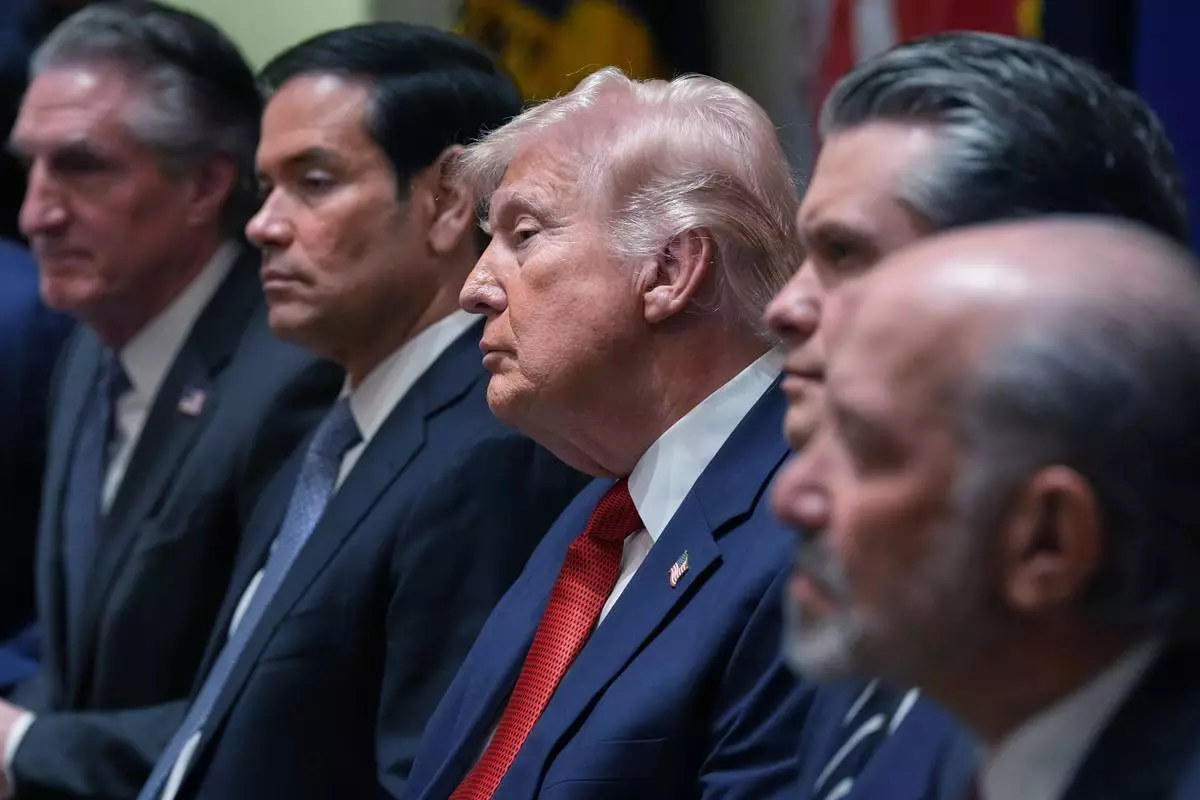
From left, Interior Secretary Doug Burgum, Secretary of State Marco Rubio, President Donald Trump, Defense Secretary Pete Hegseth, and Commerce Secretary Howard Lutnick listen during a Cabinet meeting at the White House, Thursday, March 26, 2026, in Washington. (AP Photo/Alex Brandon)

From left, Interior Secretary Doug Burgum, Secretary of State Marco Rubio, President Donald Trump, Defense Secretary Pete Hegseth, and Commerce Secretary Howard Lutnick listen during a Cabinet meeting at the White House, Thursday, March 26, 2026, in Washington. (AP Photo/Alex Brandon)

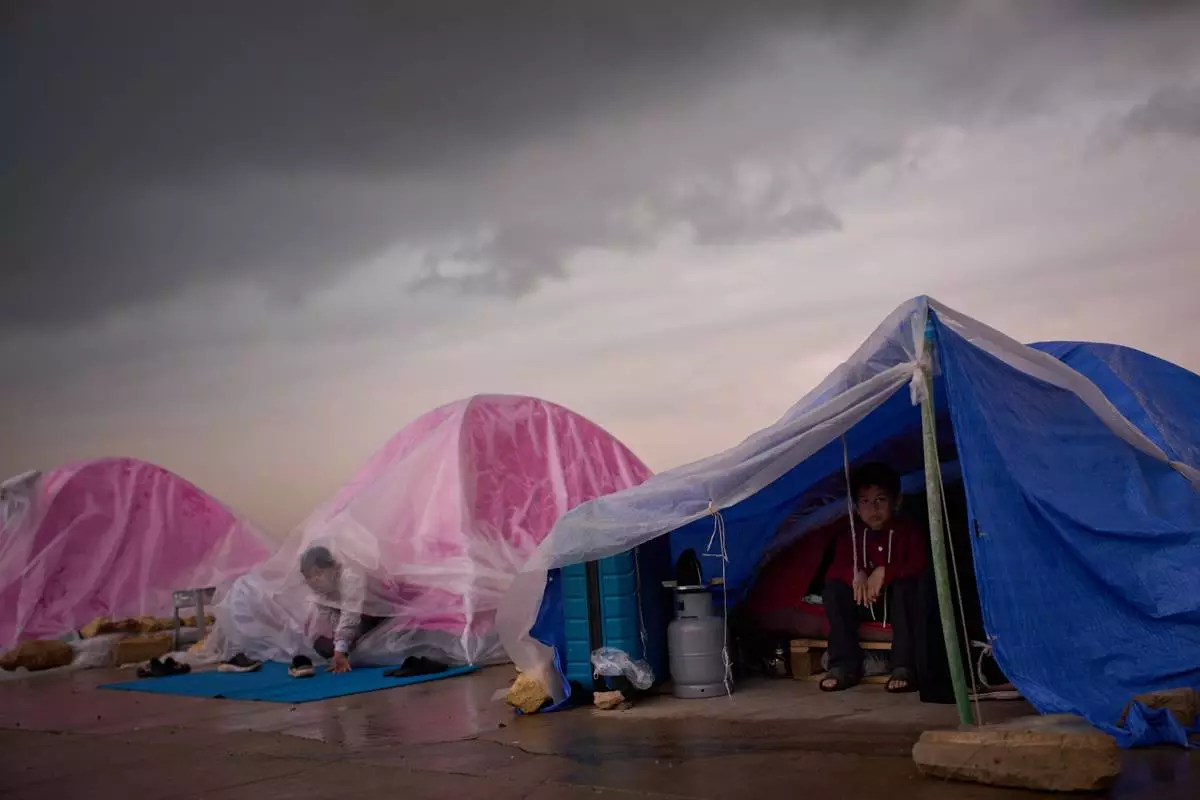
Children displaced from Beirut's southern suburb of Dahiyeh shelter from the rain inside their tents along the coast in Beirut, Lebanon, Thursday, March 26, 2026. (AP Photo/Emilio Morenatti)

Children displaced from Beirut's southern suburb of Dahiyeh shelter from the rain inside their tents along the coast in Beirut, Lebanon, Thursday, March 26, 2026. (AP Photo/Emilio Morenatti)

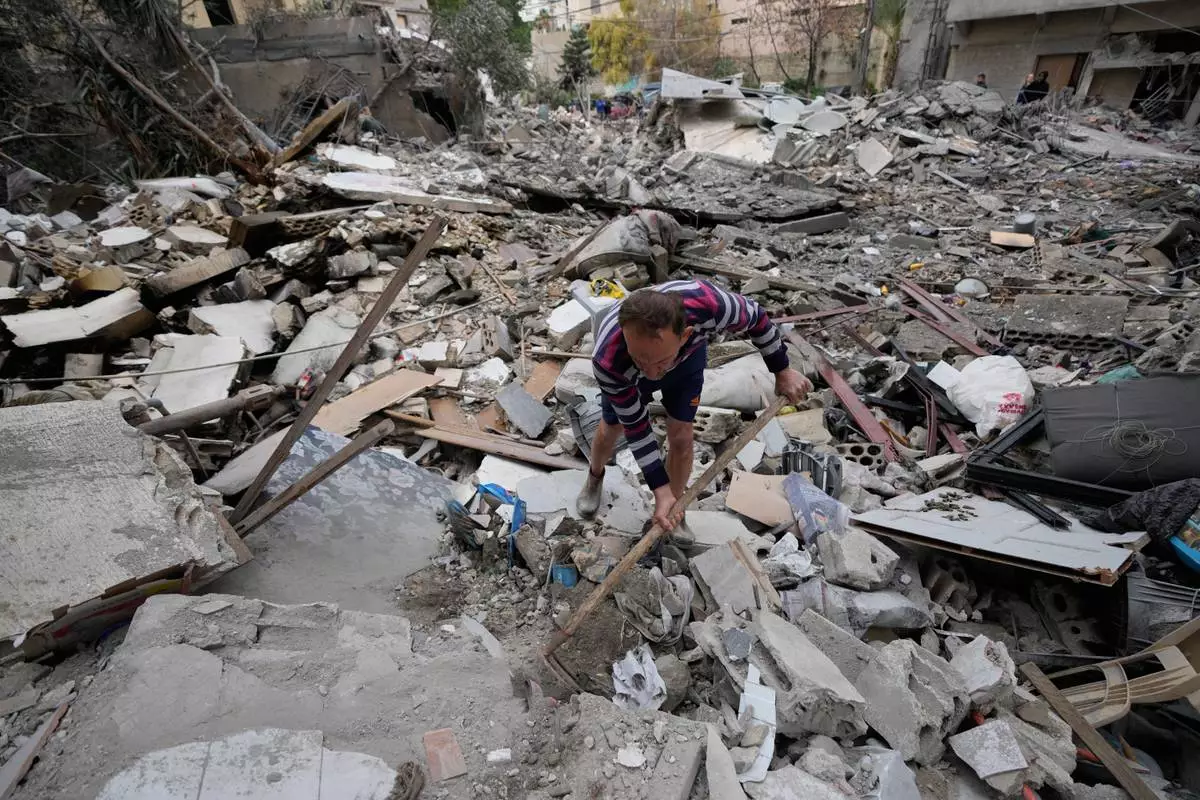
A man removes rubbles as he looks for missed stuff from his destroyed house that was hit in an Israeli airstrike in the southern port city of Tyre, Lebanon, Thursday, March 26, 2026. (AP Photo/Hussein Malla)

A man removes rubbles as he looks for missed stuff from his destroyed house that was hit in an Israeli airstrike in the southern port city of Tyre, Lebanon, Thursday, March 26, 2026. (AP Photo/Hussein Malla)

Recommended Articles