FEHD releases fifth batch of gravidtrap indexes for Aedes albopictus in March
The Food and Environmental Hygiene Department (FEHD) today (March 27) released the fifth batch of gravidtrap indexes and density indexes for Aedes albopictus in March, covering 19 survey areas, as follows:
District |
Survey Area |
March 2026 |
First Phase Gravidtrap Index |
First Phase Density Index |
Central and Western |
Central and Admiralty |
0.0% |
N/A |
Kennedy Town and Shek Tong Tsui |
0.0% |
N/A |
Kowloon City |
Hung Hom and To Kwa Wan |
0.0% |
N/A |
Kowloon Tong |
1.6% |
1.0 |
Kwun Tong |
Yau Tong and Cha Kwo Ling |
0.0% |
N/A |
Wong Tai Sin |
Diamond Hill and Tsz Wan Shan |
0.0% |
N/A |
Wong Tai Sin East |
0.0% |
N/A |
Yau Tsim |
Tsim Sha Tsui and Yau Ma Tei |
0.0% |
N/A |
North |
Fanling North |
0.0% |
N/A |
Fanling South |
0.0% |
N/A |
Sha Tin |
Sha Tin East |
0.0% |
N/A |
Kwai Tsing |
Tsing Yi North |
0.0% |
N/A |
Tsuen Wan |
Sheung Kwai Chung |
0.0% |
N/A |
Tsuen Wan West |
0.0% |
N/A |
Tuen Mun |
Tuen Mun South |
0.0% |
N/A |
Yuen Long |
Tin Shui Wai |
0.0% |
N/A |
District |
Survey Area |
March 2026 |
Area Gravidtrap Index |
Area Density Index |
Kwun Tong |
Kowloon Bay |
0.0% |
N/A |
Lam Tin and Sau Mau Ping |
0.8% |
1.0 |
Tai Po |
Tai Po East |
0.0% |
N/A |
Among the fifth batch of First Phase Gravidtrap Indexes covering 16 survey areas and Area Gravidtrap Indexes covering three survey areas in March, most of the areas recorded 0 per cent, indicating that the distribution of Aedes albopictus mosquitoes was not extensive.
The FEHD has so far released five batches of gravidtrap indexes for Aedes albopictus in March 2026, covering 57 survey areas. Among these 57 survey areas, 48 recorded a decrease or remained unchanged as compared to the Area Gravidtrap Index last month (i.e. February 2026), representing that the areas' mosquito infestation improved or maintained a low level. Nine other areas recorded a slight increase, but the indexes were lower than 10 per cent.
The warm and humid weather of spring is favourable for mosquito breeding. Members of the public should strengthen prevention work against mosquito breeding before the rainy season, and eliminate potential mosquito breeding sites in advance, with a view to avoiding the nuisances caused by rapid mosquito breeding during the rainy season and reducing the risk of transmitting mosquito-borne diseases.
Public participation is crucial to the effective control of mosquito problems. The FEHD appeals to members of the public to continue to work together in strengthening personal mosquito control measures, including:
tidy up their premises and check for any accumulation of water inside their premises;
remove all unnecessary water collections and eliminate the sources;
check household items (those placed in outdoor and open areas in particular), such as refuse containers, vases, air conditioner drip trays, and laundry racks to prevent stagnant water;
change water in flower vases and scrub their inner surfaces thoroughly, and remove water in saucers under potted plants at least once a week;
properly cover all containers that hold water to prevent mosquitoes from accessing the water;
properly dispose of articles that can contain water, such as disposable meal boxes and empty cans; and
scrub drains and surface sewers with alkaline detergent at least once a week to remove any mosquito eggs.
Starting in August 2025, following the completion of the surveillance of individual survey areas, and once the latest gravidtrap index and the density index are available, the FEHD has been disseminating relevant information through press releases, its website and social media. It aims to allow members of the public to quickly grasp the mosquito infestation situation and strengthen mosquito control efforts, thereby reducing the risk of chikungunya fever (CF) transmission.
Following recommendations from the World Health Organization and taking into account the local situation in Hong Kong, the FEHD sets up gravidtraps in districts where mosquito-borne diseases have been recorded in the past, as well as in densely populated places such as housing estates, hospitals and schools to monitor the breeding and distribution of Aedes albopictus mosquitoes, which can transmit CF and dengue fever. At present, the FEHD has set up gravidtraps in 62 survey areas of thecommunity, with a surveillance period of two weeks. During the surveillance period, the FEHD will collect the gravidtraps once a week. After the first week of surveillance, the FEHD will immediately examine the glue boards inside the retrieved gravidtraps for the presence of adult Aedine mosquitoes to compile the Gravidtrap Index (First Phase) and Density Index (First Phase). At the end of the second week of surveillance, the FEHD will instantly check the glue boards for the presence of adult Aedine mosquitoes. Data from the two weeks of surveillance will be combined to obtain the Area Gravidtrap Index and the Area Density Index. The gravidtrap and density indexes for Aedes albopictus in different survey areas, as well as information on mosquito prevention and control measures, are available on the department's webpage(www.fehd.gov.hk/english/pestcontrol/dengue_fever/Dengue_Fever_Gravidtrap_Index_Update.html#).
Hong Kong Customs combats unfair trade practices by fitness centre
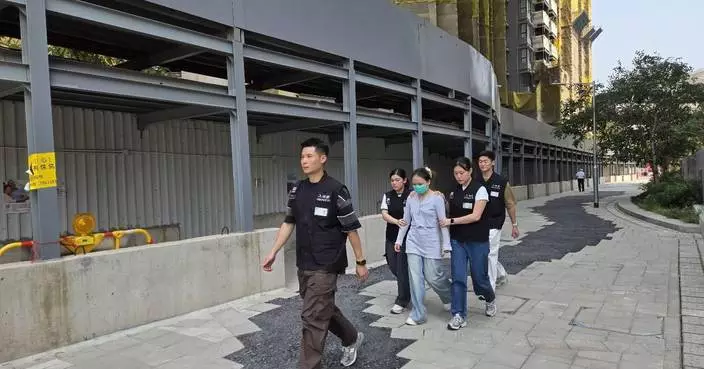
Hong Kong Customs today (March 27) mounted a special enforcement operationto combat unfair trade practices by a fitness centreand arrested two staff members of a chain fitness centre suspected of engaging in aggressive commercial practices in the course of selling fitness services, in contravention of the Trade Descriptions Ordinance (TDO).
Customs officers earlier received information that staff members of a chain fitness centre in Mong Kok separately enticed two customers to visit the fitness centre on the pretext of claiming a prize and redeeming gifts. Subsequently, the staff members forced the customers to make payments and sign fitness service contracts before allowing them to leave. The staff members were suspected of imposing undue influence and using aggressive commercial practices to force the customers to procure fitness services.
After an investigation, Customs officers today arrested a 30-year-old man and a 31-year-old woman. The investigation is ongoing.
Customs reminds traders to comply with the requirements of the TDO and urges consumers to procure services at reputable shops. Before making any purchase decision, consumers should be cautious when providing their identity cards or credit cards to salespersons. Consumers should firmly refuse to sign any documents if they do not clearly know the content and charges of the services, or have no intention of purchasing the services.
Under the TDO, any trader commits an offence of engaging in aggressive commercial practices if harassment, coercion or undue influence is used to impair a consumer's freedom of choice or conduct, causing the consumer to make a transactional decision. The maximum penalty upon conviction is a fine of $500,000 and imprisonment for five years.
Stressing its priority given to consumer rights protection and its zero tolerance for unfair trade practices by fitness centres, Customs pledges that it will continue its stringent enforcement action against unscrupulous traders.
Members of the public may report any suspected violation of the TDO to Customs' 24-hour hotline 182 8080 or its dedicated crime-reporting email account (crimereport@customs.gov.hk) or online form (eform.cefs.gov.hk/form/ced002).
Source: AI-found images