WASHINGTON (AP) — President Donald Trump has listed five objectives that the U.S. wants to achieve before ending its war with Iran. Now, one month into the conflict, he has suggested the U.S. may soon be “winding down” the operation, even though some of his key aims remain undefined or unfulfilled.
Trump last week outlined five goals for the massive air campaign. That's up from four laid out by his staff since the war's start on Feb. 28 (and up from the three generally enumerated by the Pentagon and Secretary of State Marco Rubio). Though the Trump administration has said its objectives are clear and unchanging, the list of priorities has expanded and shifted as the war has taken a toll on the global economy, tested alliances and raised unanswered questions about the planning for the conflict, its justification and its aftermath.
By most accounts, the strikes by the U.S. and Israel have significantly degraded Iran's military capabilities and killed scores of senior leaders. But those tactical successes don't necessarily translate to achieving all the president's strategic aims.
Some of his objectives are difficult to achieve and if the U.S. walks away with unfinished aims and Iran's paramilitary Islamic Revolutionary Guard in power, Trump could face political fallout at home and global repercussions about what was accomplished in his decision to launch a war of choice that upended the Middle East and roiled the global economy.
Trump and the White House have insisted the operation is going well and on track to meet its goals. “We are very close to meeting the core objectives of Operation Epic Fury, and this military mission continues unabated,” press secretary Karoline Leavitt told reporters this week, saying the operation was “ahead of schedule and performing exceptionally.”
Here’s a look at the objectives as laid out by Trump and where they stand:
One of the prime objectives laid out by the president with Iran was to “destroy their missiles and raze their missile industry to the ground."
The administration says that the ability has been significantly degraded. But Iran is still launching missiles and drones, including a series of barrages at Israel as Trump claimed that negotiations with Iran were underway.
Trump said Thursday at the White House that about 90% of Iran's missiles and launchers have been knocked out, and that drones and the factories where drones and missiles are manufactured “are way down.”
Before last week, the president and his administration sometimes listed this as a standalone objective, describing it as a goal to “raze their missile industry to the ground.” Other times, this has fallen off the list. The Pentagon has generally lumped it into the first objective of destroying Iran’s missile capability.
U.S. Central Command has said its targets for strikes in Iran have included weapons production and missile and drone manufacturing facilities. But Iranian attacks against its Gulf neighbors and Israel continue.
The U.S. and Israel quickly established air superiority in the skies above Iran, where they have flown largely unchallenged. Defense Secretary Pete Hegseth said Thursday that the U.S. has damaged or destroyed more than 150 Iranian vessels.
After a U.S. submarine torpedoed and sank an Iranian warship in early March, two other Iranian vessels — the IRIS Bushehr and IRIS Lavan — docked in Sri Lanka and India and sought assistance from the two countries. There has been no indication from the U.S. that they have since been sunk or captured.
Iran’s Revolutionary Guard has its own navy that also relies on smaller vessels to do swarm attacks and drop mines. It is unclear how much of that force remains or whether it has planted any mines. But Iranian missiles continue to disrupt shipping through the Strait of Hormuz.
Trump made a marked shift over the last year after declaring that the U.S. has “obliterated” Iran’s nuclear program in June, only for his aides to warn that Iran was just weeks away from a bomb to justify the current operations.
Iranian state media said its nuclear facilities were attacked Friday. A heavy water plant and a yellowcake production plant were struck and Israel later confirmed it was behind the strikes.
Israel had previously announced strikes on other nuclear-related targets, including the killing of a top Iranian nuclear scientist.
One of the most pressing questions in the war is whether Trump will seek to seize or destroy about 970 pounds of enriched uranium that Tehran has that could potentially be used for a weapon.
Trump, for the first time on Monday, said the U.S. would retrieve the uranium, which is believed to be buried deep under a mountain facility. But he indicated that would occur if the U.S. struck some kind of deal with Iran to the U.S. to retrieve it. Without permission from Iran, seizing it would be a dangerous mission, experts say, and would require a sizable deployment of U.S. troops into the country.
Trump, in a recent social media post, added a fifth objective for the U.S: “Protecting, at the highest level, our Middle Eastern Allies, including Israel, Saudi Arabia, Qatar, the United Arab Emirates, Bahrain, Kuwait, and others. The Hormuz Strait will have to be guarded and policed, as necessary, by other Nations who use it — The United States does not!”
The U.S. already maintains thousands of troops on bases and other installations in the region. It's not clear how much further Trump is willing to go to protect Middle East allies from threats, and Iran is still able to attack those countries. It’s also not clear how far the U.S. is willing to go to keep open the Strait of Hormuz. Trump has vacillated on whether the U.S. needs to take a role in policing it. He has again extended a deadline for Iran to reopen the Strait of Hormuz or face attacks on its power plants, now giving them until April 6.
Trump has spoken about regime change since the start of the war, encouraging the Iranian people to “take over your government” after Israel, assisted by the U.S., launched strikes that killed Iran's supreme leader and much of its upper echelon of leaders.
Trump and his administration, however, have never explicitly stated regime change as an objective in Iran, despite making it clear they want to end the repressive theocracy's 47-year reign.
Trump said Thursday at the White House that the regime is “largely decimated.”
“You could really say we have regime change because they have been killed,” he said in a Fox News Channel interview.
Now the U.S. claims to be holding talks with elements of the same Iranian government as it looks to bring a swift end to the conflict and reopen the Strait of Hormuz to maritime traffic. Iran, however, continues to publicly insist it is not negotiating with the White House.
And Trump's initial hopes for the Iranian people appear set to continue unfulfilled.
Trump administration officials have offered few updates about this objective, which the president has described as ensuring that “the region’s terrorist proxies can no longer destabilize the region or the world and attack our forces” and “ensuring that the Iranian regime cannot continue to arm, fund, and direct terrorist armies outside of their borders.”
While the U.S. has struck Iranian-aligned militia groups in Iraq, and Israel appears to be expanding its operations against Hezbollah in Lebanon, the administration has not offered details about how it’s going to permanently halt Tehran’s support for the militant groups.
The White House said in a statement that ensuring that Iranian proxy groups cannot further destabilize the region remains a key goal and that “proxies are hardly putting up a fight because our United States Military is so strong and lethal.”
Associated Press writer Konstantin Toropin contributed to this report.
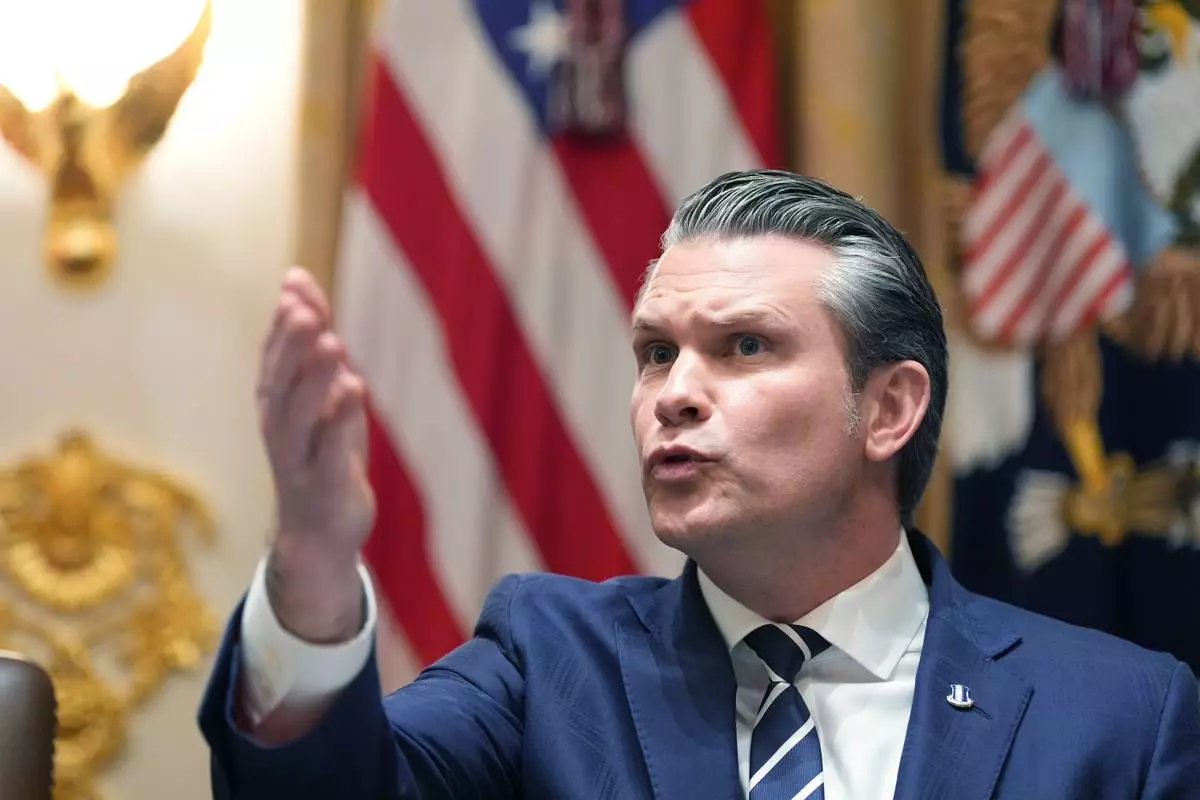
Defense Secretary Pete Hegseth speaks during a Cabinet meeting at the White House, Thursday, March 26, 2026, in Washington. (AP Photo/Alex Brandon)
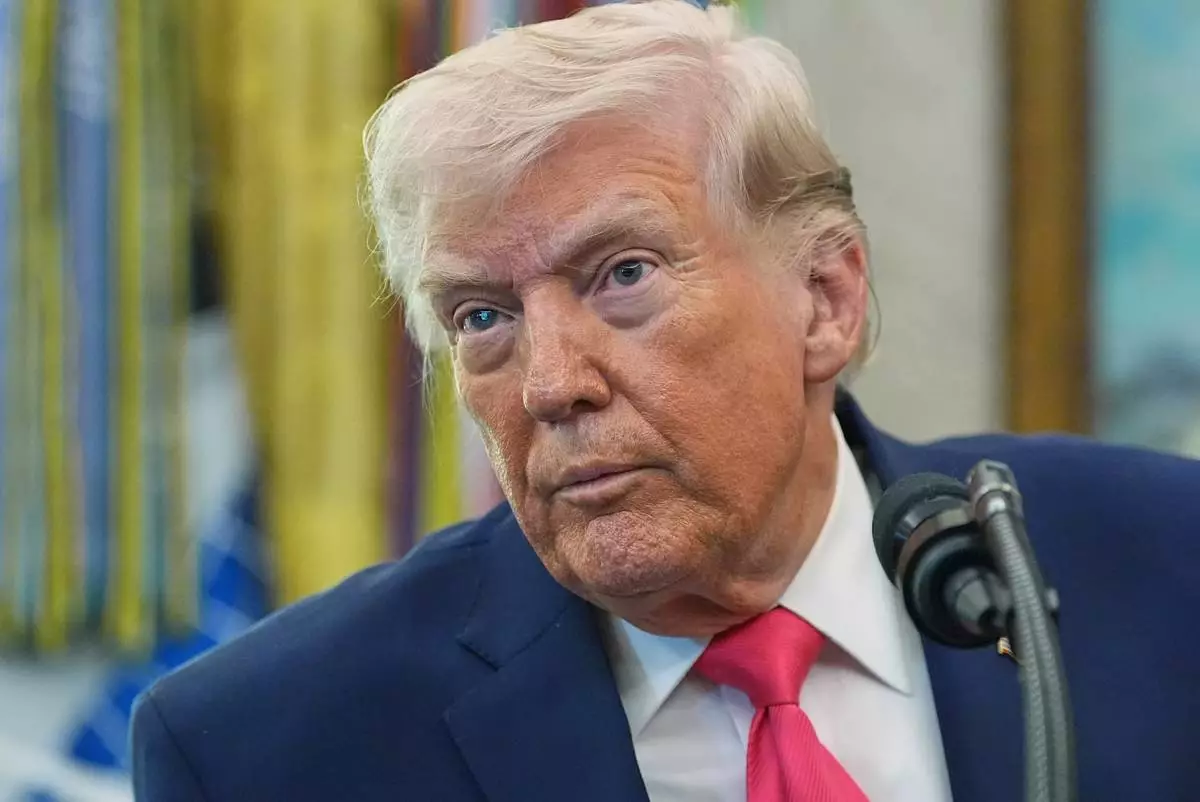
President Donald Trump listens to a reporter during the swearing in for Homeland Security Secretary Markwayne Mullin in the Oval Office of the White House, Tuesday, March 24, 2026, in Washington. (AP Photo/Alex Brandon)
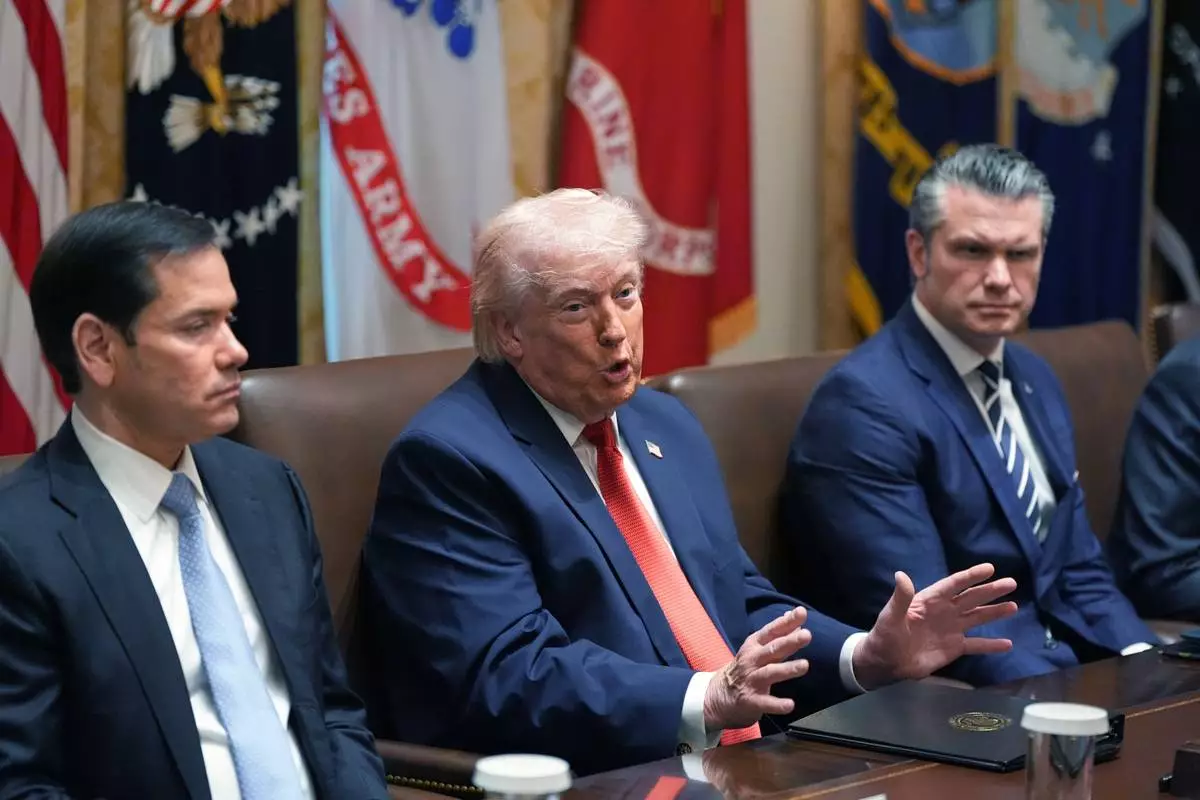
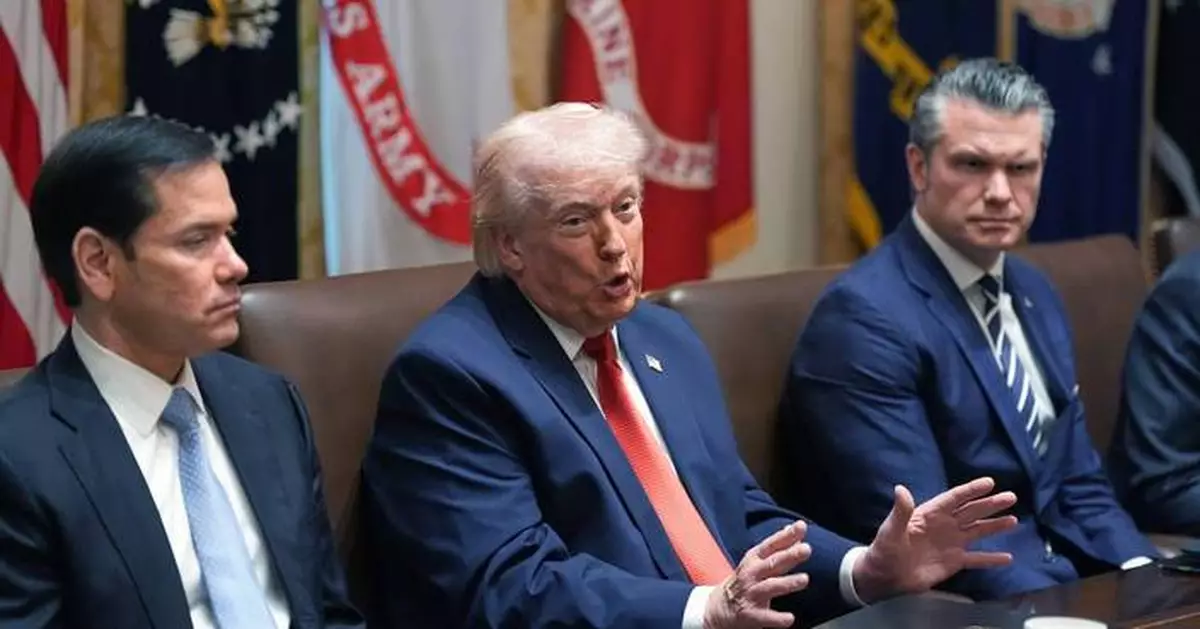
President Donald Trump speaks during a Cabinet meeting at the White House, Thursday, March 26, 2026, in Washington. (AP Photo/Alex Brandon)