SAN FRANCISCO & CHARLOTTE, N.C.--(BUSINESS WIRE)--Mar 28, 2026--
Visa, the Official Payment Technology Partner of the FIFA World Cup 26™, together with national nonprofit Street Soccer USA and Bank of America, the Official Bank Sponsor of the FIFA World Cup 26™, today announced a significant expansion of Visa Street Soccer Parks, bringing a new park to every host city in the U.S. ahead of this summer’s tournament.
This press release features multimedia. View the full release here: https://www.businesswire.com/news/home/20260328341048/en/
Designed to serve communities at the neighborhood level, Visa Street Soccer Parks transform underutilized spaces into vibrant, accessible hubs for sport, learning and connection. As the tournament approaches, the expansion will bring community-driven infrastructure and programming to all 11 U.S. FIFA World Cup 26™ Host Cities, including new parks in Boston, Dallas/Fort Worth, Houston, Los Angeles, Miami, Philadelphia and Seattle/Tacoma. This community-focused infrastructure investment reflects a shared commitment to harnessing the unifying power of sport to uplift local communities
Alongside the expansion of Visa Street Soccer Parks, Visa will activate Visa & Main, its new small business engagement program, to support local entrepreneurs in the neighborhoods surrounding each park.
“With the FIFA World Cup™ just months away, we’re shifting from preparation to execution,” said Kim Lawrence, Regional President, North America, Visa. “This tournament is a global moment, but its legacy is built locally—in the neighborhoods that will host fans, families and the next generation of players. By expanding Visa Street Soccer Parks and supporting the local businesses and people who activate them every day, we’re turning tournament momentum into meaningful opportunity that lasts well beyond the final match.”
Each park is custom designed to support meaningful, ongoing use by the communities it serves and features two professional grade Bank of America fields, lighting for extended play, learning centers and flexible gathering spaces. Programming is delivered in collaboration with community partners and tailored to local needs—supporting recreational play, academic enrichment, workforce readiness and community engagement.
“Communities are built on accessible opportunities for connection, healthy activity and growth,” said David Tyrie, President, Marketing, Digital and Specialized Consumer Client Solutions at Bank of America. “These are more than just places to play; they are spaces where people of all ages can find common ground through the game of soccer, develop essential life skills and forge lasting bonds that strengthen our community fabric.”
Since opening the first park in San Francisco last year, the initiative is already demonstrating its impact on the ground with additional parks in Denver, Kansas City and New York City actively hosting youth and adult leagues, after-school academic support, financial education sessions and job readiness programming in partnership with local organizations. Previously announced parks in Nashville and Atlanta remain in development, with opening dates to be shared as planning is finalized.
“This is not about short-term excitement—it’s about building something that lasts,” said Lawrence Cann, Co-Founder and President of Street Soccer USA. “These parks are designed to create consistency and access, but more importantly, they belong to the communities that activate them every day. Rooted in community leadership, they create a bottom-up, durable legacy built and sustained by the people who call these neighborhoods home. As we expand these efforts into additional cities across the country, the focus is permanence and ensuring this work endures long after the tournament ends.”
The FIFA World Cup 26™ will bring unprecedented global attention to the United States. Through Visa Street Soccer Parks—and by supporting the people and small businesses that activate them—Visa, Street Soccer USA and Bank of America are already delivering community-driven impact, building spaces that will serve local communities well beyond the tournament itself.
About Visa
Visa (NYSE: V) is a world leader in digital payments, facilitating transactions between consumers, merchants, financial institutions and government entities across more than 200 countries and territories. Our mission is to connect the world through the most innovative, convenient, reliable and secure payments network, enabling individuals, businesses and economies to thrive. We believe that economies that include everyone everywhere, uplift everyone everywhere and see access as foundational to the future of money movement. Learn more at Visa.com.
About Street Soccer USA
Street Soccer USA is a national non-profit organization dedicated to addressing social issues through soccer-based programs, providing underserved communities with pathways to achieve their potential. With a focus on accessible soccer programming and park development, SSUSA fosters safe, community-driven environments that empower individuals and strengthen neighborhoods. Through long standing relationships with municipal and state partners, thousands of donors, and key foundation, brands and pro soccer partners like Adam R. Scripps Foundation, UNIQLO, Borussia Dortmund, Serie A among others, SSUSA has grown to serve tens of thousands of youth and families each year across 16 cities, nationally, and growing.
About Bank of America
Bank of America is one of the world’s leading financial institutions, serving individual consumers, small and middle-market businesses and large corporations with a full range of banking, investing, asset management and other financial and risk management products and services. The company provides unmatched convenience in the United States, serving nearly 70 million clients with approximately 3,600 retail financial centers, approximately 15,000 ATMs (automated teller machines) and award-winning digital banking with approximately 59 million verified digital users. Bank of America is a global leader in wealth management, corporate and investment banking and trading across a broad range of asset classes, serving corporations, governments, institutions and individuals around the world. Bank of America offers industry-leading support to approximately 4 million small business households through a suite of innovative, easy-to-use online products and services. The company serves clients through operations across the United States, its territories and more than 35 countries. Bank of America Corporation stock (NYSE: BAC) is listed on the New York Stock Exchange.

Youth soccer players at inaugural Visa Street Soccer Park opening.
DUBAI, United Arab Emirates (AP) — Iranian-backed Houthi rebels claimed a missile launch toward Israel early Saturday, their first since the war in the Middle East started. The Israeli military said it intercepted the projectile.
The war, now marking its one-month anniversary, erupted after the United States and Israel attacked Iran, which retaliated with strikes against Israel and neighboring Gulf Arab states. The conflict has upended global air travel, disrupted oil exports and caused fuel prices to soar. Iran’s stranglehold on the Strait of Hormuz, a strategic waterway, has also exacerbated the economic fallout of the war.
Israel struck Iran’s nuclear facilities hours after threatening to “escalate and expand” its campaign against Tehran on Friday. Iran vowed to retaliate and struck a base in Saudi Arabia, wounding more than a dozen U.S. service members and damaging planes.
Before Saturday’s attack, there appeared to be a breakthrough as Tehran agreed to allow humanitarian aid and agricultural shipments through the strait.
Brig. Gen. Yahya Saree, a military spokesman for the Houthis, said in a statement aired Saturday morning on the rebels' Al-Masirah satellite television that the Houthis fired a barrage of ballistic missiles targeting what he described as “sensitive Israeli military sites” in southern Israel. The attack came hours after Saree signaled in a vague statement Friday that the rebels would join the war.
Sirens went off around Israel’s southern city of Beer Sheba and the area near Israel’s main nuclear research center as Iran and Hezbollah continued to fire on Israel overnight. Loud explosions also filled the air in Tel Aviv and Israel’s Fire and Rescue Service said it was responding to 11 different impact sites across the metro area.
Saturday's assault calls into question whether the Houthis will again target commercial shipping traveling through the Red Sea corridor, as they did during the Israel-Hamas war, upending traffic in the Red Sea through which about $1 trillion worth of goods passed each year before the war. The rebels also fired drones at Israel.
The potential involvement of the Houthis in the war would also complicate the deployment of the USS Gerald R. Ford, the aircraft carrier that first went to port in Crete for repairs and on to Split, Croatia, where it arrived on Saturday. Sending the carrier back into the Red Sea could draw it into the same high tempo of attacks seen by the USS Dwight D. Eisenhower in 2024 and the USS Harry S. Truman in the 2025 American campaign against the Houthis.
The Houthis have held Yemen’s capital, Sanaa, since 2014, and so far had stayed out of the war as the rebels have had an uneasy ceasefire for years with Saudi Arabia, which launched a war against the group on behalf of Yemen’s exiled government in 2015.
More than two dozen U.S. troops have been wounded in Iranian attacks on Saudi Arabia’s Prince Sultan Air Base in the past week, according to two people who have been briefed on the matter. Iran fired six ballistic missiles and 29 drones at the base in the Friday attack that injured at least 15 troops, including five seriously, according to the sources who were not authorized to comment publicly and spoke on the condition of anonymity.
The base, about 96 kilometers (60 miles) from the Saudi capital of Riyadh, came under attack twice earlier in the week, including a strike that wounded 14 U.S. troops, according to the people briefed on the matter. The base is run by the Royal Saudi Air Force but is also used by U.S. troops.
The latest attacks happened after Trump claimed that talks on ending the war were going “very well” and that he had given Tehran until April 6 to reopen the Strait of Hormuz. Iran maintains that it has not engaged in any negotiations.
With the economic repercussions from the war extending far beyond the Middle East, Trump is under growing pressure to end Iran’s chokehold on the strait.
Pakistan said Saturday Saudi Arabia, Turkey and Egypt will send their top diplomats to Islamabad for talks aimed at ending the war.
Foreign Minister Ishaq Dar said in a statement that Saudi Foreign Minister Prince Faisal bin Farhan, Turkey’s Foreign Minister Hakan Fidan and Egypt’s Foreign Minister Badr Abdelatty will arrive Sunday for a two-day visit to “hold in-depth discussions on a range of issues, including efforts to de-escalate tensions in the region.”
Pakistan’s Prime Minister Shehbaz Sharif said Saturday he spoke with Iranian President Masoud Pezeshkian for more than an hour, holding “extensive discussions” on regional hostilities and efforts aimed at end the war.
Trump envoy Steve Witkoff has said Washington delivered a 15-point “action list” to Iran for a possible ceasefire, with a proposal to restrict Iran’s nuclear program and reopen the strait. Tehran rejected the proposal and presented its own five-point proposal that included reparations and recognition of its sovereignty over the waterway.
Meanwhile, U.S. ships drew closer to the region carrying some 2,500 Marines, and at least 1,000 paratroopers from the 82nd Airborne trained to land in hostile territory to secure key positions and airfields have been ordered to the Middle East.
Secretary of State Marco Rubio said the U.S. “can achieve all of our objectives without ground troops.”
Iranian authorities say more than 1,900 people have been killed in the Islamic Republic, while 19 have been reported dead in Israel.
In Lebanon, where Israel has started an invasion in the south, officials said more than 1,100 people have been killed since the start of the war.
Meanwhile, at least 13 U.S. troops have been reported killed, while in Iraq, where Iranian-supported militia groups have entered the conflict, 80 members of the security forces have died.
In the Gulf states, 20 people have been killed and four others in the occupied West Bank.
The U.N.’s International Organization for Migration also said Friday that 82,000 civilian buildings in Iran, including hospitals and the homes of 180,000 people, were damaged.
Israel focused its attacks Friday on sites “in the heart of Tehran” where ballistic missiles and other weapons are produced, the military said. It said it also hit missile launchers and storage sites in Western Iran, while witnesses in eastern Tehran reported a partial power outage following airstrikes.
Iran’s Atomic Energy Organization said the Shahid Khondab Heavy Water Complex in Arak and the Ardakan yellowcake production plant in Yazd Province were targeted, IRNA reported. The strikes did not cause casualties and there was no risk of contamination, it said.
Yellowcake is a concentrated form of uranium after impurities are removed from the raw ore. Heavy water is used as a moderator in nuclear reactors.
The Israeli military later said raw materials are processed for enrichment at the Yazd plant and the strike was a major blow to Iran's nuclear program. Tehran vowed to retaliate.
Iran agreed to allow humanitarian aid and agricultural shipments through the Strait of Hormuz following a request from the United Nations.
Ali Bahreini, the country’s ambassador to the U.N. in Geneva, said Iran agreed to “facilitate and expedite” such movement.
The vital waterway usually handles a fifth of the world’s oil shipments and nearly a third of the world’s fertilizer trade. While markets and governments have largely focused on blocked supplies of oil and natural gas, the restriction of fertilizer ingredients and trade threatens farming and food security around the world.
Magdy reported from Cairo, Madhani from Washington and Gambrell from Dubai. Associated Press writer Munir Ahmed in Islamabad contributed to this report.
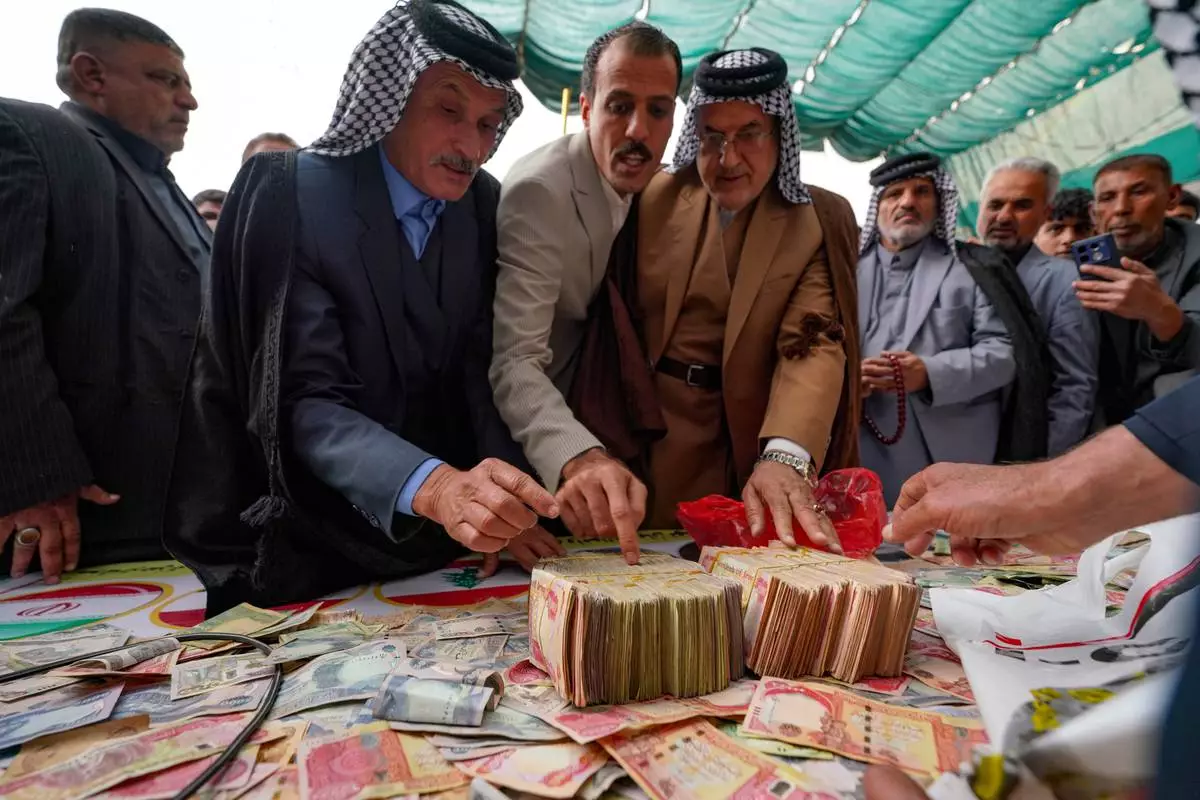
People donate money following a call by Grand Ayatollah Ali al-Sistani to support Iran and Lebanon during the war with the U.S. and Israel, Friday, March 27, 2026, in Babylon, Iraq. (AP Photo/Anmar Khalil)
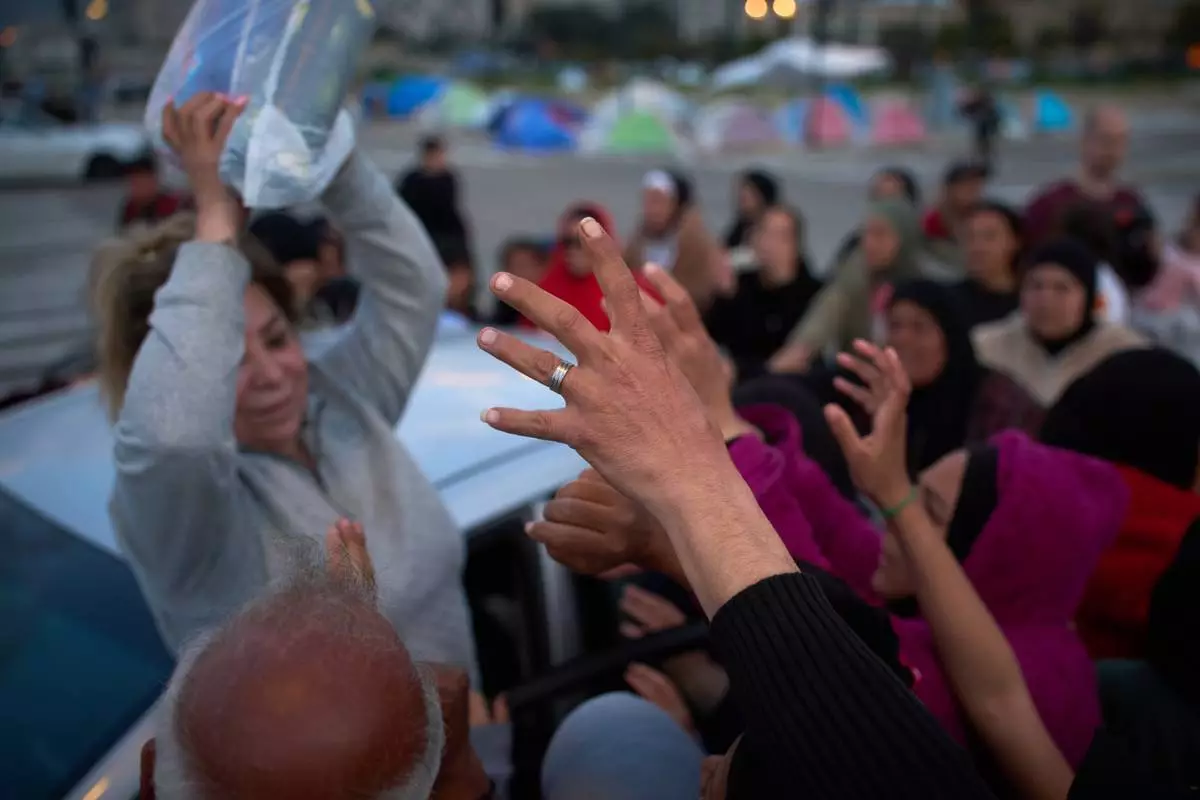
Displaced women reach out to receive an aid package distributed by a volunteer in Beirut, Lebanon, Friday, March 27, 2026. (AP Photo/Emilio Morenatti)
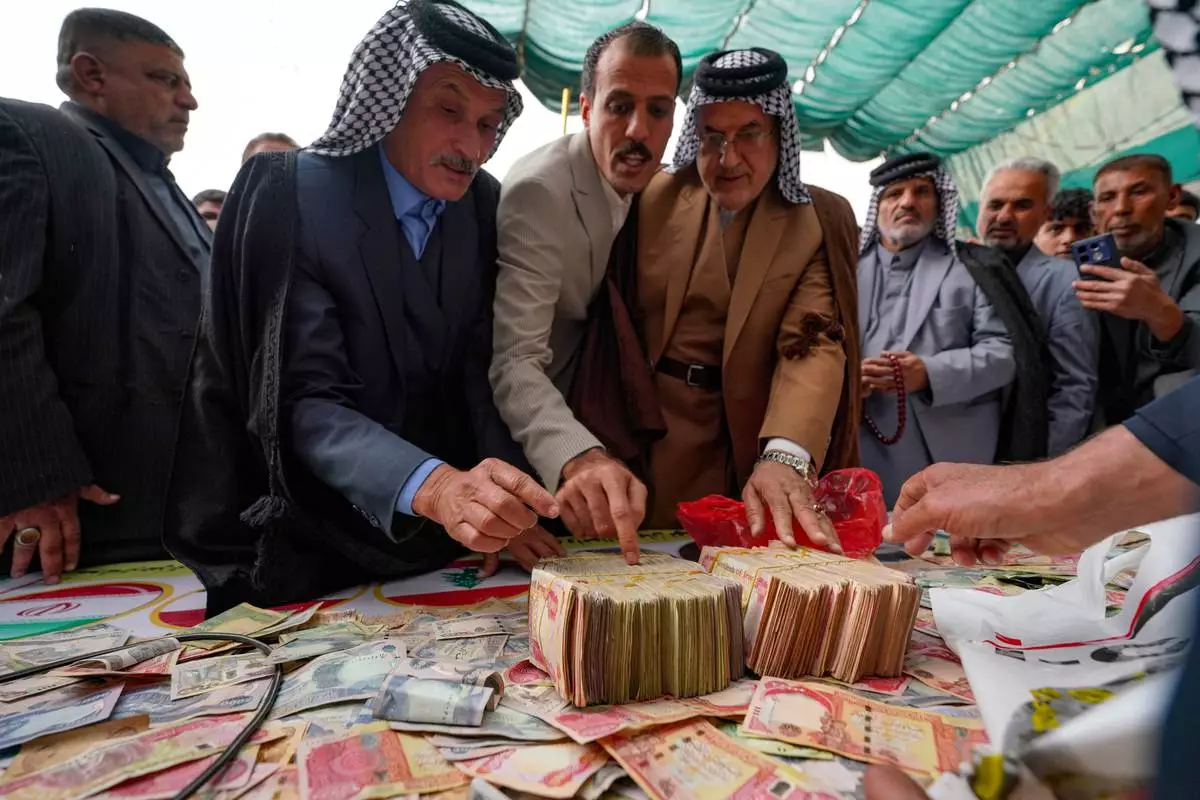
People donate money following a call by Grand Ayatollah Ali al-Sistani to support Iran and Lebanon during the war with the U.S. and Israel, Friday, March 27, 2026, in Babylon, Iraq. (AP Photo/Anmar Khalil)
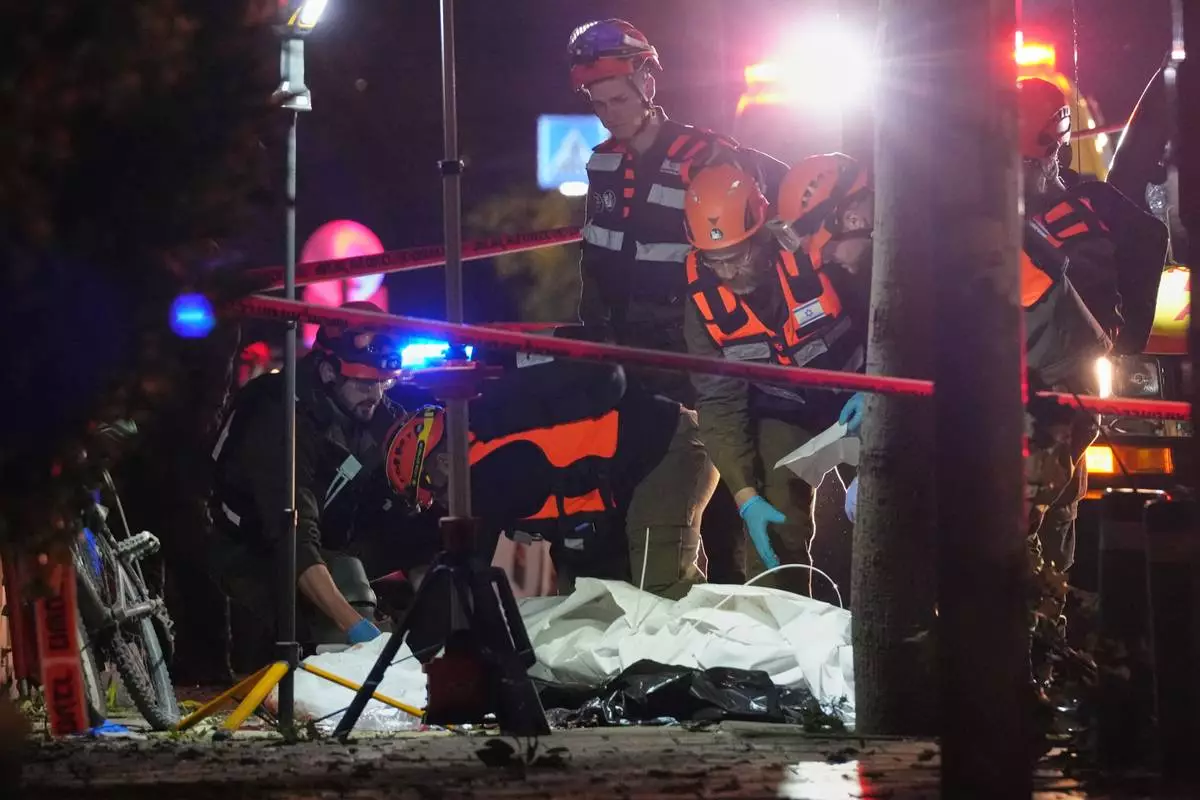
Israeli first responders remove the body of a person from the site of a missile strike in Tel Aviv, Israel, early Saturday, March 28, 2026. (AP Photo/Maya Levin)
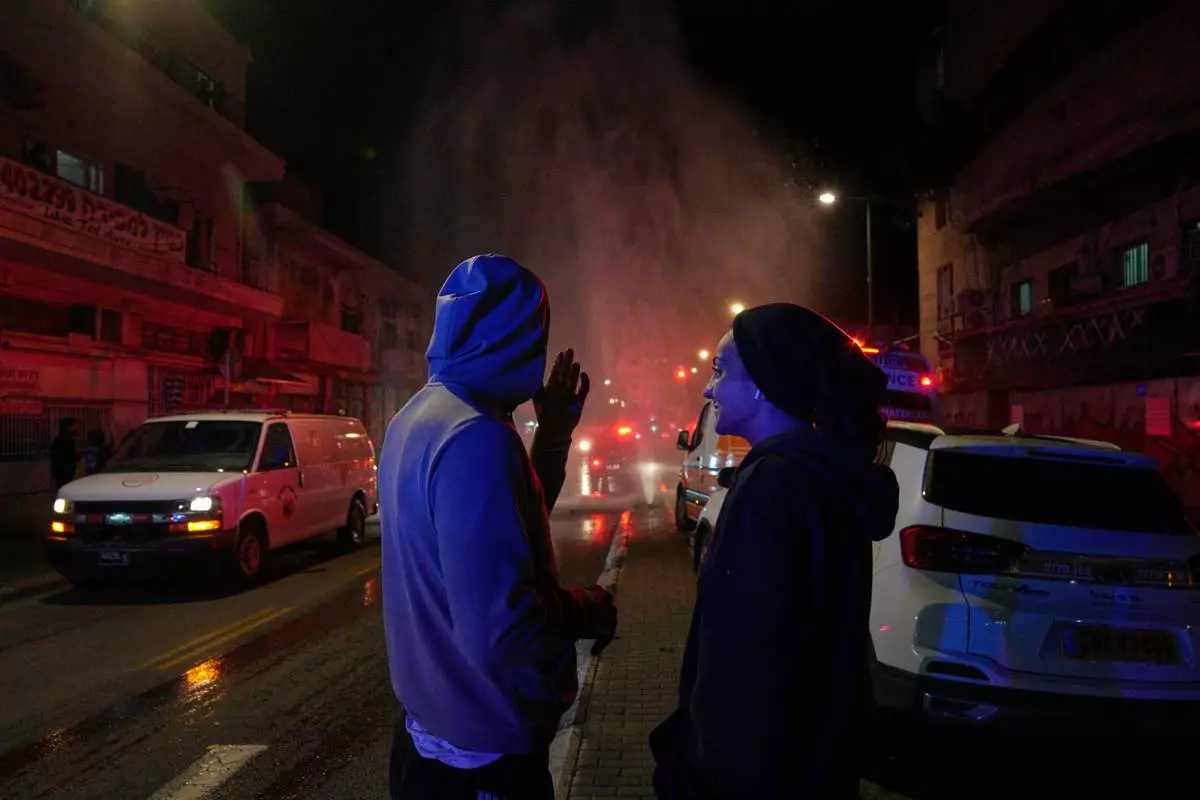
Residents look on as first responders work at the site of a missile strike in Tel Aviv, Israel, early Saturday, March 28, 2026. (AP Photo/Maya Levin)
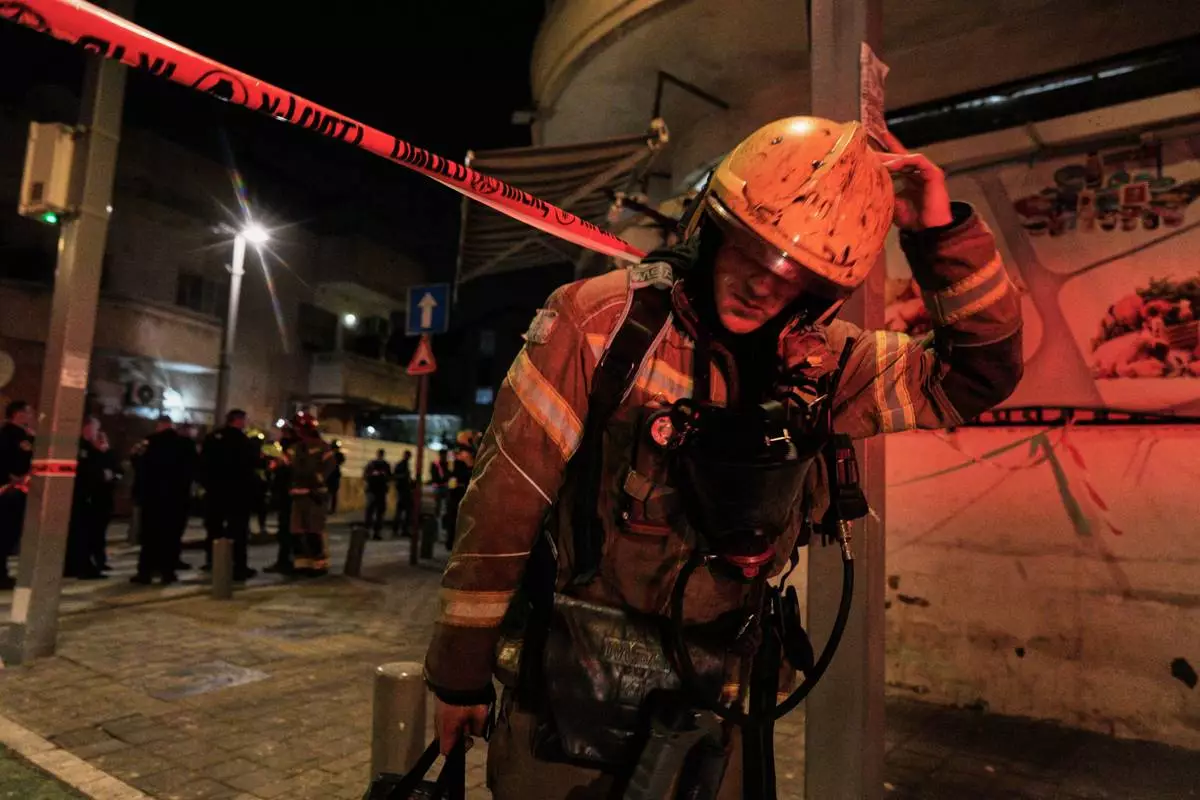
An Israeli first responder walks from the site of a missile strike in Tel Aviv, Israel, early Saturday, March 28, 2026. (AP Photo/Maya Levin)