JERUSALEM (AP) — Jerusalem’s major holy sites are shuttered and families are dejected and exhausted ahead of Passover and Easter as the Iran war enters its fifth week. The mood stands in stark contrast to a usual spring, when longer days herald a period of family gatherings and an influx of tourists for the major Jewish and Christian holidays.
Metal shutters are drawn on nearly all stores in the Old City, home to key holy sites, and only scattered footsteps echo on deserted stone alleyways. Vast plazas are missing the typical throngs of faithful and tourists.
Click to Gallery
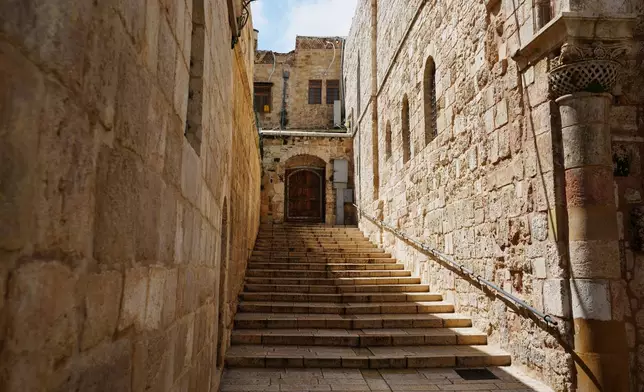
A locked door and empty stairs leading to the Church of the Holy Sepulchre in Jerusalem's Old City, closed to visitors amid heightened security during the war with Iran, Friday, March 27, 2026. (AP Photo/Mahmoud Illean)
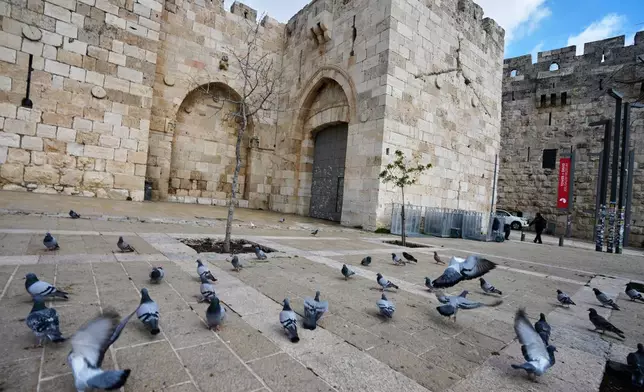
A locked Jaffa Gate in Jerusalem's Old City stands closed to visitors amid the war with Iran, Friday, March 27, 2026. (AP Photo/Mahmoud Illean)
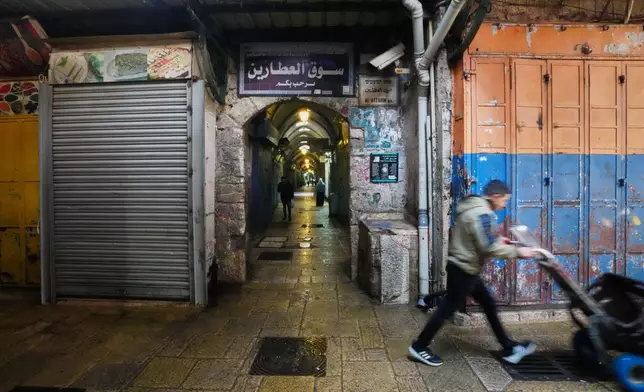
A man pushes a handcart past closed shops in Jerusalem's Old City, Friday, March 27, 2026, as the area remains closed to visitors amid the war with Iran. (AP Photo/Mahmoud Illean)
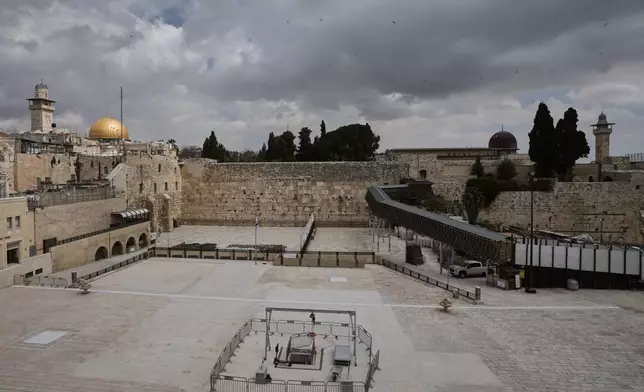
The Western Wall plaza in Jerusalem's Old City stands empty as the area remains closed to visitors amid the war with Iran. Wednesday, March 25, 2026. (AP Photo/Mahmoud Illean)
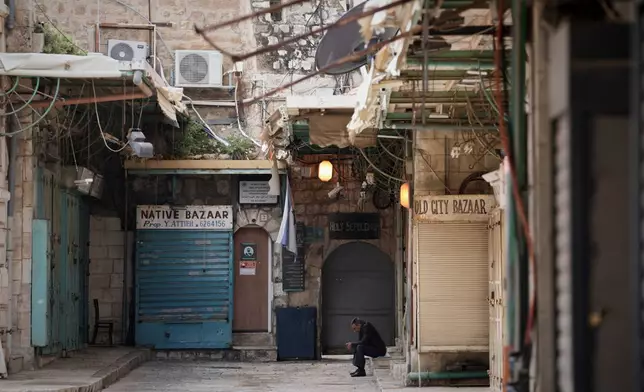
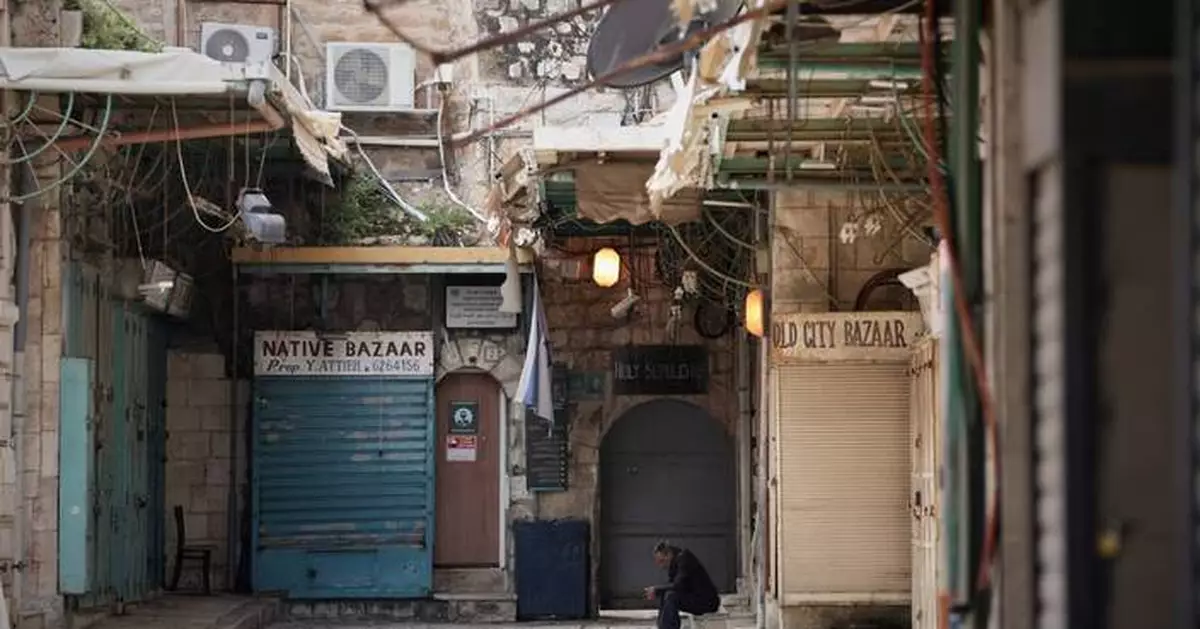
A man sits beside a locked door of the Church of the Holy Sepulchre and shuttered shops in Jerusalem’s Old City, which remains off limits to visitors amid the war with Iran, Friday, March 27, 2026. (AP Photo/Mahmoud Illean)
Jerusalem has largely escaped past wars, with Israel's enemies appearing to be hesitant to launch missiles near the city's Muslim holy sites. But since Israel and the United States launched strikes on Iran on Feb. 28, Jerusalem has repeatedly come under fire.
Earlier this month, an intercepted Iranian missile sprayed shrapnel on the rooftop of the Greek Orthodox Patriarchate, just steps from the Church of the Holy Sepulcher, one of the most important sites in Christianity. The church, built on what is revered by many Christians as the site of Jesus’ crucifixion, burial and resurrection, remains closed under Israeli military guidelines prohibiting gatherings of more than 50 people.
Missile debris also hit a road leading to the Western Wall, the holiest site where Jews can pray.
From his office overlooking the plaza at the Western Wall, now also closed to worshipers, Rabbi Shmuel Rabinowitz, lamented the empty plaza.
“The heart aches greatly, it bleeds, seeing the Western Wall as it looks now,” he said.
The massive priestly blessing for Passover, which usually draws tens of thousands, will take place with just 50 worshippers, Rabinowitz said. That's the maximum allowed to pray together in the enclosed area by the Western Wall under wartime safety guidelines — reminiscent of the restrictions imposed during the coronavirus pandemic.
The Latin Patriarchate canceled the Palm Sunday procession in Jerusalem, complying with Israeli military guidelines that limited gatherings to under 50 people.
Despite that, the Patriarchate said Jerusalem police prevented the Catholic Church’s top leaders from entering the Church of the Holy Sepulchre to celebrate the Mass marking Jesus’ triumphant entry into Jerusalem.
The Catholic church called it “a manifestly unreasonable and grossly disproportionate measure" and said it was "the first time in centuries” that Church leaders were prevented from celebrating Palm Sunday at the place where Christians believe Jesus was crucified.
The Jerusalem police did not have immediate comment.
The traditional Palm Sunday procession normally sees tens of thousands of Christians from around the world walk from the Mount of Olives down the narrow, hilly streets toward the Old City, waving palm fronds and singing.
Rami Asakrieh, the parish priest for Jerusalem's Catholics, said the community will sorely miss the procession, a deeply emotional and spiritual part of the holiday. But the cancellation is also a reminder that faith comes internally from the heart, not from external actions, he added.
“We are celebrating resurrection, resurrection is from death and winning the pain and the war," he said. "It will not come by having fear, but by having faith.”
A local Catholic high school, empty of students as classes have been canceled, was also recently hit by debris from an Iranian missile interception, Asakrieh said.
A Franciscan priest, Asakrieh is still celebrating Mass for up to 50 parishioners at the Saint Savoir monastery's cavernous marble hall, near the centuries-old complex’s music school, the Magnificat Institute. The school was built in what was once the convent's basement, which has been approved by the Israeli military as a suitable shelter.
Jerusalem's smaller synagogues, mosques and churches are also open to groups of up to 50 people — if they are located close to a shelter or a safe space.
Next to the Western Wall is Al Aqsa Mosque compound, Islam’s third-holiest site, which has also stood empty since the war started, canceling prayers during most of the Muslim holy month of Ramadan, which ended 10 days ago.
Fayez Dakkak, a third-generation Muslim storeowner in the Old City whose shop has catered to Christian pilgrims since 1942, said he was heartbroken over Al Aqsa's closure during the Islamic holy month.
“It’s like there was no Ramadan for us,” Dakkak said. He added that he prayed several times at a local mosque but that it can't compare to being able to pray at Al Aqsa.
Police orders have closed his shop, along with all non-food stores in the Old City — also part of the safety guidelines during the war.
Dakkak said that for years now, as the numbers of pilgrims and tourists plummeted, he's barely been able to make ends meet. Still, it would have been nice to open his shop for some semblance of routine and just chat with other storeowners.
Israelis have also grown weary after nearly a month of daily sirens, 16 civilian deaths and dozens of people seriously injured.
For seder, Jewish families are planning smaller, stripped-down ceremonial Passover dinners that commemorate the Jewish exodus from Egypt — a far cry from times when large family gatherings often welcomed relatives from abroad. Israel's Ben Gurion airport has been operating on a severely limited basis throughout the war. Many point out the irony that ahead of Passover, Israelis are fleeing the country through the land border crossing with Egypt to the Sinai desert, while the holiday commemorates the story of ancient Israelites leaving Egypt via Sinai to Israel.
Observant Jewish families are frantically cleaning for Passover to remove traces of leavening, which requires “turning the house upside-down in between running for the shelter,” said Jamie Geller, a cookbook author who works in Jerusalem’s Old City.
From her office at Aish, a Jewish educational institute with headquarters next to the Western Wall plaza, Geller can see where shrapnel dented and smashed rooftops, roads and a parking lot in the area.
“It’s shocking,” she said. “The Old City has always been a bit off limits for international terror and war, but not this time.”
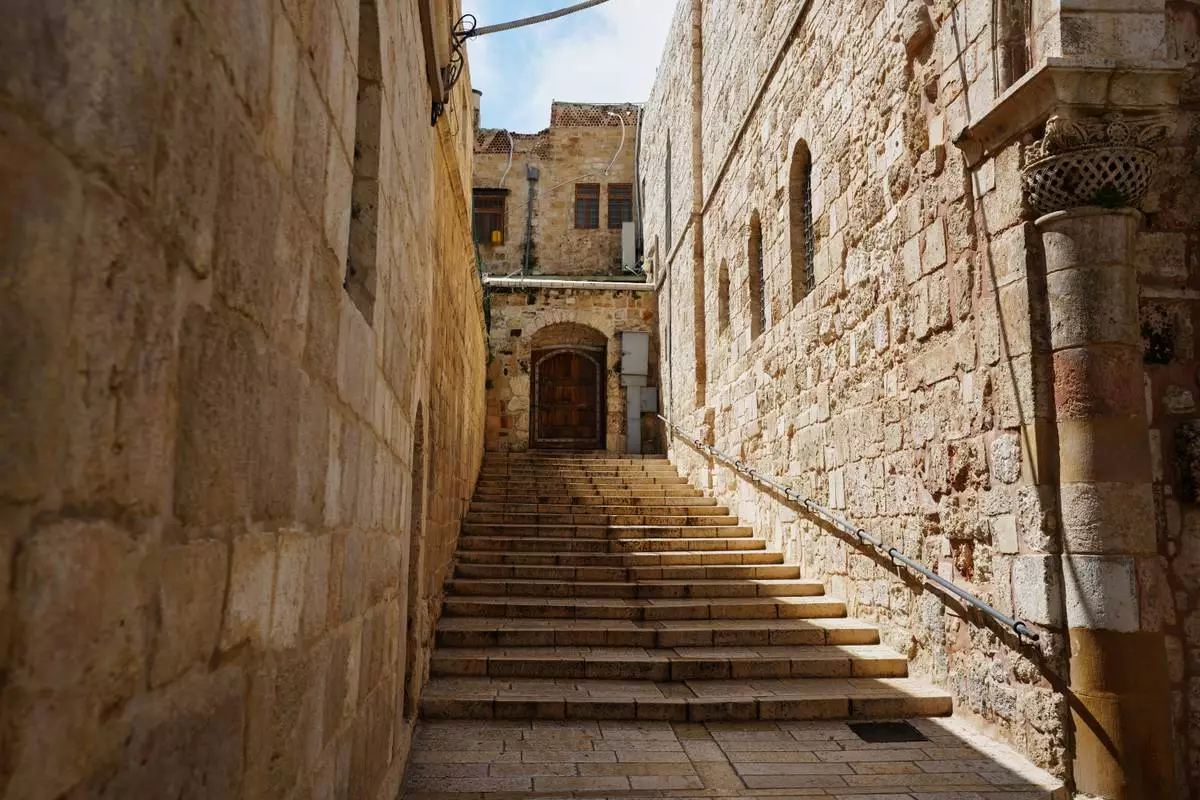
A locked door and empty stairs leading to the Church of the Holy Sepulchre in Jerusalem's Old City, closed to visitors amid heightened security during the war with Iran, Friday, March 27, 2026. (AP Photo/Mahmoud Illean)
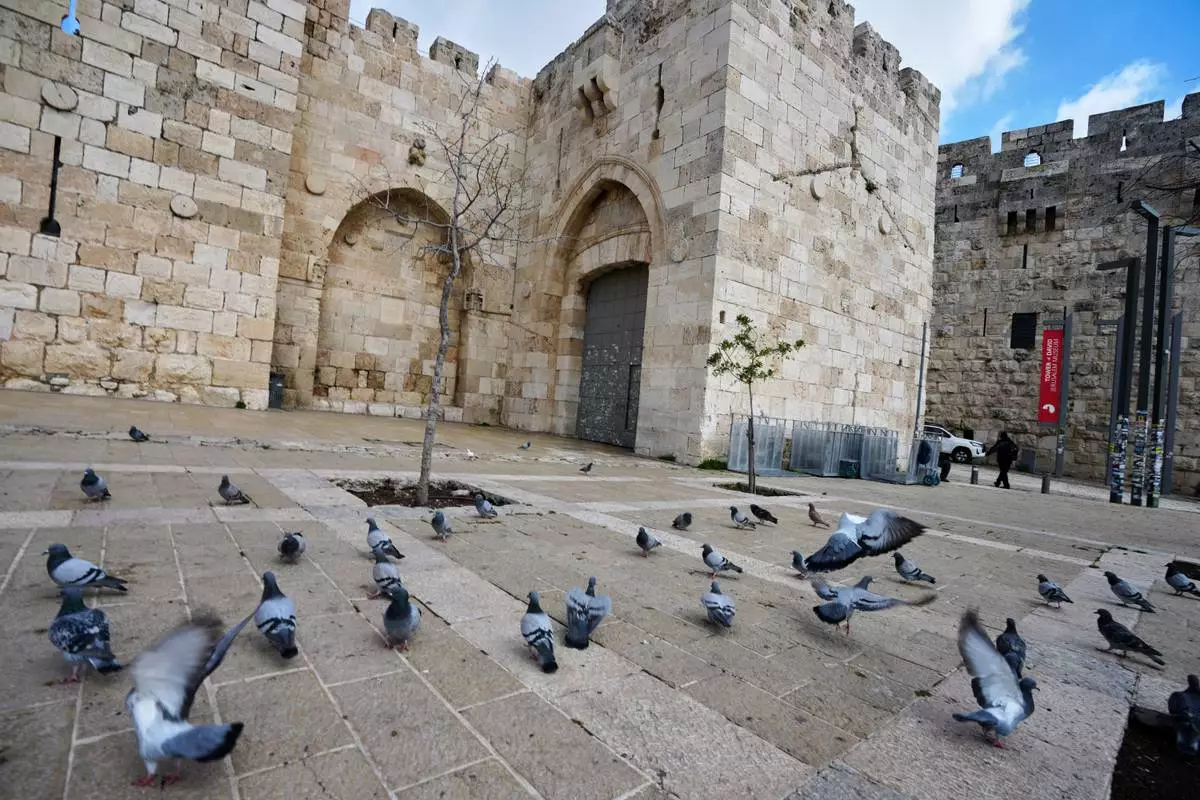
A locked Jaffa Gate in Jerusalem's Old City stands closed to visitors amid the war with Iran, Friday, March 27, 2026. (AP Photo/Mahmoud Illean)
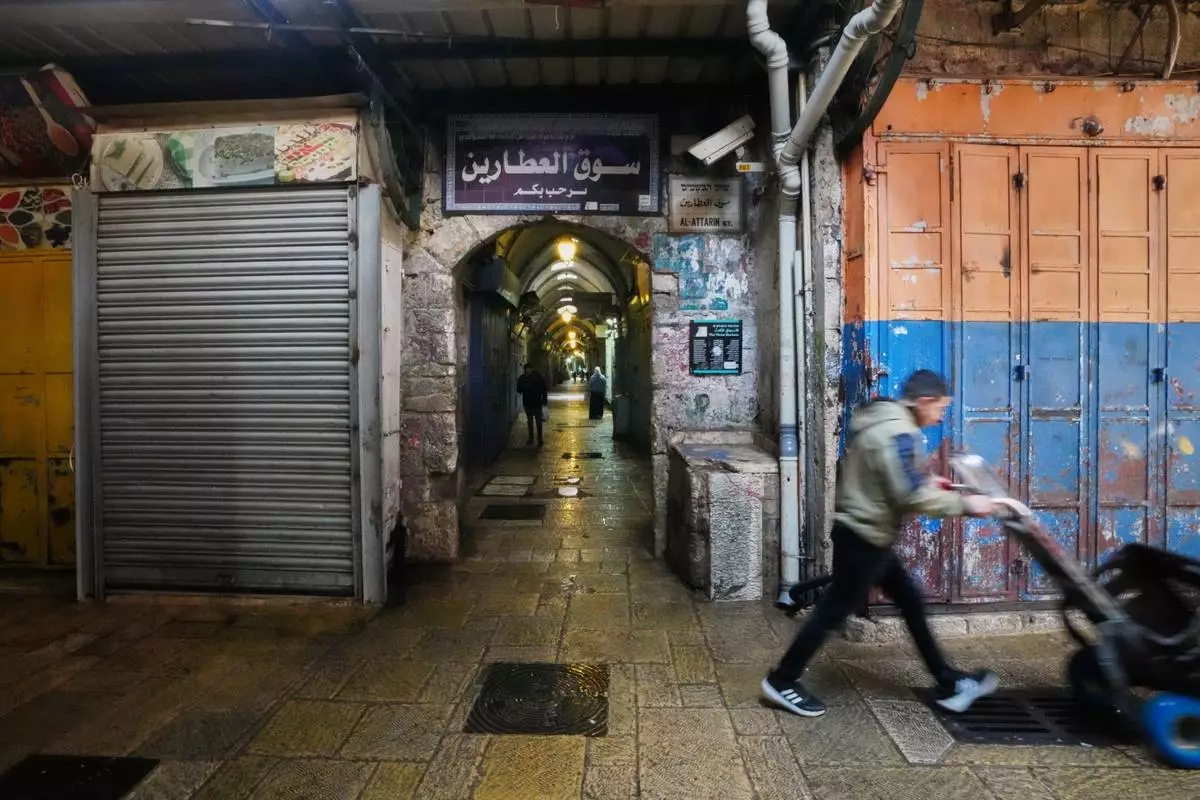
A man pushes a handcart past closed shops in Jerusalem's Old City, Friday, March 27, 2026, as the area remains closed to visitors amid the war with Iran. (AP Photo/Mahmoud Illean)
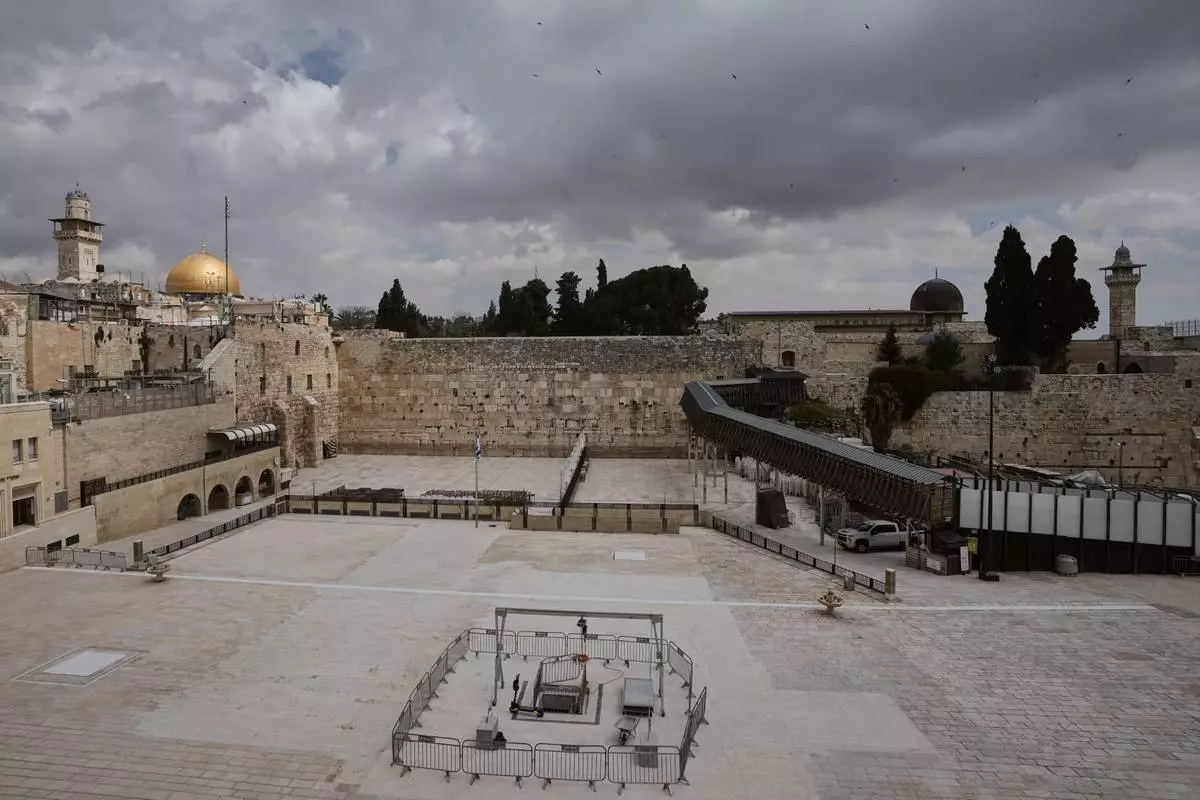
The Western Wall plaza in Jerusalem's Old City stands empty as the area remains closed to visitors amid the war with Iran. Wednesday, March 25, 2026. (AP Photo/Mahmoud Illean)
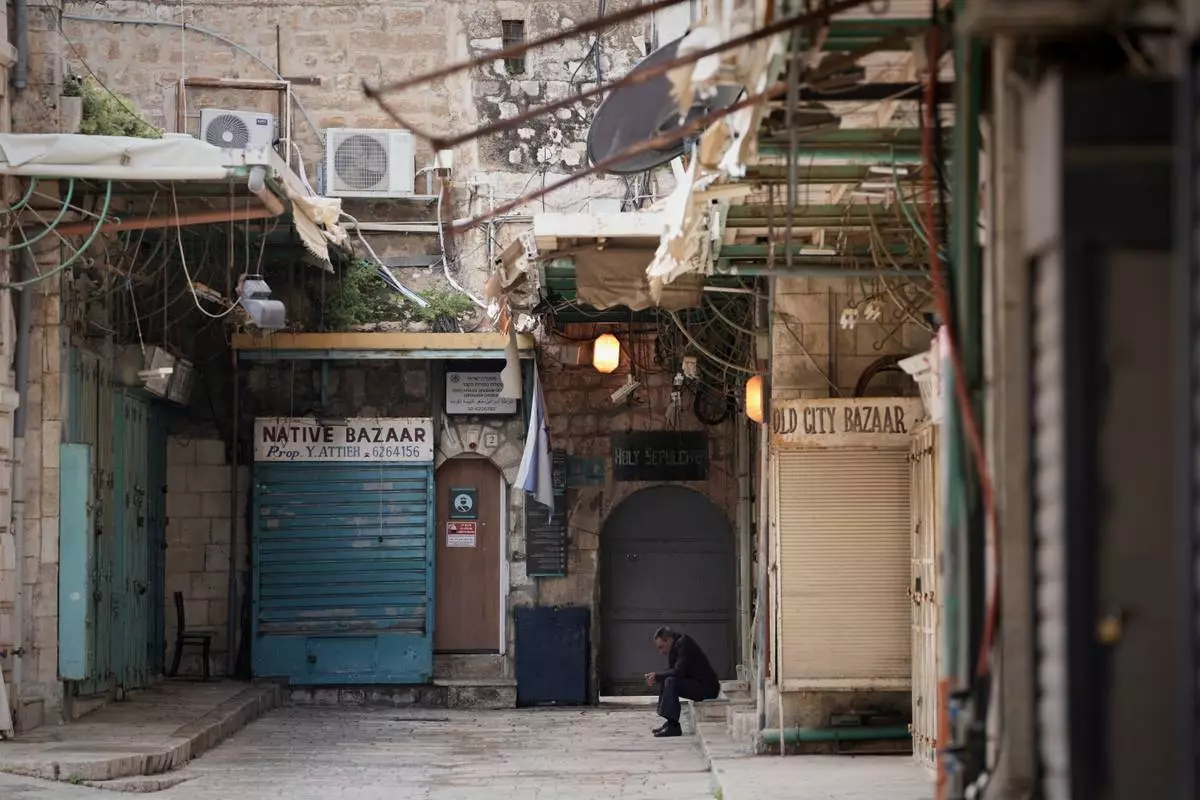
A man sits beside a locked door of the Church of the Holy Sepulchre and shuttered shops in Jerusalem’s Old City, which remains off limits to visitors amid the war with Iran, Friday, March 27, 2026. (AP Photo/Mahmoud Illean)