The artificial intelligence (AI) technology in China has grown to be exceptional at every level, Olivier Chiabodo, the co-founder and CEO of The Explorers, a French company which excels in UHD 8K images, said at the 2026 Zhongguancun Forum Annual Conference that ended in Beijing on Sunday.
Serving as the European Vice President of the UHD World Association (UWA), Chiabodo said he has been amazed at the exchanges with his Chinese partners in terms of innovation.
"Whenever I have the opportunity to speak at a forum, or even just listen, or collaborate with Chinese companies, I am always amazed. Everyone is very positive, seeking new solutions, looking to the future. And that is extremely energizing, extremely positive," he said.
Opened on March 25, this year's Zhongguancun Forum Annual Conference was held under the theme "Full Integration Between Technological and Industrial Innovation."
At the forum, Chiabodo shared his insights on technological transformations, the growing role of AI, and the essential role of culture in a world marked by uncertainties.
"I believe AI here in China is exceptional at every level. Personally, I’m more interested in something related to production, and especially themes around culture and nature. But it’s true that Huawei, which is probably the most technologically advanced company in the world, has exceptional AI models. Over the past few days, I’ve had the chance to see some demonstrations and collaborate with them. It’s exceptional," he said.
Chiabodo expressed the hope that his company could serve as a cultural and technological bridge between France and China.
"I believe that in this world where there are many conflicts, the French and Europeans have a major role to play in creating the link between Europe and China. Culture is probably the strongest bond we can use to build connections in general. And I hope that my company The Explorers and myself can be a small link, or at least a thread, that will enable this cooperation, this cultural and technological connection between our two sides," said Chiabodo.
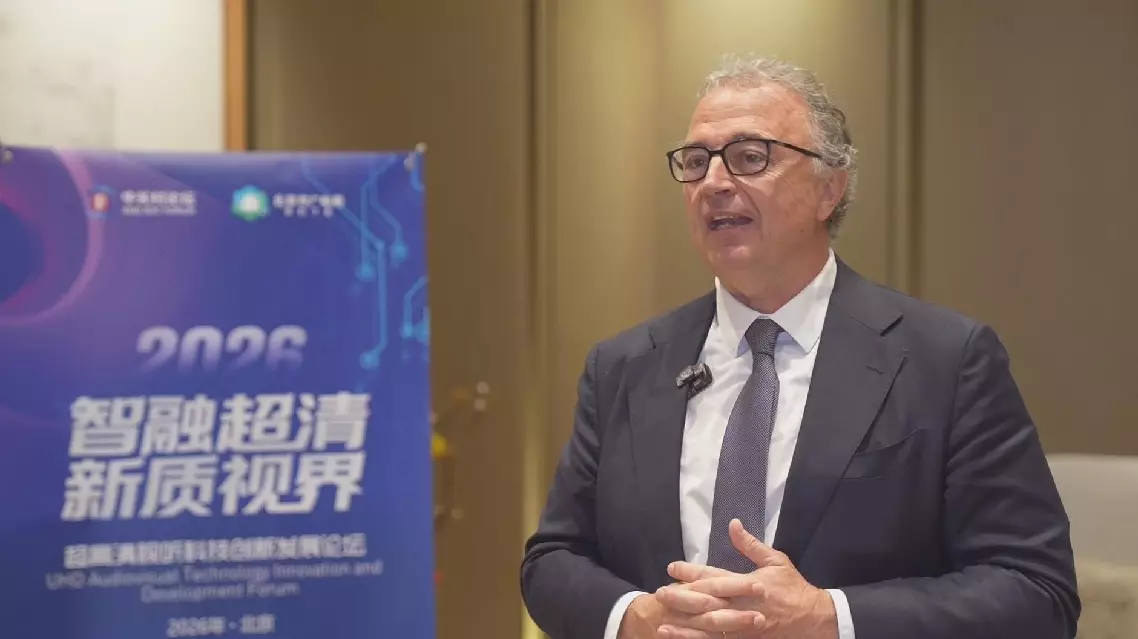
AI in China becomes exceptional at all levels: French entrepreneur
With the Pinglu Canal set to open within the year, the new river-sea shipping corridor is poised to reshape the logistic landscape for the Guangxi Zhuang Autonomous Region and southwest China while spurring industrial and infrastructural upgrades, as its economic ripple effects have already spread beyond the region.
The Pinglu Canal, currently under construction in south China's Guangxi, stretches more than 134 kilometers, aiming to link the Xijiang River, a major waterway in southwest China, with ports in the Beibu Gulf.
Regarded as the shortest and most economical and convenient waterway route from Guangxi and southwest China to the region of the Association of Southeast Asian Nations (ASEAN), the project is already beginning to generate growing economic spillover effects.
In Pingtang Village, located at the canal's starting point, local residents are seeking to leverage the area's geographic advantage by building a cultural and tourism brand as the "first village of the canal," hoping to give the local economy a fresh start.
Moreover, the canal's benefits are extending to more regions and industries.
At the Xijiang Heavy Industry shipbuilding base, about 110 kilometers from the canal's starting point, the construction of a 5,000-ton river-sea direct shipping demonstration vessel for the Pinglu Canal has completed several key procedures.
The new generation of ships, designed to support the canal's core transport capacity, features greener and smarter technologies.
"The ship is equipped with an LNG clean-energy power system as well as seven functional modules including an intelligent engine room, reducing carbon dioxide emissions by 23 percent and sulfur compounds by 99 percent. The Pinglu Canal will not only change the shipping routes, but also drive the transformation and upgrading of our shipbuilding industry. This is an unprecedented opportunity," said Wei Mingliu, assistant general manager of the shipbuilder.
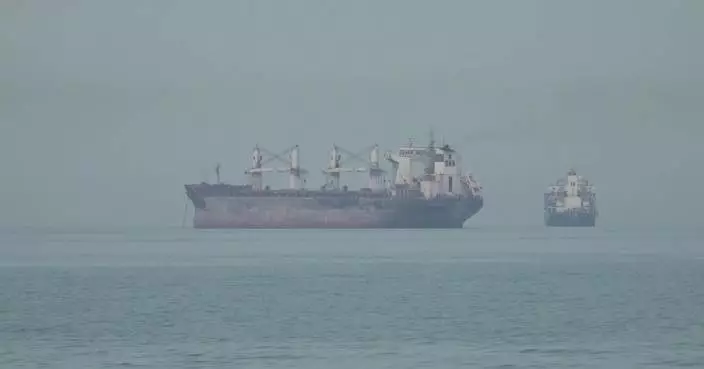
Meanwhile, Qinzhou Port, located at the canal's sea outlet, has completed renovations of multiple berths to meet demands for large-tonnage, multi-cargo and high-efficiency multimodal transport which is soon to emerge after the canal opens.
In addition, nearby ports are also accelerating upgrades of port infrastructure and cargo distribution systems.
"After the Pinglu Canal opens, it will rewrite the history of inland shipping in Guangxi and southwest China that relies on 'detours through Guangdong to reach the sea', reshape the regional cargo transport pattern, and greatly expand the service radius of the Beibu Gulf Port, enabling its leap from a port to a 'transportation hub' in overall capacity," said Yu Shuoxian, an engineer from Qinzhou automated container terminal.
In fact, the canal's influence has already extended beyond Guangxi.
In a petrochemical industrial park less than three kilometers from Qinzhou Port, a new plant is being built by a new energy company from southwest China's Sichuan Province. It is expected to add 300,000 tons of annual capacity upon completion next year.
According to a senior executive, the company is attracted by the logistics cost advantage brought by the Pinglu Canal.
"Qinzhou Port is the nearest seaport outlet port to the Sichuan-Chongqing region. Our raw materials mainly come from the Sichuan-Chongqing region, but our products are primarily sold to Europe. After the Pinglu Canal opens, both raw materials and products can be transported by waterway. Just in terms of raw material transportation costs, it is expected to drop directly by 10 percent to 20 percent, which directly enhances our market competitiveness," said Xia Diqiang, CFO of the company.
In addition to Sichuan, companies from Yunnan, Chongqing, Guizhou and other southwestern regions within the canal's reach are accelerating their entry into the canal's prime shipping route.
Bulk cargo shipped via the Pinglu Canal directly to the Beibu Gulf and onward to global routes is expected to significantly reduce logistics costs.
At the same time, industrial coordination is also taking shape. Port-adjacent, water-oriented industries including AI, next-generation information technology, modern green chemical engineering, and nonferrous metals are being planned along the canal route.
Authorities in Guangxi said they are strengthening industrial cooperation with eastern coastal regions and provinces along the New International Land-Sea Trade Corridor, a key logistics network connecting China's western regions to global markets, promoting integration of cross-border industrial and supply chains, and fully leveraging the Pinglu Canal's comprehensive benefits as a backbone project of the corridor.
Ports, shipbuilders, industries race to seize opportunities from Pinglu Canal construction