The first embodied intelligent humanoid robot from the Shanghai Automotive Industry Corporation (SAIC) began work on a battery mass-production line on Friday, marking one of the first practical applications in China's automotive industry and ushering in a new era of transformation in auto manufacturing. SAIC said the deployed humanoid robot costs about 400,000 yuan (about 57,871 U.S. dollars) and is manufactured by Zhiyuan Robotics, one of the leading humanoid robot developers in Shanghai.
Compared to industrial robots, humanoid robots offer a wider range of applications and greater flexibility, according to experts.
The humanoid robot's torso can move up and down, allowing it to reach objects both above and below. Like a human, it can also lean forward to perform complex movements.
Equipped with two high-precision cameras as its "eyes", it currently achieves a grasping accuracy of approximately 0.1 millimeters.
The combination of these features enables the humanoid robot to work effectively in real-world industrial settings.
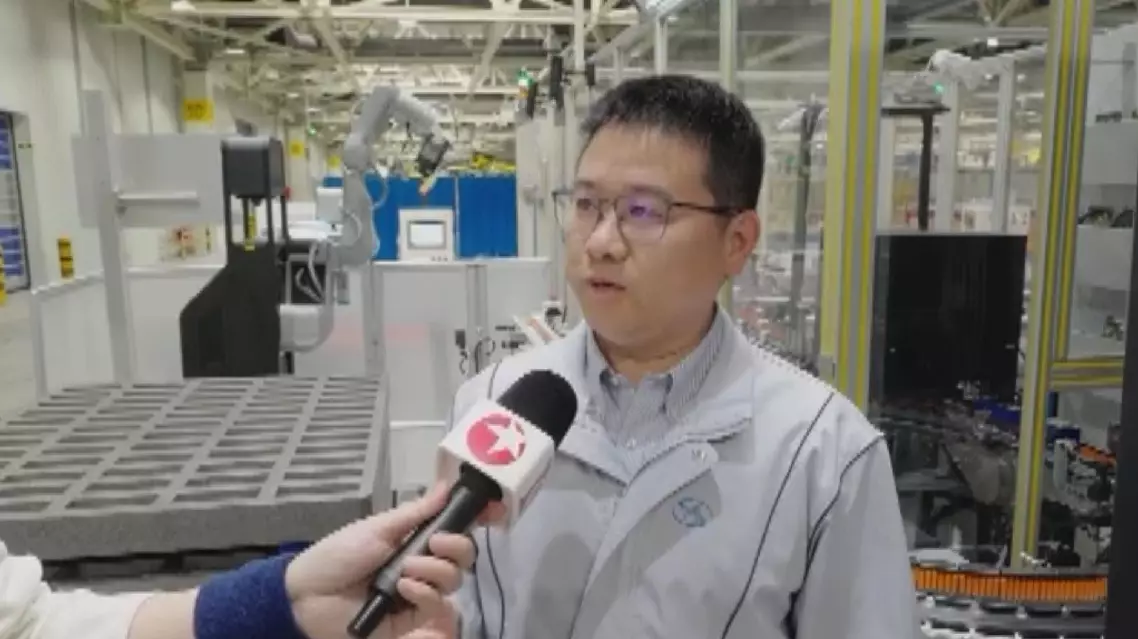
"Regarding positioning requirements for incoming materials and the random nature of those materials, it can flexibly and intelligently adapt to relevant specific needs," said Zhang Yunfei, director of Intelligent Manufacturing and Equipment Engineering at SAIC-General Motors (GM).
According to SAIC, the humanoid robot is also multifunctional. By equipping it with new robotic arms and providing data-driven training, it can quickly adapt to new production processes.
By the end of 2025, China had more than 140 humanoid robot manufacturers, with 330 products released.
The industry has moved beyond laboratory demonstrations and technology showcases to focus on engineering and real-world applications.
China's automaker deploys embodied humanoid robot to production line
Leaders In Future Tech+ (LIFT+), a large-scale documentary program focused on youth sci-tech innovation, made for integrated-media, was officially aired on Oct 3 by China Media Group (CMG).
Starting Oct 3, the program is set to air every Saturday at 17:30 on CMG's CCTV-4 channel and be simultaneously presented across its Yangshipin new media matrix.
The program, jointly produced by China Media Group, the Ministry of Education, and the municipal government of Nanjing, capital of east China's Jiangsu Province, brings together resources from industry, academia, research, and investment sectors to make a comprehensive showcase of the thriving ecosystem and dynamic growth of China's youth-led sci-tech innovation.
Since its launch, LIFT+ has held 15 preliminary rounds spanning 10 cities across China. Following a rigorous selection process involving nearly 500 registered enterprises and innovation teams, 100 groups of young innovators -- with an average age of 28 -- gathered in Nanjing to embark on a journey of growth, bridging technology with capital and connecting creative ideas with industry.
The premiere episode of the program uses a documentary-style perspective to chronicle the journeys of 22 teams of young innovators who unanimously passed the preliminary selection. A panel of "Youth Innovation Ambassadors" -- comprising over a dozen academicians, industry experts, and heads of leading investment firms -- is set up to help the young innovators take the center stage.
LIFT+ has demonstrated significant effectiveness in empowering the industry. Through multiple rounds of selection and a series of implementation-focused events, the program has secured investment intentions totaling over 485 million yuan (nearly 72.5 million US dollars) across 34 participating sci-tech enterprises. Furthermore, its collaboration with the city of Nanjing has led to 31 businesses setting up shop there.
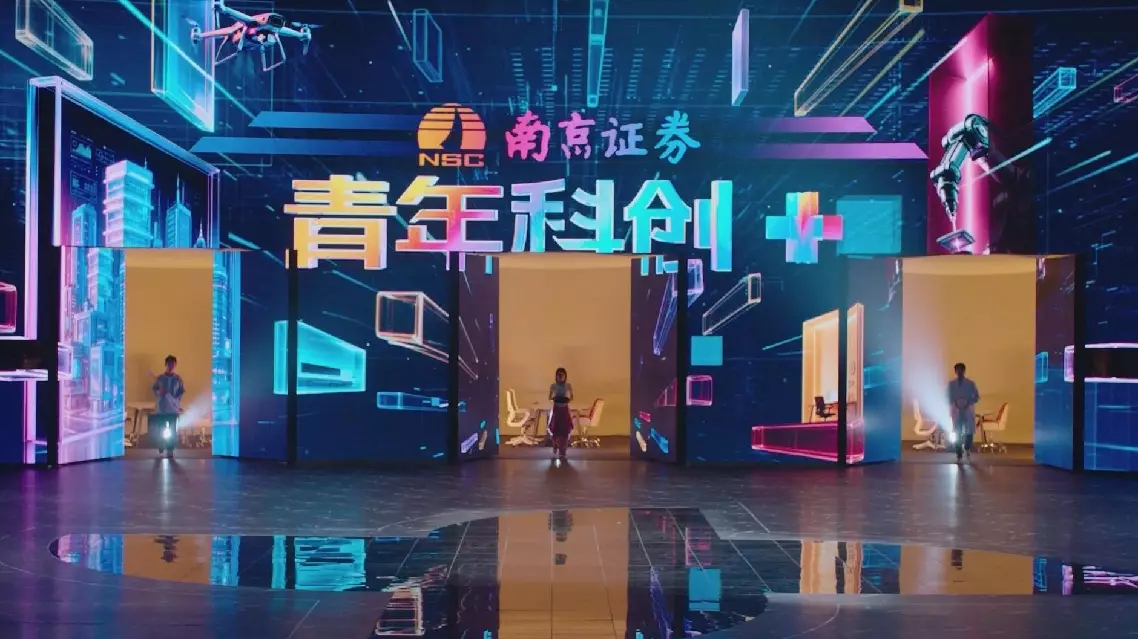
CMG airs documentary program on youth sci-tech innovation