Authorities in Los Angeles deployed tear gas near a federal detention center and made dozens of arrests following one of thousands of “No Kings” rallies held this weekend across the United States and in Europe to protest President Donald Trump's actions and the war in Iran.
Los Angeles police said Sunday that 74 people were arrested for failing to heed a dispersal order that was given after Saturday's rally ended. One other person was taken into custody on suspicion of possessing a weapon that police described as a dagger.
Click to Gallery
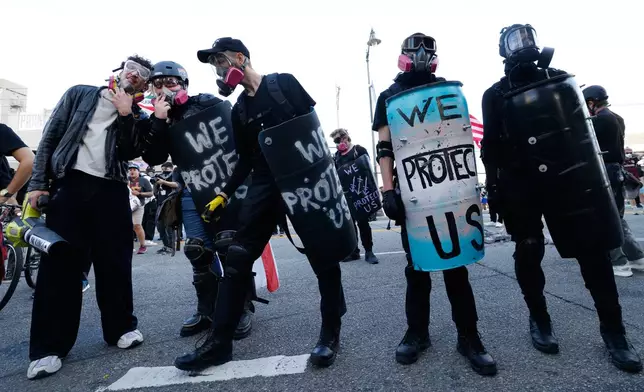
Protestors stand off against police outside the Metropolitan Detention Center in downtown Los Angeles during a "No Kings" rally Saturday, March 28, 2026. (AP Photo/Jill Connelly)
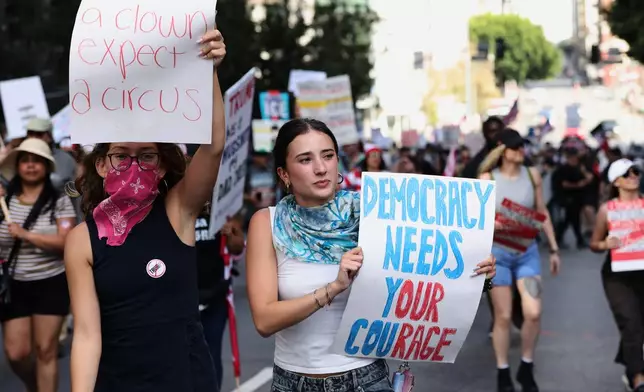
Demonstrators march through downtown Los Angeles during a "No Kings" protest Saturday, March 28, 2026. (AP Photo/Jill Connelly)
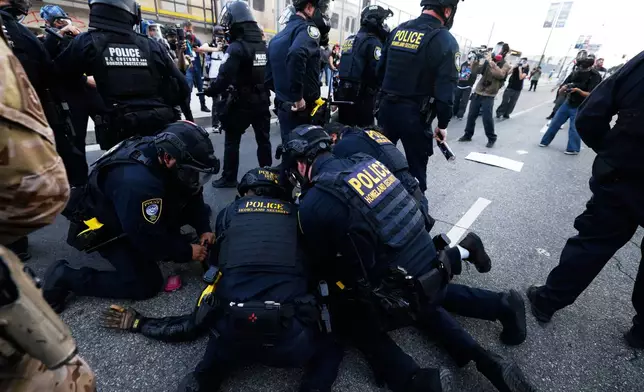
Police detain a protestor near the Metropolitan Detention Center in downtown Los Angeles during a "No Kings" protest Saturday, March 28, 2026. (AP Photo/Jill Connelly)
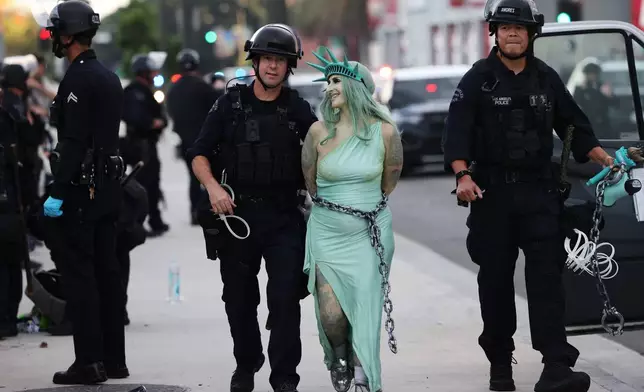
Police arrest a protestor dressed as the Statue of Liberty, in downtown Los Angeles after the "No Kings" rally Saturday, March 28, 2026. (AP Photo/Jill Connelly)
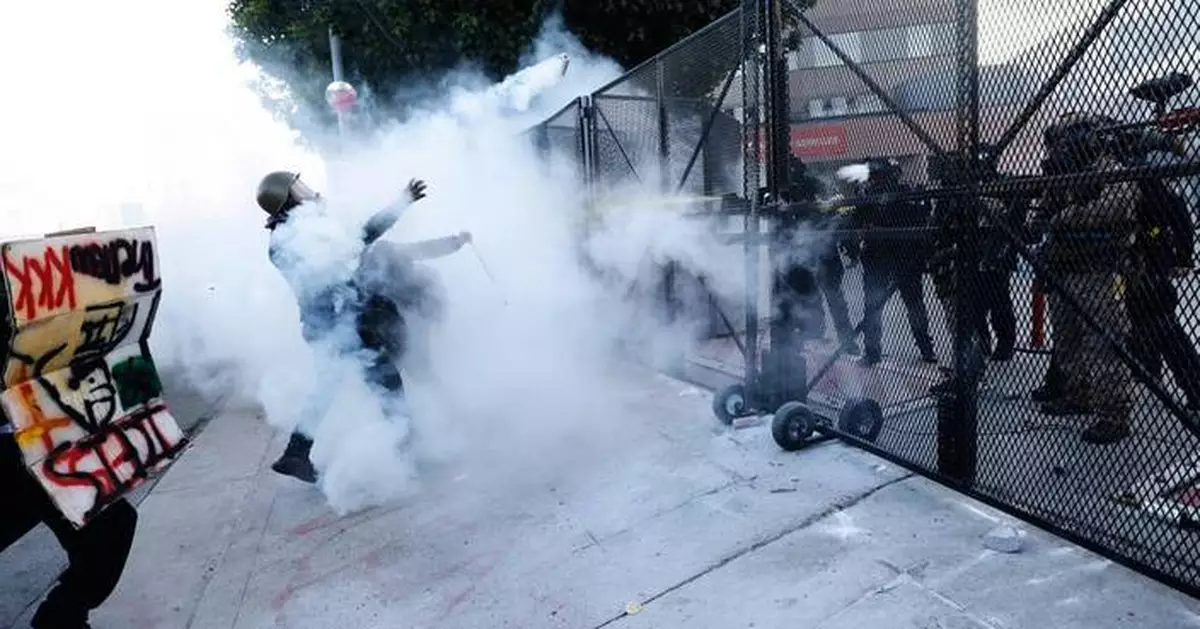
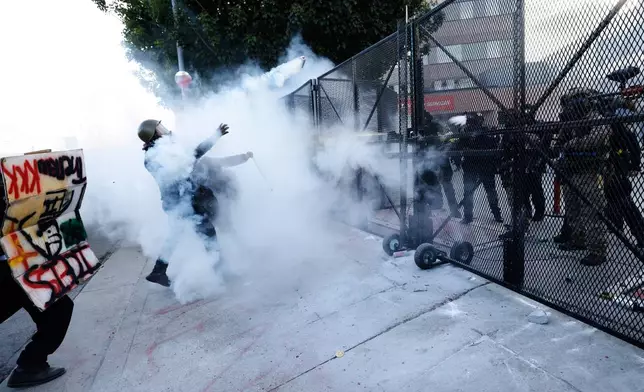
Protestors face off against police firing tear gas outside the Metropolitan Detention Center in downtown Los Angeles during a "No Kings" rally Saturday, March 28, 2026. (AP Photo/Jill Connelly)
The arrests stood out from what otherwise were mostly peaceful protests. Organizers said there were more than 3,100 events registered in all 50 U.S. states.
As hundreds of protesters surrounded a federal complex in downtown Los Angeles, some threw rocks, bottles and broken concrete blocks at officers, the U.S. Department of Homeland Security said in a statement late Saturday night.
Two officers who were struck by concrete blocks sustained undetermined injuries and received medical attention, DHS said.
Andre Andrews Jr., a Navy veteran and independent journalist, had walked the entire route of the Los Angeles rally and captured video of the event. He said after authorities gave the dispersal order, they deployed tear-gas canisters when protesters didn't comply. Some protesters wearing shields and gas masks on the other side of a fence at the federal complex picked up the canisters and tossed them back at police. Andrews said some people also smashed concrete barriers into smaller pieces and threw them at authorities.
“Does it make L.A. look bad? No. They’re bad actors causing problems, for sure,” Andrews said. “The peaceful protest was good for the cause. You have the right to do that. But the other people, they were definitely causing problems.”
Police said those arrested included eight juveniles. Also detained was a woman dressed as the Statue of Liberty, smiling as she chatted with an officer who led her away.
In Denver, the police department said on the social platform X that it declared an unlawful assembly and deployed smoke canisters after a small group of protesters blocked a road and did not leave as asked. At least eight people were arrested, as was a ninth person later who police said was throwing objects.
Nationwide, people rallied from New York City, with almost 8.5 million residents in a solidly blue state, to Driggs, a town of fewer than 2,000 people in eastern Idaho, a state Trump carried with 66% of the vote in 2024. In Minnesota, a flagship event on the Capitol lawn in St. Paul drew Bruce Springsteen as its headliner to celebrate resistance to Trump's aggressive immigration enforcement.
Demonstrations also were held in more than a dozen other countries, according to co-executive director Ezra Levin of Indivisible, which spearheaded the events.
U.S. organizers have estimated that the first two rounds of No Kings rallies drew more than 5 million people in June and 7 million in October. Levin estimated at least 8 million participants showed up Saturday.
“It was powerful. It was historic. It was joyful. It was boisterous,” Levin said Sunday. “I’d say it went pretty well.”
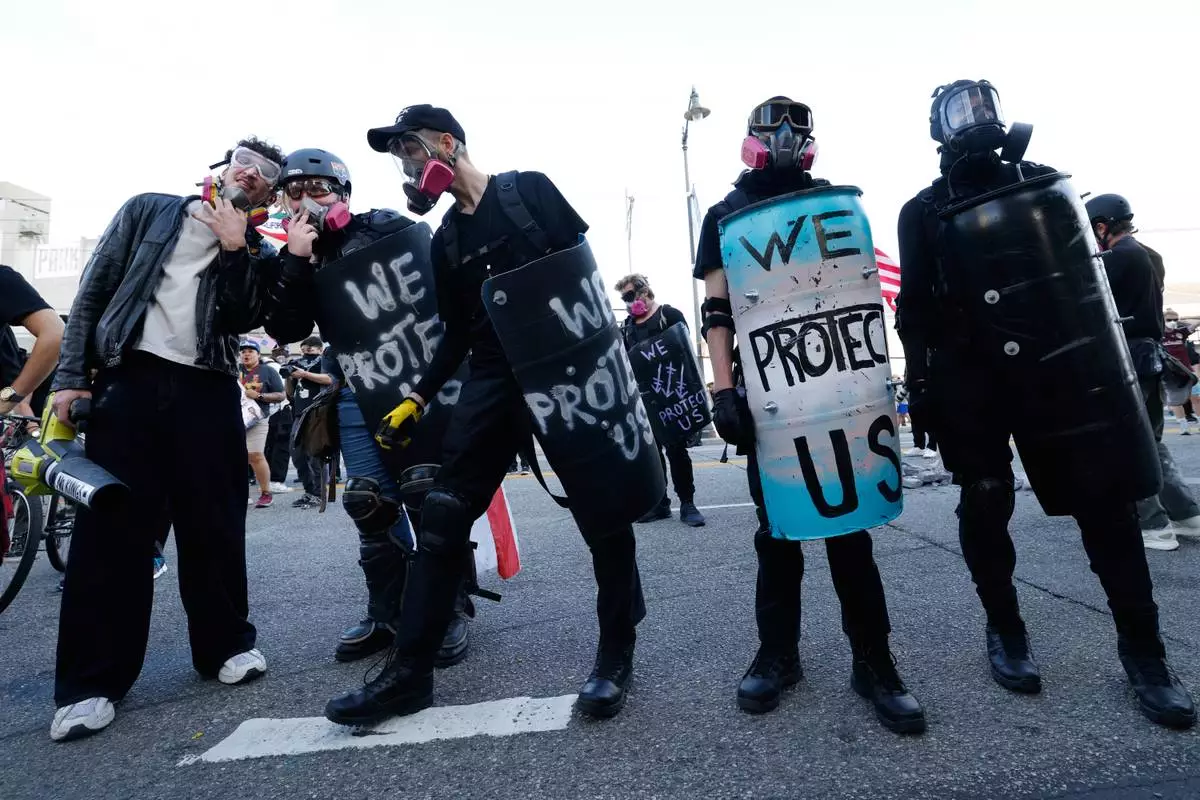
Protestors stand off against police outside the Metropolitan Detention Center in downtown Los Angeles during a "No Kings" rally Saturday, March 28, 2026. (AP Photo/Jill Connelly)
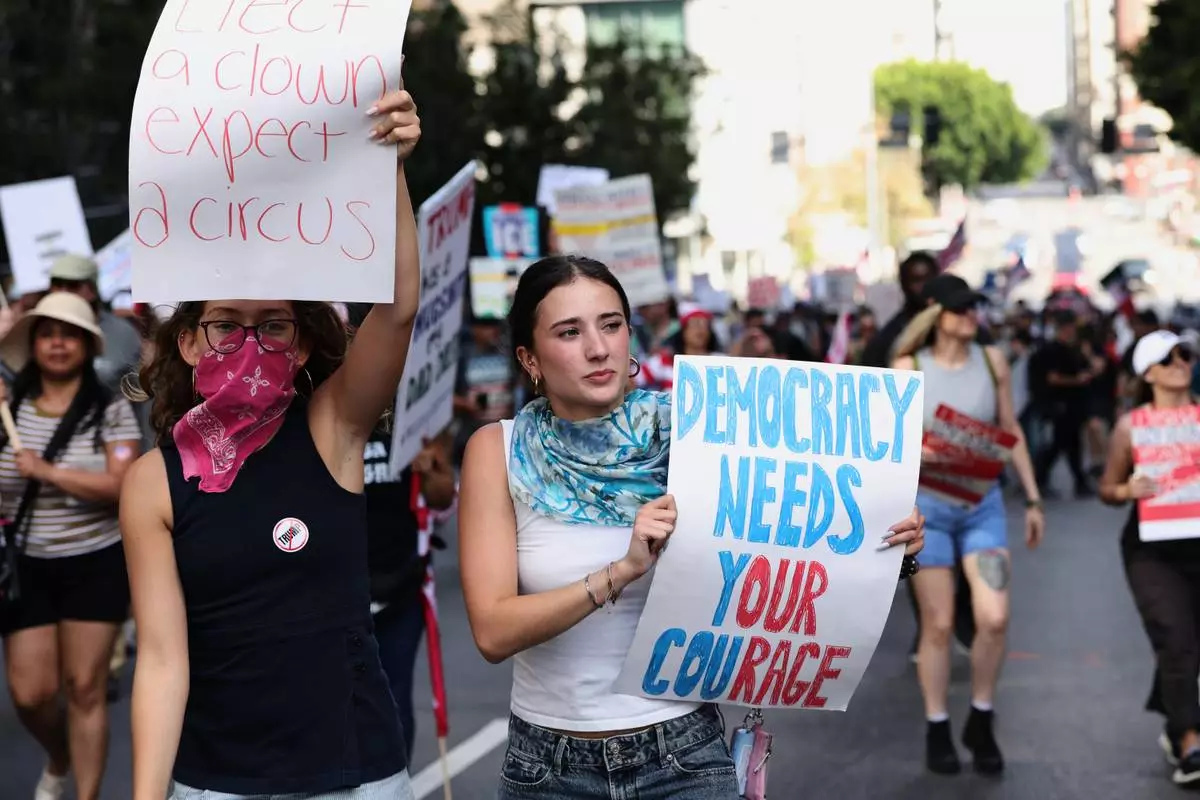
Demonstrators march through downtown Los Angeles during a "No Kings" protest Saturday, March 28, 2026. (AP Photo/Jill Connelly)
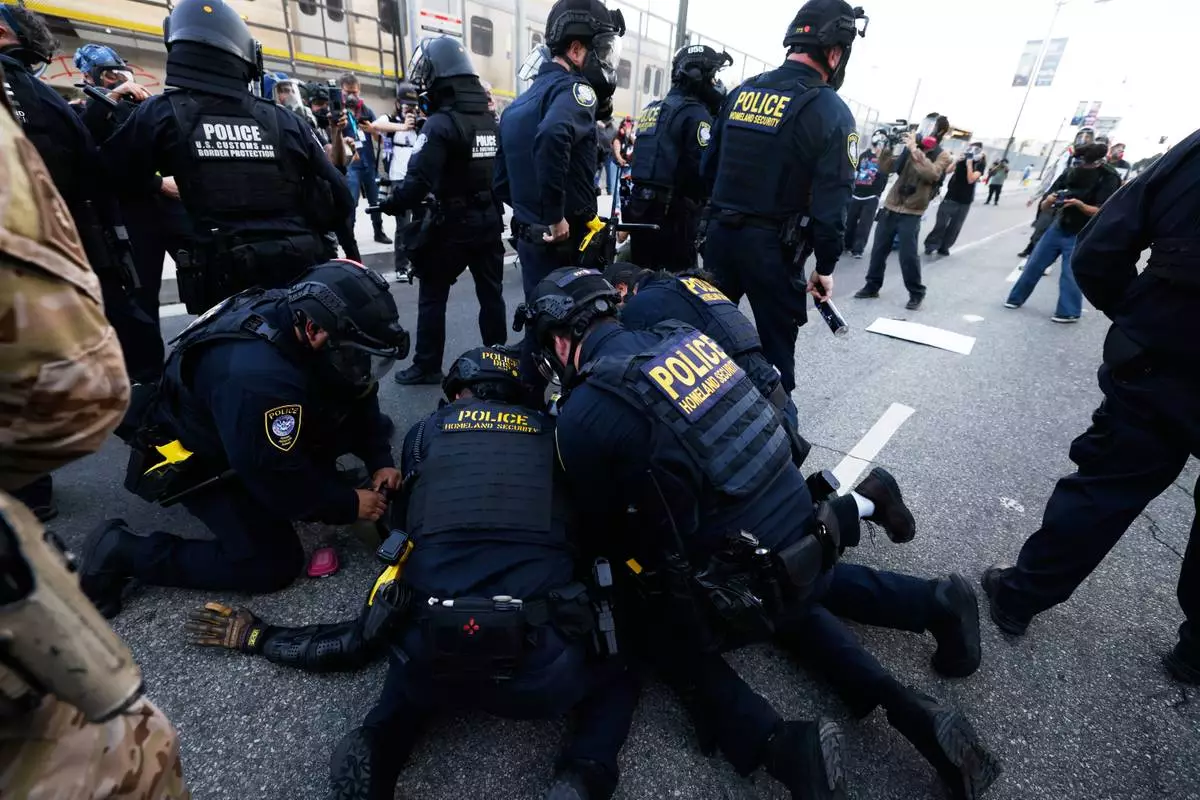
Police detain a protestor near the Metropolitan Detention Center in downtown Los Angeles during a "No Kings" protest Saturday, March 28, 2026. (AP Photo/Jill Connelly)
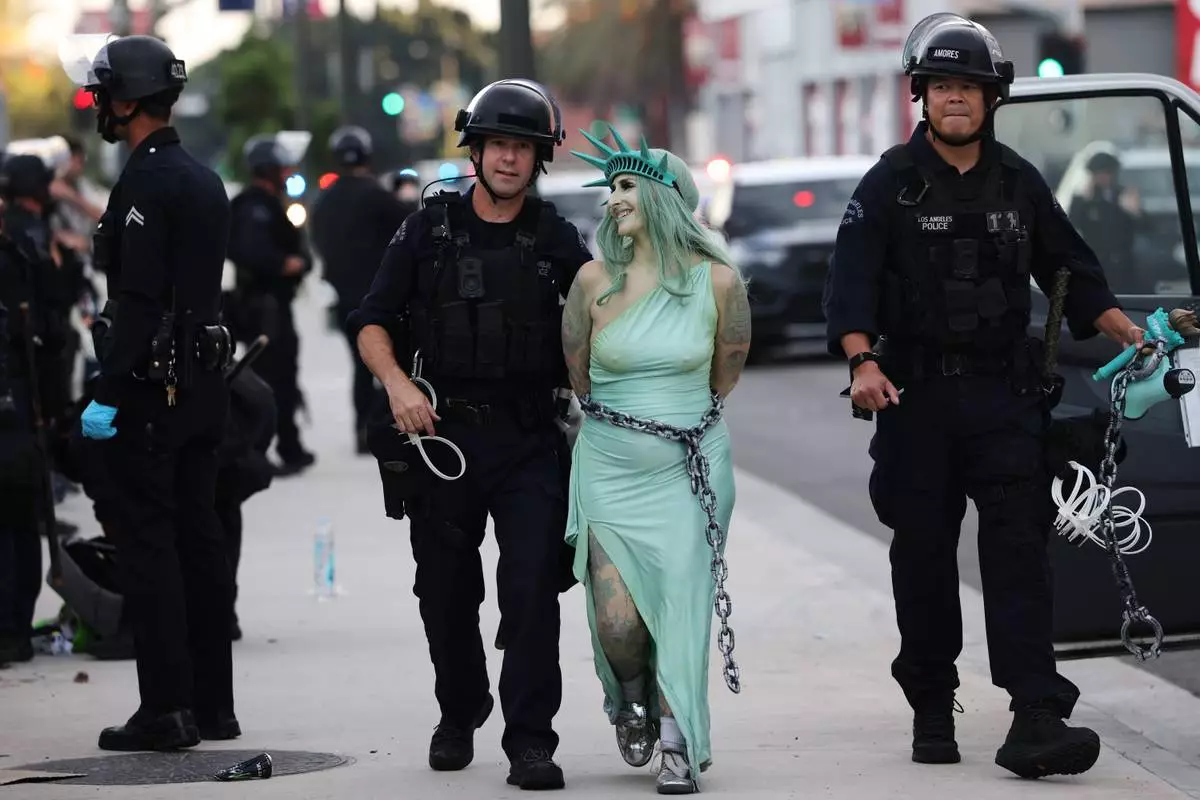
Police arrest a protestor dressed as the Statue of Liberty, in downtown Los Angeles after the "No Kings" rally Saturday, March 28, 2026. (AP Photo/Jill Connelly)
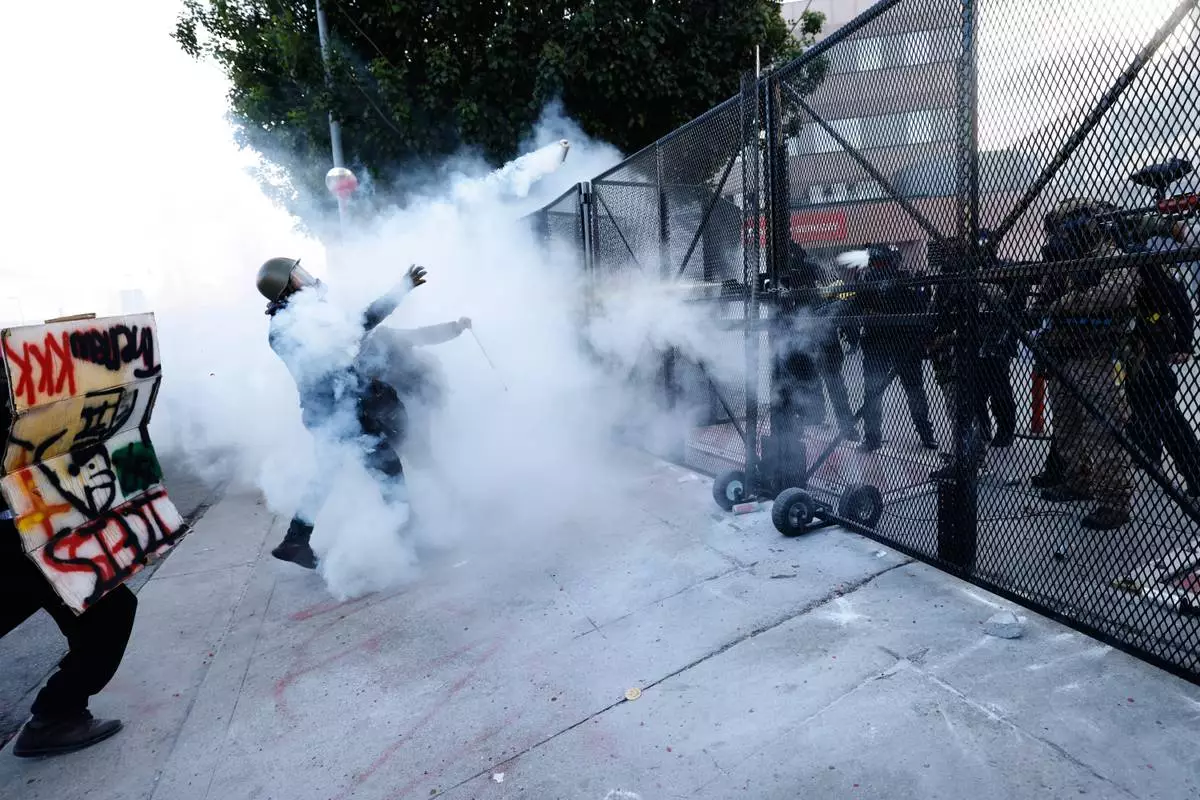
Protestors face off against police firing tear gas outside the Metropolitan Detention Center in downtown Los Angeles during a "No Kings" rally Saturday, March 28, 2026. (AP Photo/Jill Connelly)
CAIRO (AP) — The Egyptian government is seeking ways to conserve oil-powered electricity during the U.S.-Israel war with Iran, enacting at least one policy that threatens Cairo's identity as a city that never sleeps.
The government imposed new nationwide closing times Saturday for stores, restaurants and cafes, ordering them to shut early and interfering with their ability to operate during critical hours.
“It’s ruinous,” said Youssef Salah, a cafe owner in Cairo. “It deprives us from our peak time.”
The decision is one of a series of measures the government has taken in recent weeks to mitigate the fallout of the U.S. and Israeli war against Iran, which has shaken the Middle East and the global economy. Though Egypt is not a party to the widening conflict, the most populous Arab country is one of the most impacted by the war’s far-reaching repercussions, including higher oil prices and disrupted shipping routes.
The early closures will have dire repercussions on hundreds of thousands of small businesses found on almost every street, alley and lane across the country. Some of them — including many eateries, juice shops and cafés — usually operate nonstop.
Salah, the café owner in Cairo’s middle-class neighborhood of Sayeda Zeinab, said he was forced to cut his 35-member workforce by 40%.
The 46-year-old father of three used to keep his venue open 24 hours a day, with peak hours starting in the evening till the first hours of the new day. The late-night shifts are now abolished, he said.
“It’s painful,” Salah said as he closed his shop doors at 9 p.m. (19:00 GMT) on Saturday.,
Yet two days into the decision, some Egyptians danced around the government order. Some cafes closed their front doors as patrons inside went about smoking shisha or playing chess, dominos or cards.
Others took to social media to criticize the early closures.
“The Butterfly effect,” Mahmoud Elmamlouk, editor of Cairo24, one of the biggest news outlets in Egypt, wrote on social media after cafe shops shuttered their doors Saturday evening. “The closure of Strait of Hormuz has deprived us from smoking shisha in Talbia,” he wrote, referencing a working-class neighborhood in greater Cairo.
Ayman Harbi, who works at a store in Downtown Cairo, called on the government to extend the opening hours at least till midnight, saying that closing at 9 p.m. is “extremely difficult” for business like his.
“Our work in the summer usually starts after 8 p.m. (18:00 GMT),” he said. “Forcing me to close at 9 p.m. (19:00 GMT) makes the workday pointless.”
Magdy al-Deeb, a business owner, urged the government to reverse the decision to preserve jobs, especially for cafes and small businesses.
“Where will all those people (workers) go,” he asked of those who could lose their jobs. Smoking a shisha — the tobacco burning water pipe — in a Cairo café, he said society "must protect people’s livelihoods.”
The decision to close businesses early has also changed to the lifestyle for Egyptians accustomed to being able to buy virtually anything at any time, especially in big cities like Cairo and Alexandria.
A nighttime tour across Cairo Saturday and Sunday revealed the city's usually vibrant streets turned eerily quiet.
Shops, restaurants, malls and cafes across the country have been ordered to close at 9 p.m. (19:00 GMT) for a month.
The measures -- described by the government as “exceptional” — include dimming streetlights and roadside advertising. The government’s district offices in the New Administrative Capital, east of Cairo, were also ordered to close by 6 p.m. (16:00 GMT). Civil servants were also asked to return working from home for one day a week in April.
The government exempted tourist-attraction areas from its energy-saving measures, given that tourism is a major source of foreign currency for the cash-strapped country. The exempt areas include the Red Sea tourist resorts of Hurghada, Sharm el-Sheikh, Marsa Alam, as well as the antiquities-rich southern cities of Aswan and Luxor.
Prime Minister Mustafa Madbouly said the measures aim to curtail oil consumption.
“The alternative would be to resort again to further price increases,” he warned.
The government already hiked prices for fuel and cooking gas earlier this month as global energy prices soared with the virtual closure of the Strait of Hormuz, a crucial chokepoint for about a fifth of global oil supply.
Global energy prices have skyrocketed since the start of the war on Feb. 28, when the U.S. and Israel launched massive airstrikes on Iran, which retaliated with attacks on oil and gas infrastructure across the Persian Gulf and by squeezing traffic through the Strait of Hormuz.
The increases hit Egypt hard given that its population of over 108 million people consumes $20 billion of oil products annually, including fuel used to operate power plants.
The country imports 28% of its gasoline and 45% of its diesel and Madbouly said the nation's oil bill had more than doubled from January to $2.5 billion.
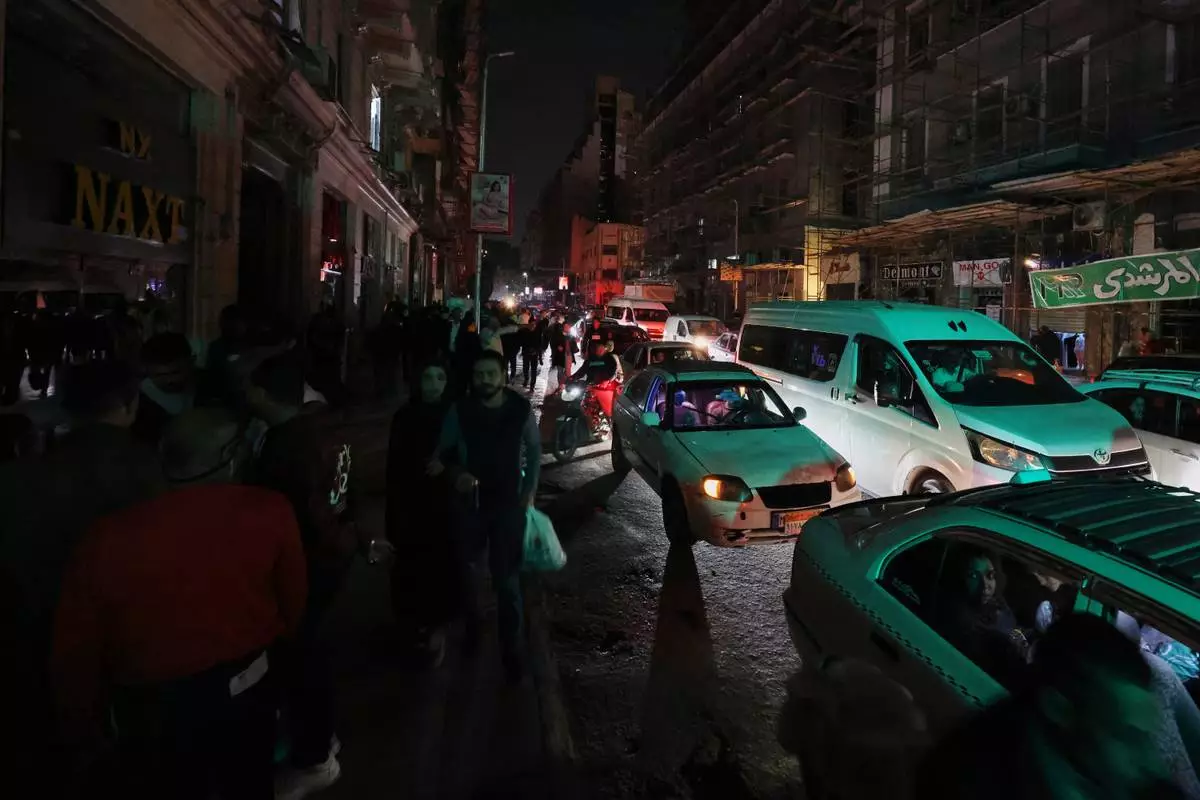
Vehicles drive as light poles are switched off to save electricity, as part of a series of measures the government has taken to mitigate the fallout of the U.S. and Israeli war against Iran, in Cairo, Egypt, Saturday, March 28, 2026. (AP Photo/Khaled Elfiqi)