JUBA, South Sudan (AP) — A South Sudanese prophet — as the story goes — wielded a sacred stick during a tribal battle in 1878 and summoned a deadly thunderbolt that struck down rival fighters.
That stick is known as Ngundeng Bong's dang, and not only has its reputation as a magical and dangerous weapon lived on, but it also plays a role in the latest cycle of violence in the world’s youngest nation.
The dang has emerged as a contentious relic in the quarrel between South Sudan President Salva Kiir and opposition leader Riek Machar, who took ownership of the stick years ago. Machar is believed by his followers to be the gap-toothed, left-handed man who would become president in fulfillment of Ngundeng's prophecy.
While that sustains Machar’s struggle, it also makes him a target for his opponents. Kiir and Machar are from different ethnic groups. Kiir is Dinka, the country's largest group, while Machar — like Ngundeng — is Nuer, the second largest.
Fighting exploded along ethnic lines when Kiir and Machar disagreed in 2013. Kiir claimed Machar was plotting a coup. Machar then launched a rebellion that became a deadly civil war in which an estimated 400,000 people were killed. Machar returned as Kiir’s deputy following a 2018 peace deal that has collapsed.
Now fighting has escalated so badly that authorities are ordering civilians to evacuate rebel-held towns. That's despite the fact that Machar is under house arrest and accused of treason. A South Sudanese general was recently filmed urging government troops to “spare no lives.”
Some rebels, including a militia known as the White Army, believe they are fighting to fulfill Ngundeng’s words and finally install Machar as president.
Douglas H. Johnson, the British-American historian who brought the dang back to South Sudan, compares the stick's authority to a parliamentary speaker's mace, needed for official business to proceed.
Machar is said to keep the dang as a religious object, using it to galvanize political support, according to Johnson and others who spoke to The Associated Press.
“Very much of the conflict is linked to spirituality,” said Mawal Marko, an independent researcher in Juba. "Most of the people fighting, especially the eastern Nuer, you find so many fighting in the name of Ngundeng.”
South Sudanese mythology abounds with cruelty, and the fight between Kiir and Machar is the latest installment of the hatred Ngundeng himself witnessed and later sought to stop: Dinka against Nuer, Nuer against Dinka.
Ngundeng’s prophecies were expressed in songs that even today some people play on the internet, searching for revelations about their country's fate. There can be disagreement on the literal meaning of Ngundeng’s words.
“If we look at a prophecy progressively, there is always room for doubt,” said Christopher Tounsel, a historian of greater Sudan who teaches at the University of Washington, speaking of Ngundeng's prophecies.
“That’s the most powerful thing: What people think and what they feel. That is the thing that can be the most impactful — not what it is, but what people perceive to be.”
Ngundeng, who died in 1906, is believed to have predicted his country’s independence. He foresaw violence. And he is said to have prophesied about a messianic Nuer leader for South Sudan who lacked the facial marks of his tribe, was left-handed and gap-toothed, and had been with a white woman. Machar is said to check those boxes.
“We know it can have power,” said Alex Miskin of the Rift Valley Institute think tank, speaking of Ngundeng’s dang. “Can (Machar) speak power into that stick? That is something I don’t know.”
“Who has the stick and what is the story may make some people a bit frightened” of Machar, said Miskin.
The dang was fashioned from the root of a tamarind tree and decorated with copper wire. It is about 110 centimeters (three and a half feet) long. One end of it broke during the 1878 battle won by the Nuer. Afterward, Ngundeng would say the dang was broken; there's no account of him using it so successfully again.
The dang was inherited by Ngundeng's son, who was shot dead trying to use it against colonial troops. He is said to have cried when he raised the stick and nothing happened.
Collected as a trophy, the stick was presumed lost forever until it was discovered in the British town of Bournemouth by Johnson, a prominent South Sudan specialist. He bought the relic and sought to return it to South Sudan, which didn't have a museum.
Machar, as the highest-ranking Nuer leader in a government then at the cusp of independence from Sudan, received the dang in the South Sudan capital of Juba in 2009. A white ox was slaughtered in a ritual overseen by Machar, who was photographed holding the dang aloft.
The dang’s return was seen as a national event. Kiir welcomed its arrival in a statement that warned the dang should not be used to wage war.
While serving as the vice president, Machar kept the dang in his house and showed it off to visiting Nuer leaders, said Johnson. “In a way, he was using this as a cultural object, something of interest to the Nuer rather than to South Sudan, to bring in other people as part of his coalition," he said.
Johnson recalled that the dang looked ordinary in an umbrella stand when he first saw it. But if Machar has the stick, it wouldn’t be surprising that Kiir “would be worried that it was out of the control of the government,” he said.
The AP was unable to reach Machar for comment. His spokesman, Puok Both Baluang, said that freeing Machar would be “synonymous with the release of peace.”
Despite his detention, the 73-year-old Machar remains a formidable opponent for Kiir, who has governed without an electoral mandate for 15 years. Authorities say elections will be held in December. But a vote without Machar on the ballot and which returns Kiir as president would be seen as disenfranchising the Nuer.
Their military rivalry began in the bush in the 1990s, when Machar led a breakaway unit that drew accusations of treachery against him during the long war for independence. Amid the split, forces loyal to Machar carried out a massacre that targeted the Dinka, angering Kiir and others.
Fighting among southerners briefly undermined their struggle for independence, and sowed lifelong distrust between Machar and Kiir. Machar remained influential because he had the loyalty of Nuer fighters.
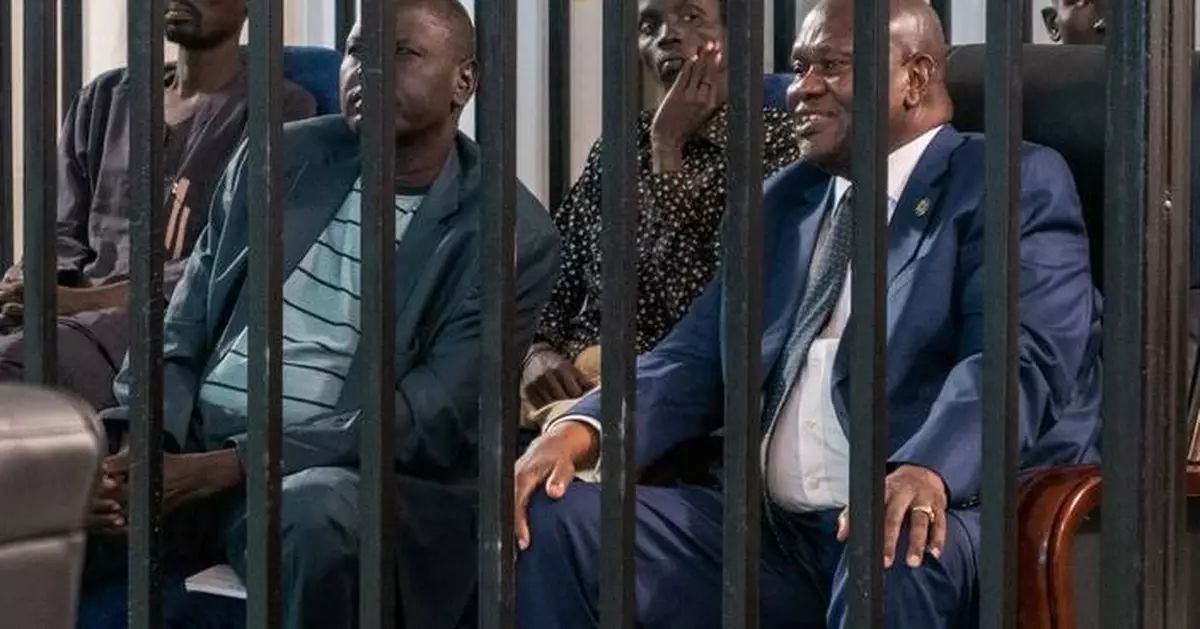
Kiir suspended Machar as his deputy in September after Machar was accused of remotely playing a role in an attack on a garrison of government troops. Machar regularly appears in a cage in the criminal trial he says is politically motivated. It is unclear if Ngundeng's dang is still kept in his house.
The stick “is the heritage of South Sudan,” even though it isn't at the building in Juba that holds national archives, said archivist Peter Tako.
“We hear it is with Riek Machar,” Tako said of the dang. “I don’t even talk about it.”
The dang, he said, was a sacred item “embedded” with the kind of political authority that made him feel unqualified to discuss it.
Associated Press religion coverage receives support through the AP’s collaboration with The Conversation US, with funding from Lilly Endowment Inc. The AP is solely responsible for this content.
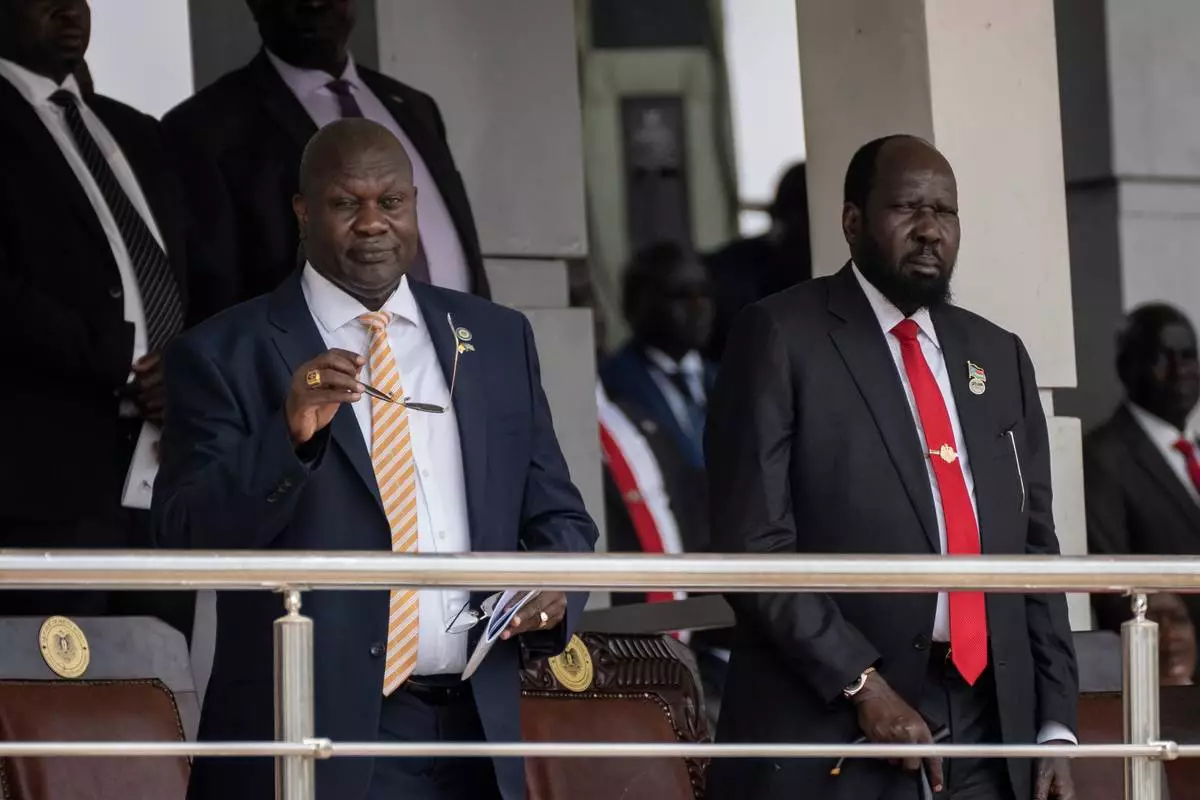
FILE - South Sudan's President Salva Kiir, right, and Vice President Riek Machar, left, attend a Holy Mass led by Pope Francis at the John Garang Mausoleum in Juba, South Sudan Sunday, Feb. 5, 2023. (AP Photo/Ben Curtis, File)
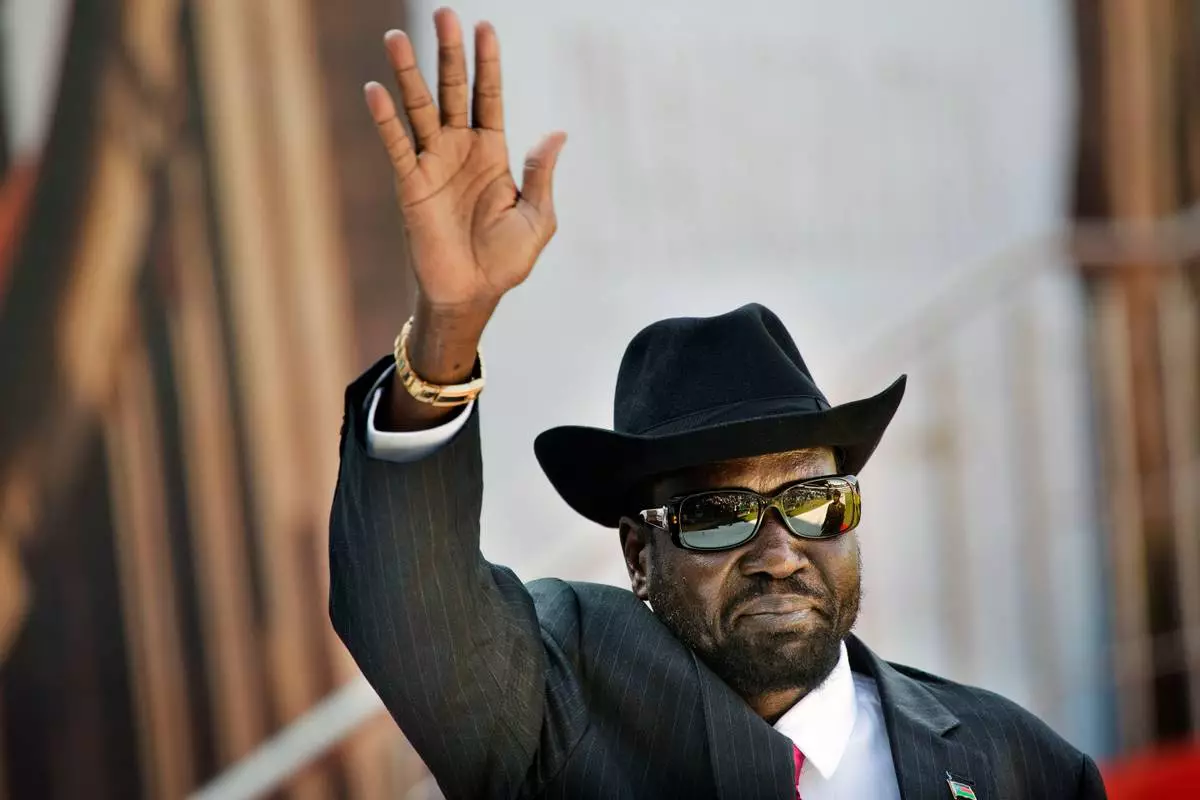
FILE - In this Saturday, May 25, 2019 file photo, South Sudan's President Salva Kiir arrives for the swearing-in ceremony of Cyril Ramaphosa at Loftus Versfeld stadium in Pretoria, South Africa. (AP Photo/Jerome Delay, File)
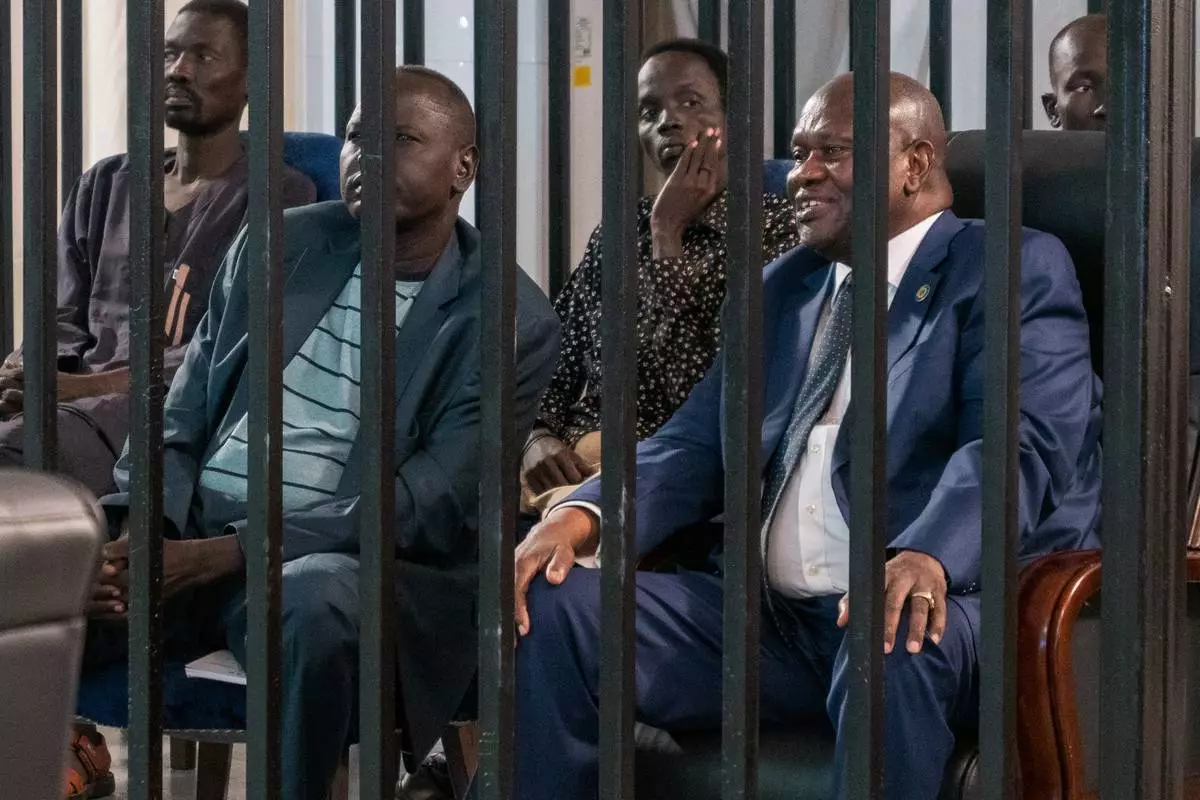
FILE- South Sudan's suspended First Vice President Riek Machar, right, sits in the dock with seven others charged with murder, treason, and crimes against humanity at the Freedom Hall in Juba, South Sudan, Wednesday, Sep. 24, 2025. (AP Photo/Florence Miettaux, file)
ESPOO, Finland--(BUSINESS WIRE)--Mar 30, 2026--
IQM Finland Oy, a global leader in full-stack superconducting quantum computers (“IQM”, “IQM Quantum Computers” or the “Company”), today announced it has secured a €50 million financing package from funds and accounts managed by BlackRock.
This press release features multimedia. View the full release here: https://www.businesswire.com/news/home/20260329996942/en/
This facility will support acceleration of IQM’s technology roadmap, fuel R&D, support entry into additional markets, and advance IQM’s leadership in quantum computing.
This facility was secured prior to IQM’s recent announcement of plans to become the first publicly listed European quantum computing company through a merger with Real Asset Acquisition Corp (“RAAQ”). The facility lowers IQM’s overall cost of capital and improves the flexibility and diversity of its capital base.
“The financing package comes at a pivotal time for IQM, as we build momentum for our next phase of growth,” said Jan Goetz, CEO and Co-founder of IQM. “This financing further strengthens our capital structure, increasing the resources available to enable us to execute on our technology vision and expand into new markets.”
He added: “We build open and transparent quantum systems that institutions can operate directly, enabling hands-on use, long-term capability building, and full control over their quantum infrastructure. By making quantum computing accessible in this way, we are enabling ecosystems to grow, benefitting researchers, industries, and partners.”
With growing global demand for its on-premises quantum systems, IQM is well positioned to support enterprise quantum and quantum-AI adoption through a multifaceted strategy that includes hardware innovation, cloud accessibility, industry partnerships, and ecosystem development on the path toward fault-tolerant quantum computing.
About IQM Quantum Computers:
IQM Finland Oy (“IQM”, “IQM Quantum Computers”, “Company”) is a global leader in superconducting quantum computers, delivering full-stack quantum systems and cloud platform access to research institutions, universities, high-performance computing centres, and national laboratories worldwide. IQM's on-premises deployment model gives customers direct ownership and control of their quantum infrastructure. Founded in 2018, headquartered in Finland, it has over 350 employees. IQM operates across Europe, Asia, and North America and has announced its plans to become the first publicly listed European quantum company on a major U.S. stock exchange and considering dual listing on Helsinki Stock Exchange.
Additional Information About the Proposed Transaction and Where to Find It
In connection with the proposed business combination between IQM and RAAQ (the “Proposed Transaction”), IQM intends to file with the SEC a registration statement on Form F-4 (the “Registration Statement”), which will include a preliminary proxy statement of RAAQ and a preliminary prospectus of IQM, and after the Registration Statement is declared effective by the SEC, RAAQ will mail the definitive proxy statement/prospectus relating to the proposed business combination to its shareholders as of a record date to be established for voting at the extraordinary general meeting of its shareholders (the “Extraordinary General Meeting”). The Registration Statement, including the proxy statement/prospectus contained therein, will contain important information about the proposed business combination and the other matters to be voted upon at the Extraordinary General Meeting. This communication does not contain all the information that should be considered concerning the proposed business combination and is not intended to provide the basis for any investment decision or any other decision in respect of such matters. RAAQ and IQM may also file other documents with the SEC regarding the proposed business combination. RAAQ’s shareholders and other interested persons are advised to read, when available, the Registration Statement, including the preliminary proxy statement/prospectus contained therein, the amendments thereto and the definitive proxy statement/prospectus and other documents filed in connection with the proposed business combination, as these materials will contain important information about RAAQ, IQM and the proposed business combination. Shareholders may obtain copies of the Registration Statement, including the preliminary or definitive proxy statement/prospectus contained therein, and the other documents filed or that will be filed by RAAQ and IQM with the SEC, once available, without charge, at the SEC’s website located at www.sec.gov.
Forward-Looking Statements
This communication includes “forward-looking statements” within the meaning of the U.S. federal securities laws and “forward-looking information” within the meaning of applicable non-U.S. securities laws (collectively, “forward-looking statements”). Forward-looking statements may be identified by the use of words such as “estimate,” “plan,” “project,” “forecast,” “intend,” “will,” “expect,” “anticipate,” “believe,” “seek,” “target,” “continue,” “could,” “may,” “might,” “possible,” “potential,” “predict” or similar expressions that predict or indicate future events or trends or that are not statements of historical matters. These forward-looking statements are based upon current estimates and assumptions that, while considered reasonable by IQM and its management, and RAAQ and its management, as the case may be, are inherently uncertain. These statements include: statements regarding IQM’s financing facility with funds affiliated with BlackRock and the benefits of such facility to IQM’s business; projections of market opportunity and market share; estimates of customer adoption rates and usage patterns; projections regarding IQM’s ability to commercialize new products and technologies; projections of development and commercialization costs and timelines; expectations regarding IQM’s ability to execute its business model and the expected financial benefits of such model; expectations regarding IQM’s ability to attract, retain and expand its customer base; IQM’s deployment of proceeds from capital raising transactions; IQM’s expectations concerning relationships with strategic partners, suppliers, governments, state-funded entities, regulatory bodies and other third parties; IQM’s ability to maintain, protect and enhance its intellectual property; future ventures or investments in companies, products, services or technologies; development of favorable regulations affecting IQM’s markets; the successful consummation and potential benefits of the proposed business combination and expectations related to its terms and timing; the stock exchanges on which the securities of IQM are expected to trade; proceeds from the business combination and related PIPE; funds received by the combined company from RAAQ’s trust account and redemptions by RAAQ’s public shareholders; IQM’s ability to commercialize its hardware and software; the expectation that IQM is building the sovereign infrastructure that allows quantum ecosystems to grow; and the potential for IQM to increase in value.
These forward-looking statements are provided for illustrative purposes only and are not intended to serve as, and must not be relied on as, a guarantee, an assurance, a prediction or a definitive statement of fact or probability. Actual events and circumstances are difficult or impossible to predict and will differ from assumptions, many of which are beyond the control of IQM and RAAQ.
These forward-looking statements are subject to known and unknown risks, uncertainties and assumptions that may cause the actual results of IQM following the Proposed Transaction, levels of activity, performance, or achievements to be materially different from any future results, levels of activity, performance or achievements expressed or implied by such statements. Such risks and uncertainties include: that IQM is pursuing an emerging technology, which faces significant technical challenges and may not achieve commercialization or market acceptance; IQM’s historical net losses and limited operating history; IQM’s expectations regarding future financial performance, capital requirements and unit economics; IQM’s use and reporting of business and operational metrics; IQM’s competitive landscape; IQM’s dependence on members of its senior management and its ability to attract and retain qualified personnel; the potential need for additional future financing; IQM’s concentration of revenue in contracts with government or state-funded entities; IQM’s ability to manage growth and expand its operations; potential future acquisitions or investments in companies, products, services or technologies; IQM’s reliance on strategic partners and other third parties; IQM’s ability to maintain, protect and defend its intellectual property rights; risks associated with privacy, data protection or cybersecurity incidents and related regulations; the use, rate of adoption and regulation of artificial intelligence and machine learning; uncertainty or changes with respect to laws and regulations; uncertainty or changes with respect to taxes, trade conditions and the macroeconomic environment; IQM’s ability to maintain internal control over financial reporting and operate a public company; the possibility that required shareholder and regulatory approvals for the Proposed Transaction are delayed or are not obtained, which could adversely affect the combined company or the expected benefits of the Proposed Transaction; the risk that shareholders of RAAQ could elect to have their shares redeemed, leaving the combined company with insufficient cash to execute its business plans; the occurrence of any event, change or other circumstance that could give rise to the termination of the business combination agreement; the outcome of any legal proceedings or government investigations that may be commenced against IQM or RAAQ; failure to realize the anticipated benefits of the Proposed Transaction; the ability of IQM to issue equity or equity-linked securities in connection with the Proposed Transaction or in the future; and other factors described in RAAQ’s and IQM’s filings with the SEC. These forward-looking statements are based on certain assumptions, including that none of the risks identified above materialize; that there are no unforeseen changes to economic and market conditions, and that no significant events occur outside the ordinary course of business. Additional information concerning these and other factors that may impact such forward-looking statements can be found in filings made and to be made by IQM and RAAQ with the SEC, including under the heading “Risk Factors.” If any of these risks materialize or assumptions prove incorrect, actual results could differ materially from the results implied by these forward-looking statements. In addition, these statements reflect the expectations, plans and forecasts of IQM’s and RAAQ’s management as of the date of this communication; subsequent events and developments may cause their assessments to change. While IQM and RAAQ may elect to update these forward-looking statements at some point in the future, they specifically disclaim any obligation to do so, unless required by applicable securities laws. Accordingly, undue reliance should not be placed upon these statements.
In addition, statements that “we believe” and similar statements reflect our beliefs and opinions on the relevant subject. These statements are based upon information available to us as of the date of this communication, and while we believe such information forms a reasonable basis for such statements, such information may be limited or incomplete, and our statements should not be read to indicate that we have conducted an exhaustive inquiry into, or review of, all potentially available relevant information. These statements are inherently uncertain, and investors are cautioned not to unduly rely upon these statements. An investment in RAAQ is not an investment in any of RAAQ’s founders’ or sponsors past investments, companies, or affiliated funds. The historical results of those investments are not indicative of future performance of RAAQ, which may differ materially from the performance of RAAQ’s founders’ or sponsors past investments.
Participants in the Solicitation
RAAQ, IQM and certain of their respective directors, executive officers and other members of management and employees may, under SEC rules, be deemed to be participants in the solicitation of proxies from RAAQ’s shareholders in connection with the Proposed Transaction. Information regarding the persons who may, under SEC rules, be deemed participants in the solicitation of RAAQ’s shareholders in connection with the Proposed Transaction will be set forth in the Registration Statement, including the proxy statement/prospectus contained therein, when it is filed with the SEC. You can find more information about RAAQ’s directors and executive officers in RAAQ’s Annual Report on Form 10-K for the year ended December 31, 2025 filed with the SEC on March 3, 2026 and in the subsequent filings made by RAAQ with the SEC. Shareholders, potential investors, and other interested persons should read the Registration Statement, including the proxy statement/prospectus contained therein, carefully when it becomes available before making any voting or investment decisions. You may obtain free copies of these documents from the sources described above.
No Offer or Solicitation
This communication does not constitute an offer to sell or the solicitation of an offer to buy any securities, or a solicitation of any vote or approval, nor shall there be any sale of securities in any jurisdiction in which such offer, solicitation or sale would be unlawful prior to registration or qualification under the securities laws of any such jurisdiction, including any European Economic Area member state or the United Kingdom. This communication is not, and under no circumstances is to be construed as, a prospectus, an advertisement or a public offering of the securities described herein in the United States or any other jurisdiction. No offer of securities shall be made except by means of a prospectus meeting the requirements of Section 10 of the Securities Act of 1933, as amended, or exemptions therefrom. Any potential dual listing of IQM’s ordinary shares on the Helsinki stock exchange referred to in this communication would be made by means of a prospectus as set out in the EU Prospectus Regulation. INVESTMENT IN ANY SECURITIES DESCRIBED HEREIN HAS NOT BEEN APPROVED BY THE SEC OR ANY OTHER REGULATORY AUTHORITY NOR HAS ANY AUTHORITY PASSED UPON OR ENDORSED THE MERITS OF THE OFFERING OR THE ACCURACY OR ADEQUACY OF THE INFORMATION CONTAINED HEREIN. ANY REPRESENTATION TO THE CONTRARY IS A CRIMINAL OFFENSE.
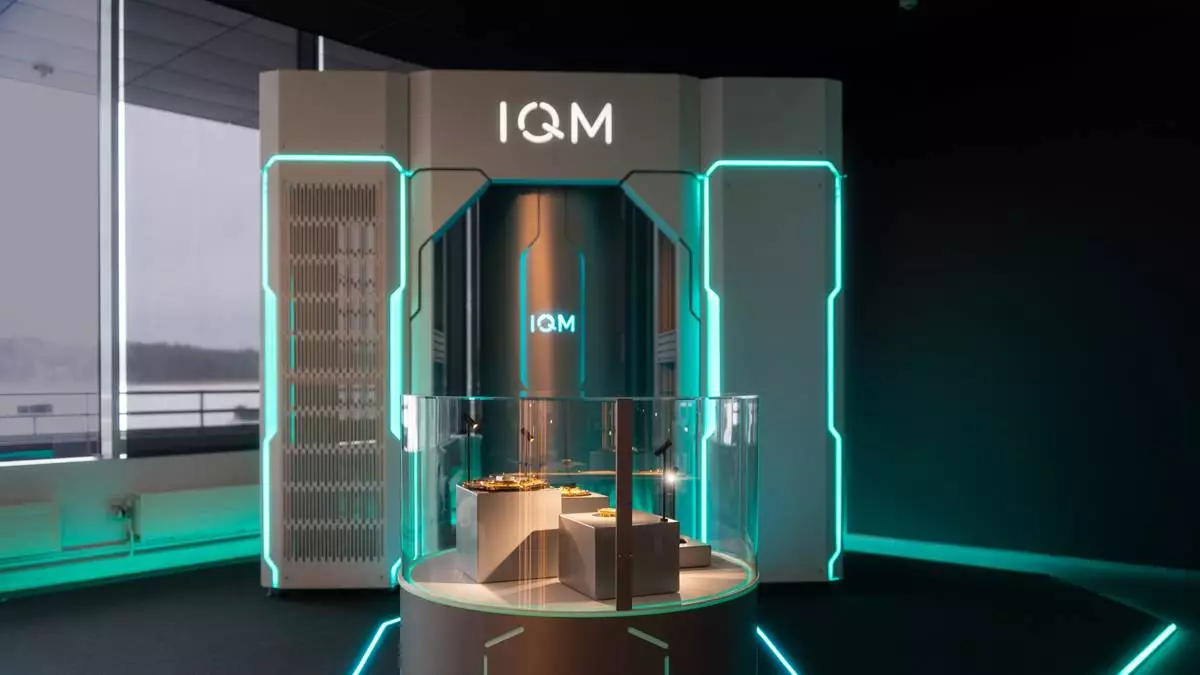
IQM Radiance quantum computer is located in IQM's showroom in Espoo, Finland.