FEHD announces Wo Hop Shek Garden of Forever Love Phase II and first water-soluble commemorative facility "The Spring of Love" to open this Wednesday
The Food and Environmental Hygiene Department (FEHD) said today (March 30) that the newly built Wo Hop Shek Garden of Forever Love Phase II, dedicated to the keeping of abortuses of less than 24 weeks' gestation, will open this Wednesday (April 1) for public applications. The first water-soluble commemorative facility, "The Spring of Love", located within the garden, will also be open to the public for free use on the same day, allowing family members to commemorate their departed loved ones.
A spokesman for the FEHD said, "Since 2018, the Government has been examining and implementing proposals to enhance the handling of abortuses in a holistic manner. Adhering to the policy objective of funerary services 'Let the departed rest in peace, let the living find solace', various measures to facilitate the handling of abortuses have been introduced, including the provision of facilities for keeping and cremating abortuses. Following the setting up of the first Garden of Forever Love in Wo Hop Shek, Fanling (Wo Hop Shek Garden of Forever Love Phase I), in April 2019, the FEHD subsequently opened the second and third Gardens of Forever Love at Cape Collinson in 2021 and at Shek Mun last year respectively, continuously expanding the services."
The name, Garden of Forever Love, symbolises the everlasting care and love from parents, the community and the Government for the abortuses. The garden provides a tranquil and serene environment, serving not only as a resting place for the deceased young lives but also as a space for parents to maintain a connection with their children. Through formal farewell rituals, parents can face and process their grief, gradually finding solace and moving from sorrow towards healing. The FEHD hopes that the Garden of Forever Love will not only provide a resting place for abortuses but also offer support and strength to entire families, truly embodying the service tenet of "Let the departed rest in peace, let the living find solace".
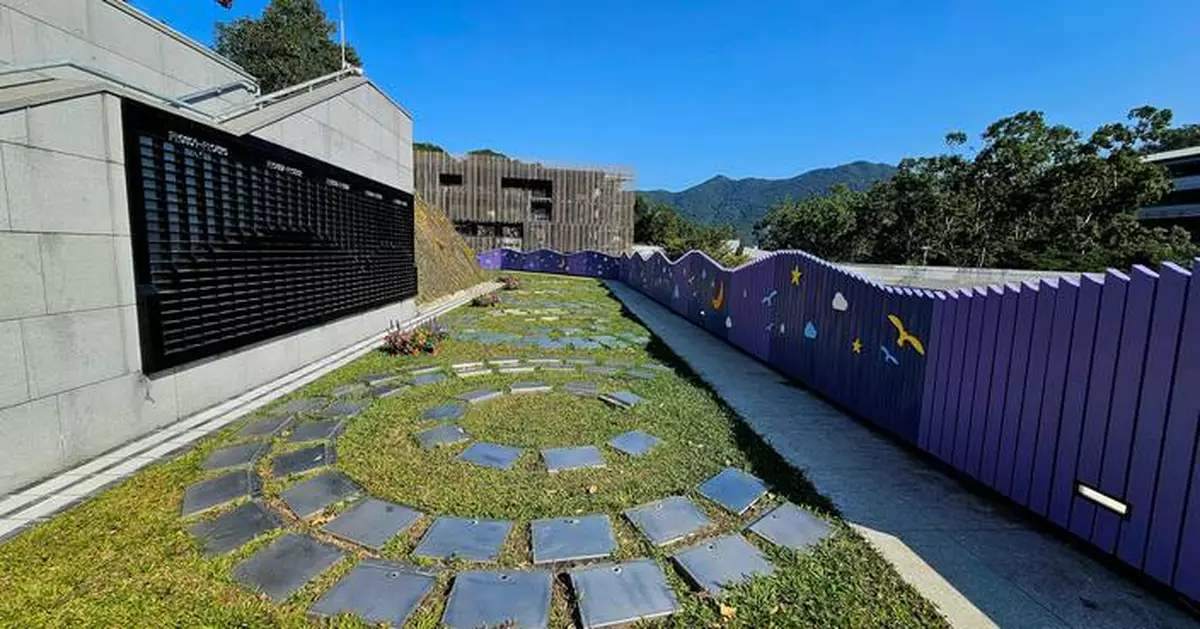
As the interment spaces in the Wo Hop Shek Garden of Forever Love Phase I are currently nearly full, the FEHD proceeded with the Phase II construction to continue providing keeping services for abortuses of less than 24 weeks gestation. The newly completed Phase II facility offers 619 keeping spaces, which features a beautiful and tranquil environment with walls and three-dimensional columns for placing commemorative plaques. The softly coloured feature walls are adorned with patterns loved by young children, such as stars, moons, clouds and birds, creating an atmosphere reminiscent of a nursery or kindergarten - a peaceful resting place for the deceased young lives.
Additionally, the FEHD added a new water-soluble commemorative facility named "The Spring of Love" adjacent to the Wo Hop Shek Garden of Forever Love Phase II, providing a commemorative experience with deeper symbolic meaning. "The Spring of Love" combines the imagery of spring water with a homophone for "enduring" (both pronounced "chuen" in Cantonese), signifying that love and remembrance flow endlessly, allowing love to last forever. Family members and friends can write their thoughts and blessings on specially made water-soluble paper, then place it into water and watch the paper slowly dissolve, letting their grief drift away with the ripples and thus transforming their love into eternal blessings.
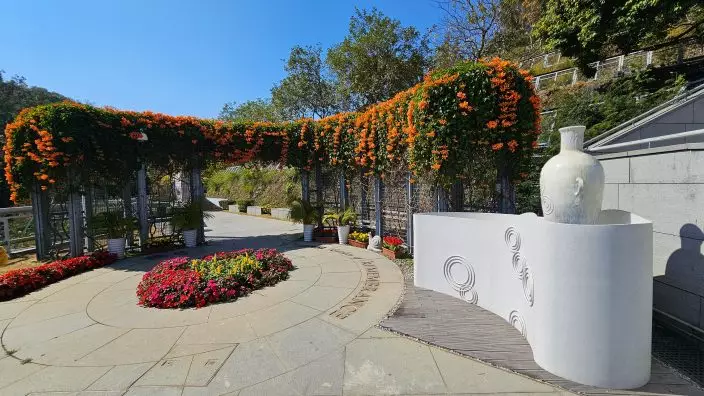
The Food and Environmental Hygiene Department said today (March 30) that the newly built Wo Hop Shek Garden of Forever Love Phase II, dedicated to the keeping of abortuses of less than 24 weeks' gestation, will open this Wednesday (April 1) for public applications. The first water-soluble commemorative facility, "The Spring of Love", located within the garden, will also be open to the public for free use on the same day. Photo shows the first water-soluble commemorative facility, "The Spring of Love". Source: HKSAR Government Press Releases

The Food and Environmental Hygiene Department said today (March 30) that the newly built Wo Hop Shek Garden of Forever Love Phase II, dedicated to the keeping of abortuses of less than 24 weeks' gestation, will open this Wednesday (April 1) for public applications. The first water-soluble commemorative facility, "The Spring of Love", located within the garden, will also be open to the public for free use on the same day. Photo shows the Wo Hop Shek Garden of Forever Love Phase II. Source: HKSAR Government Press Releases