New local HIV cases decline for 10 consecutive years as DH strengthens community engagement to consolidate support for HIV prevention and control
The Centre for Health Protection (CHP) of the Department of Health (DH) today (March 31) announced the situation of Human Immunodeficiency Virus (HIV) infection in Hong Kong in 2025. The number of new cases of HIV infection in Hong Kong has declined for 10 consecutive years and the prevalence rate has remained well below the global average, reflecting the success of Hong Kong's prevention and control efforts. Thanks to advances in medical science, HIV infection has become a manageable chronic disease. The Government is committed to strengthening HIV prevention, control and support by continuously enhancing community engagement, expanding testing services, and providing personalised support services to people living with HIV (PLHIV).
New HIV cases continues to decline but proportion of late presenters remains high
---------------------------------------------------------------------------------------
In 2025, the CHP received 331 new HIV cases, comprising 258 males and 73 females aged between 6 and 76. Among the cases with a reported route of transmission, 279 cases (99 per cent) acquired the infection through sexual contact, including 158 through homosexual or bisexual contact and 121 through heterosexual contact. The cumulative total of locally reported HIV infections since 1984 is 12 734.
During the same period, a total of 86 new AIDS cases were reported, including 61 males and 25 females. Since 1985, a cumulative total of 2 643 confirmed AIDS cases have been reported in Hong Kong. The most common AIDS-defining illness was Pneumocystis pneumonia.
"The prevalence of HIV infection in Hong Kong has remained far below the global average, accounting for 1 in 1 000 of the adult population. The number of new HIV infections has declined for 10 consecutive years since the peak in 2015 when over 700 new cases were reported, representing a more than 50 per cent drop. This is largely attributable to the sustained efforts of the Government, the healthcare sector and non-governmental organisations (NGOs) over the years. Nevertheless, the proportion of late presenters among the newly reported cases in Hong Kong has remained high at about 50 per cent in recent years. An in-depth analysis of the data by the CHP revealed that the proportion of late presenters among high-risk populations (such as men who have sex with men (MSM) and sex workers) is approximately 40 to 50 per cent. Among non-high-risk groups, this figure is even higher, reaching 60 to 70 per cent. This situation warrants attention," said the Consultant (Special Preventive Programme) of the Public Health Services Branch of the CHP, Dr Bonnie Wong.
Late presenters refer to individuals with a very low CD4 (one kind of immune cell) cell count (less than 200 cells/mm3) or those who have already progressed to AIDS at the time of HIV diagnosis. Late presentation indicates that these individuals were not diagnosed and put on treatment in a timely manner at an earlier stage of infection.
"Late presentation can lead to an increased risk of opportunistic infections and malignancies, leading to a tenfold increase in mortality rate when compared with other people infected with HIV. In addition, as a result of an unsuppressed viral load, late presenters contribute to an increased risk of HIV transmission in the community. As sexual transmission remains the major route of HIV transmission in Hong Kong, we encourage people who have had sex to get HIV testing at least once to keep track of their health status. People with higher risk of infection (such as those who do not use condoms properly or those who inject drugs) should undergo regular screening to safeguard their own and their partners' health," said Dr Wong.
Multifaceted collaboration model to strengthen prevention, control and support of HIV/AIDS
----------------------------------------------------------------------------------------
She added that 2026 marks the 30th anniversary of the introduction of highly effective antiretroviral drugs for HIV treatment. With the advancement of medicine and successful implementation of prevention and control measures in Hong Kong, HIV infection is now a manageable chronic disease. The World Health Organization also emphasised that people with HIV should receive antiretroviral drugs as soon as possible. This helps achieve viral suppression, prevent the progression to AIDS and other complications, and increase the chance of survival significantly. Furthermore, those who achieve an undetectable level of the virus in blood while on treatment will not transmit the virus through sex, i.e. Undetectable = Untransmittable (U=U).
As with the prevention and control of other chronic diseases, community engagement is particularly important in the prevention and control of HIV/AIDS. The Government will adopt a multifaceted collaboration model to engage community stakeholders, including NGOs, in participating in HIV prevention and control work. The following two initiatives under the Partnership Programme for Community Engagement will be launched on April 1:
(1) Priority Populations Testing and Counselling Programme
Target participants include priority populations identified in the Recommended HIV/AIDS Strategies for Hong Kong (2022-2027) (including MSM, people of non-Chinese ethnic groups, transgender people, people who inject drugs, sex workers or those who were at a higher risk of infection, such as clients of sex workers or individuals with multiple sexual partners).
The CHP subsidises NGOs to provide target participants with free HIV and syphilis antibody testing, personalised psychological support and counselling, health advice on safer sex and methods to prevent HIV and other sexually transmitted infections. When necessary, service recipients will be referred to other services for prevention, diagnosis or follow-up care arrangement. Participating NGOs will also deploy outreach teams into communities to proactively provide relevant services to those in need.
(2)People Living with HIV (PLHIV) Support Services Programme
The target participants are individuals currently receiving follow-up care at public HIV clinics. NGOs subsidised by the CHP will provide comprehensive support tailored to PLHIV, including medication and adherence support, psychological and social support, group therapy activities, drug rehabilitation and counselling support, functional rehabilitation and bridging psychiatric services etc.
"These two programmes address different groups and needs with precision. The former promotes early testing and early prevention to align with the CHP's core objectives of expanding testing services and implementing target-based prevention, control and intervention; the latter helps PLHIV better manage their health and further strengthen the existing support for them and their families. The CHP believes that leveraging the community service networks established by the NGOs over the years will help build a more accessible, targeted and sustainable HIV/AIDS prevention, control and support network. This approach puts into practice the concept of community-collaborative public health service. The CHP will accumulate experience for the optimisation and improvement of related services in the future,"Dr Wong said
Members of the public who wish to participate or learn more about the two programmes may visit the Red Ribbon Centre's website (www.rrc.gov.hk/english). Those interested in undergoing HIV antibody test may visit the HIV Testing Service website (www.hivtest.gov.hk) or call the AIDS Hotline (2780 2211) to schedule a free, anonymous and confidential HIV antibody test; or to order HIV self-test kits on the HIV Testing Service website.
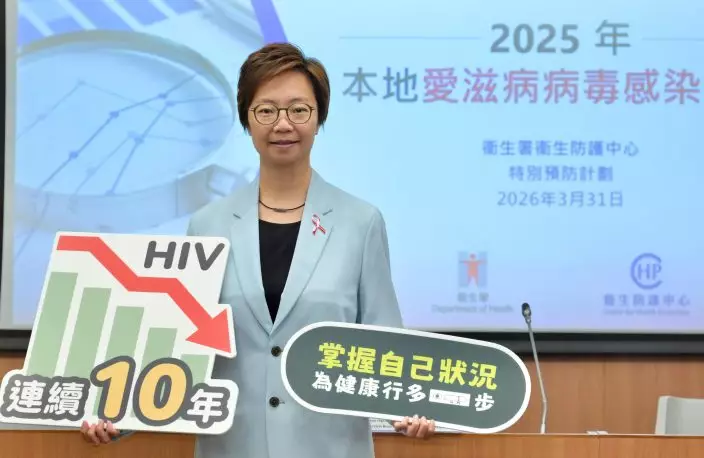
The Centre for Health Protection (CHP) of the Department of Health (DH) today (March 31) announced the situation of Human Immunodeficiency Virus (HIV) infection in Hong Kong in 2025. The number of new cases of HIV infection in Hong Kong has declined for 10 consecutive years and the prevalence rate has remained well below the global average, reflecting the success of Hong Kong's prevention and control efforts. Photo shows the Consultant (Special Preventive Programme) of Public Health Services Branch of the CHP of the DH, Dr Bonnie Wong. Source: HKSAR Government Press Releases