China's new development in the 15th Five-Year Plan period (2026-2030) for national socioeconomic development will unlock new opportunities for the rest of the world, experts said at the "Linjia No.7 Salon" press briefing held in Beijing on Monday.
The "Linjia No.7 Salon" is an irregular event hosted by the China Public Diplomacy Association. It invites guest speakers to engage in interactive exchanges with Chinese and foreign journalists on focused topics, serving as a key platform and window for the international community to gain in-depth insights into China's policies and development trends.
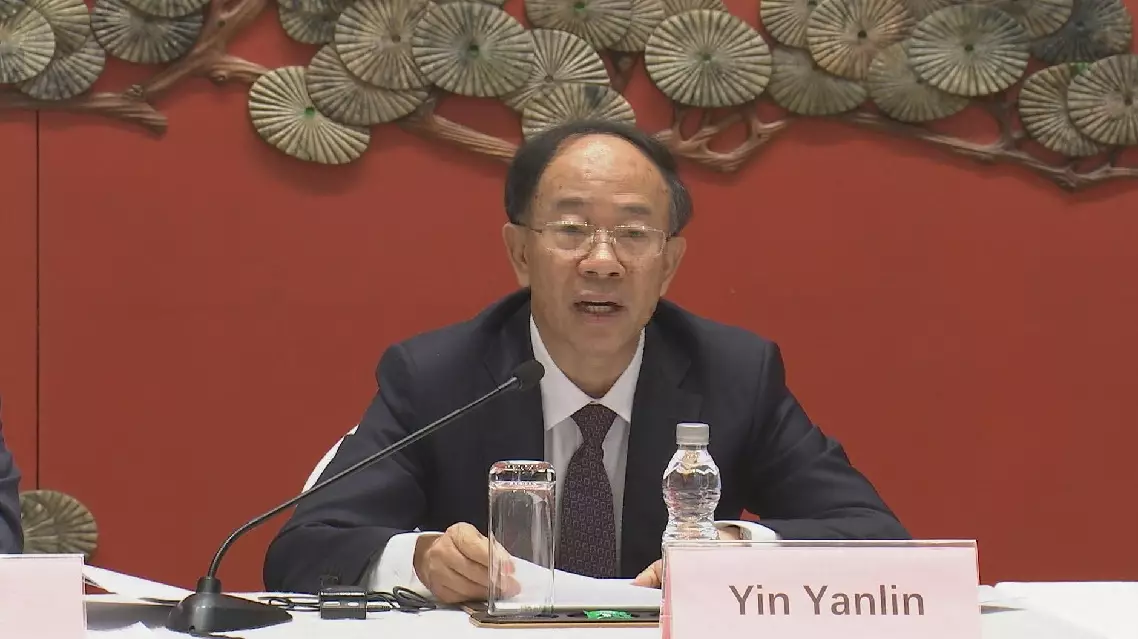
Yin Yanlin, deputy director of the Committee on Economic Affairs of National Committee of the Chinese People's Political Consultative Conference (CPPCC), outlined the development landscape for China in the 15th Five-Year Plan period. He said that while the country will face profound and complex changes in its development environment, including deepening external impacts and a mix of long-standing issues and emerging challenges in domestic economic development and transformation, the fundamental trend and supporting conditions for China's long-term economic soundness have remained unchanged, with the country's institutional strengths and advantages continuing to grow more prominent.
He noted that during the 15th Five-Year Plan period, China's annual growth in research and development spending is expected to exceed 7 percent, and the added value of core digital economy industries will reach 12.5 percent of China's gross domestic product (GDP).
"To facilitate implementation of the 15th Five-Year Plan goals and tasks, the outline proposes 109 major projects across six areas, with the focus on using government investment to lead participation by social forces, in efforts to better leverage the important role of major projects in strengthening foundations, shoring up weak links, and boosting long-term growth momentum," he said.
Building on this positive outlook, Justin Lin Yifu, professor and dean of the Institute of New Structural Economics at Peking University, identified four key advantages that will drive China's growth and development of new quality productive forces.
The first is its unparalleled human resources advantage. China produces millions of new science and engineering graduates every year, the highest number worldwide. The second is its massive market strength, as China has become the world's largest consumer market by purchasing power parity. The third is its complete industrial system, which allows new technologies and creative ideas to be turned into finished products faster and at a lower cost than anywhere else in the world. And the fourth advantage lies in China's institutional strength, which enables a proactive and effective government to help enterprises break through bottlenecks in technological innovation and industrial upgrading.
"With resultant forces arising from these advantages, I believe that from the 15th to the 16th Five-Year Plan period, China should still have an annual growth potential of 8 percent. I believe China will continue to contribute about 30 percent to global growth every year, remaining a major engine for the world economy," he said.
To fully realize this growth potential, Liu Yue, deputy director of the International Economic Research Institute at the National Development and Reform Commission, called on foreign investors to move beyond basic manufacturing and establish full-value operations in China.
"Do not just manufacture here. Do the R and D (research and development). Do supply chain management. You can create a new application here. And use China as the world's best testing ground to improve your service and your products, and update your technology," she said.
China's new development to bring opportunities for rest of world: experts