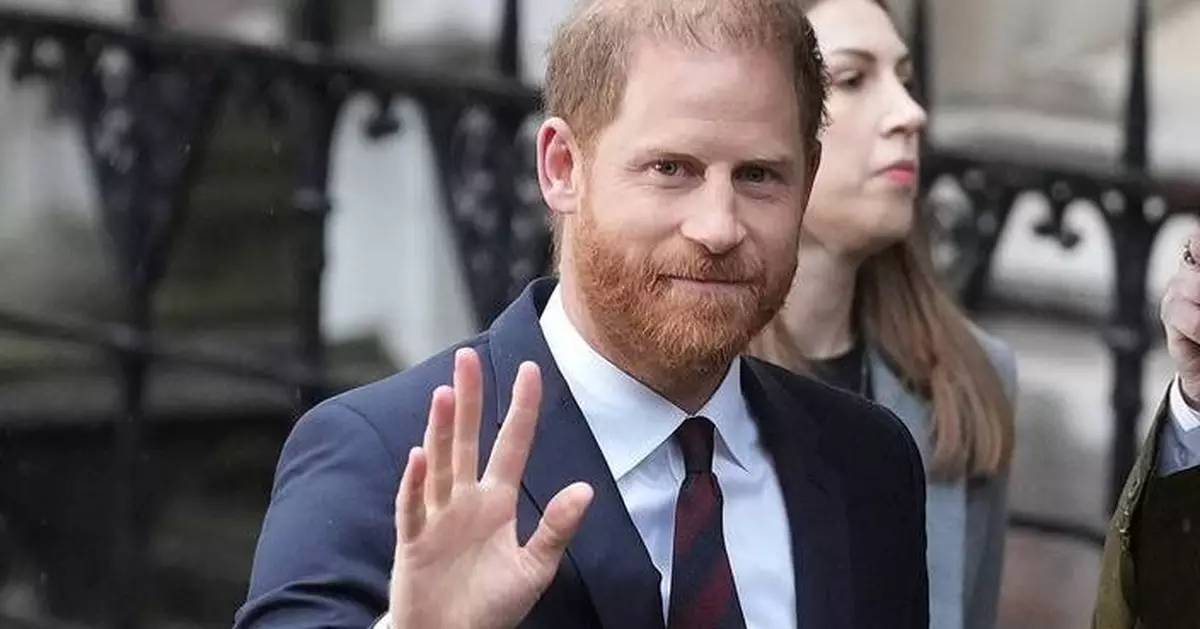
LONDON (AP) — The outcome of Prince Harry 's final lawsuit against the British tabloids could rest on the credibility of a private eye who previously admitted snooping on the royal.
A lawyer for the publisher of the Daily Mail said Tuesday that the case brought by the Duke of Sussex and celebrities including Elton John and actors Sadie Frost and Elizabeth Hurley collapsed when investigator Gavin Burrows testified that he never spied for the newspaper or its sister publication, the Mail on Sunday.
Defense lawyer Antony White said in his closing argument that a statement Burrows allegedly signed — and later disavowed — saying he “must have done hundreds of jobs” for the Mail between 2000 and 2005 had inspired the lawsuits.
But Burrows, who once apologized to Harry in a BBC documentary for ruthlessly targeting him for tabloids in his teen years, testified that he never carried out the skullduggery for the Mail. He said the statement was fabricated by the claimants’ legal team and his signature was forged.
Judge Matthew Nicklin, who oversaw the 11-week trial in the High Court and will issue a written ruling later, repeatedly asked the claimants’ lawyer what would happen to the case if he rejected Burrows’ original statement.
Attorney David Sherborne said there was a wealth of other evidence implicating the newspapers of unlawful information gathering, including the use by the papers of other investigators, journalists and freelance reporters to tap phones, intercept voicemails and obtain information through deception.
Harry and the six other claimants are seeking a “substantial award of damages, including aggravated damages,” Sherborne said. The legal costs alone have been estimated as reaching nearly 40 million pounds ($52 million).
The trial is the final chapter in Harry’s long‑running battle with the British tabloid press. He wants to hold newspapers accountable for past wrongdoing and reform what he has called a toxic media environment.
Harry and the claimants are suing Associated Newspapers Ltd. for invading their privacy. Other claimants are anti‑racism activist Doreen Lawrence, former politician Simon Hughes and John's husband, David Furnish.
They claim the newspapers relied on “clear, systematic and sustained use of unlawful information gathering” over two decades to spy on them.
Associated Newspapers denied the allegations as “preposterous,” insisting the roughly 50 articles at issue were based on lawful sources, including friends, royal aides and publicists who offered information to reporters. The company also said claims dating back to the 1990s were filed too late.
While Sherborne said payment records to private eyes lined up with the dates of articles in question, White called that conjecture and said the case relied too heavily on inferences.
Harry testified at the start of the trial in January that press intrusions left him “paranoid beyond belief,” strained his relationships and took a toll on his mental health.
He took a defensive tone on cross-examination and choked up, saying the tabloids had made the life of his wife, Meghan, “an absolute misery.”
Harry has linked his media venom to the death of his mother, Princess Diana, who was killed in a 1997 car crash while being pursued by paparazzi, and to what he has described as relentless press attacks on his wife that contributed to their decision to step back from royal duties and move to the United States in 2020.
Harry previously won a judgment in a phone hacking trial against the publisher of the Daily Mirror and got a settlement and apology from Rupert Murdoch’s Sun and the now-defunct News of the World.
The Mail trial has played out differently than the Mirror case, with far more current and former reporters and editors taking the witness stand to deny using any illegal means to write stories on Harry’s many romances — many about ex-girlfriend Chelsy Davy — his role as a godfather and about his late mother.
Some reporters named sources and they disputed Harry’s assertion that his “social circles were not leaky.”
“They were not all tight lipped,” Katie Nicholl, a former Mail on Sunday editor, said about Harry’s associates. “I had very good sources in the inner circle.”
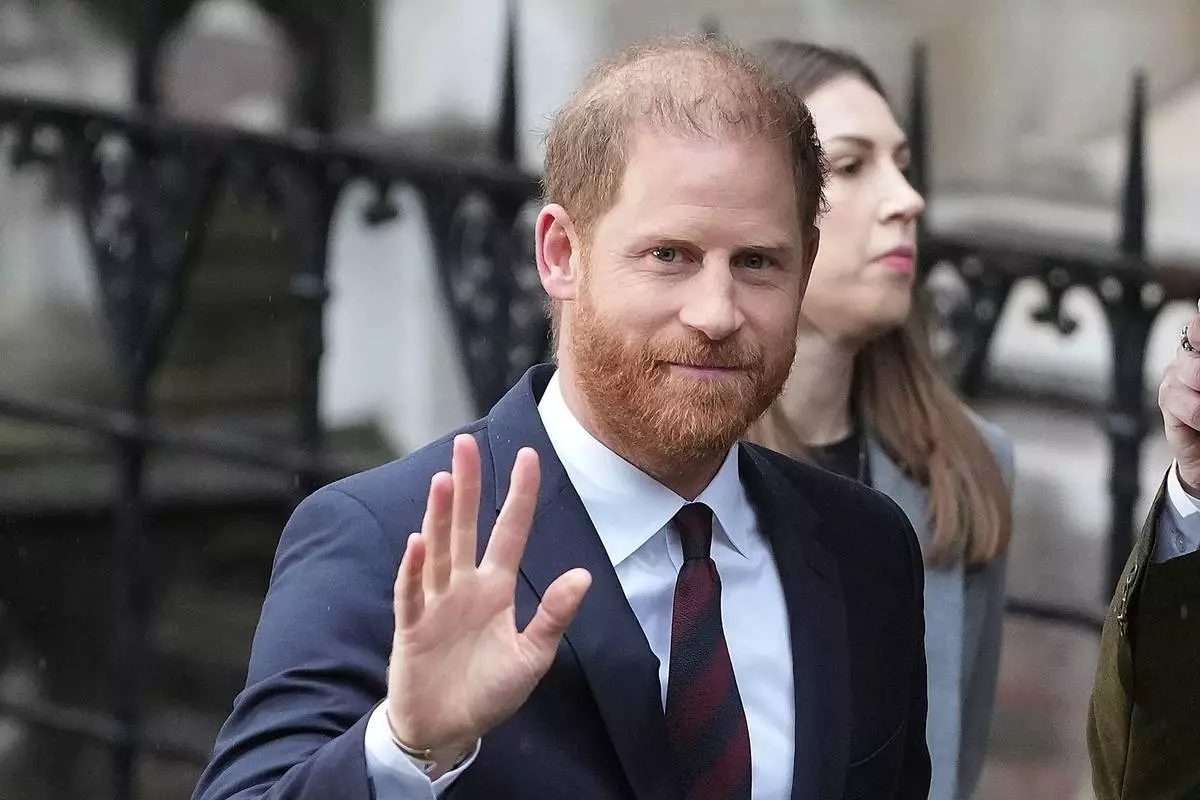
FILE - Britain's Prince Harry arrives at London's High Court to lead a group accusing the Daily Mail's publisher of privacy invasion through unlawful tactics in a trial that is part of a wider phone hacking scandal in London, Jan. 21, 2026. (AP Photo/Kirsty Wigglesworth, File)
WASHINGTON (AP) — President Donald Trump on Tuesday signed an executive order to create a nationwide list of verified eligible voters and to restrict mail-in voting, a move that swiftly drew legal threats from state Democratic officials ahead of this year's midterm elections.
The order, which voting law experts say violates the Constitution by attempting to seize states' power to run elections, is the latest in a torrent of efforts from Trump to interfere with the way Americans vote based on his false allegations of fraud. The president has repeatedly lied about the outcome of the 2020 presidential campaign and the integrity of state-run elections, asserting again Tuesday that he won “three times” and citing accusations of voter fraud that numerous audits, investigations and courts have debunked.
The order signed Tuesday calls on the Department of Homeland Security, working in conjunction with the Social Security Administration, to make the list of eligible voters in each state. It also seeks to bar the U.S. Postal Service from sending absentee ballots to those not on each state’s approved list.
Trump is also calling for ballots to have secure envelopes with unique barcodes for tracking, according to the executive order, which was first reported by the Daily Caller. Federal funding could be withheld from states and localities that don’t comply.
“The cheating on mail-in voting is legendary. It's horrible what's going on,” Trump said, repeating his false allegations about mail ballots as he signed the order. “I think this will help a lot with elections.”
Within minutes of Trump signing the order, top elections officials in Oregon and Arizona, two states that rely heavily on mail ballots, pledged to sue, arguing that the president was illegally encroaching on the right of states to run elections.
Arizona Secretary of State Adrian Fontes said the state’s vote-by-mail system was designed by Republicans and is now used by 80% of voters. Arizona doesn’t need the federal government to tell it who can vote, and federal data isn't always reliable, he said.
“It is just wrongheaded for a president of the United States to pretend like he can pick his own voters,” Fontes told The Associated Press. “That’s just not how America works.”
Maine Secretary of State Shenna Bellows told the AP that the order was “laughably unconstitutional” and said her state would not comply. More than a quarter of Maine voters cast mail-in ballots in the 2024 election.
Nevada Secretary of State Francisco Aguilar said Trump’s order would cripple local election officials charged with implementing it and silence voters counting on casting a mail ballot.
“It doesn’t benefit anybody in this country except himself,” Aguilar said.
Legal experts noted other potential flaws with the order. David Becker, a former Justice Department lawyer who leads the Center for Election Innovation and Research, said the Postal Service is run by a board of governors, and the president has no power to tell it what mail it can and cannot deliver.
A spokesperson for USPS said Tuesday the agency will review the order. Trump has sought to bring the independent agency under more presidential control, proposing to fold it under the Commerce Department — whose secretary, Howard Lutnick, was on hand for Tuesday’s signing.
Trump’s March 2025 election executive order sought sweeping changes to how elections are run, including adding a documentary proof-of-citizenship requirement to the federal voter registration form and requiring mailed ballots to be received at election offices by Election Day. Much of it has been blocked through legal challenges brought by voting rights groups and Democratic state attorneys general who allege it’s an unconstitutional power grab that would disenfranchise large groups of voters.
He also told a conservative podcaster in February that he wants to “take over” elections from Democratic-run areas.
U.S. elections are unique because they are not centralized. Rather than being run by the federal government, they’re conducted by election officials and volunteers in thousands of jurisdictions across the country, from tiny townships to sprawling urban counties with more voters than some states have people. The Constitution’s Elections Clause gives Congress the power to “make or alter” election regulations, at least for federal office, but it doesn’t mention presidential authority over election administration.
“This is Donald Trump turning the Department of Homeland Security into the department of controlling the homeland,” said Maya Wiley, president and CEO of the Leadership Conference on Civil and Human Rights.
The Trump administration has launched a widespread campaign it says is meant to target allegations of voter fraud that for years have been the subject of false claims from Trump and his allies. The Justice Department for months has been demanding detailed voter registration lists from states in what it has described as an effort to ensure the security of elections, and has sued when state officials have refused to hand them over.
The FBI in January seized ballots from the election office of a Georgia county that has been central to right-wing conspiracy theories over Trump’s 2020 election loss. And Attorney General Pam Bondi recently named a “special attorney” with the power to investigate and prosecute cases across the country “relating to the integrity of federal elections,” according to a copy of the order.
The Department of Homeland Security’s SAVE system for verifying citizenship and immigration status has come under scrutiny for producing flawed results from unreliable data sets, as well as over privacy concerns. One example is that states can conduct bulk searches of the system with Social Security numbers, but few states collect full Social Security numbers as part of voter registration, according to the Brennan Center for Justice.
The Trump administration undertook an overhaul of the system last year, but it still faces legal challenges alleging that reliance on the system can lead to errors in identifying citizenship status and affect eligible voters.
At least one Republican elections official on Tuesday defended the SAVE system while downplaying the potential of widespread voter fraud.
Robert Sinners, a spokesperson for Georgia Secretary of State Brad Raffensperger, said their recommendations to the Trump administration have strengthened voter verification and stressed that "the small number flagged as potential non-citizens cannot vote by mail or in person until they provide proof of citizenship.”
"The executive order will be decided in court, but in Georgia, we already verify citizenship and will continue to do so regardless of the outcome,” Sinners added.
The president is a vocal critic of mail-in voting, alleging that the practice is rife with fraud as he pushes lawmakers to pass a far-reaching elections bill that would clamp down on it. A 2025 report by the Brookings Institution found that mail voting fraud occurred in only 0.000043% of total mail ballots cast, or about four cases per 10 million.
Trump himself has also used mail ballots, most recently last week in local Florida elections. The White House has said that Trump is opposed to universal mail-in voting, rather than individual voters who may need the alternative voting method for reasons such as travel or military deployment.
Swenson reported from New York, and Cooper reported from Phoenix. Associated Press writers Alanna Durkin Richer in Washington, Susan Haigh in Hartford, Connecticut, and Julie Carr Smyth in Columbus, Ohio, contributed to this report.
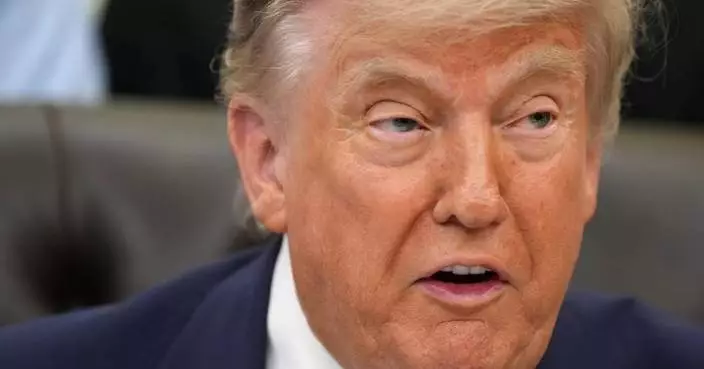
President Donald Trump answers questions from reporters after signing an executive order in the Oval Office of the White House Tuesday, March 31, 2026, in Washington, as Commerce Secretary Howard Lutnick listens. (AP Photo/Alex Brandon)
President Donald Trump holds papers in the Oval Office of the White House before signing an executive order Tuesday, March 31, 2026, in Washington. (AP Photo/Alex Brandon)
President Donald Trump answers questions from reporters after signing an executive order in the Oval Office of the White House Tuesday, March 31, 2026, in Washington. (AP Photo/Alex Brandon)