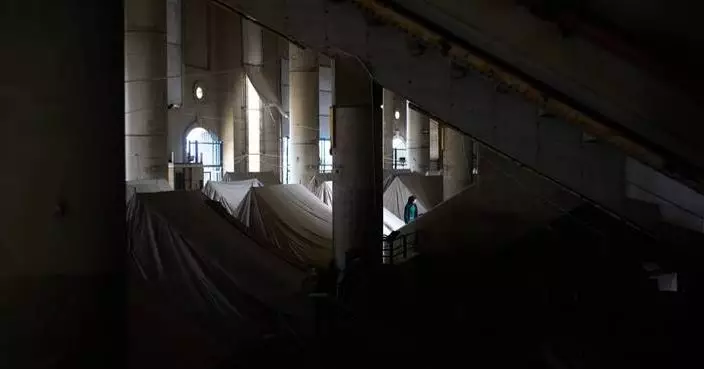
WASHINGTON (AP) — Thousands of additional U.S. troops are heading to the Middle East as the Trump administration has insisted that progress has been made in talks with Iran and has threatened to escalate the war if a deal is not reached soon.
The aircraft carrier USS George H.W. Bush deployed Tuesday and is slated to go to the Middle East along with three destroyers, two U.S. officials said. The carrier strike group consists of more than 6,000 sailors.
It comes as thousands of soldiers from the 82nd Airborne Division also have begun arriving in the Middle East, according to two other U.S. officials, who, like the others, spoke on condition of anonymity to discuss sensitive military plans.
While the majority of those troops are part of a rotation of forces planned before the war, some are among roughly 1,500 paratroopers the Trump administration decided to surge into the region last week.
The Trump administration has not said what those troops will be doing, but the 82nd Airborne is trained to parachute into hostile or contested territory to secure key territory and airfields. A U.S. Navy ship carrying about 2,500 Marines recently arrived in the Middle East, and another 2,500 Marines also are being deployed from California.
The extra forces, on top of tens of thousands of service members already in the region, come as Defense Secretary Pete Hegseth and other administration officials have avoided questions about whether or not the U.S. military will deploy ground troops against Iran.
“You can’t fight and win a war if you tell your adversary what you are willing to do or what you are not willing to do to include boots on the ground,” Hegseth told reporters Tuesday.
He added, “Our adversary right now thinks there are 15 different ways we could come at them with boots on the ground. And guess what? There are.”
But he also said the goal is to reach a deal with Iran through talks because “we don’t want to have to do more militarily than we have to.”
Additional resources are heading in as the war has strained the troops and assets already in the region.
The world's largest aircraft carrier, the USS Gerald R. Ford, had a fire in a laundry room on March 12, which forced it to return from the Red Sea to the Mediterranean Sea to undergo repairs at a naval base in Crete.
According to a Navy press release, the fire damaged seven berthing compartments aboard the ship, likely forcing hundreds of sailors to find new sleeping arrangements, and damaged personal effects.
While Ford is now in Croatia for time off, Navy leaders said the aircraft carrier will likely set records for the length of its deployment. The USS Abraham Lincoln aircraft carrier also arrived in the region in January.
"You’re going to see a recordbreaking deployment by Ford,” Adm. Daryl Caudle, the Navy's top officer, said during a Center for Strategic and International Studies discussion Tuesday.
Caudle said the aircraft carrier would probably go into the 11th month of deployed operations — a length of time that would put the ship returning to Norfolk, Virginia, around the end of May. The Ford was in the Mediterranean before being sent to the Caribbean to take part in the military operation in January that ousted Venezuela's leader, Nicolás Maduro, and then was deployed to support the Iran war.
"For those that are not in the Navy, that’s an extraordinary thing to even think about something of that kind of deployment length,” Caudle said.
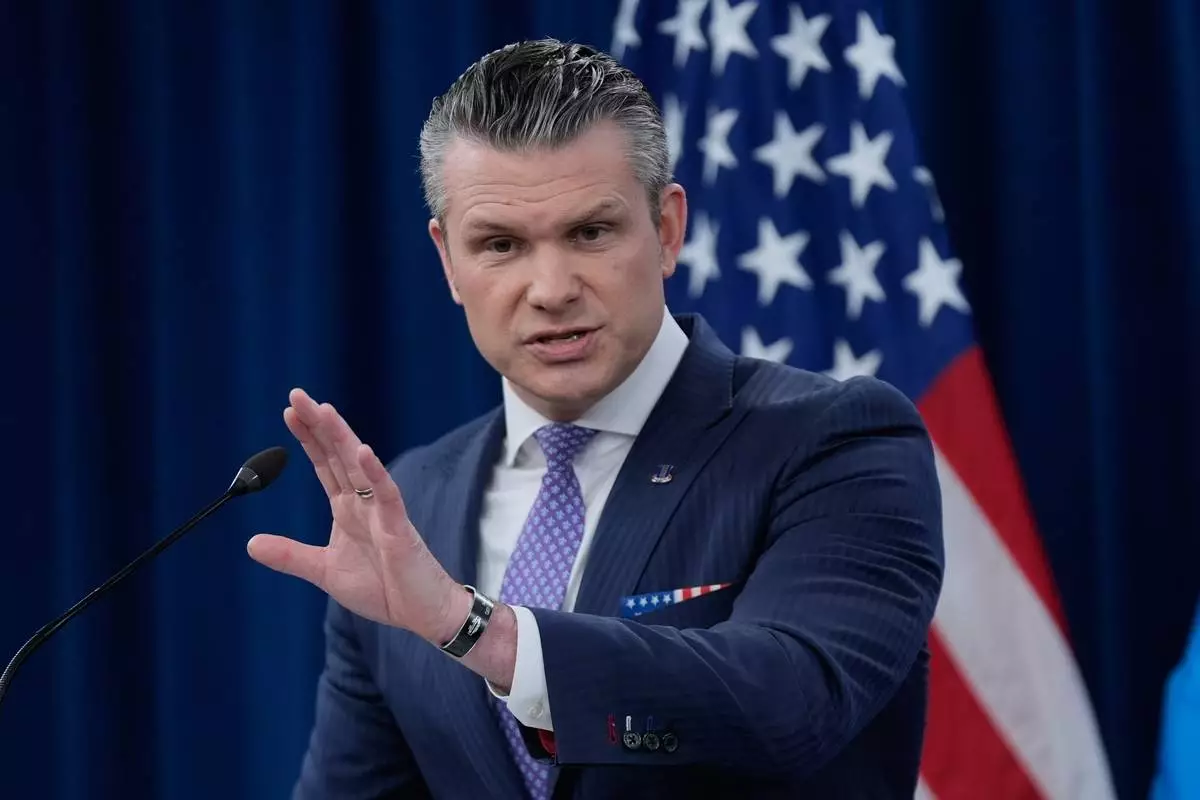
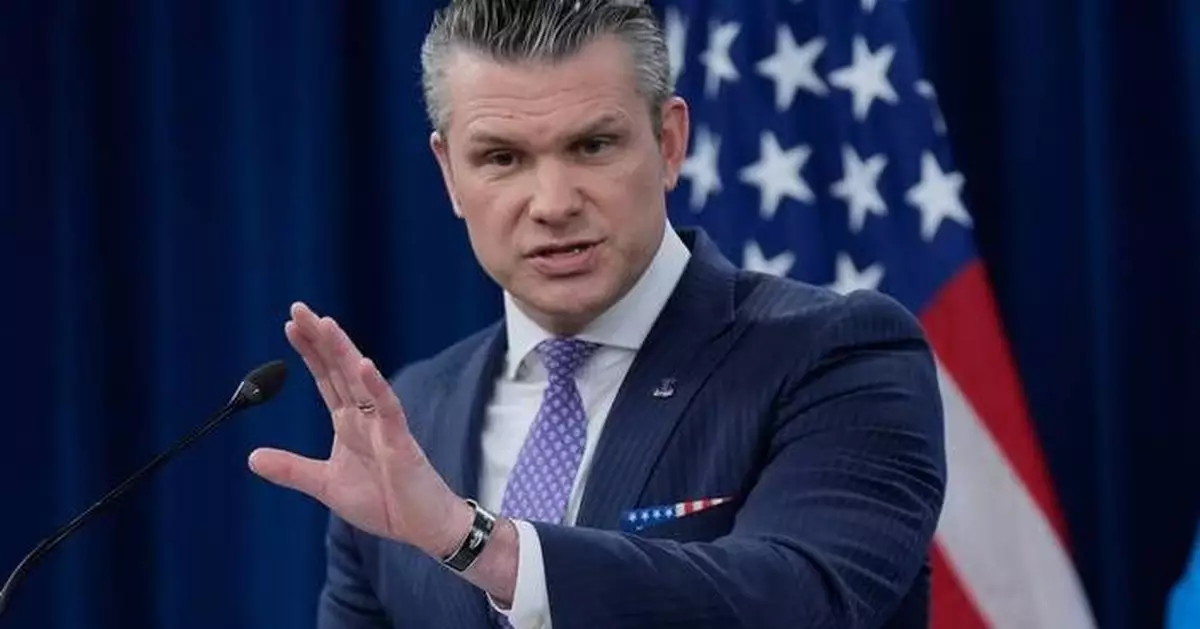
Defense Secretary Pete Hegseth speaks to members of the media during a press briefing at the Pentagon in Washington, Tuesday, March 31, 2026. (AP Photo/Manuel Balce Ceneta)
WASHINGTON (AP) — President Donald Trump on Tuesday signed an executive order to create a nationwide list of verified eligible voters and to restrict mail-in voting, a move that swiftly drew legal threats from state Democratic officials as the president demands further limitations on voting ahead of this year's midterm elections.
The order, which voting law experts say violates the Constitution by attempting to seize the power to run elections from states, is the latest in a torrent of efforts from Trump to interfere with the way Americans vote based on his false allegations of fraud.
It calls on the Department of Homeland Security, working in conjunction with the Social Security Administration, to make the list of eligible voters in each state, according to the text of the executive order released Tuesday. It also seeks to bar the U.S. Postal Service from sending absentee ballots to those not on each state’s approved list, although the president likely lacks the power to mandate what the Postal Service does.
Trump is also calling for ballots to have secure envelopes with unique barcodes for tracking, according to the executive order, which was first reported by the Daily Caller.
“The cheating on mail-in voting is legendary. It's horrible what's going on,” Trump said, repeating his false allegations about mail ballots as he signed the order. “I think this will help a lot with elections.”
Within minutes of Trump signing the order, top elections officials in Oregon and Arizona, two states that rely heavily on mail ballots, pledged to sue. Trump is trying to illegally encroach on the right of states to run elections, they said.
"We don’t need decrees from Washington, D.C.,” said Tobias Read, the Democratic secretary of state in Oregon, which votes entirely by mail. “My message to the President: We’ll see you in court.”
Arizona Secretary of State Adrian Fontes said the state’s vote-by-mail system was designed by Republicans and has delivered secure elections for decades. It’s now used by 80% of voters.
“Donald Trump is attempting to pick his desired list of voters in each state with the Social Security Administration’s help,” said Fontes, a Democrat.
“We will not let this stand,” he added.
Trump has repeatedly lied about the outcome of the 2020 presidential campaign and the integrity of state-run elections, asserting again Tuesday that he won “three times” and continuing to cite accusations of voter fraud that numerous audits, investigations and courts have debunked.
Trump’s first election executive order in March 2025 sought sweeping changes to how elections are run across the country, including adding a documentary proof-of-citizenship requirement to the federal voter registration form and requiring mailed ballots to be received at election offices by Election Day. Much of it has been blocked through legal challenges brought by voting rights groups and Democratic state attorneys general who allege it’s an unconstitutional power grab that would disenfranchise large groups of voters.
He also said in a February interview with a conservative podcaster that he wants to “take over” elections from Democratic-run areas,
Tuesday's voting order shows he hasn’t learned from his previous, blocked efforts to assert control over elections, said David Becker, a former Justice Department lawyer who leads the Center for Election Innovation and Research.
“The Constitution is very clear — the president has no power over elections in the states,” Becker said. “This will be blocked as soon as lawyers can get to the courthouse.”
Becker also added that the U.S. Postal Service is run by a board of governors, and the president has no power to tell it what mail it can and cannot deliver.
“If Trump signs an unconstitutional Executive Order to take over voting, we will sue," Marc Elias, a voting rights litigator and founder of Democracy Docket, said in a social media post. "I don’t bluff and I usually win.”
Elections in the U.S. are unique because they are not centralized. Rather than being run by the federal government, they’re conducted by election officials and volunteers in thousands of jurisdictions across the country, from tiny townships to sprawling urban counties with more voters than some states have people. The Constitution’s so-called “Elections Clause” gives Congress the power to “make or alter” election regulations, at least for federal office, but it doesn’t mention any presidential authority over election administration.
The Trump administration has launched a widespread campaign it says is meant to target allegations of voter fraud that for years have been the subject of false claims from Trump and his allies. The Justice Department for months has been demanding detailed voter registration lists from states in what it has described as an effort to ensure the security of elections, and has sued when state officials have refused to hand them over.
The FBI in January seized ballots from the election office of a Georgia county that has been central to right-wing conspiracy theories over Trump’s 2020 election loss. And Attorney General Pam Bondi recently named Daniel Bishop, the top federal prosecutor for the Middle District of North Carolina, as a “special attorney” with the power to investigate and prosecute cases across the country “relating to the integrity of federal elections,” according to a copy of the order.
The Department of Homeland Security’s SAVE system for verifying citizenship and immigration status has come under scrutiny from voting-rights groups for producing flawed results from unreliable data sets, as well as over privacy concerns. One example is that states can conduct bulk searches of the system with Social Security numbers, but few states collect full Social Security numbers as part of voter registration, according to the Brennan Center for Justice.
The Trump administration undertook an overhaul of the system last year, but it still faces legal challenges alleging that reliance on the system can lead to errors in identifying citizenship status and affect eligible voters.
The president is a vocal critic of mail-in voting, alleging that the practice is rife with fraud as he pushes lawmakers to pass a far-reaching elections bill that would clamp down on it. Trump's accusations of widespread fraud are unfounded; a 2025 report by the Brookings Institution found that mail voting fraud occurred in only 0.000043% of total mail ballots cast, or about four cases per 10 million mail ballots.
Trump himself has also used mail ballots, most recently last week in local Florida elections. The White House has said that Trump is opposed to universal mail-in voting, rather than individual voters who may need the alternative voting method for reasons such as travel or military deployment.
Swenson reported from New York, and Cooper reported from Phoenix. Associated Press writers Alanna Durkin Richer in Washington and Julie Carr Smyth in Columbus, Ohio, contributed to this report.
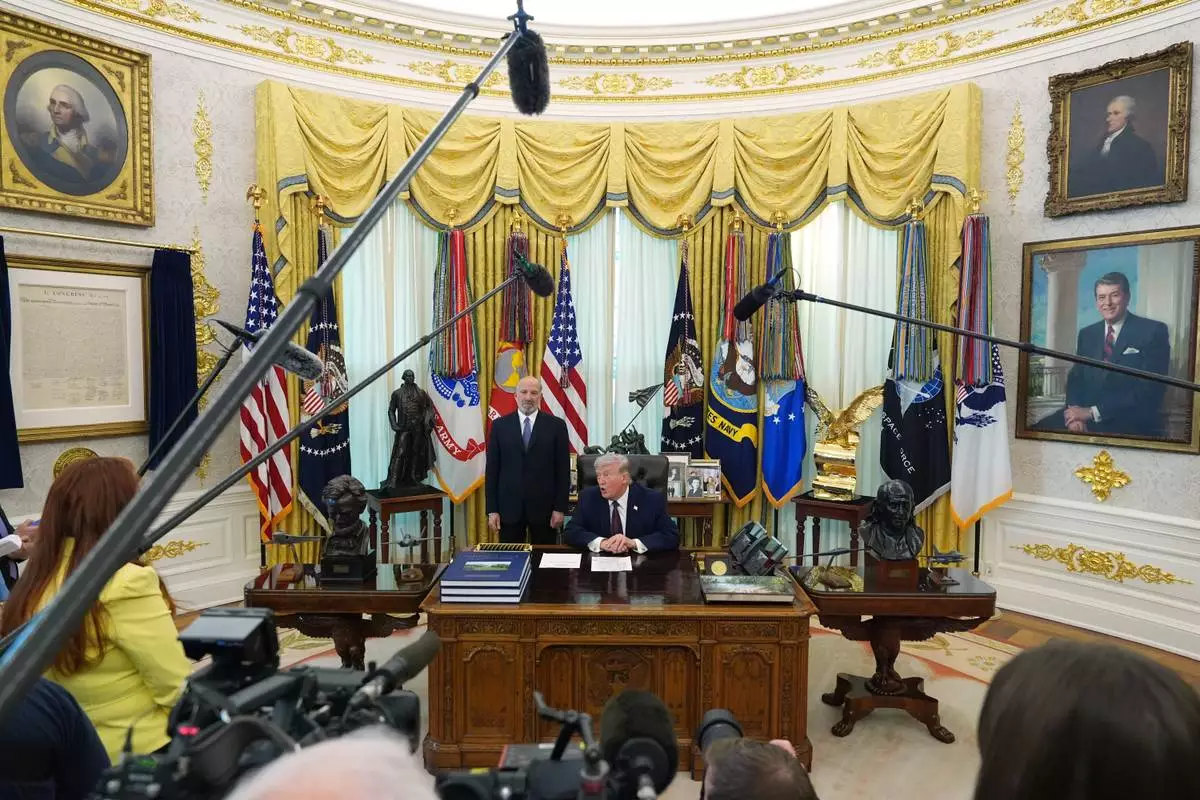
President Donald Trump answers questions from reporters after signing an executive order in the Oval Office of the White House Tuesday, March 31, 2026, in Washington, as Commerce Secretary Howard Lutnick listens. (AP Photo/Alex Brandon)
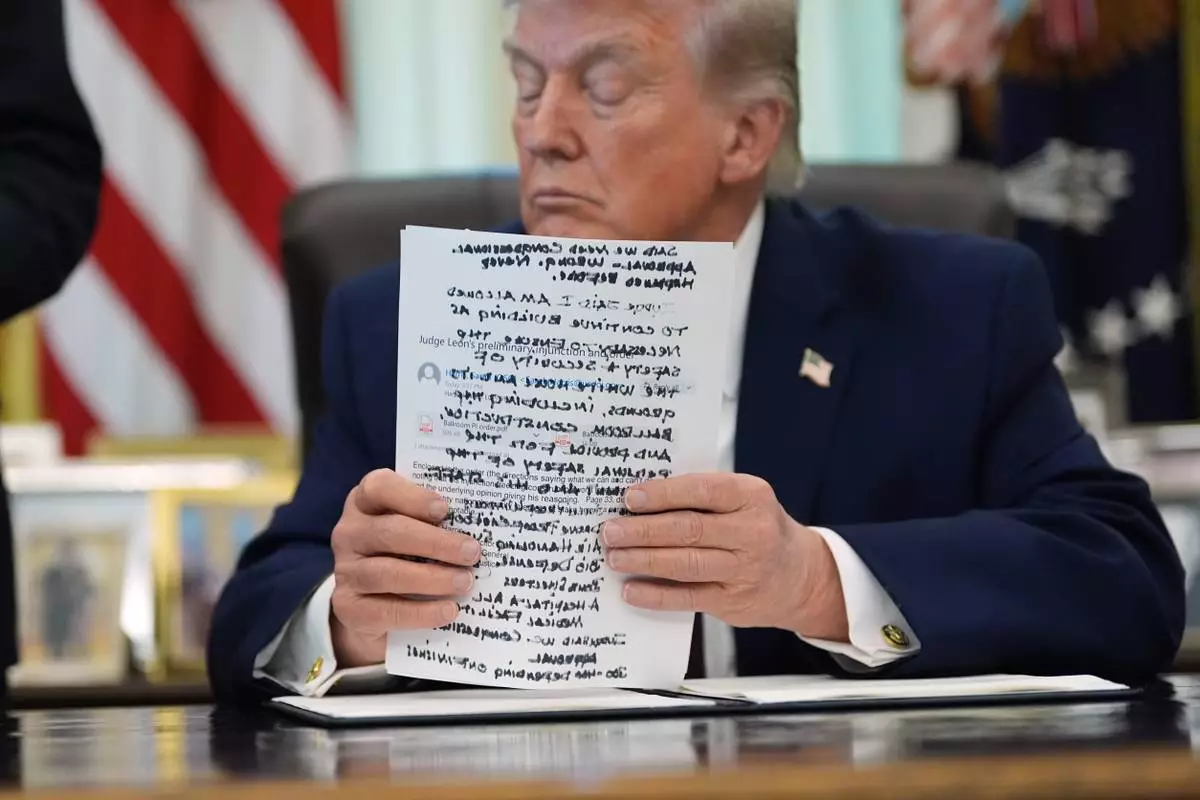
President Donald Trump holds papers in the Oval Office of the White House before signing an executive order Tuesday, March 31, 2026, in Washington. (AP Photo/Alex Brandon)
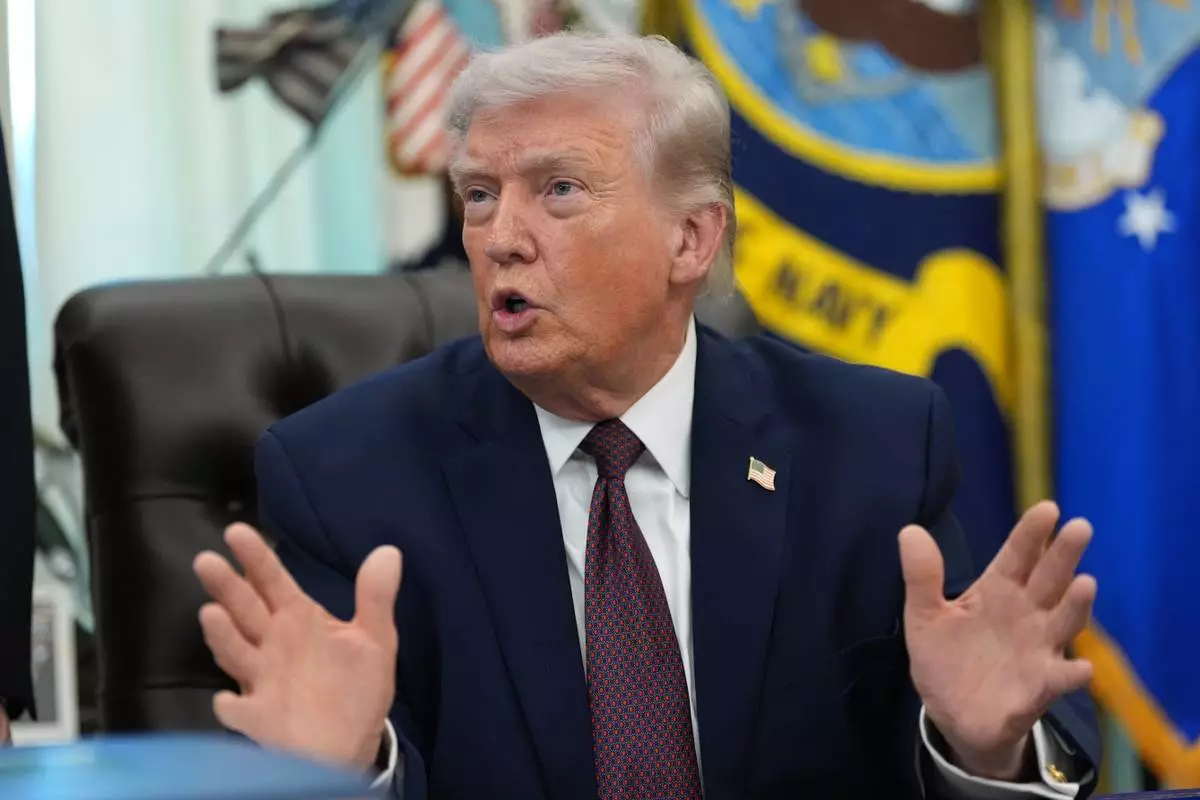
President Donald Trump answers questions from reporters after signing an executive order in the Oval Office of the White House Tuesday, March 31, 2026, in Washington. (AP Photo/Alex Brandon)