MILWAUKEE (AP) — Tampa Bay’s Shane McClanahan understands he needs time to build his stamina back up as the two-time All-Star pitches again for the first time in nearly three years.
That doesn’t mean he’s going to be happy about it.
McClanahan carried a no-hitter into the fifth inning Tuesday in his first major league appearance since Aug. 2, 2023. Then he allowed three runs — two earned — in the fifth inning and took the loss as Tampa Bay fell 6-2 to the Milwaukee Brewers.
Considering he had gone 972 days between starts while recovering from a second Tommy John surgery and nerve-related issues in his left triceps, McClanahan pitched as well as just about anyone could have expected. The 28-year-old left-hander wasn’t nearly satisfied.
“I can give you an excuse that it’s been 2 1/2 years, but I’m not going to do that,” McClanahan said. “I want to win. I’m here to win. I’ve got to execute better. I’m frustrated. Obviously I want to win and help this team. I let them down today.”
His teammates had a different take on his performance.
“I thought he looked really, really good for his first day out in almost 1,000 days,” catcher Nick Fortes said. “That’s unheard of. I’m really, really proud of him.”
McClanahan went 33-16 with a 3.02 ERA for Tampa Bay from 2021-23. He joined Herb Score and Frank Tanana as the only left-handers since 1920 to post a 3.02 ERA or lower with 450 strikeouts or more through their first three seasons.
He underwent his second Tommy John surgery in August 2023, knocking him out for the rest of that year and for 2024 as well. McClanahan was working his way back last year when an inflamed nerve in his triceps caused him to leave his third spring training start.
After making three minor league appearances last July, McClanahan underwent surgery in August to address the nerve issue in his triceps. He went 3-0 with a 2.08 ERA in four spring training starts.
That set the stage for his return Tuesday. McClanahan looked right at home while allowing only one base runner through the first four innings, on a walk to Gary Sánchez.
“It’s where I belong,” McClanahan said. “It’s easy when you know this is what God put you on this Earth to do. I was anxious to get out there and all the buildup, all the time you spend kind of thinking about your first start, I was mindful of it, I know it’s been a long time. You just kind of know that you might not be exactly who you want to be just yet, and that’s frustrating because I have such high standards for myself out there as these guys do for themselves.”
Rays manager Kevin Cash said he wants to limit McClanahan to around 80 pitches per outing for now. McClanahan understands building endurance is a process but wishes that wasn’t the case.
“Unfortunately, it is a process,” McClanahan said. “The road isn’t always straight and smooth. I’m going to take it as a learning experience. I’m very grateful to be back, but I want to win. I don’t really care about anything else other than helping this team win. I’m frustrated.”
McClanahan started to tire in the fifth.
He walked Sánchez to open that inning. One out later, Brandon Lockridge singled for the Brewers’ first hit. McClanahan retired Sal Frelick on a liner to center but walked Joey Ortiz to load the bases.
Brice Turang then sent a 2-2 pitch into right for a single that ended up bringing home three runs. Frelick was caught in a rundown and eventually got tagged out at second, but replays showed that center fielder Cedric Mullins lost the ball while applying the tag. That made Frelick safe and allowed a third run to score.
McClanahan ended up striking out four and allowing three runs (two earned), two hits and three walks in 4 2/3 innings.
“I never want to feel like I felt out there again,” McClanahan said of his fifth-inning struggles. “It’s a (lousy) feeling to go out here and just kind of feel like the train’s starting to come off the tracks a little bit. I really don’t want to give you excuses because at the end of the day, I’ve just got to pitch better.”
AP MLB: https://apnews.com/hub/MLB

Tampa Bay Rays' Shane McClanahan pitches during the first inning of a baseball game against the Milwaukee Brewers, Tuesday, March 31, 2026, in Milwaukee. (AP Photo/Aaron Gash)

Tampa Bay Rays' Shane McClanahan pitches during the first inning of a baseball game against the Milwaukee Brewers, Tuesday, March 31, 2026, in Milwaukee. (AP Photo/Aaron Gash)
TRIKORFO, Greece (AP) — Can a centuries-old ritual of spiritual renewal rekindle a New Year’s resolution to build healthy eating habits before it fades in the spring?
For six weeks every year, millions of Orthodox Christians around the world adopt a largely vegan diet, abstaining from meat, dairy products, eggs, and fish with backbones. Oil and wine also are prohibited on weekdays during the 40-day Lenten period before Orthodox Easter, which often falls later than its Catholic and Anglican counterpart.
The annual adherence to a plant-based, Mediterranean-style meal plan drives a communal rediscovery of vegetables and oil-free cooking methods in majority-Orthodox countries.
In Greece, even McDonald’s franchises get into the lean Lent spirit by adding seasonal menu items that meet most of the proscriptions of the Greek Orthodox Church. The menu includes shrimp wraps, shrimp salad, vegetable spring rolls and plant-based McVeggie burgers but is not oil-free.
Although following Eastern Orthodox dietary guidelines before Easter is often referred to as fasting, the focus is on going without certain foods, not refraining from eating altogether. The rules are not rigid but can be adapted to account for personal needs.
Here’s a look at the annual alimentary tradition, along with reasons to consider sticking with a similar diet and cautionary advice from nutritionists.
Christian traditions diverge between East and West ahead of Easter, and not just in their methods for determining the most important date on their calendars. Catholics are encouraged to give up one or more personal indulgences during Lent but get to decide whether to deny themselves dessert, alcohol, video games, swearing or something else. Members of the Orthodox Church forgo animal products except for shellfish.
Gone are Greeks' beloved dishes like mousaka and souvlakia — grilled meat wrapped with toppings. So are dairy products like milk and cheese. Vertebrate fish like anchovies, mullet and hake are no-nos too, although shrimp, oysters and calamari are permitted.
On a lush coastal hillside in central Greece, 40 monks closely follow these rules at the Monastery of St. Augustine and Seraphim. The monks, who wear black robes and full beards, grow and harvest most of their own produce in the monastery's gardens, including an abudance of zucchini and tomatoes.
Their meals during Lent are basic but not bland. The monks have mastered methods to replicate familiar tastes and textures. Oven-roasted potatoes are coated with tahini instead of oil to preserve the crunch factor. Vegetable stock prepared from scratch gives lentil dishes a hearty flavor.
The monks listen to prayers read aloud as they eat.
Father Nektarios Moulatsiotis, the monastery's affable abbot, says the practice of fasting and following a restricted diet is essential for deep reflection and focus required for the spiritual preparation for Easter. He compares it to endurance training.
“In the same way someone goes to the gym to shape their body," Nektarios said, "the church is a gym for the soul.”
Occasional hunger pangs aren't something to resist; they are part of the plan. The idea is simple: less indulgence, more clarity.
“You cannot really pray, study, chant or do any spiritual exercise with a full stomach,” he said with a chuckle.
Nektarios argues that a nutritious yet disciplined diet can produce benefits that apply outside of a religious setting as much as inside of one, such as a sense of greater self-control and enhanced awareness.
Orthodox monks observe several fasting periods that limit what, when and how much they eat for most of the year. Researchers have studied their health and food intake for decades to determine if their customs hold any clues to preventing heart disease, type 2 diabetes and strokes.
However, the advantages of eating a balanced diet that includes whole grains, vegetables, fruits and legumes are well-established. Reduce consumption of meat, saturated fats and processed foods long enough, and the body typically responds.
“Fasting certainly has benefits, provided it’s done correctly,” Eirini Babaroutsi, a sports nutritionist at the Hellenic Athletics Federation, said. For example, Orthodox Christians tend to eat more fiber during Lent, which helps the digestive system function better, she said.
“It also matters what we do eat, not simply what we avoid," Babaroutsi said. "With the right combinations, we can get all the nutrients we need.”
Meals that meet the guidelines aren’t confined to the ingredients found in Orthodox-majority countries in Southern and Eastern Europe. Babaroutsi suggests porridge with oat milk, vegetable wraps with olive paste, and high-quality peanut butter as helpful international additions.
There are a few considerations.
A six-week fasting cycle is not advisable for older adults and young children, Babaroutsi said. The Eastern Orthodox church also exempts people with serious health conditions, special dietary requirements, and pregnant or nursing women from strict obedience.
Engaging in a post-Lent binge as a reward also is best avoided because loading up after a period of abstinence can strain the body, Babaroutsi said.
For those wary of making a full commitment, know that you're not alone. Orthodox Lent started on Feb. 23, but many Greeks participate only during Holy Week, which starts on April 5, Palm Sunday, and goes until April 11, the day before Orthodox Christians celebrate Easter this year.
Supermarkets and bakeries in Greece make it easier to abide by stocking fast, family-friendly meals and an assortment of seasonal goods.
These include jars of pickles and olives, bags of chickpeas and other pulses, squid sliced into rings in freezer cases, the creamy pink fish roe known as taramosalata, and slabs of unleavened bread shaped like small surfboards.
In central Athens, at the slippery-floored central fish market, vendors call out over piles of Lent-compliant clams, octopus and mussels, shoveling seafood into paper cones.
Gerasimos Mantalvanos, the market’s general manager, said many customers tend to overindulge when Easter Sunday's traditional lamb dishes and sweets arrive. For most, a spirit of moderation eventually returns, he said.
“It is good for eating habits to change from time to time during the year,” Mantalvanos said. “So a period of fasting, a little fish and some abstinence from meat, I think these are good for the body. It is a kind of small detox, a little break.”
–––
AP photographer Thanassis Stavrakis and videojournalist Srdjan Nedeljkovic contributed.
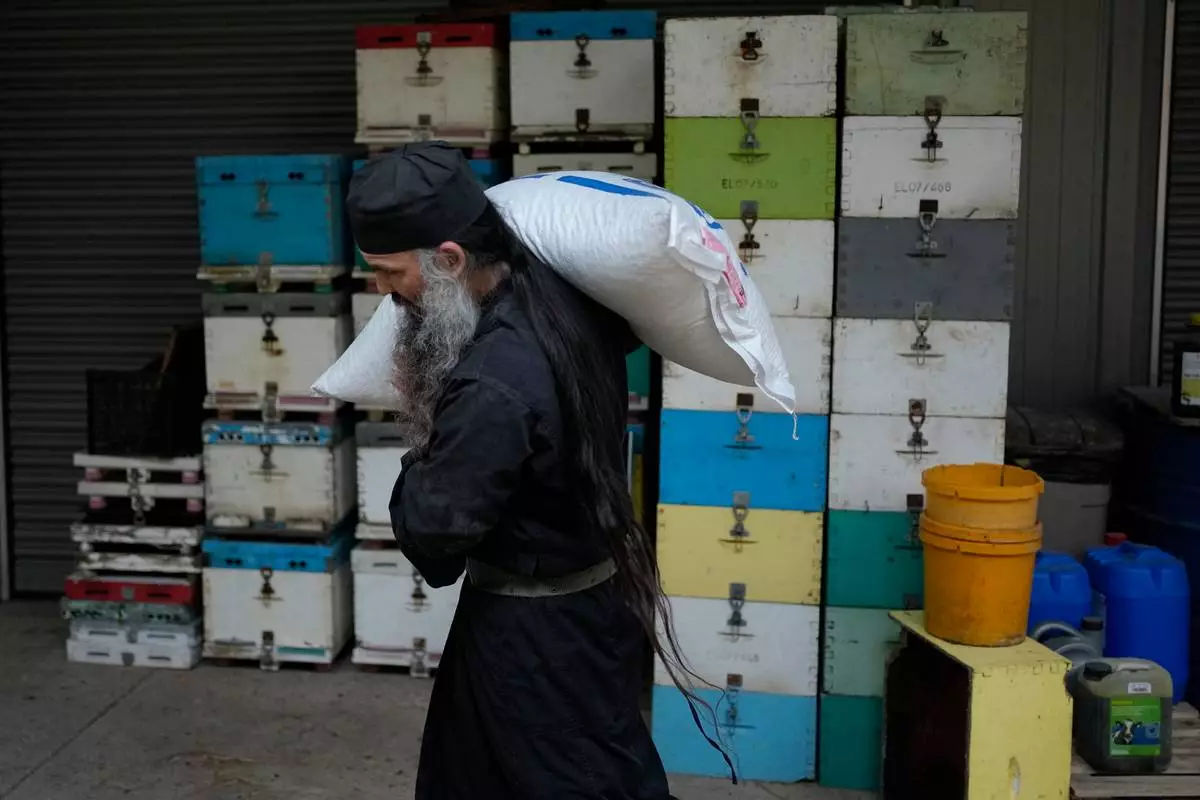
Father Seraphim carries a sack of feed for sheep at the Monastery of St. Augustine and Seraphim of Sarov in the village of Trikorfo, about 236 kilometers (147 miles) northwest of Athens, Friday, March 20, 2026. (AP Photo/Thanassis Stavrakis)
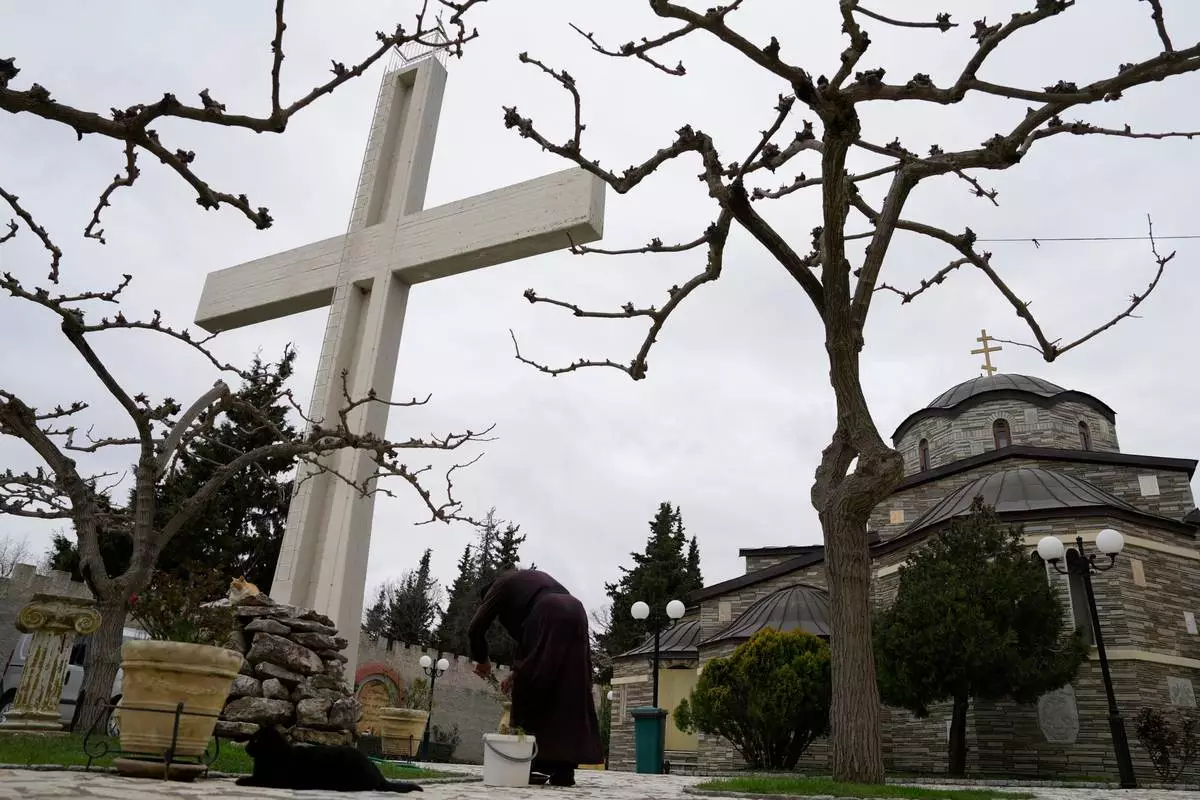
A monk tends to plants at the Monastery of St. Augustine and Seraphim of Sarov in the village of Trikorfo, about 236 kilometers (147 miles) northwest of Athens, Friday, March 20, 2026. (AP Photo/Thanassis Stavrakis)
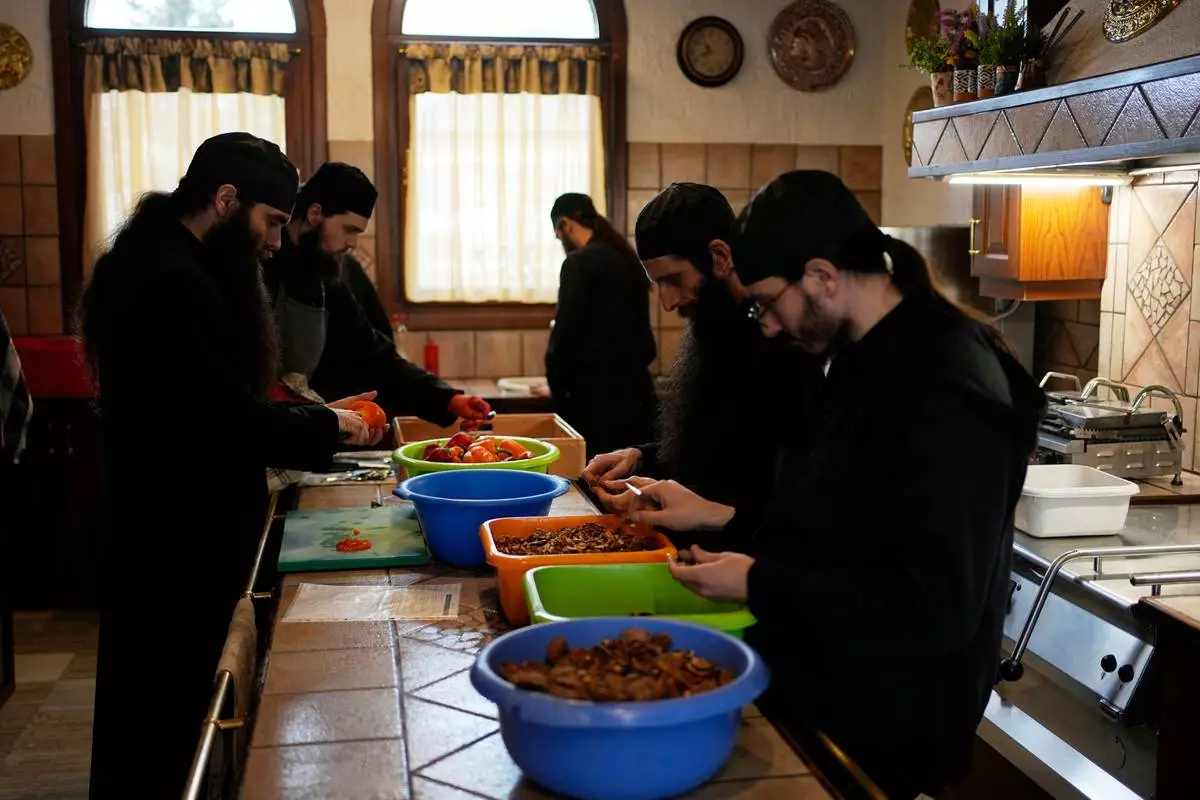
Monks prepare the meals at the Monastery of St. Augustine and Seraphim of Sarov in the village of Trikorfo, about 236 kilometers (147 miles) northwest of Athens, Friday, March 20, 2026. (AP Photo/Thanassis Stavrakis)
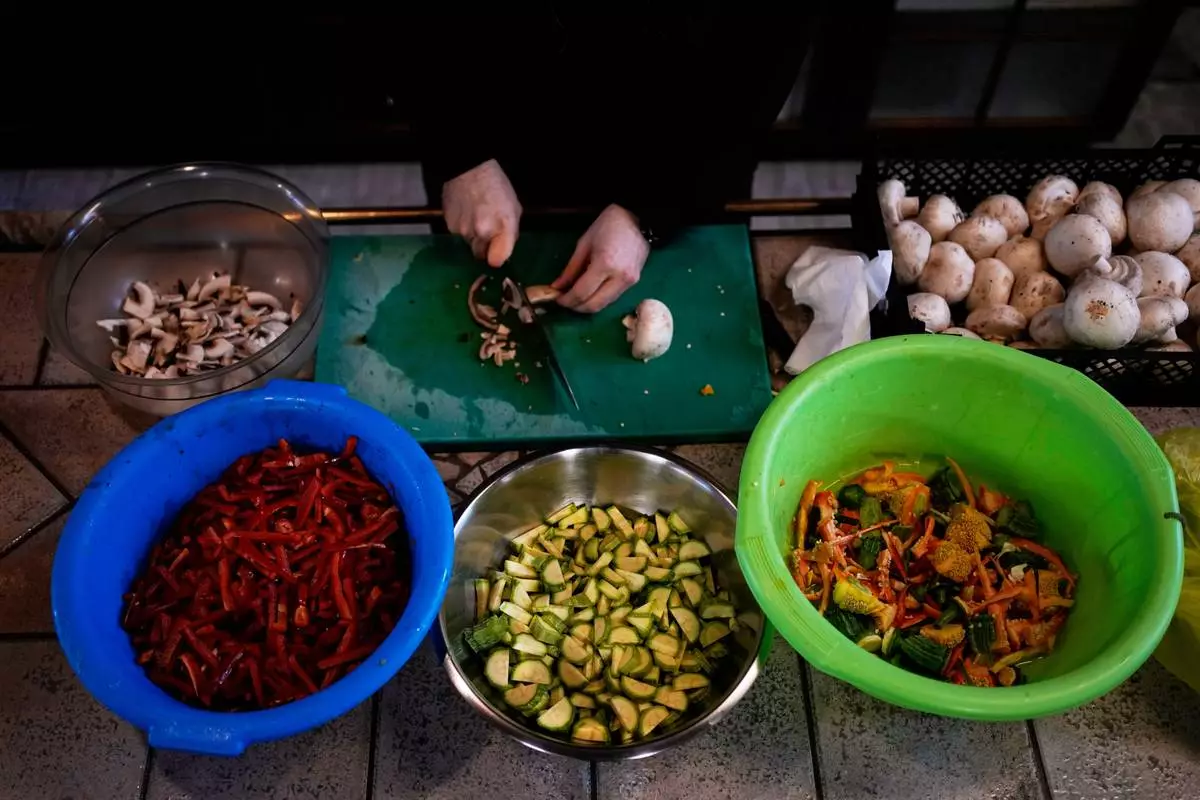
A monk prepares meals at the Monastery of St. Augustine and Seraphim of Sarov ahead of Easter as part of annual Lenten dietary restrictions in the village of Trikorfo, about 236 kilometers (147 miles) northwest of Athens, Friday, March 20, 2026. (AP Photo/Thanassis Stavrakis)
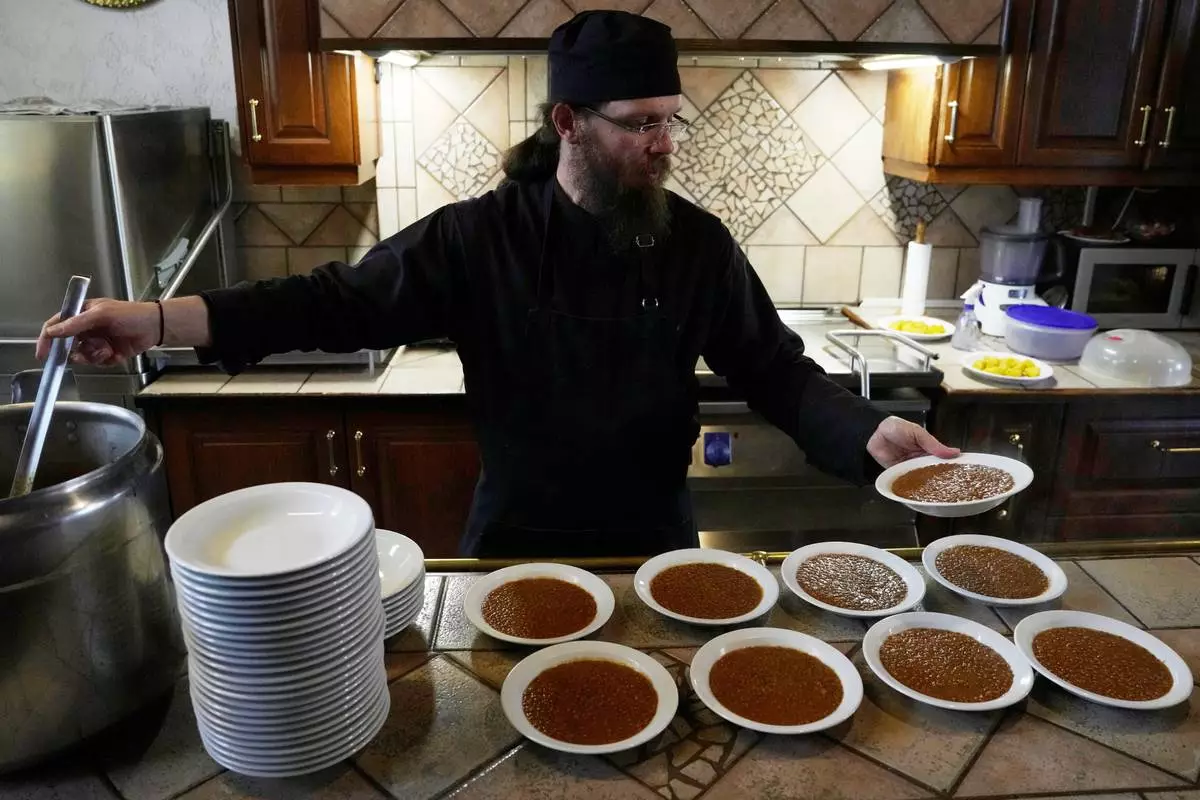
Father Isaac serves lentils for the midday meal at the Monastery of St. Augustine and Seraphim of Sarov in the village of Trikorfo, about 236 kilometers (147 miles) northwest of Athens, Friday, March 20, 2026. (AP Photo/Thanassis Stavrakis)