Incoming passenger convicted and jailed for possessing duty-not-paid cigarettes
An incoming female passenger was sentenced to three months' imprisonment and fined $4,000 by the Fanling Magistrates' Courts yesterday (March 31) for possessing duty-not-paid cigarettes and failing to declare them to Customs officers, in contravention of the Dutiable Commodities Ordinance (DCO).
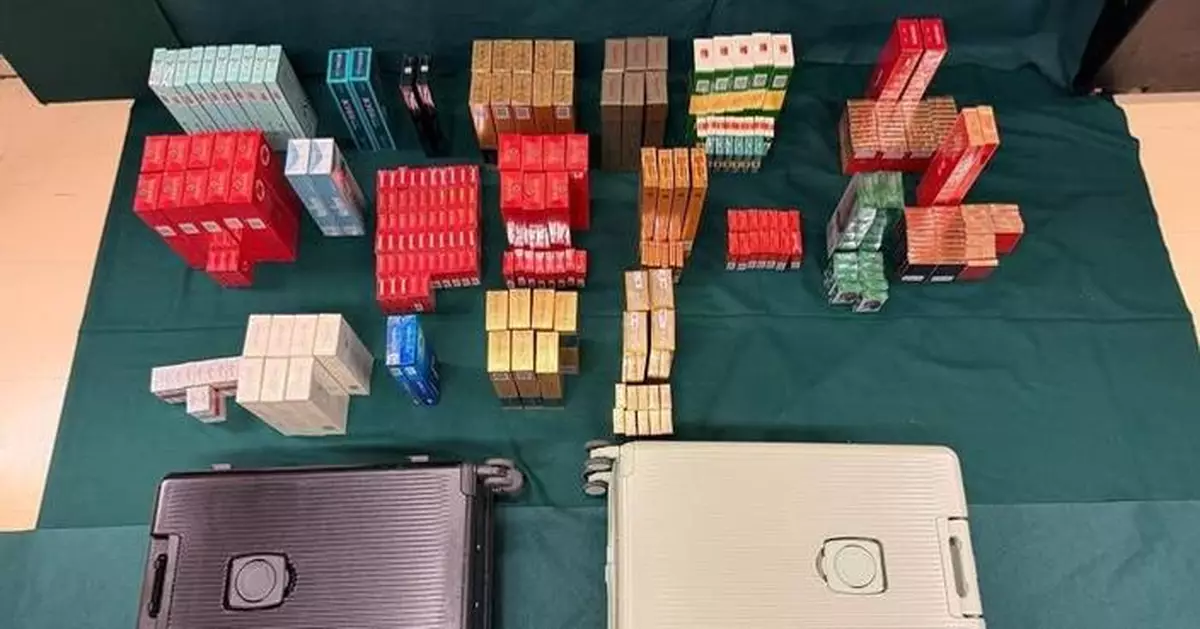
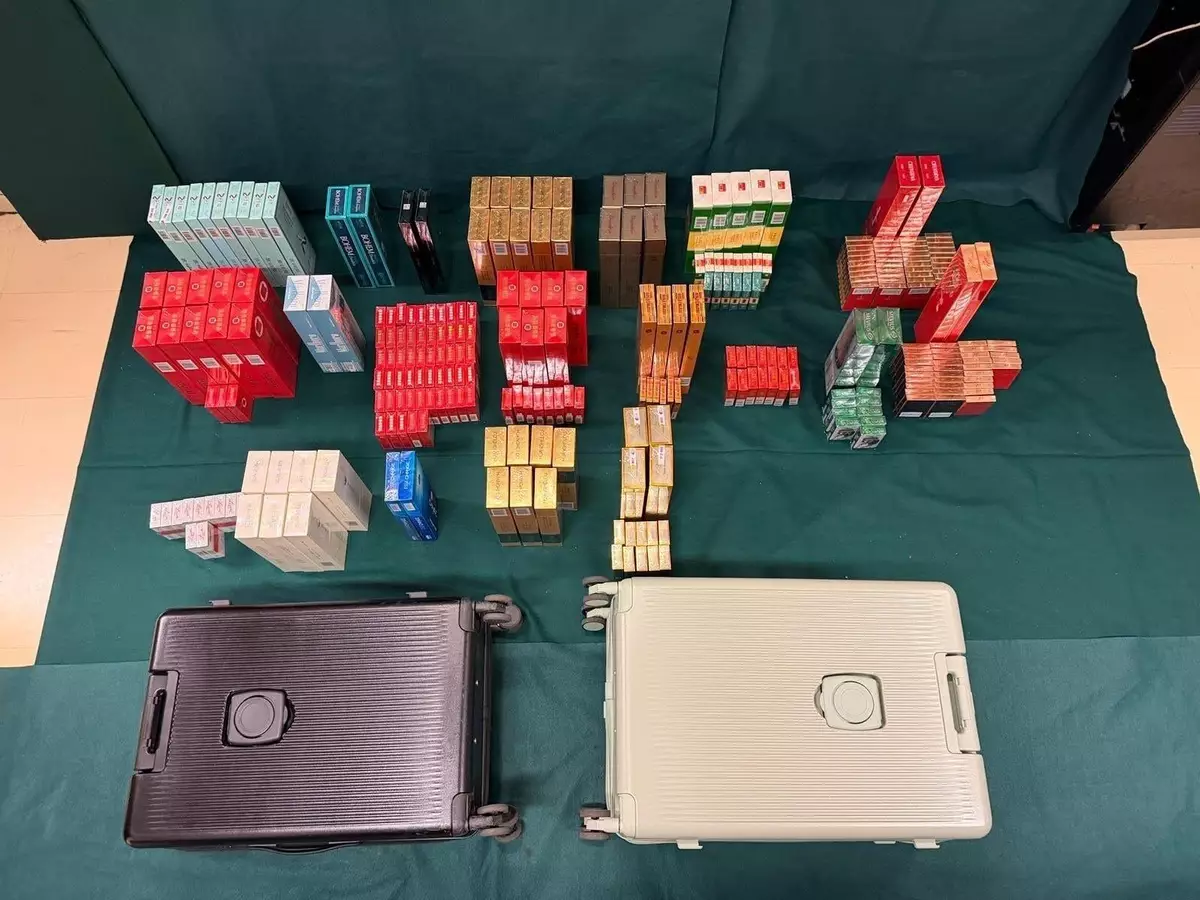
Customs officers intercepted a 45-year-old incoming female passenger at the Lo Wu Control Point on March 8 and seized 20,920 duty-not-paid cigarettes in her personal baggage, with an estimated market value of about $85,000 and a duty potential of about $69,000. The female passenger was subsequently arrested.
Customs welcomes the sentence, noting that even a first-time offender may still be imprisoned. The custodial sentence has imposed a considerable deterrent effect and reflects the seriousness of the offences. Members of the public should not defy the law.
Customs reminds members of the public that under the DCO, cigarettes are dutiable goods to which the DCO applies. Any person who imports, deals with, possesses, sells or buys illicit cigarettes commits an offence. The maximum penalty upon conviction is a fine of $2 million and imprisonment for seven years.
Members of the public may report any suspected illicit cigarette activities to Customs' 24-hour hotline 182 8080 or its dedicated crime-reporting email account (crimereport@customs.gov.hk) or online form (eform.cefs.gov.hk/form/ced002).
Incoming passenger convicted and jailed for possessing duty-not-paid cigarettes Source: HKSAR Government Press Releases
Government releases weekly updates on retail price adjustments of auto-fuel
Stable energy supply is crucial to Hong Kong's economic and social operations. Public transportation, air passenger and cargo services, and electricity supply are directly related to energy supply. The situation in the Middle East is affecting global oil supply, with the impact on Asia being particularly pronounced. The top priority of the Government is to ensure the stability of Hong Kong's energy supply.
Currently, around 80 per cent of Hong Kong's oil products come from the Chinese Mainland. Hong Kong has weathered several global energy crises in the past, including those triggered by the Gulf War and the Ukrainian conflict. With the advantage of having strong support from the motherland, Hong Kong has been able to maintain a stable energy supply amid energy shortages in many regions and cities around the world.
In view of the latest situation in the Middle East, the Environment and Ecology Bureau (EEB) reiterated to local major oil companies the importance of energy for Hong Kong's economic and social operations, and urged them to ensure a stable supply of local auto-fuel. All oil companies have indicated that the supply of local auto-fuel remains at a normal level, and that they will continue to strive to maintain a stable supply.
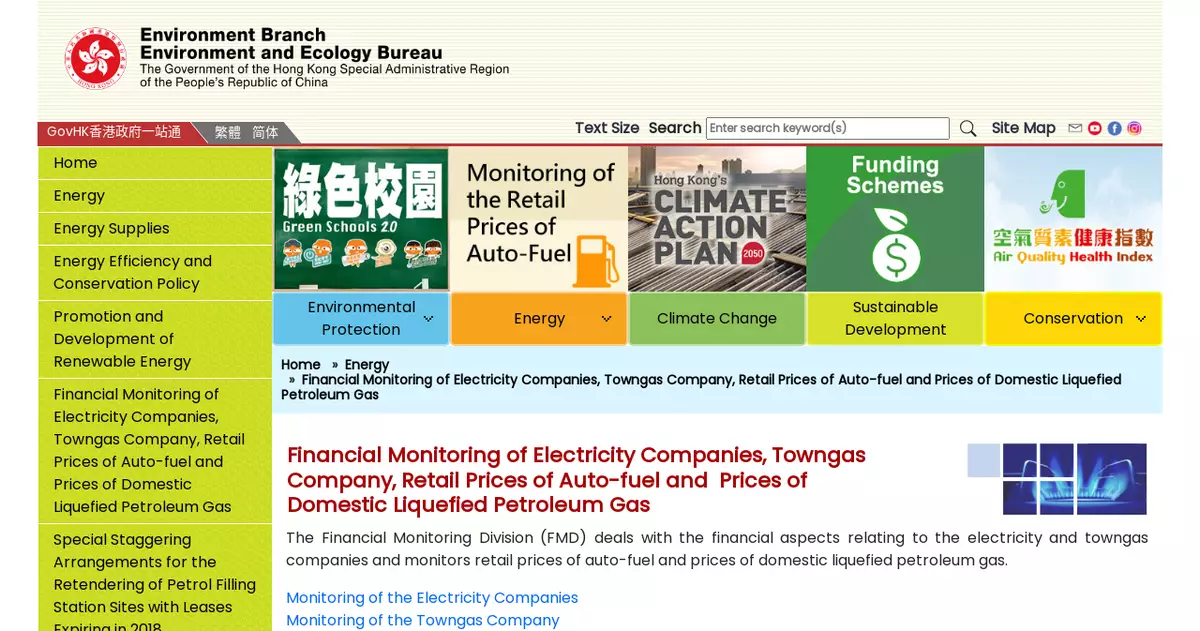
To facilitate public monitoring of retail price adjustments for auto-fuel, the EEB will, starting from today (April 1) and on a weekly basis, release the seven-day moving average retail prices, after walk-in discounts, of unleaded petrol and diesel from local oil companies, along with the trends in international benchmark prices of refined oil products during the same period. The relevant information has been uploaded to the EEB website:www.eeb.gov.hk/en/energy/financial_monitoring.html.
Crude oil and refined oil products are different products. Therefore, changes in the international prices of crude oil (e.g. London Brent crude) may not necessarily correspond to adjustments in retail prices for auto-fuel. The EEB compares the international benchmark prices of refined oil products with retail prices for auto-fuel in these charts to facilitate the public in monitoring trends of local retail prices for auto-fuel among local oil companies, as well as international prices for refined oil products, and to assess whether these prices are moving in tandem and the extent of such changes.
While local oil companies have set pump prices for auto-fuel, they offer various discounts for actual transactions. As a result, pump prices do not reflect the actual retail prices. In addition to showing pump prices, the charts also show the retail prices, net of walk-in discounts, offered by each oil company. This allows the public to compare the average prices across different oil companies and choose the ones offering more competitive prices. Nonetheless, it should be noted that these charts do not take into account other discounts available only to specific customers, such as credit card discounts and membership card discounts from the oil companies.
The EEB will release the charts for the previous week every Wednesday afternoon. If Wednesday falls on a general holiday, the charts will be released on the next working day.
The Government will continue to closely monitor geopolitical developments, international energy price trends, and the local fuel supply situation to ensure the stability of Hong Kong's energy supply.
Source: AI-found images