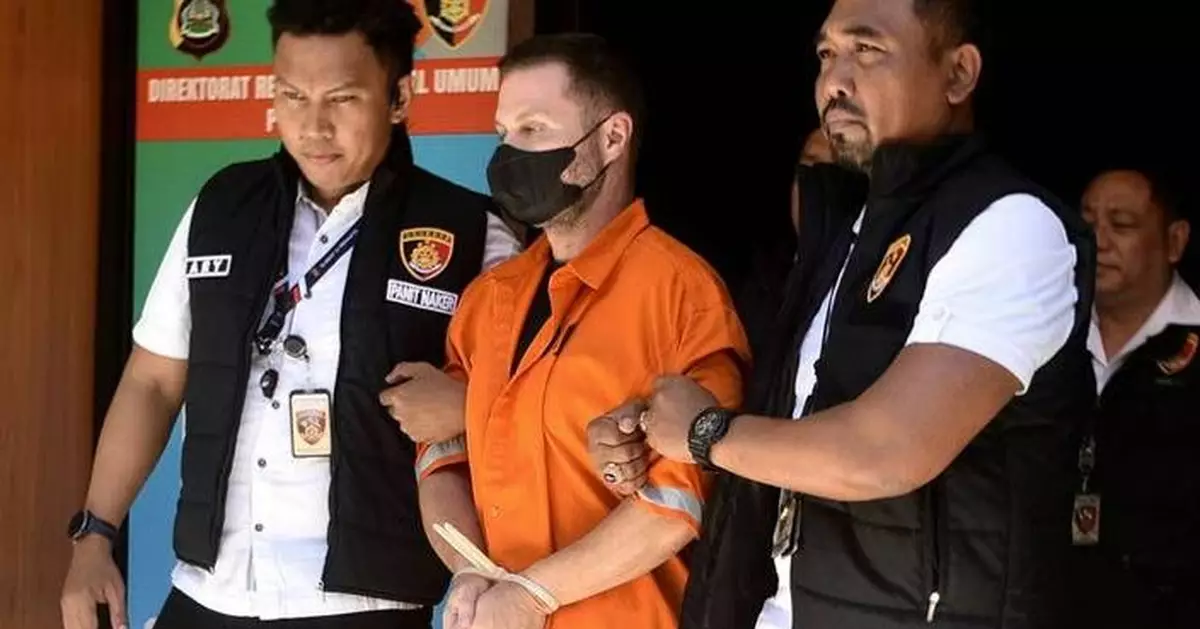
DENPASAR, Indonesia (AP) — A Scottish crime boss is to be deported to Spain Wednesday after he was arrested on the Indonesian resort island of Bali in connection with large-scale drug trafficking and money laundering, authorities said.
Authorities described the 45-year-old, identified as Steven Lyons, as a senior figure in an international crime syndicate who had spent months on the run.
He was detained on Saturday when he arrived at Bali’s Ngurah Rai international airport from Singapore, Indonesia’s immigration and police authorities said.
The immigration system had flagged Lyons as the subject of an Interpol Red Notice issued at Spain’s request. A Red Notice is an alert issued by Interpol at the request of a member country for police worldwide to arrest a suspect for extradition.
Lyons, who is wanted in Spain and the United Kingdom, will be flown to Spain via Doha on Wednesday evening, said Bugie Kurniawan of Bali’s immigration office.
The alleged leader of the Lyons crime family, based in Scotland, was handed over to Spain’s Civil Guard officers at Ngurah Rai airport ahead of his extradition to Madrid, where prosecutors are seeking to try him on charges in connection with organized crime, drug trafficking and money laundering, Kurniawan said.
Lyons has been on Spain’s wanted list for about two years, following a murder there in 2024. Bali Police Chief Daniel Adityajaya said the arrest was part of a joint investigation involving Spanish and Scottish police.
According to Untung Widiyatmoko who heads Indonesia’s branch of Interpol, Lyons is alleged to have led a transnational criminal network operating out of Cumbernauld, Scotland, and controlled narcotics trafficking routes from Spain to the U.K. His organized crime ring is suspected of using shell companies for money laundering in Europe and the Middle East — including in Spain, Scotland, England, Dubai, Qatar, Bahrain and Turkey.
Widiyatmoko said a day before Lyons' arrest in Bali, police in Scotland and Spain carried out raids in connection with the case, with the help of Europol, a European Union law enforcement cooperation hub. Several people were arrested, while others were detained in Turkey, the Netherlands and the United Arab Emirates.
Scottish media have reported that Lyons survived a 2006 shooting in Glasgow that killed his cousin and later moved to Spain before settling in Dubai, in the UAE. Last May, his brother and an associate were shot and killed in a suspected gangland shooting at a beachfront bar in Fuengirola, southern Spain.
Karmini reported from Jakarta, Indonesia.
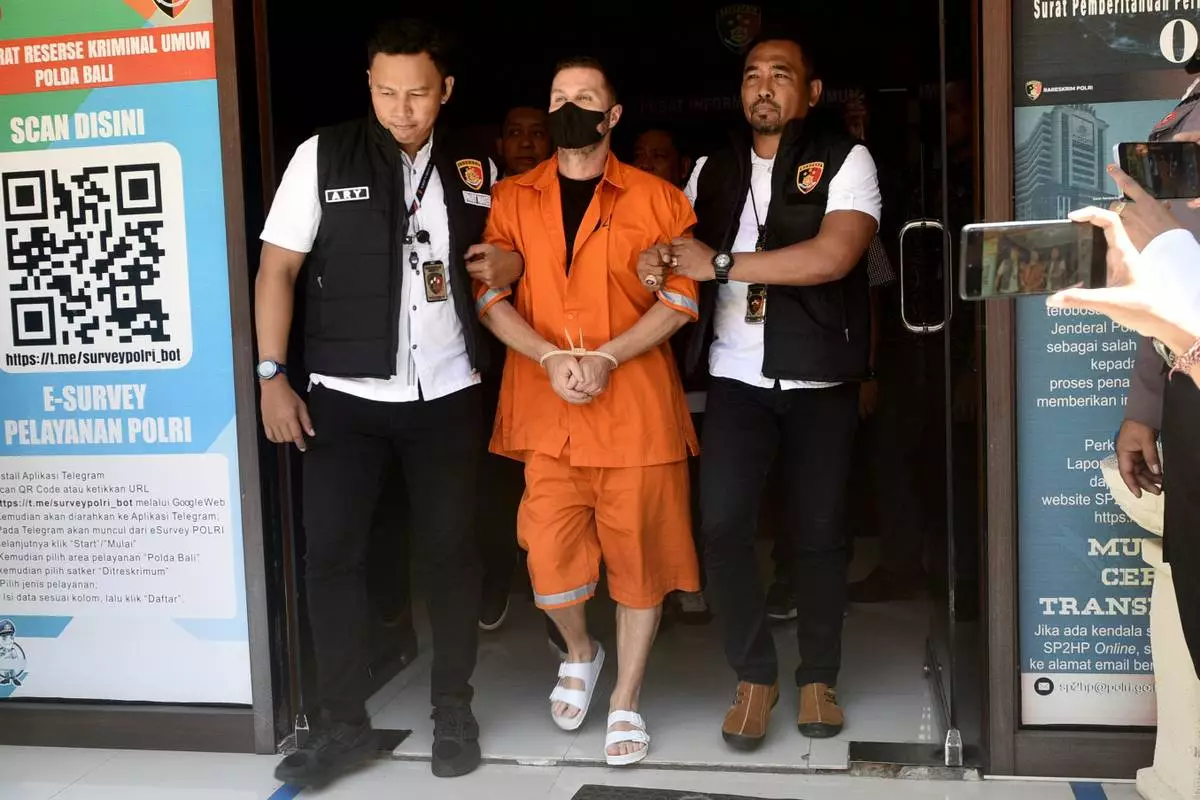
A Scottish man identified as Steven Lyons, who is described as a senior figure in an international crime syndicate, center, is escorted by police officers at the regional police headquarters in Denpasar, Bali, Indonesia, Tuesday, March 31, 2026. (AP Photo)
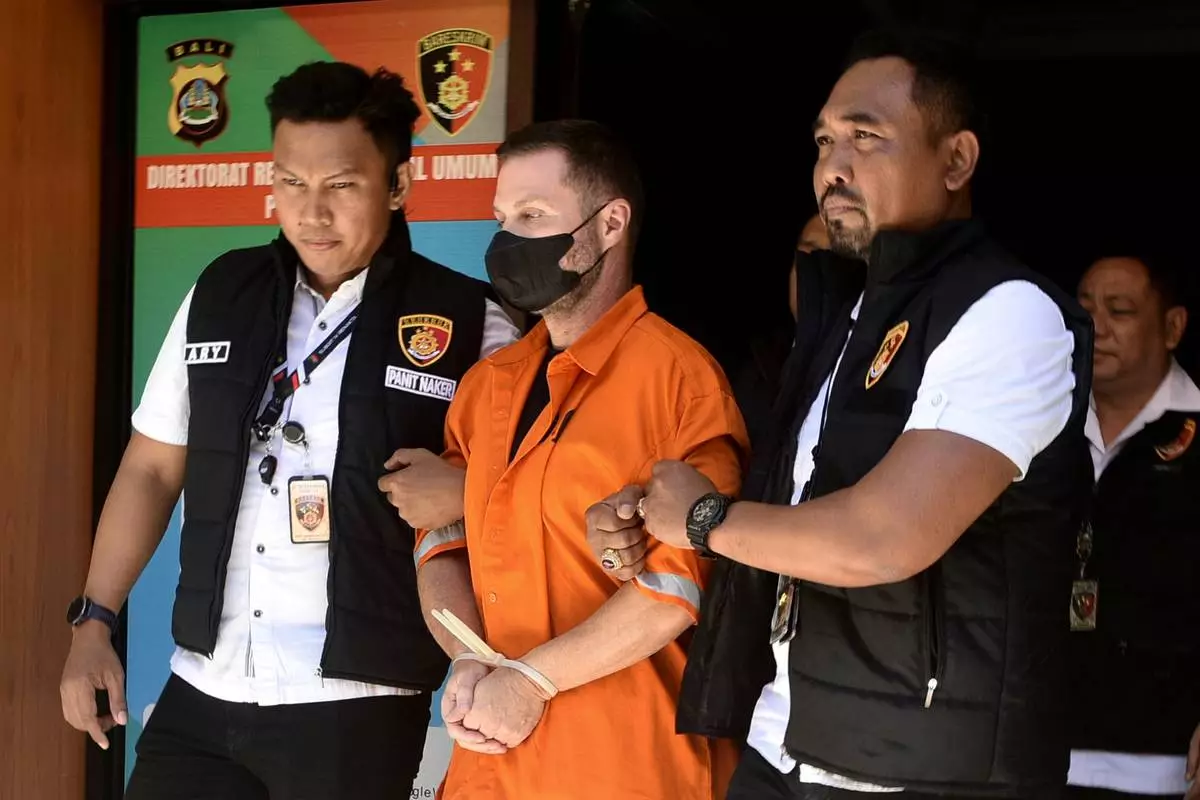
A Scottish man identified as Steven Lyons, who is described as a senior figure in an international crime syndicate, center, is escorted by police officers at the regional police headquarters in Denpasar, Bali, Indonesia, Tuesday, March 31, 2026. (AP Photo)
Advocacy groups and experts condemned YouTube for serving up low-quality artificial intelligence-generated videos to its most vulnerable audience: children.
In a letter to YouTube CEO Neal Mohan and Sundar Pichai, the CEO of YouTube’s parent company Google, children’s advocacy group Fairplay expresses “serious concern” about the spread of AI-generated videos on both YouTube and YouTube Kids. The letter, which was sent on Wednesday morning, was signed by more than 200 organizations and individual experts such as child psychiatrists and educators.
“This ’ AI slop ’ harms children’s development by distorting their sense of reality, overwhelming their learning processes and hijacking their attention, thereby extending time online and displacing offline activities necessary for their healthy development,” the letter reads. “These harms are particularly acute for young children.” The letter calls on YouTube to clearly label all AI-generated content and ban any AI-generated content on YouTube Kids. They also propose barring AI-generated videos from being recommended to users under 18 and implementing an option for parents to turn off AI-generated content even if their child searches for it.
The letter is signed by 135 organizations including the American Federation of Teachers and the American Counseling Association, and around 100 individual experts like “The Anxious Generation” author Jonathan Haidt. The letter is part of a larger campaign from Fairplay that also includes a petition.
Much of this AI-generated content is fast-paced with bright colors, lively music and clickbait titles that work to grab the attention of young viewers, the letter outlines. There has been a growing movement online against AI-generated content, particularly when it looks or feels low quality or leans into the meaninglessness of “ brainrot.”
Spokesperson Boot Bullwinkle said in a statement that YouTube has “high standards for the content in YouTube Kids, including limiting AI-generated content in the app to a small set of high-quality channels.”
“We also provide parents the option to block channels. Across YouTube, we prioritize transparency when it comes to AI content, labeling content from our own AI tools, and requiring creators to disclose realistic AI content,” Bullwinkle said. “We’re always evolving our approach to stay current as the ecosystem evolves.”
YouTube's current policy regarding AI-generated content requires creators to disclose when content that's “realistic” is made with altered or synthetic media, including generative AI. Creators are not required to disclose when generative AI is used to create content that is clearly unrealistic, including animated videos and those with special effects.
YouTube said it is actively working on developing labels for YouTube Kids.
In its letter, Fairplay argues that voluntary disclosure policy and what it sees as an “extremely limited” definition of altered and synthetic content mean kids still see a flood of AI-generated videos that are not labeled as such. They also argue that many children who watch YouTube videos are not yet able to read or to comprehend something like an AI disclosure. That leaves children “to fend for themselves or their parents to play whack-a-mole,” the letter reads.
Fairplay's campaign comes shortly after Google’s AI Futures Fund invested $1 million into Animaj, an AI animation studio that makes videos for kids and draws in staggeringly high viewership numbers, according to Bloomberg.
The campaign follows a landmark verdict in a social media addiction trial in which a California jury found that YouTube designed its platform to hook young users without concern for their well-being. Meta was also found liable on the same counts as YouTube in the same case.
“Pushing AI slop onto young children is just another testament to how YouTube and YouTube Kids are designed to maximize children’s time online — including babies. AI slop hypnotizes young children, making it hard for them to get off their screens and move onto essential activities like play, sleep and social interaction,” said Rachel Franz, the director of Fairplay’s Young Children Thrive Offline program, in a statement. “What’s more, YouTube’s algorithm makes it impossible for kids to avoid AI slop.”
Earlier this year, YouTube head Mohan listed out “managing AI slop” as one of the company's priorities for 2026. In a January blog post, he wrote that the company was “actively building on our established systems that have been very successful in combatting spam and clickbait, and reducing the spread of low quality, repetitive content.”

FILE - The icons for the YouTube Kids and YouTube apps are displayed on a smartphone in New York on April 25, 2018. (AP Photo/Jenny Kane, File)