PALO ALTO, Calif.--(BUSINESS WIRE)--Apr 1, 2026--
Navan (NASDAQ: NAVN), the global AI-powered business travel and expense platform, today announced that PCL Construction has selected Navan to spearhead its global travel and expense transformation.
This press release features multimedia. View the full release here: https://www.businesswire.com/news/home/20260331877360/en/
PCL Construction has thrived for more than a century by consistently innovating and adapting to the latest technology. As an employee-owned company, PCL is defined by a culture that empowers its workforce and prioritizes the employee experience. By partnering with Navan, PCL is moving away from decentralized manual workflows toward a high-performance, unified tech stack.
“PCL’s 120-year history is a testament to our ability to adapt and lead. We have always embraced technology to modernize our business and improve the lives of our employees,” said Gordon Stephenson, Chief Financial Officer at PCL Construction. “In Navan, we found a partner that matches our resilient, tech-forward mindset. By unifying travel and expense, we are removing the friction of manual processes and giving our teams a superior, digital-first experience that allows them to stay focused on building the future.”
The decision to adopt Navan reflects a commitment to driving operational excellence across PCL’s more than 30 major centers. Key drivers of the partnership include:
“Navan aims to be the engine behind the world’s most forward-thinking organizations, and PCL Construction is a premier example of a global leader that refuses to settle for the status quo,” said Michael Sindicich, President of Navan. “By integrating travel and expense into a single AI-powered workflow, PCL is setting a new standard for productivity in the construction industry. This partnership continues Navan’s momentum as the platform of choice for complex, global enterprises that demand both financial control and a premium user experience.”
PCL Construction joins a growing list of enterprise organizations switching to Navan, including industry leaders from across Canada and the construction sector. This momentum is underscored by Navan’s recent ranking as the No. 1 Travel Management Software in Canada in the G2 Spring 2026 Rankings, cementing its position as the preferred choice for Canadian companies demanding modern, scalable travel and expense solutions.
About PCL Construction
PCL Construction is one of the most respected and accomplished global construction leaders, comprising independent companies operating throughout the United States, Canada, the Caribbean and Australia. With an annual construction volume of $9.9 billion USD, PCL builds projects that shape communities and strengthen infrastructure. The company’s 100% employee ownership model fuels a culture of commitment for clients in the buildings, civil infrastructure, heavy industrial and solar markets. With a strategic presence in more than 30 major centers, PCL’s leadership teams consistently drive innovation and set new benchmarks for excellence, bringing unparalleled skill to every project. Watch us build at PCL.com.
About Navan
Navan (NASDAQ: NAVN) is the global AI-powered business travel and expense platform that makes travel easy for frequent travelers. From finding flights and hotels, to automating expense reconciliation, with 24/7 support along the way, Navan delivers an intuitive experience travelers love and finance teams rely on. See how Navan customers benefit and learn more at navan.com.
Forward-Looking Statements
All statements in this press release other than statements of historical fact could be deemed to be forward-looking statements within the meaning of the Private Securities Litigation Reform Act of 1995. Forward-looking statements are often identified by words such as “anticipate,” “believe,” “estimate,” “expect,” “intend,” “may,” “plan,” “project,” “will,” or similar expressions. Such statements are subject to risks, uncertainties and other factors that may cause actual results to be materially different from any future results expressed or implied by the forward-looking statements. These risks and other factors include the risks described under the caption “Risk Factors” in Navan’s Quarterly Report on Form 10-Q filed with the Securities and Exchange Commission (“SEC”) on December 15, 2025 and in other reports Navan files from time to time with the SEC. Except as required by law, Navan undertakes no obligation, and does not intend, to update these forward-looking statements.

PCL Construction Selects Navan to Transform Global Travel and Expense Operations
WASHINGTON (AP) — The Trump administration on Thursday loosened federal rules that require grocery stores and air-conditioning companies to reduce greenhouse gases used in cooling equipment, a step President Donald Trump said would help lower grocery costs.
Trump, at a White House ceremony, said the action by the Environmental Protection Agency would “substantially lower costs for consumers” by delaying costly restrictions that limit the type of refrigerants U.S. businesses and families can use.
The move to relax the Biden-era rules on harmful pollutants known as HFCs emitted by refrigerators and other appliances was the latest attempt by the Trump administration to try to address rising voter concerns over the cost of living ahead of pivotal elections in November.
It is not clear how much or how quickly the loosening of the refrigerant rule might impact grocery prices. Industry groups said the move could even raise prices because manufacturers have already redesigned products, retooled factories and trained workers to build and service next-generation refrigerant equipment.
Inflation in the United States increased to 3.8% annually in April, amid price spikes caused by the Iran war and President Donald Trump’s sweeping tariffs. Inflation is now outpacing wage gains as the war has kept oil and gasoline prices high.
The Biden-era regulation was “unnecessary and costly and actually makes the machinery worse,” Trump said at a ceremony joined by top executives from Kroger, Piggly Wiggly and other grocery chains. The EPA action will protect hundreds of thousands of jobs and save Americans more than $2 billion a year, he said.
The Air-Conditioning, Heating and Refrigeration Institute, which represents more than 330 HVAC manufacturers and commercial refrigeration companies, said the change in approach would “inject uncertainty across the market” and could even raise prices.
“This rule works against basic supply and demand,” said Stephen Yurek, the group’s president and CEO. “By extending the compliance deadline” for phasing out hydrofluorocarbons, or HFCs, the administration “is maintaining and even increasing demand in the market for existing refrigerants while supply continues to fall.”
Manufacturers have already retooled product lines and certified models based on the existing timeline, Yurek said. Nearly 90% of residential and light commercial air conditioning systems use substitute refrigerants, rather than HFCs, he said.
The administration's action on refrigerants represents a reversal after Trump signed a law in his first term that aimed to reduce harmful, planet-warming pollutants emitted by refrigerators and air conditioners. That bipartisan measure brought environmentalists and major business groups into rare alignment on the contentious issue of climate change and won praise across the political spectrum.
The 2020 law reflected a broad bipartisan consensus on the need to quickly phase out domestic use of HFCs, greenhouse gases that are thousands of times more potent than carbon dioxide and are considered a major driver of global warming.
The EPA action highlights the second Trump administration’s drive to roll back regulations perceived as climate friendly. The plan is among a series of sweeping environmental changes that EPA Administrator Lee Zeldin has said will put a “dagger through the heart of climate change religion.”
Environmentalists criticized the administration’s actions, saying the new rule would exacerbate climate pollution while disrupting a yearslong industry transition to new coolants as an alternative to HFCs.
The 2020 law signed by Trump, known as the American Innovation and Manufacturing Act, phased out HFCs as part of an international agreement on ozone pollution. The law accelerated an industry shift to alternative refrigerants that use less harmful chemicals and are widely available.
The U.S. Chamber of Commerce and the American Chemistry Council, the top lobbying group for the chemical industry, were among numerous business groups that supported the law and an international deal on pollutants, known as the Kigali Amendment, as victories for jobs and the environment. U.S. companies such as Chemours and Honeywell developed and produce the alternative refrigerants sold in the United States and around the world.
The 2023 rule now being relaxed imposed steep restrictions on HFCs starting in 2026. Zeldin said the rule from the Democratic Biden administration did not give companies enough time to comply and that the rapid switch to other refrigerants caused shortages and price increases last year. Some in the industry dispute this.
The Food Industry Association, which represents grocery stores and suppliers, applauded the Trump EPA proposal last year, saying the earlier rule “imposed significant and unrealistic compliance timelines.”

Kevin McDaniel, Piggly Wiggly franchise owner, speaks during an event with President Donald Trump about loosening a federal refrigerant rule, in the Oval Office at the White House, Thursday, May 21, 2026, in Washington. (AP Photo/Jacquelyn Martin)

Kroger CEO Greg Foran speaks speaks during an event with President Donald Trump about loosening a federal refrigerant rule, in the Oval Office at the White House, Thursday, May 21, 2026, in Washington. (AP Photo/Jacquelyn Martin)

Lee Zeldin, Environmental Protection Agency administrator, listens as President Donald Trump speaks during an event about loosening a federal refrigerant rule, in the Oval Office at the White House, Thursday, May 21, 2026, in Washington. (AP Photo/Jacquelyn Martin)

President Donald Trump speaks during an event about loosening a federal refrigerant rule, in the Oval Office at the White House, Thursday, May 21, 2026, in Washington. (AP Photo/Jacquelyn Martin)
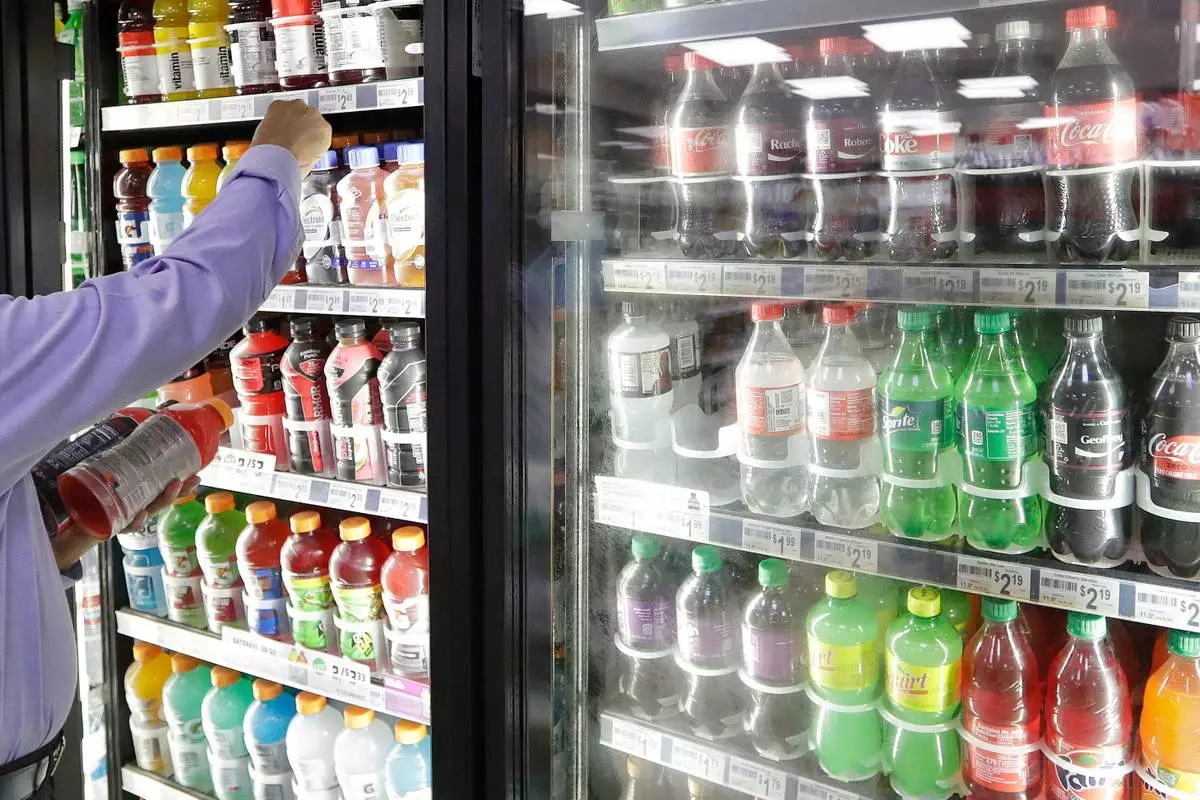
FILE - A shop owner reaches into a drink display refrigerator at his convenience store in Kent, Wash., Oct. 1, 2018. (AP Photo/Elaine Thompson, File)