WASHINGTON (AP) — The U.S. Supreme Court has finished hearing arguments over the constitutionality of President Donald Trump’s order to end birthright citizenship for children born in the United States to someone in the country illegally or temporarily.
The birthright citizenship order, which Trump signed on Jan. 20, 2025, the first day of his second term, is part of his Republican administration’s broad immigration crackdown.
Trump attended but left after one hour; he is the first sitting president to attend oral arguments at the nation’s highest court.
Every lower court to have considered the issue has found the order illegal and prevented it from taking effect. A definitive ruling by the nation’s highest court is expected by early summer.
Here’s the latest:
Covering an oral argument in front of the Supreme Court poses logistical challenges for reporters, who are used to feeding information to the wire in real time.
But phones and recording devices are not allowed into the courtroom — not even an Oura ring.
For that reason, dispatches from the court are delayed until the press is released from the courtroom, which may take hours.
Today, the President entered the courtroom around 9:45 a.m. and left 13 minutes into ACLU attorney Cecillia Wang’s arguments.
This was really an unprecedented moment for the Trump administration.
Justices Gorsuch, Kavanaugh and Barrett were questioning some of the president’s immigration policies while the president was actually in the audience to listen to them.
That’s especially significant because it was Trump who nominated all of those justices to the Supreme Court during his first term.
President Trump wasn’t the only celebrity there in attendance.
Actor and activist Robert De Niro was also in the crowd in the totally packed courtroom.
Security is usually tight at the Supreme Court. But with the president visiting, it was especially high on Wednesday.
After the hearing, De Niro told reporters that Trump, “turned up today because he wants to try to put his thumb on the scale. If you want to try to intimidate some of the justices, three of whom he appointed to rule in his favor, I dare say that did not work.”
The president showed up to the Supreme Court hearing just as the oral arguments were set to begin.
He sat in the front row of the public seating section of the courtroom, which made it hard for the press to be able to view him. But the media was able to see who accompanied the president — Attorney General Pam Bondi and Commerce Secretary Howard Lutnick.
As he sat down Trump scoped out the crowd but otherwise didn’t appear to be talking to anyone and sat quietly for the arguments.
Stephen Miller is weighing in on the Supreme Court arguments.
Miller is Trump’s deputy chief of staff for policy and homeland security advisor. He’s also the architect of many of the president’s immigration-related policies.
In posts on X during the arguments Miller said: “Birthright citizenship means the children of illegal aliens can vote to tax your children and seize their inheritance.”
Trump, who wants to see the practice eliminated, repeated his opposition to it in a social media post.
“We are the only Country in the World STUPID enough to allow “Birthright” Citizenship!” he posted from the White House.
During the arguments, the justices cast doubt on Trump’s bid to limit birthright citizenship.
While the concept is relatively are rare around the world, about three dozen countries guarantee citizenship to children born on their territory.
Only a couple dozen countries around the world have birthright citizenship, which Sauer said makes the U.S. “an outlier among modern nations.”
That comment was striking to Darrell A. H. Miller, a professor at the University of Chicago Law School and a scholar whose focus includes constitutional law and legal history.
The “argument about United States birthright citizenship being an outlier compared to other Western nations is peculiar, given the way this administration trumpets American exceptionalism in other contexts,” he said in an email.
Fatimah Hussein was one of few reporters allowed in the courtroom, where we witnessed the president enter the chambers. There was a lot of neck craning and whispering as Trump entered the court room through a side entrance, wearing a dark suit and his signature red tie.
He sat in the first row of the public seats and was joined by several cabinet members. The press in the room saw Attorney General Pam Bondi and Commerce Secretary Howard Lutnick join the president. Trump was initially seated in the far right side of the public seating, where he was scoping out the crowd, but after a few minutes of shuffling with Lutnick, he was moved further into the room.
Aside from a few glances in his direction, the justices did not acknowledge Trump’s presence.
Trump eventually left the room alone during the ACLU attorney’s arguments.
The justices heard arguments for more than two hours. Trump left just over an hour into the session, after his lawyer wrapped up.
The Fourteenth Amendment says people “born or naturalized in the United States and subject to the jurisdiction thereof, are citizens of the United States.”
The Trump administration has long focused on the phrase “subject to the jurisdiction thereof,” saying that excludes parents living illegally in the U.S.
But Wang went directly at that argument Wednesday, saying that the legal focus should be on the newborn: “The question that the 14th amendment asks is whether the U.S.-born child is subject to U.S. jurisdiction when they’re born.”
Rep. Grace Meng, chair of the Congressional Asian Pacific American Caucus, on Wednesday said the president’s executive order to end birthright citizenship is “plainly unconstitutional.”
“As the daughter of immigrants—like millions of Americans across the country—this is deeply personal to me,” Meng, a Democrat from New York, said in a statement. “Birthright citizenship is the bedrock of our belonging; it is how we have been able to build our lives and call this country home.”
Meng has led hundreds of Democratic colleagues in filing amici curiae (friends of the court) briefs for Trump v. Barbara arguing that Trump’s executive order violates not only the Constitution, past Supreme Court rulings but also laws passed by Congress that guarantee citizenship to children born in the United States.
Bigotry against Chinese people was widespread in the U.S. in the 19th century, Wang said, with “a common view that Chinese people were inherently temporary sojourners in the country.”
She argued that it was possible that Justice Gray, who wrote the Wong Kim Ark ruling, “was trying to dispel that notion.”
Justice Gorsuch is drilling down into the aftermath of the Wong Kim Ark decision and trying to get Wang to clarify.
“Trying to understand how the legal community understood what happened in Wong Kim Ark. It seems to me it’s a mess. Maybe you can persuade me otherwise,” he asked Wang.
Trump spent just over an hour inside the courtroom. He apparently was only interested in hearing the arguments by the government’s lawyer, Solicitor General D. John Sauer.
The president departed shortly after Sauer wrapped up and the plaintiff was invited to present her case.
Cecillia Wang, the American Civil Liberties Union legal director facing off against Sauer, often centered her arguments around American courts’ reliance on English common law, which provides for citizenship based on the legal concept of jus soli, or “right of soil.”
“When the government tried to strip Mr. Wong Kim Ark’s citizenship on largely the same grounds they raised today, this court said no,” she said, adding “this court held that the 14th Amendment embodies the English common law rule: Virtually everyone born on U.S. soil is subject to its jurisdiction and is a citizen.”
Justice Jackson is drilling down into exactly how the government would actually figure out who’s entitled to citizenship and who’s not.
“Are you suggesting that when a baby is born people have to have documents? Present documents? Is this happening in the delivery room? How are we determining when or whether a newborn child is a citizen of the United States under your rule?” she’s asking Sauer.
Sauer seems to be saying that it would fall to the computer systems that give out Social Security numbers, saying they would automatically check the citizenship of the parents.
Roberts says the word is used 20 times in the 1898 decision. “Isn’t it at least something to be concerned about?”
Wang says it’s true that the Chinese parents were domiciled in the U.S., but that the decision did not turn on that fact, but instead a long history of basing citizenship on where the child was born.
More than an hour in, it’s the opponents’ turn
The ACLU’s Wang has begun her presentation in defense of birthright citizenship.
Sauer noted that the government is “not asking you overrule Wong Kim Ark,” which extended citizenship to children born in the U.S. to foreign parents.
But he added that it was “totally unambiguous” that the 1898 ruling “relates to domiciled aliens,” and not what he called “sojourners,” or temporary visitors.
Judge Alito is asking Sauer about the humanitarian issue of people who have been in the U.S. for a long time and are “subject to removal” but in “their minds” have made a permanent home in America.
Alito also says that immigration laws in the U.S. have been “ineffectively and in some cases unenthusiastically” enforced over the years.
He’s asking Sauer to address the “humanitarian problem” that arises with how to deal with those people when it comes to birthright citizenship.
Sauer is saying that when it comes to birthright citizenship the U.S. is an “outlier among modern nations” and is pointing to places in Europe who don’t allow birthright citizenship and suggesting there doesn’t seem to have been any humanitarian fallout there.
Kavanaugh says Congress might have used different language in laws enacted in 1940 and 1952 if it wanted to make clear that children of people here illegally or temporarily were not entitled to citizenship.
Much of the early discussions revolved around the concepts of “domicile,” or a person’s permanent residence, and to which government that person owes “allegiance.”
Solicitor General D. John Sauer began his arguments by noting that the citizenship clause “was adopted just after the Civil War to grant citizenship to the newly freed slaves and their children, whose allegiance to the United States had been established by generations of domicile here.”
It did not, he said, “grant citizenship to the children of temporary visitors or illegal aliens who have no such allegiance.”
Sauer insists that Trump’s order would apply “only prospectively.”
But Justice Sonia Sotomayor says the logic of the administration’s argument would allow a future president to try to strip citizenship from U.S.-born children years from now.
Sauer was asked by Chief Justice John Roberts about how significant is the issue of “birth tourism.”
Critics of birthright citizenship have long said that it attracts people from other countries who come to the U.S. in order to give birth so that their children can become American citizens. Then they go back to their home country.
Sauer was asked by Roberts about any data on how many people come to the U.S. for this reason. “No one knows for sure,” Sauer said, and cited “media estimates” for various numbers.
Thomas recounts that the aim of the 14th amendment was to make citizens of the freed slaves. “How much of the debates around the 14 Amendment had anything to do with immigration?”
Conservative and liberal justices are questioning Sauer’s history of the debates that led to the adoption of the 14th Amendment. Justice Neil Gorsuch says there’s precious little discussion about domicile, a key part of Sauer’s argument.
Justice Elena Kagan says part of Sauer’s case rests “on some pretty obscure sources.”
Many of the arguments in today’s case go back to the Supreme Court’s 1898 ruling in the case of Wong Kim Ark, which said a U.S.-born child of Chinese nationals was a citizen.
In that ruling, Justice Horace Gray wrote that Fourteenth Amendment “affirms the ancient and fundamental rule of citizenship by birth within the territory. That, he wrote, is “including all children here born of resident aliens.”
Roberts says it’s not clear how the recognized exceptions to citizenship, children of ambassadors and foreign invaders, can be applied to “a whole class of illegal aliens.”
Roberts says he’s not sure “how you get to that big group from such tiny and idiosyncratic examples.”
Sauer, Trump’s top Supreme Court lawyer, is at the lectern, defending the president’s birthright citizenship order. Trump is in the courtroom.
On American Samoa, an island cluster in the South Pacific roughly halfway between Hawaii and New Zealand, native-born children are considered “U.S. nationals” — a distinction that gives them certain rights and obligations while denying them others.
American Samoans are entitled to U.S. passports and can serve in the military. Men must register for the Selective Service. They can vote in local elections in American Samoa but cannot hold public office in the U.S. or participate in most U.S. elections.
Those who wish to become citizens can do so, but the process costs hundreds of dollars and can be cumbersome. In 2022, the Supreme Court rejected an appeal seeking to extend birthright citizenship to American Samoa.
An Alaska appeals court is weighing whether to dismiss criminal charges against an Alaska resident born in American Samoa after she was elected to a local school board.
Crowds watched from the sidewalks as Trump’s motorcade drove along Constitution and Independence Avenues, passing the Washington Monument and the National Mall on the way to the court building.
Justice Felix Frankfurter, a native of Austria, was the last of six justices who were born abroad. The current court is American from birth.
Still, the citizenship issue hits close to home for some justices.
Thomas and Ketanji Brown Jackson are descended from enslaved people who eventually had their citizenship established by the 14th Amendment.
Justice Sonia Sotomayor’s parents were born in Puerto Rico, where residents became citizens under a 1917 law enacted by Congress. The justice most closely tied to an immigrant is Alito, whose father was born in Italy.
Way back in 1841, former President John Quincy Adams represented a shipload of African men and women who had been sold into slavery in the famous Amistad case.
Former President William Howard Taft became chief justice nearly eight years after leaving the White House in 1913. Charles Evans Hughes left the Supreme Court for a presidential run in 1912, which he nearly won, then returned to the court in 1930 as chief justice.
In 1966, Richard Nixon argued his only Supreme Court case, which he lost.
Twenty-four Democratic state attorneys general put out a statement Wednesday morning saying they’re “proud to lead the fight against this unlawful order.”
While Democratic attorneys general have sued the Trump administration scores of times, the plaintiffs in this case are represented by the American Civil Liberties Union and other civil rights groups.
The Democratic attorneys filed court papers supporting their position. Twenty-five of their Republican counterparts filed a friend-of-the-court brief backing the Trump administration.
The only state sitting this one out is New Hampshire.
More than 250,000 babies born in the U.S. each year would not be citizens, according to research from the Migration Policy Institute and Pennsylvania State University’s Population Research Institute.
The order would only apply going forward, the administration has said. But opponents have said a court ruling in Trump’s favor could pave the way for a later effort to take away citizenship from people who were born to parents who were not themselves U.S. citizens.
The president and first lady Melania Trump showed up for the court ritual marking the arrival of a new justice following the confirmations of Justice Neil Gorsuch in 2017 and Justice Brett Kavanaugh a year later.
The ceremony for Trump’s third appointee, Justice Amy Coney Barrett, was delayed a year because of the COVID-19 pandemic and Trump, who was no longer in office, did not attend.
Traditionally the president has avoided attending arguments to maintain distance between the government branches — since the executive officer’s presence is seen by many as a way to pressure the independent court to rule in their favor.
Given the unusual nature of it all — Trump’s presence in the courtroom spotlights how high the stakes are for him, as the court’s decision will have massive consequences on his longstanding promise to crack down on immigration.
Last year, Trump said that he badly wanted to attend a hearing on whether he overstepped federal law with his sweeping tariffs, but he decided against it, saying it would have been a distraction.
Adam Winkler, a constitutional law professor at UCLA, told the The Associated Press that Trump’s attending SCOTUS oral arguments signals how important the president views this case.
However, Trump’s presence “is unlikely to sway the justices,” Winkler said, adding that the SCOTUS justices “pride themselves in their independence, even if some agree with much of Trump’s agenda.”
The fanfare of Trump being in the courtroom will make for a different experience for the justices themselves, however, as “Trump’s presence will make the atmosphere a little bit more circus-like,” Winkler said.
Solicitor General D. John Sauer is making his ninth Supreme Court argument and second in as many weeks. Sauer’s biggest win to date was the presidential immunity decision that spared Trump from being tried for his effort to overturn the 2020 election.
Sauer was a Supreme Court law clerk to Justice Antonin Scalia early in his legal career.
ACLU legal director Cecillia Wang, the child of Chinese immigrants, is presenting her second argument to the Supreme Court. In the first Trump administration, a 5-4 conservative majority ruled against Wang’s clients in another immigration case.
It’s not an April Fool’s joke. Alito was born this day in 1950. Only Thomas, who turns 78 in June, is older than Alito among the nine justices.
In the post-pandemic era, the other justices allow the 77-year-old Thomas, the longest-serving member of the court, to pose a question or two before the free-for-all begins.
In a second round of questioning, the justices ask questions in order of seniority. Chief Justice John Roberts, whose center chair makes him the most senior, gets the first crack.
The justices have routinely gone beyond the allotted time since returning to the courtroom following the Covid-19 pandemic.
A buzzer and the court marshal’s cry, “All rise,” signal the justices’ entrance from behind red curtains. The livestream won’t kick in for several minutes, until after the ceremonial swearing-in of lawyers to the Supreme Court bar.
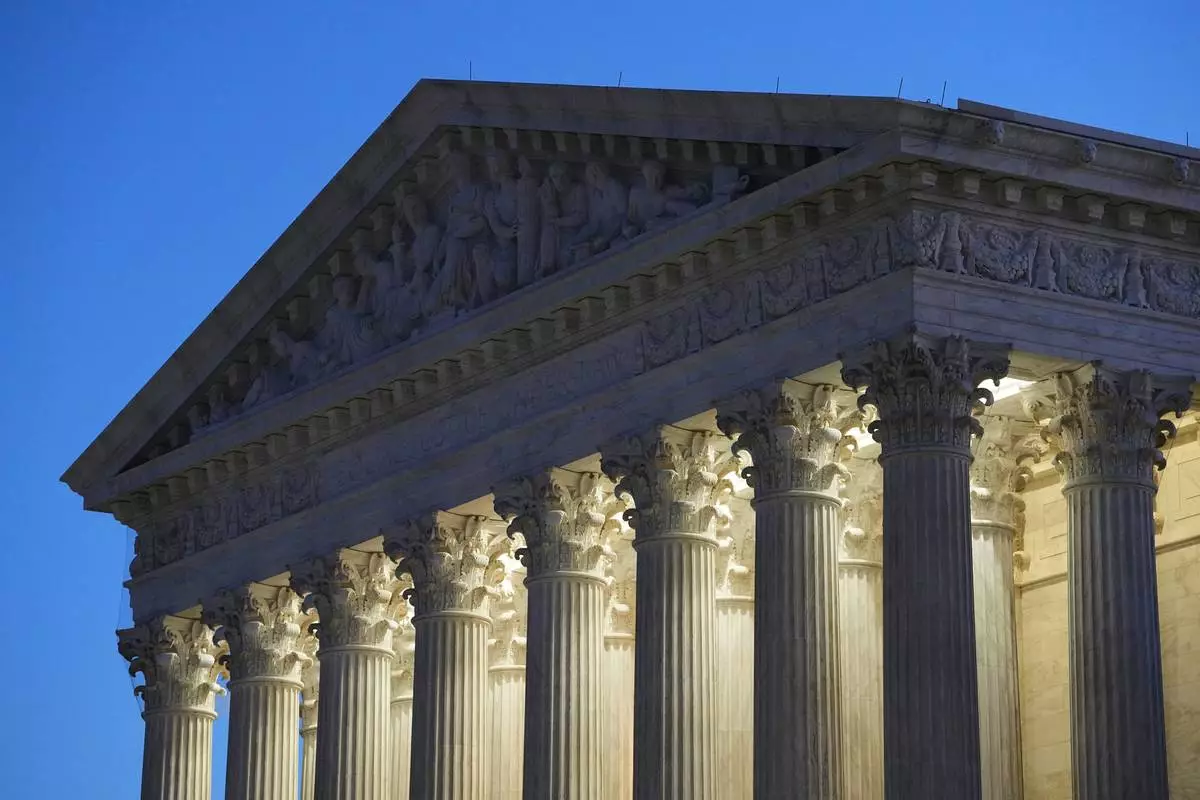
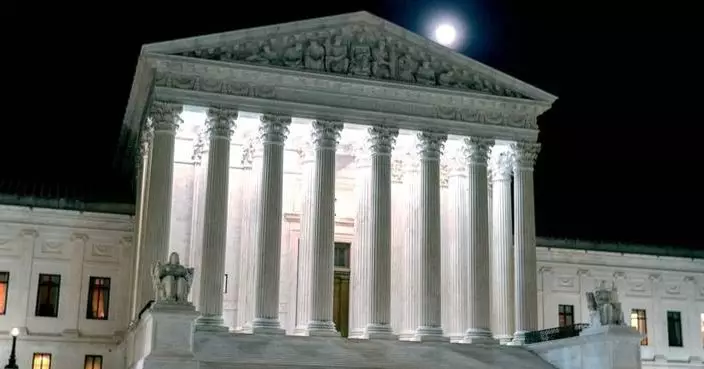
FILE - The U.S. Supreme Court is seen in Washington on Feb. 24, 2026. (AP Photo/Matt Rourke, File)
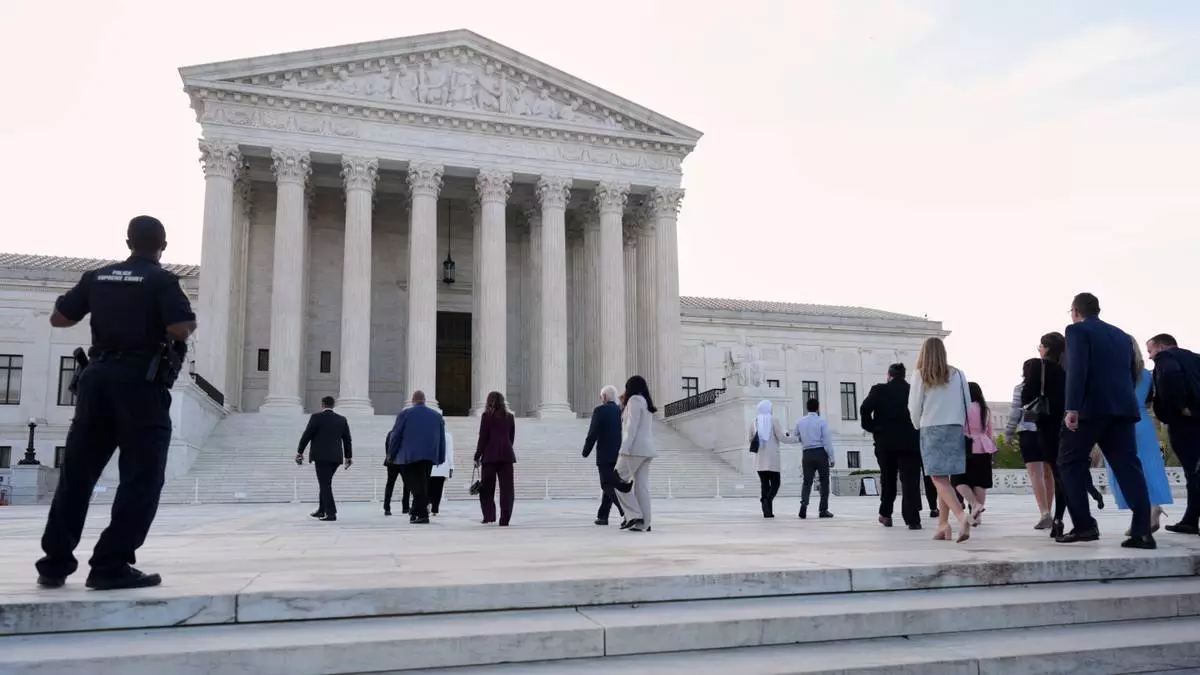
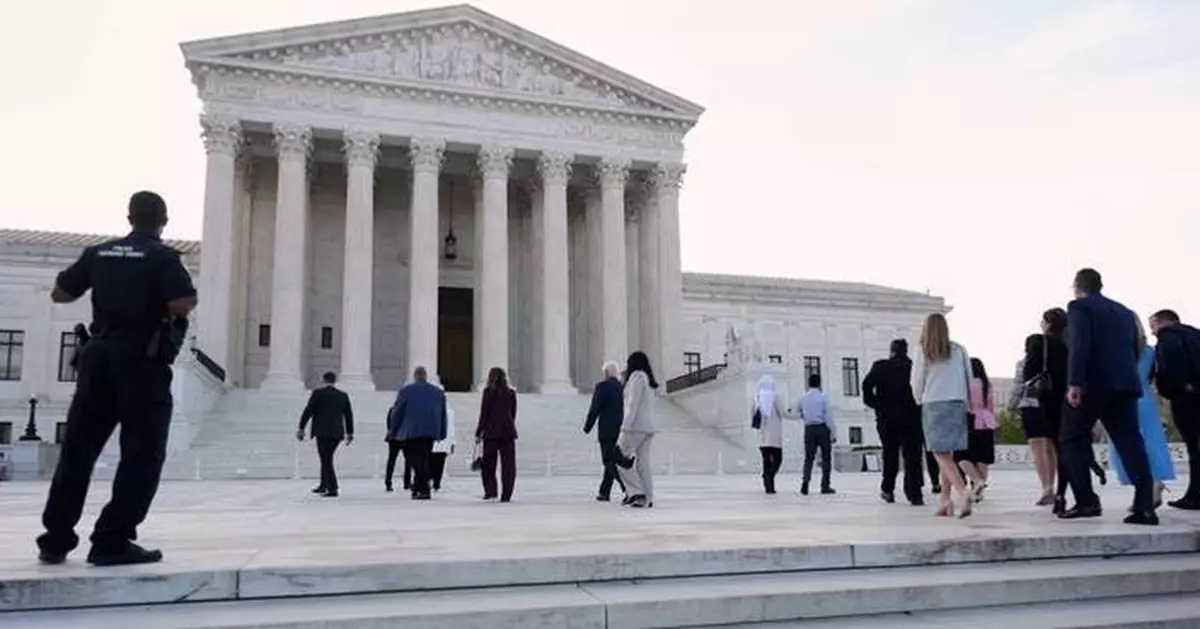
People arrive to walk inside the U.S. Supreme Court, on Capitol Hill in Washington, Wednesday, April 1, 2026. The Supreme Court justices will hear oral arguments today on whether President Donald Trump can deny citizenship to children born to parents who are in the United States illegally or temporarily. (AP Photo/J. Scott Applewhite)
U.S. President Donald Trump on Wednesday claimed Iran’s president wanted a ceasefire ahead of his speech to the American people. Trump made the claim on his Truth Social website. Iran’s Foreign Ministry spokesperson said Trump’s remarks were “false and baseless.”
The aircraft carrier USS George H.W. Bush is slated to go to the Middle East along with three destroyers, two U.S. officials said. The carrier strike group consists of more than 6,000 sailors. It comes as thousands of soldiers from the 82nd Airborne Division have also begun arriving in the Middle East, according to two other U.S. officials.
Meanwhile, U.S. gas prices jumped past an average of $4 a gallon for the first time since 2022 on Tuesday, as the Iran war continues to push fuel prices higher worldwide. Analysts say those high fuel costs will trickle into groceries as businesses’ transportation and packaging costs pile up.
Here is the latest:
AP footage in the Iranian capital of Tehran showed large plumes of smoke billowing over the city on Wednesday afternoon following U.S.- Israeli strikes, as the war in the Middle East completes its first month and strikes on Iran continue unabated.
Also Wednesday, the Israeli military said that it had completed a wave of strikes against “dozens of military infrastructure sites of the Iranian terror regime in the heart of Tehran.”
The president has said one of his primary goals of the war was to stop Iran from getting a nuclear weapon, and he told Reuters on Wednesday that has been achieved, though it isn’t clear how.
Iran’s stockpile of enriched uranium that could potentially be used to build nuclear weapons is believed to be buried under the rubble of a mountain facility that was hit during strikes last June — and that hasn’t changed since the war with Iran began this year. Trump has said the U.S. would move to take the uranium if it reaches a deal with Iran.
But he said Wednesday that the uranium is “so far underground, I don’t care about that.”
“We’ll always be watching it by satellite,” he said.
Trump also said Iran is now “incapable” of developing a nuclear weapon.
Vice President JD Vance has been speaking to intermediaries about Iran as recently as Tuesday and delivered a message that Trump is impatient and that there will be growing pressure on Iranian infrastructure if they don’t make a deal, according to a person familiar with the talks who was not authorized to speak publicly and spoke on condition of anonymity.
Trump directed Vance to communicate privately that he is open to a ceasefire as long as certain demands are met.
The president told Reuters in a telephone interview ahead of his televised address Wednesday night that the U.S. would be finishing its war in Iran soon, but he wouldn’t give a timeline.
“I can’t tell you exactly ... we’re going to be out pretty quickly,” he said.
But once the U.S. leaves, he said “We’ll come back to do spot hits” on targets, as needed.
Almost 4 million barrels of crude oil a day transited the Bab el-Mandeb Strait in March, up from about 3 million barrels the prior month and the highest level since October 2023, maritime data firm Kpler said Wednesday.
The increase came as Saudi Arabia sent crude through a pipeline across its country to the Red Sea port of Yanbu after the virtual closure of the Strait of Hormuz. Saudi Aramco operates the East-West pipeline from the Aqaiq oil processing center near the Persian Gulf to Yanbu. It has enabled the Saudis to maintain some exports blocked by the Hormuz closure, but it lacks the capacity to fully compensate.
Before the war, Yanbu shipped 750,000 to 850,000 barrels a day. Of the crude passing through Bab el-Mandeb in March, 1.75 million barrels a day were loaded there, the data showed.
Most of the remainder transiting the strait in March was Russian oil bound for Asia, Kpler said.
Somalia’s government on Wednesday said it has limited control over fuel pricing, as imports are handled by private companies in a largely liberalized market.
Dahir Shire Mohamed, Minister of Petroleum and Mineral Resources, said prices have surged due to “external shocks,” linking the increase to “regional tensions affecting global supply routes.”
The price per liter has increased from $0.70 to $1.75, marking a 150% increase.
Tanzania’s Energy Ministry on Wednesday announced a 33% increase in fuel prices, attributing it to the conflict in Iran, saying it had affected supply and shipping. The ministry urged Tanzanians to use the available fuel “carefully and efficiently.”
American officials have given mediators “clear assurances” that Iranian Foreign Minister Abbas Araqchi and Parliamentary Speaker Mohammad Baqer Qalibaf won’t be targeted amid ongoing diplomatic efforts to stop the Iran war, according to two regional officials and one person briefed on the matter.
The person briefed said that Pakistan asked Washington to intervene to get Israel to remove the two officials from its hit list.
Israel’s prime minister’s office and the military didn’t respond to request for comment.
The assurances were also given at the request of other regional mediators to facilitate communications with Iran and push for indirect talks, said one of the officials, who is involved in the mediation efforts. All three spoke to The Associated Press on the condition of anonymity because they were not authorized to discuss sensitive diplomatic conversations.
A Gulf diplomat, briefed on the matter, said the U.S. assurances were “crucial” to ensure neither the foreign minister or the speaker or their teams won’t be assassinated. Reuters was the first to report that the two Iranian leaders were removed from a supposed hit list.
The two leaders spoke via phone in a “constructive” conversation, said Alexander Stubb, the Finnish leader.
“We exchanged thoughts on NATO, Ukraine, and Iran,” Stubb wrote in an X post. “It’s good to seek solutions to problems together.”
The call comes as the U.S. president is increasingly venting about allies and what he says is their unwillingness to get involved in the war in Iran, particularly in securing the Strait of Hormuz, prompting him to again talk about the U.S. leaving NATO.
Syrian state television said Wednesday that its crew reporting in the Quneitra Province in southern Syria was targeted by the Israeli military, a claim the military later denied.
A video aired by the station showed a journalist in a press vest falling to the floor following what the person filming said was “a second shelling.”
The Israeli military said the “journalists approached the scene only after the fire had been carried out and were not the target of the activity.” It wasn’t immediately clear what the military was targeting.
A revised draft of Bahrain’s proposal — obtained by The Associated Press — to protect commercial shipping in and around the critical waterway has removed explicit authorization for U.N.-backed military action while retaining language associated with it. A vote on the new draft is expected Thursday, according to a U.N. diplomat who wasn’t authorized to comment about plans not yet made public and spoke on the condition of anonymity.
The original text had been placed under Chapter Seven of the U.N. Charter, which allows the council to authorize actions ranging from sanctions to the use of force. But it faced opposition from Iran’s allies on the Security Council, China and Russia, which are both veto-wielding members. The U.S. and the Gulf countries, including the United Arab Emirates, had been lobbying on behalf of the proposal.
The diplomat said the watered-down language will still be a hard swallow for China and Russia but it’s expected to get the necessary votes to pass the 15-member council.
— Farnoush Amiri
President Trump says he’s strongly considering pulling the United States out of NATO, ratcheting up his criticism of European allies and exposing a wider rift in the trans-Atlantic alliance — this time over the Iran war.
While Trump’s talk of a possible NATO pullout dates back years, the comments to The Telegraph newspaper in the U.K., published Wednesday, were among the clearest and most disparaging yet — suggesting the fracture has deepened perhaps to a point of no return.
Asked whether he would reconsider U.S. membership in the alliance after the conflict in the Middle East ends, Trump replied: “Oh yes, I would say (it’s) beyond reconsideration.”
NATO didn’t provide immediate comment when contacted by The Associated Press.
U.K. Prime Minister Keir Starmer said his government was “fully committed to NATO” and called it “the single most effective military alliance the world has ever seen.”
Many European leaders have felt political pressure over the war, which faces opposition in their countries and has sent petroleum prices soaring as Iran has effectively shut the Strait of Hormuz.
▶ Read more
Macron, who held talks with Japanese Prime Minister Sanae Takaichi, said Wednesday they both believe in international law, the international order and the democratic values, adding: “This is why ... we both advocate for a return to peace, a ceasefire, calm, and free passage through the Strait of Hormuz.”
Takaichi said the two leaders agreed on the importance of quickly de-escalating the conflict and to secure the safety of the vital waterway and the stable supply of goods.
“With the international environment increasingly severe, I believe it is especially meaningful for the Japanese and French leaders to deepen our friendship and cooperation,” Takaichi said at a joint news conference at the Akasaka Palace in Tokyo.
The leaders said they also agreed to deepen their cooperation in defense, rare earths development, nuclear energy, space and other areas.
▶ Read more
Shelly Kittleson’s mother, 72-year-old Barb Kittleson, said she last exchanged emails with her daughter Monday. Shelly Kittleson sent photos of herself from Iraq, her mother said.
Barb Kittleson said she heard about the kidnapping from a news report Tuesday and was visited by the FBI at her home in Mount Horeb, Wisconsin, on Tuesday night.
When asked how she felt about the kidnapping she said, “Terrible. Scared. I’ll pray for her.”
She said her hope is for her daughter “not to be hurt and be OK.”
Shelly Kittleson left her home in Wisconsin in 1995, when she was 19 years old, and first headed to Italy where she went to school and worked as a nanny, her mother said. She spent about 10 years in Italy before eventually settling in Iraq, Barb Kittleson said.
Barb Kittleson said she had not seen her daughter in person since 2002 but they exchange emails a couple of times a week, including on Monday when her daughter sent her a couple of pictures.
Should the U.S. decide to send in military forces to secure Iran’s uranium stockpile, it would be a complex, risky and lengthy operation, fraught with radiation and chemical dangers, according to experts and former government officials.
President Trump has offered shifting reasons for the war in Iran but has consistently said a primary objective is ensuring the country will “never have a nuclear weapon.” Less clear is how far he’s willing to go to seize Iran’s nuclear material.
Given the risks of inserting as many as 1,000 specially trained forces into a war zone to remove the stockpile, another option would be a negotiated settlement with Iran that would allow the material to be surrendered and secured without using force.
Iran has 972 pounds (440.9 kilograms) of uranium that’s enriched up to 60% purity, a short, technical step from weapons-grade levels of 90%, according to the International Atomic Energy Agency, the U.N.’s nuclear watchdog agency.
▶ Read more
Sirens sounded across central Israel in multiple rounds within minutes Wednesday afternoon. Associated Press reporters heard loud booms in Tel Aviv as the windows of buildings shook from the reverberations.
Iran’s Foreign Ministry spokesperson, Esmail Baghaei, called Trump’s claim “false and baseless,” according to a report on Iranian state television.
Also, Iran’s paramilitary Revolutionary Guard separately issued a statement saying the Strait of Hormuz “is firmly and decisively under the control” of its forces.
“This strait will not be opened to the enemies of this nation through the ridiculous spectacle by the president of the United States,” it added.
Stocks are climbing worldwide, and oil prices are easing Wednesday as hopes build that the war with Iran could end soon. Some of the moves are tentative, though, after financial markets have already seen similar bouts of optimism get quickly undercut several times.
The S&P 500 rose 0.6% and added to its leap from the day before, which was its best since last spring. That followed even bigger gains for stock markets across Europe and Asia, including an 8.4% surge in South Korea, which were catching up to Wall Street’s rally from Tuesday.
The Dow Jones Industrial Average was up 292 points, or 0.6%, as of 10 a.m. Eastern time, and the Nasdaq composite was 1% higher.
Oil prices also fell back toward $100 per barrel after President Donald Trump said shortly before Wall Street began trading that Iran “has just asked the United States of America for a CEASEFIRE!”
▶ Read more
In addition to gas and oil stuck in the Persian gulf, urgent food aid destined for Sudan and Afghanistan is also facing severe delays, the UN agency for hunger emergencies, World Food Program, warned.
“Think of special nutritious foods required for Sudan,” Corinne Fleischer, WFP director of supply chain, told the AP. “Mothers and children are malnourished and they need this vitamin and mineral enriched food. We produced this in Pakistan as one of the countries. That is now stuck there.”
Fleischer explained that due to the risks of attacks in the southern part of the Red Sea, carriers now have to go all the way down through the Cape of Good Hope in Africa to reach West Africa.
Around 180,000 Iranian families have been displaced due to the ongoing war, but it’s hard to determine an exact figure because Iran doesn’t have a displacement tracking level as found in other countries, according to the International Organization for Migration.
Amy Pope, IOM’s director general, told The Associated Press the agency expects that figure to increase as more civilian infrastructure gets caught in the crossfire.
Pope also warned about the impact on migrants working in Iran who might not be guaranteed the same safety that an Iranian family is seeking.
“This is the kind of hidden consequence of a conflict like this. There are people ... who are not necessarily accounted for and ... won’t have the support they need,” she said.
President Trump on Wednesday claimed Iran’s president wanted a ceasefire ahead of his speech to the American people.
Trump made the claim on his Truth Social website.
Trump said “Iran’s New Regime President,” however. Iran still has the same president.
Trump also said a ceasefire would only happen when the Strait of Hormuz is “open, free, clear.”
“Until then, we are blasting Iran into oblivion or, as they say, back to the Stone Ages!!!” he wrote.
Iran had no immediate response to Trump’s post. Iran’s Foreign Minister Abbas Araghchi in an interview with Al Jazeera aired late Tuesday signaled Tehran’s willingness to keep fighting.
“You cannot speak to the people of Iran in the language of threats and deadlines,” he said. “We do not set any deadline for defending ourselves.”
A Pakistani vessel carrying oil arrived at the southern port city of Karachi after transiting the Strait of Hormuz, while a second vessel reached the port via a different route, a Karachi Port Trust spokesperson said Wednesday.
Spokesperson Shariq Farooqi said more Pakistani-flagged ships are expected this month to deliver much-needed oil from Gulf countries.
The development comes days after Pakistan’s foreign minister said Iran had agreed to allow 20 additional Pakistani-flagged ships to pass through the Strait of Hormuz, describing the move as a “constructive gesture” aimed at easing regional tensions.
Pakistan is also seeking to help end the conflict between the United States and Iran by encouraging both sides to return to negotiations.
The Strait of Hormuz is a critical artery for global oil shipments.
Iran’s capital, Tehran, held a funeral Wednesday for an Iranian Revolutionary Guard commander killed in an Israeli airstrike last week.
State television showed live footage of mourners waving Iranian flags at a funeral for Rear. Adm. Alireza Tangsiri, the head of Revolutionary Guard’s navy. An Israeli airstrike killed Tangsiri last week, with Tehran only acknowledging his death Monday.
Another funeral had been held Tuesday in Bandar Abbas, a key port city on the Strait of Hormuz.
A volunteer with the Iranian Red Crescent was killed by an airstrike Tuesday in the country’s northwest, according to the International Federation of Red Cross and Red Crescent Societies.
Alireza Sohbatlou was providing services at a clinic in Zanjan province when an airstrike hit the nearby religious site Azam Hussainiya of Zanjan, the humanitarian network said Wednesday.
He was the third Red Crescent volunteer killed in Iran since the start of the war, the IFRC said.
Iran’s supreme leader vowed Wednesday his nation will continue to support anti-Israeli forces in the Mideast.
The message from Ayatollah Mojtaba Khamenei, like others since he was named Iran’s new supreme leader, came in a statement read on air by a state television anchor.
“I firmly declare that the consistent policy of the Islamic Republic of Iran, in continuing the path of the late Imam and martyred leader, is based on continuing to support the resistance against the Zionist-American enemy,” Khamenei said in the comments from a letter to the Lebanese group Hezbollah.
Khamenei has not been seen since the war began Feb. 28. U.S. and Israeli officials believe he was wounded and remains in hiding.
An Indian citizen was wounded during a drone attack Wednesday in the United Arab Emirates, according to the official WAM news agency in Umm Al Quwain, one of the UAE’ seven emirates.
Shrapnel fell near an industrial area of Umm Al Thoub while air defense systems were intercepting a drone, the agency reported.
The Russian Embassy in Iran on Wednesday condemned an airstrike on the compound of the former U.S. Embassy there as it damaged a nearby cathedral.
The embassy said the blast broke doors and windows at St. Nicholas Orthodox Cathedral, just across from the compound.
An adjacent Russian nursing home sustained damage, including a collapsed roof, it added.
“We strongly condemn the ongoing US and Israeli aggression against Iran, which is increasingly affecting civilian infrastructure and religious and cultural heritage,” the embassy said.
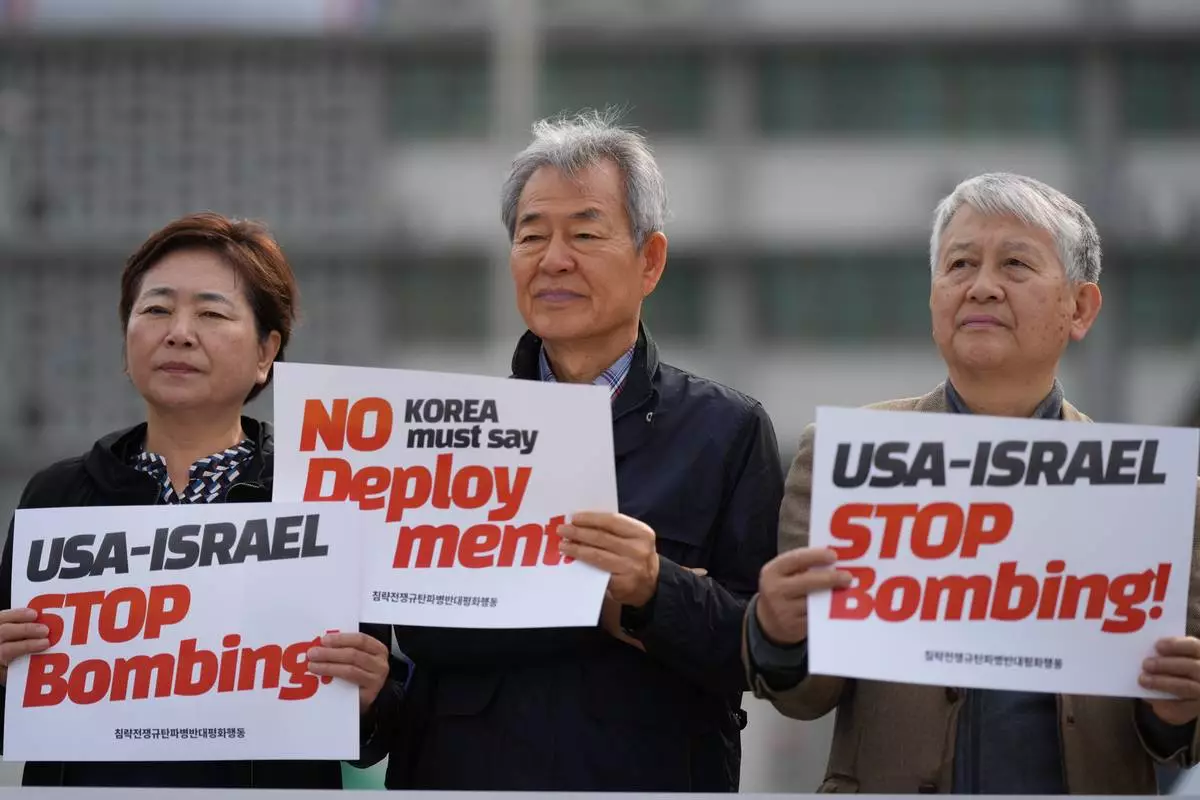
Members of civic groups hold signs against the U.S. and Israel attacks on Iran near the U.S. Embassy in Seoul, South Korea, Wednesday, April 1, 2026. (AP Photo/Lee Jin-man)
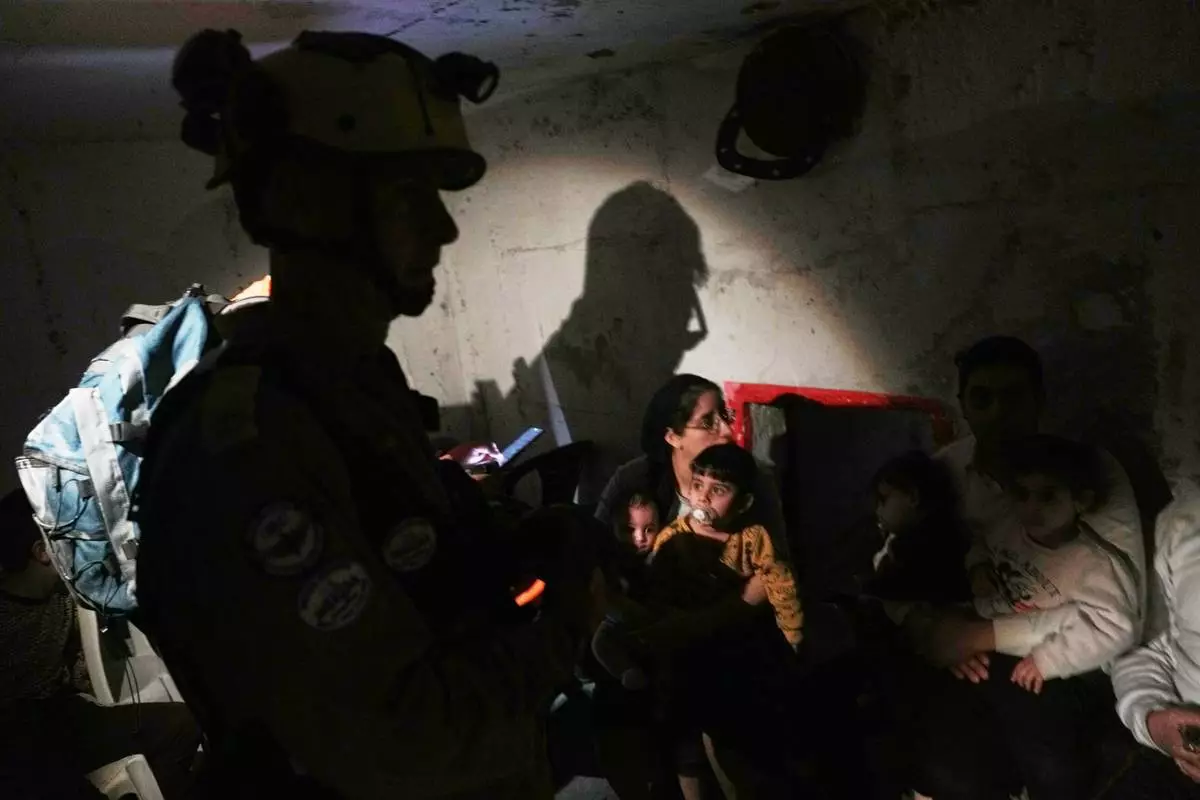
Israel's rescue teams and residents take shelter as sirens sounds next to a site struck by an Iranian missile in Bnei Brak, Wednesday, April 1, 2026. (AP Photo/Oded Balilty)
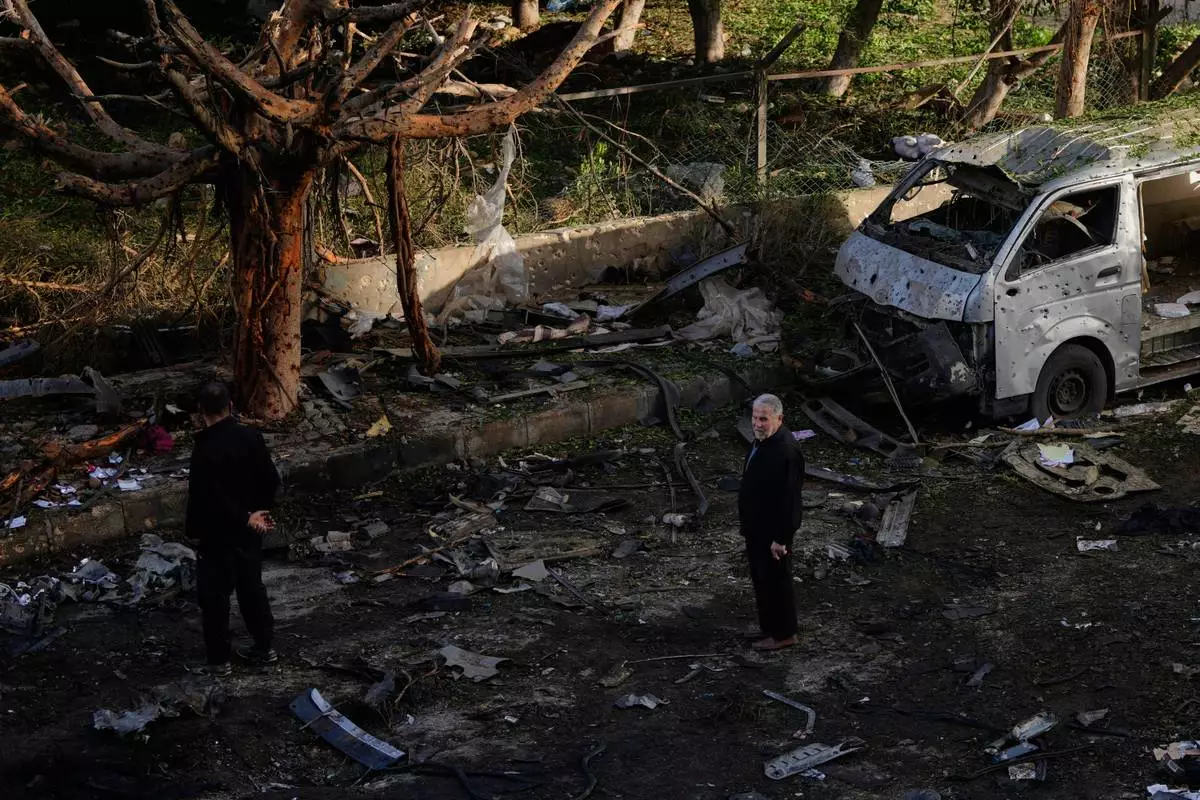
People stand near a damaged van beside scattered debris following an Israeli strike in Beirut, Lebanon, Wednesday, April 1, 2026. (AP Photo/Hassan Ammar)
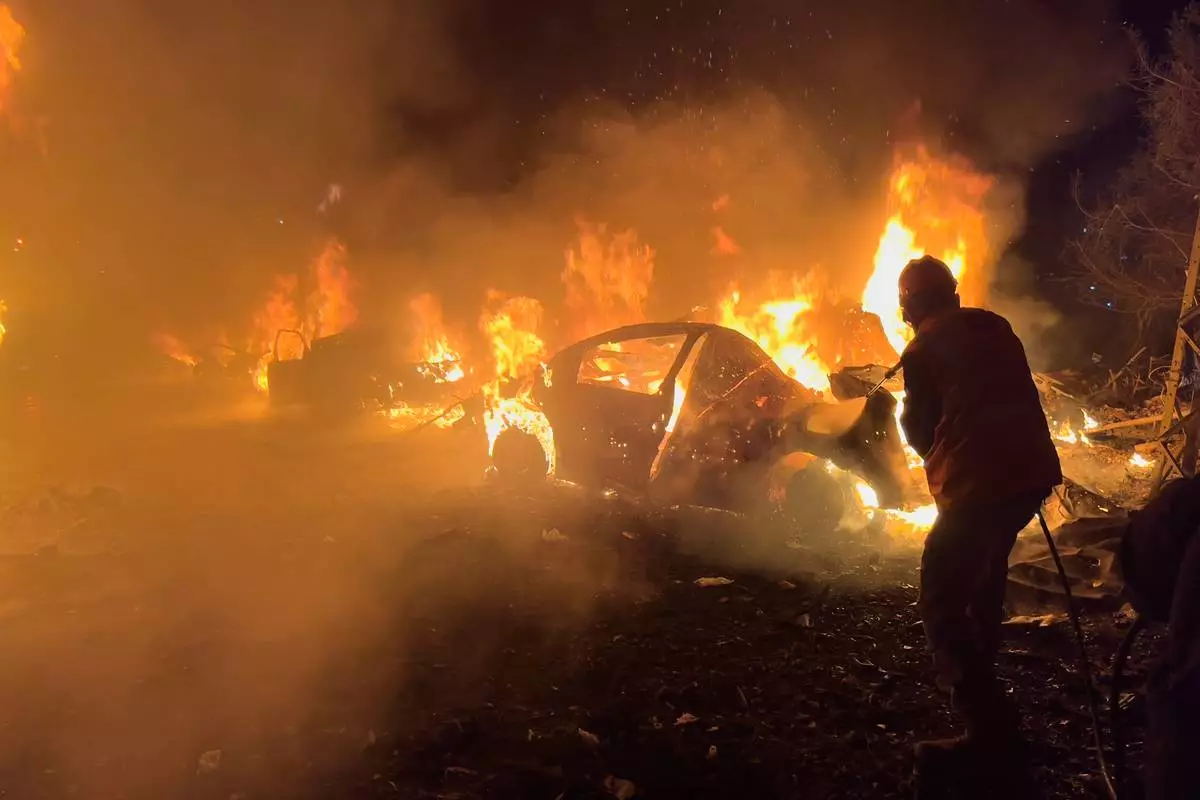
A firefighter extinguishes a car at the site of Israeli airstrikes, in Beirut, Lebanon, Wednesday, April 1, 2026. (AP Photo/Hussein Malla)

Residents and Israeli security forces inspect a site struck by an Iranian missile in Petah Tikva, Israel, Tuesday, March 31, 2026. (AP Photo/Ohad Zwigenberg)
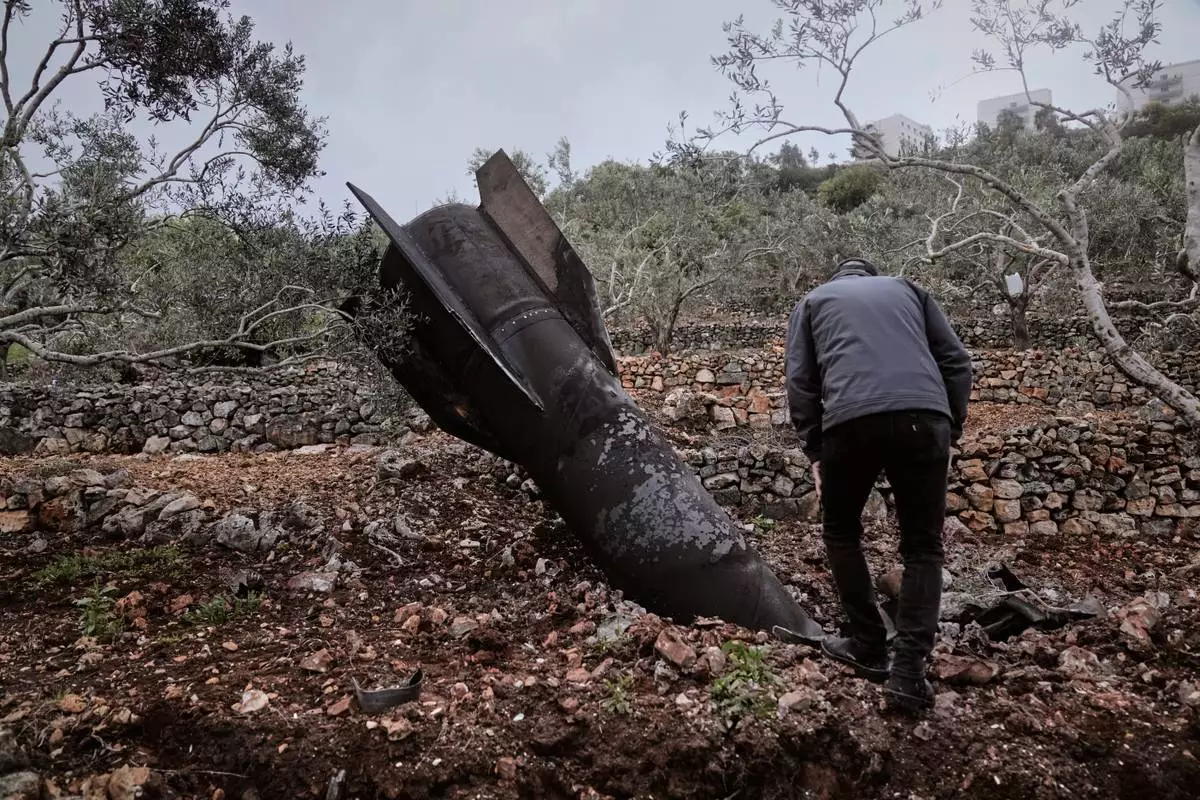
A man inspect the wreckage of an Iranian missile that landed near the West Bank village of Marda, Tuesday, March 31, 2026. (AP Photo/Majdi Mohammed)
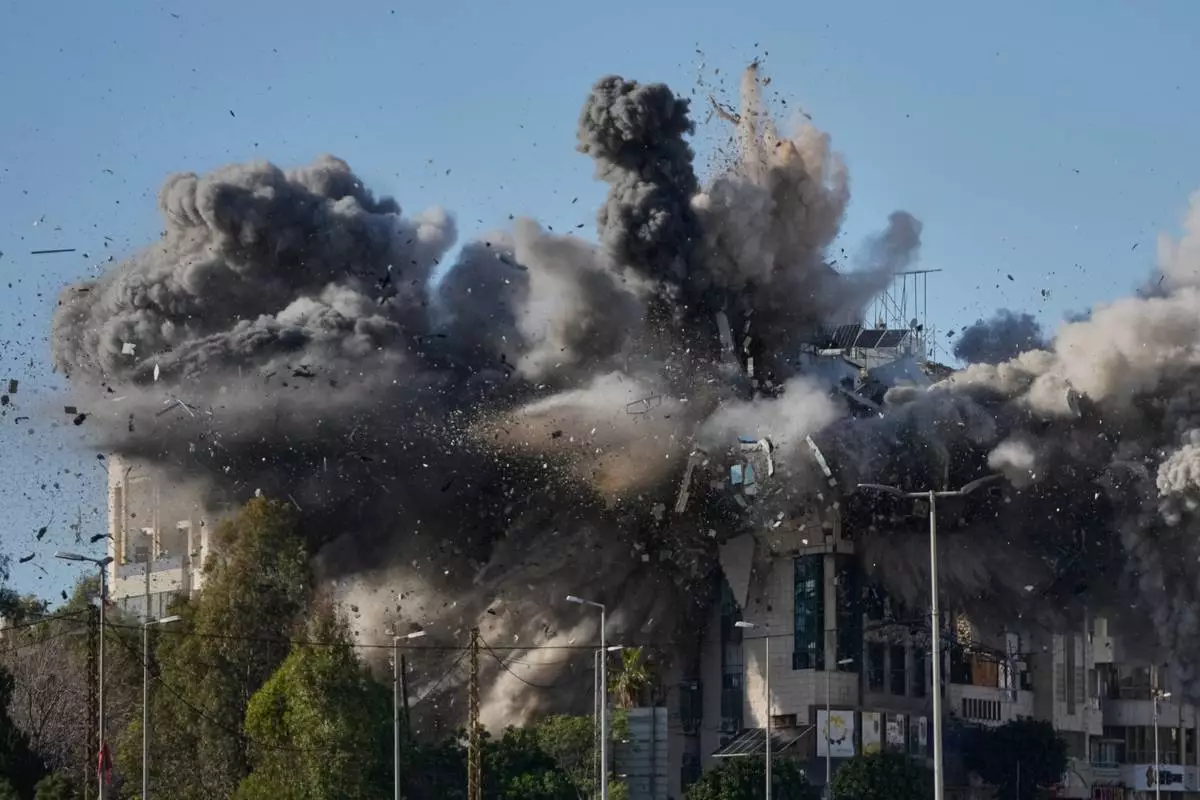
Smoke rises after an Israeli airstrike hits a building near the airport road in Beirut, Lebanon, Tuesday, March 31, 2026. (AP Photo/Hussein Malla)
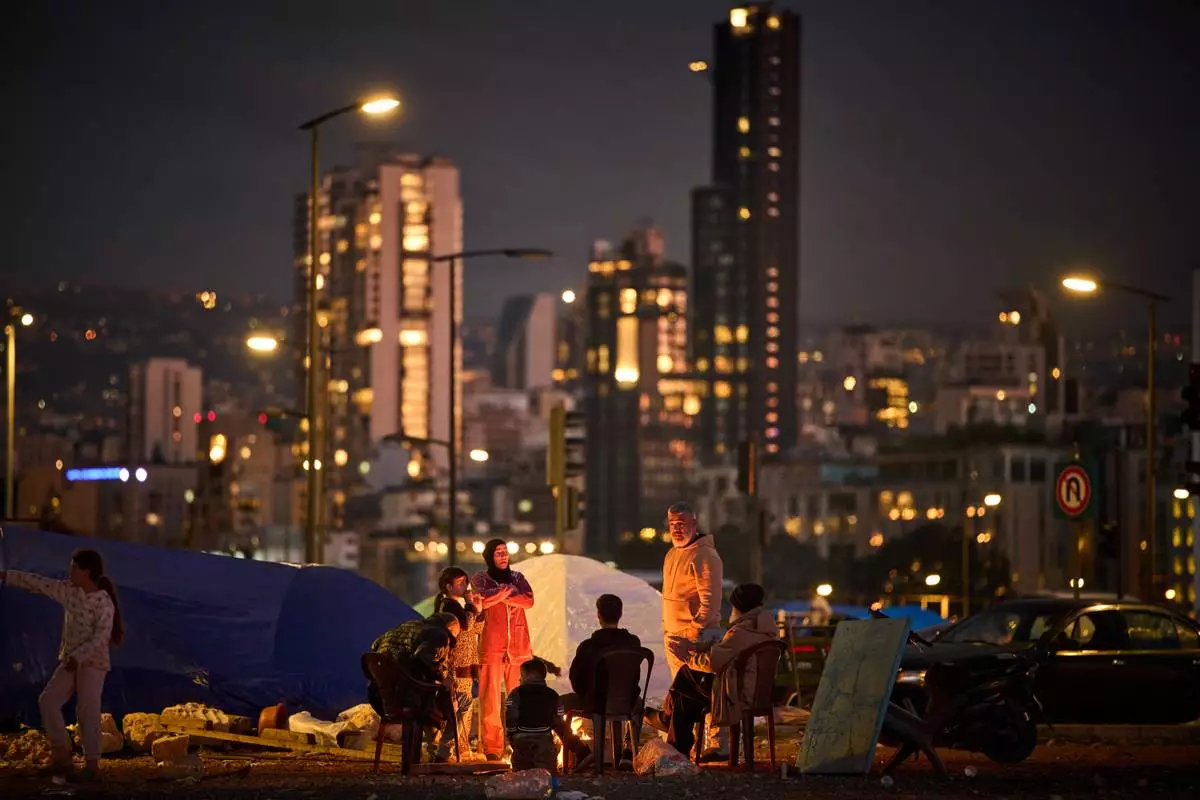
A family who fled Israeli shelling in southern Lebanon warm themselves by a bonfire next to tents used as shelters in Beirut, Lebanon, Tuesday, March 31, 2026. (AP Photo/Emilio Morenatti)