|
Pressing issues in oncology, including rising cancer incidences in younger people, plus global opportunities for improving outcomes, were presented alongside cutting-edge research and clinical guidelines updates, during yearly event hosted by the National Comprehensive Cancer Network.
ORLANDO, Fla., April 2, 2026 /PRNewswire/ -- The National Comprehensive Cancer Network® (NCCN®)—a non-profit alliance of leading cancer centers—brought together more than a thousand oncology professionals at the NCCN 2026 Annual Conference in Orlando, Florida, with hundreds more joining virtually. This year's event featured educational sessions on the latest breakthroughs in cancer prevention and treatment, clinical guidelines updates, guidance for improving cancer center operations, plus panel discussions on critical issues in care delivery.
"We gain so much from gathering together to share ideas and best practices, make new connections, and forge new collaborations," said Crystal S. Denlinger, MD, CEO, NCCN. "Conference attendees tell us they feel a renewed energy and hope for the future after discussing how cancer care has advanced over the past year. This helps us all serve our patients better and ensure they experience the best care and outcomes possible."
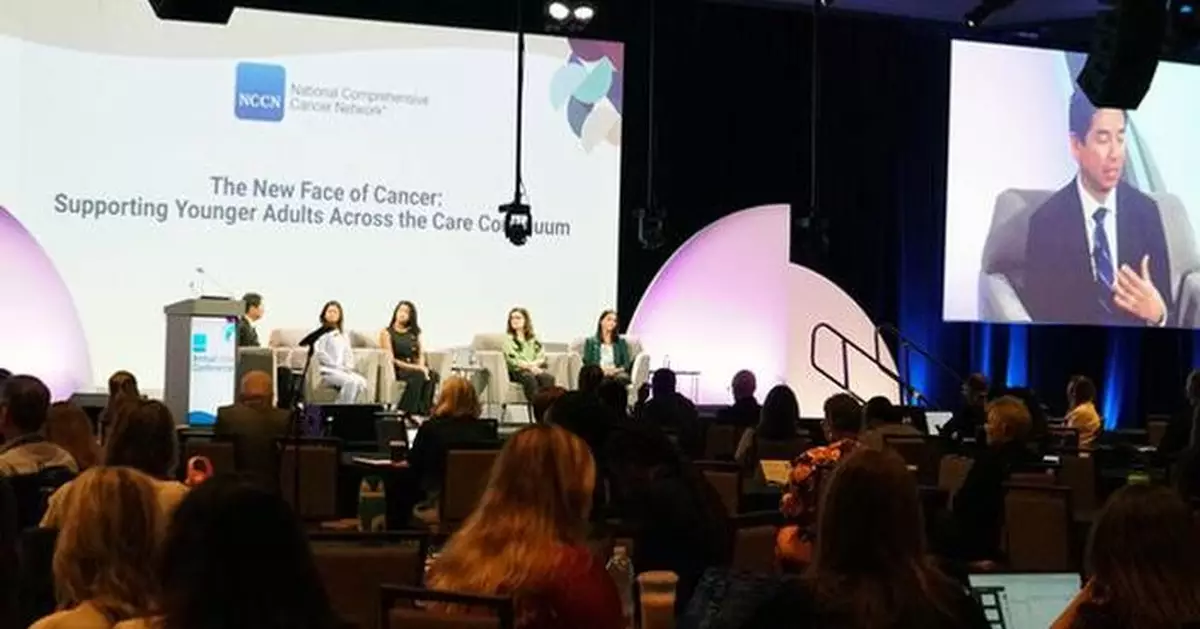
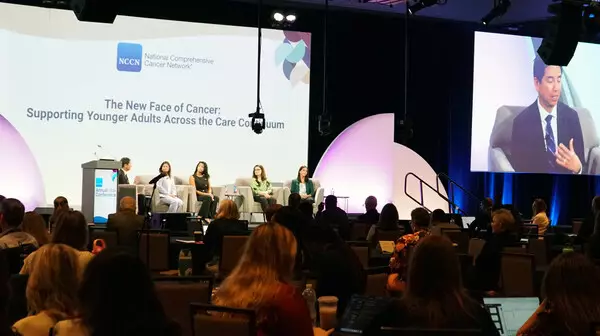
The New Face of Cancer: Supporting Younger Adults Across the Care Continuum
The conference opened with a plenary session exploring the causes of an alarming rise in cancer incidence in people under 50, and how providers should adjust to this new reality. The panel members agreed that there are likely several contributing factors, including diet and lifestyle, microbiome, and environmental hazards.
Speakers noted that scheduling and financial toxicity are particularly troublesome for younger people who are at a different stage in their life and career when they embark on their cancer journey. Some may have complicated commitments due to young children while others may not be thinking about building a family yet or be aware of how treatment may impact fertility. Their experiences going through therapy can be isolating from both their peers—who are living very different lives—and their fellow patients, who are typically older.
The hope is that these patients go on to live for many years, making it particularly important to take long-term side effects from treatment into account. At the same time, adolescents and young adults are often diagnosed at a later stage due to being below the age threshold for screening, rarity making symptoms less likely to be identified, plus an increased likelihood of a genetic component. According to the panel, more education is needed within the healthcare community and beyond, to better prepare survivors and health care systems to achieve optimal results.
"All patients, but particularly early-onset adults, should have a full team providing multidisciplinary, holistic care," said panel moderator Christopher Lieu, MD, University of Colorado Anschutz Cancer Center, Vice-Chair of the NCCN Board of Directors. "Adolescents and young adults with cancer have unique challenges and rely on supportive services to ensure good quality of life through treatment and for years to come."
The speakers noted that the NCCN Clinical Practice Guidelines in Oncology (NCCN Guidelines®) for Adolescents and Young Adults (AYA) are a helpful resource on this topic.
Delivering Cancer Care Worldwide: Current Realities and Future Strategies
A second plenary session tackled cancer care around the world, with a focus on the growing burden and new opportunities to address it. The panel pointed out that cancer rates are rising dramatically and disproportionately, with the vast majority of deaths occurring in low- and middle-income countries (LMICs). However, only 5% of the world's cancer funding is spent on these regions.
Speakers highlighted that there are numerous opportunities to make a significant difference with a big return on investment. Those include standardizing treatments worldwide while upscaling prevention—such as HPV-vaccination uptake and access to screening. But there are new challenges from funding cuts that undermine progress, plus siloed efforts that seek to reinvent the wheel. Staffing limitations and regional disparities in resources contribute to the burden.
"Well-conceived programs can make an incredible difference in these settings," said panelist Anu K. Agrawal, MD, Vice President, Global Cancer Support, American Cancer Society (ACS). "A lot of people are very interested in helping; we just need them to work together. We must move swiftly to action and support cancer-related policies with practical resources."
Speakers celebrated the collaboration between the African Cancer Coalition, ACS, and NCCN for creating and maintaining the International Adaptations of the NCCN Guidelines® for Sub-Saharan Africa as one example of a program that is finding success. The panel also showcased the NCCN Guidelines Middle East and North Africa (MENA) Editions, a collaborative effort with the Ministry of National Guard—Health Affairs (Saudi Arabia). Learn more about these, and other initiatives, at NCCN.org/global.
Operational Excellence in Cancer Care
New this year for in-person attendees, NCCN offered an educational track on best practices for oncology program operations. It included sessions on the role of guidelines in addressing systemic and practical challenges to care, optimizing academic/community collaborations, artificial intelligence (AI) innovation and governance, and policy insights.
"The NCCN Guidelines were downloaded more than 18 million times last year. That is a sign that people want to do the right thing and provide the best care that they can," said Lawrence N. Shulman, MD, MACP, FASCO, Abramson Cancer Center at the University of Pennsylvania, Member of the NCCN Best Practices Committee and Policy Advisory Group. "New advances have benefited our patients, who are living longer, which is great news. But they stay in our practices longer, and together with the growing number of new cancer patients in the U.S., our oncology work force is ever more strained. We need to make care more efficient with improved electronic health records (EHRs), other technologies, and reducing administrative burdens."
New Research and More
The conference featured more than 300 original research abstracts, covering topics such as:
- Best Practices
- Bioinformatics/IT
- Case Studies
- Clinical Oncology
- Correlative/Genomic
- Epidemiology/Risks/Prevention
- Outcomes
- Pre-Clinical Oncology
- Quality Improvement
- Trials in Progress
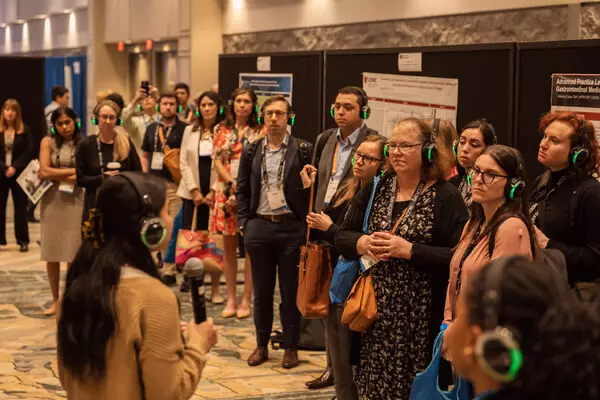
In-person attendees had an opportunity to embark on expert-guided tours through both days of posters. Top abstracts on topics like "Integrating Print-to-Web Outreach into Mammography Workflows to Promote Lung Cancer Screening: A Feasibility Study," "A Phase I Study of Safety and Immunogenicity of Survivin Long Peptide Vaccine (SurVaxM) in Patients with Metastatic Neuroendocrine Tumors (NETs)," and "Increasing Equitable Adherence to Annual Lung Cancer Screening and Diagnostic Surveillance: A Pragmatic Factorial Trial" were presented as talks during a live session. Past NCCN Foundation® Young Investigator Award winners presented talks on topics including: "Evolving Toward Precision Oncology in Osteosarcoma" and "Characterizing the Peripheral T-cell Repertoire in Patients with Unresectable Melanoma Treated with IO102-IO103 and Nivolumab-relatlimab."
The posters included an abstract from Taneal D. Carter, DHSc, MPA, MS, Senior Manager of the NCCN Cancer Care Equity Program, et. al., on a pilot project utilizing the Health Equity Report Card to assess and promote equitable practices in community care settings, through funding from the Alliance for Equity in Cancer Care.
Conference participants learned about clinical guideline updates for gastrointestinal, genitourinary, gynecologic, hematologic, and skin cancers, as well as case study discussions for breast and non-small cell lung cancers. Sessions also featured information on managing immune checkpoint inhibitor toxicities, clinical applications and emerging trends in AI technology, and other topics.
Next year, the NCCN Annual Conference moves to San Diego, California for the first time. Save the dates: Friday, March 19 – Sunday, March 21, 2027. Visit NCCN.org/conference to learn more.
About the National Comprehensive Cancer Network
The National Comprehensive Cancer Network® (NCCN®) is a not-for-profit alliance of leading cancer centers devoted to patient care, research, and education. NCCN is dedicated to defining and advancing quality, effective, equitable, and accessible cancer care and prevention so all people can live better lives. The NCCN Clinical Practice Guidelines in Oncology (NCCN Guidelines®) provide transparent, evidence-based, expert consensus-driven recommendations for cancer treatment, prevention, and supportive services; they are the recognized standard for clinical direction and policy in cancer management and the most thorough and frequently-updated clinical practice guidelines available in any area of medicine. The NCCN Guidelines for Patients® provide expert cancer treatment information to inform and empower patients and caregivers, through support from the NCCN Foundation®. NCCN also advances continuing education, global initiatives, policy, and research collaboration and publication in oncology. Visit NCCN.org for more information.
Media Contact:
Rachel Darwin
267-622-6624
darwin@nccn.org
Pressing issues in oncology, including rising cancer incidences in younger people, plus global opportunities for improving outcomes, were presented alongside cutting-edge research and clinical guidelines updates, during yearly event hosted by the National Comprehensive Cancer Network.
ORLANDO, Fla., April 2, 2026 /PRNewswire/ -- The National Comprehensive Cancer Network® (NCCN®)—a non-profit alliance of leading cancer centers—brought together more than a thousand oncology professionals at the NCCN 2026 Annual Conference in Orlando, Florida, with hundreds more joining virtually. This year's event featured educational sessions on the latest breakthroughs in cancer prevention and treatment, clinical guidelines updates, guidance for improving cancer center operations, plus panel discussions on critical issues in care delivery.
"We gain so much from gathering together to share ideas and best practices, make new connections, and forge new collaborations," said Crystal S. Denlinger, MD, CEO, NCCN. "Conference attendees tell us they feel a renewed energy and hope for the future after discussing how cancer care has advanced over the past year. This helps us all serve our patients better and ensure they experience the best care and outcomes possible."
The New Face of Cancer: Supporting Younger Adults Across the Care Continuum
The conference opened with a plenary session exploring the causes of an alarming rise in cancer incidence in people under 50, and how providers should adjust to this new reality. The panel members agreed that there are likely several contributing factors, including diet and lifestyle, microbiome, and environmental hazards.
Speakers noted that scheduling and financial toxicity are particularly troublesome for younger people who are at a different stage in their life and career when they embark on their cancer journey. Some may have complicated commitments due to young children while others may not be thinking about building a family yet or be aware of how treatment may impact fertility. Their experiences going through therapy can be isolating from both their peers—who are living very different lives—and their fellow patients, who are typically older.
The hope is that these patients go on to live for many years, making it particularly important to take long-term side effects from treatment into account. At the same time, adolescents and young adults are often diagnosed at a later stage due to being below the age threshold for screening, rarity making symptoms less likely to be identified, plus an increased likelihood of a genetic component. According to the panel, more education is needed within the healthcare community and beyond, to better prepare survivors and health care systems to achieve optimal results.
"All patients, but particularly early-onset adults, should have a full team providing multidisciplinary, holistic care," said panel moderator Christopher Lieu, MD, University of Colorado Anschutz Cancer Center, Vice-Chair of the NCCN Board of Directors. "Adolescents and young adults with cancer have unique challenges and rely on supportive services to ensure good quality of life through treatment and for years to come."
The speakers noted that the NCCN Clinical Practice Guidelines in Oncology (NCCN Guidelines®) for Adolescents and Young Adults (AYA) are a helpful resource on this topic.
Delivering Cancer Care Worldwide: Current Realities and Future Strategies
A second plenary session tackled cancer care around the world, with a focus on the growing burden and new opportunities to address it. The panel pointed out that cancer rates are rising dramatically and disproportionately, with the vast majority of deaths occurring in low- and middle-income countries (LMICs). However, only 5% of the world's cancer funding is spent on these regions.
Speakers highlighted that there are numerous opportunities to make a significant difference with a big return on investment. Those include standardizing treatments worldwide while upscaling prevention—such as HPV-vaccination uptake and access to screening. But there are new challenges from funding cuts that undermine progress, plus siloed efforts that seek to reinvent the wheel. Staffing limitations and regional disparities in resources contribute to the burden.
"Well-conceived programs can make an incredible difference in these settings," said panelist Anu K. Agrawal, MD, Vice President, Global Cancer Support, American Cancer Society (ACS). "A lot of people are very interested in helping; we just need them to work together. We must move swiftly to action and support cancer-related policies with practical resources."
Speakers celebrated the collaboration between the African Cancer Coalition, ACS, and NCCN for creating and maintaining the International Adaptations of the NCCN Guidelines® for Sub-Saharan Africa as one example of a program that is finding success. The panel also showcased the NCCN Guidelines Middle East and North Africa (MENA) Editions, a collaborative effort with the Ministry of National Guard—Health Affairs (Saudi Arabia). Learn more about these, and other initiatives, at NCCN.org/global.
Operational Excellence in Cancer Care
New this year for in-person attendees, NCCN offered an educational track on best practices for oncology program operations. It included sessions on the role of guidelines in addressing systemic and practical challenges to care, optimizing academic/community collaborations, artificial intelligence (AI) innovation and governance, and policy insights.
"The NCCN Guidelines were downloaded more than 18 million times last year. That is a sign that people want to do the right thing and provide the best care that they can," said Lawrence N. Shulman, MD, MACP, FASCO, Abramson Cancer Center at the University of Pennsylvania, Member of the NCCN Best Practices Committee and Policy Advisory Group. "New advances have benefited our patients, who are living longer, which is great news. But they stay in our practices longer, and together with the growing number of new cancer patients in the U.S., our oncology work force is ever more strained. We need to make care more efficient with improved electronic health records (EHRs), other technologies, and reducing administrative burdens."
New Research and More
The conference featured more than 300 original research abstracts, covering topics such as:
- Best Practices
- Bioinformatics/IT
- Case Studies
- Clinical Oncology
- Correlative/Genomic
- Epidemiology/Risks/Prevention
- Outcomes
- Pre-Clinical Oncology
- Quality Improvement
- Trials in Progress
In-person attendees had an opportunity to embark on expert-guided tours through both days of posters. Top abstracts on topics like "Integrating Print-to-Web Outreach into Mammography Workflows to Promote Lung Cancer Screening: A Feasibility Study," "A Phase I Study of Safety and Immunogenicity of Survivin Long Peptide Vaccine (SurVaxM) in Patients with Metastatic Neuroendocrine Tumors (NETs)," and "Increasing Equitable Adherence to Annual Lung Cancer Screening and Diagnostic Surveillance: A Pragmatic Factorial Trial" were presented as talks during a live session. Past NCCN Foundation® Young Investigator Award winners presented talks on topics including: "Evolving Toward Precision Oncology in Osteosarcoma" and "Characterizing the Peripheral T-cell Repertoire in Patients with Unresectable Melanoma Treated with IO102-IO103 and Nivolumab-relatlimab."
The posters included an abstract from Taneal D. Carter, DHSc, MPA, MS, Senior Manager of the NCCN Cancer Care Equity Program, et. al., on a pilot project utilizing the Health Equity Report Card to assess and promote equitable practices in community care settings, through funding from the Alliance for Equity in Cancer Care.
Conference participants learned about clinical guideline updates for gastrointestinal, genitourinary, gynecologic, hematologic, and skin cancers, as well as case study discussions for breast and non-small cell lung cancers. Sessions also featured information on managing immune checkpoint inhibitor toxicities, clinical applications and emerging trends in AI technology, and other topics.
Next year, the NCCN Annual Conference moves to San Diego, California for the first time. Save the dates: Friday, March 19 – Sunday, March 21, 2027. Visit NCCN.org/conference to learn more.
About the National Comprehensive Cancer Network
The National Comprehensive Cancer Network® (NCCN®) is a not-for-profit alliance of leading cancer centers devoted to patient care, research, and education. NCCN is dedicated to defining and advancing quality, effective, equitable, and accessible cancer care and prevention so all people can live better lives. The NCCN Clinical Practice Guidelines in Oncology (NCCN Guidelines®) provide transparent, evidence-based, expert consensus-driven recommendations for cancer treatment, prevention, and supportive services; they are the recognized standard for clinical direction and policy in cancer management and the most thorough and frequently-updated clinical practice guidelines available in any area of medicine. The NCCN Guidelines for Patients® provide expert cancer treatment information to inform and empower patients and caregivers, through support from the NCCN Foundation®. NCCN also advances continuing education, global initiatives, policy, and research collaboration and publication in oncology. Visit NCCN.org for more information.
Media Contact:
Rachel Darwin
267-622-6624
darwin@nccn.org
** This press release is distributed by PR Newswire through automated distribution system, for which the client assumes full responsibility. **
NCCN 2026 Annual Conference Prepares Cancer Care Providers Worldwide for Healing the Whole Patient
NCCN 2026 Annual Conference Prepares Cancer Care Providers Worldwide for Healing the Whole Patient
Key regional events bring Together Industry Leaders to Advance Dialogue Across the Food and Feed Value Chain
BANGKOK, April 2, 2026 /PRNewswire/ -- Southeast Asia's food, feed, and agricultural trade community gathered in Bangkok, Thailand, for two key industry events hosted by the U.S. Soybean Export Council (USSEC), the S.E. Asia U.S. Agricultural Cooperators Conference and the Asia Soy Excellence & Food Summit. Together, the events brought together U.S. farmers, exporters, industry leaders, and regional stakeholders to exchange insights, strengthen partnerships, and explore opportunities shaping the future of food and agriculture in Southeast Asia.
Southeast Asia remains a key growth market for U.S. Soy, fueled by increasing demand across both feed and food sectors. In Marketing Year (MY) 2024/25, the region imported 10.1 million metric tons (MMT) of whole soybeans and 18.6 MMT of soybean meal[1], underscoring the region's reliance on imported soy products, including U.S. Soy for high-quality, sustainable protein. The Philippines continues to be the top importer of U.S. soybean meal globally, while Vietnam remains among the region's leading markets with strong demand growth in recent years driven by expanding feed demand for livestock and aquaculture production.
The region's food and beverage sector continues to embrace U.S. Soy's quality and versatility, supporting both traditional and modern food applications. As urbanization accelerates and consumer expectations evolve, rising consumption of poultry, pork, and seafood continues to drive demand for soybean meal across Southeast Asia.
"These events bring together partners across the feed and food sectors to support practical dialogue and collaboration across the value chain," said Carlos Salinas, Executive Director – East Asia, U.S. Soybean Export Council. "Southeast Asia remains a key growth region for U.S. Soy. As demand for protein continues to rise, there are clear opportunities to expand the use of U.S. soybean meal and soy food products across the region. Through continued engagement, we support the region's priorities in food security, nutrition, and sustainable production."
Sustainability That Buyers Trust
Sustainability, transparency, and consistent quality continue to shape buyer expectations across Southeast Asia. U.S. Soy's unique strengths, including its lower carbon footprint and verified sustainability credentials, remain key differentiators for customers in the region. This is supported by the long-standing commitment of multi-generational U.S. farmers to quality[2] and reliable supply. Close engagement with buyers further reinforces confidence in U.S. Soy as a dependable, long-term partner.
S.E. Asia U.S. Agricultural Cooperators Conference 2026 (23–25 March, 2026)
Co‑organized by USSEC, the U.S. Grains & BioProducts Council, and U.S. Wheat Associates, the conference centered on the theme "Building Trusted Partnerships, Delivering Value and Reliability."
The three-day program brought together U.S. suppliers and Southeast Asian buyers through business-to-business meetings, plenary sessions, and expert-led discussions focused on the forces shaping global agricultural markets. Insights highlighted how production trends, policy developments, and shifting trade dynamics continue to influence supply, pricing, and market outlooks across soy, grains, and wheat in an increasingly complex global trade environment. These discussions reinforced that reliability and long-term relationships remain key in navigating market uncertainty.
The conference also provided opportunities for direct engagement between U.S. suppliers and Southeast Asian buyers, supporting more informed decision-making and deeper market engagement across the value chain. Discussions also highlighted the broader role of the feed sector in supporting reliable access to protein for a growing population.
Asia Soy Excellence & Food Summit 2026 (25–27 March, 2026)
The Asia Soy Excellence & Food Summit opened with a strong emphasis on innovation, nutrition, and sustainability, highlighting the expanding role of U.S. Soy in meeting Asia's evolving food needs. Under the theme "Unlocking Nutritious and Sustainable Soy Benefits – Differentiate and Elevate U.S. Soy for Nourishing Asia," the summit convened leaders across the soy food ecosystem to explore how sustainably sourced U.S. Soy can support healthier diets and more resilient food systems across the region.
Sustainability is also playing a greater role in shaping brand positioning and purchasing decisions. Industry partners are reporting stronger product differentiation, improved market performance, and enhanced consumer trust following the adoption of the Sustainable U.S. Soy (SUSS) label[3], which identifies products made with verified sustainable U.S. Soy.
The program further underscored demand for food-grade and identity preserved soybeans, alongside the importance of verified sourcing and traceability in meeting buyer expectations for consistent and trusted supply.
Together, both events underscored the importance of strong partnerships, responsible sourcing, and shared innovation in supporting Southeast Asia's evolving food and feed needs. U.S. Soy continues to deliver consistent, responsibly sourced solutions backed by reliability and collaboration across the value chain.
About USSEC
The U.S. Soybean Export Council (USSEC) focuses on differentiating, elevating preference, and attaining market access for the use of U.S. Soy for human consumption, aquaculture, and livestock feed in more than 90 countries internationally. USSEC members represent the soy supply chain including U.S. Soy farmers, processors, commodity shippers, merchandisers, allied agribusinesses, and agricultural organizations. USSEC is funded by the U.S. Soy Checkoff, USDA Foreign Agricultural Service matching funds, and industry. Visit www.ussec.org for the latest information about USSEC and U.S. Soy internationally.
[1] USDA Foreign Agricultural Service Production, Supply and Distribution, USDA Foreign Agricultural Service Global Agricultural Trade System, Data reflected is for total soy imports across all origins.
[2] https://ussec.org/why-choose-us-soy/the-us-soy-advantage/#superior-quality
[3] https://ussec.org/buyer-tools/sustainable-us-soy-label/
** This press release is distributed by PR Newswire through automated distribution system, for which the client assumes full responsibility. **

U.S. Soy Drives Dialogue on Trade, Partnerships, and Sustainable Growth in Southeast Asia

U.S. Soy Drives Dialogue on Trade, Partnerships, and Sustainable Growth in Southeast Asia