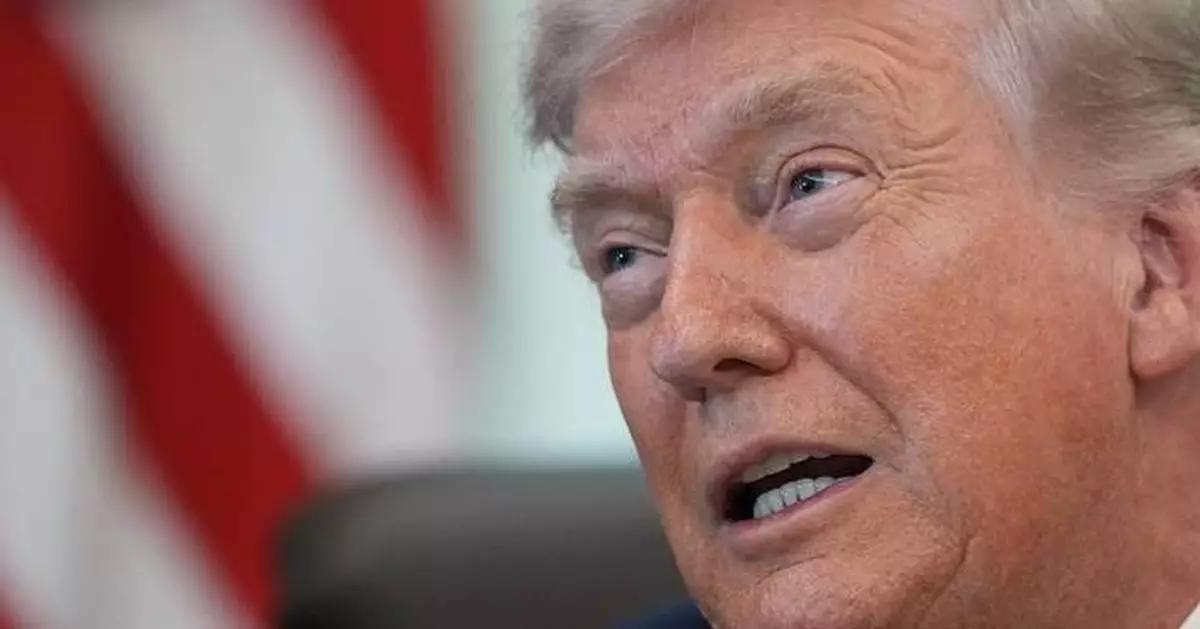
WASHINGTON (AP) — President Donald Trump sought on Wednesday to explain his rationale for the war against Iran at a pivotal moment at home and abroad, but he offered few new details as he amasses extraordinary executive authority to prosecute the military operation.
The war is fast becoming a signature of his second-term agenda and the speech was a capstone to a remarkable day flexing presidential power.
Trump started the morning as the first sitting president to show up for a U.S. Supreme Court hearing, a stunning reach of the executive into the affairs of the judicial branch. He ended with his first primetime address from the White House about a war he launched on his own, bulldozing past Congress.
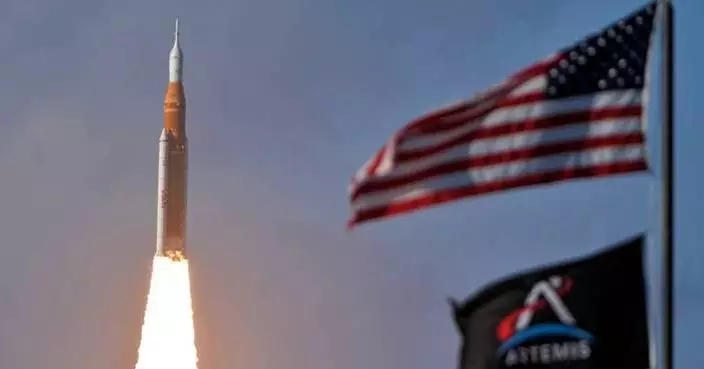
On an early spring night when many Americans may have been looking upward as Artemis II astronauts lifted off for NASA's return to the moon, Trump gave a nod to that historic milestone. Then he quickly refocused attention back to him — and to the conflict with Iran that has killed more than a dozen U.S. service members and appears to have no easy exit in sight.
"America, as it has been for five years under my presidency is winning — and now winning bigger than ever before," Trump said.
“We’re going to finish the job and were going to finish it very fast," he added.
The president said at the top of his address that he wanted to “discuss why Operation Epic Fury is necessary for the safety of America and the security of the free world,” showing that part of the goal for Wednesday’s speech was to take on the confusion that has persisted as he and his administration have shifted their reasons for launching the mission and its objectives.
But Wednesday night, Trump did not offer any new explanations.
He maintained that Iran cannot have a nuclear weapon, calling such a prospect “an intolerable threat.”
Though he and his administration insisted that the U.S. and Israel obliterated Iran’s nuclear program in strikes last summer, he said Wednesday that Iran sought to rebuild its nuclear program after those strikes at a new different location. He did not offer details but said it indicated Iran was not backing away from its nuclear ambitions. He also said Iran was building a vast arsenal of ballistic missiles that were a threat to America’s homeland.
While he said Iran’s ballistic missile capacity was greatly reduced, he didn’t explain how the operation had headed off Iran’s nuclear ambitions.
He instead painted the threats from Iran generally as having been wiped away, though he didn’t back up that assertion, especially as multiple competing factions of power remain within Iran’s theocracy.
Iran long has insisted its nuclear program was peaceful. It had, however, been enriching uranium up to 60% purity, a short, technical step away from weapons-grade levels. Before the war, U.S. intelligence agencies assessed that Iran had yet to begin a weapons program, but had “undertaken activities that better position it to produce a nuclear device, if it chooses to do so.”
Thousands of additional U.S. troops are heading to the Middle East. Gulf allies are urging Trump to finish the fight, arguing that Tehran hasn’t been weakened enough.
And yet Trump himself has predicted the U.S. will be done “within maybe two weeks."
He said the “core strategic objectives are nearing completion" and did not signal any preparations for a ground invasion by American troops — to retrieve Iran's enriched uranium or secure the Strait of Hormuz, where a chokehold by Iran has sent energy prices soaring.
But Trump offered few details about next steps. At one point he told allies to simply reopen the waterway critical to oil shipments themselves — “take it," he implored.
Trump is fast approaching the 60-day mark when he must seek approval from Congress under the War Powers Act to continue any military operations.
Trump did not announce the imminent start of peace talks or any other diplomatic effort to end the war.
Instead he recounted the long wars in Korea and Vietnam and vowed the U.S. would be better off because of this one.
“This is a true investment for your children and your grandchildren’s future,” he said.
Trump has berated U.S. allies for not doing their part in the conflict, even as British Prime Minister Keir Starmer said he would convene a diplomatic summit to help reopen the Strait of Hormuz after the fighting ends.
Trump and Secretary of State Marco Rubio have suggested that NATO will need to be reconsidered once the Iran war is over. But Trump did not mention NATO by name during the speech.
Trump has gone so far as to say he is “seriously considering” withdrawing from the military alliance, which has been a bulwark of transatlantic unity and security since the end of World War II.
But he cannot simply withdraw from NATO on his own without a legal fight.
“We’re going to have to re-examine the value of NATO and that alliance for our country,” Rubio said Tuesday in an interview with Fox News host Sean Hannity. “Ultimately, that’s a decision for the president to make, and he’ll have to make it.”
Trump, who ran as the “America First” president vowing not to drag the country into endless wars, has yet to fully address the political pushback he faces from his own base of supporters over the Iran conflict.
The U.S. economy is roiling, the financial markets are swinging with Trump's various pronouncements about the war effort, and Americans are facing pain at the pump as the cost of living rises.
While the president often describes the inflationary high prices as a momentary setback, it's all feeding into a rocky November midterm election.
Some of the sharpest criticism he’s faced in the early days of the Iran war has come from once-loyal media figures in the MAGA-universe, including Tucker Carlson.
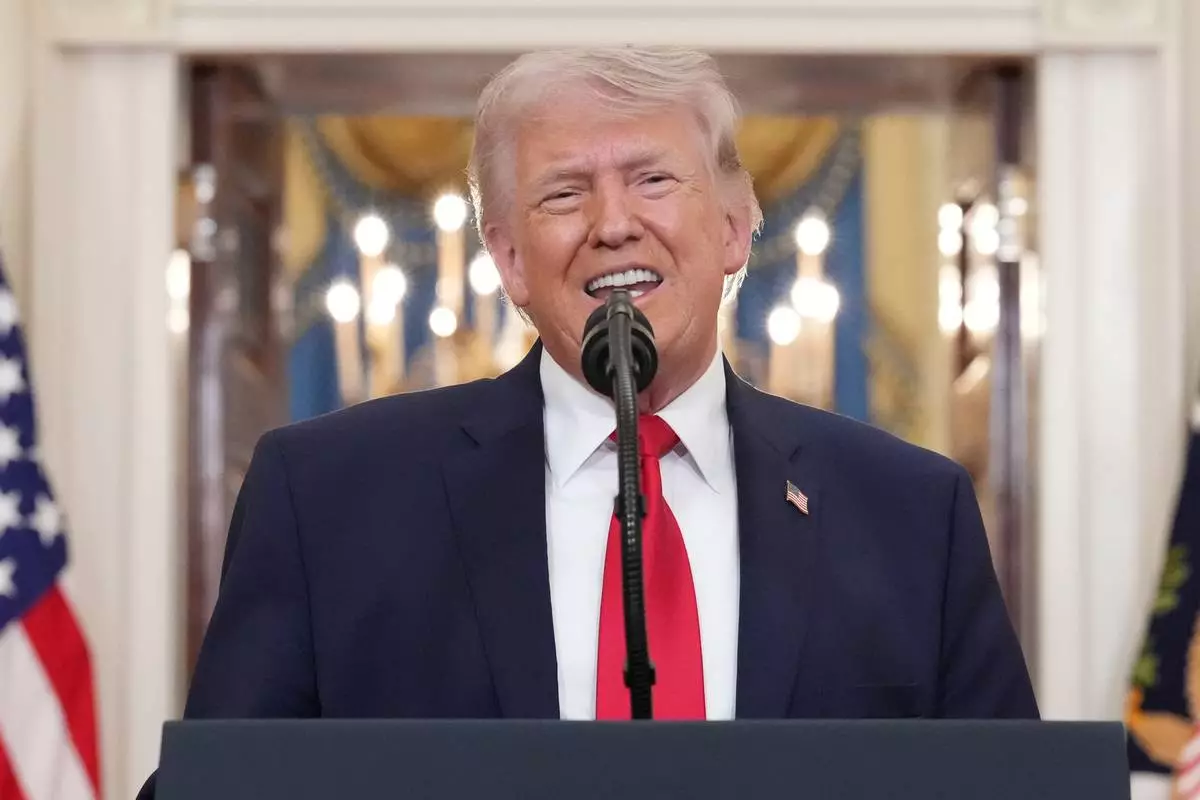
President Donald Trump speaks about the Iran war from the Cross Hall of the White House on Wednesday, April 1, 2026, in Washington. (AP Photo/Alex Brandon, Pool)
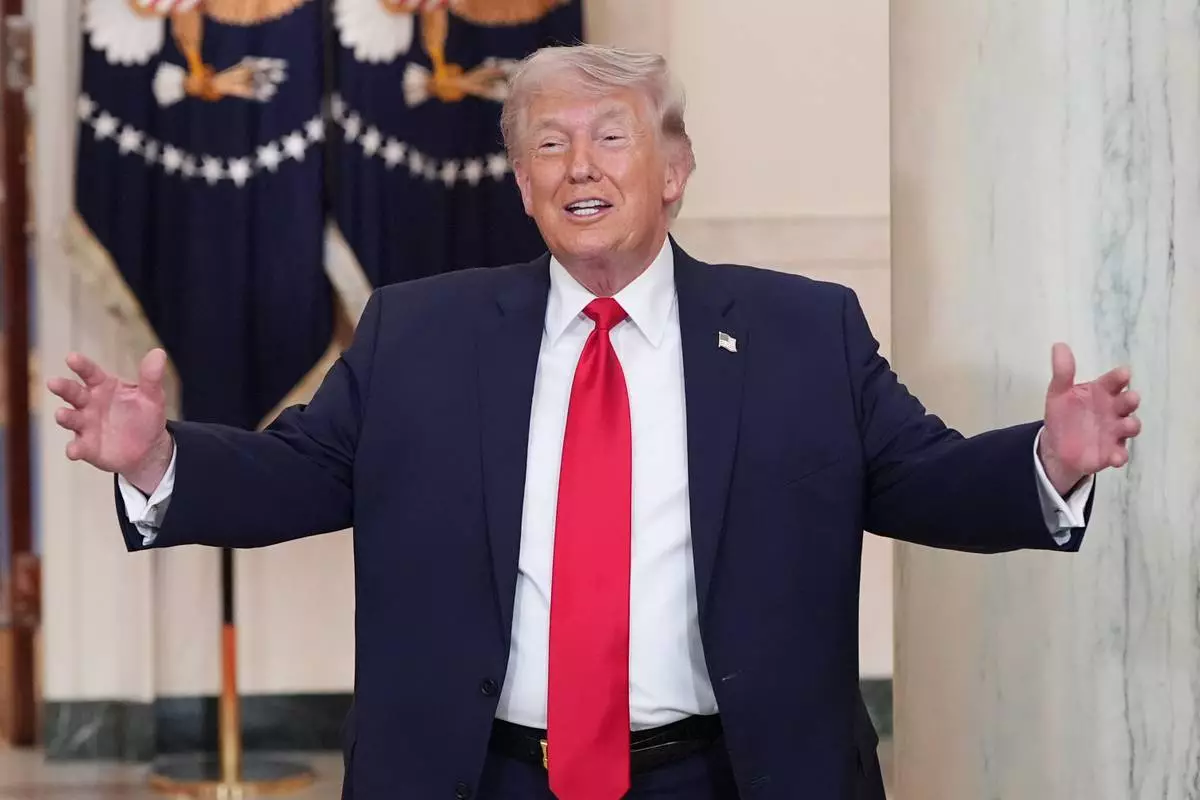
President Donald Trump gestures after speaking about the Iran war from the Cross Hall of the White House on Wednesday, April 1, 2026, in Washington. (AP Photo/Alex Brandon, Pool)
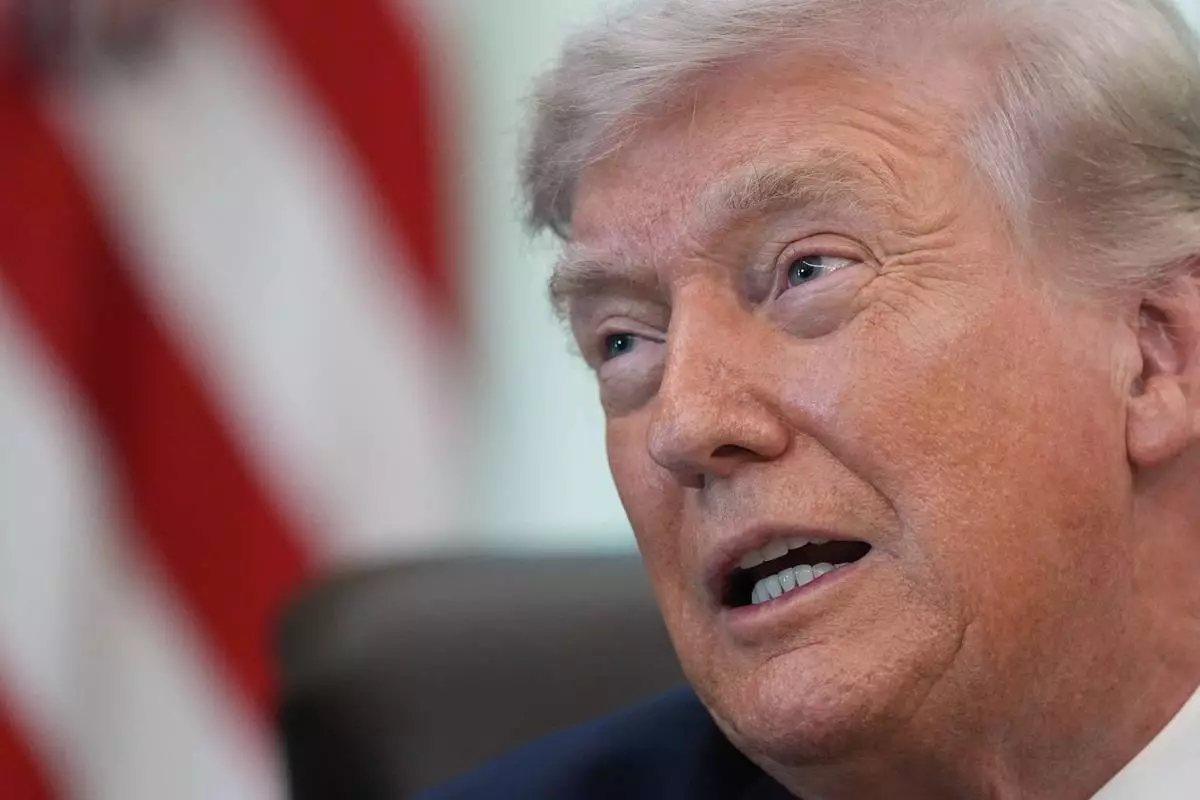
President Donald Trump speaks in the Oval Office of the White House before signing an executive order Tuesday, March 31, 2026, in Washington. (AP Photo/Alex Brandon)
WASHINGTON (AP) — U.S. President Donald Trump has been fuming about NATO, musing about leaving the alliance, ratcheting up his criticism of European leaders and exposing a wider rift in the trans-Atlantic alliance — this time over the Iran war.
“NATO treated us very badly, and you have to remember it because they’ll be treating us badly again if we ever need them,” Trump said Wednesday at a private White House lunch for the upcoming Easter holiday that was posted online by a Business Insider reporter.
The president also suggested in an interview to The Telegraph newspaper in the U.K., published Wednesday, that he could potentially try to leave the alliance.
Yet in his televised Wednesday evening address to the American people about the Iran war, Trump chose not to mention NATO by name, suggesting only that countries that depend on oil flowing through the Strait of Hormuz “must grab it and cherish it” because the U.S. would not.
Trump's tension over NATO reflects the potentially dangerous consequences of breaking up the alliance, the limits on his own power to do so and the careful mending of the relationship performed by fellow world leaders. But one certainly is that Trump's displeasure with NATO appears to be a feature of his presidency, rather than an issue that can be easily settled.
Congress passed legislation in 2023 that would prevent any president from pulling out of NATO without its approval. The Trump administration, during his first term, had insisted the president had such authority on his own. It’s unclear whether Trump would challenge in any way the new law, which is the first of its kind and with the NATO provision specifically championed at the time by Trump's secretary of state, Marco Rubio, who was a Florida senator at the time.
There are efforts under way to reinforce America's relationship with NATO, with its secretary-general, Mark Rutte, scheduled to visit Washington next week. The visit by Rutte was confirmed by a White House official who was not authorized to comment on the yet to be formally announced visit and spoke on the condition of anonymity.
U.K. Prime Minister Keir Starmer said his government was “fully committed to NATO” and called it “the single most effective military alliance the world has ever seen.”
Before a Trump speech later Wednesday, U.S. Sen. Mitch McConnell, a Kentucky Republican, and Sen. Chris Coons, a Delaware Democrat, said in a joint statement that “NATO is the most successful military alliance in history” and stressed that the Senate “will continue to support the alliance for the peace and protection it provides" the United States, Europe and the world.
Many European leaders have felt political pressure over the war, which faces opposition in their countries and has sent petroleum prices soaring as Iran has effectively shut the Strait of Hormuz, the narrow waterway between Iran and Oman through which about one-fifth of the world’s oil passes.
The U.K. is working on plans that could help assuage Trump, and Starmer said military planners will work on a postwar security plan for the Strait.
On Thursday, British Foreign Secretary Yvette Cooper will host a virtual meeting of 35 countries that have signed up to help ensure security for shipping in the Strait — after the fighting ends.
Iulia-Sabina Joja, a senior fellow at the Middle East Institute, alluded to Trump's exhortation Tuesday for allies to “go get your own oil” in a social media post insisting it wasn't America's job to secure the Strait.
“The Europeans are not keen to go into an active warfare situation, to so-called ‘get’ their energy out of the Strait,” said Joba, a former deputy project manager at NATO Allied Command Transformation in Virginia.
As energy prices have spiked, Trump has called NATO allies “cowards” for not sending their military ships to the strait. It's an amplification of his message since his first term that European partners should assume greater responsibility for their own security.
Speaking Tuesday on Fox News, Rubio said, “I do think, unfortunately, we are going to have to reexamine whether or not this alliance that has served this country well for a while is still serving that purpose.”
Rubio raised questions with interviewer Sean Hannity about whether NATO has “become a one-way street where America is simply in a position to defend Europe — but when we need the help of our allies, they’re going to deny us basing rights and they’re going to deny us overflight.”
The fraying of NATO could weaken the alliance’s deterrence, particularly with Russia: It seeks to limit conflict by having Russian President Vladimir Putin believe that NATO would retaliate if he decides to one day expand Moscow's war in Ukraine.
NATO is built on Article 5 of its founding treaty, which pledges that an attack on any one member will be met with a response from them all.
As the Iran war has spread, missiles and drones have been fired toward NATO member Turkey and a British military base on Cyprus, fueling speculation about what might prompt NATO to trigger its collective security guarantee and come to their rescue.
The alliance hasn't intervened or signaled any plan to do so. Rutte — who has voiced support for Trump and Washington's role in the alliance — has been focusing mostly on the Russia-Ukraine war since Ukraine borders four NATO countries.
NATO operates uniquely by consensus. All 32 countries must agree for it to make decisions, so political priorities play a role. Even invoking Article 5 requires agreement among the allies. Turkey or the U.K. can't trigger it alone.
European leaders have called for the Middle East conflict to stop and want the U.S. and Iran to return to negotiations over Tehran's nuclear program, which Washington and Israel see as a threat.
The vocal opposition in Europe to Trump's war against Iran has started to turn into action.
Spain has closed its airspace to U.S. planes involved in the war.
Early last month, France agreed to let the U.S. Air Force use a base in southern France after receiving a “full guarantee” from the United States that planes not involved in carrying out strikes against Iran would land there.
The government of Italian Premier Giorgia Meloni, long seen as one of the European Union leaders with the best personal ties to Trump, denied permission for U.S. bombers to land at the Sigonella air base in Sicily for one mission related to the Middle East.
Franco Pavoncello, a professor of political science at Rome’s John Cabot University, said that decision might cost Meloni a lot of her political capital in Washington.
But he said, “The Italian government could not be seen by the European allies as too submissive to American interests, as it would have very negative repercussions both at home and in the EU.”
U.S. relations with Europe had already soured in recent months over Trump's call for Greenland — a semiautonomous territory of stalwart NATO ally Denmark — to become part of the United States, prompting many EU countries to rally behind Copenhagen.
Jill Lawless reported from London and Jamey Keaten from Geneva. Lorne Cook in Brussels, Giada Zampano in Rome, Sam McNeil in Dubai, United Arab Emirates, and Matthew Lee in Washington contributed to this report.
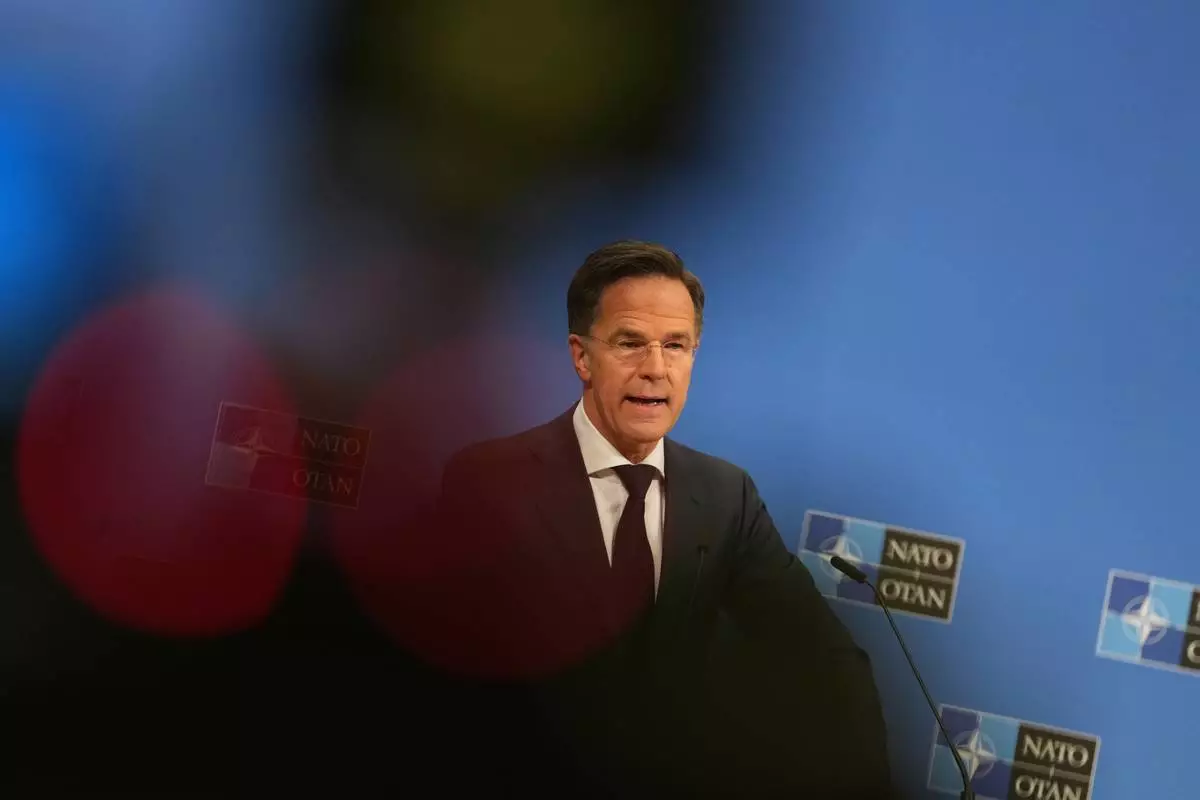
NATO Secretary General Mark Rutte speaks during the launch of the NATO Secretary General's Annual Report for 2025 at NATO headquarters in Brussels, Thursday, March 26, 2026. (AP Photo/Virginia Mayo)
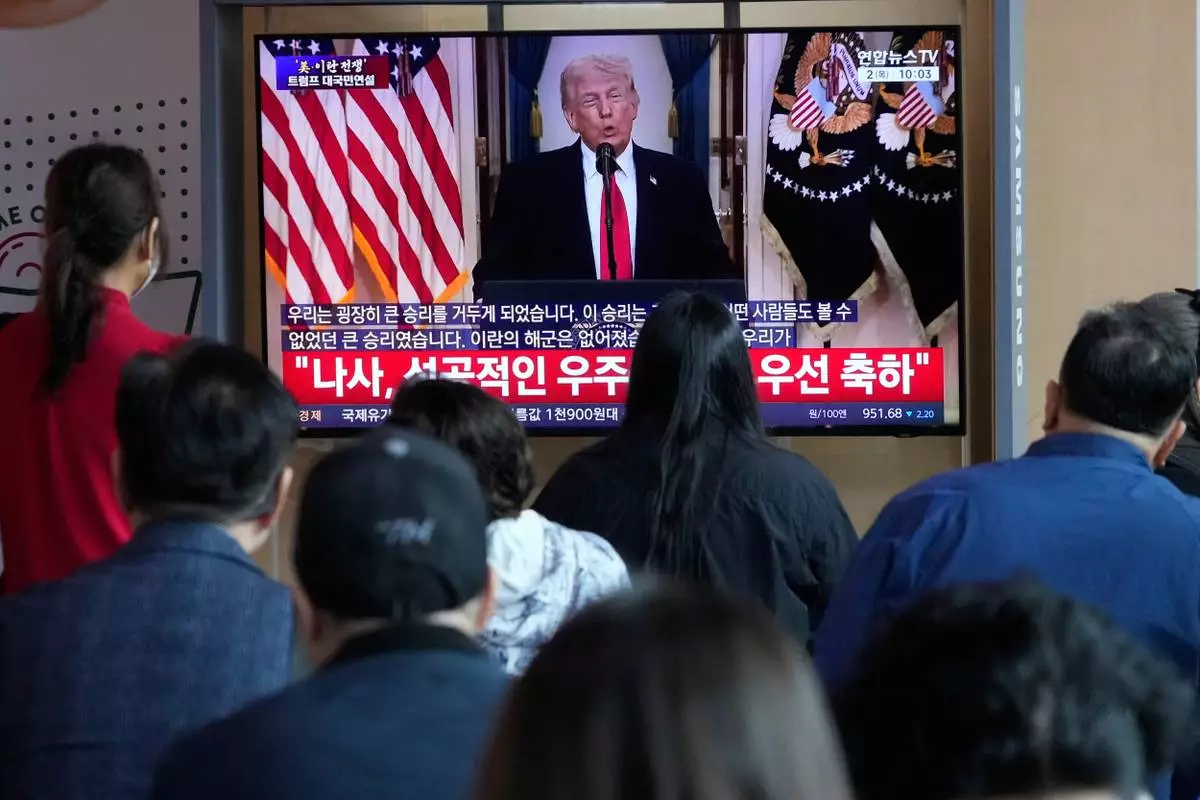
People watch a TV screen showing a live broadcast of U.S. President Donald Trump's speech at the Seoul Railway Station in Seoul, South Korea, Thursday, April 2, 2026. (AP Photo/Ahn Young-joon)
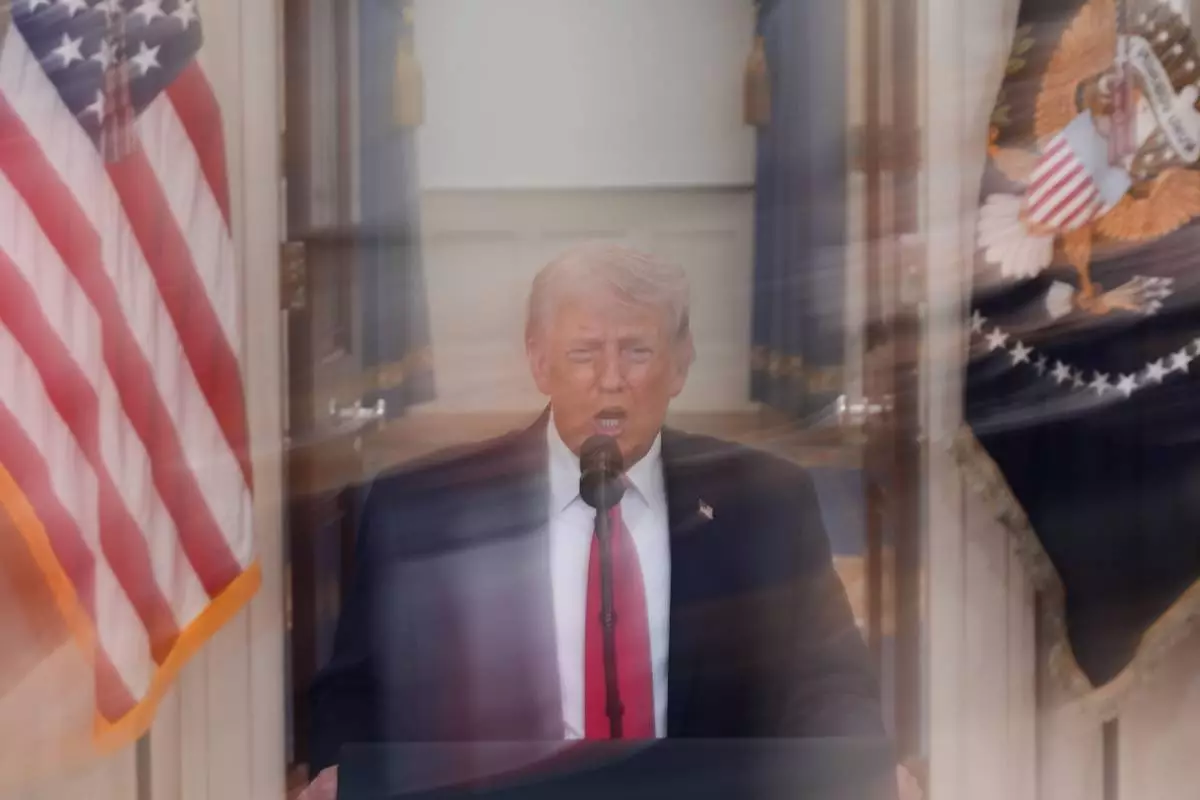
In this image made with a long exposure, President Donald Trump speaks about the Iran war from the Cross Hall of the White House on Wednesday, April 1, 2026, in Washington. (AP Photo/Alex Brandon, Pool)
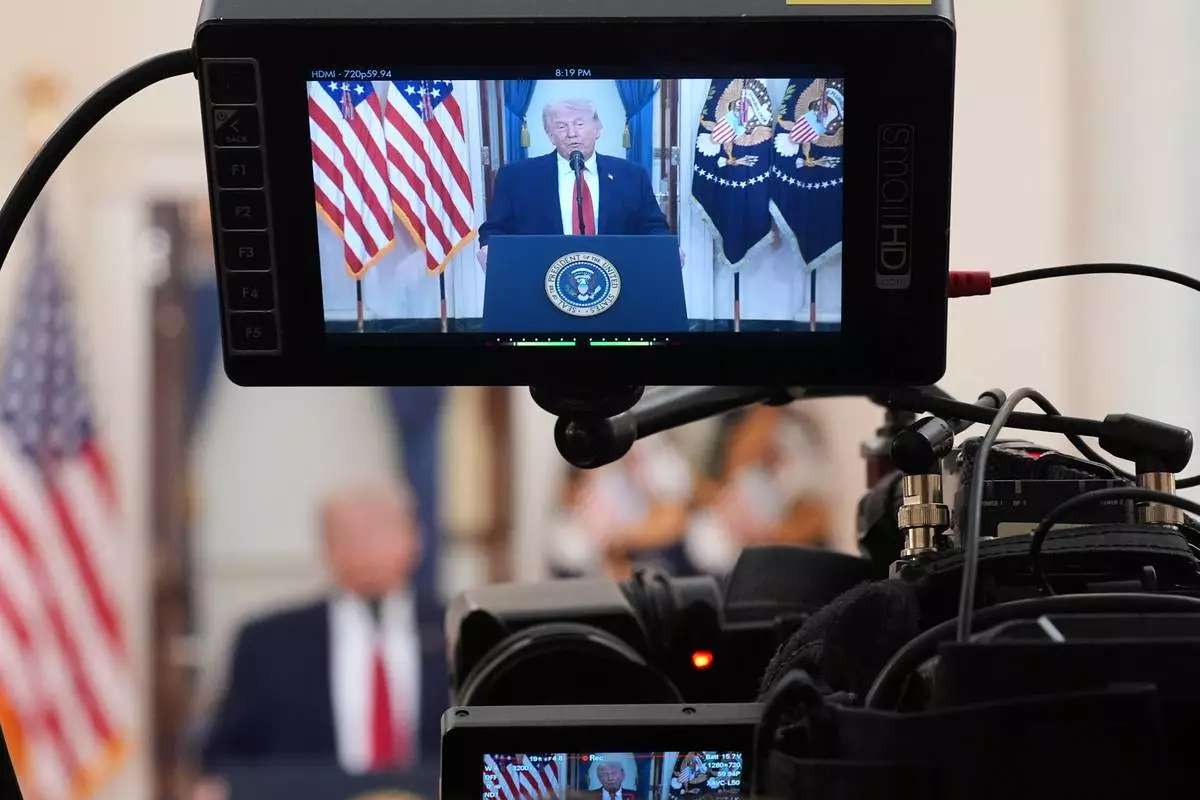
President Donald Trump speaks about the Iran war from the Cross Hall of the White House on Wednesday, April 1, 2026, in Washington. (AP Photo/Alex Brandon, Pool)
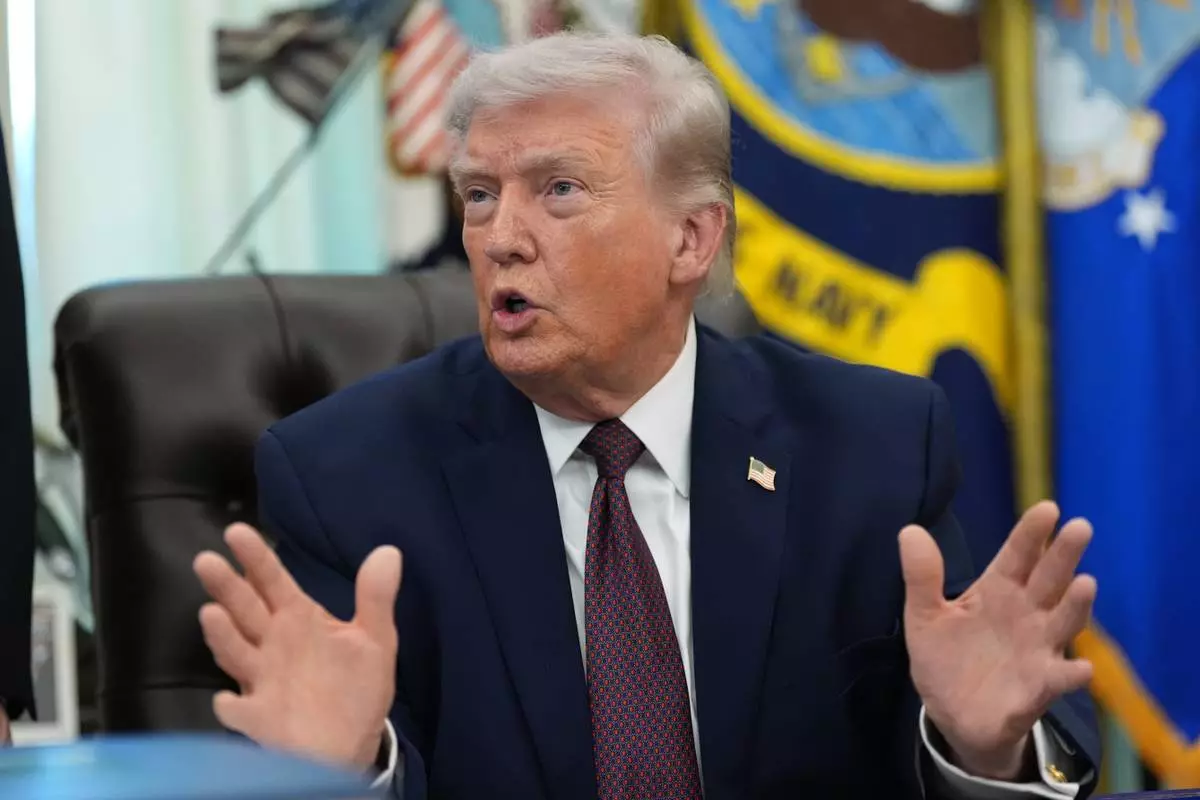
President Donald Trump answers questions from reporters after signing an executive order in the Oval Office of the White House Tuesday, March 31, 2026, in Washington. (AP Photo/Alex Brandon)
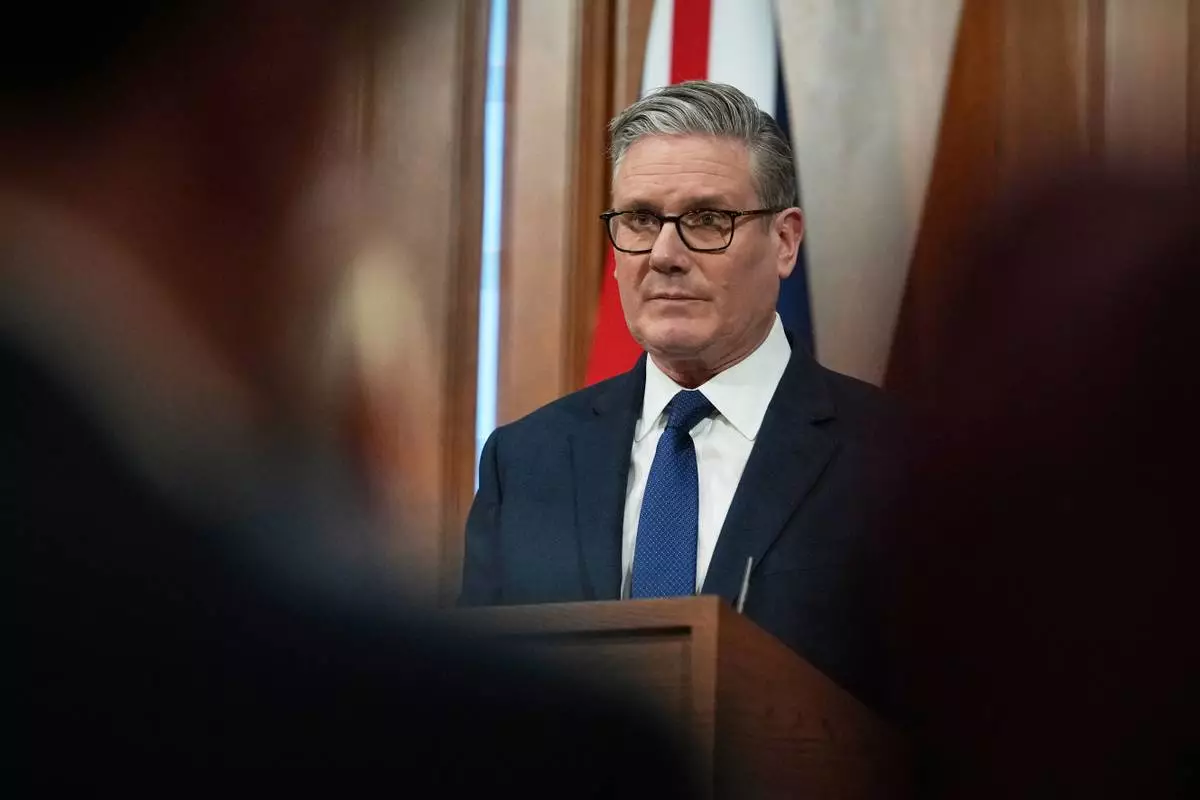
Britain's Prime Minister Keir Starmer speaks during a press conference at Downing Street in London, Wednesday, April 1, 2026. (AP Photo/Frank Augstein, Pool)
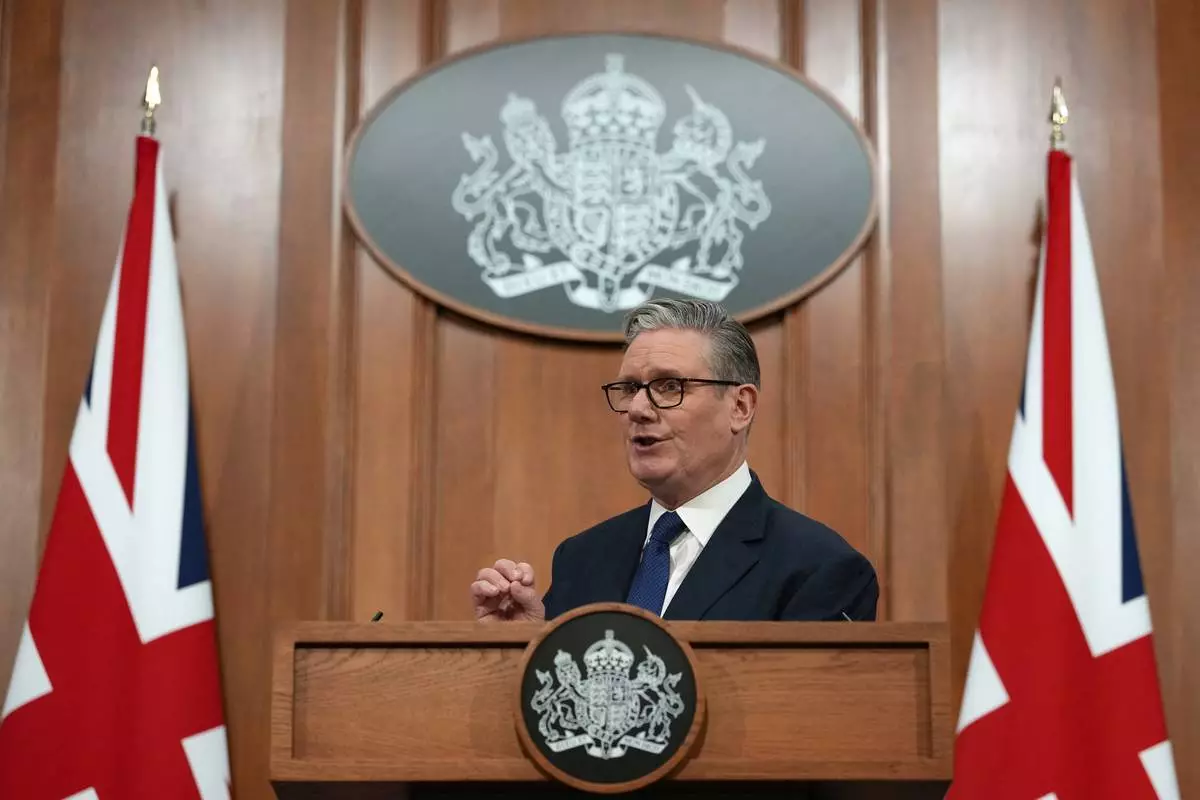
Britain's Prime Minister Keir Starmer speaks during a press conference at Downing Street in London, Wednesday, April 1, 2026. (AP Photo/Frank Augstein, Pool)
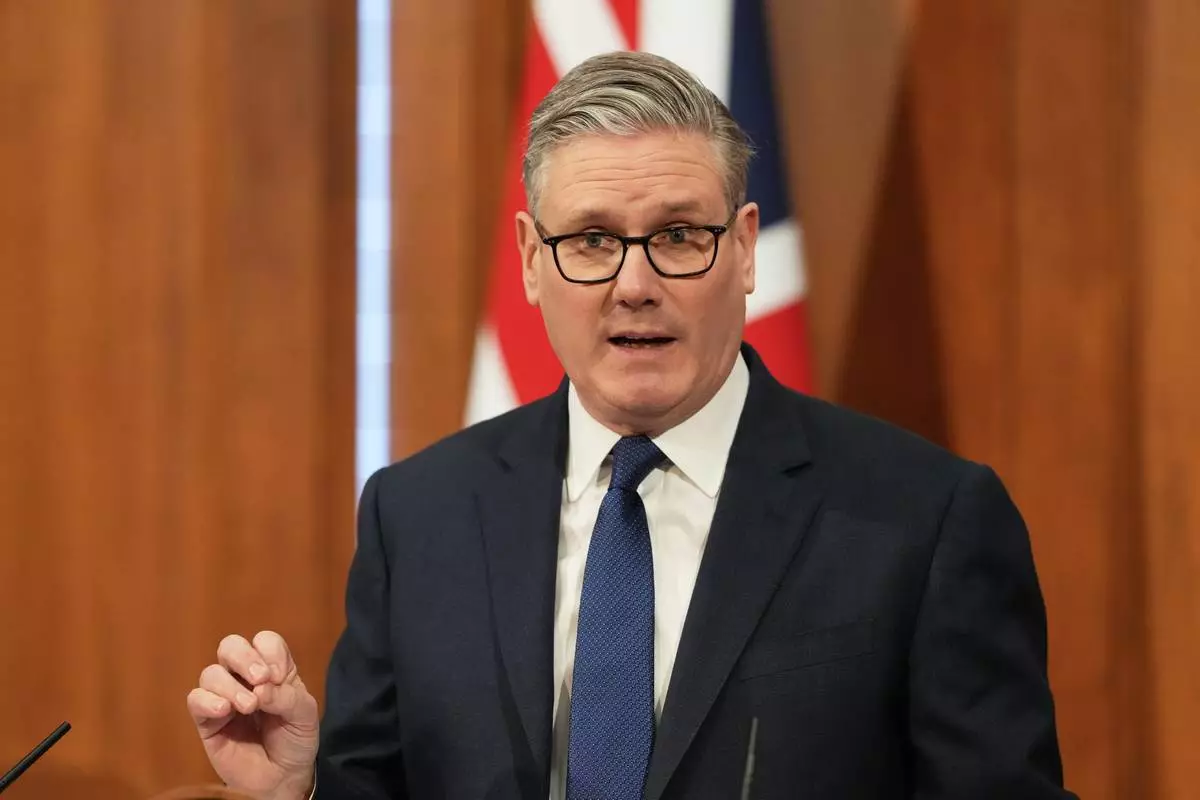
Britain's Prime Minister Keir Starmer speaks during a press conference at Downing Street in London, Wednesday, April 1, 2026. (AP Photo/Frank Augstein, Pool)