MEXICO CITY (AP) — Mexico's president on Wednesday designated Roberto Velasco, the foreign ministry's subsecretary for North America and a leading expert in bilateral relations with the U.S., as the country's new foreign minister during a critical time for Mexico-U.S. relations.
The previous minister, Juan Ramón de la Fuente, a 74-year-old psychiatrist who has been a key member of Mexican President Claudia Sheinbaum's administration, requested to step down for health reasons, the president's office announced Wednesday on social platform X.
Velasco, a 38-year-old lawyer with a master's degree in Public Policy from the University of Chicago, has been involved in Mexico's foreign relations with the U.S. and Canada for six years, first as North America general director and then as subsecretary. He stepped in for De la Fuente for a few weeks after a surgery last year. His appointment must be ratified by the Senate.
He is considered one of the foremost experts on the technical intricacies of bilateral relations during the end of U.S. President Donald Trump’s first administration and in this second term. He has led numerous bilateral and trilateral negotiations on security, migration, the economy, the border and the management of shared waters.
When Trump returned to power, Velasco became De la Fuente’s right-hand man during a period of turbulent relations between the two countries, which are now at one of their most critical points. It remains to be seen whether the young official has the necessary political clout at such a difficult times.
Velasco will be in charge of leading Mexican diplomacy amid negotiations to revise the U.S.-Mexico-Canada Free Trade Agreement, and Trump’s continued pressure in the fight against the cartels at a time when the U.S. president has shown willingness to launch military operations against those he considers his enemies, including Mexico's ally Cuba.
Previously, Velasco had served as spokesperson for Marcelo Ebrard, the current economy secretary, when Ebrard was Mexico’s foreign minister during the first part of former Mexican President Andrés Manuel López Obrador’s administration.
Outgoing minister De la Fuente, who served in the role since October 2024, was known for his discretion and negotiating skills. He accompanied Sheinbaum throughout the transition period, received envoys from then-U.S. President Joe Biden, and was responsible for preparing the entire U.S. consular network for the deportations announced by Trump.
When the Republican returned to the White House in January 2025, De la Fuente became a key figure in the negotiations with his administration, always maintaining a low profile and fully aligned with Sheinbaum in exercising caution in the face of Trump’s impulsive social media posts. In September, he hosted U.S. Secretary of State Marco Rubio in Mexico City.
Arturo Sarukhan, Mexico’s former ambassador to the U.S., said “the reshuffle in the foreign ministry was long overdue” but he didn't want to comment about Velasco and wished him good luck.
Follow AP’s Latin America coverage at https://apnews.com/hub/latin-america
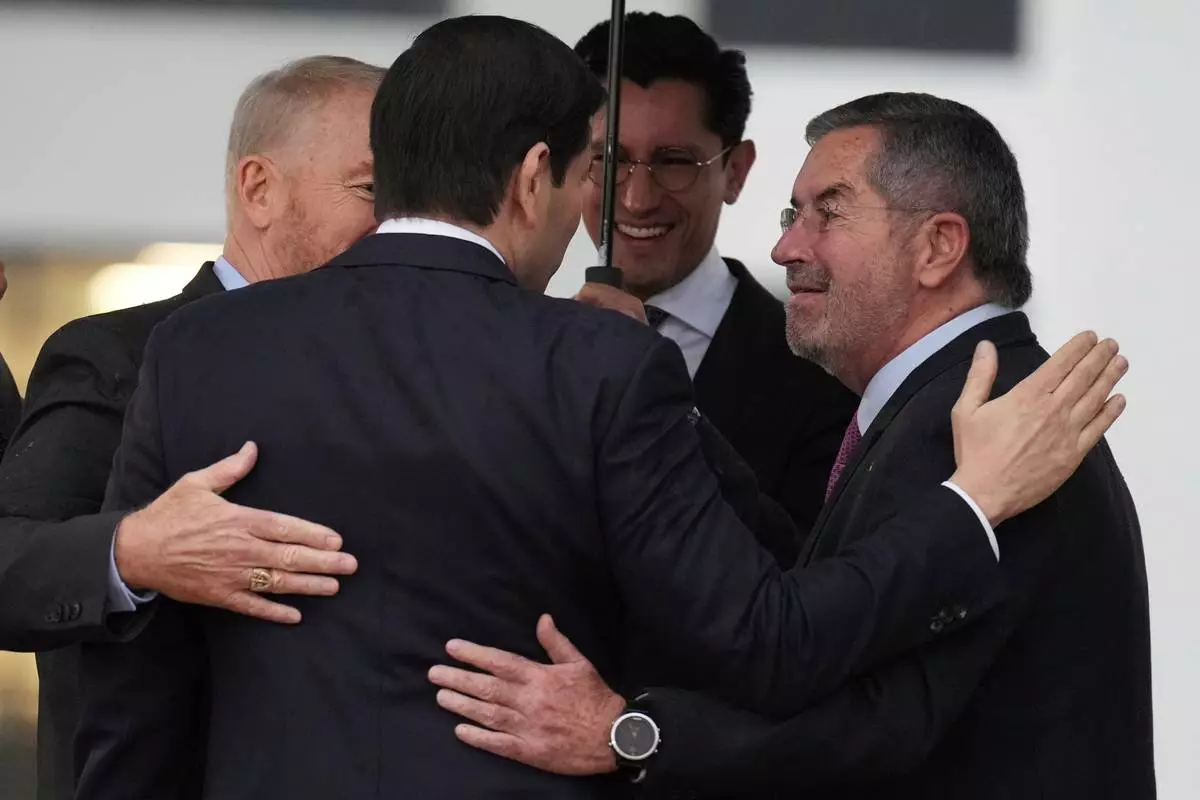
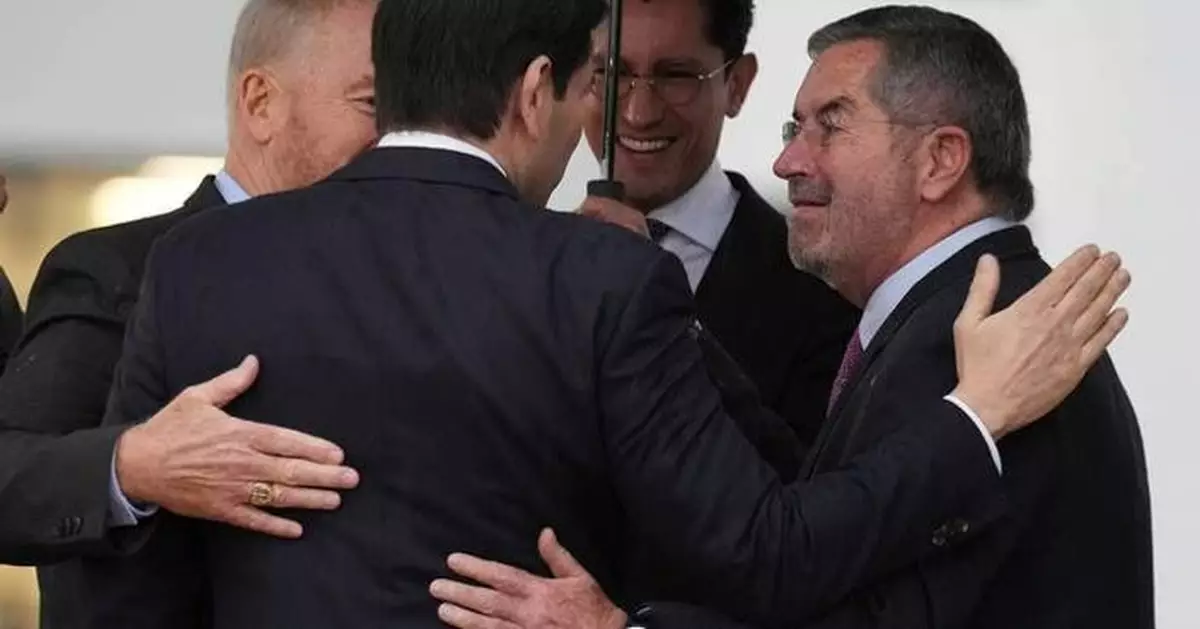
U.S. Secretary of State Marco Rubio greets Mexican Foreign Secretary Juan Ramon de la Fuente, right, Mexican Foreign Ministry Unit Chief for North America Roberto Velasco, center, and U.S. Ambassador Ronald Johnson, left, at Felipe Angeles International Airport in Zumpango, on the outskirts of Mexico City, Sept. 2, 2025. (AP Photo/Jacquelyn Martin, File)
BOGOTÁ, Colombia (AP) — Colombians milled into voting stations on Sunday in the first round of the South American nation’s presidential election, choosing between candidates with radically diverging visions for the future of peace in a country haunted by decades of armed conflict.
The vote, seen as a referendum on outgoing President Gustavo Petro’s policies, comes 10 years after Colombia signed an historic peace pact with guerrillas of the Revolutionary Armed Forces of Colombia, or FARC.
That agreement offered hope to break the nation out of a vicious cycle of fighting between rebel groups and the government but violence has roared back since then, coming to a head in the lead-up to the presidential vote. Criminal groups have increasingly launched drone strikes, armed attacks have plagued the race and last June, 39-year-old politician and presidential hopeful Miguel Uribe Turbay was fatally shot at a political rally.
In a country where the fight for peace has long been a part of the political ethos, the question of how to address the conflict is once again dividing the country.
The vote is slated to send a message to Latin America at a time voters are increasingly ditching leaders that pitched progressive policies, like providing opportunities to youths and rooting out corruption, to solve security ails, turning instead to heavy-handed security crackdowns like El Salvador's. It also comes as the Trump administration is placing renewed pressure on the region.
“Today's election isn't just important for us, it's important for all of Latin America,” said Juan Acevedo, a 62-year-old sociologist walking out of a voting station in Colombia's capital on Sunday morning. “Whoever wins here will suggest to the region if progressive policies will continue or if things are going to return to the right.”
There are 11 candidates running for president, but the election has basically turned into a three-horse race.
Senator and peace-builder Ivan Cepeda — a Petro ally — has led the polls and promises to carry on with Petro's “total peace” initiative to negotiate with the country’s remaining rebel groups and sign peace agreements with them in an effort to resolve the persistent crisis.
While the peace plan has largely failed as criminals have taken advantage of ceasefires with the government, Cepeda and Petro have maintained strong support among many because of progressive policies pushed forward under Petro, such as boosting the minimum wage.
Running against Cepeda are Abelardo de la Espriella and Paloma Valencia, who have vowed to come down on armed groups with a heavier hand.
De la Espriella — a bombastic lawyer known as “The Tiger” — has particularly gained traction among voters in recent weeks for pitching himself as an outsider keen on emulating the heavy-handed tactics used in El Salvador’s war on gangs, which sharply reduced gang violence but fueled accusations of human rights abuses.
Valencia is considered the political protege of Colombia's former president and strongman Álvaro Uribe, who governed from 2002 to 2010 with strong support from the United States and whose government beat back FARC rebels in an offensive that took a massive civilian toll.
Both de la Espriella and Valencia have touted their affinity for U.S. President Donald Trump even as he has taken a more aggressive stance toward Latin America than any U.S. president in decades and has pressured nations like Colombia, Ecuador and Mexico to more forcefully crack down on criminal groups.
If no candidate wins at least 50% of the vote — something extremely rare in Colombia — the two top vote-getters will face a runoff in June.
Maria Eugenia, a 57-year-old seamstress who was stitching a pair of jeans on Friday in downtown Bogotá, Colombia's capital, said she welcomed an all-out offensive on an expanding slate of criminal groups, regardless of the human cost.
While she approved of Petro’s pushes to improve the country's medical infrastructure, she said she was voting for de la Espriella because violence in rural areas of the country has gotten out of hand. She said negotiating peace pacts was simply “rewarding” armed groups.
“Of course, whenever you come down with a heavy hand, there’s always going to be debate,” she said. “But some people are going to have to fall to clean up what needs to be cleaned.”
Others, like Acevedo, the sociologist strolling out of a polling station on Sunday with packs of other voters, said a security crackdown like the one promoted by de la Espriella would only be returning to past military campaigns that he said only reinforced Colombia's cycle of violence.
He said he planned to vote for Cepeda, adding that while the government hasn't done a perfect job — failing to pass ambitious reforms and follow through on promises to reduce violence — it was better to continue pushing forward with their political coalition's efforts to take a different approach in addressing the country's violence.
He added that his main critique of Petro's administration was the power grabs made by criminal groups as they negotiated with the government. He said he hoped that if Cepeda won, he would strike a better balance between negotiating peace and maintaining control over those groups.
“We're a country that has lived through 60 years of conflict,” Acevedo said. “The danger here is that we return to the times where everyone is saying that the only way to solve our problems is with bullets and more war.”
Follow AP’s coverage of Latin America and the Caribbean at https://apnews.com/hub/latin-america
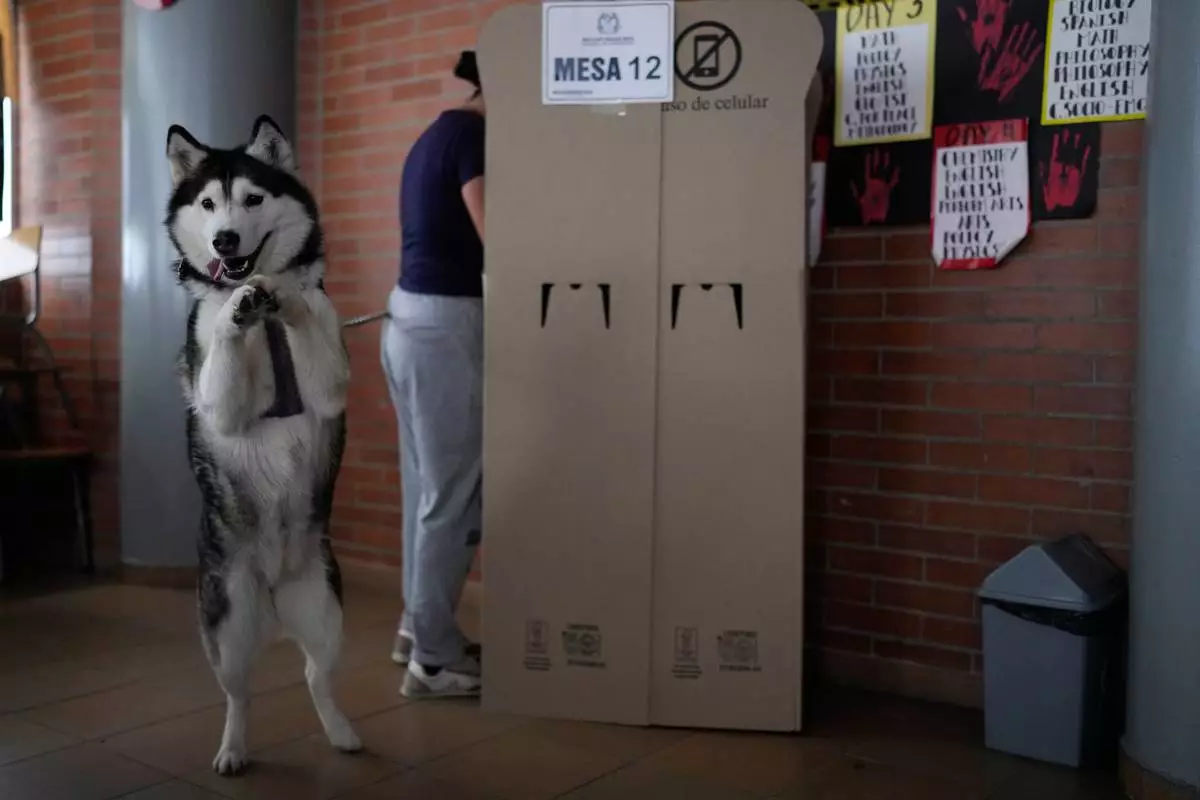
A voter marks a ballot during the presidential election in Bogota, Colombia, Sunday, May 31, 2026. (AP Photo/Matias Delacroix)
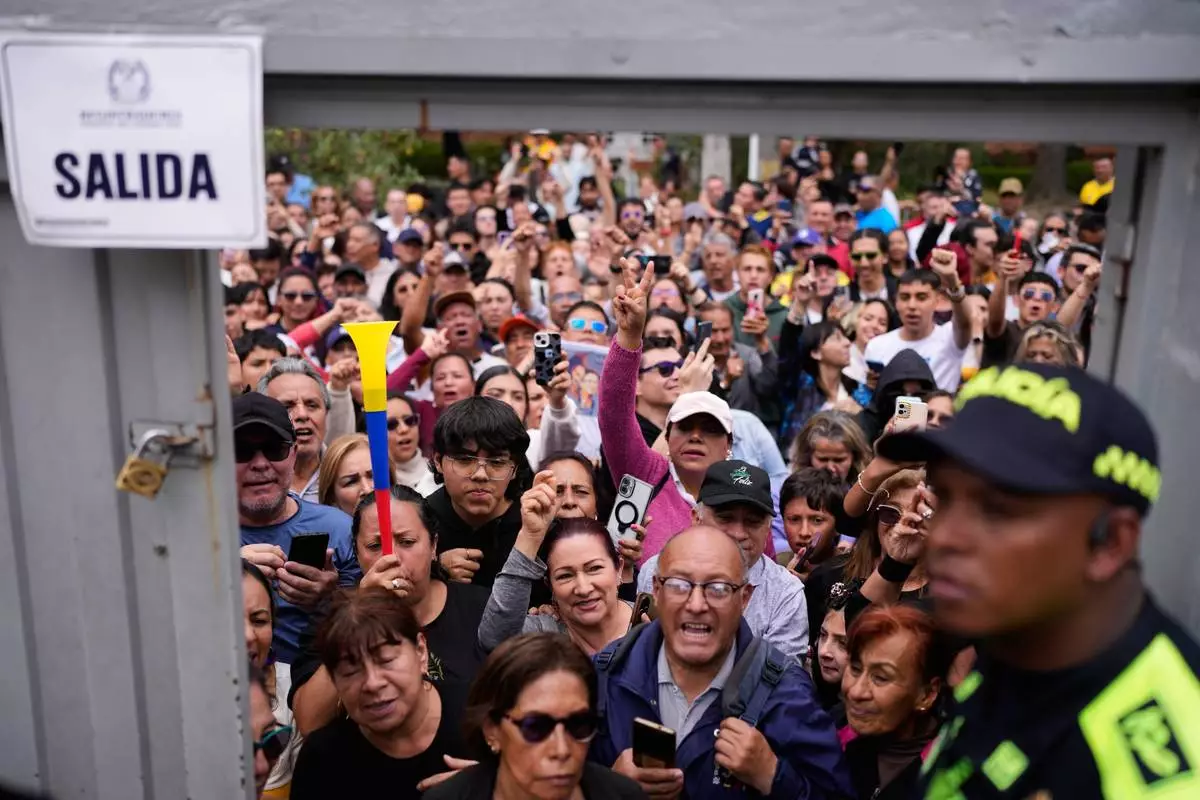
Supporters of presidential candidate Ivan Cepeda of the ruling Historic Pact coalition gather outside the polling station where he voted during the presidential election in Bogota, Colombia, Sunday, May 31, 2026. (AP Photo/Matias Delacroix)
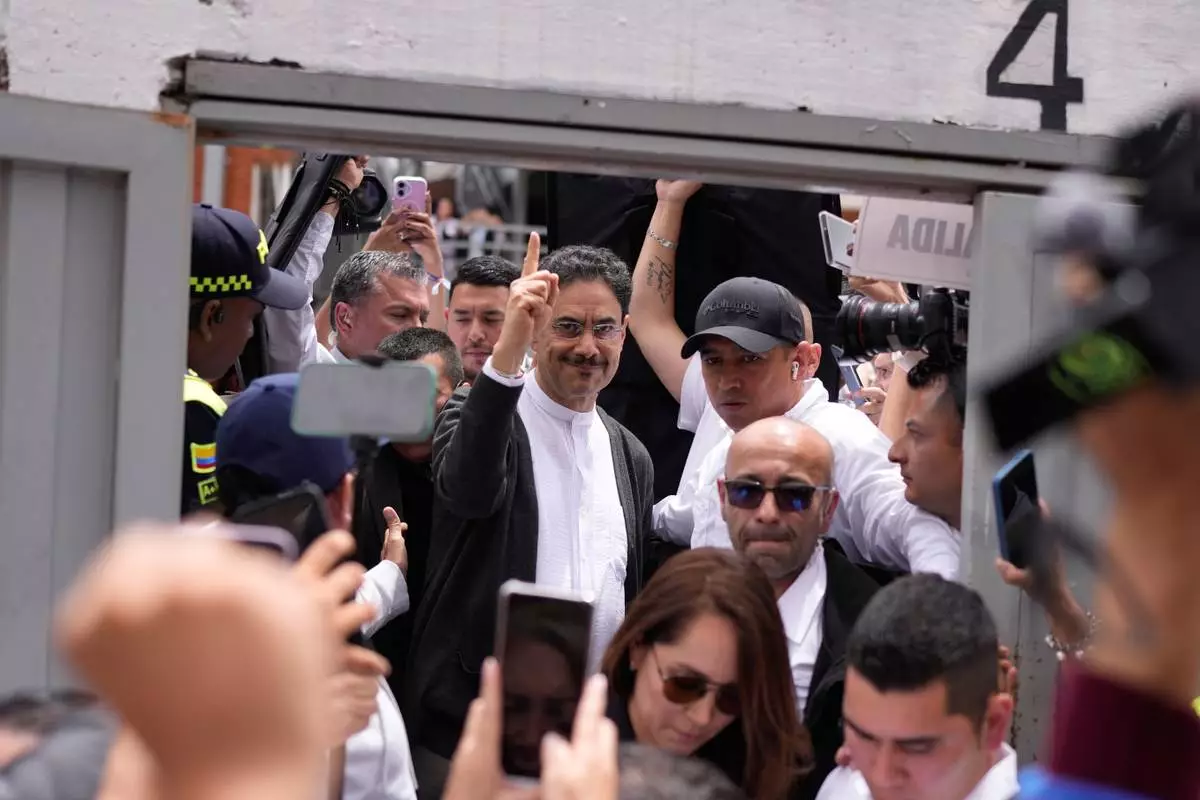
Presidential candidate Ivan Cepeda of the ruling Historic Pact coalition gestures to supporters after voting during the presidential election in Bogota, Colombia, Sunday, May 31, 2026. (AP Photo/Matias Delacroix)
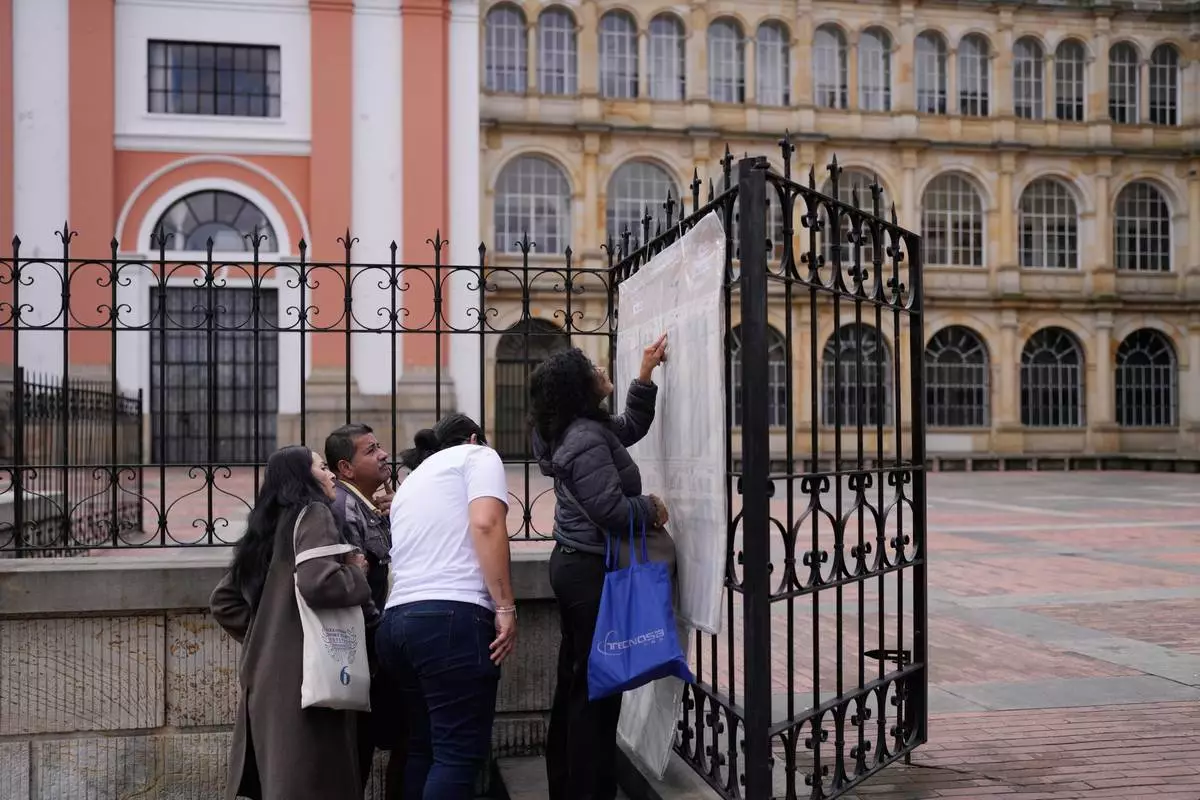
Voters check polling information during the presidential election in Bogota, Colombia, Sunday, May 31, 2026. (AP Photo/Matias Delacroix)
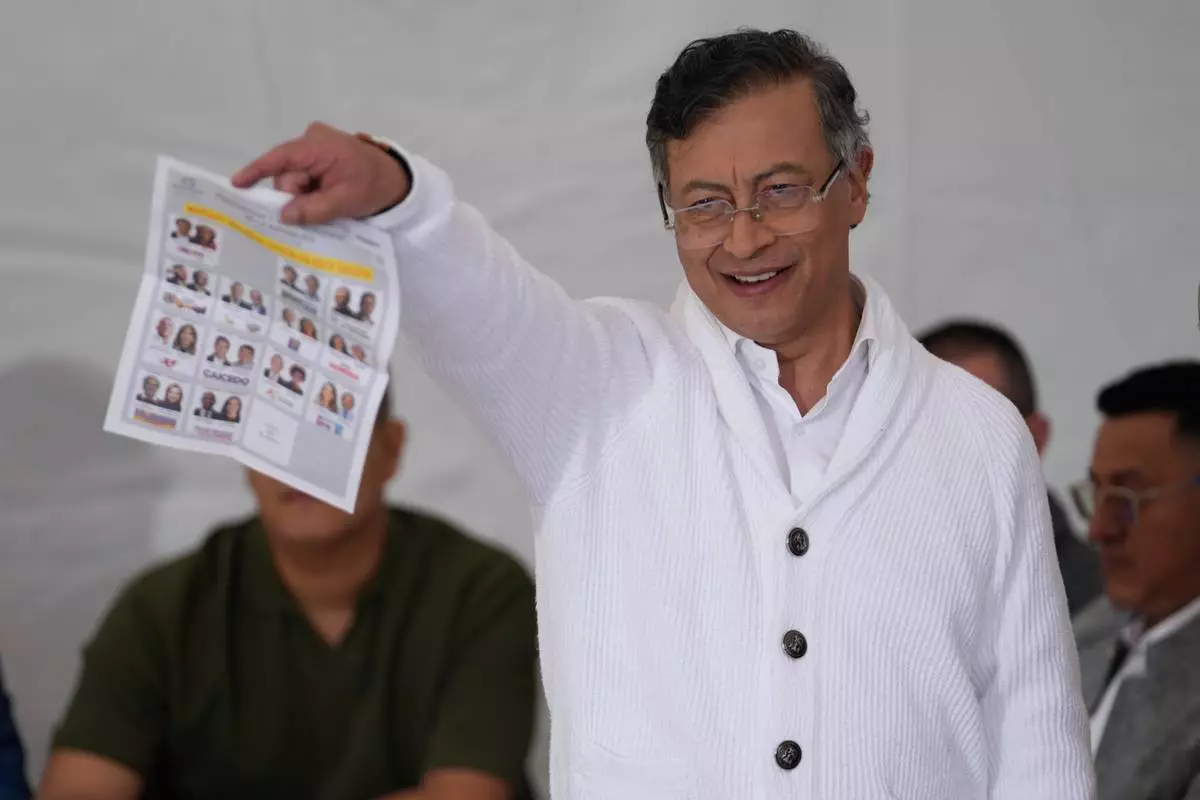
President Gustavo Petro shows a ballot during the presidential election in Bogota, Colombia, Sunday, May 31, 2026. (AP Photo/Matias Delacroix)
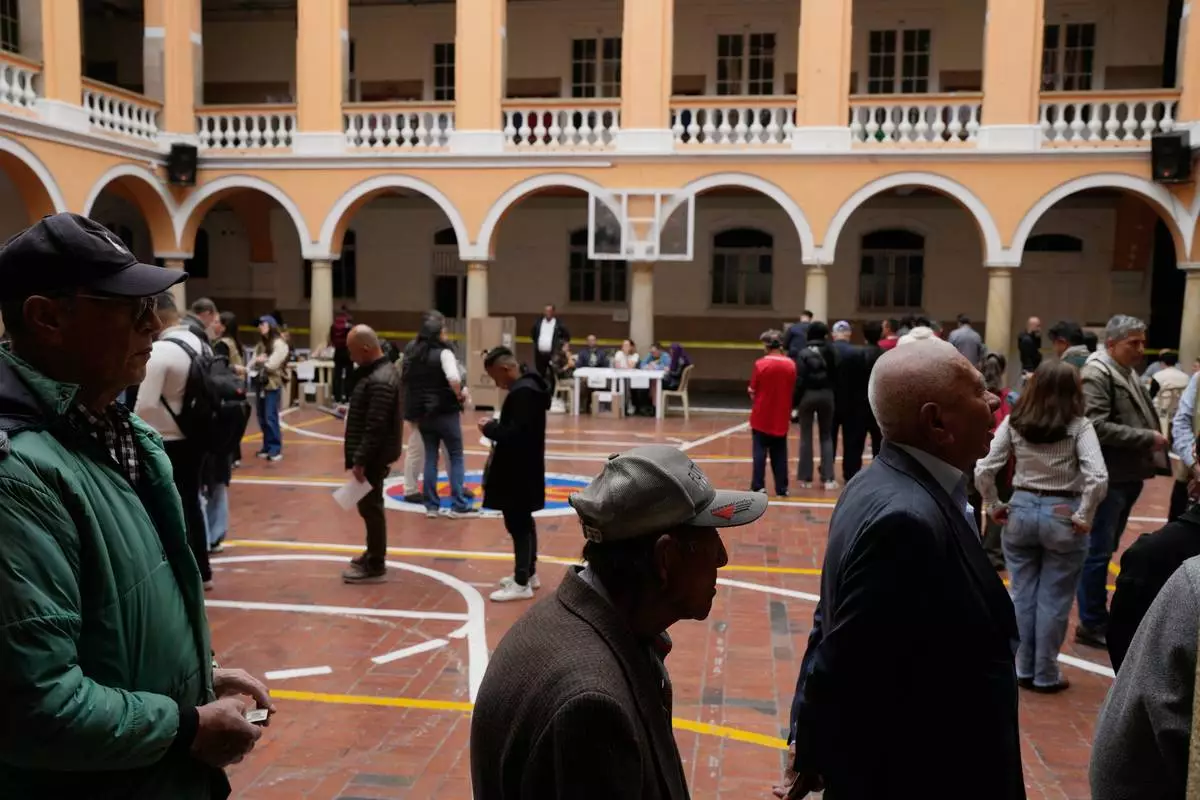
Voters line up at a polling station during the presidential election in Bogota, Colombia, Sunday, May 31, 2026. (AP Photo/Matias Delacroix)
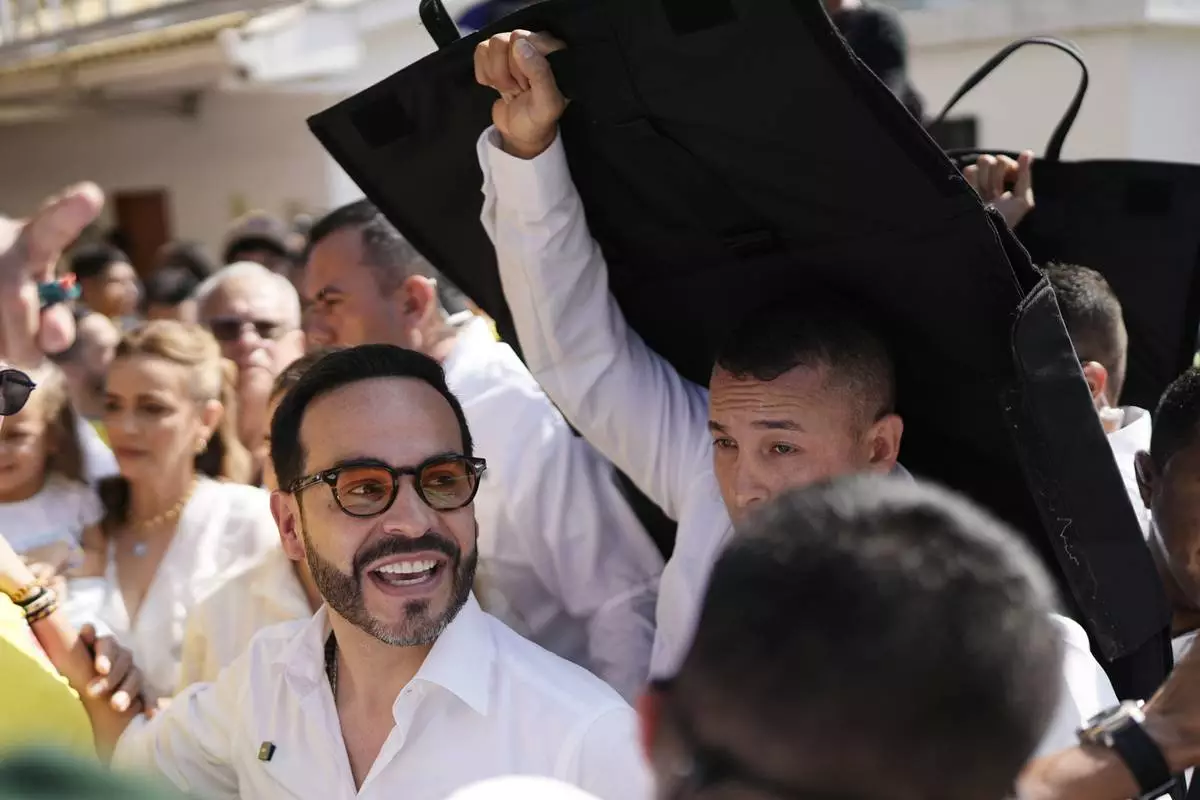
Presidential candidate Abelardo de la Espriella of the Defenders of the Motherland movement depart a polling station after voting during the presidential election in Barranquilla, Colombia, Sunday, May 31, 2026. (AP Photo/Ivan Valencia)
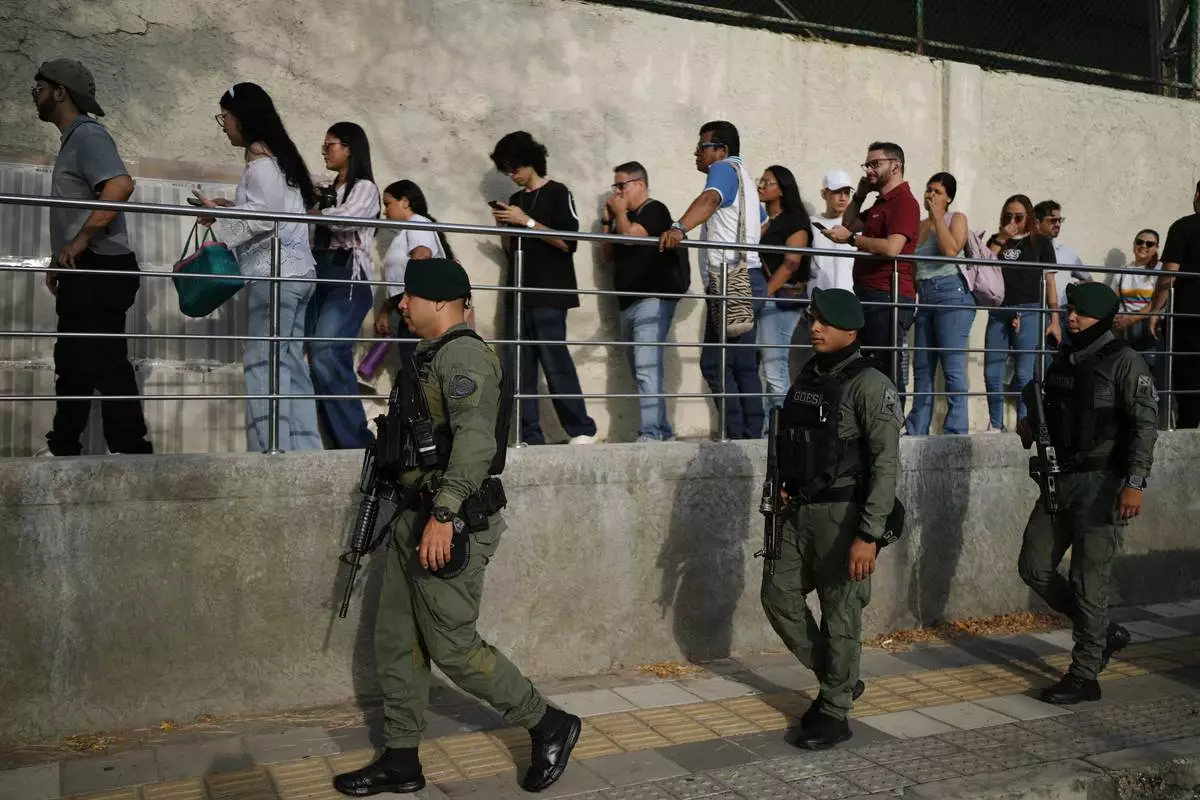
Soldiers patrol as voters arrive at a polling station during the presidential election in Barranquilla, Colombia, Sunday, May 31, 2026. (AP Photo/Ivan Valencia)
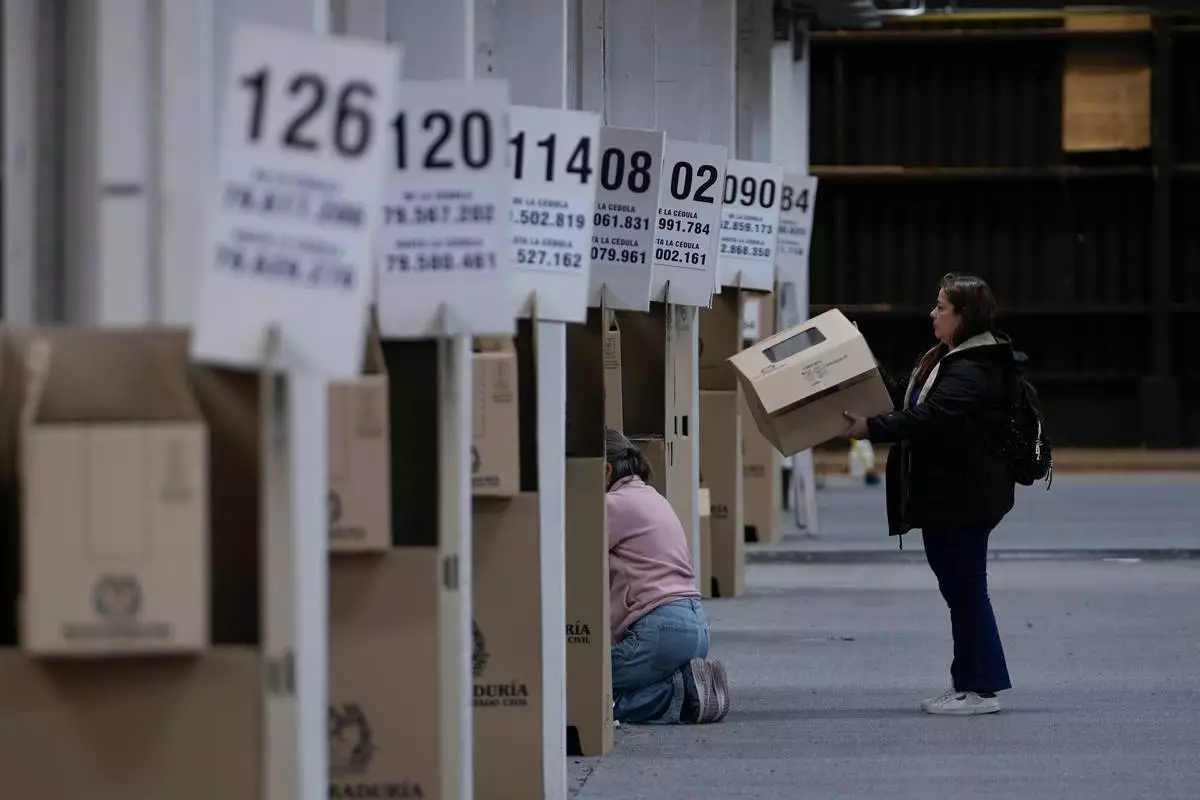
Electoral workers set up a voting center in preparation for Sunday's presidential election in Bogota, Colombia, Friday, May 29, 2026. (AP Photo/Matias Delacroix)
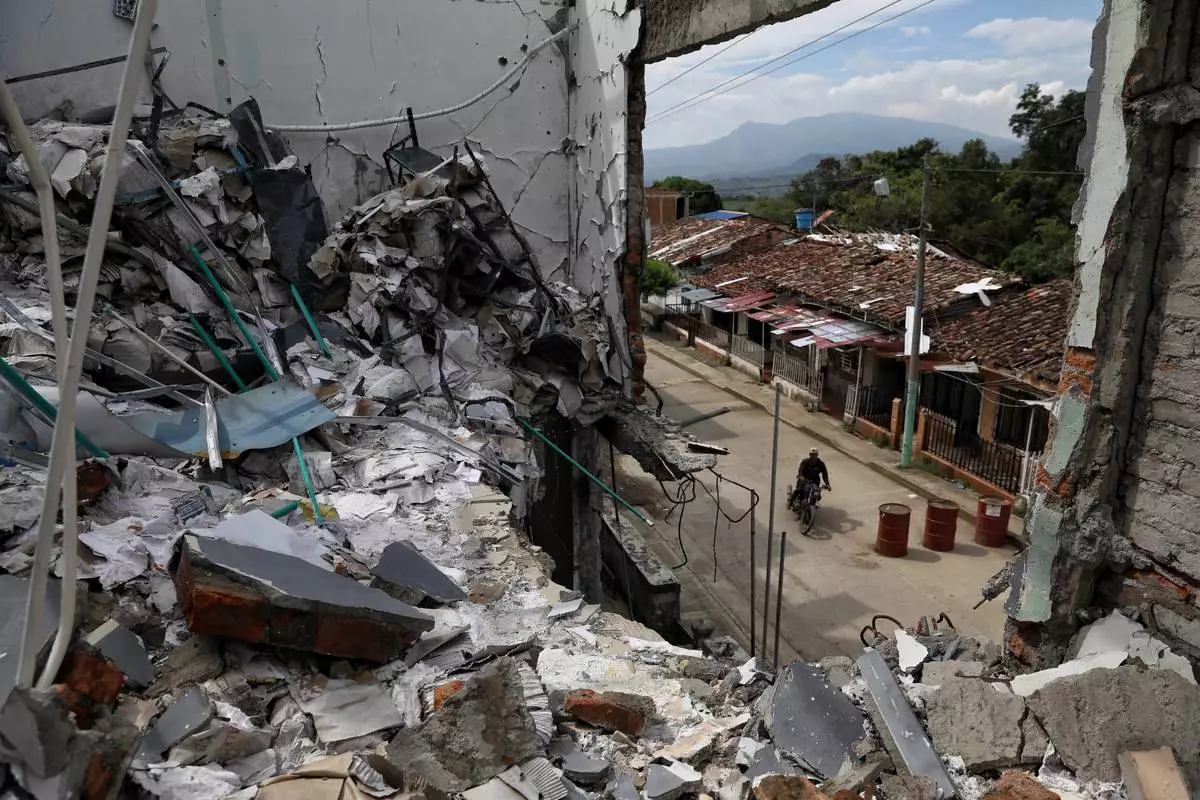
A man rides his motorcycle past the ruins of homes destroyed five months earlier in an attack by dissidents of the former Revolutionary Armed Forces of Colombia, or FARC, in Buenos Aires, Cauca, Colombia, Wednesday, May 20, 2026.(AP Photo/Santiago Saldarriaga)
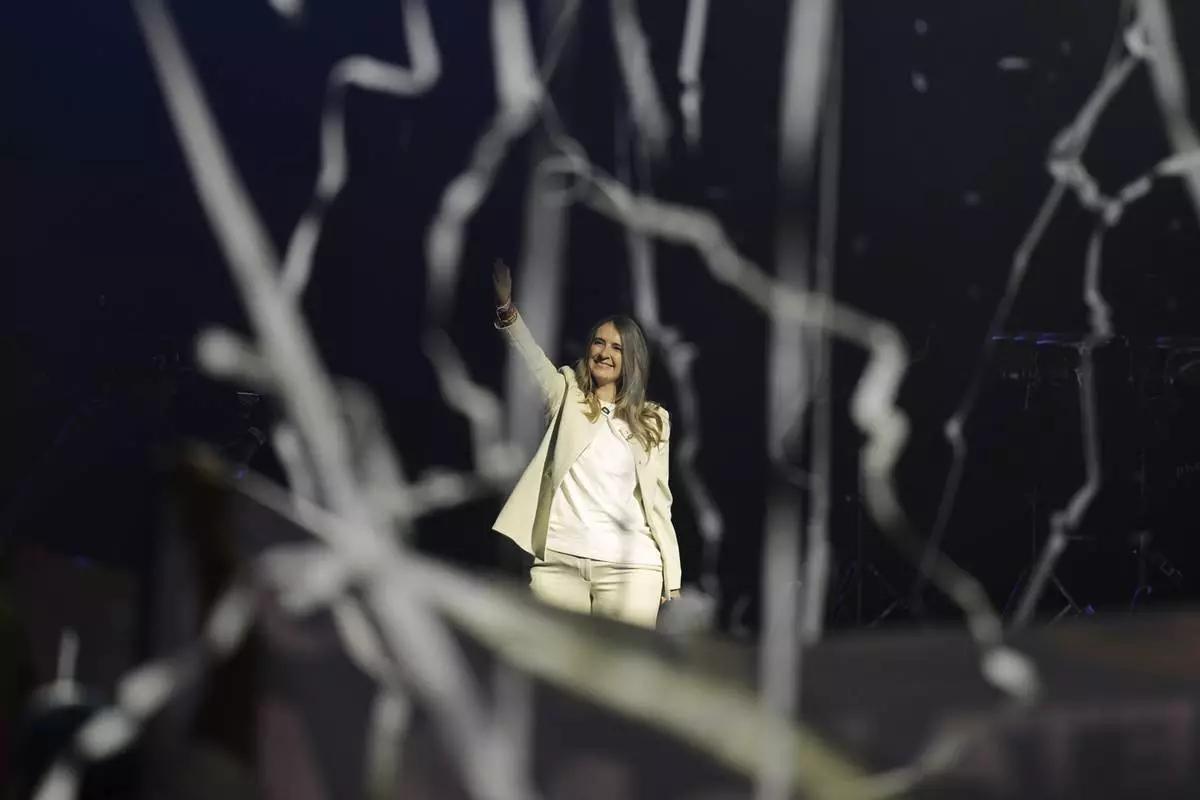
Presidential candidate Sen. Paloma Valencia of the Democratic Center party waves supporters during a campaign rally in Bogota, Colombia, Sunday, May 24, 2026. (AP Photo/Ivan Valencia)
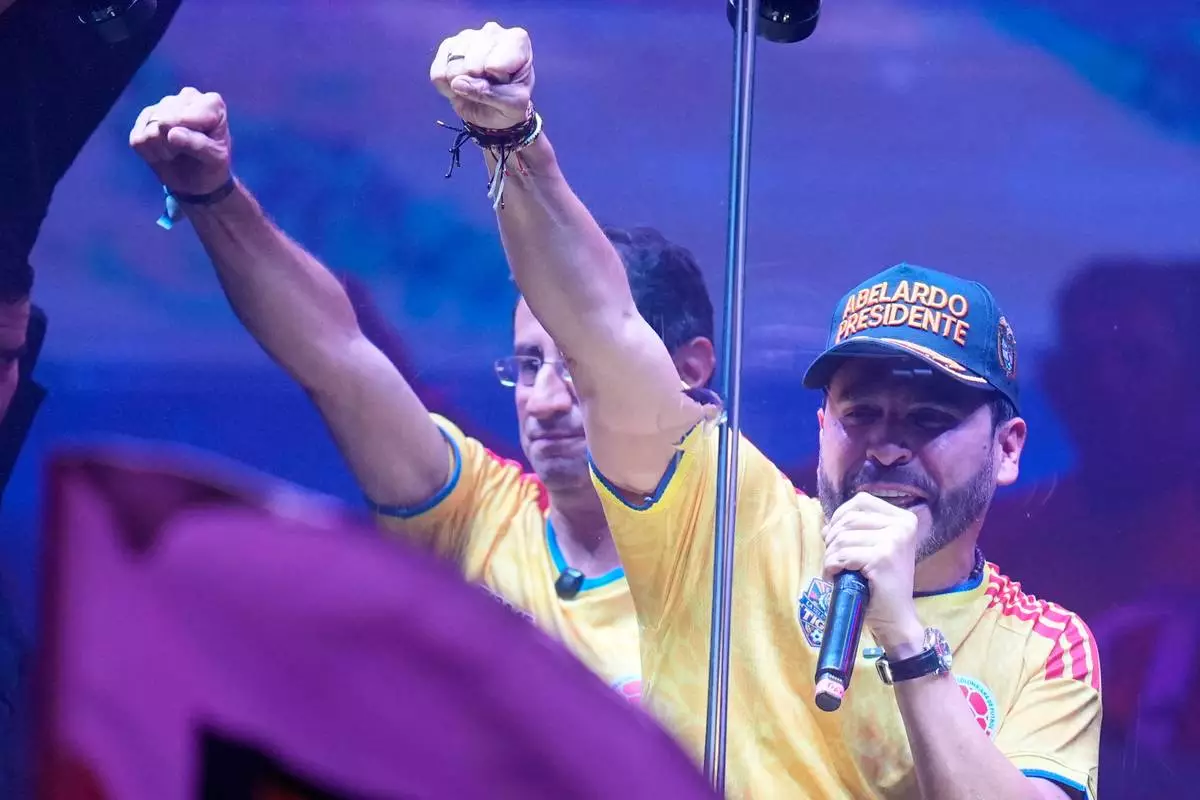
Presidential candidate Abelardo de la Espriella of the Defenders of the Motherland movement and his running mate Jose Manuel Restrepo, left, raise their fit from behind a bullet proof booth during a campaign rally in Barranquilla, Colombia, Saturday, May 23, 2026. (AP Photo/Fernando Vergara)
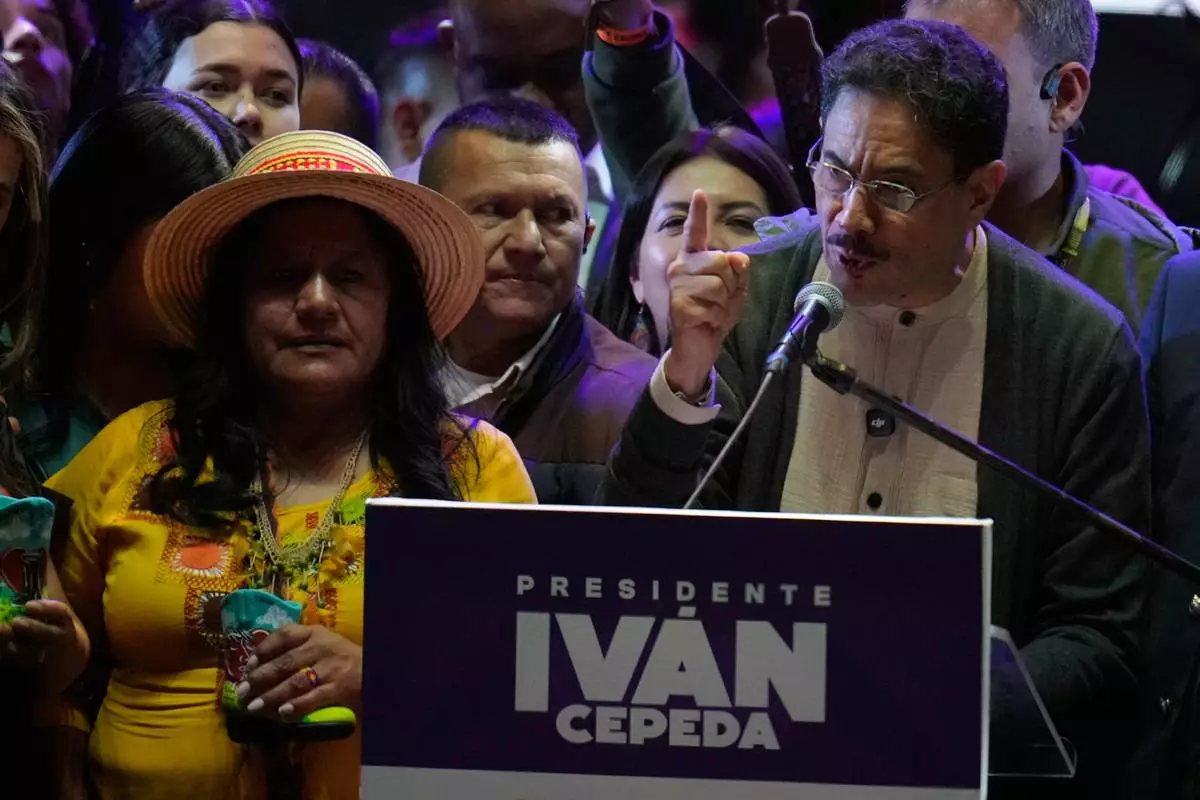
Sen. Ivan Cepeda, presidential candidate of the ruling Historic Pact coalition, speaks to supporters during a campaign rally in Bogota, Colombia, Friday, May 22, 2026. (AP Photo/Fernando Vergara)