Ted Bundy's rampage of violence spanned at least four years and left dozens of victims behind, including at least 30 women and girls who were killed — and several others who escaped or survived despite serious injuries.
Though the serial killer has been dead for nearly 40 years, the tally of his confirmed victims continues to grow as DNA testing has advanced. A Utah sheriff confirmed Wednesday that Bundy was responsible for the unsolved death of a Utah teen in 1974. The office expected another cold case would also be “close to closure” soon thanks to the creation of Bundy's full DNA profile, Utah County sheriff’s Sgt. Mike Reynolds said.
Bundy is one of the most prolific serial killers in United States history — though others likely had higher total victim counts, including Gary Ridgway, who admitted to killing 49; Samuel Little, who killed more than 60; and Donald Harvey who pleaded guilty to killing 37 people.
Bundy drew widespread fascination, in part because many considered him to be charming and handsome at his 1979 trial.
Here are some things to know about Bundy and his crimes.
It's unknown when Bundy first began his attacks, but the deaths linked to him began in Washington state in 1974. He had grown up in Tacoma, Washington, and many of his earliest known violent crimes happened around Seattle.
An 18-year-old University of Washington student was sleeping in her home near the Seattle campus in January 1974 when someone broke in and attacked her, leaving her with a fractured skull. She survived but with permanent injuries. Bundy was believed to be responsible for the crime, which fit a pattern he established in later years, often breaking into young women's homes, bludgeoning and sexually assaulting them, and either leaving them to die or dumping their bodies elsewhere.
The next month, Lynda Ann Healy, another University of Washington student, vanished from her home. A small bit of blood was found on her bedding, and her remains were found the next year on Taylor Mountain, a remote area outside a neighboring city. The remains of some of Bundy's other victims were also found at the same site.
Over the next few months, other women were also abducted from Washington state and Oregon. In some of the cases, witnesses saw the women talking to a man who was wearing an arm sling.
By October, teen girls in Utah were also vanishing. The body of 17-year-old Melissa Anne Smith was found on a hillside in Summit Park, Utah, and her head had been beaten with a crowbar.
Carol DaRonch, an 18-year-old, was snatched by Bundy when he claimed to be a police officer investigating car break-ins. But she survived by jumping out of his car after he tried to handcuff her. DaRonch's testimony would later be instrumental in putting Bundy behind bars.
Bundy continued killing throughout the next year in Utah, Colorado and Idaho.
Bundy was arrested for the first time in connection with the disappearances August 1975, when police pulled him over and found incriminating items including rope, handcuffs and a ski mask, in his vehicle.
He was found guilty the following year of kidnapping and assaulting DaRonch. Bundy was sentenced to 15 years in prison for that crime, and while imprisoned he was charged in connection with the earlier death of a nursing student.
He was brought to Aspen, Colorado, for a hearing in that case in 1977, and he escaped custody by climbing out a second-story courthouse window. He was caught about a week later, but escaped again six months later by breaking through the ceiling of a jail.
That time Bundy fled across the country, eventually making his way to Tallahassee, Florida. On Jan. 15, 1978, he entered the Chi Omega sorority house at Florida State University, bludgeoning two women to death with a large branch and leaving two more badly injured. He then went to another house nearby, badly injuring another sleeping woman.
Less than a month later, he abducted, sexually assaulted and killed a 12-year-old girl in Lake City, Florida. Kimberly Leach was believed to be his final victim: Bundy was arrested when he was pulled over in Pensacola while driving a stolen vehicle.
Bundy's case, and his self-assured attitude in court, drew widespread attention during his 1979 trial for the Chi Omega murders.
“I don’t know what it is he has, but he’s fascinating,” one teenage spectator told an AP reporter covering the trial. “He’s impressive. He just has a kind of magnetism.”
Even the judge presiding over the trial said Bundy was a “bright young man” who would have made a good lawyer. But Judge Edward Cowart also recognized Bundy as a horrifically violent killer and sentencing him to die for “extremely wicked, shocking evil and vile” crimes.
Bundy was executed on Jan. 24, 1989 by electric chair in Florida. He gave a series of confessions in his final days, including to some crimes that were previously unknown to police. Not all of those cases have been confirmed.
New DNA testing confirmed that more than 50 years ago, Bundy also killed 17-year-old Laura Ann Aime.
Aime went missing in Utah on Halloween night in 1974, and her body was found a month later on the side of a highway. Authorities believed she had been kept alive for several days after her abduction.
Boone reported from Boise, Idaho. Associated Press writer Hannah Schoenbaum contributed from Salt Lake City, Utah.

FILE - Accused murderer Ted Bundy attends the second day of jury selection in his murder trial, June 27, 1979, in Miami, Fla. (AP Photo,File)
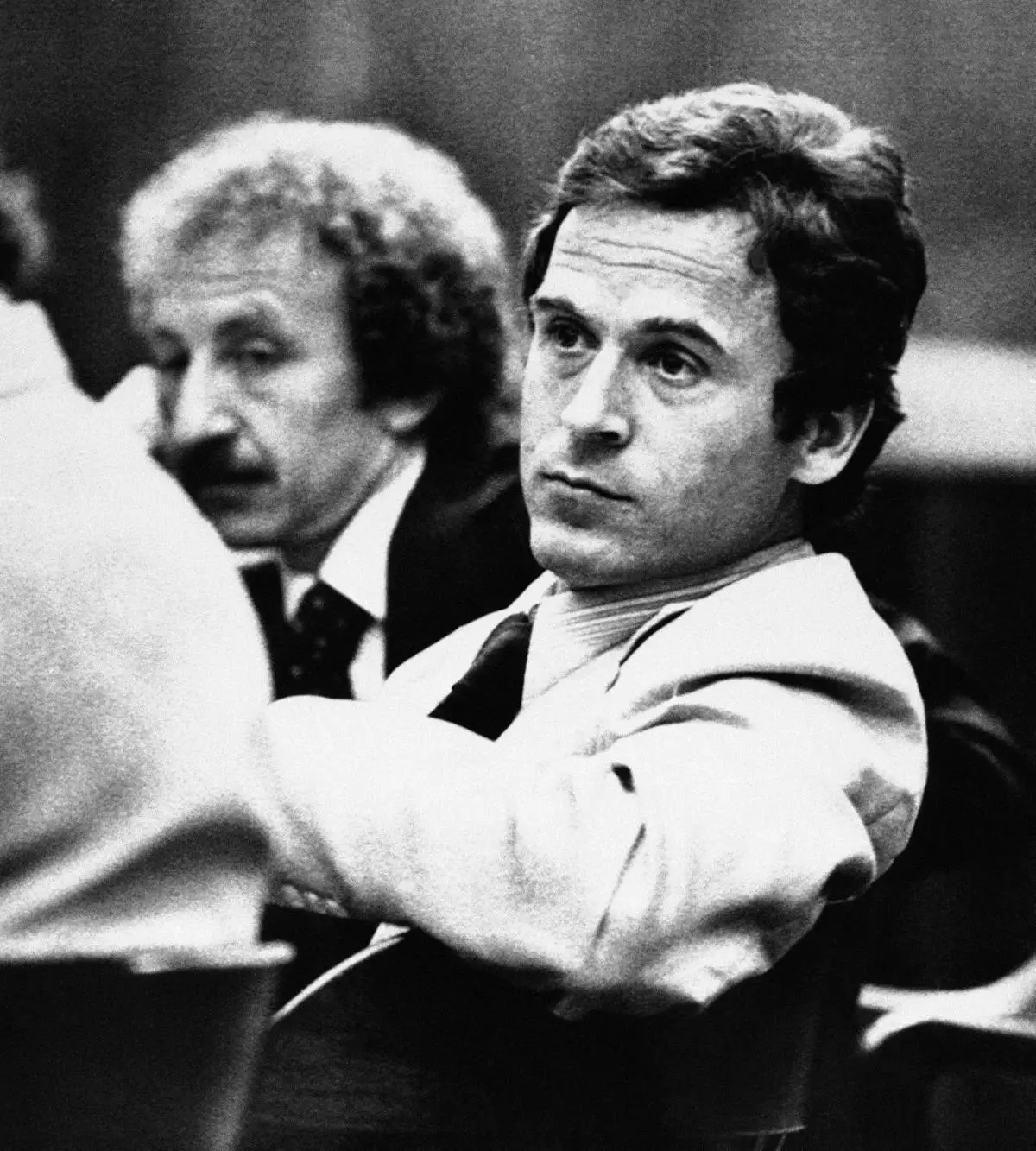
FILE - Accused murderer Ted Bundy leans back in his chair as trial judge Edward Cowart speaks, in Tallahassee, Fla., April 26, 1979. (AP Photo/Mark Foley, File)
U.S. President Donald Trump on Wednesday claimed Iran’s president wanted a ceasefire ahead of his speech to the American people. Trump made the claim on his Truth Social website. Iran’s Foreign Ministry spokesperson said Trump’s remarks were “false and baseless.”
The aircraft carrier USS George H.W. Bush is slated to go to the Middle East along with three destroyers, two U.S. officials said. The carrier strike group consists of more than 6,000 sailors. It comes as thousands of soldiers from the 82nd Airborne Division have also begun arriving in the Middle East, according to two other U.S. officials.
Meanwhile, U.S. gas prices jumped past an average of $4 a gallon for the first time since 2022 on Tuesday, as the Iran war continues to push fuel prices higher worldwide. Analysts say those high fuel costs will trickle into groceries as businesses’ transportation and packaging costs pile up.
Here is the latest:
In his private remarks at an Easter lunch at the White House, the president seemed to reflect the domestic pressure he’s feeling to wrap up the war. He said that the U.S. could “very easily” take Iran’s oil but said it “is unfortunate” that there did not seem to be patience among the American people for such an effort.
“They want to see it end,” he said.
Trump said he would prefer to take Iran’s oil “but people in the country sort of say, ‘Just win. You’re winning so big. Just win. Come home.’ And I’m OK with that too,” he said.
Video of the speech was posted online by a Business Insider reporter who said he noticed the White House had uploaded video of the closed-press event and downloaded it before it was later made private. The White House did not respond to requests for comment from The Associated Press on why it took the video down.
A series of blasts could be heard in Dubai as air defenses worked to intercept the Iranian barrage.
The attack happened just before U.S. President Donald Trump’s speech to the American people about the war.
The president has previously directed much of his anger at NATO allies for their reluctance to get involved in securing the Strait of Hormuz until the U.S. and Israel finish prosecuting their war against Iran.
But in his remarks at the private Easter lunch he hosted at the White House on Wednesday, Trump also expressed frustration with some Asian countries that are more reliant on Gulf oil than the U.S.
“Let South Korea, you know, we only have 45,000 soldiers in harm’s way over there, right next to a nuclear force — let South Korea do it,” Trump said. “Let Japan do it. They get 90% of their oil from the strait. Let China do it.”
“NATO treated us very badly, and you have to remember it because they’ll be treating us badly again if we ever need them,” Trump fumed anew about the alliance. “And hopefully, we’re never going to need them. I don’t think we’ll need them. I don’t think they can do very much.”
Trump added, “NATO won’t be there if we ever have the big one.”
The president’s scathing comments came during remarks at a private lunch on Wednesday at the White House that Trump hosted to mark the coming Easter holiday. Video of the speech was posted online by a Business Insider reporter who said he noticed the White House had uploaded video of the closed-press event and downloaded it before the White House later made it private.
The White House did not respond to requests for comment from The Associated Press on why it took the video down.
Israel’s emergency services say a 12-year-old and two 7-month-olds were mildly injured from shattered glass in central Israel in the first launch of missiles Thursday from Iran.
A 24-year-old was also mildly injured in the same overnight incident in Bnei Brak, a city east of Tel Aviv that’s been struck repeatedly during the war, according to Magen David Adom rescue services. On Wednesday morning there, an 11-year-old girl was injured by shrapnel in another missile strike and she remained in critical condition, the medical service added.
Israel’s military said it was working to intercept another missile launch from Iran early on Thursday morning.
Very early on Thursday, Israel’s military said Iran had launched missiles at the country, the first time of the day.
Sirens sounded the alert in Tel Aviv, central Israel and parts of the occupied West Bank.
NATO Secretary-General Mark Rutte is scheduled to visit Washington next week as Trump continues to lash at members of the military alliance for rejecting the U.S. leader’s call to help open up the Strait of Hormuz.
The visit by Rutte was confirmed by a White House official who was not authorized to comment on the yet to be formally announced visit and spoke on the condition of anonymity.
Trump and Rutte have a good relationship, but the president has sounded increasingly annoyed with alliance members as the Iran war grinds on, particularly the United Kingdom and France.
The dynamic is creating uncertainty and concern over the future of the alliance, whose value Trump has long called into question.
— By Aamer Madhani
Iran launched approximately 10 missiles, one right after the other, targeting central Israel in the early evening of Wednesday, Israel’s military said. The siren alerts in rapid succession sent millions of residents into shelters about an hour before sundown — when Jews were getting ready to celebrate the first night of Passover, one of the holiest times of the year.
The holiday, commemorating the ancient Israelites’ Exodus from slavery in Egypt, is celebrated around family dinner tables and at communal banquets. In Ramat Gan, just outside Tel Aviv, some families set up long, festive tables for the traditional Seder meal in an underground shelter, next to sleeping tents.
“Exactly which of the American people’s interests are truly being served by this war? Was there any objective threat from Iran to justify such behavior?” President Masoud Pezeshkian said in the letter that he posted in English on his X account on Wednesday.
He said that, in its modern history, Iran never chose aggression “despite possessing military superiority over many of its neighbors.”
Further, the Iranian president signaled that the U.S. has entered the war as a proxy for Israel, and insisted that what Iran continues to do in its attacks against neighboring countries is a “measured response grounded in legitimate self-defense”.
“Is ‘America First’ truly among the priorities of the U.S government today?” he asked.
Defense Secretary Pete Hegseth is tentatively set to testify April 29 before the House Armed Services Committee, where he’ll likely face lawmakers’ questions for the first time since the Iran war began, according to a congressional staffer with knowledge of the matter.
The meeting will serve as the annual Pentagon budget hearing and will include Gen. Dan Caine, chairman of the Joint Chiefs of Staff, said the staffer, who was not authorized to comment publicly and spoke on condition of anonymity to confirm the hearing.
Hegseth and Caine are expected to get questions about the war’s objectives, costs and casualties.
—- Ben Finley
President of the International Rescue Committee David Miliband made these remarks during an online briefing with journalists after visiting Syria and war-torn Lebanon.
Over $100,000 worth of IRC humanitarian aid for lifesaving initiatives is trapped in its hub in Dubai.
Iran has been cementing its chokehold the Strait of Hormuz in the ongoing war with the United States and Israel, the world’s most important artery for oil shipments.
“Thirty percent of the world’s fertilizer goes through there,” said Miliband, fearing a food security crisis in many vulnerable countries where the organization works. “We are advocating that all the goods in that hub be given safe passage immediately.”
Traffic through the strait has fallen by 90% since the start of the Iran war, sending global oil prices skyrocketing and inflicting alarming shortages on the Asian nations that get their oil from Persian Gulf countries via the strait.
United Nations Secretary-General Antonio Guterres set up an initiative to allow humanitarian assistance to move through the strait in a bid to prevent a global food crisis.
The president’s prime-time address will offer an update on U.S. progress toward achieving his goals in Iran, according to a White House official who spoke on condition of anonymity because they were not authorized to speak publicly ahead of the address.
The official said those goals are to destroy Iran’s missile production, destroy its Navy, ensure its proxies can no longer destabilize the region, and guarantee Iran does not obtain a nuclear weapon.
Trump is also expected to reiterate his estimated timeline of concluding operations within two to three weeks.
—- Colin Binkley
Iran’s President Masoud Pezeshkian in a message to American people said both confrontation and engagement between Iran and the U.S. are accessible, adding that Iran will endure any aggression by the U.S.
“Today, the world stands at crossroads. Continuing along the path of confrontation is more costly and futile than ever before. The choice between confrontation and engagement is both real and consequential; its outcome will shape the future for generations to come, “ said Pezeshkian. “Throughout its millennia of proud history, Iran has outlasted many aggressors. All that remains of them are tarnished names in history, while Iran endures — resilient, dignified, and proud.”
Pezeshkina did not mention a ceasefire offer last week by President Trump, though he accused Israel of dragging the U.S. into a war against Iran.
“Is it not also the case that America has entered this aggression as a proxy for Israel, influenced and manipulated by that regime? ” asked Pezeshkian.
David Miliband, President of the International Rescue Committee made these remarks during an online briefing with journalists after visiting Lebanon and Syria.
More than one million Lebanese were displaced during the past month in the latest conflict between Israel and the Hezbollah militant group. Israel has issued evacuation orders for large swaths of southern and eastern Lebanon, as well as Beirut’s southern suburbs. Only a small portion of them are staying in government-run public schools turned-shelters, while others stay with family or even in tents on the streets.
“There is nothing like driving in front of the Lebanon yacht club and in front of it are Lebanese in tents who are displaced,” said Miliband, who decried the tiny country’s situation as a “silent emergency that is getting very little attention.”
China on Wednesday said it would stay in “close communication with Pakistan and relevant parties” on the Iran war and “play a constructive role in promoting the end of hostilities.”
It comes a day after China’s foreign minister met Pakistan’s top diplomat in Beijing and said China supported efforts to deescalate tensions.
Chinese Foreign Minister Wang Yi told Pakistani Foreign Minister Ishaq Dar that it would not be an easy task and that China would be “willing to work with Pakistan” to end the “flames of war” as soon as possible and open the “window to peace talks.”
Wang said Pakistan’s efforts were in the interest of all sides, including averting spillover effects, preventing further casualties, stabilizing international energy security and protecting supply chains.
Following their meeting Tuesday, the two governments put forward a five-point proposal, including ceasing hostilities, starting peace talks, protecting civilian targets and reopening the Strait of Hormuz.
NATO is getting defended on a bipartisan basis by Sen. Mitch McConnell, R-Ky., and Sen. Chris Coons, D-Del., ahead of Trump’s address to the nation on Wednesday night.
Trump is expected to criticize NATO members for not joining the U.S. in its war with Iran.
McConnell and Coons said in a joint statement that “NATO is the most successful military alliance in history” and stressed how its members “fought and died,” along with U.S. forces in Afghanistan and Iraq.
“Americans are safer when NATO is strong and united,” the statement said. “The Senate will continue to support the alliance for the peace and protection it provides America, Europe, and the World.”
The National Defense Authorization Act in 2023 has provision that requires a two-thirds approval from the Senate in order to leave NATO or a separate measure by Congress, limiting the president’s ability to do so unilaterally.
Bahrain’s U.N. Ambassador Jamal Alrowaiei accused Iran of “economic terrorism” and violating international law. And he urged adoption of a U.N. resolution that would authorize countries “to use all necessary means” to ensure safe navigation through the Strait of Hormuz, the Gulf and the Gulf of Oman.
He expressed hope at a U.N. news conference that the Security Council will adopt the resolution “as soon as possible,” and as early as Thursday. But Russia, China and France objected to the latest draft, and negotiations were continuing.
Alrowaiei, the Arab representative on the council and its president for April, said Gulf countries had tried “to build bridges of peace with Iran,” and the attacks they were subjected to immediately after the Israeli-U.S. airstrikes on Feb. 28 were “shocking and premeditated.”
He said Bahrain, home to the U.S. Fifth Fleet, has been targeted by 186 missiles and 419 drones and has suffered damage to desalination plants, hotels, the airport and other civilian infrastructure.
AP footage in the Iranian capital of Tehran showed large plumes of smoke billowing over the city on Wednesday afternoon following U.S.- Israeli strikes, as the war in the Middle East completes its first month and strikes on Iran continue unabated.
Also Wednesday, the Israeli military said that it had completed a wave of strikes against “dozens of military infrastructure sites of the Iranian terror regime in the heart of Tehran.”
The president has said one of his primary goals of the war was to stop Iran from getting a nuclear weapon, and he told Reuters on Wednesday that has been achieved, though it isn’t clear how.
Iran’s stockpile of enriched uranium that could potentially be used to build nuclear weapons is believed to be buried under the rubble of a mountain facility that was hit during strikes last June — and that hasn’t changed since the war with Iran began this year. Trump has said the U.S. would move to take the uranium if it reaches a deal with Iran.
But he said Wednesday that the uranium is “so far underground, I don’t care about that.”
“We’ll always be watching it by satellite,” he said.
Trump also said Iran is now “incapable” of developing a nuclear weapon.
Vice President JD Vance has been speaking to intermediaries about Iran as recently as Tuesday and delivered a message that Trump is impatient and that there will be growing pressure on Iranian infrastructure if they don’t make a deal, according to a person familiar with the talks who was not authorized to speak publicly and spoke on condition of anonymity.
Trump directed Vance to communicate privately that he is open to a ceasefire as long as certain demands are met.
—- Michelle L. Price
The president told Reuters in a telephone interview ahead of his televised address Wednesday night that the U.S. would be finishing its war in Iran soon, but he wouldn’t give a timeline.
“I can’t tell you exactly ... we’re going to be out pretty quickly,” he said.
But once the U.S. leaves, he said “We’ll come back to do spot hits” on targets, as needed.
Almost 4 million barrels of crude oil a day transited the Bab el-Mandeb Strait in March, up from about 3 million barrels the prior month and the highest level since October 2023, maritime data firm Kpler said Wednesday.
The increase came as Saudi Arabia sent crude through a pipeline across its country to the Red Sea port of Yanbu after the virtual closure of the Strait of Hormuz. Saudi Aramco operates the East-West pipeline from the Aqaiq oil processing center near the Persian Gulf to Yanbu. It has enabled the Saudis to maintain some exports blocked by the Hormuz closure, but it lacks the capacity to fully compensate.
Before the war, Yanbu shipped 750,000 to 850,000 barrels a day. Of the crude passing through Bab el-Mandeb in March, 1.75 million barrels a day were loaded there, the data showed.
Most of the remainder transiting the strait in March was Russian oil bound for Asia, Kpler said.
Somalia’s government on Wednesday said it has limited control over fuel pricing, as imports are handled by private companies in a largely liberalized market.
Dahir Shire Mohamed, Minister of Petroleum and Mineral Resources, said prices have surged due to “external shocks,” linking the increase to “regional tensions affecting global supply routes.”
The price per liter has increased from $0.70 to $1.75, marking a 150% increase.
Tanzania’s Energy Ministry on Wednesday announced a 33% increase in fuel prices, attributing it to the conflict in Iran, saying it had affected supply and shipping. The ministry urged Tanzanians to use the available fuel “carefully and efficiently.”
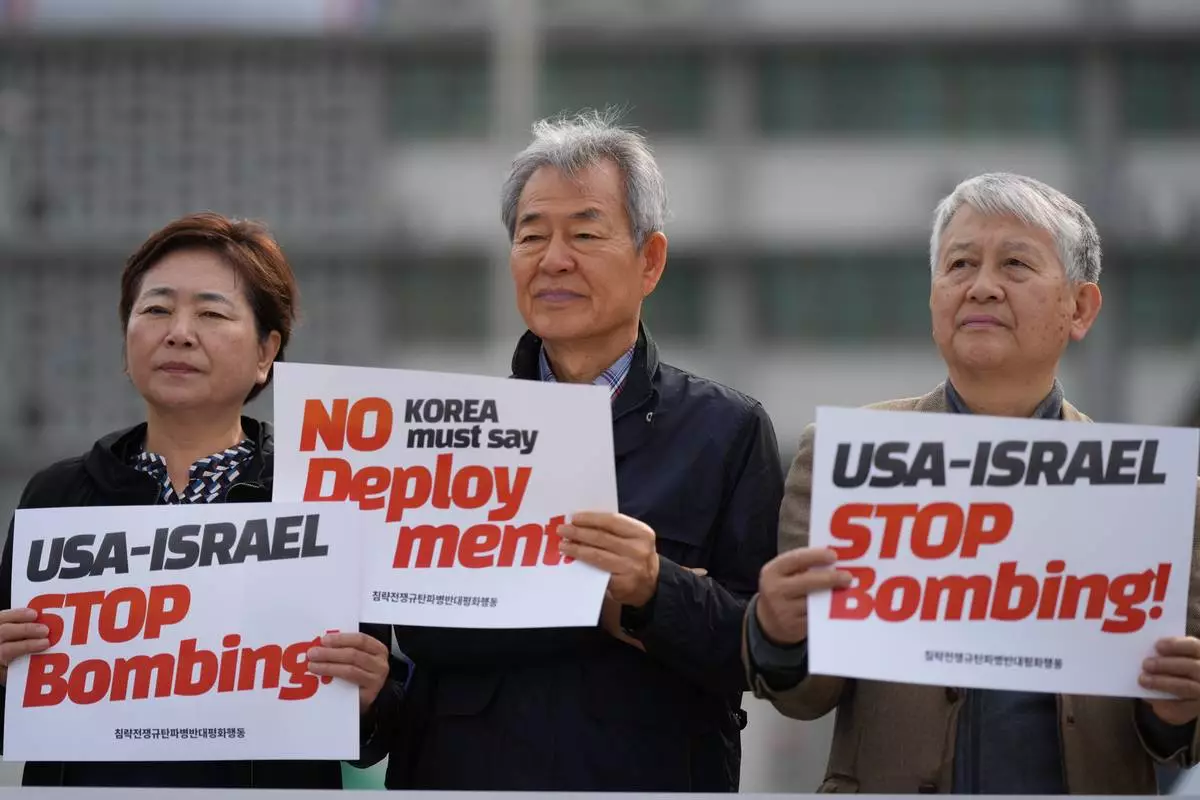
Members of civic groups hold signs against the U.S. and Israel attacks on Iran near the U.S. Embassy in Seoul, South Korea, Wednesday, April 1, 2026. (AP Photo/Lee Jin-man)
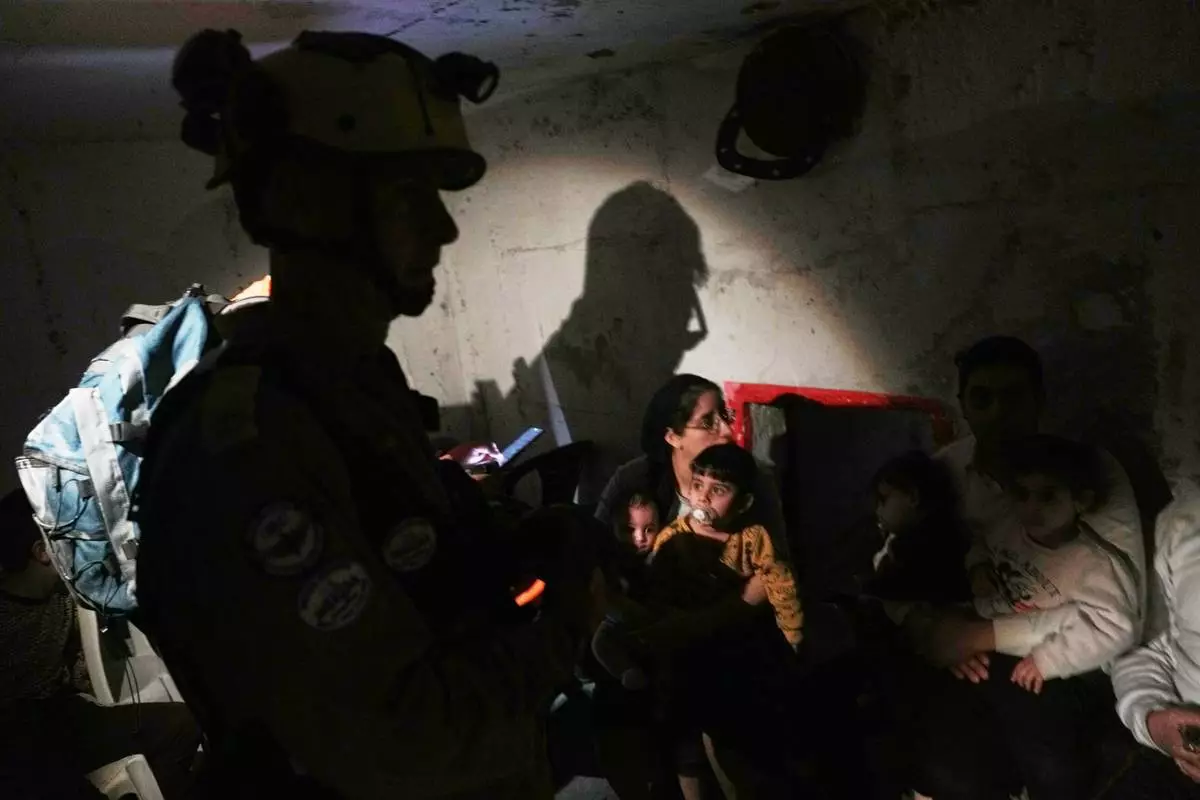
Israel's rescue teams and residents take shelter as sirens sounds next to a site struck by an Iranian missile in Bnei Brak, Wednesday, April 1, 2026. (AP Photo/Oded Balilty)
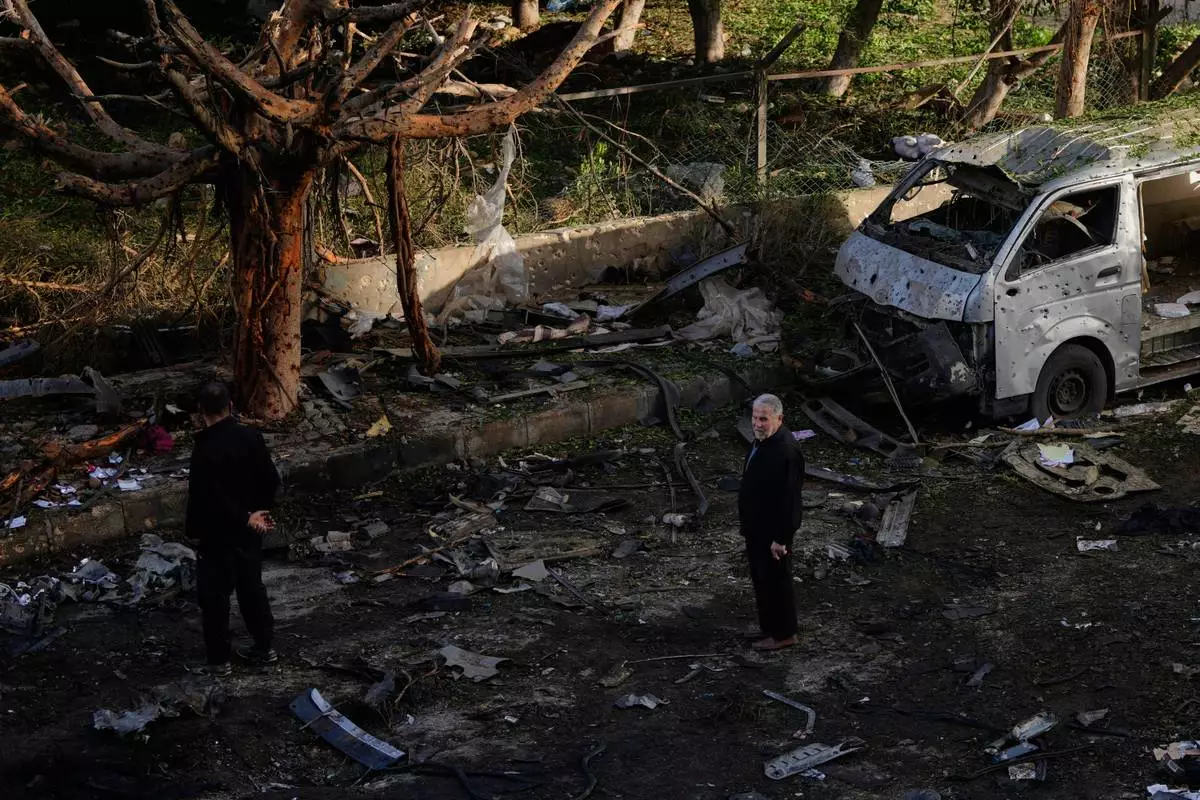
People stand near a damaged van beside scattered debris following an Israeli strike in Beirut, Lebanon, Wednesday, April 1, 2026. (AP Photo/Hassan Ammar)
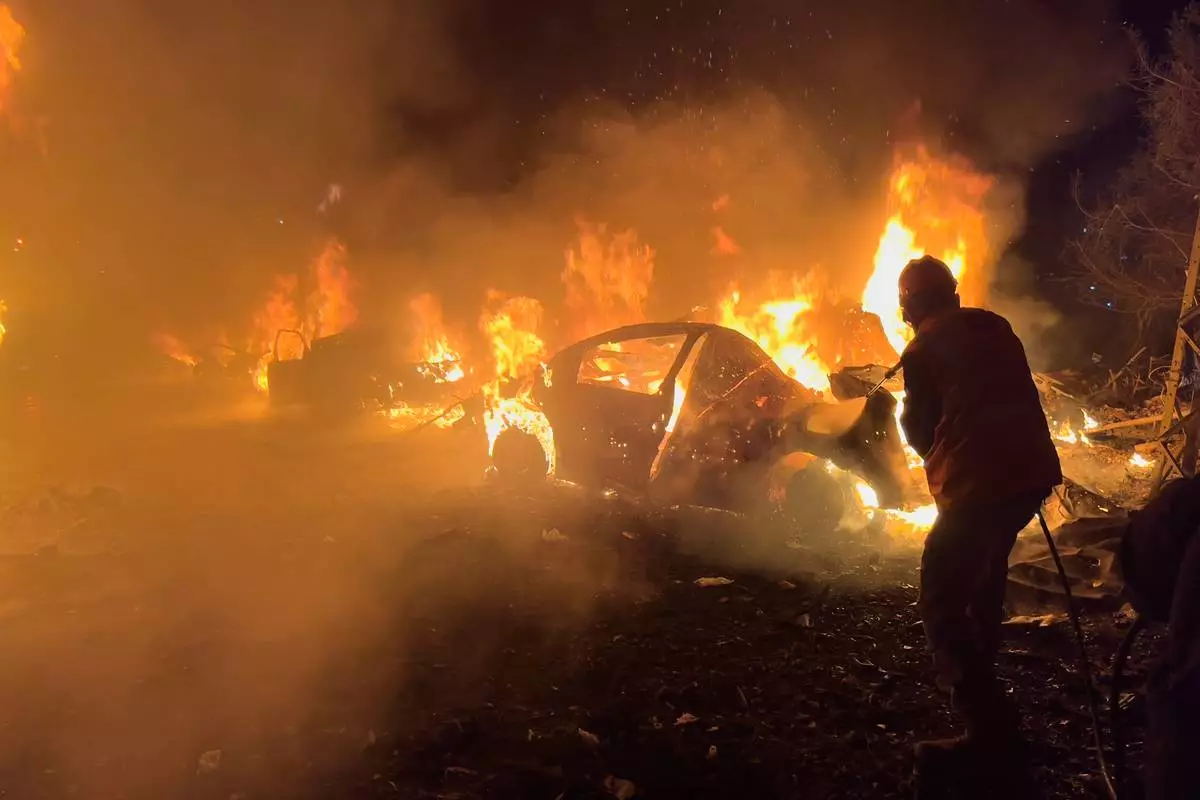
A firefighter extinguishes a car at the site of Israeli airstrikes, in Beirut, Lebanon, Wednesday, April 1, 2026. (AP Photo/Hussein Malla)
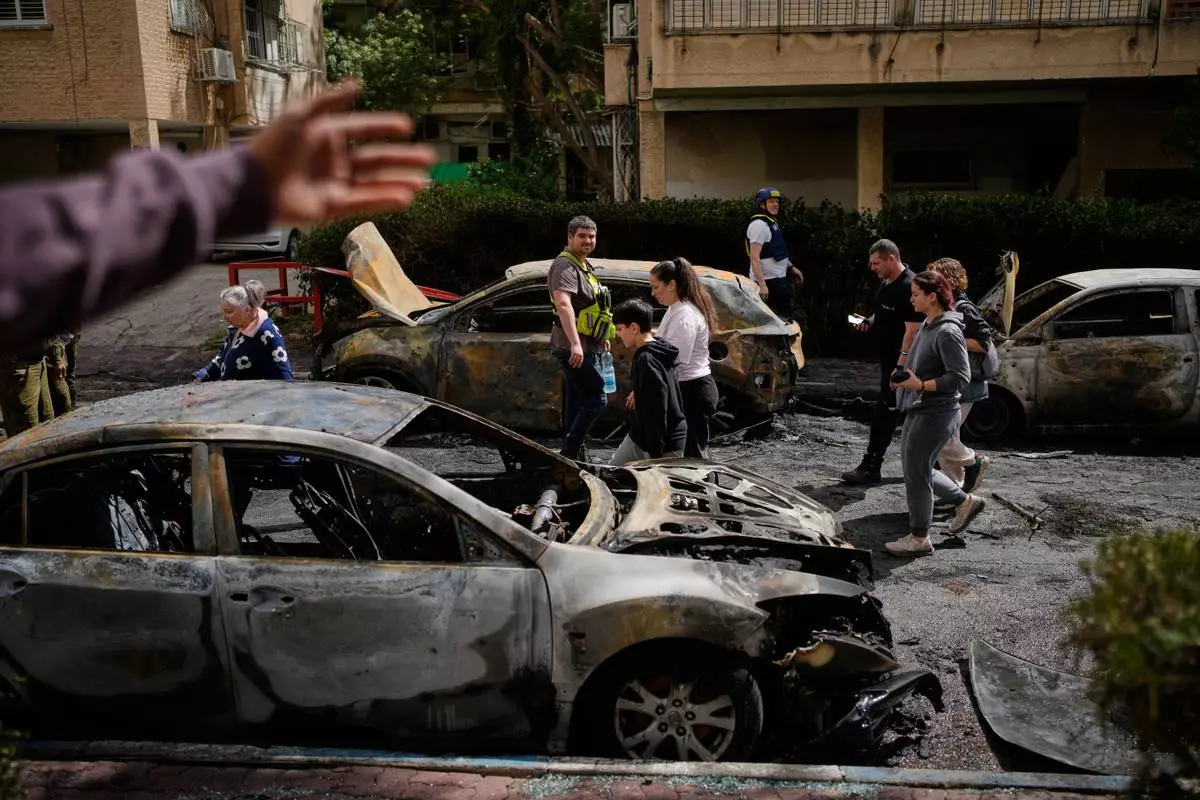
Residents and Israeli security forces inspect a site struck by an Iranian missile in Petah Tikva, Israel, Tuesday, March 31, 2026. (AP Photo/Ohad Zwigenberg)
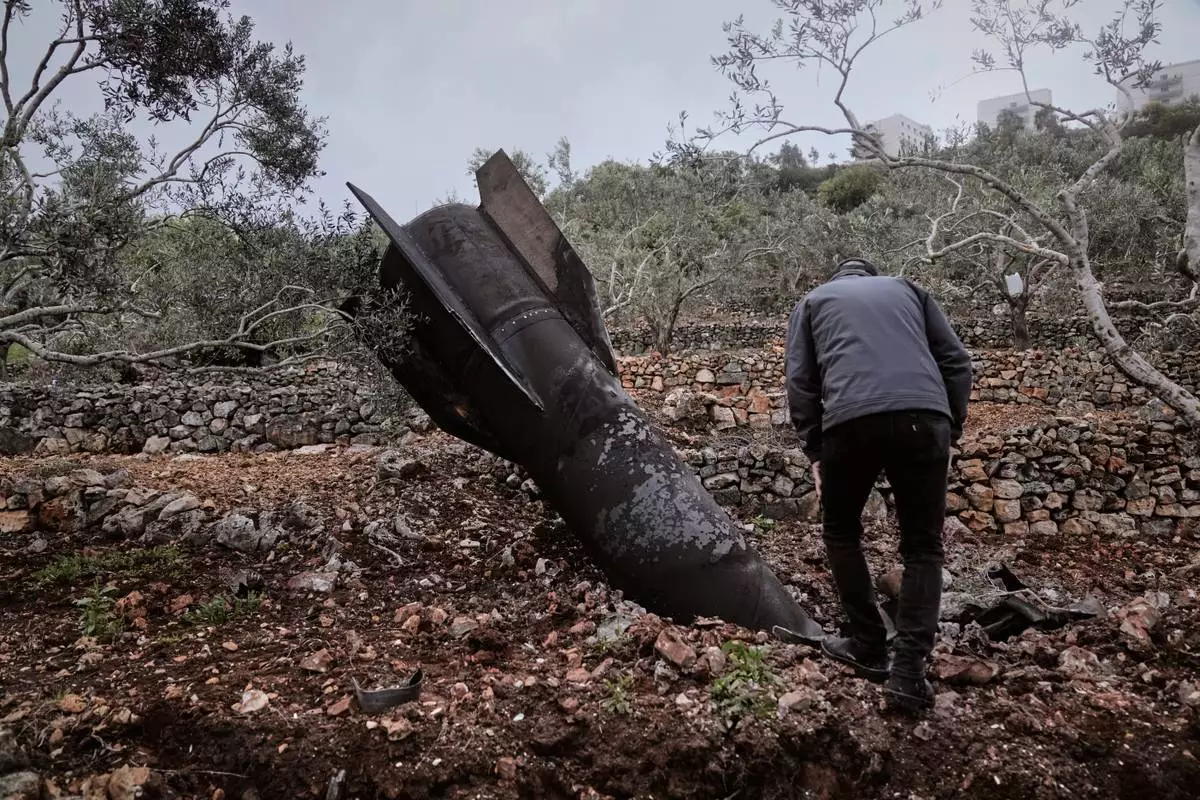
A man inspect the wreckage of an Iranian missile that landed near the West Bank village of Marda, Tuesday, March 31, 2026. (AP Photo/Majdi Mohammed)
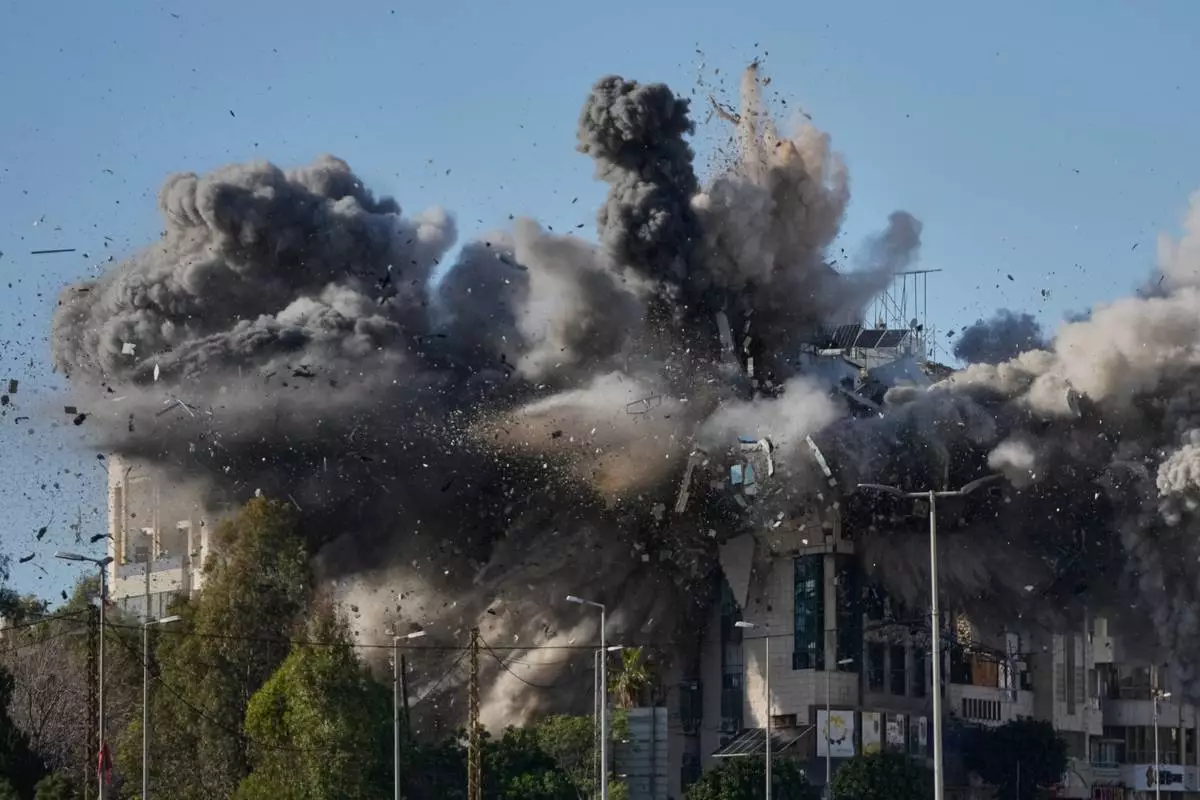
Smoke rises after an Israeli airstrike hits a building near the airport road in Beirut, Lebanon, Tuesday, March 31, 2026. (AP Photo/Hussein Malla)
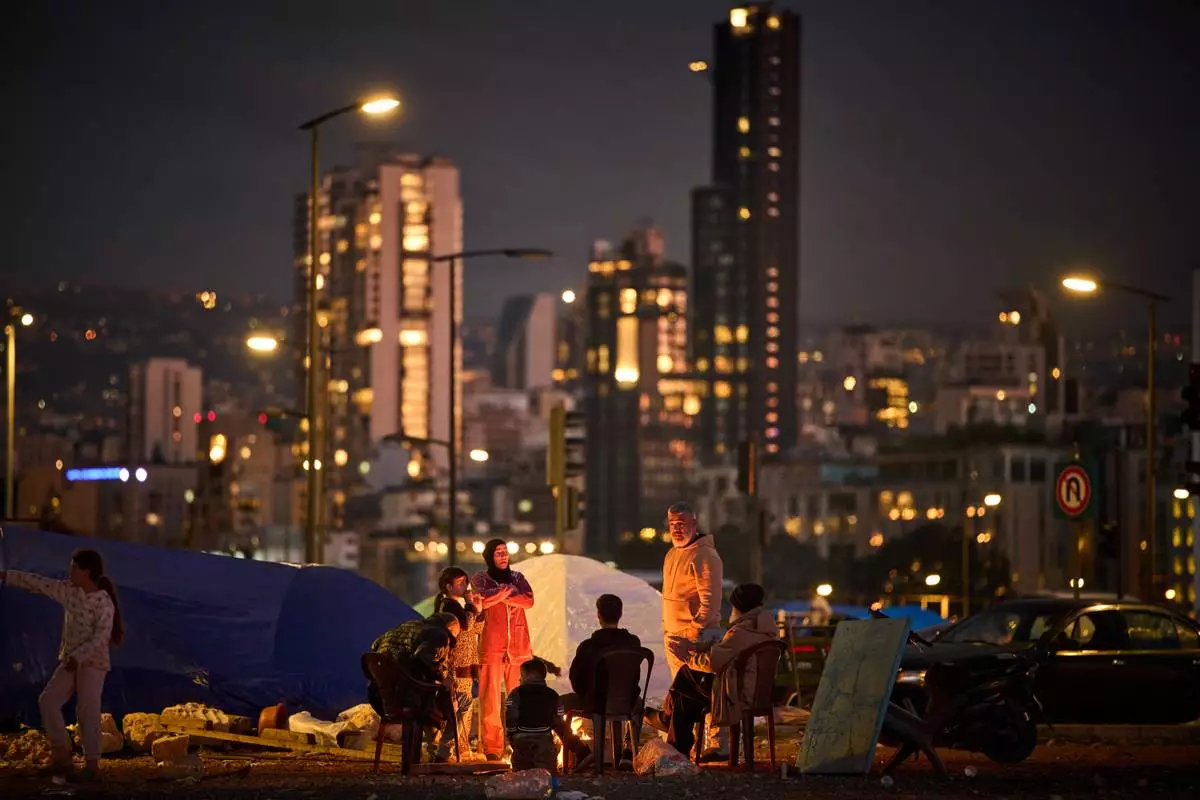
A family who fled Israeli shelling in southern Lebanon warm themselves by a bonfire next to tents used as shelters in Beirut, Lebanon, Tuesday, March 31, 2026. (AP Photo/Emilio Morenatti)