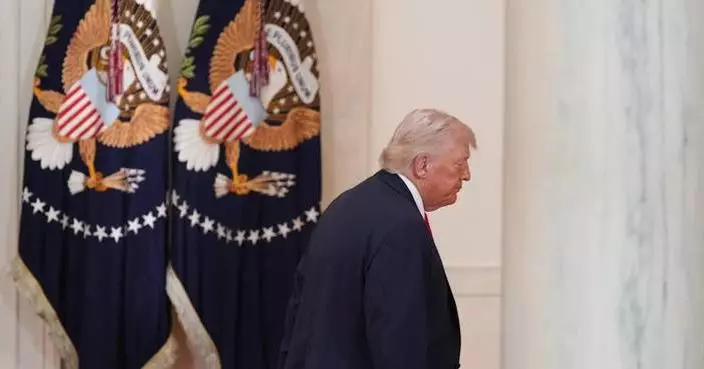
Democrats sued Wednesday to block President Donald Trump's latest executive order restricting mail voting, arguing that the U.S. Constitution empowers states and Congress, not the president, to determine who is eligible to vote by mail.
The lawsuit marks the second round of battles over the president's power to control elections. Trump's opponents handily won the first round last year, blocking his initial executive order intended to reshape election procedures by convincing multiple federal judges that it was likely unconstitutional.
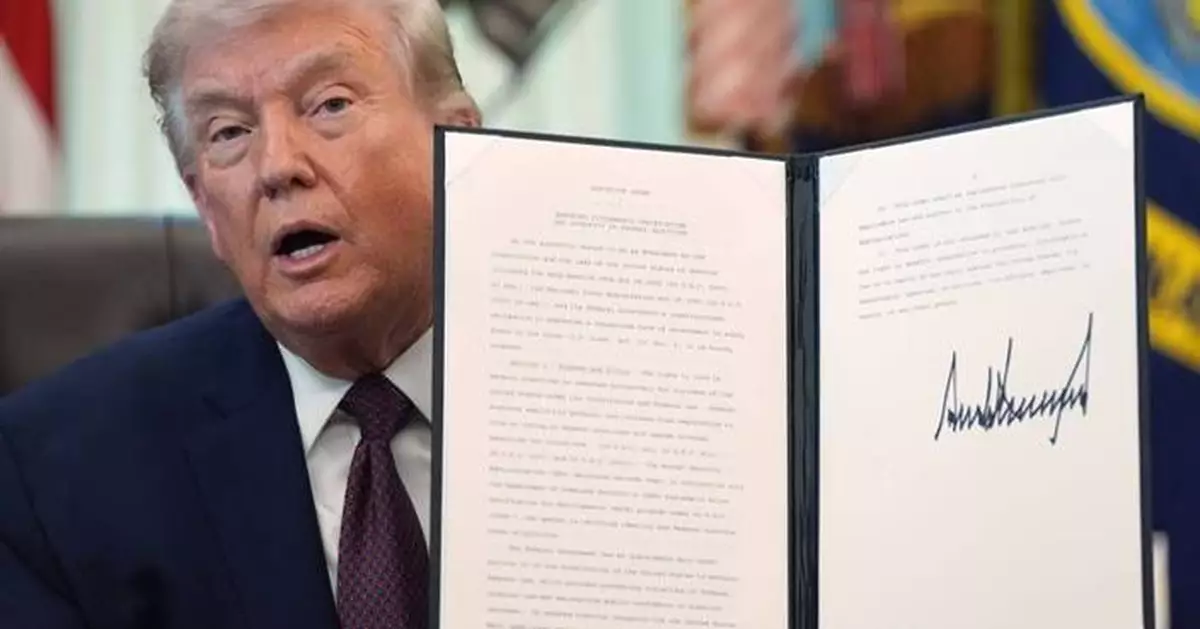
Trump on Tuesday announced that his administration would compile lists of who is eligible to vote in states and that the U.S. Postal Service would only mail ballots to those who met that criteria. Critics note that there's little time to comb through voter rolls before ballots start going out for this fall's elections, in some places as soon as September, and question whether the administration's list would be reliable.
The lawsuit was filed by Senate Minority Leader Chuck Schumer, House Minority Leader Hakeem Jeffries, the Democratic National Committee and other party organizations working on campaigns for the House, Senate and governor offices around the country. Trump is one of the defendants, along with top administration officials.
"We will see him in court and we will beat him again," Schumer said in a statement.
Democrats said Trump was attempting to strike at the heart of America's democratic machinery.
“President Trump has tried again and again to rewrite election rules for his own perceived partisan advantage,” their lawsuit said. It adds that “our Constitution’s Framers anticipated this kind of desire for absolute power,” dispersing the power to control elections to individual states and Congress.
Mail voting has existed for more than a century and had steadily been increasing in popularity in both Democratic and Republican states until 2020. Then Trump decided to target the method, levying baseless claims of mass fraud. As a result, it's become less popular among Republicans and more among Democrats, giving Trump additional incentive to throttle it before midterm elections that will determine whether his party continues to control Congress.
Trump himself often votes by mail, as recently as in a special election in Florida last month.
Since he returned to office, Trump has tried to interfere in state-run elections, citing often-disproven falsehoods about how fraud cost him the presidency in 2020. Repeated investigations, including ones by Republicans, showed no significant fraud in the 2020 vote.
Nonetheless, Trump has called for his administration to “take over” voting in Democratic areas, launched a probe of the 2020 vote fueled by election conspiracy theories and unsuccessfully pushed Congress to pass a law that would create new hurdles on voting, including a requirement that people provide in-person, documentary proof of citizenship when registering. That bill has stalled in the U.S. Senate over Democratic opposition.
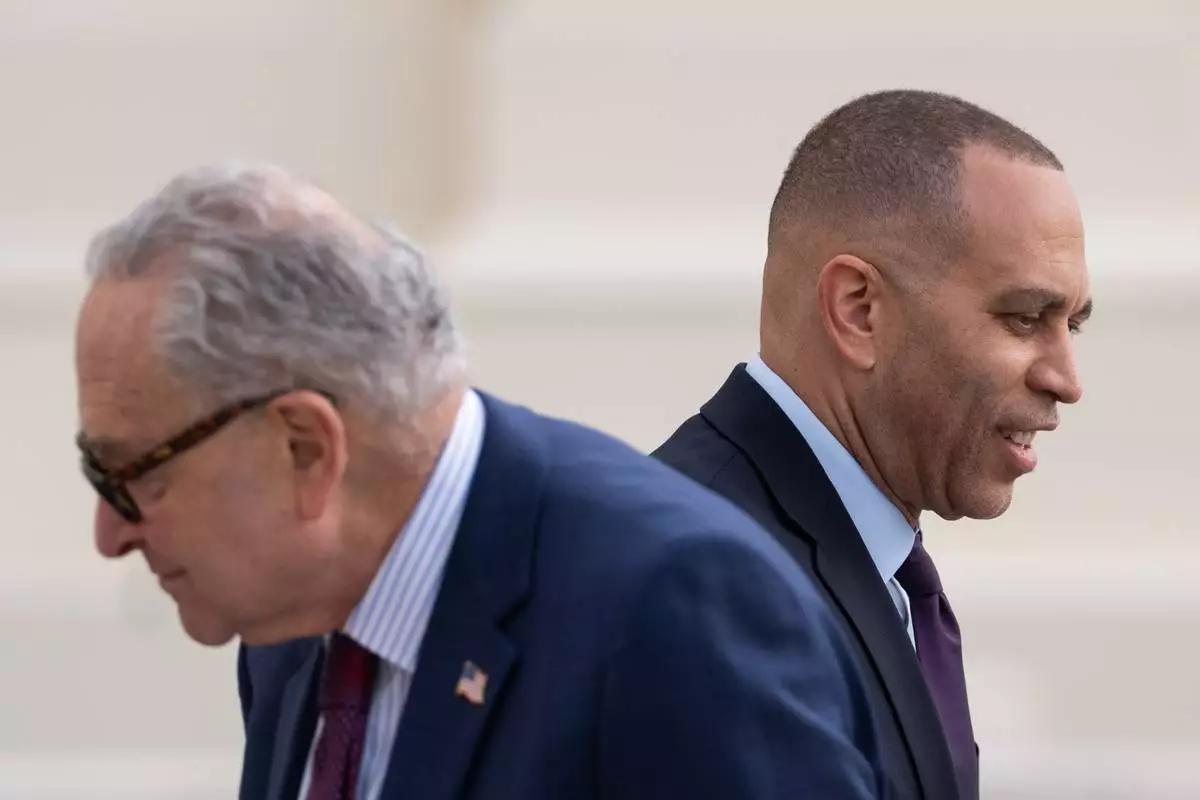
Sen. Chuck Schumer, D-N.Y., and Rep. Hakeem Jeffries, D-N.Y., attend an event marking the installation of a plaque commemorating Jan. 6 at the U.S. Capitol on Wednesday, March 25, 2026, in Washington. (AP Photo/Allison Robbert)
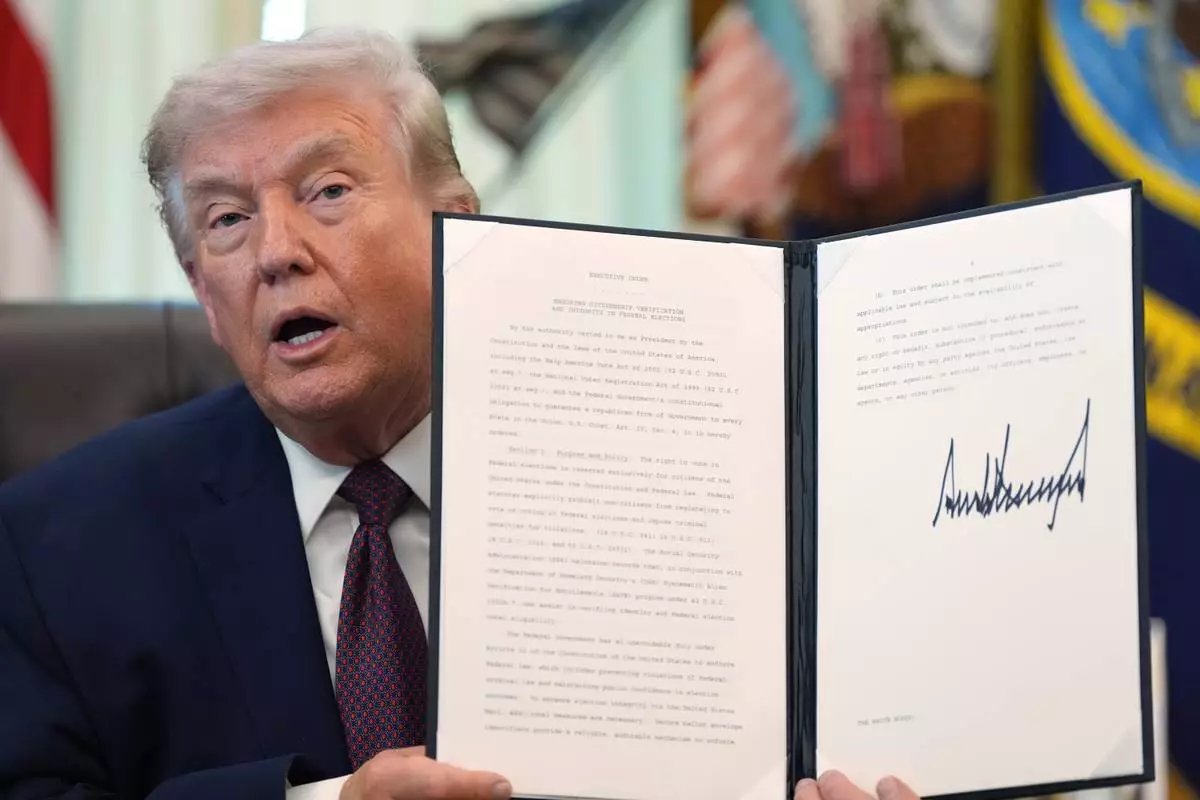
President Donald Trump holds a signed executive order in the Oval Office of the White House Tuesday, March 31, 2026, in Washington. (AP Photo/Alex Brandon)
FIFA raised its top ticket price for the World Cup final to $10,990 during the glitch-hampered reopening of sales Wednesday after the 48-team field for this year's tournament was finalized.
The price had been $8,680 when FIFA sold tickets after the tournament draw in December.
FIFA’s category 2 tickets for the July 19 game at MetLife Stadium in East Rutherford, New Jersey, were $7,380, up from $5,575, and category 3 cost $5,785, an increase $4,185.
Tickets were listed for 17 of the 72 group-stage matches by Wednesday night and none of the knockout stage games.
Soccer's governing body is using dynamic pricing for the tournament, which will be played in 11 U.S. cities plus three in Mexico and two in Canada.
Only $2,735 tickets, the highest-priced seats, were available by evening for the U.S. opener on June 12 against Paraguay at SoFi Stadium in Inglewood, California, and the price was unchanged from December. No tickets were listed for the Americans' June 19 game against Australia at Seattle or their June 25 match against Turkey at Inglewood.
Only $2,985 seats were available by Wednesday evening for the tournament opener between Mexico and Saudi Arabia on June 11 in Mexico City, up from $2,355 in December. And only $2,240 tickets were available for Canada's first game on June 12 against Bosnia-Herzegovina in Toronto, an increase from $2,170.
Soccer's governing body did not announce which games and price categories were available, leaving potential ticket buyers to search themselves on a FIFA ticketing site that often took hours to enter.
Some people who clicked on what FIFA called its “last-minute sales phase” when sales opened at 11 a.m. EDT were directed into a queue for "PMA late qualifier supporters sales phase," aimed for a segment of fans for the six nations who earned berths on Tuesday.
FIFA did not have an explanation for why the link misdirection occurred but said around noon that the links were working properly.
FIFA also said that not all remaining tickets were being put on sale for the 104 games to be played in the U.S., Mexico and Canada from June 11 to July 19 and that additional tickets will be released on a rolling basis.
This was the fifth phase of ticket sales following a Visa presale draw from Sept. 10-19, an early ticket draw from Oct. 27-31, a random selection draw from Dec. 11 to Jan. 13 and an unscheduled 48-hour availability in late February.
FIFA said this phase, which will remain open through the tournament, marked the first time a specific seat location could be purchased rather than a request for a ticket in a category.
For the month-long sales phase after the Dec. 5 draw, tickets were priced at $140 to $8,680. After complaints, FIFA said $60 tickets would be made available to each participating national federation for their most loyal supporters, an amount likely to be 400-700 per team for each match.
“The employment of dynamic ticket pricing for the 2026 FWC starkly contrasts with FIFA’s core mission to promote the accessible and inclusive promotion and development of soccer globally,” 69 Democratic members of Congress wrote in a March 10 letter to FIFA President Gianni Infantino. “Despite host cities’ cooperation in bringing the vision of the largest, most global World Cup in history to fruition, the consequences of dynamic pricing will make the 2026 FWC the most financially exclusionary and inaccessible to date.”
FIFA also has its own resale market, collecting 15% from both the buyer and seller.
Bosnia-Herzegovina, Congo, the Czech Republic, Iraq, Sweden and Turkey completed the World Cup field. Fans of teams eliminated Tuesday could attempt to resell tickets they already had purchased, nations that include Italy, Poland, Denmark, Jamaica and Bolivia.
Infantino claimed in January that the amount of ticket requests FIFA had received was the equivalent of “the request for 1,000 years of World Cups at once.”
“This is unique,” he said at the time. “It’s incredible.”
It was unclear if many of those requests were for seats in the lowest-price categories.
Fan groups have voiced concern over the soaring costs for resold tickets and one filed a formal complaint to the European Commission last month.
Infantino defended FIFA's cut of resales, saying the governing body was engaged in a legal commercial activity under U.S. law. Some European countries have laws which can restrict resale by requiring tickets to be sold for face value or only by authorized partners of the event organizers.
AP soccer: https://apnews.com/hub/soccer
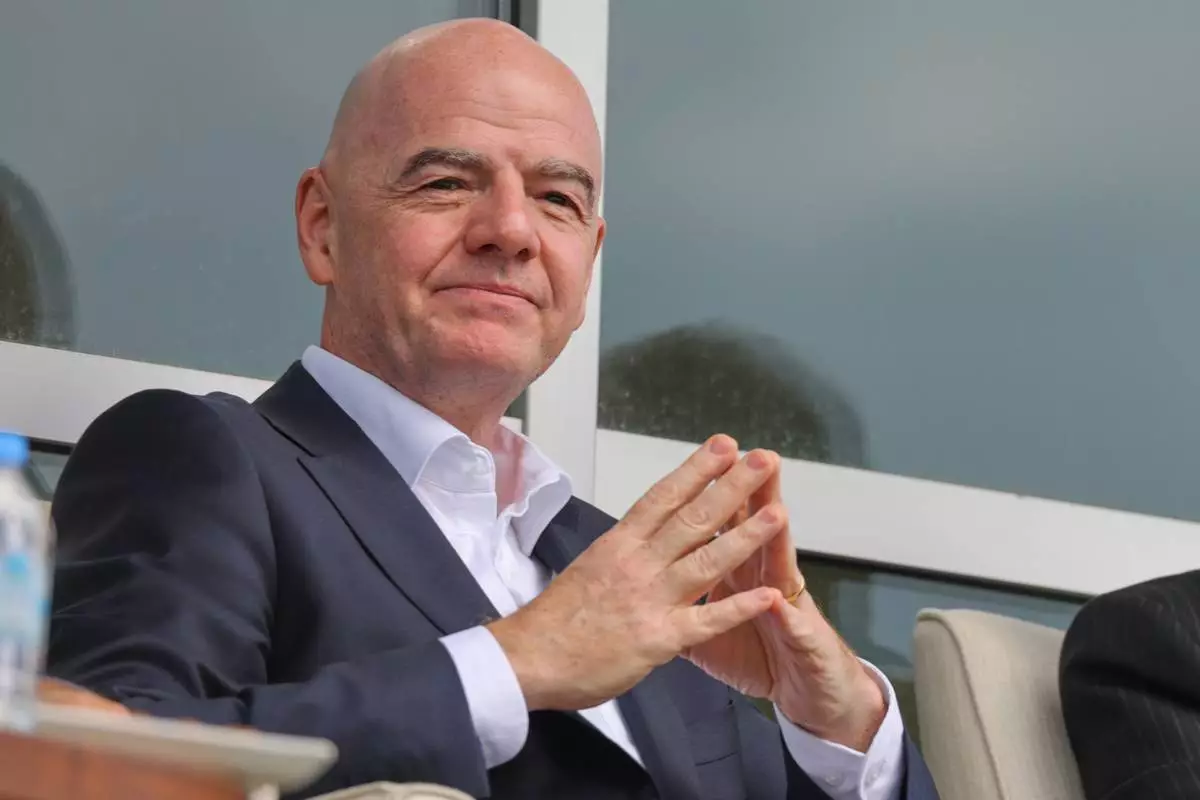
FIFA President Gianni Infantino follows a friendly soccer match between Iran and Costa Rica, in Antalya, southern Turkey, Tuesday, March 31, 2026. (AP Photo/Riza Ozel)
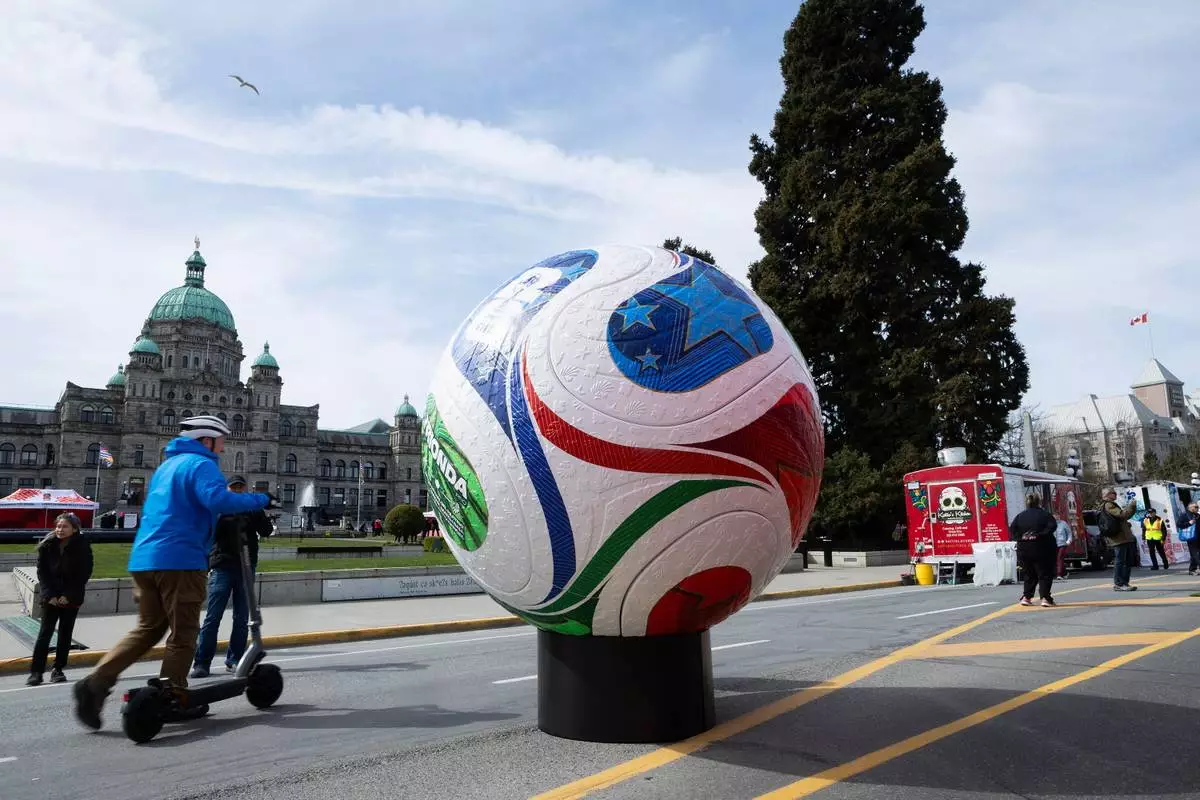
Soccer fans gathered on the grounds of the legislature to take part in the FIFA World Cup 2026 countdown celebration event in Victoria, B.C., on Tuesday, March 31, 2026. (Chad Hipolito/The Canadian Press via AP)