After two years of tweaks to its value menu, McDonald’s has a new strategy: keep it simple.
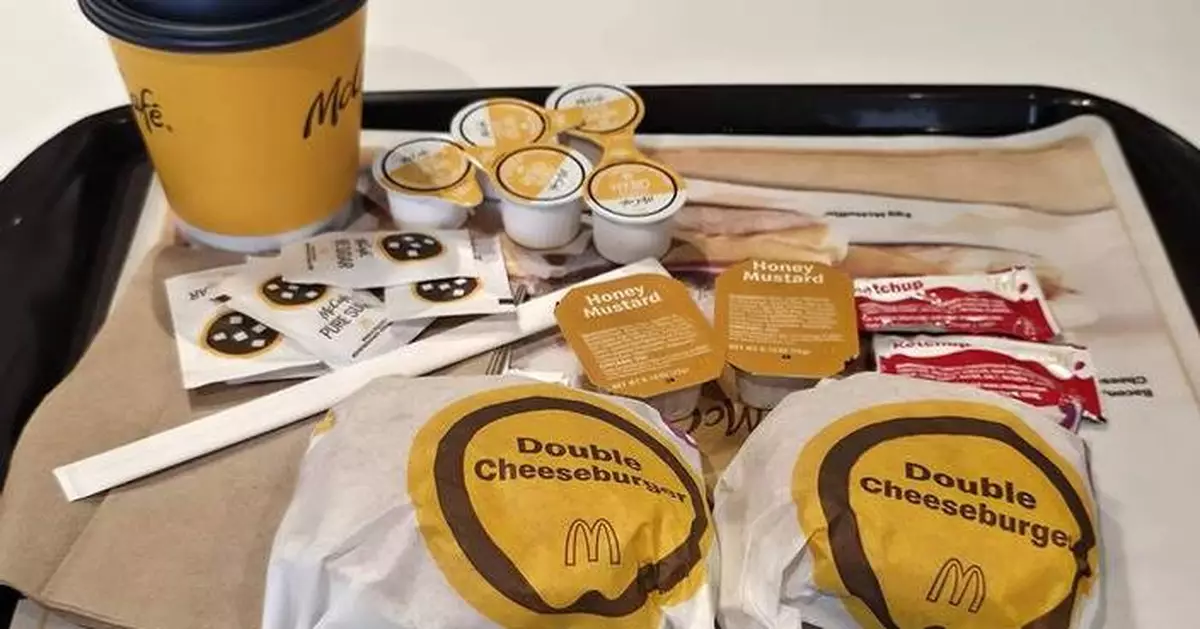
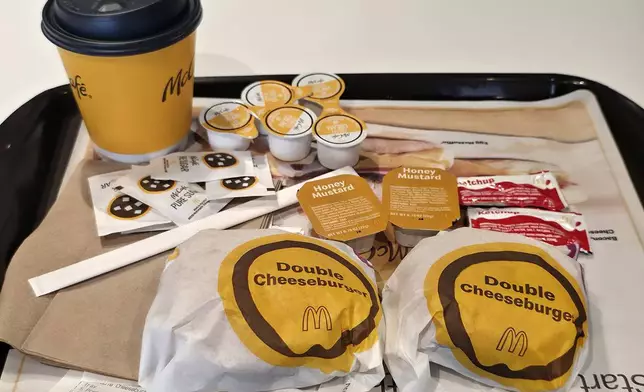
The fast-food giant’s budget-focused McValue menu will have 10 items that each cost under $3 starting April 21. The breakfast items include hash browns or a Sausage McMuffin. A small order of fries or a McDouble burger are among the options the rest of the day.
Click to Gallery
A McDonald's Golden Arch logo is displayed, Tuesday, March 31, 2026, in Los Angeles. (AP Photo/Damian Dovarganes)
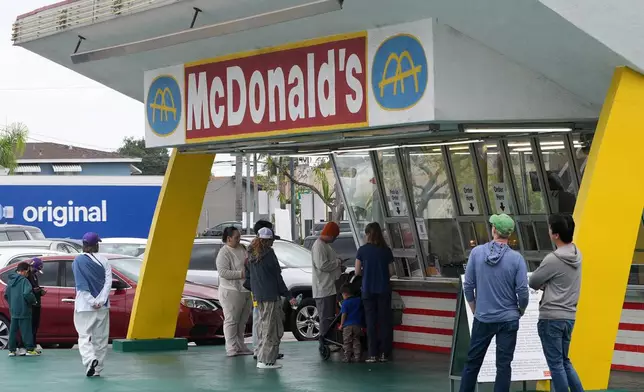
The oldest operating McDonald's restaurant still has the original Golden Arches façade, Tuesday, March 31, 2026, in Downey, Calif. (AP Photo/Damian Dovarganes)
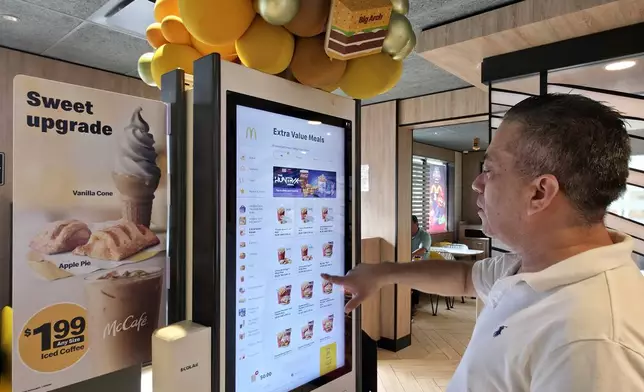
Carlos Paz picks a McValue menu selection at a McDonald's, Tuesday, March 31, 2026, in Los Angeles. (AP Photo/Damian Dovarganes)
A McValue menu selection at a McDonald's, Tuesday, March 31, 2026, in Los Angeles. (AP Photo/Damian Dovarganes)
Some of the items already cost less than $3 in some parts of the U.S., but others don't. The standardized selection will replace McDonald’s current McValue menu, which lets customers choose from a limited array of $1 items if they purchase a regular-priced item.
The shift to simpler value menu messaging and more flexibility follows similar by moves by rivals of McDonald’s. In January, Taco Bell launched a Luxe Value Menu, which also features 10 items that cost $3 or less. Panera Bread introduced its first value menu in February, with 10 items priced at $4.99 each.
Wendy’s revamped its Biggie Deals value menu in January. It now features $4 Biggie Bites, a $6 Biggie Bag and an $8 Biggie Bundle. KFC recently added $5 bowls to its U.S. menu.
Value menus are designed to offer customers more affordable options, even as fast-food companies also bring out higher-priced items like McDonald’s Big Arch burger or Burger King’s limited-time Peppercorn BLT Whopper.
Chains have emphasized value for several years to win back customers who were frustrated by food price inflation. Historically, prices for food away from home rise 3.5% per year, but in 2023 they rose 7%, in 2024 they rose 4% and in 2025 they rose 3.8%, according to government figures.
“In all retail, including quick-serve restaurants, ‘value’ has become a promotional expectation,” said Roger Beahm, an emeritus professor of marketing at Wake Forest University’s School of Business.
In June 2024, McDonald’s introduced a $5 Meal Deal; it will add a $4 Breakfast Meal Deal on April 21. It debuted the McValue menu in January 2025, and last fall it brought out Extra Value Meals, which promise a 15% discount for a bundled meal compared to buying items individually.
“Value matters more than ever to our customers, and we take that responsibility seriously,” Alyssa Buetikofer, the chief marketing and customer experience officer for McDonald’s USA, told The Associated Press.
Buetikofer said McDonald’s has improved customers’ perceptions of value and affordability since 2024. But the company decided to revamp its McValue menu after customers said they wanted more flexibility and better value in the morning. Half of the items on the under-$3 menu are breakfast items.
Scott Rodrick, a McDonald’s franchisee in California, praised the new strategy. He thinks ordering will go more smoothly because customers will have fewer questions about the deals.
“The value proposition is super clear — no deep explanation or mental gymnastics needed to understand where value is on my menu board,” Rodrick said.
Rodrick said the changes received broad support from franchisees and most U.S. stores will be offering them. Around 95% of McDonald’s U.S. stores are owned and operated by franchisees, who set their own pricing.
Fast food’s juggling act – investing in value through promotions and discounts while raising prices on some premium items – appears to be paying off, according to Revenue Management Solutions, a restaurant consulting company. In February, customer traffic at U.S. fast-food restaurants rose less than 1% compared to the same month year. Traffic was down 2% during the last three months of 2025 and in January.
But the company warned that higher gas prices due to the Iran war likely impacted fast-food traffic in March. That could put pressure on fast-food chains to offer even more value.
The term “value” is at risk of overuse, Beahm said. Over time, the surprise-and-delight of a deal loses its appeal, and customers forget what they used to pay for certain products, he said.
“If everything is always positioned as a value, then can anything really be a value?” Beahm said.
He thinks new products are a good strategy for attracting customers. Improving service or offering unexpected perks – like a donation to a charity with every purchase – are other ways.
Jennifer Fritch, an assistant professor of marketing at Arcadia University, agreed. The fast-food market is crowded, she said, and focusing solely on price turns food into a commodity. Younger customers, in particular, are looking for emotional experiences, personalization and transparency about ingredients, and are willing to pay more when they find them, she said.
“If it’s just cheap food, that’s not a winning long-term strategy,” Fritch said. “The list of demands and list of expectations is higher than it has ever been, and it’s insufficient to try to gain sales just on cost.”
A McDonald's Golden Arch logo is displayed, Tuesday, March 31, 2026, in Los Angeles. (AP Photo/Damian Dovarganes)
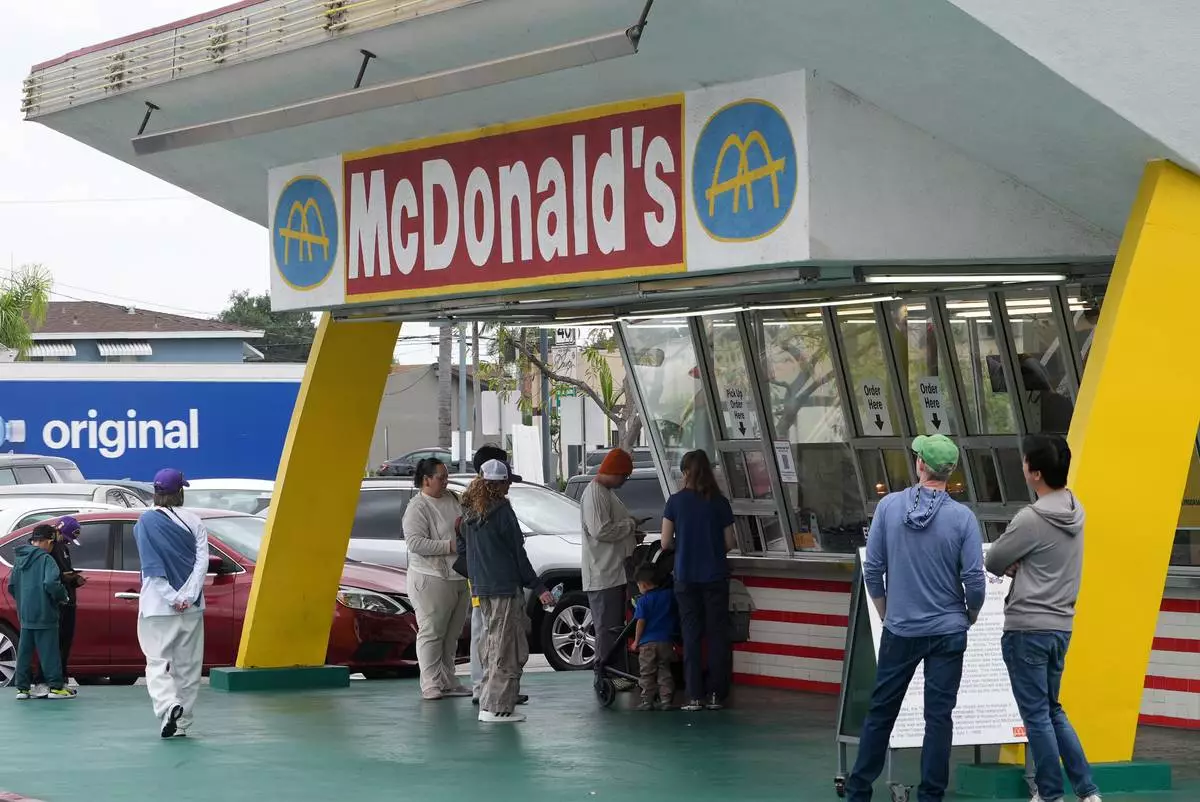
The oldest operating McDonald's restaurant still has the original Golden Arches façade, Tuesday, March 31, 2026, in Downey, Calif. (AP Photo/Damian Dovarganes)
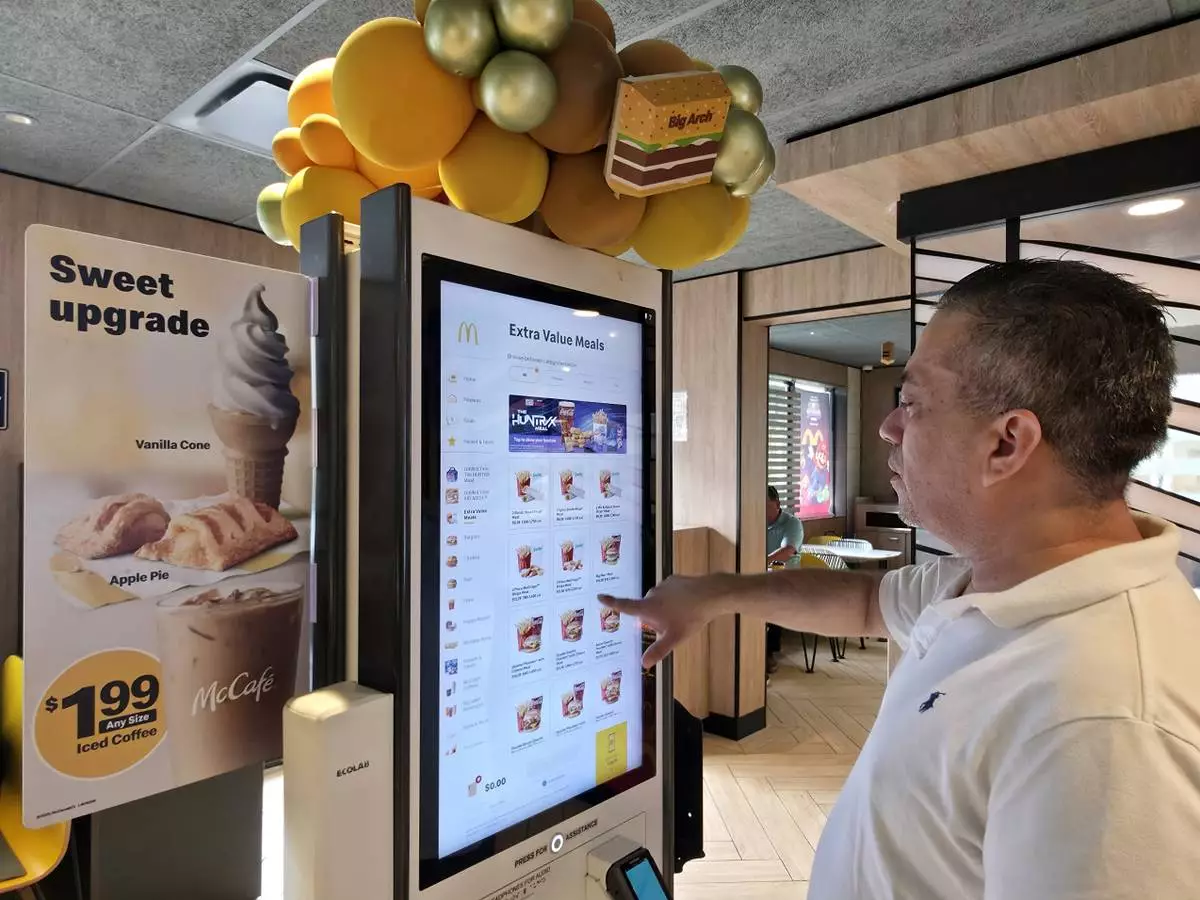
Carlos Paz picks a McValue menu selection at a McDonald's, Tuesday, March 31, 2026, in Los Angeles. (AP Photo/Damian Dovarganes)
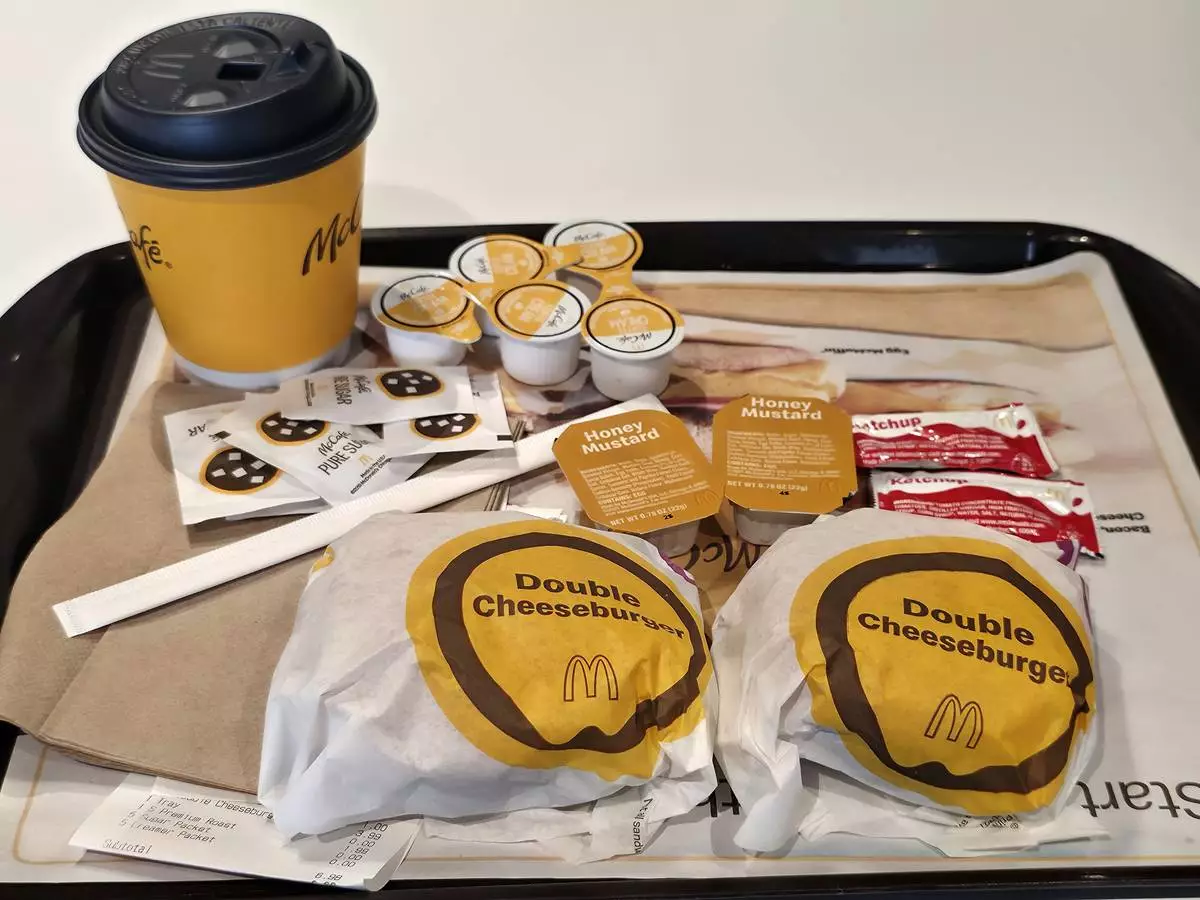
A McValue menu selection at a McDonald's, Tuesday, March 31, 2026, in Los Angeles. (AP Photo/Damian Dovarganes)
LONDON (AP) — U.S. President Donald Trump and his Defense Secretary Pete Hegseth have been damning of the U.K.'s naval capabilities. Their jibes may have stung in a country with a long and proud maritime history, but they do carry some substance.
The U.K. has been at the forefront of Trump’s ire since the onset of the Iran war on Feb. 28, when British Prime Minister Keir Starmer refused to grant the U.S. military access to British bases.
Though that decision has been partly reversed with the decision to permit the U.S. to use the bases, including that of Diego Garcia in the Indian Ocean, for so-called defensive purposes, Trump is adamant he was let down. He has repeatedly lashed out at Starmer and branded the Royal Navy’s two aircraft carriers as “toys.”
“You don’t even have a navy,” he told Britain's Daily Telegraph in comments published Wednesday. "You’re too old and had aircraft carriers that didn’t work.”
Hegseth, meanwhile, said sarcastically that the “big, bad Royal Navy” should get involved in making the Strait of Hormuz safe for commercial shipping.
For numerous reasons, the Royal Navy is not as big and bad as it used it to be when Britannia ruled the waves. But it's not as feeble as Trump and Hegseth imply and is largely similar with the French navy, which it is often compared with.
“On the negative side, there is a grain of truth, with the Royal Navy being smaller than it has been in hundreds of years,” said professor Kevin Rowlands, editor of the Royal United Services Institute Journal. “On the positive side, the Royal Navy would say that it’s entering its first period of growth since World War II, with more ships set to be built than in decades.”
It’s not that long ago that Britain could muster a task force of 127 ships, including two aircraft carriers, to sail to the south Atlantic after Argentina’s invasion of the Falkland Islands. That 1982 campaign, which then-U.S. President Ronald Reagan was lukewarm about, marked the final hurrah of Britain’s naval pedigree.
Nothing on that scale, or even remotely, could be accomplished now. Since World War II, Britain’s combat-ready fleet has declined substantially, much of it linked to changing military and technological advances and the end of empire. But not all.
The number of vessels in the Royal Navy fleet, including aircraft carriers, destroyers frigates and submarines has fallen from 166 in 1975 to 66 in 2025, according to The Associated Press' analysis of figures from the Ministry of Defense and the House of Commons Library.
Though the Royal Navy has two aircraft carriers at its command, there was a seven-year period in the 2010s when it had none. And the number of destroyers has halved to six while the frigate fleet has been slashed from 60 to just 11.
The Royal Navy faced criticism for the time it took to send the HMS Dragon destroyer to the Middle East after the war with Iran broke out. Though naval officials worked night and day to get it shipshape for a different mission than the one it was readying for, to many it symbolized the extent to which Britain’s military has been gutted since the fall of the Berlin Wall in 1989.
For much of the Cold War, Britain was spending between 4% and 8% of its annual national income on its military. After the Cold War, that proportion steadily dropped to a low of 1.9% of GDP in 2018, fuel to Trump's fire.
Like other countries, Britain, largely under the Labour governments of Tony Blair and Gordon Brown, sought to use the so-called “peace dividend” following the collapse of the Soviet Union to divert money earmarked for defense to other priorities, such as health and education.
And the austerity measures imposed by the Conservative-led government in the wake of the global financial crisis of 2008-9 prevented any pickup in defense spending despite the clear signs of a resurgent Russia, especially after its annexation of Crimea and parts of eastern Ukraine.
In the wake of Russia's full-blown invasion of Ukraine in 2022, and with another Middle East war underway, there's a growing understanding across the political divide that the cuts have gone too far.
Following the Ukraine invasion, the Conservatives started to turn the military spending tide around. Since the Labour Party returned to power in 2024, Starmer is seeking to ramp up British defense spending, partly at the cost of cutting the country's long-vaunted aid spending.
Starmer has promised to raise U.K. defense spending to 2.5% of gross domestic product by 2027, and the updated goal is now for it to rise to 3.5% of GDP by 2035, as part of a NATO agreement pushed by Trump. That, in plain terms, will mean tens of billions pounds more being spent — a lot more kit for the armed forces.
The pressure is on for the government to speed that schedule up. But with the public finances further imperilled by the economic consequences of the Iran war, it's not clear where any additional money will come.
The jibes will likely keep coming even though the critiques are unfair and far from the truth, said RUSI's Rowlands, who was a captain in the Royal Navy.
“We are dealing with an administration that doesn’t do nuance," he said.
This story has been corrected to show there were 166 vessels in 1975, not 466.
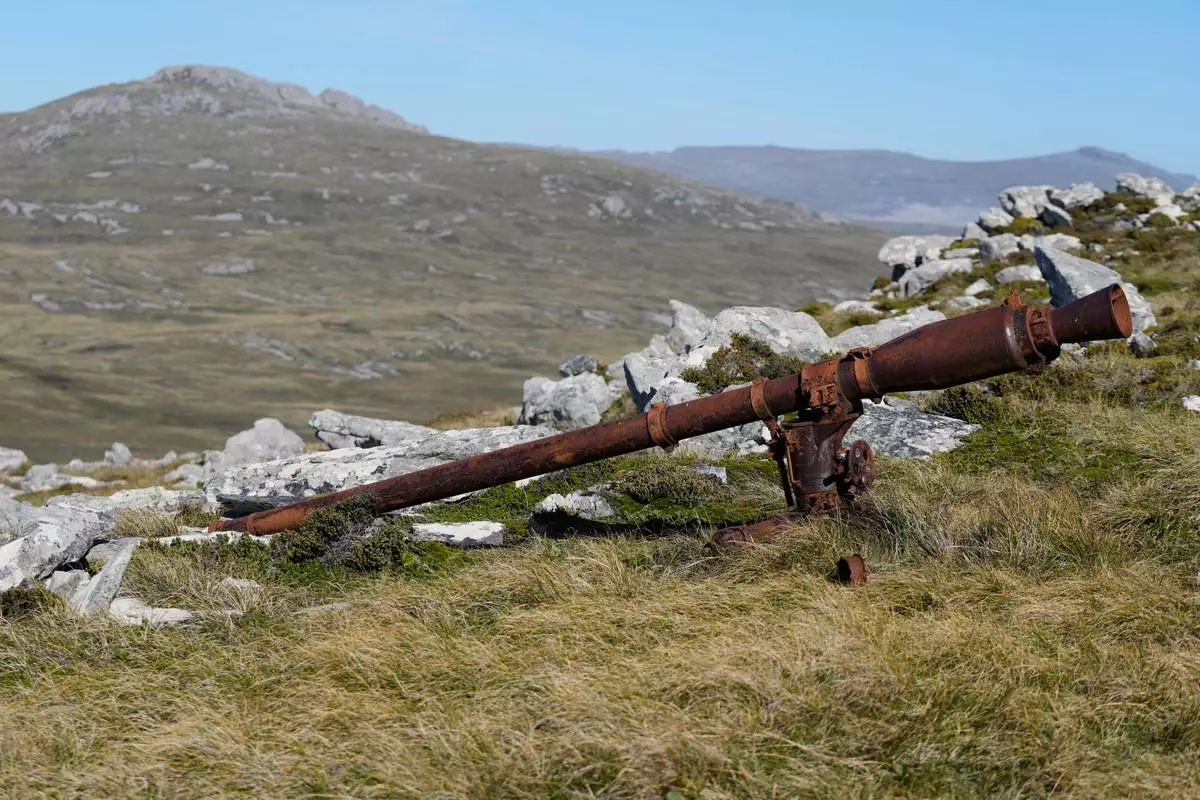
An artillery piece from the 1982 Falklands War between Argentina and Britain lies on Mount Longdon on the Falkland Islands, also known as Islas Malvinas, Monday, March 16, 2026. (AP Photo/Ricardo Mazalan)
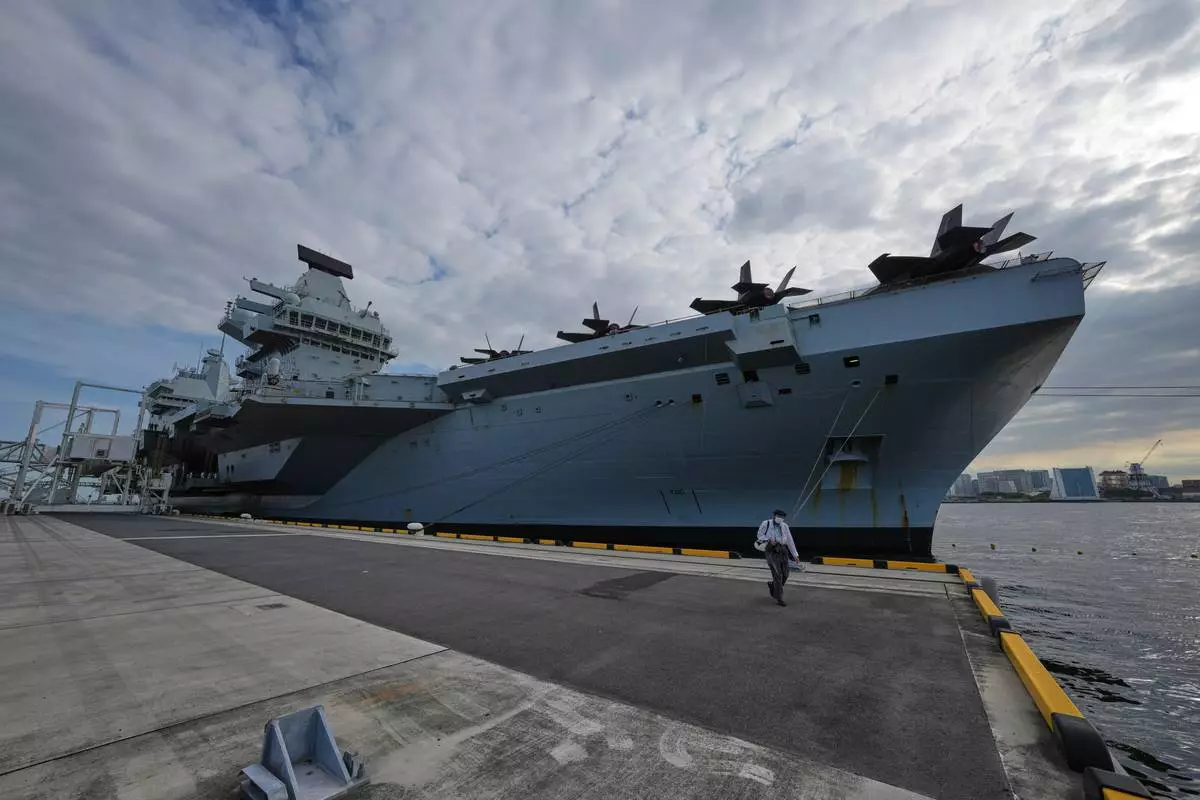
FILE - The Royal Navy aircraft carrier HMS Prince of Wales is pictured before its port call in Tokyo, Thursday, Aug. 28, 2025. (AP Photo/Eugene Hoshiko, File)
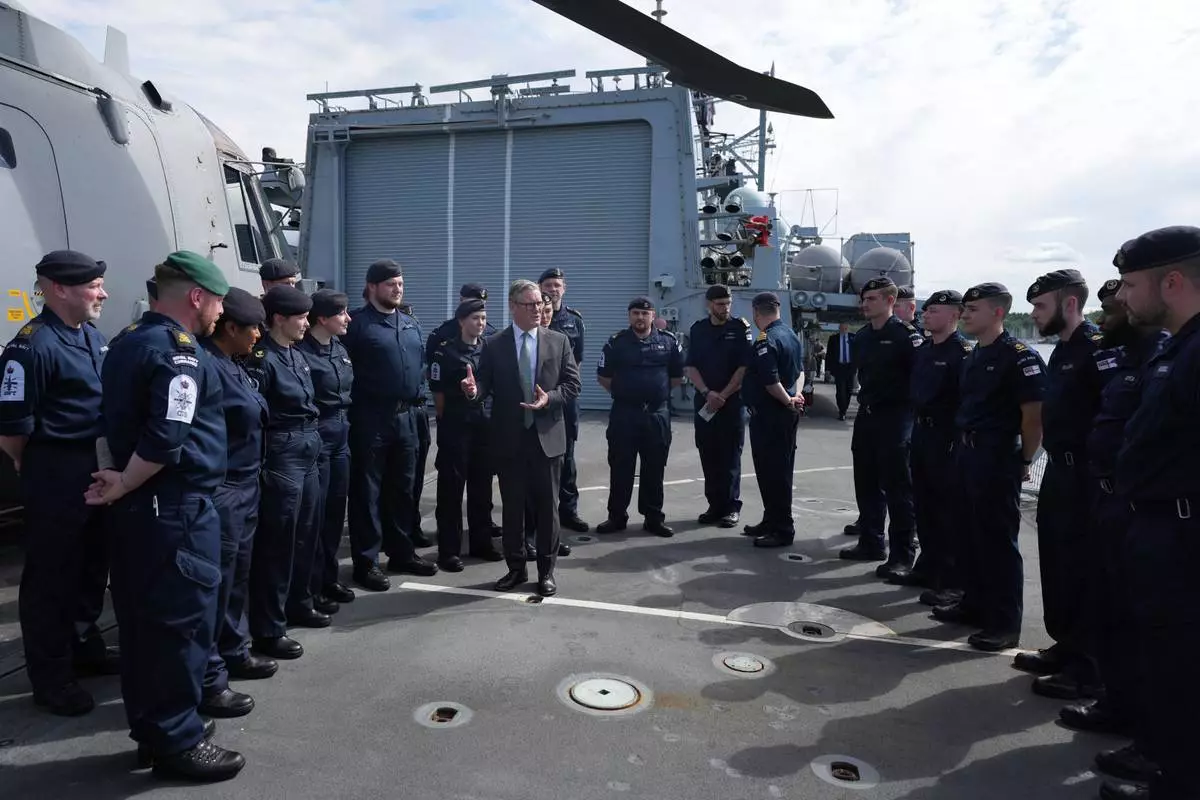
FILE - Britain's Prime Minister Keir Starmer speaks to Royal Marines onboard the HMS ST Albans in Oslo, during his visit to Norway on Friday, May 9, 2025.(AP Photo/Alastair Grant, Pool, File)
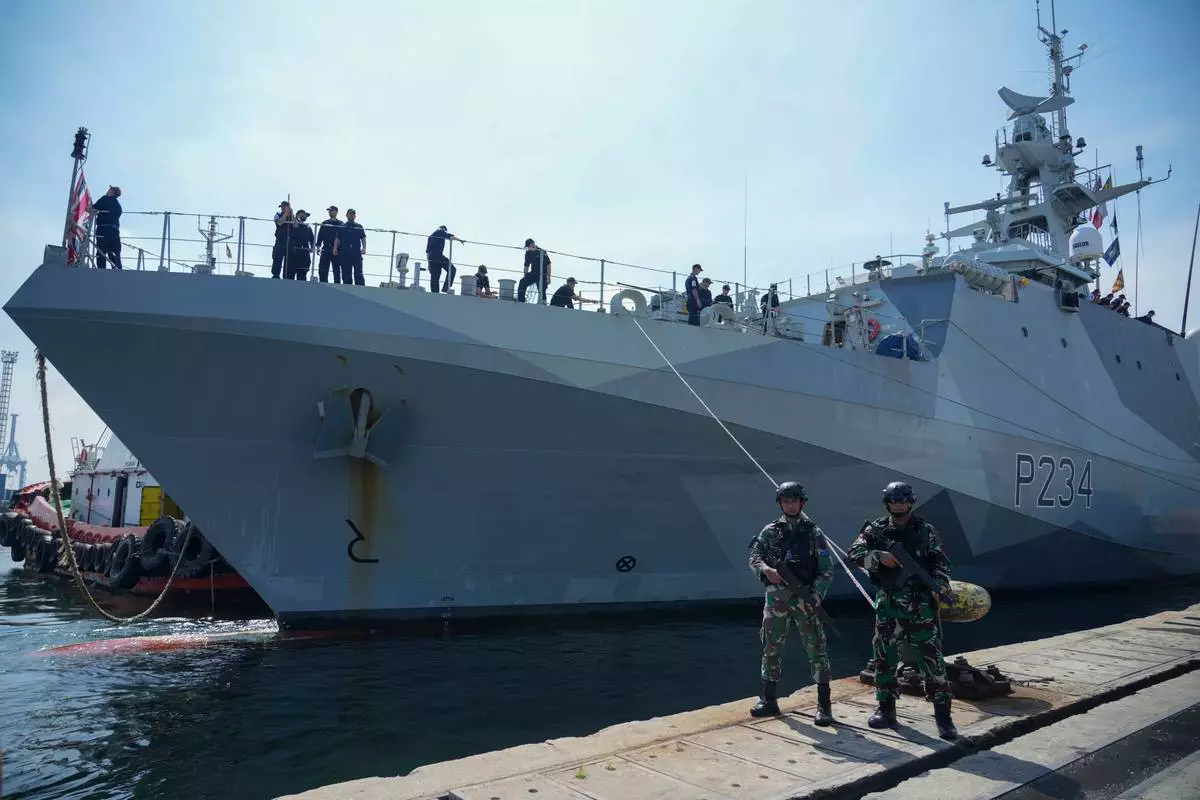
FILE - Indonesian soldiers stand guard as Royal Navy offshore patrol vessel HMS Spey is docked at Tanjung Priok Port during a port visit in Jakarta, Indonesia, Wednesday, Jan. 15, 2025. (AP Photo/Tatan Syuflana, File)
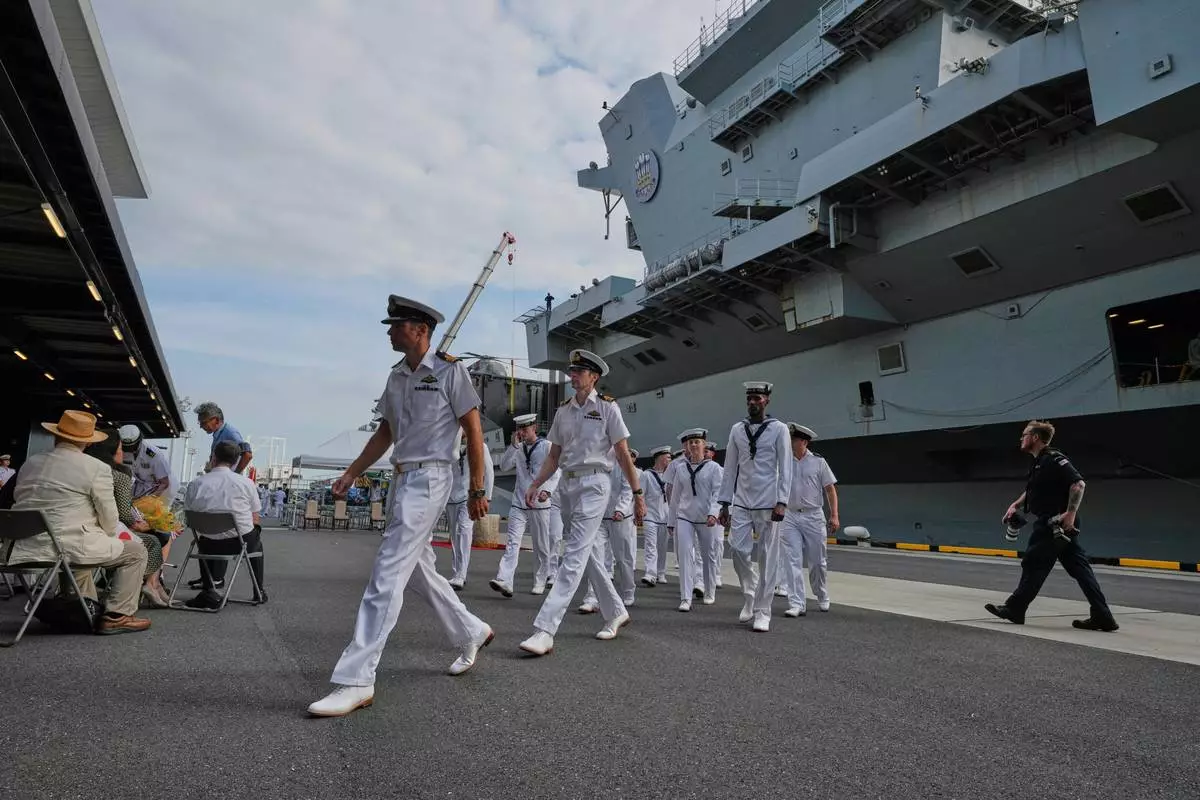
FILE - Crews walk near the Royal Navy aircraft carrier HMS Prince of Wales before its port call in Tokyo Thursday, Aug. 28, 2025. (AP Photo/Eugene Hoshiko, File)