Good news for people who regret the Gmail address they came up with when they registered for an account: Google is now letting users change it.
Google started quietly rolling out the change late last year in India and said this week in a blog post that it’s now available for all Google Account users in the United States. There were no details on when it would be available to users in other countries.
Google's CEO suggested the update will be welcomed by people who want to keep their accounts but have outgrown the awkward, embarrassing or nonsensical Gmail handles they created after the service launched 22 years ago.
“2004 was a good year, but your Gmail address doesn’t need to be stuck in it,” Sundar Pichai wrote in a post on X, adding that the policy change means users could “say goodbye to v0t3f0rp3dr02004@gmail.com or mrbrightside416@gmail.com (or whatever you were into at the time).”
The company also updated a help page to reflect the new policy. Here's a quick run-through:
The procedure is fairly easy to follow. First, go to your Google Account page. From the Google homepage in your computer browser or the Google mobile app, click the account icon in the top right corner, and then click or tap Manage your Google Account, then Personal info, then Email.
You should be able to click Change Google Account email. If you don't see it, you might not have the option yet. Google says it's “gradually rolling out to all users."
Now you'll have to enter your new address so make sure you have an idea for what you want. Then click to confirm that you want to make the change. Google says addresses can't be identical to any existing address or one that was “used by someone in the past and then deleted.”
But what if you miss your old Gmail address? Don't worry, you'll still be able to access it because Google is effectively creating a second Gmail address.
The old address will remain as an alternate and messages sent to either the old or new addresses will appear in your Gmail inbox. To find out which address an email was sent to, check the “to” field.
You can switch back to the old address by changing the settings in your Google account.
If you don't like the new Gmail address you've created, unfortunately you're out of luck - at least for the next year. Google won't let you create another Gmail address for your account until 12 months have passed. And you can only do so three times in total.
Gmail addresses are also used to sign in to other Google services like YouTube, Google Docs as well as third-party websites and apps. But the company warns that some non-Google apps and services might not recognize you with the new Gmail address, so it provided some troubleshooting tips on a help page.
Google also says Chromebook users might encounter problems, though many issues will go away after a few hours. It advises users to check a troubleshooting page but warned that if the problems persist, “you may need to change back to your previous Google Account email,” although the new address can still be used to send and receive messages.
Is there a tech topic that you think needs explaining? Write to us at onetechtip@ap.org with your suggestions for future editions of One Tech Tip.

FILE- This March 20, 2018, file photo shows the Gmail app on an iPad in Baltimore. (AP Photo/Patrick Semansky, File)
The Afghan man had fled the Taliban for refuge in upstate New York when U.S. immigration authorities ordered him deported to Uganda. The Cuban woman was working at a Texas Chick-fil-A when she was arrested after a minor traffic accident and told she was being sent to Ecuador.
There’s the Mauritanian man living in Michigan told he’d have to go to Uganda, the Venezuelan mother in Ohio told she'd be sent to Ecuador and the Bolivians, Ecuadorians and so many others across the country ordered sent to Honduras.
They are among more than 13,000 immigrants who were living legally in the U.S., waiting for rulings on asylum claims, when they suddenly faced so-called third-country deportation orders, destined for countries where most had no ties, according to the nonprofit group Mobile Pathways, which pushes for transparency in immigration proceedings.
Yet few have been deported, even as the White House pushes for ever more immigrant expulsions. Thanks to unexplained changes in U.S. policy, many are now mired in immigration limbo, unable to argue their asylum claims in court and unsure if they'll be shackled and put on a deportation flight to a country they've never seen.
Some are in detention, though it’s unclear how many. All have lost permission to work legally, a right most had while pursuing their asylum claims, compounding the worry and dread that has rippled through immigrant communities.
And that may be the point.
“This administration’s goal is to instill fear into people. That’s the primary thing,” said Cassandra Charles, a senior staff attorney with the National Immigration Law Center, which has been fighting the Trump administration’s mass deportation agenda. The fear of being deported to an unknown country could, advocates believe, drive migrants to abandon their immigration cases and decide to return to their home countries.
Things may be changing.
In mid-March, top Immigration and Customs Enforcement legal officials told field attorneys with the Department of Homeland Security in an email to stop filing new motions for third-country deportations tied to asylum cases. The email, which has been seen by The Associated Press, did not give a reason. It has not been publicly released, and DHS did not respond to requests to explain if the halt was permanent.
But the earlier deportation cases? Those are continuing.
In 2024, a Guatemalan woman who says she had been held captive and repeatedly sexually assaulted by members of powerful gang arrived with her 4-year-old daughter at the U.S.-Mexico border and asked for asylum. She later discovered she was pregnant with another child, conceived during a rape.
In December, she sat in a San Francisco immigration courtroom and listened as an ICE attorney sought to have her deported.
The ICE attorney didn't ask the judge that she be sent back to Guatemala. Instead, the attorney said, the woman from the Indigenous Guatemalan highlands would go to one of three countries: Ecuador, Honduras or across the globe to Uganda.
Until that moment, she’d never heard of Ecuador or Uganda.
“When I arrived in this country, I was filled with hope again and I thanked God for being alive,” the woman said after the hearing, her eyes filling with tears. “When I think about having to go to those other countries, I panic because I hear they are violent and dangerous.” She spoke on condition of anonymity, fearing reprisal from U.S. immigration authorities or the Guatemalan gang network.
ICE attorneys, the de facto prosecutors in immigration courts, were first instructed last summer to file motions known as “pretermissions” that end migrants' asylum claims and allow them to be deported.
“They’re not saying the person doesn’t have a claim,” said Sarah Mehta, who tracks immigration issues at the American Civil Liberties Union. “They’re just saying, 'We’re kicking this case completely out of court and we’re going to send that person to another country.'”
The pace of deportation orders picked up in October after a ruling from the Justice Department's Board of Immigration Appeals, which sets legal precedent inside the byzantine immigration court system.
The ruling from the three judges — two appointed by Attorney General Pam Bondi and the third a holdover from the first Trump administration — cleared the way for migrants seeking asylum to be removed to any third country where the U.S. State Department determines they won’t face persecution or torture.
After the ruling, the government aggressively expanded the practice of ending asylum claims.
More than 13,000 migrants have been ordered deported to so-called “safe third countries” after their asylum cases were canceled, according to data from San Francisco-based Mobile Pathways. More than half the orders were for Honduras, Ecuador or Uganda, with the rest scattered among nearly three dozen other countries.
Deported migrants are free, at least theoretically, to pursue asylum and stay in those third countries, even if some have barely functioning asylum systems.
Immigration authorities have released little information about the third-country agreements, known as Asylum Cooperative Agreements, or the deportees, and it's unclear exactly how many have been deported to third countries as part of asylum removals.
According to Third Country Deportation Watch, a tracker run by the rights groups Refugees International and Human Rights First, fewer than 100 of them are thought to have been deported.
In a statement, DHS called the agreements “lawful bilateral arrangements that allow illegal aliens seeking asylum in the United States to pursue protection in a partner country that has agreed to fairly adjudicate their claims.”
“DHS is using every lawful tool available to address the backlog and abuse of the asylum system,” said the statement, which was attributed only to a spokesperson. There are roughly 2 million backlogged asylum cases in the immigration system.
But deportations clearly turned out to be far more complicated than the government expected, restricted by a variety of legal challenges, the scope of the international agreements and a limited number of airplanes.
Mobile Pathways data, for example, shows that thousands of people have been ordered deported to Honduras — despite a diplomatic agreement that allows the country to take a total of just 10 such deportees per month for 24 months. Dozens of people ordered to Honduras in recent months did not speak Spanish as their primary language, but were native speakers of English, Uzbek and French, among other languages.
And while hundreds of asylum-seeking migrants have been ordered sent to Uganda, a top Ugandan official said none have arrived. U.S. authorities may be “doing a cost analysis” and trying to avoid dispatching flights with only a few people on board, Okello Oryem, the Ugandan minister of state for foreign affairs, told The Associated Press.
“You can’t be doing one, two people” at a time,” Oryem said. “Planeloads — that is the most effective way.”
Many immigration lawyers suspect that the March email ordering a halt in new asylum pretermissions could indicate a shift toward other forms of third-country deportations.
“Right now they haven’t been able to remove that many people,” said the ACLU's Mehta. “I do think that will change.”
“They’re in a hiring spree right now. They will have more planes. If they get more agreements, they’ll be able to send more people to more countries.”
Associated Press reporters Garance Burke in San Francisco, Joshua Goodman in Miami, Rodney Muhumuza in Kampala, Uganda, Marlon González in Tegucigalpa, Honduras, and Molly A. Wallace in Chicago contributed to this report.
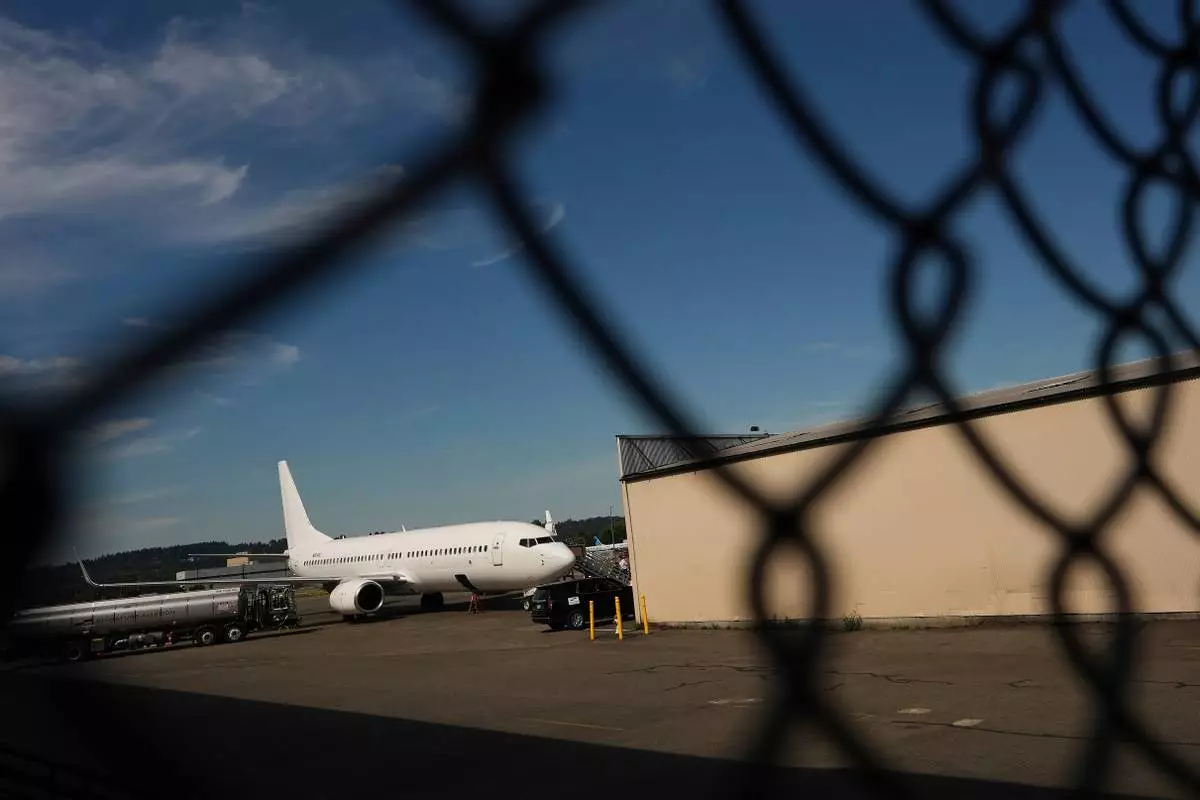
FILE - A U.S. Immigration and Customs Enforcement flight operates out of King County International Airport-Boeing Field, Aug. 23, 2025, in Seattle. (AP Photo/Lindsey Wasson, File)
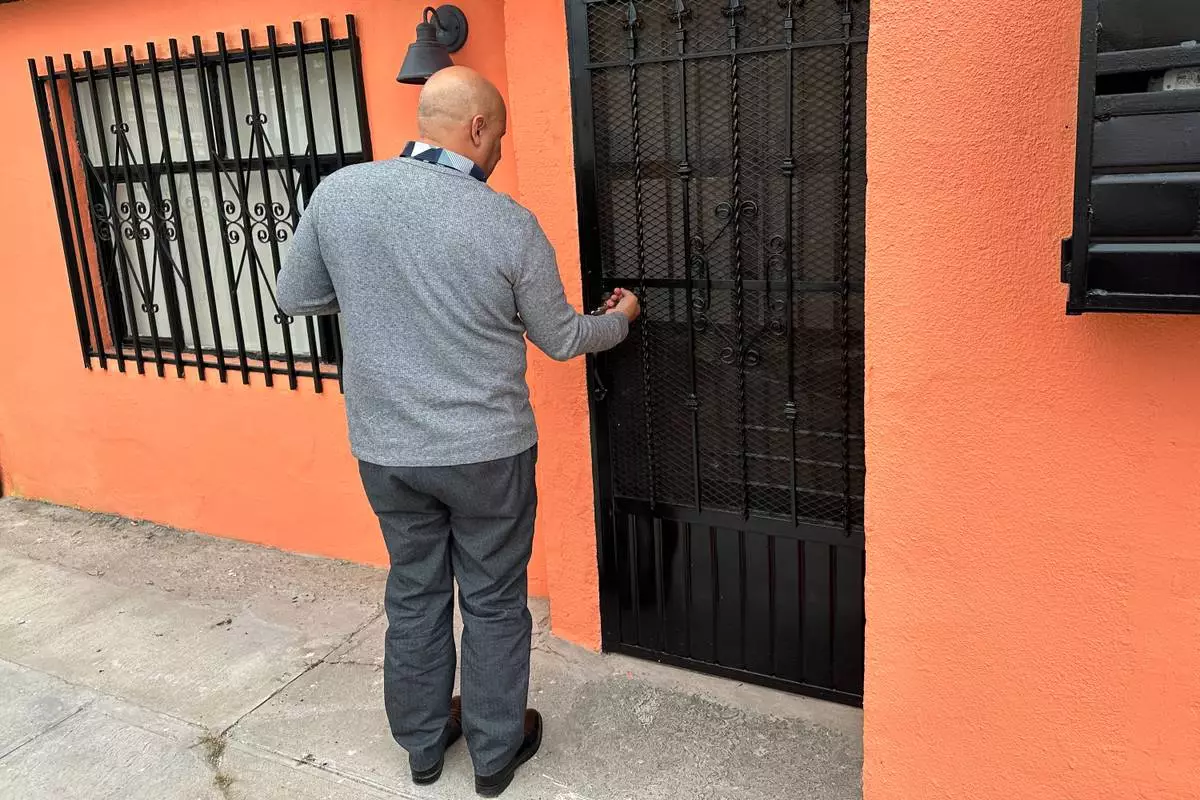
FILE - A Cuban man, who spoke to The Associated Press on condition of anonymity for fear of reprisals, adapts to life in Ciudad Juárez, Mexico, Feb. 13, 2026, after agreeing to self-deport last year from the Camp East Montana detention center in El Paso, Texas, where he says he desperately requested medication to treat diabetes and high blood pressure and never received it. (AP Photo/Morgan Lee, File)
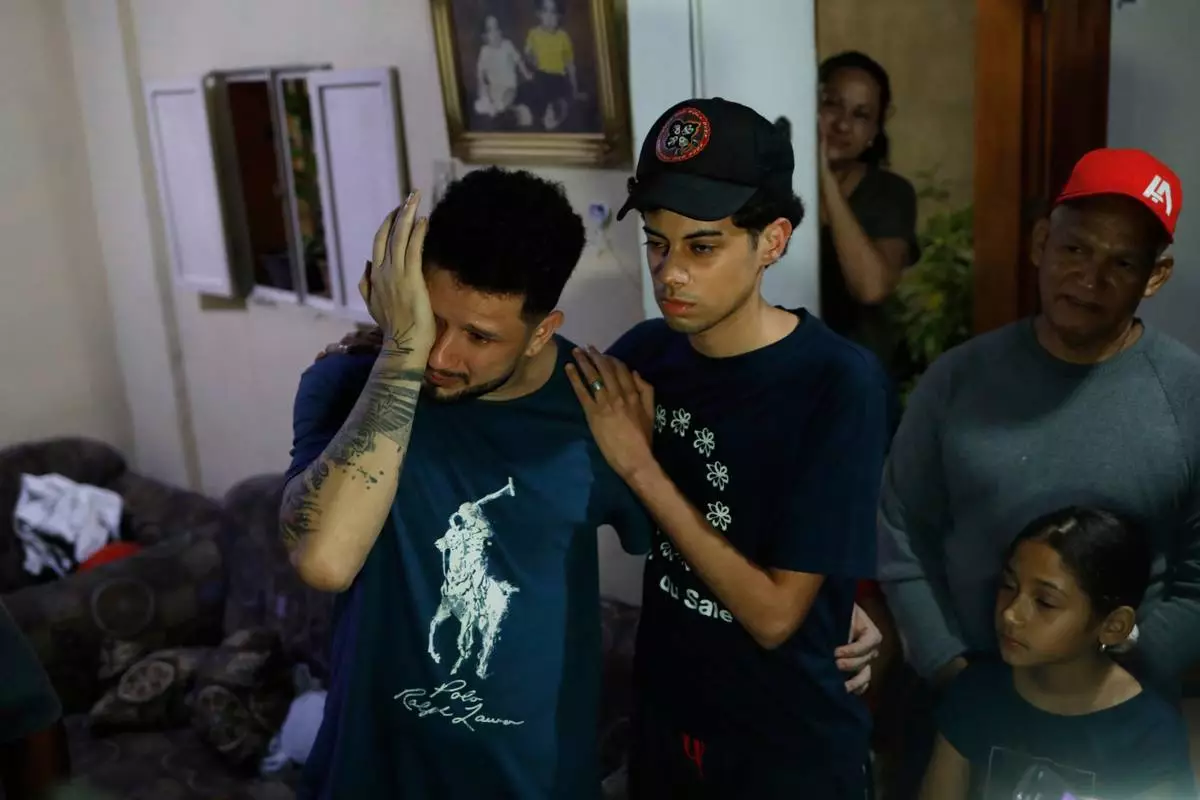
FILE - Arturo Suárez, left, a musician, one of the Venezuelan migrants deported months ago to El Salvador by the United States under the U.S. President Donald Trump administration's immigration crackdown, reacts as he returned home and was welcomed by his relatives, in Caracas, Venezuela, July 22, 2025. (AP Photo/Cristian Hernandez, File)

FILE - Migrants deported months ago by the United States to El Salvador under the Trump administration's immigration crackdown arrive at Simon Bolívar International Airport, in Maiquetia, Venezuela, July 18, 2025. (AP Photo/Ariana Cubillos, File)