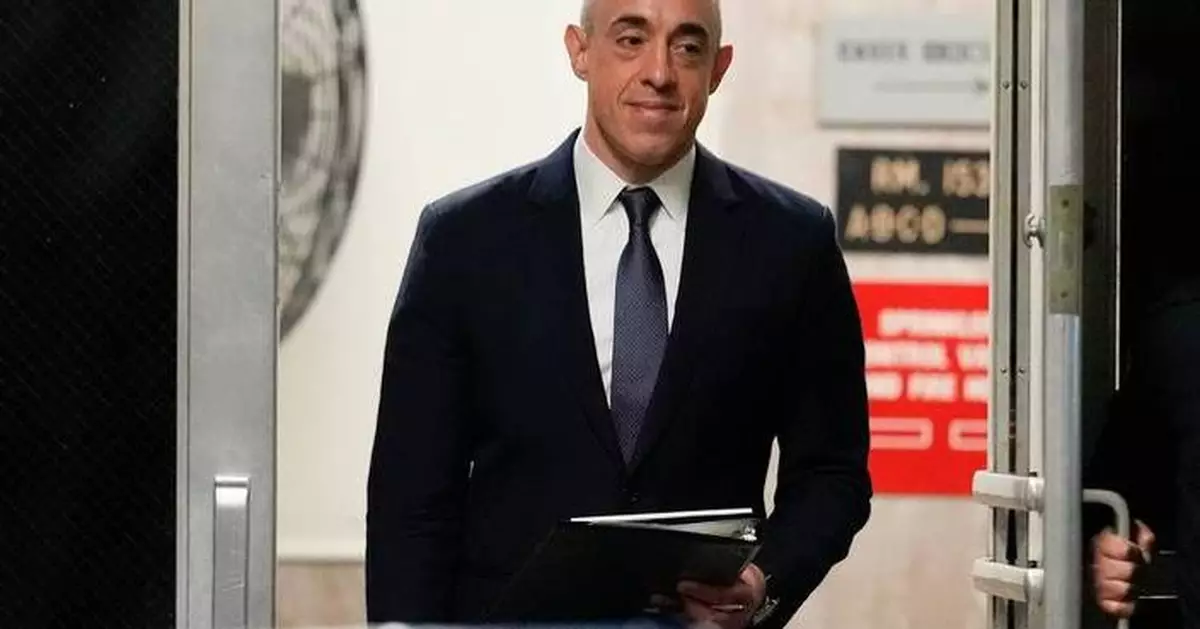
NEW YORK (AP) — Lawyers for Mahmoud Khalil, the former Columbia University graduate student fighting deportation, have asked Judge Emil Bove to step aside from an appellate panel that could weigh in on his case because of Bove’s previous role as a top Justice Department official involved in investigating student protesters.
Khalil’s lawyers this week asked that the full complement of judges on the 3rd Circuit Court of Appeals — minus Bove — review and reverse a January ruling by a panel of three 3rd Circuit judges that put the Trump administration one step closer to detaining and ultimately deporting the pro-Palestinian activist.
As the Justice Department’s Principal Associate Deputy Attorney General, Bove “directed immigration enforcement investigations and decisions against student protesters on college campuses,” including at Columbia, Khalil’s lawyers wrote.
Bove’s immigration enforcement work “demonstrates the existence, or at least the appearance of, a conflict of interest” that should disqualify him from having a say in Khalil’s appeal, they said.
Bove has been a judge on the Philadelphia-based 3rd U.S. Circuit Court of Appeals since September. Prior to his role at the Justice Department, he served as one of President Donald Trump’s defense lawyers, representing him in criminal matters including the hush-money case in New York that ended in Trump’s conviction on 34 felony counts.
The decision on recusal is up to Bove himself. The Justice Department, whose lawyers are representing the government in Khalil’s appeal, “sees no basis for recusal but defers to Judge Bove,” according to court papers.
Through the 3rd Circuit court, Bove declined to comment.
During the judicial confirmation process, Bove acknowledged that his Justice Department position, overseeing criminal and civil matters across the country, “could give rise to actual or potential conflicts” and that he would recuse himself “in cases that I was personally involved in should any such matter come before the court.”
Khalil, a legal permanent resident, was the first person whose arrest became publicly known during the crackdown on noncitizens who publicly criticized Israel and its actions in Gaza.
He remains in the U.S. with his wife, an American citizen, and their young son while he fights the January ruling that found a New Jersey federal judge who had sided with him didn’t have jurisdiction to decide the matter. Federal law requires detention and deportation challenges to move through the separate immigration court system first, the ruling said.
The three-judge panel’s 2-1 decision didn’t resolve the key issue in Khalil’s case: whether the Trump administration’s effort to throw Khalil out of the U.S. over his campus activism and criticism of Israel is unconstitutional. He then spent three months detained in a Louisiana immigration jail, missing the birth of his son.
The Trump administration has accused Khalil of leading activities “aligned to Hamas,” though they have not presented evidence to support the claim and have not accused him of criminal conduct. They also accused him of failing to disclose information on his green card application.
Khalil, who was born in Syria to a Palestinian family and holds Algerian citizenship, has dismissed the allegations as “baseless and ridiculous,” framing his arrest and detention as a “direct consequence of exercising my right to free speech as I advocated for a free Palestine and an end to the genocide in Gaza.”
The government justified Khalil’s arrest under a seldom-used statute that allows for the expulsion of noncitizens whose beliefs are deemed to pose a threat to U.S. foreign policy interests.
In February 2025, a month before Khalil’s arrest, Bove co-authored a memorandum on the Justice Department’s formation of a task force geared toward “Investigating and prosecuting acts of terrorism, antisemitic civil rights violations, and other federal crimes committed by Hamas supporters in the United States, including on college campuses.”
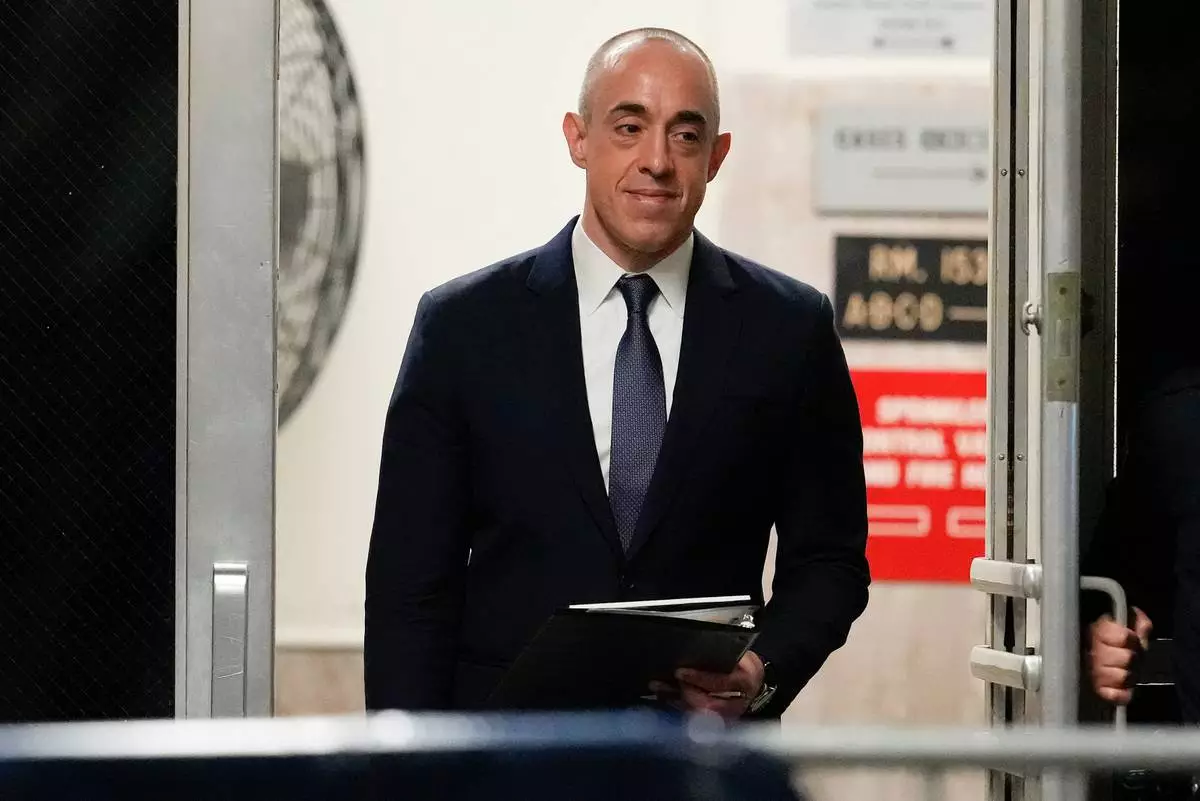
FILE - Attorney Emil Bove returns to the courtroom after a break at Manhattan criminal court, April 16, 2024, in New York. (AP Photo/Mary Altaffer, Pool, File)