NEW YORK (AP) — Bruce Hornsby's new, reflective album starts off sweetly and melodically, a musician looking back at a fascinating life. Then it gets weird. That's by design.
“I’m going along very nicely and then I might just throw something at you,” the three-time Grammy Award-winner warns from his home in Williamsburg, Virginia. “I’m well aware that a whole lot of my old-time fans just hate that.”
“Indigo Park,” a 10-song set that arrives Friday, is a concept album of sorts as Hornsby mulls over his childhood and where he's come from. To borrow a line from one song, it's “one life in reflection.”
The album — which features appearances from Vampire Weekend's Ezra Koenig, Bonnie Raitt and Bob Weir, his late Grateful Dead bandmate — is a darkly comic collection that handles memories with soulfulness — and some quirks.
Hornsby, who came out of the gates swinging with the socially conscious hit “The Way It Is” in 1986, knows which songs may trip up the average listener these days — Nos. 3, 6 and 9, which would be “Entropy Here (Rust in Peace),” “Alabama” and “Might As Well Be Me, Florinda.” They're, in a word, challenging, with dissonant and complex time signatures.
“Look, I love simple music. There’s simple songs on this,” he says. “But I also love complexity. And I’m interested sometimes in making a sound I haven’t heard before.”
“Indigo Park” captures Hornsby’s restless musical creativity and love of language. Not many pop albums these days causally drop the words “priapic” or “tumescent” or make reference to math’s Fibonacci sequence.
“This is just a window into my goofy world,” he says, explaining that the Hornsby household loves funny words and a bit of wordplay, with maybe dad telling one of his sons he’s looking “a bit concupiscent, pal.”
Hornsby calls himself an “inveterate reader” and many of his songs have been inspired by literary fiction, like 2019’s “White Noise” which was a nod to David Foster Wallace’s novel “The Pale King.” “I guess you could really just call me, simply in one word, a snob.”
On one new song, “Silhouette Shadows,” Hornsby references learning about the assassination of President John F. Kennedy over the school intercom. He was a third grader in a small, conservative Southern town, and suddenly, his classmates started celebrating, hoping Richard Nixon might take over.
“I was really alarmed and confused/Watching the children parroting parent’s views,” Hornsby sings. “Ancient scenes and cryptic dreams.”
The song’s music was inspired by a fugue by classical composer Dmitri Shostakovich that he had written for a Spike Lee project, but the filmmaker never used it. So Hornsby took it back: “That was me trying to make a sound I hadn’t heard before.”
Another song — “Ecstatic,” which features Bonnie Raitt on vocals — sounds like light-hearted playground banter, and it sort of is. It comes from the basketball chants Hornsby heard from parents as his older son, Keith, competed on the basketball court for Louisiana State University.
“You fouled, you did it, raise your hand admit it/That’s right, you fouled, you did it, raise your hand admit it,” go the lyrics. “That’s right, you walked, you traveled and got caught.”
“Indigo Park” marks the fifth-straight album Hornsby has tapped guitarist Gibb Droll and the musician says it gives listeners a peek into the inner life of the singer-songwriter.
“It’s more personal. I think his fans will feel like they’re getting a glimpse of the man and what he thinks about,” says Droll, who plays on five tracks.
As for the weirder songs, the guitarist says that's part of the Hornsby experience. “I don’t know of anyone that has continued to push the boundaries the way he does,” Droll says.
“If it’s truly art, it should challenge you at some point. The listener should be challenged to feel ‘Do I like this? I don’t know. Oh my God, I think I love it.’ And then by the eighth time, hopefully, you’re looking forward to those little weird nooks and crannies.” Droll says.
Hornsby, who plays accordion, dulcimer and piano on the collection, picked an Edward Hopper print — “Night Shadows,” a copy of which he owns — as the album cover. It depicts a man alone on a dark street.
“I thought, well, this could be called my aging record. When you’re about gone or ready to be gone you realize you’re alone, man,” he says. “I see this lone guy walking around. I thought that’s me right now. It spoke to me in that way. So, I used it.”
“Indigo Park” comes 40 years after the single and album “The Way It Is,” Hornsby's debut. In the years since, he has been impossible to categorize, having songs scattered across country, adult contemporary, rock, jazz, bluegrass and folk charts. He's played with the Grateful Dead and everyone from Bob Dylan to Chaka Khan.
He laughs that the songs hold up from that early time, but he might fire the frontman. “I’m not a fan of that singer. I guess I’d call myself a slow learner in that way. It’s gotten better through the years, at least to me.”
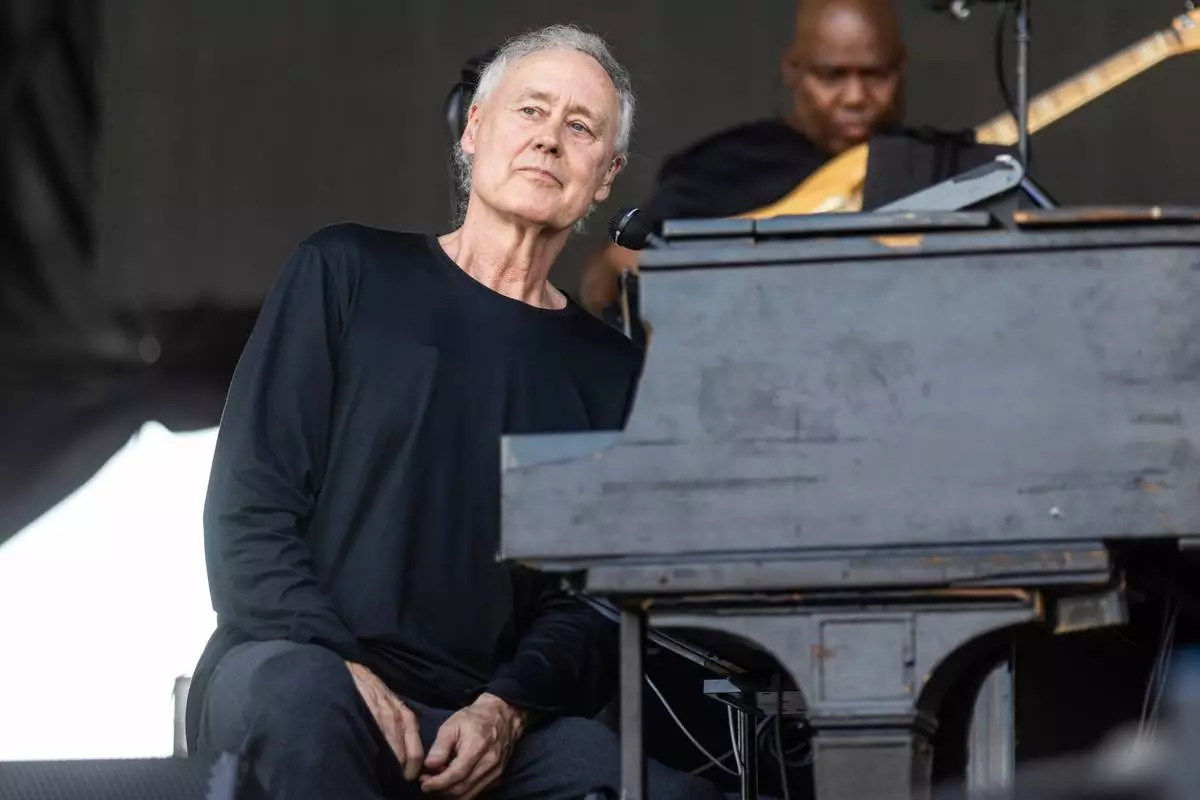
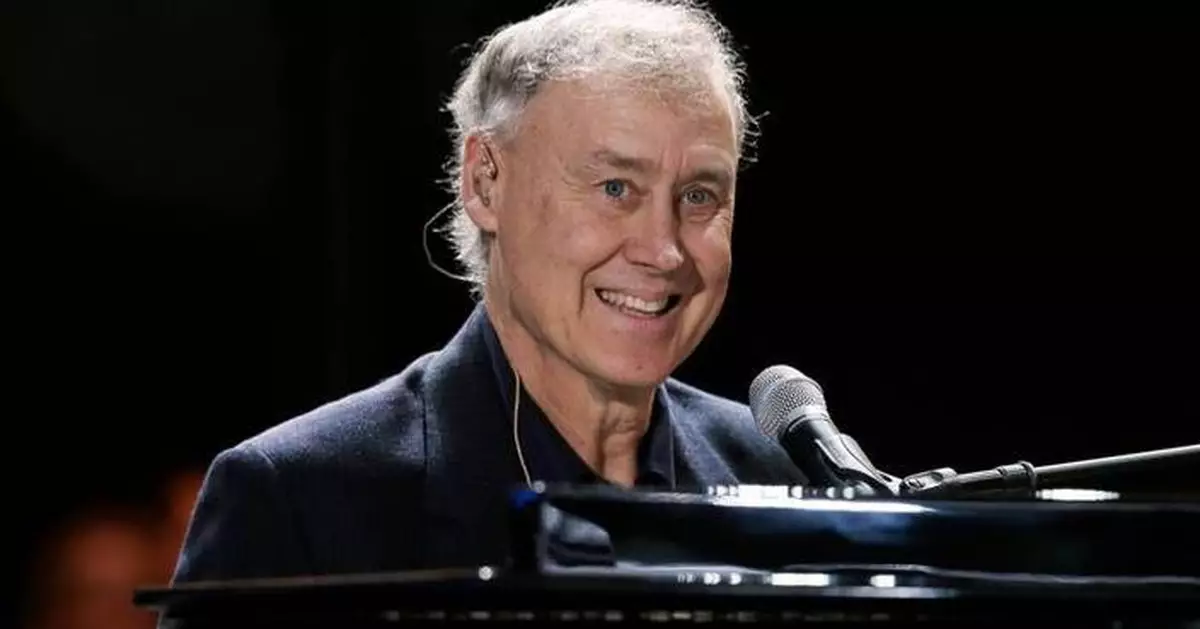
FILE - Bruce Hornsby performs during Bourbon and Beyond music festival in Louisville, Ky., on Sept. 20, 2024. (Photo by Amy Harris/Invision/AP, File)
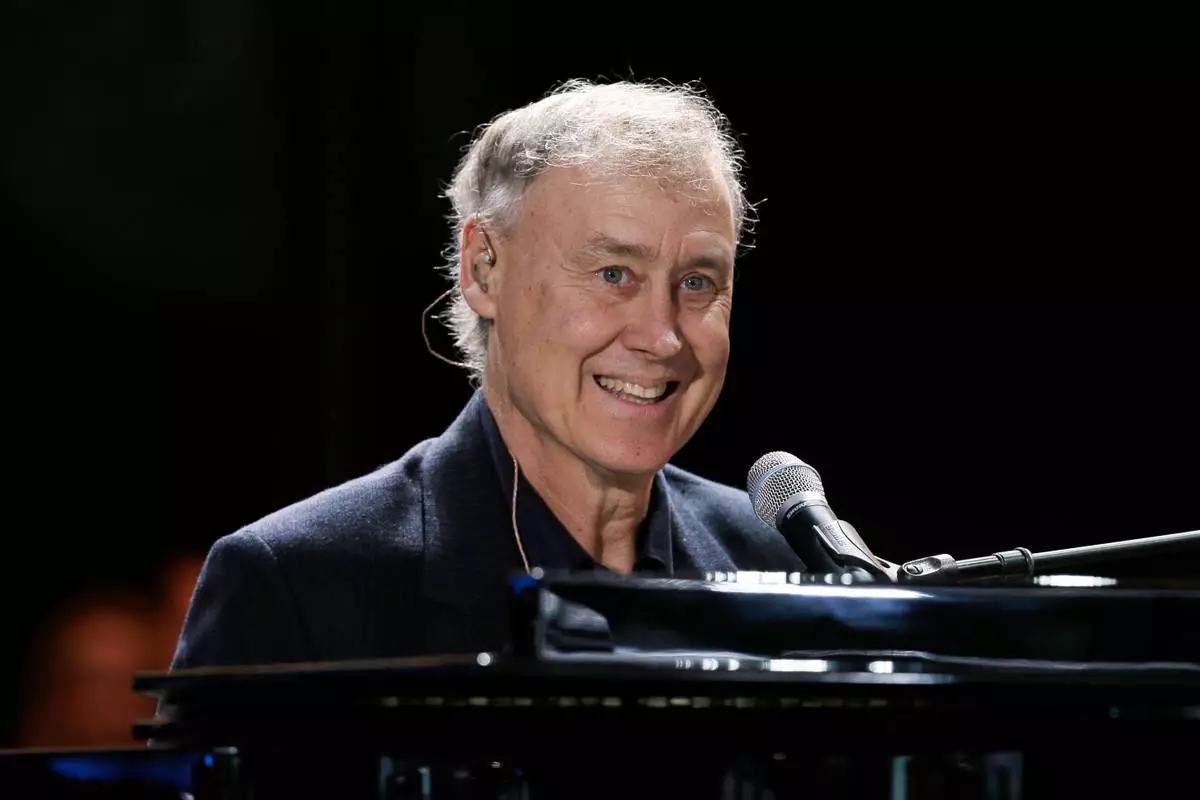
FILE - Musician Bruce Hornsby performs at the North American International Auto Show in Detroit on Jan. 14, 2013. (AP Photo/Paul Sancya, File)
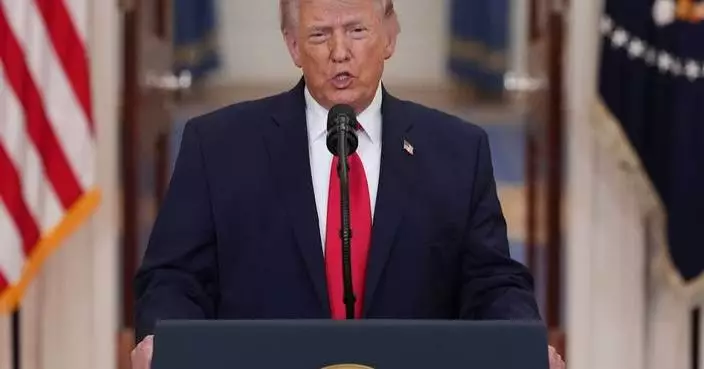
WASHINGTON (AP) — President Donald Trump said Thursday that Pam Bondi is out as his attorney general, ending the contentious tenure of a loyalist who upended the Justice Department’s culture of independence from the White House, oversaw large-scale firings of career employees and moved aggressively to investigate the Republican president’s perceived enemies.
The announcement follows months of scrutiny over the Justice Department’s handling of files related to Jeffrey Epstein’s sex trafficking investigation that made Bondi the target of angry conservatives even with her close relationship with Trump. She also struggled to satisfy Trump’s demands to prosecute his political rivals, with multiple investigations rejected by judges or grand juries.
The former Florida attorney general came into office last year pledging that she would not play politics with the Justice Department, but she quickly started investigations of Trump foes, sparking an outcry that the law enforcement agency was being wielded as a tool of revenge to advance the president’s political and personal agenda.
Bondi ushered in a period of intense turmoil at the department that included the firings of career prosecutors deemed insufficiently loyal to Trump and the resignations of hundreds of other employees. Her departure continues a trend of Justice Department upheaval that has defined Trump’s presidency as multiple attorneys general across his two terms have either been pushed out or resigned after proving unwilling or unable to meet his demands for the position.
Bondi rejected accusations that she politicized the Justice Department and said her mission was to restore the institution’s credibility after overreach by President Joe Biden’s Democratic administration with two federal criminal cases against Trump. Bondi’s defenders have said she worked to refocus the department to better tackle illegal immigration and violent crime and brought much-needed change to an agency they believe unfairly targeted conservatives.
Bondi’s public embrace of the president, however, marked a sharp departure from her predecessors, who generally took pains to maintain an arm’s-length distance from the White House to protect the impartiality of investigations and prosecutions. Bondi postured herself as Trump’s chief supporter and protector, praising and defending him in congressional hearings and placing a banner with his face on the exterior of Justice Department headquarters.
She called for an end to the “weaponization” of law enforcement she said occurred under the Biden administration, even though Biden’s attorney general, Merrick Garland, and Jack Smith, the special counsel who produced two cases against Trump, have said they followed the facts, the evidence and the law in their decision-making. Bondi’s critics, meanwhile, said she was the one who had politicized the agency to do the president’s bidding.
“You’ve turned the People’s Department of Justice into Trump’s instrument of revenge,” Rep. Jamie Raskin of Maryland, the top Democrat on the House Judiciary committee, said at a February hearing.
Bondi delivered a combative performance but few substantive answers at that hearing as she angrily insulted her Democratic questioners with name-calling, praised Trump over the performance of the stock market — “The Dow is up over 50,000 right now” —- and openly aligned herself as in sync with a president whom she painted as a victim of past impeachments and investigations.
Even Republicans began to challenge her, with the Republican-led House Oversight Committee last month issuing a subpoena to her to appear for a closed-door interview about the Epstein files.
Under Bondi’s leadership, the department opened investigations into a string of Trump foes, including Federal Reserve Chair Jerome Powell, New York Attorney General Letitia James, former FBI Director James Comey and former CIA Director John Brennan. The high-profile prosecutions of Comey and James were short-lived as they were quickly thrown out by a judge who ruled that the prosecutor who brought the cases was illegally appointed.
Trump repeatedly publicly praised and defended Bondi but also showed flashes of impatience with his attorney general’s efforts to meet his demands to prosecute his rivals. In one extraordinary social media post last year, Trump called on Bondi to move quickly to prosecute his foes, including James and Comey, telling her: “We can’t delay any longer, it’s killing our reputation and credibility.”
Bondi oversaw the exodus of thousands of career employees — both through firings and voluntary departures — including lawyers who prosecuted violent attacks on police at the U.S. Capitol on Jan. 6, 2021; environmental, civil rights and ethics enforcers; counterterrorism prosecutors; and others.
She struggled to overcome early stumbles over the Epstein files that angered conservatives eager for government bombshells about the case, which has long fascinated conspiracy theorists. She herself had fed the conspiracy theory machine with a suggestion in a 2025 Fox News Channel interview that Epstein’s “client list” was sitting on her desk for review. The department later acknowledged that no such document exists.
Bondi was ridiculed over a move to hand out binders of Epstein files to conservative influencers at the White House only for it to be later revealed that the documents included no new revelations. And despite promises that more files were going to become public, the Justice Department in July said no more would be released, prompting Congress to pass a bill to force the agency to do so.
The Epstein files fumbles led to a stunning public criticism from White House chief of staff Susie Wiles, a close friend of Bondi’s, who told Vanity Fair that the attorney general “completely whiffed.” The Justice Department’s release of millions of pages of Epstein files did little to tamp down criticism, prompting a House committee with the support of five Republicans to subpoena Bondi to answer questions under oath.
Bondi, who defended Trump during his first impeachment trial, was his second choice to lead the Justice Department, picked for the role after former Rep. Matt Gaetz of Florida withdrew his name from consideration amid scrutiny over sex trafficking allegations.
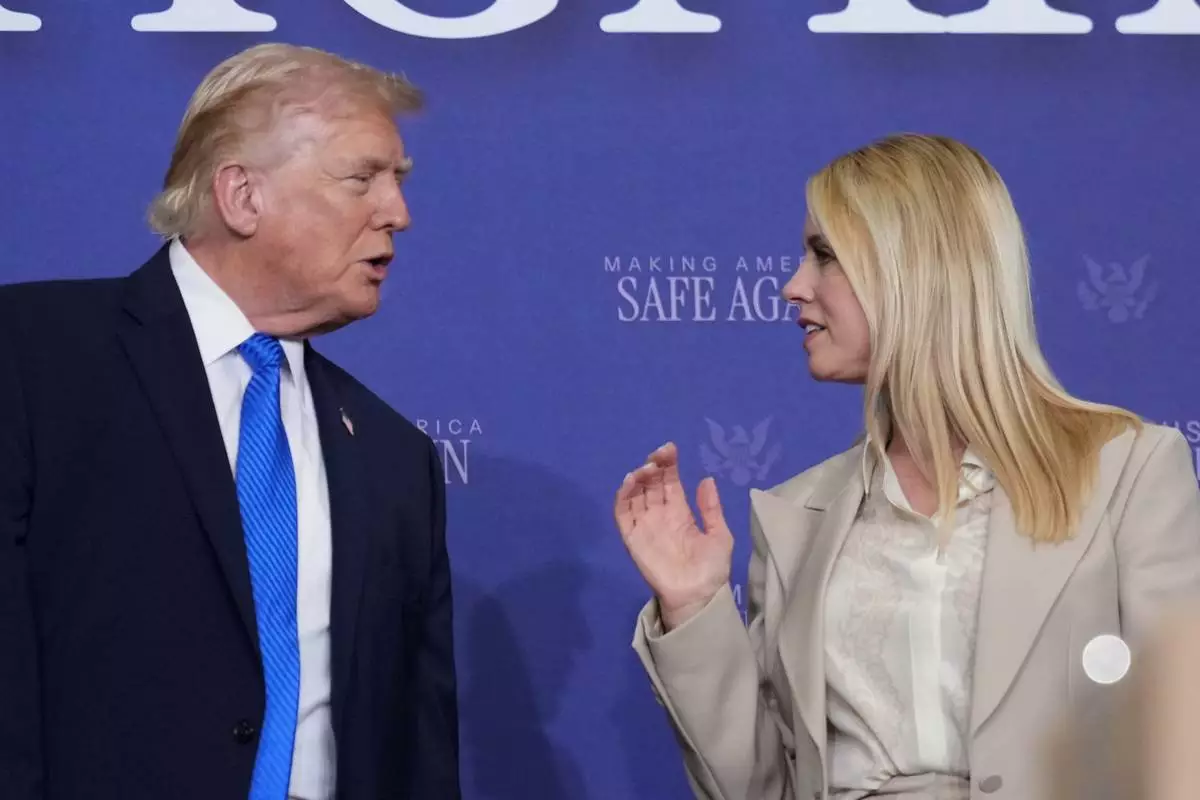
President Donald Trump speaks with Attorney General Pam Bondi during a roundtable discussion on public safety at a Tennessee Air National Guard Base, Monday, March 23, 2026, in Memphis, Tenn. (AP Photo/Mark Schiefelbein)
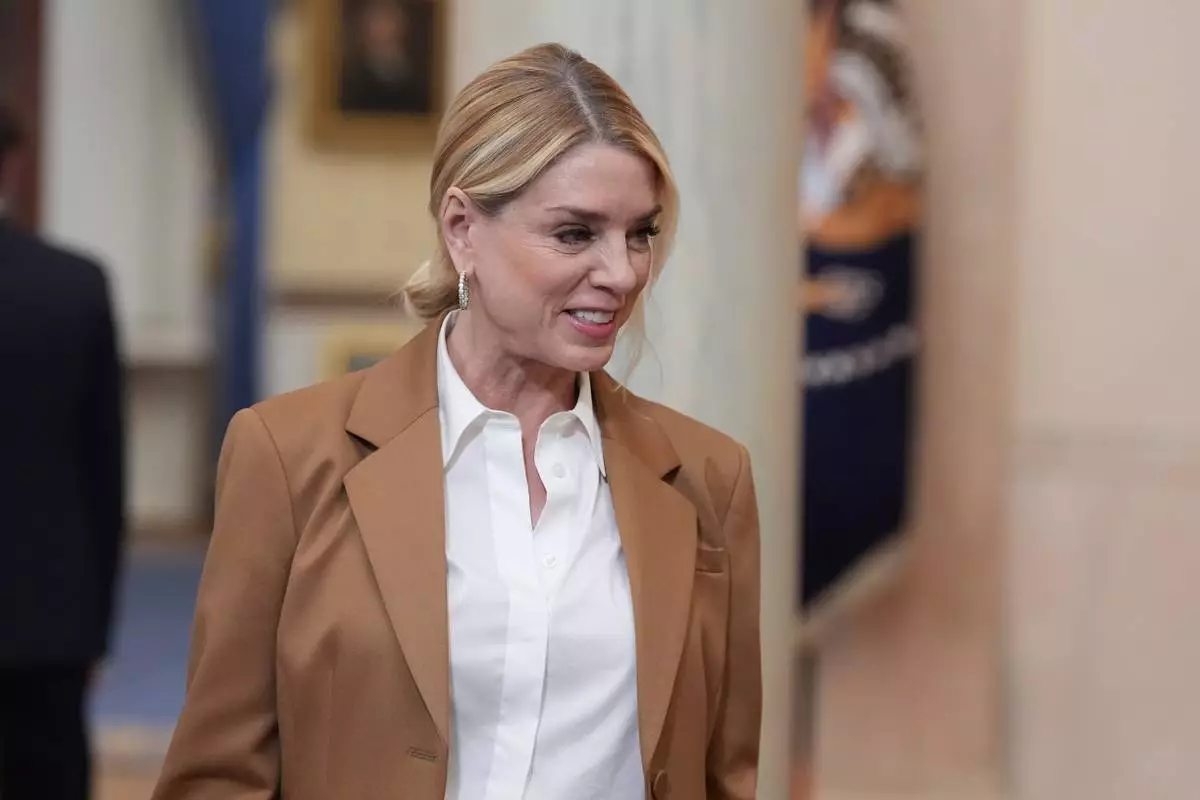
Attorney General Pam Bondi arrives before President Donald Trump speaks about the Iran war from the Cross Hall of the White House on Wednesday, April 1, 2026, in Washington. (AP Photo/Alex Brandon, Pool)
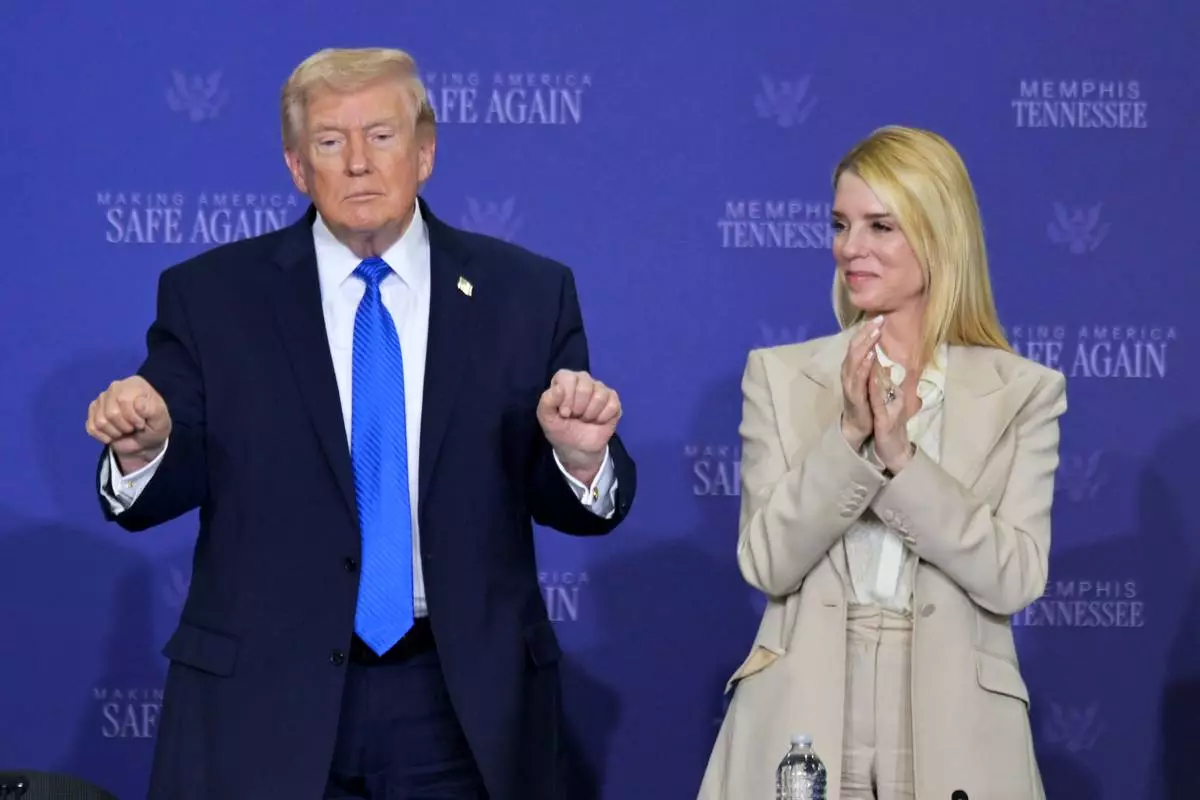
President Donald Trump participates in a roundtable discussion on public safety at a Tennessee Air National Guard Base, Monday, March 23, 2026, in Memphis, Tenn., with Attorney General Pam Bondi, right. (AP Photo/Bruce Newman)
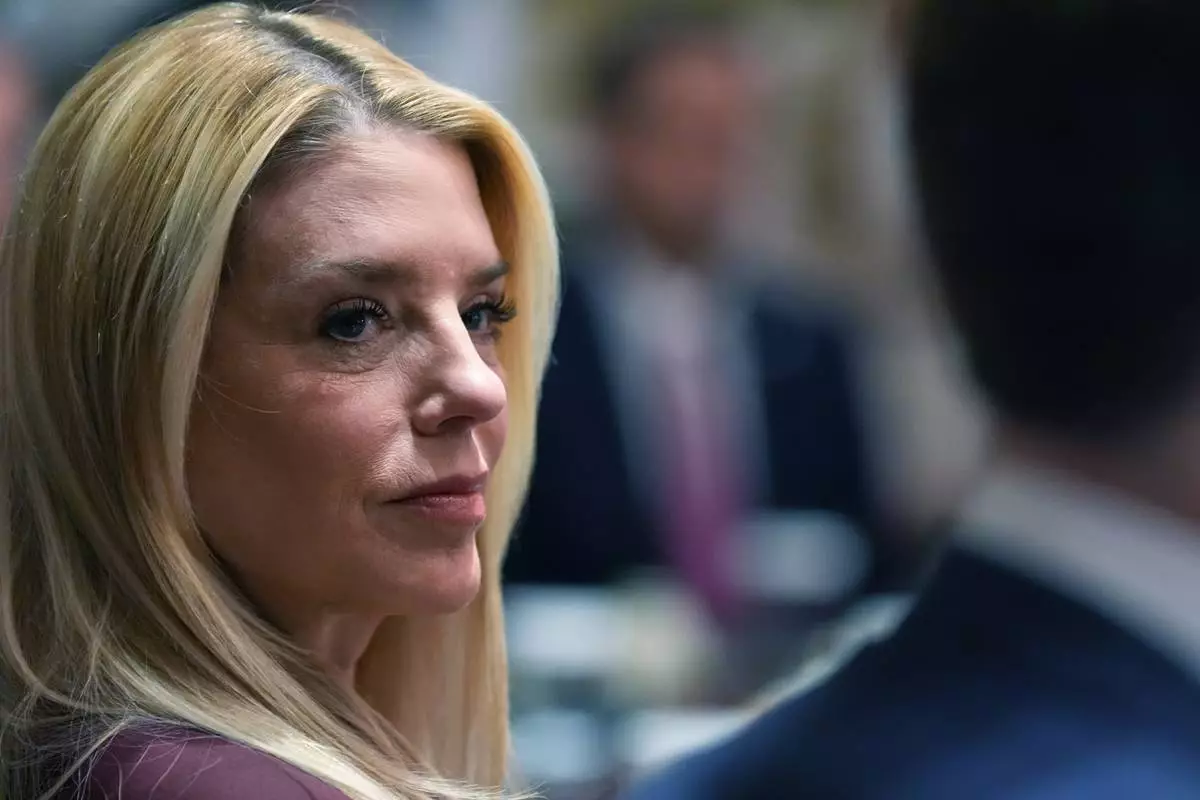
Attorney General Pam Bondi listens during a Cabinet meeting at the White House, Thursday, March 26, 2026, in Washington. (AP Photo/Alex Brandon)
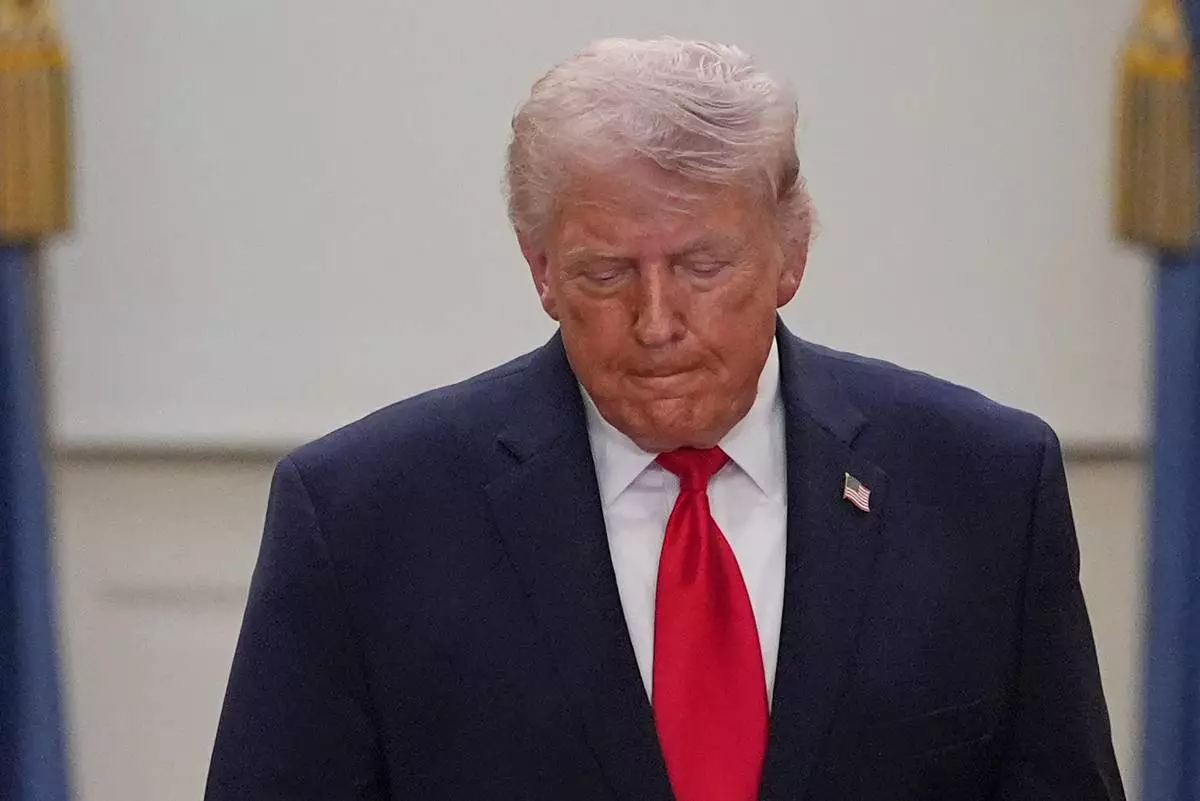
President Donald Trump walks from the Blue Room to speak about the Iran war from the Cross Hall of the White House on Wednesday, April 1, 2026, in Washington. (AP Photo/Alex Brandon, Pool)