Skip to Content Facebook Feature Image

White House set to release Trump's budget with major increase in defense spending

News

White House set to release Trump's budget with major increase in defense spending
News

News

White House set to release Trump's budget with major increase in defense spending

2026-04-03 12:01 Last Updated At:13:11

WASHINGTON (AP) — The White House is set to release President Donald Trump's 2027 budget Friday, a sweeping blueprint that could boost Pentagon spending to $1.5 trillion, the largest of its kind in decades, as the U.S. focuses on military investments rather than other domestic programs.

Even before the U.S.-led war against Iran, the Republican president had indicated he wanted to bolster defense spending to modernize the military for 21st-century threats. Separately, the Pentagon last month proposed $200 billion for the war effort and to backfill munitions and supplies.

Trump, speaking ahead of an address to the nation this week about the Iran war, signaled the military is his priority, setting up a clash ahead in Congress.

“We’re fighting wars. We can’t take care of day care,” Trump said at a private White House event Wednesday.

“It’s not possible for us to take care of day care, Medicaid, Medicare — all these individual things,” he said. “They can do it on a state basis. You can’t do it on a federal.”

The president's annual budget more broadly is considered a reflection of the administration's values and does not carry the force of law. The massive document typically highlights an administration’s priorities, but Congress, which handles federal spending issues, is free to reject it and often does.

With the nation running nearly $2 trillion annual deficits and the debt swelling past $39 trillion, the federal balance sheets have long been operating in the red.

About two-thirds of the nation's estimated $7 trillion in annual spending covers the Medicare and Medicaid health care programs, as well as Social Security income, which are essentially growing — along with an aging population — on autopilot.

The rest of the annual budget has typically been more evenly split between defense and domestic accounts, nearly $1 trillion each, which is where much of the debate in Congress takes place.

The GOP's big tax breaks bill that Trump signed into law last year boosted his priorities beyond the budget process — with at least $150 billion for the Pentagon over the next several years, and $170 billion for Trump’s immigration and deportation operations at the Department of Homeland Security.

This year’s White House document, prepared by Budget Director Russ Vought, is intended to provide a road map from the president to Congress as lawmakers build their own budgets and annual appropriations bills to keep the government funded. Vought spoke to House GOP lawmakers on a private call Thursday.

The president's budget arrives as the House and Senate remain tangled over current-year spending and stalemated over DHS funding, with Democrats demanding changes to Trump’s immigration enforcement regime that Republicans are unwilling to accept.

Trump announced Thursday he would sign an executive order to pay all DHS workers who have gone without paychecks during the record-long partial government shutdown that has reached 49 days. The Republican leadership in Congress reached an agreement this week on a path forward to fund the department, but lawmakers are away on spring break and have not yet voted on any new legislation.

Last year, in the president's first budget since returning to the White House, Trump sought to fulfill his promise to vastly reduce the size and scope of the federal government, reflecting the efforts of billionaire Elon Musk's Department of Government Efficiency.

As DOGE slashed through federal offices and Vought sought to claw back funds, Congress did not always agree.

For example, Trump sought a roughly one-fifth decrease in non-defense spending for the current budget year ending Sept. 30, but Congress kept such spending relatively flat.

Some of the programs that Trump tried to eliminate entirely, such as assisting families with their energy costs, got a slight uptick in funding. Others got flat funding, such as the Community Development Block Grants that states and local communities use to fund an array of projects intended mostly to help low-income communities through new parks, sewer systems and affordable housing.

Lawmakers have also focused on ensuring the administration spends federal dollars as directed by Congress. This year’s spending bills contained what Sen. Patty Murray, the ranking Democratic member of the Senate Appropriations Committee, described as “hundreds upon hundreds of specific funding levels and directives” that the administration is required to follow.
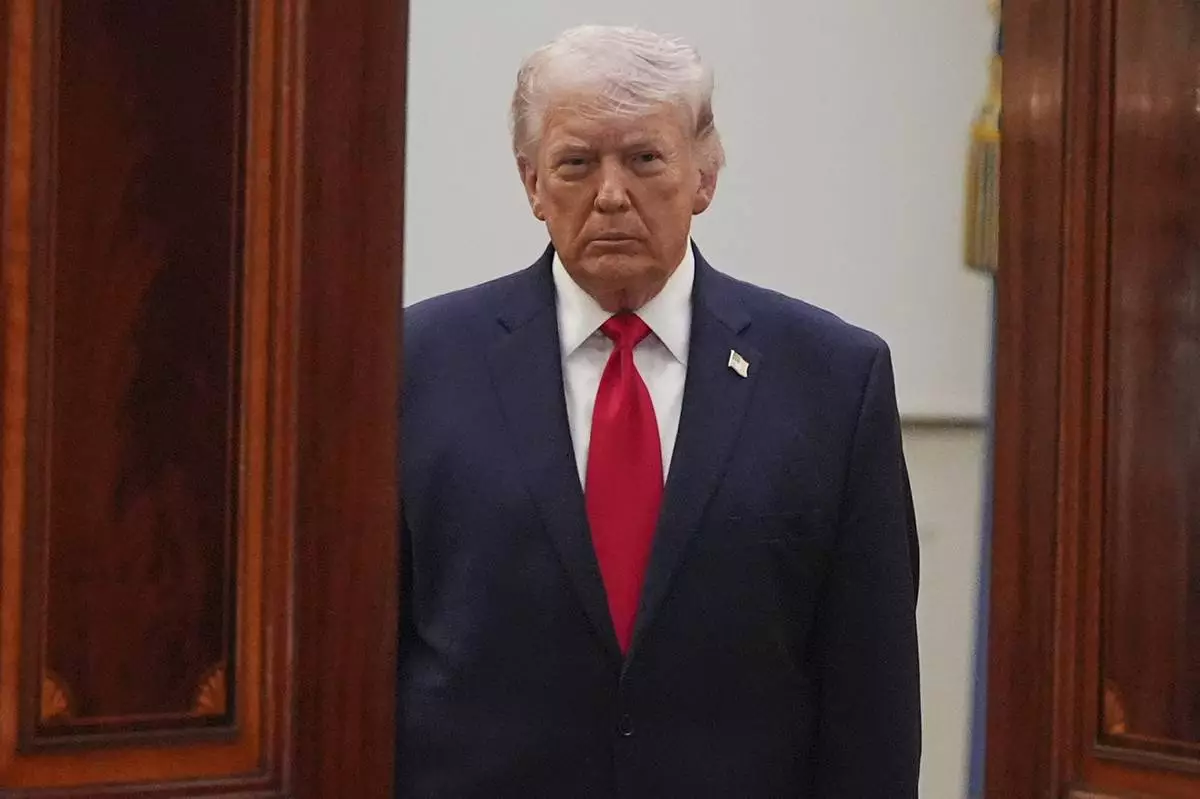
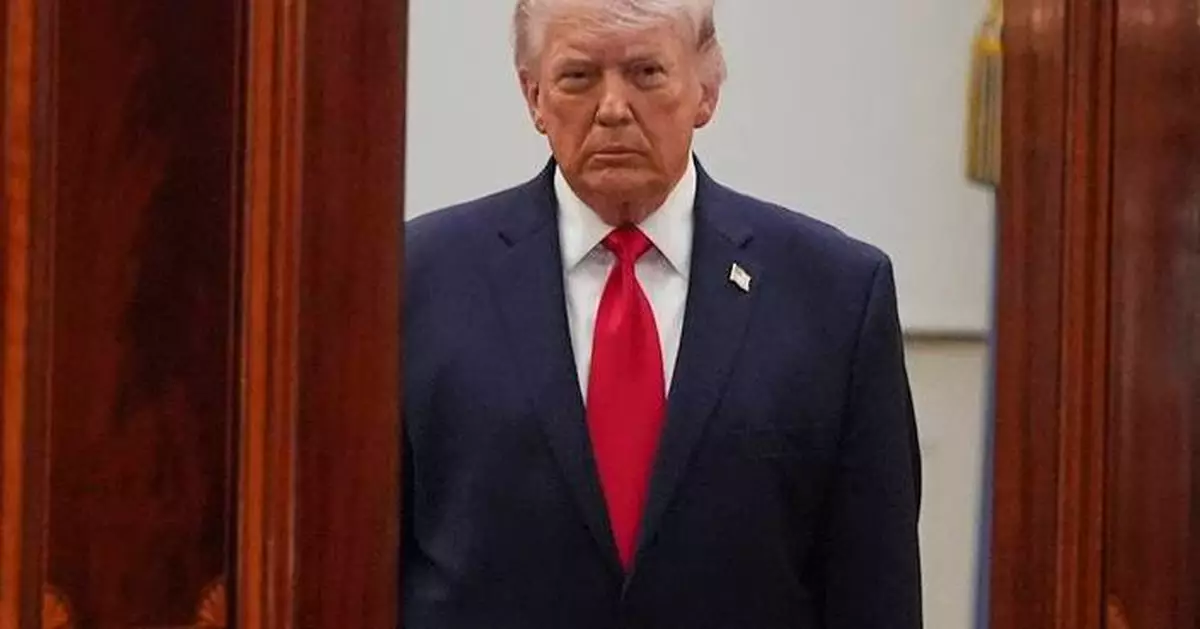
President Donald Trump arrives from the Blue Room to speak about the Iran war from the Cross Hall of the White House on Wednesday, April 1, 2026, in Washington. (AP Photo/Alex Brandon, Pool)

President Donald Trump arrives from the Blue Room to speak about the Iran war from the Cross Hall of the White House on Wednesday, April 1, 2026, in Washington. (AP Photo/Alex Brandon, Pool)
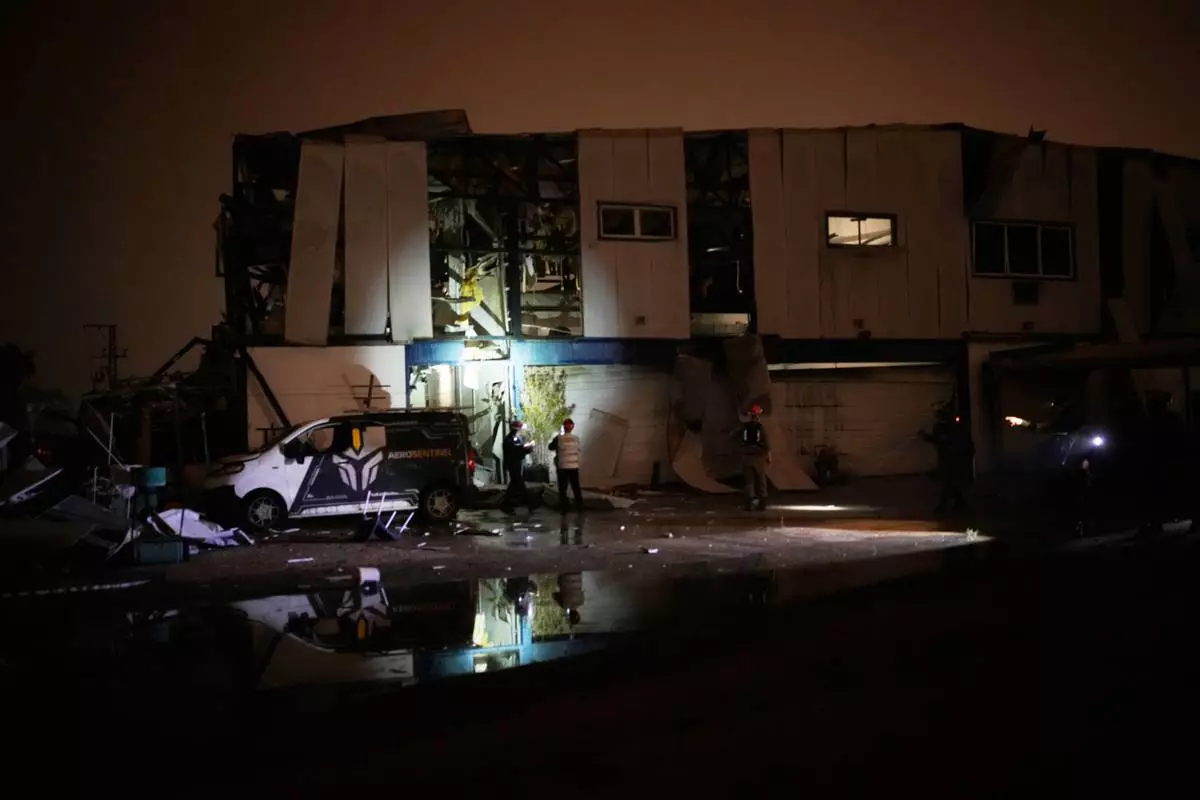
DUBAI, United Arab Emirates (AP) — Iran fired on targets across the Middle East while American and Israeli airstrikes hit the Islamic Republic early Friday as the war neared the end of its fifth week unabated and the U.N. Security Council prepared to meet over Tehran’s stranglehold on the Strait of Hormuz.

Despite claims from the U.S. and Israel that Iran’s military capabilities have been all but destroyed, Tehran has continued to keep the pressure on Israel and its Gulf Arab neighbors. Bahrain and Kuwait both reported early morning barrages from Iran, while Israel warned of incoming missiles.

Activists reported strikes around Tehran and the central city of Isfahan, but it wasn’t immediately clear what was hit.

Iran’s attacks on Gulf region energy infrastructure and its tight grip on the Strait of Hormuz, through which a fifth of the world’s oil and natural gas transits in peacetime, have sent oil prices skyrocketing and is impacting global economies.

Spot prices of Brent crude, the international standard, were around $109 early Friday, up more than 50% from Feb. 28 when Israel and the U.S. started the war with their attacks on Iran.

Shipping had flowed freely through the strait before the war, but U.S. President Donald Trump has said it’s not now Washington’s responsibility to get the waterway reopened, instead putting the onus on others, saying this week that the countries that depend more on fuel shipped through Hormuz should “build some delayed courage” and go “take it.”

The U.N. Security Council was expected to vote Saturday on a proposal from Bahrain that would authorize defensive action to ensure vessels can safely transit the strait. Bahrain’s initial draft would have allowed countries to “use all necessary means” to secure the strait, but Russia, China and France — who have veto power on the Council — expressed opposition to approving the use of force.

Speaking Thursday in South Korea, French President Emmanuel Macron said the American expectation that the Strait of Hormuz could be reopened by force was unrealistic.

Macron said a military operation “would take an infinite amount of time and would expose anyone passing through the strait to coastal threats from (Iran’s) Revolutionary Guard." He added that reopening of the strait “can only be done in coordination with Iran,” through negotiations that would follow a potential ceasefire.

Talks organized by Britain and involving more than 40 countries focused on political rather than military means to secure the strait. The nations, which didn't include the U.S., urged increased diplomatic pressure on Iran and possible sanctions.

More than 1,900 people have been killed in Iran during the war, while 19 have been reported dead in Israel. More than two dozen people have died in Gulf states and the occupied West Bank, while 13 U.S. service members have been killed.

More than 1,300 people have been killed and more than 1 million displaced in Lebanon, where Israel has launched a ground invasion in its fight with the pro-Iranian Hezbollah militant group. Ten Israeli soldiers have also died there.

Rising reported from Bangkok. AP journalists Sylvie Corbet in Paris and Edith M. Lederer at the United Nations contributed to this report.

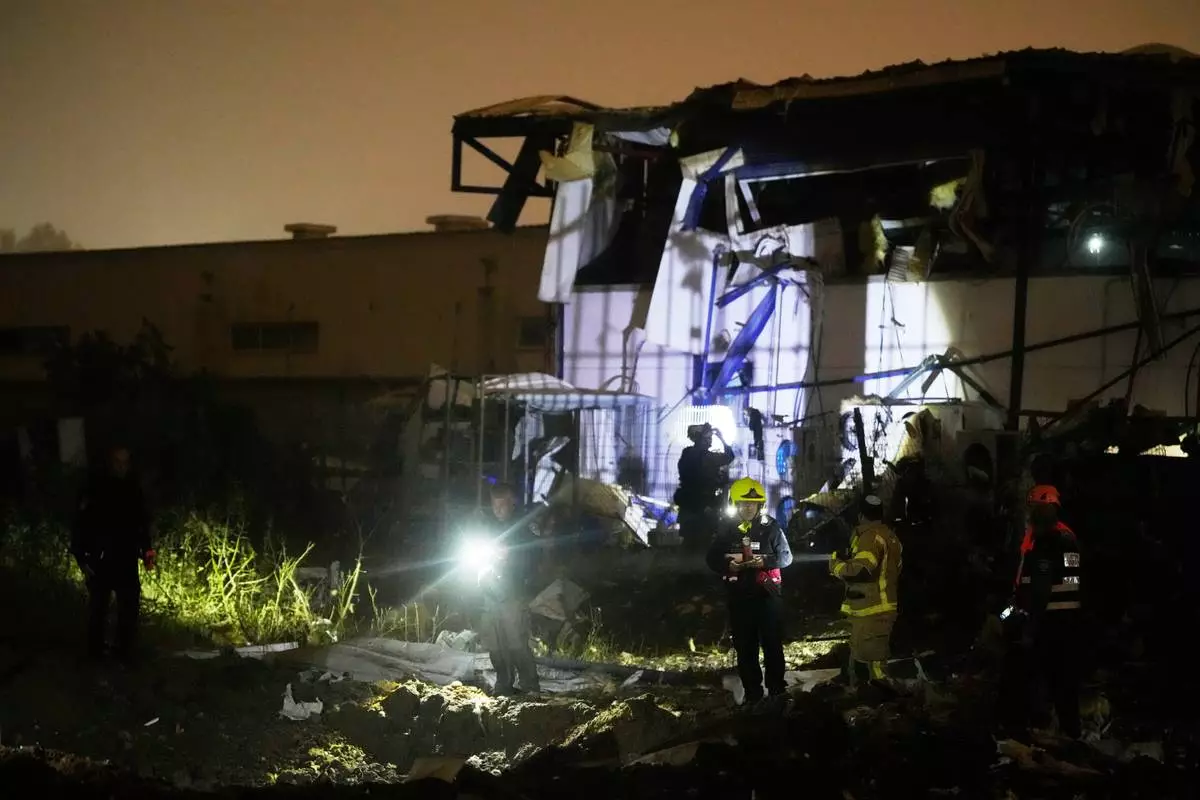
Israeli security forces and rescue teams inspect a site struck by an Iranian missile in Petah Tikva, Israel,Thursday, April 2, 2026. (AP Photo/Ohad Zwigenberg)

Israeli security forces and rescue teams inspect a site struck by an Iranian missile in Petah Tikva, Israel,Thursday, April 2, 2026. (AP Photo/Ohad Zwigenberg)

A boy who fled with his family following Israeli strikes in southern Lebanon sits inside the van they are using as shelter in Sidon, Lebanon, Thursday, April 2, 2026. (AP Photo/Emilio Morenatti)

A boy who fled with his family following Israeli strikes in southern Lebanon sits inside the van they are using as shelter in Sidon, Lebanon, Thursday, April 2, 2026. (AP Photo/Emilio Morenatti)

Israeli security forces and rescue teams inspect a site struck by an Iranian missile in Petah Tikva, Israel,Thursday, April 2, 2026. (AP Photo/Ohad Zwigenberg)

Israeli security forces and rescue teams inspect a site struck by an Iranian missile in Petah Tikva, Israel,Thursday, April 2, 2026. (AP Photo/Ohad Zwigenberg)

Recommended Articles