WASHINGTON (AP) — The U.S. job market likely rebounded last month from a dismal February. But the improvement may not last long as the American economy absorbs fallout from the Iran war and a surge in oil prices.
The Labor Department is expected to report Friday that companies, government agencies and nonprofits added 60,000 jobs in March after shedding 92,000 in February, The unemployment rate is expected to stay at a healthy 4.4%, according to a survey of forecasters by the data firm FactSet.
U.S. payrolls were probably lifted last month by warmer weather and the return of 31,000 Kaiser Permanente employees to work after the end of a strike in February.
Nancy Vanden Houten, lead U.S. economist at Oxford Economics, expects the Iran war – and the resulting surge in oil and gasoline prices – to weaken the job market. But “the impact of the war might not be felt for some time,’’ she wrote in a commentary. Changes in businesses’ plans to hire and invest will take time to show up in the economic data.
Moreover, big income tax refunds this spring will keep consumers spending and drive economic activity. But, she added, “another month or two of reasonably good labor market and economic data won’t be a reason to conclude that the economy isn’t facing downside risks related to the war.’’
Adam Schickling, senior economist at the investment firm Vanguard, now expects U.S. unemployment to rise to 4.6% at year’s end; before the Iran war, he’d expected joblessness to dip to 4.2%.
The American job market is already in a slump.
Last year, employers added an average of just 9,700 jobs a month, the weakest hiring outside a recession since 2002. Businesses have been reluctant to bring on new workers partly because of uncertainty arising from President Donald Trump’s trade and immigration policies. One measure released by the Labor Department on Monday showed the weakest hiring since April 2020 – in the middle of COVID-19 lockdowns.
But firms have also been reluctant to let go of their existing employees, creating what economists describe as a “no-hire, no-fire’’ scenario that locks young applicants out of the job market. At the same time, there are growing worries that artificial intelligence is taking entry-level jobs.
New jobs are heavily concentrated in health care and social assistance (which includes daycare and vocational rehabilitation centers). Excluding that category, all other private sector employers collectively cut 285,000 jobs over the past year.
Vanguard’s Schickling expects healthcare and social assistance to account for 45% of hiring over the next four years, versus a historical average of just 20%. The trend reflects an aging U.S. population. A graying Japan saw the same thing in the early 2010s, Schickling wrote in a commentary.
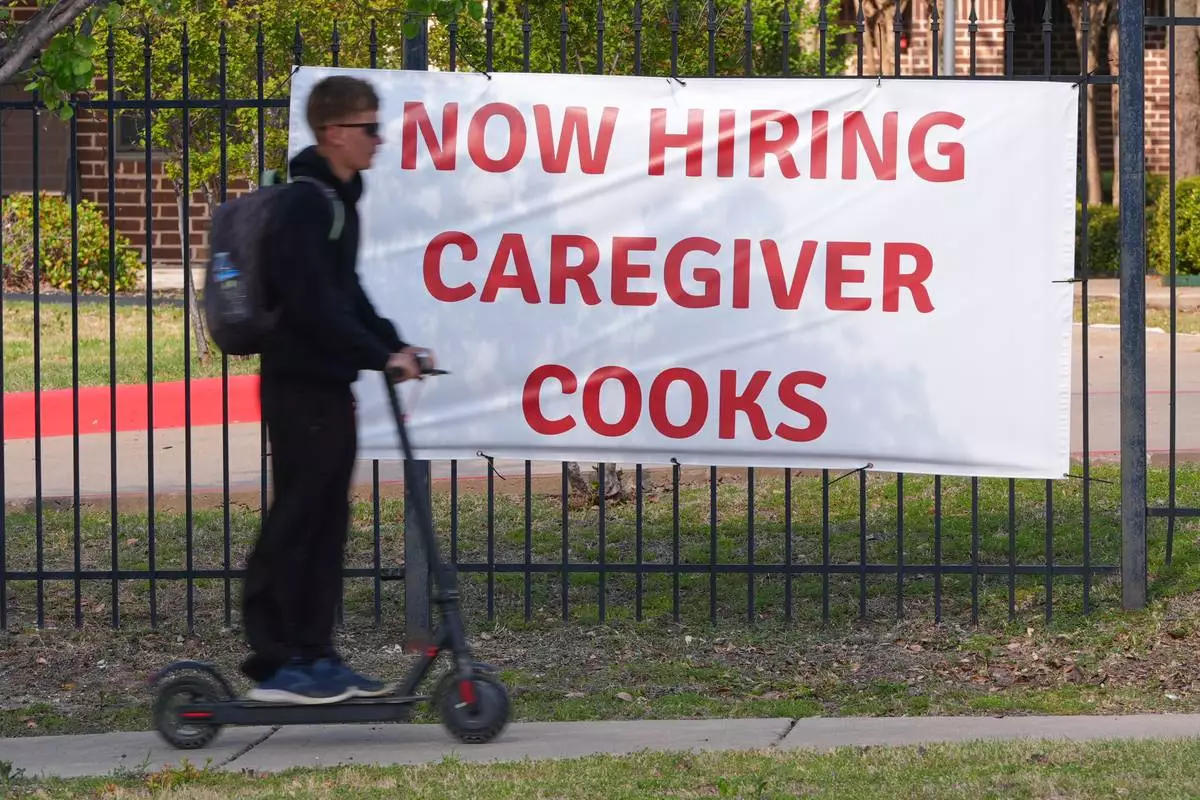
A now hiring sign sits by the sidewalk as a rider on a scooter passes in Garland, Texas, Monday, March 23, 2026. (AP Photo/LM Otero)
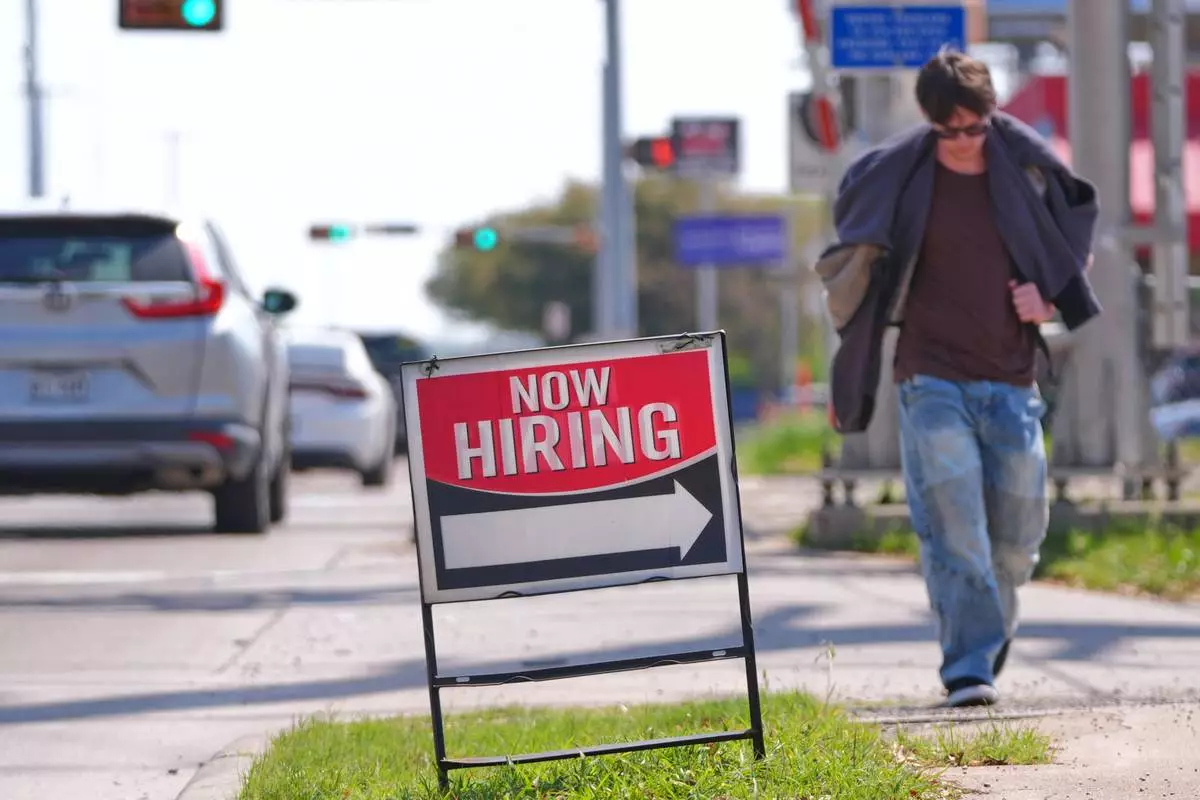
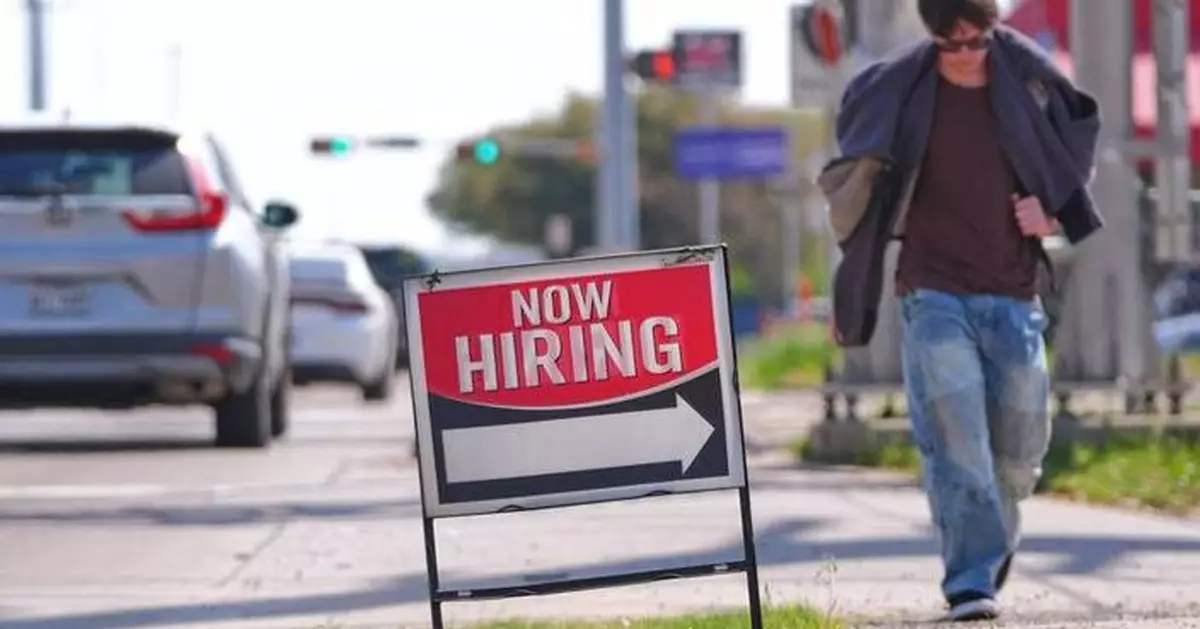
A now hiring sign sits on the side of the road in Garland, Texas, Monday, March 23, 2026. (AP Photo/LM Otero)
DUBAI, United Arab Emirates (AP) — Iran fired on targets across the Middle East while American and Israeli airstrikes hit the Islamic Republic early Friday as the war neared the end of its fifth week unabated and the U.N. Security Council prepared to meet over Tehran’s stranglehold on the Strait of Hormuz.
Despite claims from the U.S. and Israel that Iran’s military capabilities have been all but destroyed, Tehran has continued to keep the pressure on Israel and its Gulf Arab neighbors. Bahrain and Kuwait both reported early morning barrages from Iran, while Israel warned of incoming missiles.
Activists reported strikes around Tehran and the central city of Isfahan, but it wasn’t immediately clear what was hit.
Iran’s attacks on Gulf region energy infrastructure and its tight grip on the Strait of Hormuz, through which a fifth of the world’s oil and natural gas transits in peacetime, have sent oil prices skyrocketing and is impacting global economies.
Spot prices of Brent crude, the international standard, were around $109 early Friday, up more than 50% from Feb. 28 when Israel and the U.S. started the war with their attacks on Iran.
Shipping had flowed freely through the strait before the war, but U.S. President Donald Trump has said it’s not now Washington’s responsibility to get the waterway reopened, instead putting the onus on others, saying this week that the countries that depend more on fuel shipped through Hormuz should “build some delayed courage” and go “take it.”
The U.N. Security Council was expected to vote Saturday on a proposal from Bahrain that would authorize defensive action to ensure vessels can safely transit the strait. Bahrain’s initial draft would have allowed countries to “use all necessary means” to secure the strait, but Russia, China and France — who have veto power on the Council — expressed opposition to approving the use of force.
Speaking Thursday in South Korea, French President Emmanuel Macron said the American expectation that the Strait of Hormuz could be reopened by force was unrealistic.
Macron said a military operation “would take an infinite amount of time and would expose anyone passing through the strait to coastal threats from (Iran’s) Revolutionary Guard." He added that reopening of the strait “can only be done in coordination with Iran,” through negotiations that would follow a potential ceasefire.
Talks organized by Britain and involving more than 40 countries focused on political rather than military means to secure the strait. The nations, which didn't include the U.S., urged increased diplomatic pressure on Iran and possible sanctions.
More than 1,900 people have been killed in Iran during the war, while 19 have been reported dead in Israel. More than two dozen people have died in Gulf states and the occupied West Bank, while 13 U.S. service members have been killed.
More than 1,300 people have been killed and more than 1 million displaced in Lebanon, where Israel has launched a ground invasion in its fight with the pro-Iranian Hezbollah militant group. Ten Israeli soldiers have also died there.
Rising reported from Bangkok. AP journalists Sylvie Corbet in Paris and Edith M. Lederer at the United Nations contributed to this report.
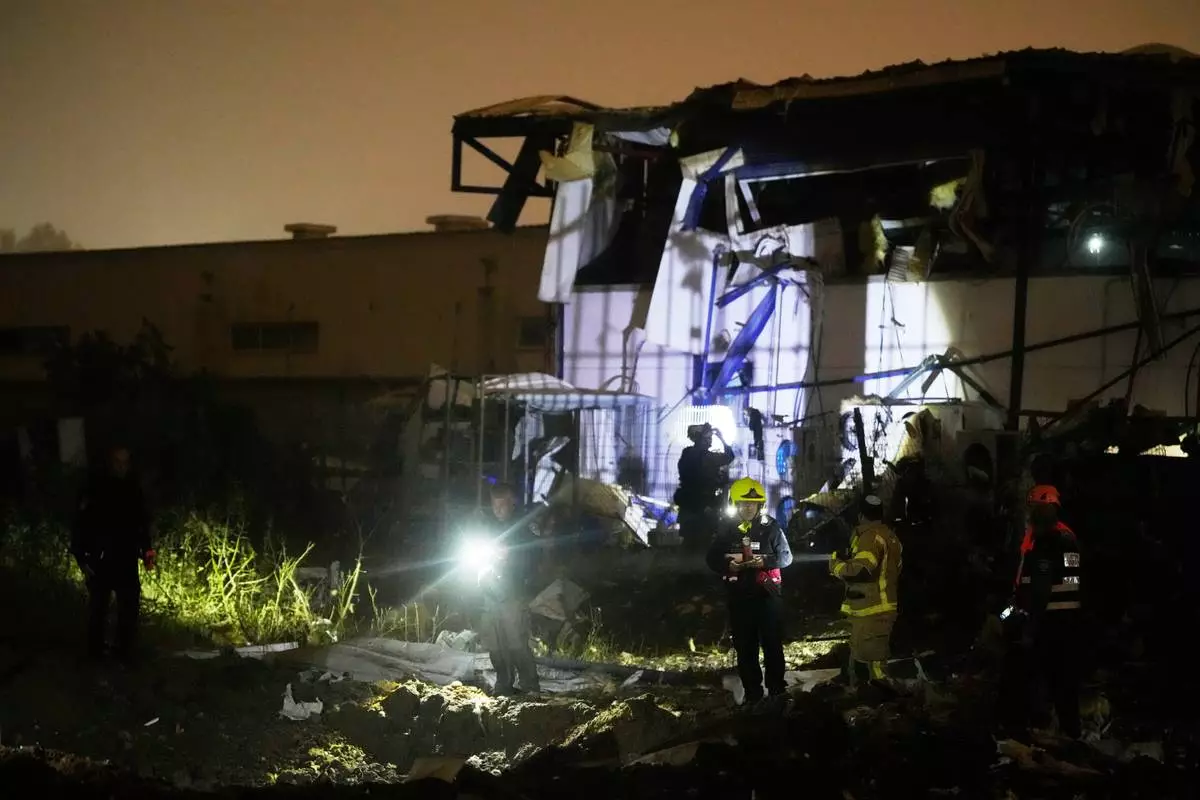
Israeli security forces and rescue teams inspect a site struck by an Iranian missile in Petah Tikva, Israel,Thursday, April 2, 2026. (AP Photo/Ohad Zwigenberg)
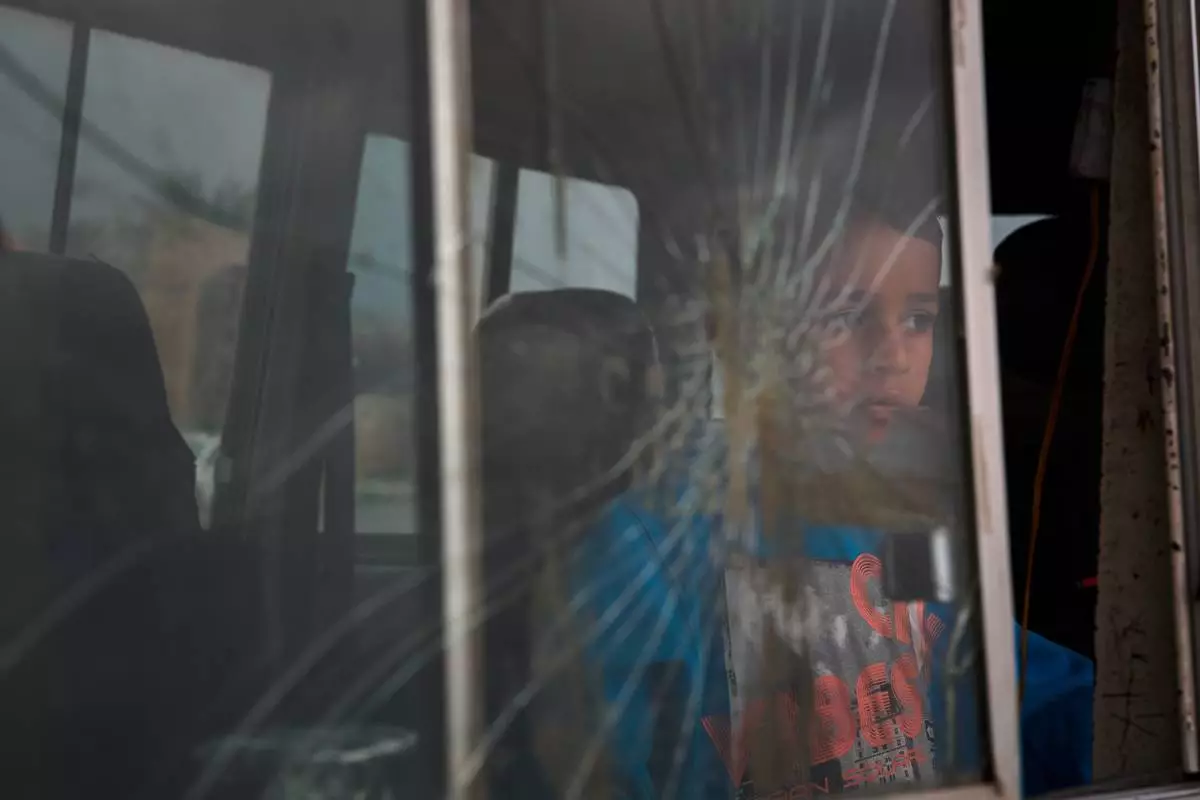
A boy who fled with his family following Israeli strikes in southern Lebanon sits inside the van they are using as shelter in Sidon, Lebanon, Thursday, April 2, 2026. (AP Photo/Emilio Morenatti)
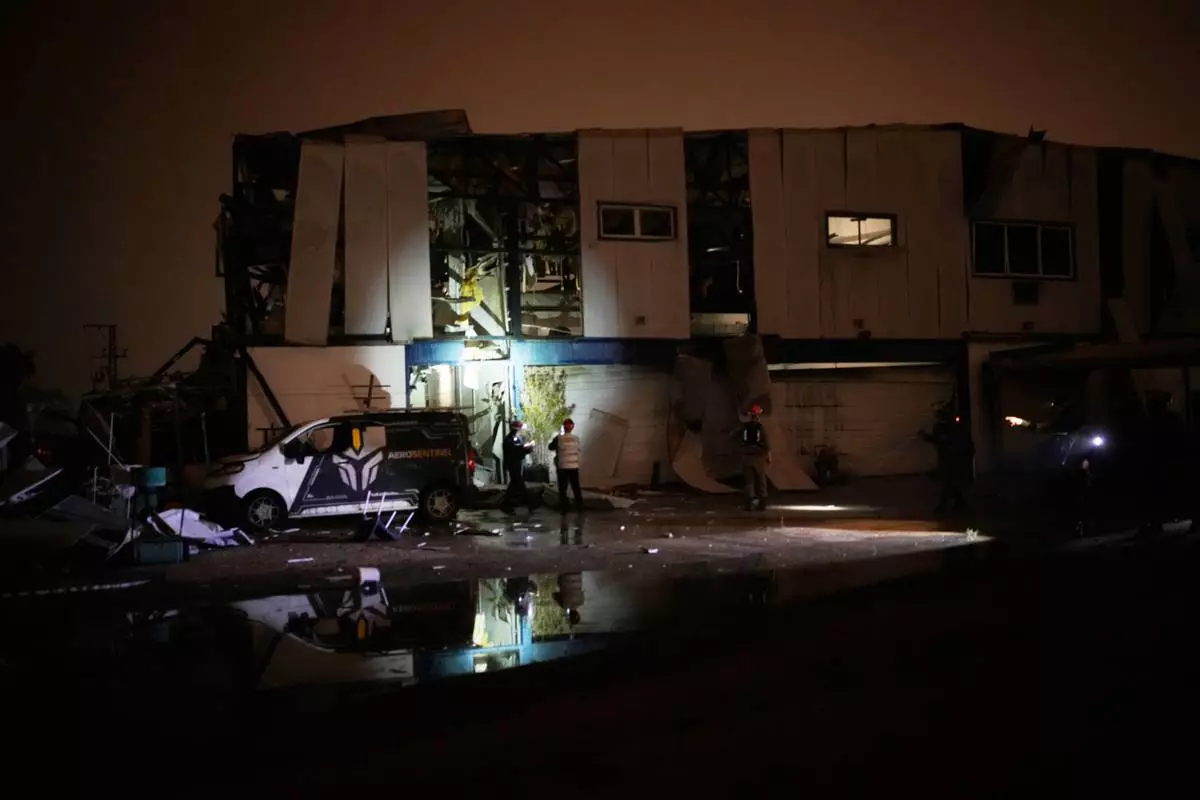
Israeli security forces and rescue teams inspect a site struck by an Iranian missile in Petah Tikva, Israel,Thursday, April 2, 2026. (AP Photo/Ohad Zwigenberg)