INDIANAPOLIS (AP) — The concept used to be so simple: Professionals played sports for money. College players did not.
Now, it is not so clear-cut, and that confusion now gets wrapped into virtually any conversation about the state of college sports. Not surprisingly, it's bubbling up at the Final Four, where Illinois has five players on the roster who boast pro experience in Europe, and Arizona has a couple of starters who came out of the European pro leagues.
Click to Gallery
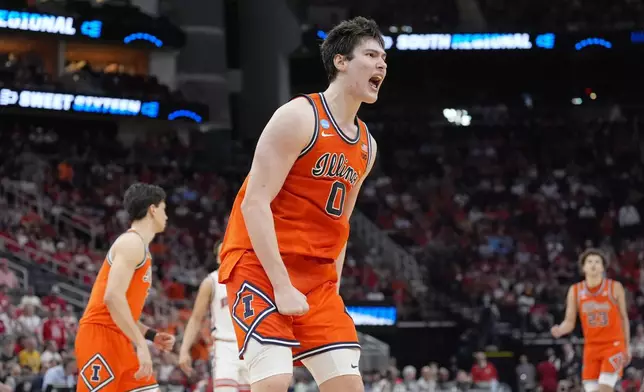
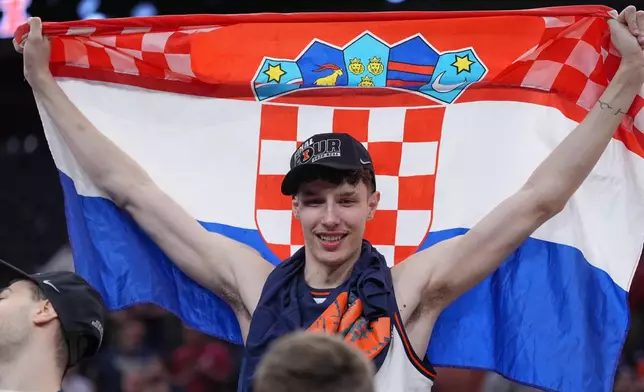
Illinois forward David Mirkovic (0) reacts during the second half against Houston in the Sweet 16 of the NCAA college basketball tournament Thursday, March 26, 2026, in Houston. (AP Photo/Ashley Landis)
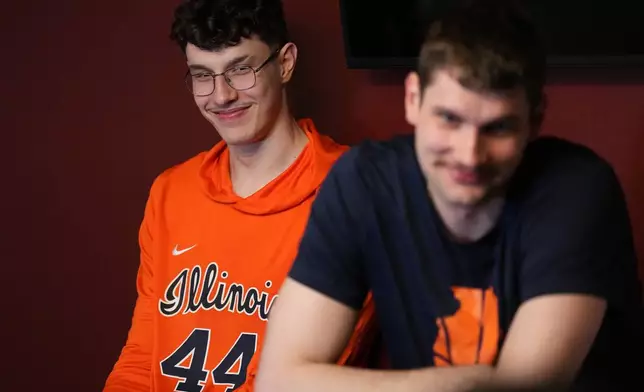
Illinois center Zvonimir Ivisic, left, listens as brother and teammate Tomislav Ivisic, right, answer questions during a news conference for the Elite Eight of the NCAA college basketball tournament, Friday, March 27, 2026, in Austin, Texas. (AP Photo/Eric Gay)
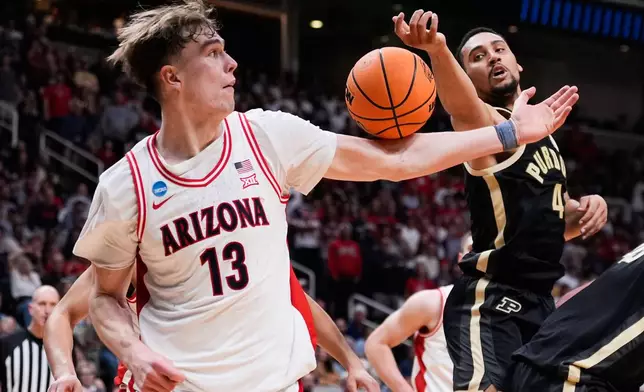
Arizona center Motiejus Krivas (13) reaches for a rebound next to Purdue forward Trey Kaufman-Renn (4) during the second half in the Elite Eight of the NCAA college basketball tournament, Saturday, March 28, 2026, in San Jose, Calif. (AP Photo/Godofredo A. Vásquez)
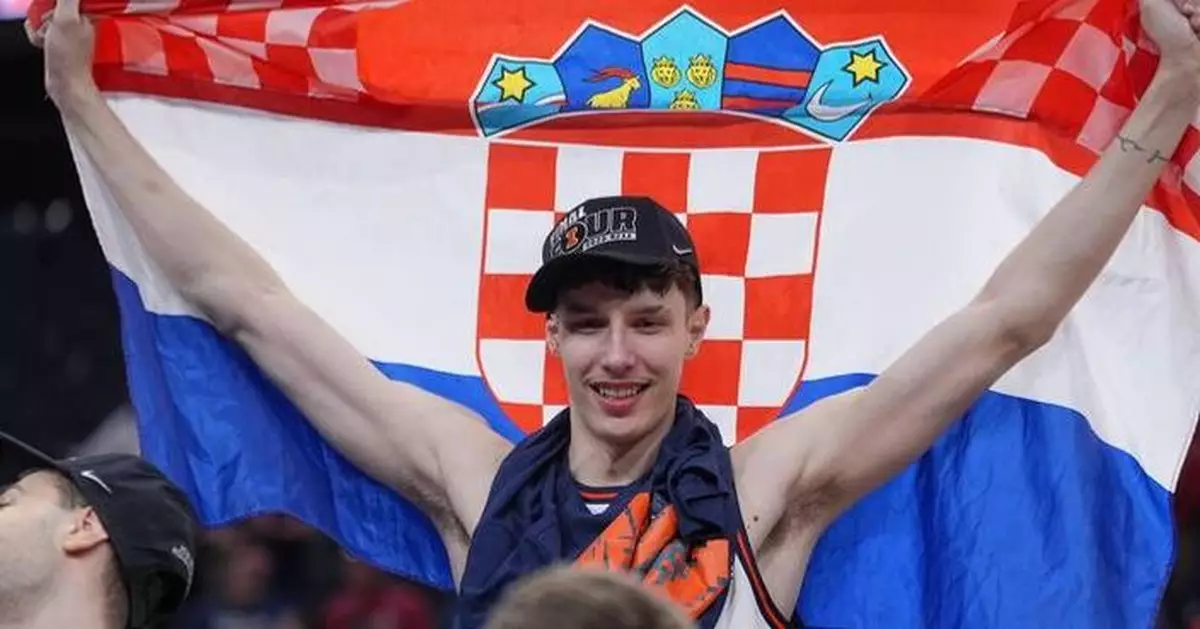
Illinois' Zvonimir Ivisic celebrates after an Elite Eight game against Iowa in the NCAA college basketball tournament Saturday, March 28, 2026, in Houston. (AP Photo/Eric Gay)
An NCAA playing field founded on the idea that amateurs play college sports has become much more of a business in which players get paid — forever considered the best way to define a pro — while their eligibility hinges on where that money comes from.
All the Illinois players with European roots are allowed to play because their pro teams were more like club teams; they didn't enter a draft or actually get drafted, the way a player might if he was looking to go to the NBA.
The topic is still so fresh that the NCAA announced just this week it was considering changing rules to bar athletes who enter and stay in a pro sports draft from coming back and competing in college, as happened in two instances earlier this season.
All of that is further jumbled by the fact that many of these players will probably make more in college than they would at their “pro” jobs — whether it be basketball, finance or coaching — thanks to the influx of name, image and likeness payments that now permeate college sports.
“The way I would describe it is it's a middle ground, between what college athletics used to be about, which was not paying, to now, where you're paying student-athletes,” Michigan athletic director Warde Manuel said. “But in a way, we've always paid student-athletes. We've given them a scholarship. We've given them something of value. Now, the only difference is, we’re adding cash to that for their name, image, likeness.”
That cash has widened the recruiting pipeline to Europe and other points overseas. Nobody has exploited it better this season than the Illini, whose “Balkan Bloc” — including twins Tomislav and Zvonimir Ivisic and David Mirkovic — accounts for 36% of both their scoring and their minutes.
Illinois' key recruiter in Europe, Geoff Alexander, explained that a European “pro” who comes to the U.S. for college is something much different than, say, a player with experience in the NBA.
“In Europe and around the world, they don't have high school basketball," Alexander said. "They go to these clubs as youths and find their path. That's like their high school. So anyone who wants to pigeonhole these guys into all this discussion about college eligibility, it's apples and oranges.”
The eligibility discussion concerns an NCAA proposal that came out this week to tweak the rules about who can play and who can't. It was partly a reaction to two players, Alabama's Charles Bediako and Baylor’s James Nnaji, who each played in college this season after entering the 2023 NBA draft.
Bediako's case drew headlines because he actually played three years in the NBA's developmental G League. He sued the NCAA after it denied Alabama's request to allow him to return to college this season, arguing he remined within his five-year eligibility window. One judge issued a temporary-restraining order that allowed Bediako to play. That lasted five games until new rulings barred him again.
Looming next could be the case of 22-year-old Amari Bailey, a former UCLA star who played 10 games in the NBA with the Charlotte Hornets. He has hired a lawyer and is seeking a return, telling ESPN, "right now, I’d be a senior in college. I'm not trying to be 27 years old playing college athletics."
Neither are the European transplants, though many certainly do play against players 27 and older in the overseas leagues before they arrive in the U.S. college system.
“If you've played in the EuroLeague, you are not a freshman,” Michigan coach Dusty May said, in reference to Arizona freshman Ivan Kharchenkov, who has played at different levels for a club team in Munich since he was 12 and could end up in the NBA soon.
Another Arizona starter, Motiejus Krivas, is from Lithuania.
Wildcats coach Tommy Lloyd spent decades at Gonzaga, a school that took a lead in international recruiting (Domantas Sabonis, Rui Hachimura) long before the onset of NIL made coming to America a more lucrative proposition for the up-and-coming European club players.
“To be honest with you, I think it’s maybe opened a few more doors,” Lloyd said. “One of the detriments to international recruiting back in the day was if a kid wanted to get paid, the European clubs could pay them legally, and obviously we couldn’t.”
Lloyd predicts that soon, “the convoluted notion of who's eligible” will get sorted out and it will become more clear that college sports is for players in their late teens and early 20s.
Illinois coach Brad Underwood acknowledges that no matter where the players come from, the business model of college sports has changed.
“I’d argue that in today’s world, all these kids are finding opportunities that allow them to receive compensation,” he said.
AP March Madness bracket: https://apnews.com/hub/ncaa-mens-bracket and coverage: https://apnews.com/hub/march-madness
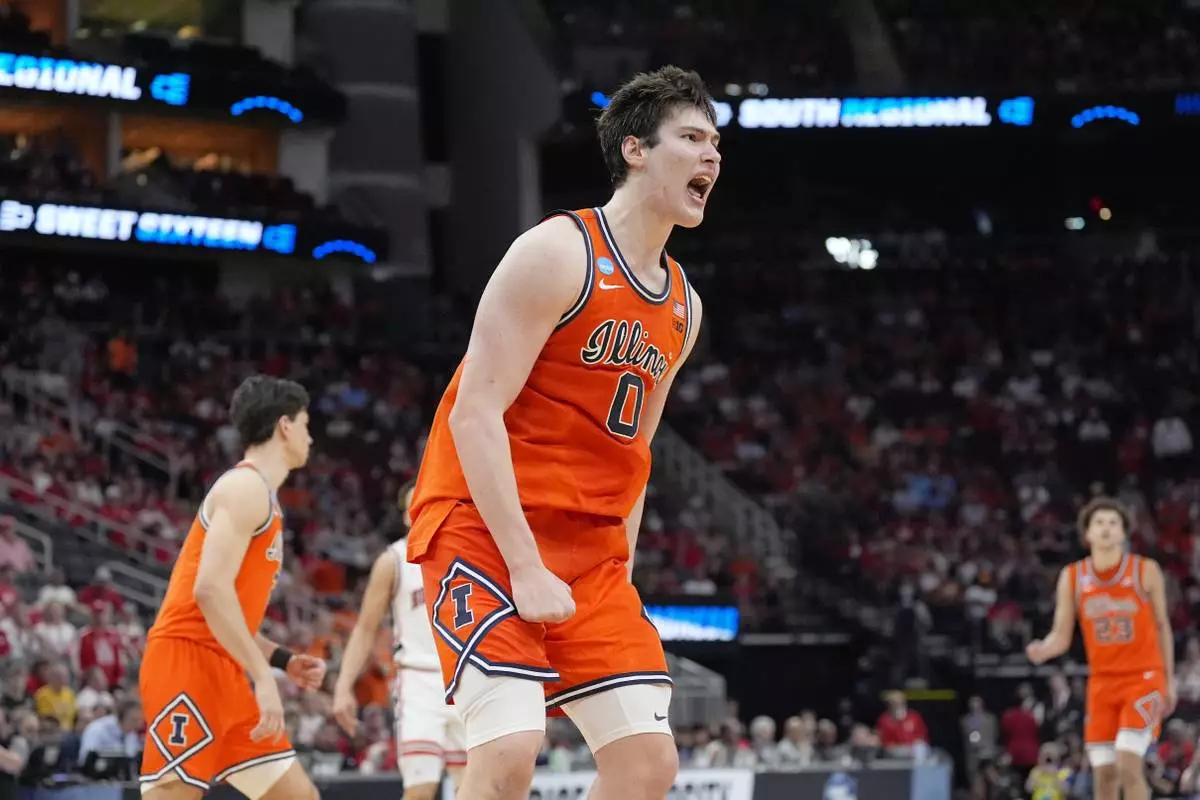
Illinois forward David Mirkovic (0) reacts during the second half against Houston in the Sweet 16 of the NCAA college basketball tournament Thursday, March 26, 2026, in Houston. (AP Photo/Ashley Landis)
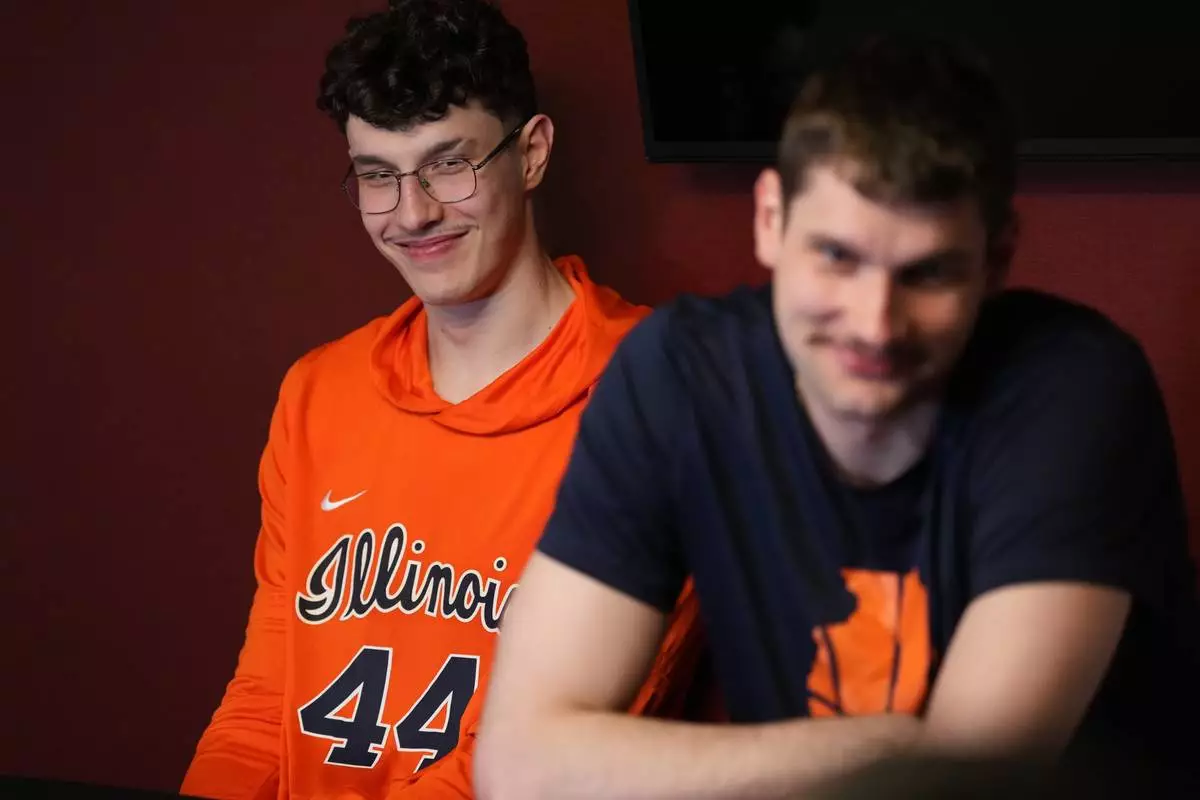
Illinois center Zvonimir Ivisic, left, listens as brother and teammate Tomislav Ivisic, right, answer questions during a news conference for the Elite Eight of the NCAA college basketball tournament, Friday, March 27, 2026, in Austin, Texas. (AP Photo/Eric Gay)
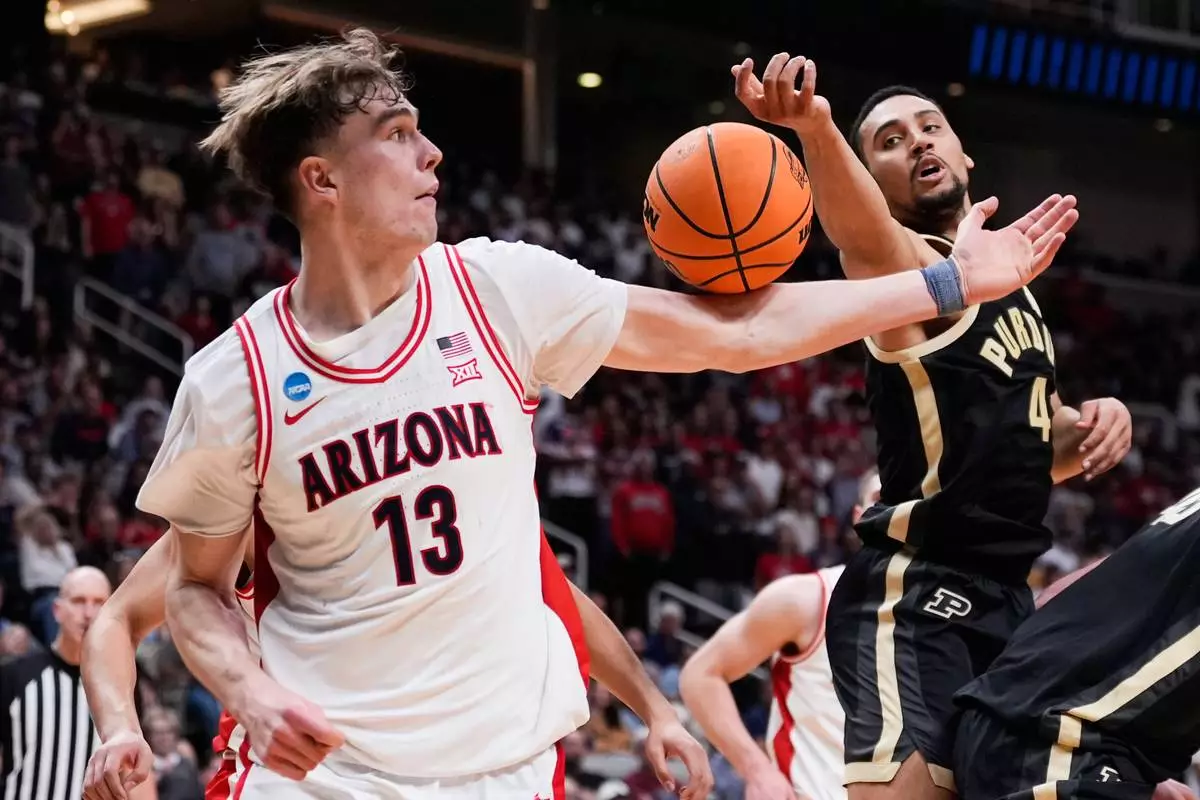
Arizona center Motiejus Krivas (13) reaches for a rebound next to Purdue forward Trey Kaufman-Renn (4) during the second half in the Elite Eight of the NCAA college basketball tournament, Saturday, March 28, 2026, in San Jose, Calif. (AP Photo/Godofredo A. Vásquez)
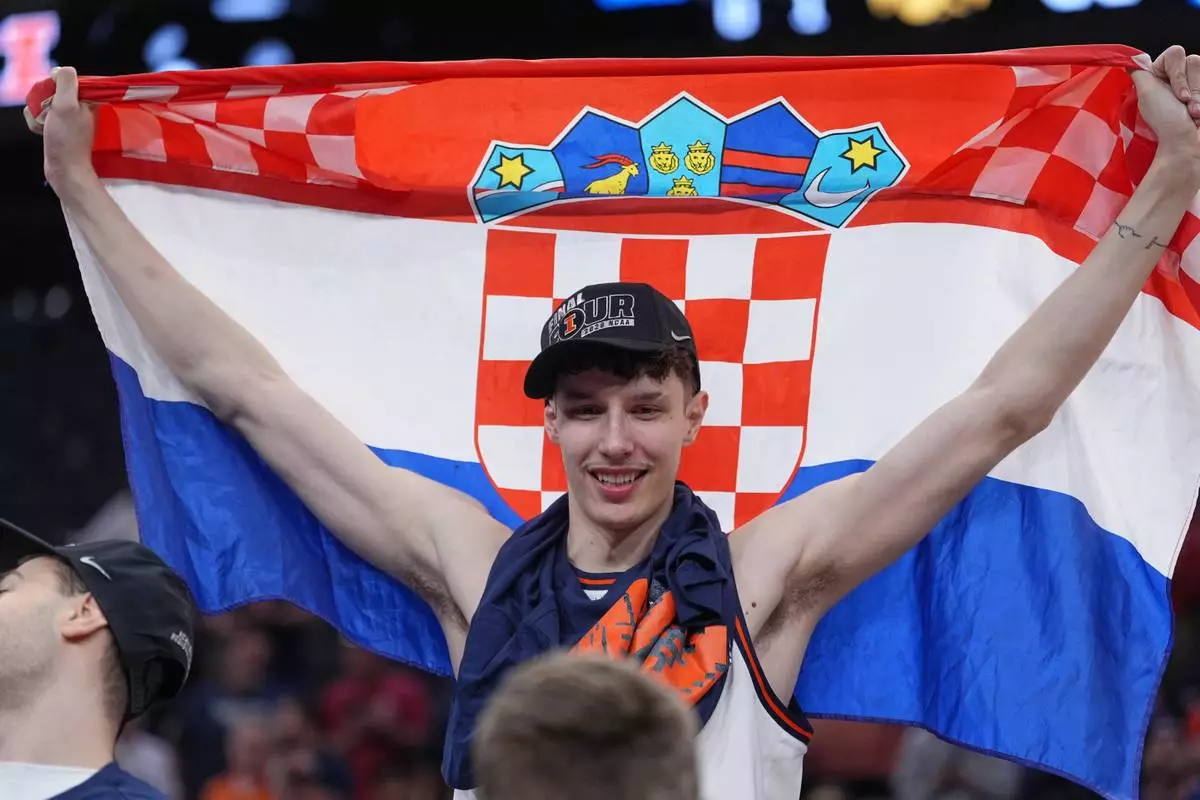
Illinois' Zvonimir Ivisic celebrates after an Elite Eight game against Iowa in the NCAA college basketball tournament Saturday, March 28, 2026, in Houston. (AP Photo/Eric Gay)
LOS ANGELES (AP) — Until quite recently, the prevailing image to outsiders of The Church of Jesus Christ of Latter-day Saints has been male missionaries wearing white shirts and name tags, evoked by the hit Broadway show “The Book of Mormon.”
But another unofficial face of the male-led church has emerged in American pop culture: digitally savvy, female influencers, often seen sporting athleisure, a giant soda in hand — and varying degrees of adherence to church teachings.
These influencers have found an enthusiastic audience across the country, curious about their faith and families. Some explain the tenets of what's widely known as the Mormon church, but others bring attention to the rules they often break — drinking alcohol, having premarital sex and in one high-profile instance, a “soft-swinging” scandal that birthed the hugely popular Hulu reality series, “The Secret Lives of Mormon Wives.”
ABC sought to capitalize on that interest by casting “Mormon Wives” star Taylor Frankie Paul in “The Bachelorette,” but recently had to scuttle the already filmed season after a video of a domestic violence incident surfaced.
These viral moments and “Mormon Wives” project a version of the faith that appears more progressive and lenient than church leadership and other Latter-day Saint influencers might like. “The internet really challenged the church’s ability to maintain its own narratives about itself,” said Nancy Ross, an associate professor at Utah Tech University who studies Mormon feminism.
The church has worked to distance itself from “Mormon Wives,” issuing a statement ahead of the first season’s premiere in 2024 without naming the show specifically. It said that some media portrayals of Latter-day Saint women resort to “stereotypes or gross misrepresentations that are in poor taste and have real-life consequences for people of faith.”
Camille N. Johnson, the president of the church’s Relief Society organization for women, said in an emailed statement that it’s important to seek out trusted sources of information about the church and its members in light of recent media attention.
“Millions of Latter-day Saint women around the world strive to live faith-filled lives grounded in a love for God and all of His children,” she said.
It would be impossible for the “Mormon Wives” cast to fully represent millions of women in the church. But they are not the only Latter-day Saint influencers online — nor are they the only ones with large followings.
Many are women in their early twenties who are married with young children. They post about young motherhood and experiences like buying a house before they turn 25. Lauren Yarro, a Latter-day Saint content creator and podcast host, said she can see this being a foreign image to some.
“Our culture is fascinating to an outsider, and I can understand why it would pull people in,” she said. “That Mormon timeline is intriguing to the rest of the world. I think most people innately have a desire for a happy marriage and a happy family life and we tend to create those in The Church of Jesus Christ of Latter-day Saints.”
The beliefs and practices of church members have often been the subject of intense interest and scrutiny because of how they differ from other religions. Some of these include the belief that church leadership can receive revelations from God, or the practice of wearing garments under clothing that have deep religious significance.
Latter-day Saint influencers are not a new phenomenon, but they have found staying power by driving pop culture discourse and documenting their lifestyles. Many of them use content creation as a way to be stay-at-home parents while also generating income for their families. Several prominent creators live in Utah, the home of the church’s administrative and cultural hub, but there is a broad spectrum in terms of how much they bring their faith into their content.
While “Mormon Wives” and its controversial star, Paul, have been the recent high-profile drivers of public interest, the cast talks about the church only sparingly. Rosemary Avance, an assistant professor at Oklahoma State University whose research includes religious identity and digital media, said “there’s so little reference” to the cast's faith once people are hooked on the show from its title. Many cast members have left the church or are no longer active in it.
“It was clearly a marketing strategy on behalf of the people putting these shows together. They think that’ll draw people in, and it does,” she said. “It’s not like you have these women sitting down talking about their secret temple practices that they’re not supposed to speak about, or challenging the authority of the church in some way. They’re just not talking about it.”
Avance sees parallels between now and about 15 years ago, when Republican Mitt Romney was running for president and “The Book of Mormon” debuted on Broadway. At the time, people wanted to know “what’s going on behind the scenes in Mormonism,” she said.
“People think they know a lot about it (Mormonism), and they’ve heard a lot about it because there’s prominent stories and prominent people who are well-known and those narratives are circulated, but it’s almost always second-, third-hand,” she said. “A lot of people don’t know any Mormons and may never meet a Mormon, or if they have, they don’t know it, and so it’s what you’ve heard and the preconceptions you think you have about Mormonism.”
Creators like Yarro, who speak about their faith openly online and closely follow the church's teachings, said “Mormon Wives” does not feel representative of their experiences in the church or their lives in Utah. The Latter-day Saint content creators who spoke with The Associated Press emphasized they don't place fault on the individual cast members, but rather the production of the show and the way it Hollywoodizes their faith. Representatives for Hulu did not respond to a request for comment.
“The only thing I don’t like about what they do is sometimes they will play on things, twist things, use what is sacred to us as members of the church, and they’ll put it out and it feels like mockery to us,” said Shayla Egan, another Latter-day Saint content creator.
Some of the more devout members use their online platforms to respond to and course-correct more salacious social media content or “Mormon Wives” storylines they believe don't align with their understanding of church teachings or experiences.
Mimi Bascom, a Latter-day Saint content creator who says the mission behind her social media presence is to “show that members of the church are real people,” often makes videos responding to “Mormon Wives” clips. She finds the show to be a “net positive for our church” since it gives everyday members the opportunity to “share what we actually believe and get that more out there into the world,” she said.
Bascom, for one, had always prepared to serve on a mission but no longer could after getting married. Making content about the church has felt like a way she's “able to still live that out,” she said.
“We want to be missionaries and spread the good word of the Gospel,” she continued, “and so this is just another way we can do it.”
Associated Press religion coverage receives support through the AP’s collaboration with The Conversation US, with funding from Lilly Endowment Inc. The AP is solely responsible for this content.
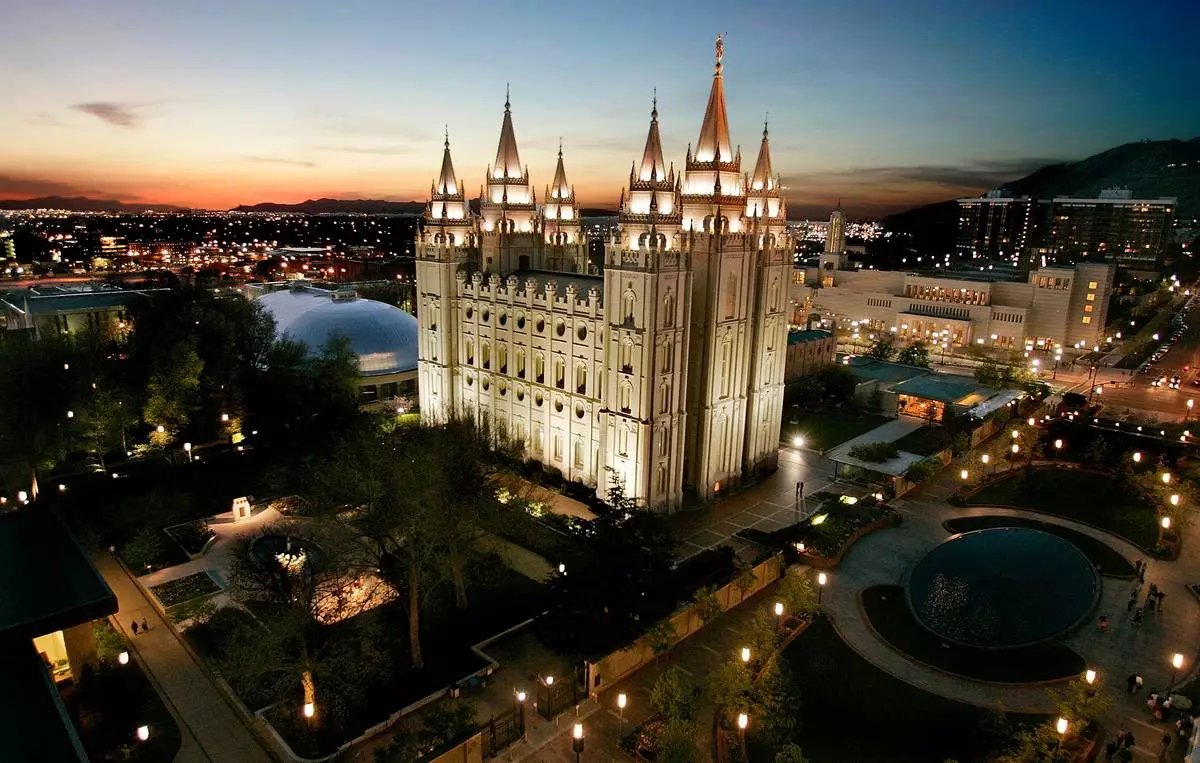
FILE - The sun sets behind the Mormon Temple, the centerpiece of Temple Square, in Salt Lake City, April 27, 2006. (AP Photo/Douglas C. Pizac, File)
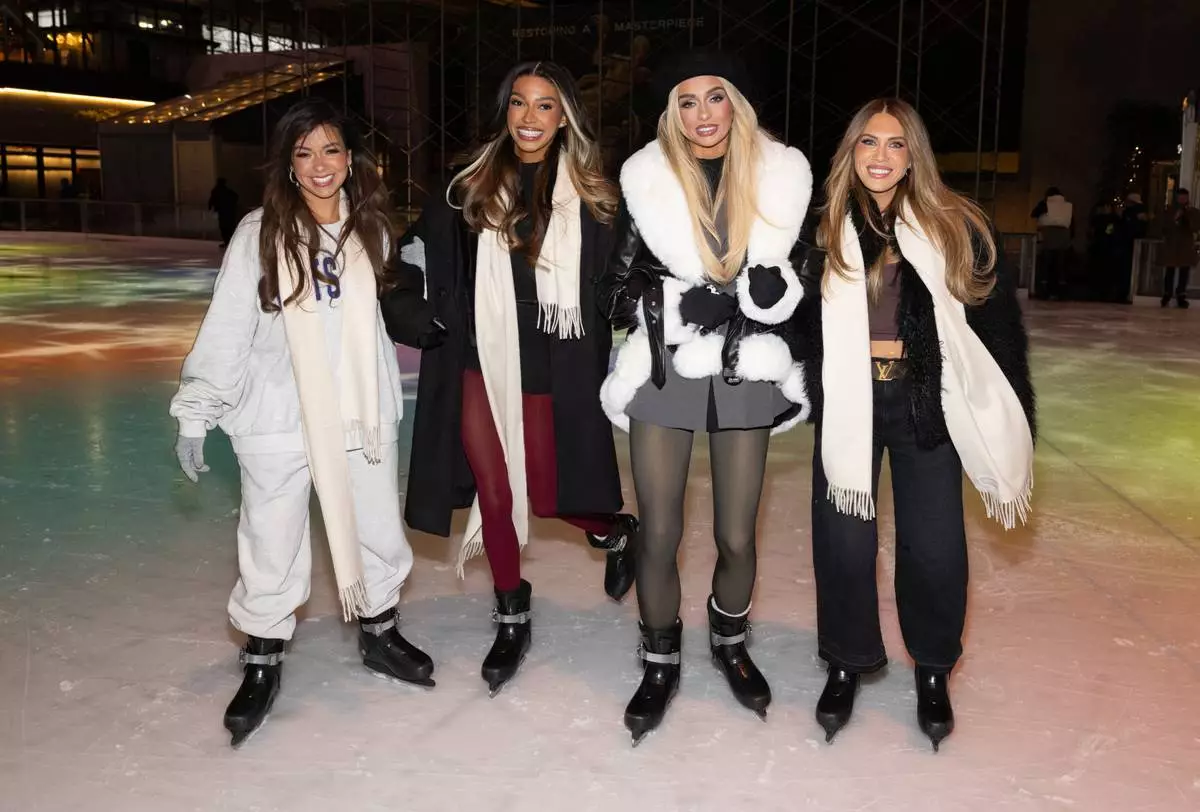
FILE - Jen Affleck, from left, Layla Taylor, Miranda McWhorter, and Jessi Draper Ngatikaura participate in Hulu's "The Secret Lives of Mormon Wives" photo call at The Rink at Rockefeller Plaza, Tuesday, Nov. 11, 2025, in New York. (Photo by CJ Rivera/Invision/AP, File)