Skip to Content Facebook Feature Image

Why one Las Vegas newspaper just stopped printing its rival

News

Why one Las Vegas newspaper just stopped printing its rival
News

News

Why one Las Vegas newspaper just stopped printing its rival

2026-04-03 23:38 Last Updated At:23:41

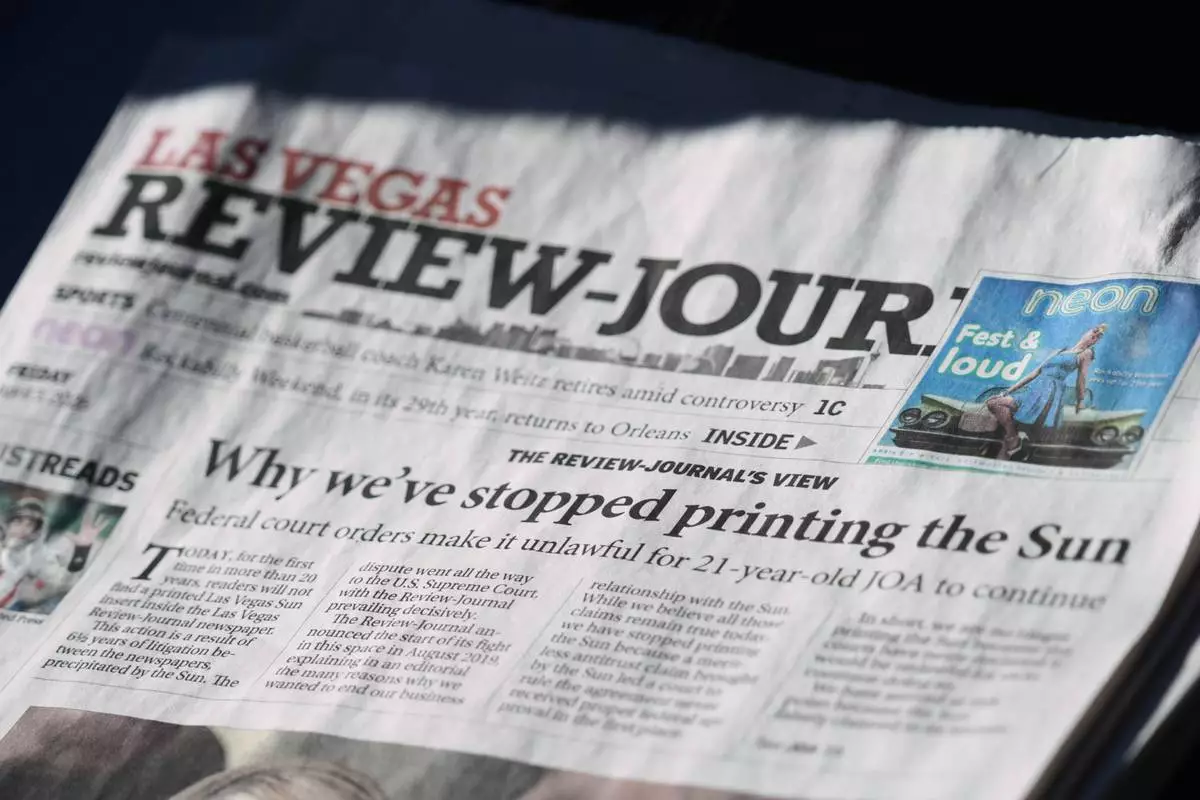
LAS VEGAS (AP) — The Las Vegas Review-Journal announced Friday that it will no longer print its rival the Las Vegas Sun for the first time in decades, amid an ongoing legal dispute over the nation's last joint operating agreement stemming from a 1970 law designed to preserve newspapers.

Readers “will not find a printed Las Vegas Sun insert inside,” the Review-Journal said in an editorial, noting the Sun maintains a website, has a few hundred thousand followers across social media platforms, and is free to produce its own newspaper.

“We encourage them to do so. The Review-Journal competes with countless sources of news and entertainment, but we would welcome one more. We just don’t want to foot the bill. It is time the Sun stood up on its own two feet,” the editorial said, without specifying the cost.

The two publications will be in court Friday and the Sun hopes a judge will order printing to immediately resume, attorney Leif Reid said in an email. It will be the first day in 76 years that the Sun hasn’t been printed, he said.

“This does irreparable harm to our community, as no one benefits when a local newspaper is prevented from being published,” he said.

The now-rare joint operating agreement required the Sun to be printed as a daily insert in the Review-Journal, while both companies remained editorially independent with separate newsrooms and websites.

A lower court had found the agreement was unenforceable because a 2005 update was never signed by the U.S. attorney general, and in February the U.S. Supreme Court declined to hear an appeal by the Sun.

The Review-Journal editorial called the Supreme Court decision a decisive victory, saying that halting publication of the Sun on Friday was “a result of 6½ years of litigation between the newspapers, precipitated by the Sun.”

Such agreements between rival publications have dwindled as part of a "long, slow goodbye of newspapers as we knew them,” said Ken Doctor, a news business analyst. The Detroit Free Press and the Detroit News ended a 40-year agreement last year. USA Today Co., which owns the Detroit Free Press, recently announced its plans to purchase the Detroit News.

In 1950, the Sun was founded in response to the Review-Journal’s refusal to negotiate with typesetters from the International Typographical Union. The union started its own newspaper and reached out to businessman Hank Greenspun for financial backing. The Greenspuns still own the paper.

The Review-Journal has been publishing since 1909, first as the Clark County Review. It is owned by the Adelson family, casino magnates and mega GOP donors, and remains the state’s largest newspaper.

The Review-Journal’s editorials lean more conservative, while the Sun’s lean liberal. The 1970 law signed by then President Richard Nixon, called the Newspaper Preservation Act, was designed to save newspapers costs while maintaining competition and editorial variety in cities as newspapers began to financially struggle.

The papers first entered into a joint operating agreement in 1989 when the Sun was struggling to stay afloat financially. The agreement made the Sun an afternoon newspaper during weekdays and a section within the Review-Journal on weekend mornings, while the Review-Journal handled production, distribution and advertising. The Review-Journal also collected all revenue and was required to pay the Sun monthly to cover the Sun’s news and editorial expenses.

In 2005 the agreement was amended to make the Sun an insert in the Review-Journal every morning.

Review-Journal owners sought to end the agreement in 2019, and in response the Sun’s owners filed a lawsuit alleging that ending the agreement violated anti-trust laws.

The 1970 law allowing such agreements was signed at a time when news options weren't as prevalent and there was more concern over news monopolies.

Las Vegas — and Nevada as a whole — today have more strong, independent news organizations compared to other places, said Stephen Bates, a journalism and media professor at the University of Nevada, Las Vegas.

The Sun also publishes online. But it has argued in court that losing its print product could make it harder to recruit staff, cause a loss in readers, and even force it to close.

Genelle Belmas, a journalism professor at the University of Kansas who specializes in media law, said it would be disappointing if the last joint operating agreement in the country ends. During visits to Vegas, she's enjoyed being able to pick up the Review-Journal and see the Sun folded inside, offering two differing points of view in one place. Online news outlets make it easier for consumers to stay in their echo chambers, she said.

“Every local news outlet we lose — and that includes big towns, small towns, whatever — is a loss of perspective and a loss of a potential alternative view,” Belmas said.

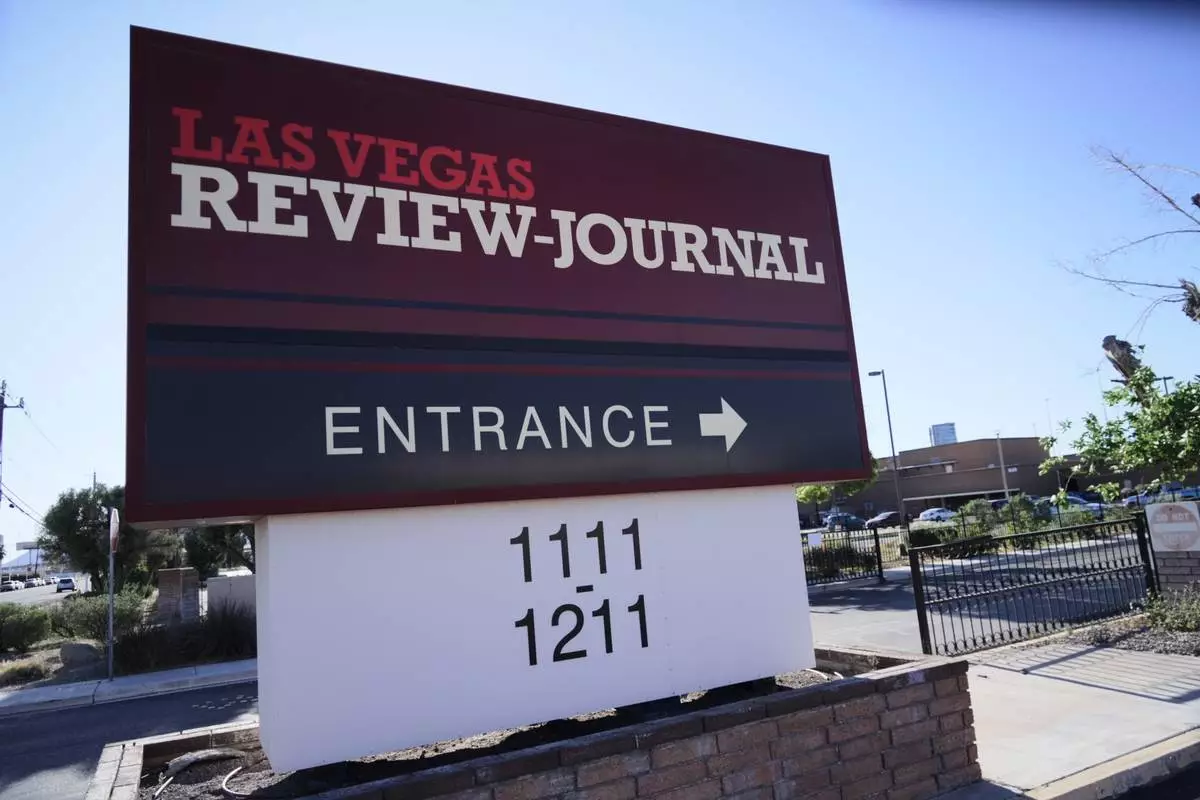
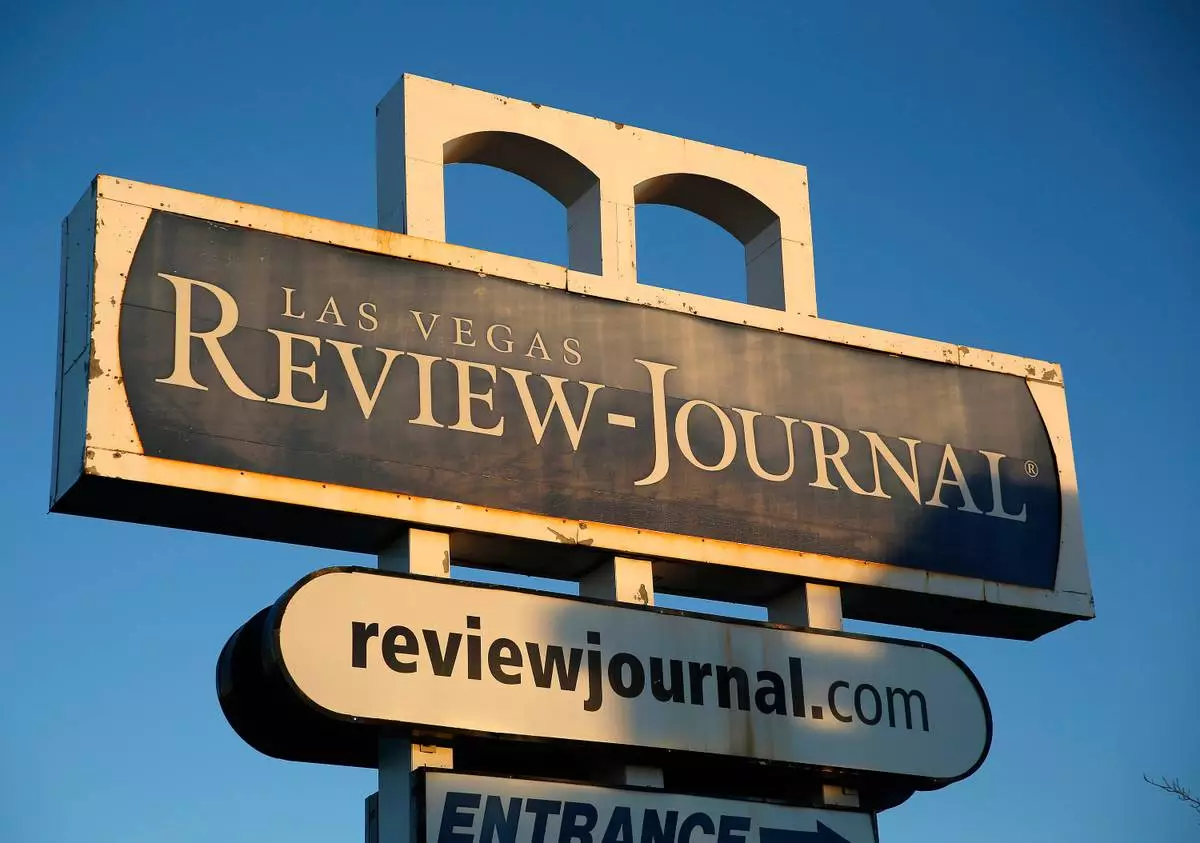
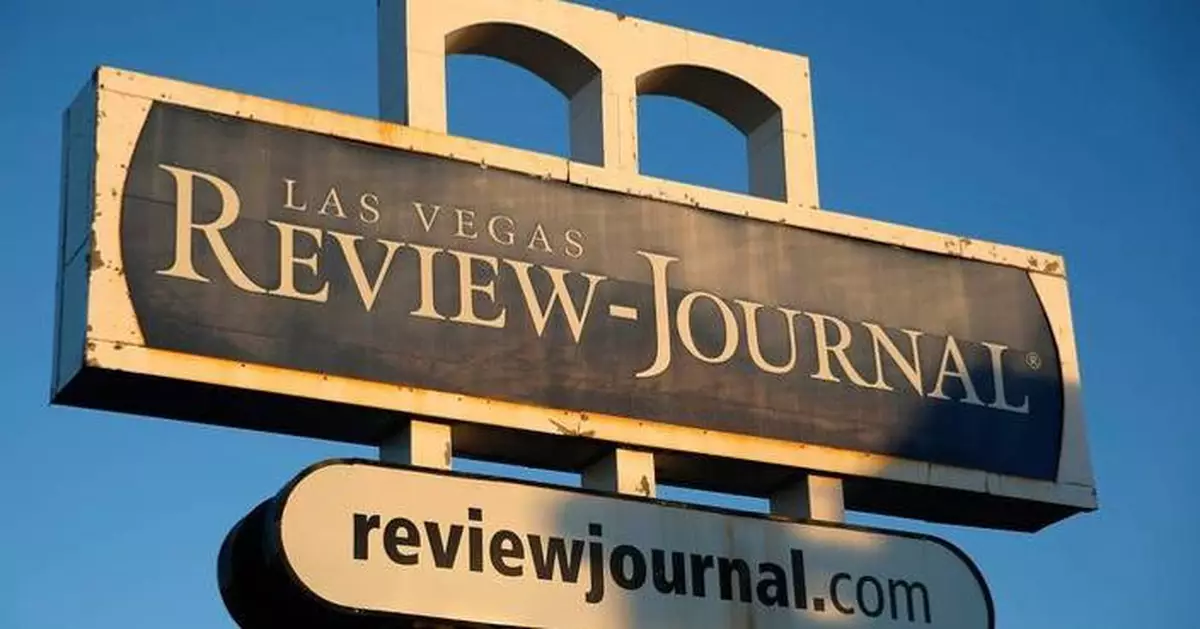
FILE - This Dec. 17, 2015 file photo shows a sign outside the building housing the Las Vegas Review-Journal in Las Vegas. AP Photo/John Locher, File)

FILE - This Dec. 17, 2015 file photo shows a sign outside the building housing the Las Vegas Review-Journal in Las Vegas. AP Photo/John Locher, File)
NEW YORK (AP) — This is not the run-up to the midterm elections that Republicans wanted.

A year and a half after winning the White House by promising to lower costs and end wars, Donald Trump is a wartime president overseeing surging energy costs and an escalating overseas conflict that many in his own party do not like.

He offered little clarity to a nation eager for answers this week during a prime-time address from the White House, his first since the U.S. and Israel attacked Iran more than a month ago, simultaneously suggesting that the war was ending and expanding.

“Thanks to the progress we’ve made, I can say tonight that we are on track to complete all of America’s military objectives shortly, very shortly,” Trump said. “We’re going to hit them extremely hard over the next two to three weeks.”

Trump's comments come roughly six months before voters across the nation begin to cast ballots in elections that will decide control of Congress and key governorships for Trump’s final two years in office. For now, Republicans, who control all branches of government in Washington, are bracing for a painful political backlash.

“You’re looking at an ugly November,” warned veteran Republican pollster Neil Newhouse. “At a point in time when we need every break possible to hold the House and Senate, our edge is being chipped away.”

It’s hard to overstate how dramatically the political landscape has shifted.

At this time last year, many Republican leaders believed there was a path to preserve their narrow House majority and easily hold the Senate. Now they privately concede that the House is all but lost and Democrats have a realistic shot at taking the Senate.

Republicans are also struggling to coalesce around a clear midterm message on Iran.

The Republican National Committee has largely avoided the war in talking points issued to surrogates over the last month. The leaders of the party's campaign committees responsible for the House and Senate declined interview requests. Many vulnerable Republican candidates sidestep the issue, unwilling to defend or challenge Trump publicly.

The president remains deeply popular with Republican voters, and he has vocal supporters like Sen. Lindsey Graham of South Carolina.

“That was the best speech I could’ve hoped for,” he wrote on social media after Trump's address on Wednesday evening. Graham said Trump “gave the American people a clear and coherent pathway forward.”

Trump made little effort to sell the conflict to Americans before the initial attack. Five weeks later, at least 13 U.S. service members have been killed and hundreds more injured. Thousands more troops have converged on the region, and the Pentagon requested $200 billion in new funding.

The Strait of Hormuz, a key passage for a fifth of the world’s oil, remains closed. The average price for a gallon of gasoline in the U.S. was $4.08 on Thursday, according to AAA, almost a full dollar higher than on President Joe Biden's last day in office.

On Wednesday, Trump insisted that gas prices would fall quickly once the war concluded but offered no solution for reopening the Strait of Hormuz. Instead, he invited skeptical U.S. allies to do it themselves.

He insisted that the war would be worth it.

“This is a true investment in your grandchildren and your grandchildren’s future,” Trump said. “When it’s all over, the United States will be safer, stronger, more prosperous and greater than it has ever been before.”

Former Rep. Marjorie Taylor Greene, a Georgia Republican who was once among Trump's most vocal allies in Congress, lashed out against his Iran policy.

“I wanted so much for President Trump to put America First. That’s what I believed he would do. All I heard from his speech tonight was WAR WAR WAR,” she wrote on social media. “Nothing to lower the cost of living for Americans.”

About 6 in 10 U.S. adults say the U.S. military action in Iran has “gone too far,” according to AP-NORC polling from March. Roughly a third approve of how he’s handling Iran overall.

The possibility of sending U.S. forces into Iran also appears politically unpalatable.

About 6 in 10 adults are “strongly” or “somewhat” opposed to deploying U.S. troops on the ground to fight Iran. That includes about half of Republicans. Only about 1 in 10 favor deploying troops.

At the same time, Trump’s approval ratings have remained consistently weak. About 4 in 10 Americans approve of how he’s handling the presidency, roughly in line with how it’s been throughout his second term.

Republican strategist Ari Fleischer, a senior aide in former President George W. Bush’s administration, acknowledged that Trump has not received the polling bump in this war that Bush got after invading Iraq.

Bush, of course, worked to build public backing for the Iraq War before going in. Immediately after the 2003 invasion, Bush's popularity soared, as did the stock market.

Public sentiment and the economy soured only after the conflict stretched on. It ultimately spanned more than eight years, spawning a generation of anti-war Republicans — and sowing the seeds of Trump's “America First” foreign policy.

“My hope is that the Trump experience is the exact opposite of the Bush experience,” Fleischer said.

He said Trump must win the war decisively and quickly to avoid a further backlash, saying there could be a “very significant political upside if things end well, oil comes down and markets rally.”

Fleischer added that Trump's actions will matter much more than his words.

“Ultimately, he is not going to get judged on his persuasion or his explanations or his assertions, he’s going to get judged on results,” he said.

Associated Press writer Linley Sanders in Washington contributed to this report.

In this image made with a long exposure, President Donald Trump speaks about the Iran war from the Cross Hall of the White House on Wednesday, April 1, 2026, in Washington. (AP Photo/Alex Brandon, Pool)

In this image made with a long exposure, President Donald Trump speaks about the Iran war from the Cross Hall of the White House on Wednesday, April 1, 2026, in Washington. (AP Photo/Alex Brandon, Pool)

Recommended Articles