Northwest China's Xinjiang Uygur Autonomous Region has consolidated its position as a major green energy hub, with new energy generation growth outstripping its total electricity consumption growth for the first time in the first quarter of 2026, according to the State Grid Corporation of China.
In the January to March period, Xinjiang's total electricity consumption rose by 7.1 billion kilowatt-hours (kWh) year-on-year, while the region's power generation from wind and photovoltaic new energy sources hit 38.1 billion kWh, an increase of 8.4 billion kWh compared with the first quarter of 2025, equivalent to 118 percent of the total increment of the region's electricity consumption.
"This change has demonstrated that new energy generation has become the main force behind the growth in electricity consumption, marking a fundamental transformation in Xinjiang's energy structure and reflecting our continuously improved capacity to supply green power," said Cai Pengcheng, deputy director of the Regulation Division at the Dispatching and Control Center of State Grid Xinjiang Electric Power Company.
At present, the cumulative installed capacity of new energy on Xinjiang's power grid has reached nearly 170 million kilowatts, accounting for more than 60 percent of the region's total installed power capacity. Xinjiang has built a distinctive green power supply system characterized by "wind power in northern Xinjiang, photovoltaic power in southern Xinjiang, and multi-energy complementation", providing solid power supply support for the steady growth of new energy generation.
To optimize the utilization of new energy power, Xinjiang has launched "off-peak green power trading" programs, which precisely match Xinjiang's midday power generation with evening consumption peaks in central and eastern China. So far, the cumulative outbound transmission of new energy power from Xinjiang has exceeded 300 billion kWh, accounting for nearly 30 percent of the region's total outbound power delivery.

Xinjiang's new energy generation growth outstrips electricity consumption growth in Q1 2026
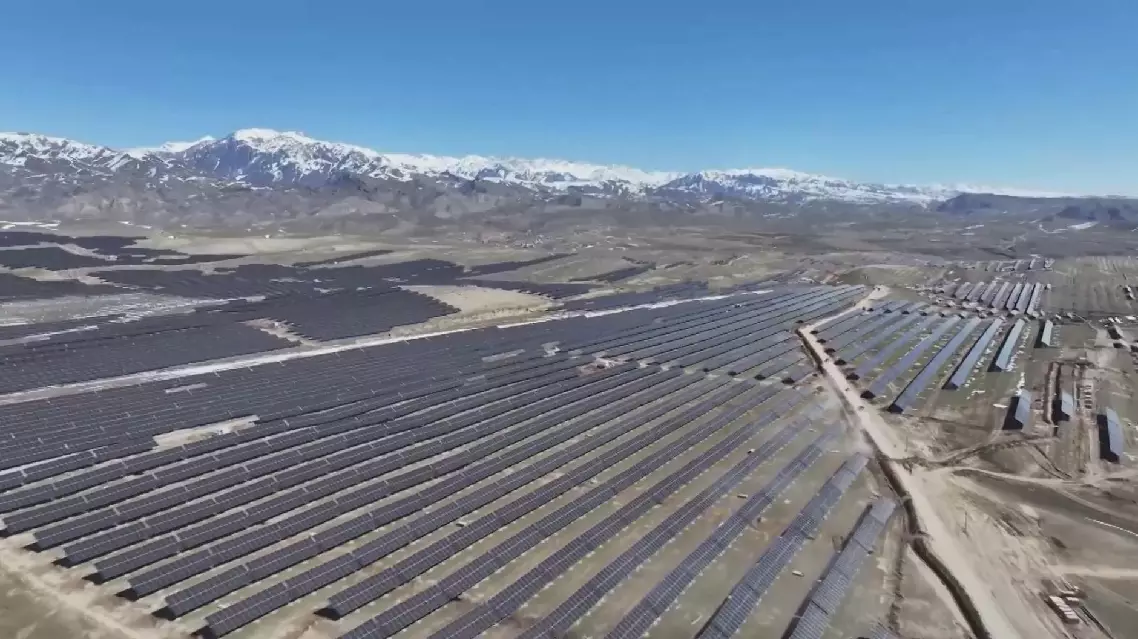
Xinjiang's new energy generation growth outstrips electricity consumption growth in Q1 2026