Amid the ongoing U.S.-Israeli war with Iran, Gulf oil producers are shifting oil flows to pipelines and tanker trucks that bypass the Strait of Hormuz, a key chokepoint for global energy supplies.
The Strait of Hormuz, which once saw around 130 vessels passing daily, now has approximately 20,000 seafarers stranded aboard 2,000 ships in its waters, according to the International Maritime Organization.
Lloyd's List Intelligence, a maritime data and intelligence company, revealed that only 292 ships transited the strait between Feb 28 and March 31, with 71 percent of them being either owned by or affiliated with Iran.
Saudi Arabia is maximizing the use of the East-West pipeline, which has a capacity of nearly 7 million barrels per day and allows the country's oil exports to bypass the Strait of Hormuz, according to a person familiar with the matter. Also known as the Petroline, the over 1,200-kilometer-long pipeline was originally built in the 1980s and terminates at the Yanbu port in the Red Sea.
A number of tanker fleets have been relocated to the Yanbu port for oil loading, providing a vital lifeline for global oil supply. According to sources, daily crude oil exports through Yanbu have reached approximately 5 million barrels, and Saudi Arabia also exports between 700,000 and 900,000 barrels of refined oil per day.
At present, Saudi Arabia is considering exporting more crude oil via pipelines and is studying ways to further expand the transportation capacity of the East-West pipeline or develop new oil export routes.
Meanwhile, the United Arab Emirates (UAE) is exporting oil through the Abu Dhabi Crude Oil Pipeline (ADCOP), which has a rated transportation capacity of 1.5 million barrels per day. The pipeline connects the Habshan Oil and Gas Field to the Port of Fujairah, allowing the country to export oil while bypassing the Strait of Hormuz.
According to some sources, the UAE is considering building a second crude oil pipeline.
Furthermore, the Iraqi Ministry of Oil has announced the start of crude oil exports by tankers via Syria, as part of its efforts to reach export outlets following the disruption of maritime shipments through the Strait of Hormuz.
The first convoy of Iraqi fuel tankers entered Syria on Wednesday through the al-Tanf-al-Waleed border crossing.
The Syrian Petroleum Company said that the convoy consists of 299 tankers carrying refined fuel destined for the Baniyas refinery on Syria's Mediterranean coast, where it will be processed and prepared for export.
The shipments will be unloaded into storage facilities before being transferred to the Baniyas oil terminal for loading onto maritime tankers, the company added.
On Feb 28, Israel and the United States launched joint military strikes on Tehran, the capital city of Iran, and several other Iranian cities, killing Iran's then-Supreme Leader Ali Khamenei, along with senior military commanders and civilians. Iran responded with waves of missile and drone strikes targeting Israel and U.S. bases and assets in the Middle East, tightening its hold on the Strait of Hormuz and blocking vessels belonging to or affiliated with Israel and the United States.
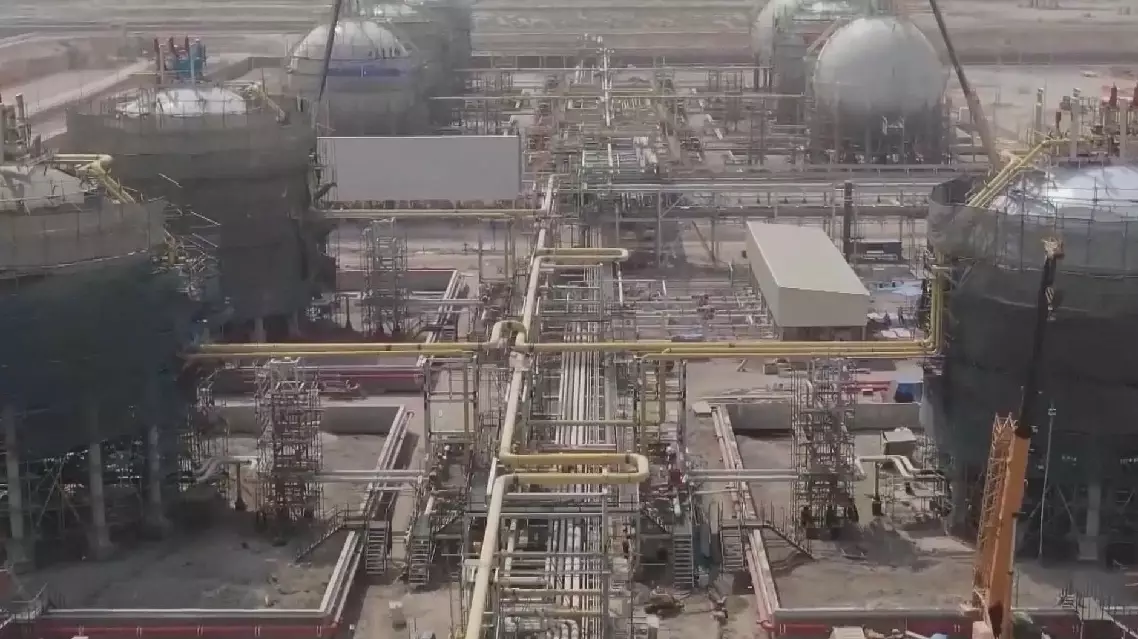
Gulf oil producers seek alternative routes as safe passage in Strait of Hormuz remains elusive