FRANKFURT, Germany (AP) — Swedish authorities have released a tanker sanctioned by the European Union that had been boarded and detained on suspicion of causing an oil spill in the Baltic Sea.
The Swedish Coast Guard said they had not found sufficient evidence that the Flora 1 tanker was at fault for the 12-kilometer (8-mile) -long spill that had been discovered Thursday.
Investigators also established that Cameroon had confirmed the vessel was sailing under that country's flag, which had not been clear when the vessel and its 24-member crew was stopped Friday, the coast guard said.
The Flora 1 was put on the EU's list of sanctioned vessels for carrying Russian oil while “practicing irregular and high-risk shipping practices.” Unsafe practices can include turning off the automatic tracking system that transmits the vessel's location to other ships.
The sanctions are aimed at the “shadow fleet” that emerged in response to a price cap on Russian oil imposed by the Group of Seven democracies to limit the revenues that fund Russia’s invasion of Ukraine. The cap was enforced by barring insurance and shipping companies from handling oil above the cap.
The fleet is made up of aging tankers with ownership and insurance based in countries that are not observing the price cap. The age of the vessels and their lack of Western insurance has raised safety concerns about oil spills and who would get the cleanup bill.
The Flora 1 was owned by a Hong Kong company as of late 2025 and has also been sanctioned by the UK, Canada, Australia, Switzerland, New Zealand and Australia, according to the Ukrainian government. It has changed its name six times and its flag country nine times. It has been observed turning off its automatic tracking system, a step that hides a vessel's location, and engaging in a ship-to-ship transfer, which can be a way to disguise the origins of an oil cargo.
Sanctions forbid any transactions involving the named vessels.
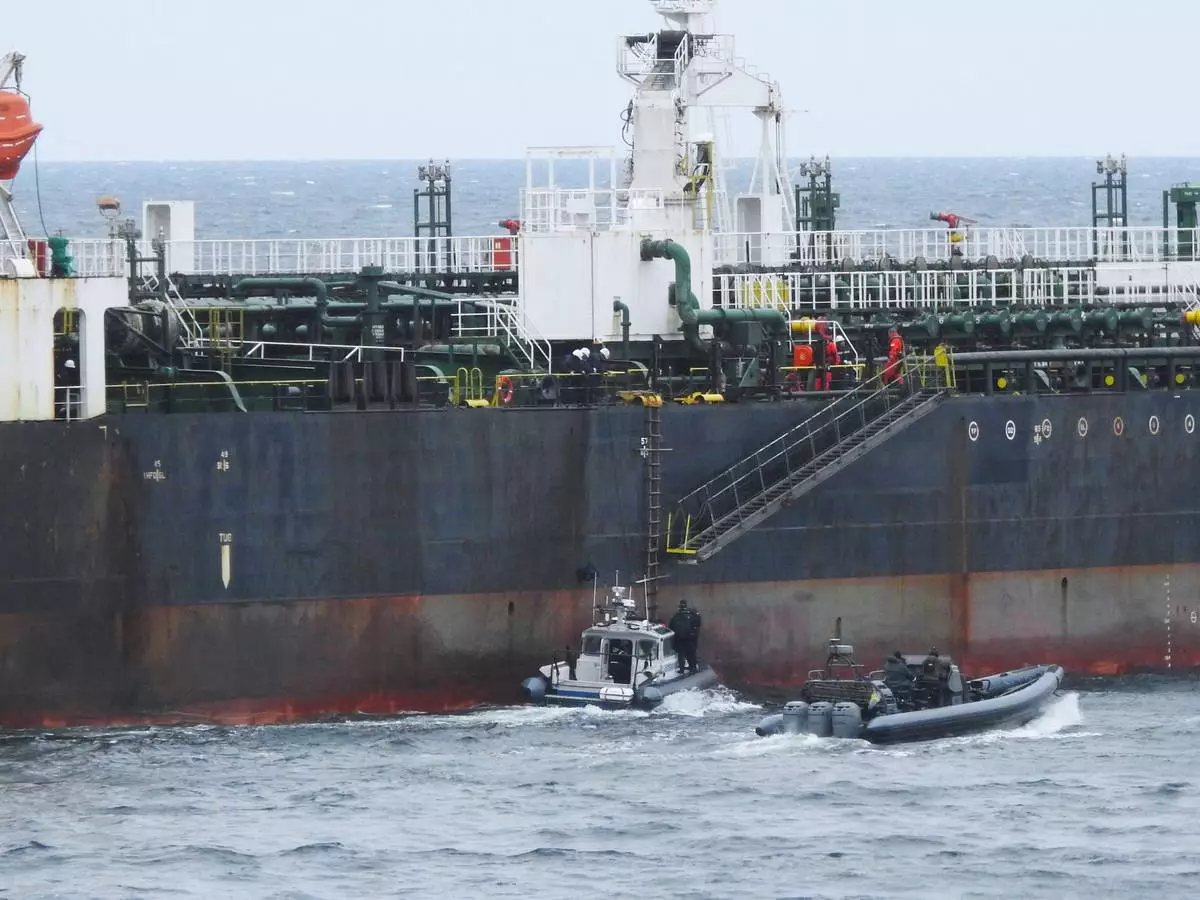
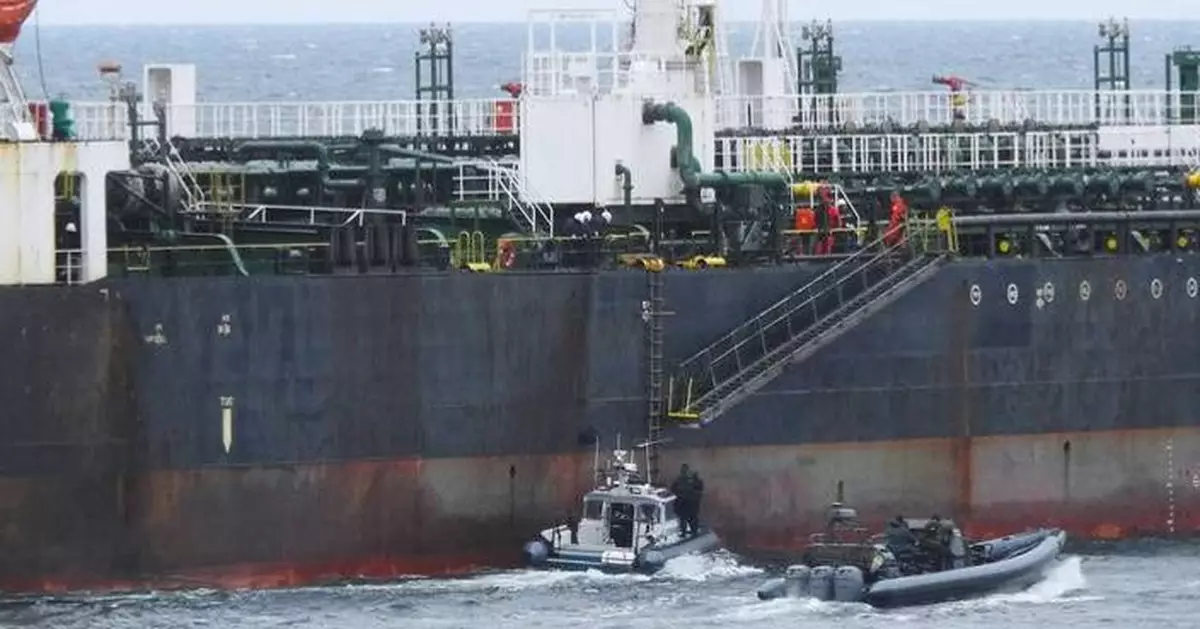
In this photo provided by the Swedish Coast Guard, personnel board a tanker suspected of causing an oil spill in the Baltic Sea, Friday, April 3, 2026. (Swedish Coast Guard via AP)
TOKYO (AP) — Asian markets that were open for trading mostly rose Monday, as investors continued to closely watch the war in Iran, soaring oil prices and what President Donald Trump might say next.
Japan's benchmark Nikkei 225 rose nearly 1.1% to 53,692.42 in morning trading. South Korea's Kospi gained 1.5% to 5,460.24. Trading was closed in Australia for Easter, and in Hong Kong and Shanghai for a traditional Chinese holiday.
The Tuesday deadline Trump has given for Iran to open the Strait of Hormuz is looming. Some analyst fear the war may escalate after that. Over the weekend Trump made more threats against Iran, even as the bombing continued in the region. The United States rescued two aviators whose fighter jet was shot down by Iran.
The key market focus continues to be on oil prices.
Benchmark U.S. crude gained 38 cents to $111.92 a barrel. Brent crude, the international standard, added $1.71 to $110.74 a barrel. Energy markets were closed Friday, but the prices have been surging lately on fears that the Iran war will drag on longer than expected.
The U.S. relies on the Persian Gulf for only a fraction of the oil it imports, but oil is a commodity and prices are set in a global market. Some nations, like resource-poor Japan, import a large portion of their energy needs and rely heavily on access to the Strait of Hormuz.
“As we kick off the first full trading week of April, the word uncertainty is paramount. Last year it was centered on the impact of ‘Liberation Day’ tariffs, this year it's uncertainty surrounding the ongoing Iranian War,” said Jay Woods, analyst at Freedom Capital Markets in New York.
U.S. markets were closed for Good Friday and will reopen Monday. Some markets in Europe also did not trade on Friday.
In currency trading, the U.S. dollar inched up to 159.65 Japanese yen Monday from 159.63. The euro cost $1.1509, down from $1.1517.
AP Business Writer Matt Ott in Washington contributed.
Yuri Kageyama is on Threads: https://www.threads.com/@yurikageyama
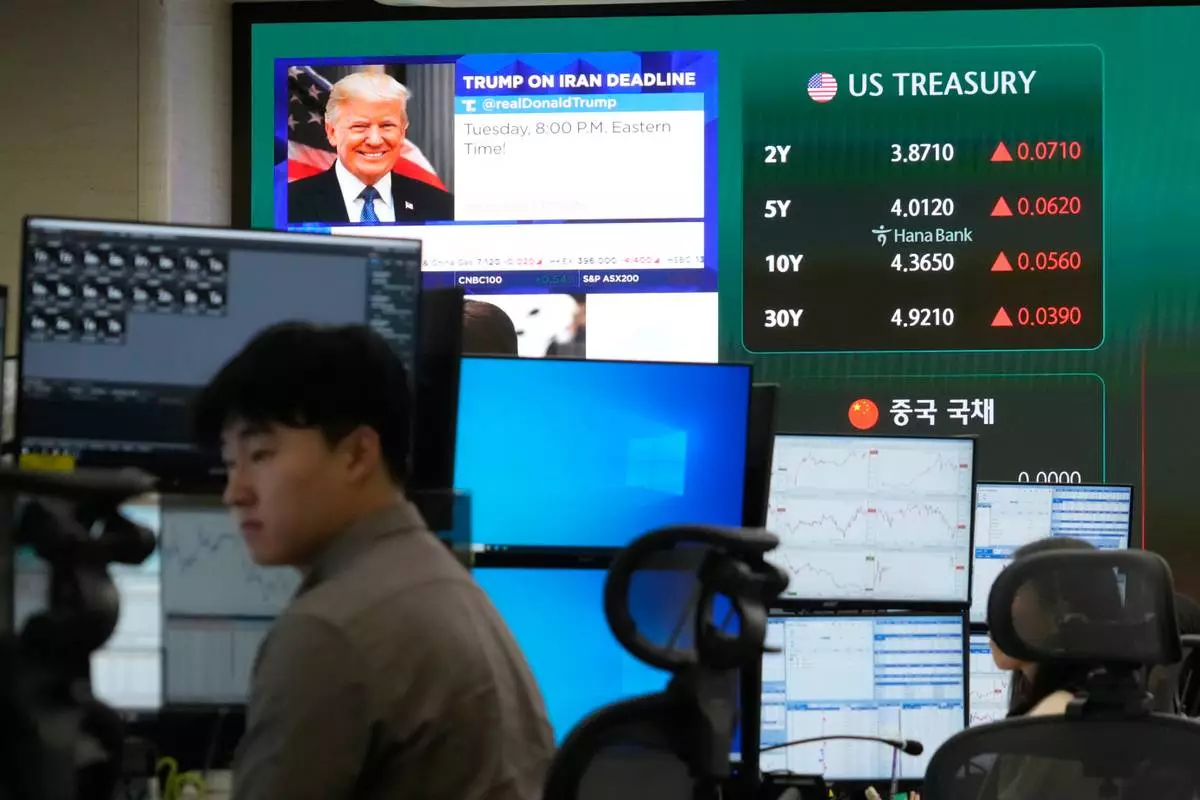
U.S. President Donald Trump is seen on a screen as traders work at the foreign exchange dealing room of the Hana Bank headquarters in Seoul, South Korea, Monday, April 6, 2026. (AP Photo/Ahn Young-joon)
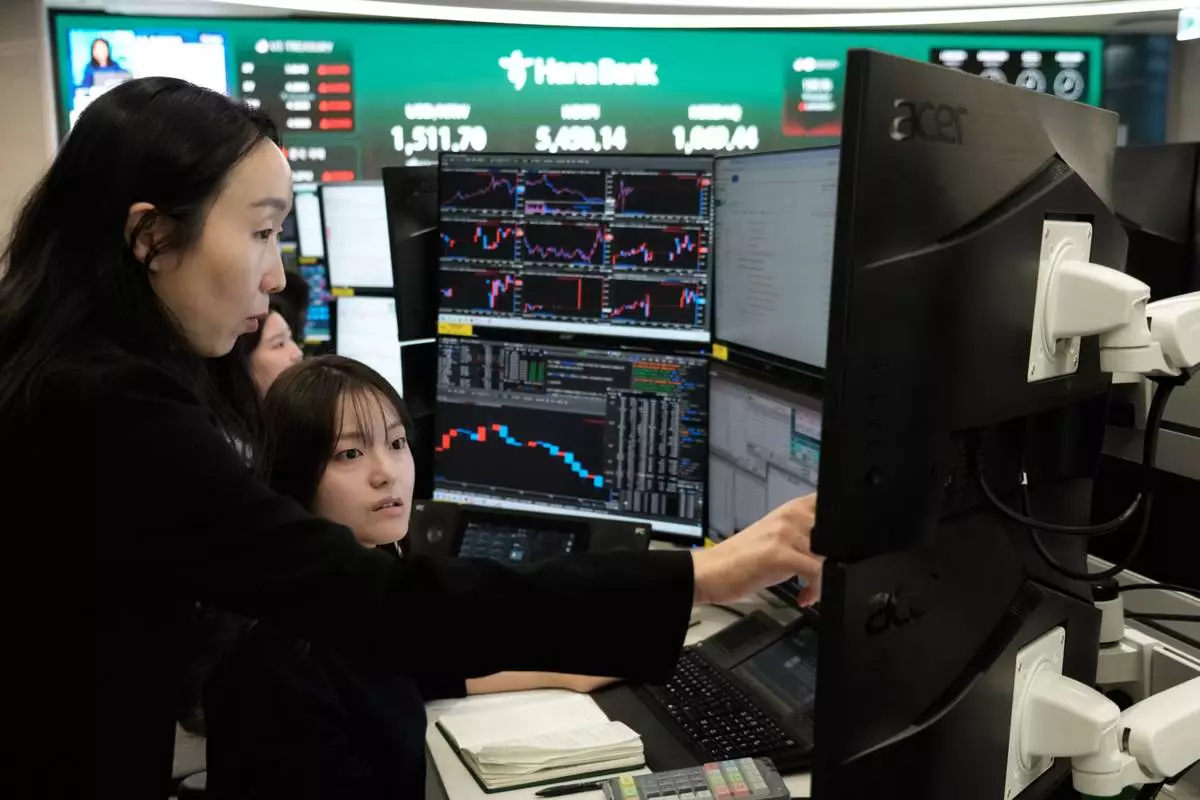
Currency traders watch monitors at the foreign exchange dealing room of the Hana Bank headquarters in Seoul, South Korea, Monday, April 6, 2026. (AP Photo/Ahn Young-joon)