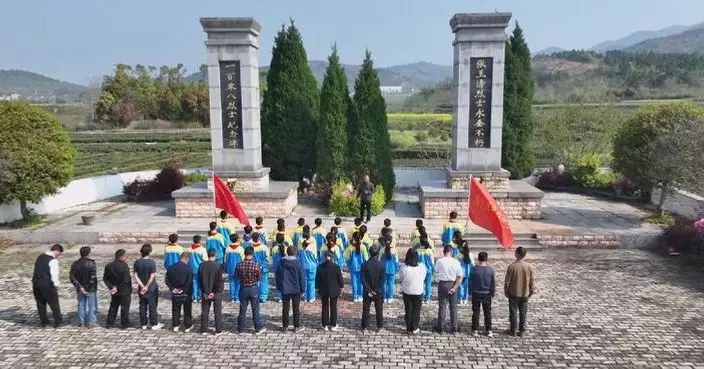
Many Taiwan residents have traveled to the Chinese mainland during the Qingming Festival to pay tribute to their ancestors and trace their family roots, underscoring shared cultural traditions across the Taiwan Strait.
The Qingming Festival, or Tomb-Sweeping Day, falls on April 5 this year. It is a traditional Chinese festival for people to pay tribute to the deceased and worship their ancestors.
During the festival, an ancestral worship ceremony for Taiwan's Lin clan was held on Meizhou Island in east China's Fujian Province, where participants returned to trace their roots.
The Lin clan is widely established in both Fujian and Taiwan, reflecting deep family ties across the Taiwan Strait.
"About 80 percent of the people in our village share the surname Lin. We are descendants of [sea goddess] Mazu," said Lin Jui-chuan, a Taiwan resident.
Lin Meng-jung, another resident from Taiwan, was moved to tears and said she told her ancestors their descendants had come back to visit them.
"I said the following words at the ceremony: your descendants have come to see you. We've come home to visit you. I was so moved that I found it hard to calm down my emotions," she said.
Beyond kinship ties, some Taiwan residents also made the trip to the mainland out of devotion to Mazu, a Chinese sea goddess widely regarded as an important spiritual link connecting people across the Taiwan Strait.
"Mazu is like our family. She protects us at home. We have a Mazu statue since my childhood," said Hsu Tse-nan, a Taiwan resident.
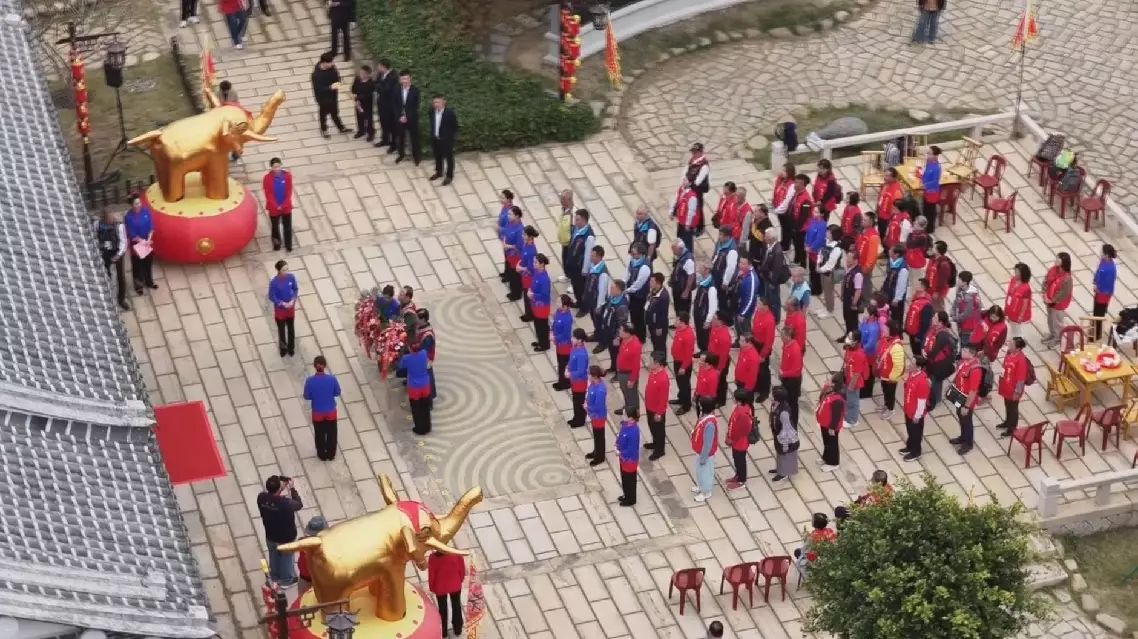
Taiwan residents return to Chinese mainland for shared rituals during Qingming Festival
More than 1,000 coal mines in China have adopted intelligent systems, as their application expands from pilot projects to large-scale deployment, the China National Coal Association said recently.
Statistics show that by the end of 2025, a total of 1,066 coal mines nationwide have introduced smart systems, with such technologies now supporting more than 65 percent of the country's coal production capacity. The number of autonomous mining trucks in operation surpassed 4,000 units, roughly doubling on an annual basis.
The rapid adoption of smart mining is driven by robust domestic capabilities in intelligent equipment and technology. In Beijing, a newly deployed underground Internet of Things (IoT) precision positioning and management system links workers, positioning cards and operating zones, while also enabling health monitoring. Its core technologies and components are fully domestically developed and have been applied in coal mines and coal preparation plants. "This underground positioning system we've developed has a positioning deviation of less than 20 centimeters when a person or device is stationary. Even when a person or device is moving at high speeds, the margin of error remains minimal. A single device can cover a radius of 800 meters," said Wu Fengdong, general manager of China Coal Beijing Coal Mining Machinery Co., Ltd., a subsidiary of the state-owned China National Coal Group Corporation.
Since the start of the 14th Five-Year Plan period (2021–2025), cumulative investment in smart mining has exceeded 107.1 billion yuan (about 15.6 billion U.S. dollars), with intelligent technologies now widely applied, accelerating the shift from traditional mining to modern, technology-driven extraction.
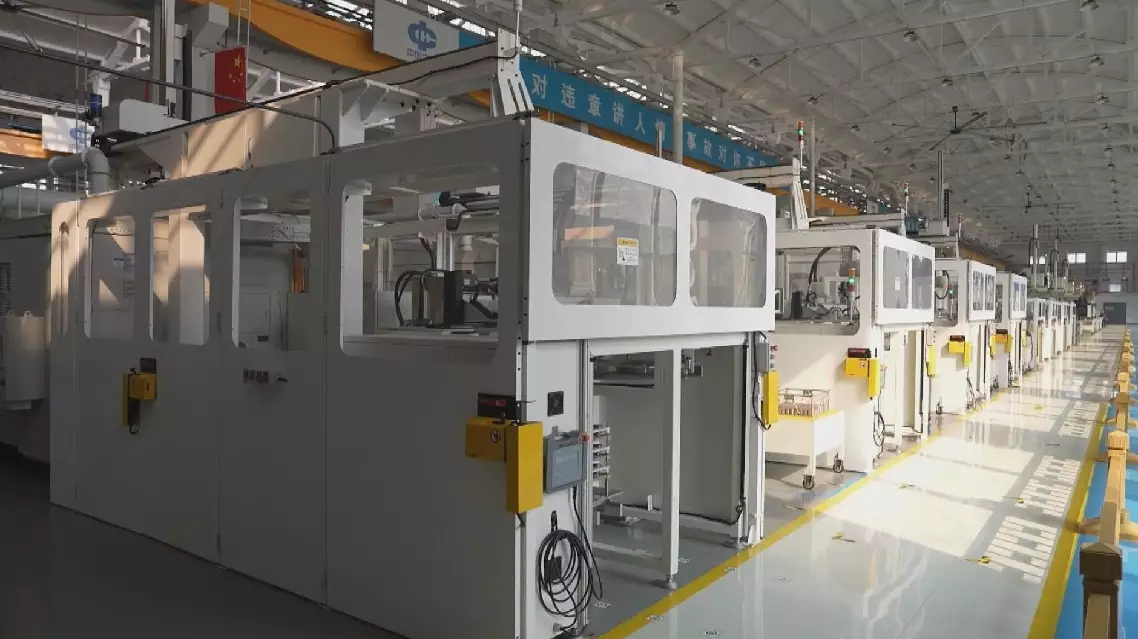
Over 60 pct of China's coal production capacity uses smart technology by end of 2025