WASHINGTON (AP) — Three months after Republican Marjorie Taylor Greene resigned from Congress following a public rift with President Donald Trump, voters in the northwest Georgia congressional district she once represented will pick a replacement to serve out the remainder of her term.
Tuesday’s special congressional runoff marks the second time in less than a month that voters in Georgia’s 14th Congressional District cast ballots for their representative in Washington. None of the 17 contenders in a March 10 special election received a majority of the vote, triggering Tuesday’s contest between the top two vote-getters.
The outcome will almost immediately affect the fragile balance of power in the closely divided U.S. House, where Republicans cling to a 217-214 majority. An additional seat is held by a former Republican who became an independent in March, while twoseats remain vacant.
Democrat Shawn Harris received the most votes in the Georgia special election, where all candidates ran on the same ballot regardless of party affiliation. Harris edged Republican Clay Fuller by about 2 percentage points, aided in part by the fact that the district’s sizable Republican vote was split among a dozen Republican candidates.
Harris is a retired Army brigadier general who lost to Greene in the 2024 general election. Fuller is a district attorney who has Trump’s endorsement. Both are also seeking their parties’ nominations for a full term in the May 19 primary ahead of the November midterm elections.
The district has a history of heavily favoring Republican candidates in general elections. Trump carried the district in 2024 with 68% of the vote. The 37% Harris received in March was slightly better than the roughly 36% of the vote he notched in his head-to-head matchup with Greene in 2024.
Harris modestly improved his vote share in nine of the district’s 10 counties since 2024. He also outperformed former Vice President Kamala Harris' 2024 presidential vote share in all 10 counties. But to win the seat, he needs to far surpass the overall mid-30% range that Democrats have received in the district in recent general elections.
His best performances in the special election were in Cobb and Paulding counties, two metro Atlanta counties that are the two most populous in the northwest Georgia district. But Greene still carried every county in the election that year.
Harris, who did not face major Democratic opposition in the special election, raised a total of $6.4 million for his campaign, compared to about $1.3 million for Fuller. As of March 18, Harris had about $745,000 in the bank, while Fuller had about $53,000.
Trump’s endorsement should be a boost for Fuller, considering the president outperformed Greene districtwide. But turnout in special elections is typically much lower than in presidential elections, and turnout for runoffs tends to be even lower.
Elsewhere in Georgia on Tuesday, runoffs will also be held in state Senate District 53 and state House District 94. Republicans control both chambers of the General Assembly, and the outcome of the two special runoffs will not threaten their majorities.
The Associated Press does not make projections and will declare a winner only when it’s determined there is no scenario that would allow a trailing candidate to close the gap. If a race has not been called, the AP will continue to cover any newsworthy developments, such as candidate concessions or declarations of victory. In doing so, the AP will make clear that it has not yet declared a winner and explain why.
There is no automatic recount provision in Georgia, but a losing candidate may request a recount if the margin is less than or equal to 0.5% of the total vote. The AP may declare a winner in a race that is eligible for a recount if it can determine the lead is too large for a recount or legal challenge to change the outcome.
Here are some of the key facts about the election and data points the AP Decision Team will monitor as the votes are tallied:
Polls close at 7 p.m. ET.
The AP will provide vote results and declare winners in the special runoff elections for the 14th Congressional District, state Senate District 53 and state House District 94.
Any registered voter may participate in the special runoff election in their district, regardless of whether they voted in the March 10 special election.
As of Friday, there were about 571,000 total registered voters in the 14th Congressional District, including about 524,000 active voters. Georgia voters do not register by party.
About 116,000 votes were cast in the March 10 U.S. House special election, roughly 52% of which was cast before Election Day.
Nearly 47,000 ballots had already been cast in the U.S. House special runoff election as of Friday.
In the March 10 special election, the AP first reported results in the 14th Congressional District at 7:05 p.m. ET, or five minutes after polls closed. The last vote update of the night was from Paulding County at 9:51 p.m. ET with about 99.9% of total votes counted.
All 10 counties in the 14th Congressional District tend to release some or all of their absentee voting results in the first vote update of the night. Four counties, including the two largest, Paulding and Cobb, also tend to include all of their results from early voting in the first vote update. Since the 2020 election, Democrats have been more likely to cast their votes early or by mail. In jurisdictions that release mail and early vote results at the start of the night, this could result in the Democratic candidate taking an initial lead in the vote count until votes from in-person Election Day ballots are tallied.
As of Tuesday, there will be 210 days until this seat is up again in the 2026 midterm elections.
Follow the AP’s coverage of the 2026 election at https://apnews.com/projects/elections-2026/.

FILE - Rep. Marjorie Taylor Greene, R-Ga., speaks during a news conference on the Epstein Files Transparency Act, Nov. 18, 2025, outside the U.S. Capitol in Washington. (AP Photo/Julia Demaree Nikhinson, File)
DUBAI, United Arab Emirates (AP) — Attacks targeted facilities at Iran’s South Pars natural gas field on Monday, Iranian media outlets reported.
The semiofficial Fars news agency and the judiciary’s Mizan news agency both reported the attack, blaming America and Israel. Neither country immediately claimed any attack on the gas field at Asaluyeh in Iran’s southern Bushehr province.
An earlier Israeli attack on South Pars saw Iran increasingly target Gulf Arab oil and natural gas sites.
U.S. President Donald Trump has warned of possible attacks on power plants and bridges this week if the Strait of Hormuz is not opened.
THIS IS A BREAKING NEWS UPDATE. AP’s earlier story follows below.
DUBAI, United Arab Emirates (AP) — Israel and the United States carried out a wave of attacks on Iran on Monday, killing more than 25 people, and Iran responded with missile fire on Israel and its Gulf Arab neighbors. U.S. President Donald Trump’s deadline for Tehran to reopen the Strait of Hormuz loomed as mediators circulated a new ceasefire proposal.
Explosions rang out in Tehran and low-flying jets could be heard for hours as the capital was pounded. Thick black smoke rose near the city’s Azadi Square after one airstrike hit the grounds of the Sharif University of Technology.
Among those killed in one of the attacks on Tehran was the head of intelligence for Iran’s paramilitary Revolutionary Guard, Maj. Gen. Majid Khademi, according to Iranian state media and Israel's defense minister.
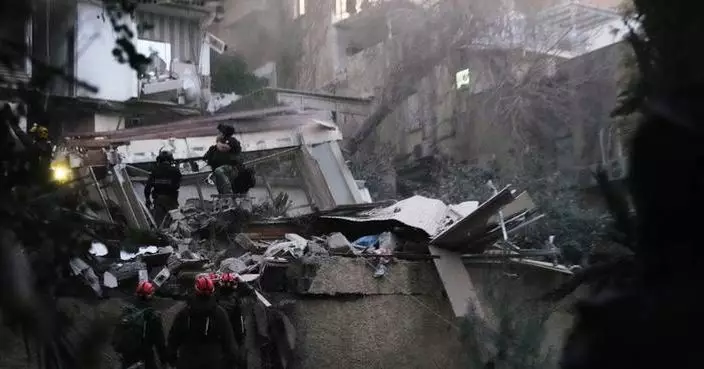
Iranian missiles hit the northern Israeli city of Haifa, where four people were found dead in the rubble of a residential building.
Kuwait, the United Arab Emirates and Saudi Arabia all activated their air defenses to intercept incoming Iranian missiles and drones, as Tehran kept up the pressure on its Gulf neighbors. Iran's regular attacks on regional energy infrastructure and its stranglehold on the Strait of Hormuz, through which a fifth of the world's oil is shipped in peacetime, has sent global energy prices soaring.
Under pressure at home as consumers are growing increasingly concerned, Trump gave Tehran a deadline that expires Monday night Washington time, saying if no deal was reached to reopen the strait, the U.S. would hit Iran's power plants and other infrastructure targets and set the country “back to the stone ages.”
“Tuesday will be Power Plant Day, and Bridge Day, all wrapped up in one, in Iran,” he threatened in a social media post, adding that if Iran did not open the strait “you'll be living in Hell.”
In an effort to stop the fighting, Egyptian, Pakistani and Turkish mediators have sent Iran and the U.S. a proposal calling for a 45-day ceasefire and the reopening of the Strait of Hormuz to give time to try and find a way to end the war, two Mideast officials have told The Associated Press.
Iran and the U.S. have not responded to the proposal, sent late Sunday night to both Iranian Foreign Minister Abbas Araghchi and U.S. Mideast envoy Steve Witkoff, the officials said. The officials spoke on condition of anonymity to discuss the private negotiations.
European Council President António Costa called for diplomacy to be given a chance, writing on X that “any targeting of civilian infrastructure, namely energy facilities, is illegal and unacceptable.”
“Escalation will not achieve a ceasefire and peace,” he said. “Only negotiations will, namely the ongoing efforts led by regional partners.”
Trump has at times demanded that Iran reopen the strait or face a significant escalation in bombing from the U.S. while at other times said it was not up to Washington to force the waterway open or even that the war could end without it being reopened.
He has also given multiple deadlines to Iran on the issue, and after the threat he posted Sunday he later posted a single line saying “Tuesday, 8:00 P.M. Eastern Time!” It was not clear whether that meant he had extended the deadline another day.
Tehran has shown no signs of backing down from its stranglehold on shipping through the strait, which was fully open before Israel and the U.S. attacked Iran on Feb. 28 to start the war.
Following Trump’s expletive-laced posts on Easter Sunday, Iran’s parliamentary Speaker Mohammad Bagher Qalibaf called the threats of targeting Iran’s infrastructure “reckless.”
“You won’t gain anything through war crimes,” Qalibaf wrote on X. “The only real solution is respecting the rights of the Iranian people and ending this dangerous game.”
Brent crude oil, the international standard, rose to $109 in early Monday spot trading, some 50% higher than it was when the war started.
Iran has let some vessels through the strait since the war began, but none belonging to the U.S., Israel or countries perceived as helping them. Some have paid Iran for passage and the overall flow of traffic is down more than 90% over the same period last year.
One of Monday's morning airstrikes targeted Tehran's Sharif University of Technology, where Iranian media reported damage to the buildings as well as a natural gas distribution site next to the campus.
It wasn’t immediately clear what had been targeted on the grounds of the university, which is empty of students as the war has forced all schools into the country into online classes. However, multiple countries over the years have sanctioned the university for its work with the military, particularly on Iran’s ballistic missile program, which is controlled by the country’s paramilitary Revolutionary Guard.
Following the confirmation that the Guard's intelligence chief had been killed in one strike, Israeli Defense Minister Israel Katz vowed to keep targeting top-ranking Iranian officials. “Iran’s leaders live with a sense of being targeted," Katz said. "We will continue to hunt them down one by one.”
A strike near Eslamshar, southwest of Tehran, killed at least 15 people, authorities said. Five others were killed when a residential area in the city of Qom was hit, and six more were killed in strikes on other cities, the state-run IRAN daily newspaper reported.
Three more people were killed when an airstrike hit a home in Tehran, Iranian state television reported.
More than 1,900 people have been killed in Iran since the war began, but its government has not updated the toll for days.
In Lebanon, which Israel has invaded by ground, more than 1,400 people have been killed and more than 1 million people have been displaced. Eleven Israeli soldiers have died there while targeting Iranian-backed Hezbollah militants.
In Gulf Arab states and the occupied West Bank, more than two dozen people have died, while 23 have been reported dead in Israel and 13 U.S. service members have been killed.
Rising reported from Bangkok and Magdy from Cairo.
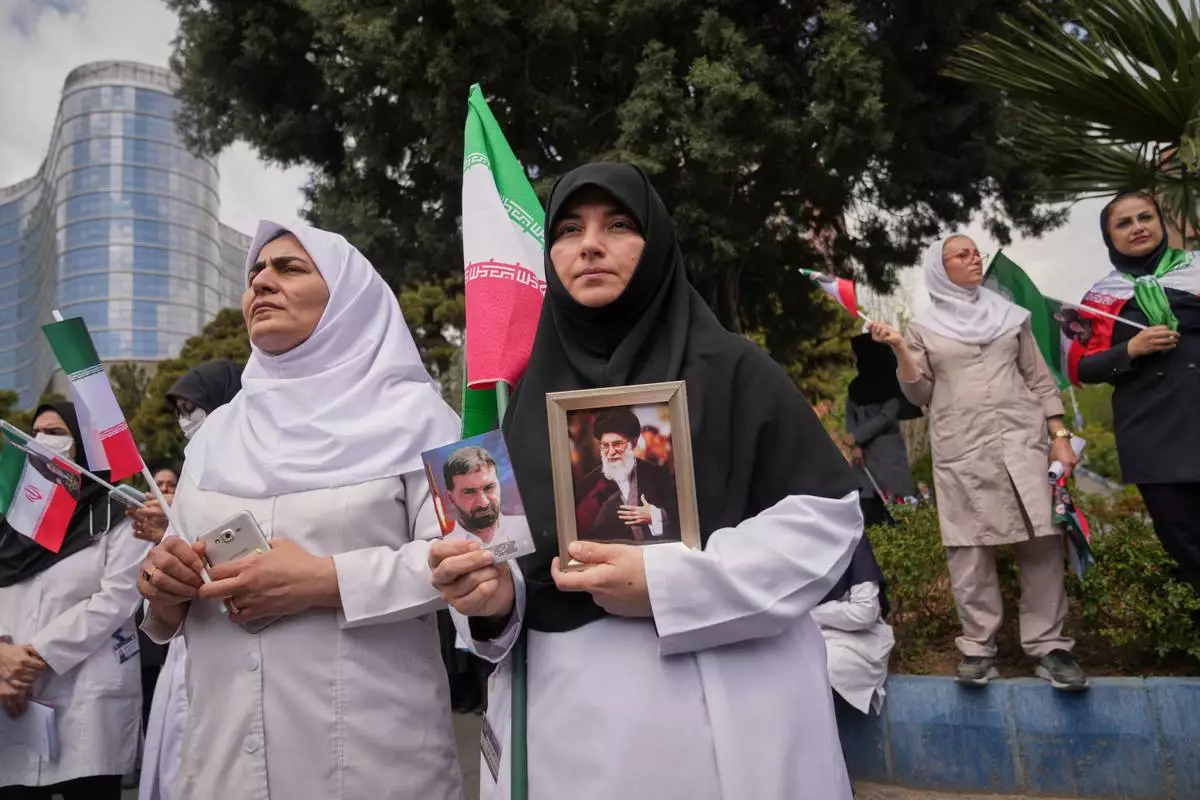
Medical workers attend a government-sponsored protest against the U.S.-Israeli military campaign outside Imam Khomeini Hospital in Tehran, Iran, Monday, April 6, 2026. (AP Photo/Francisco Seco)
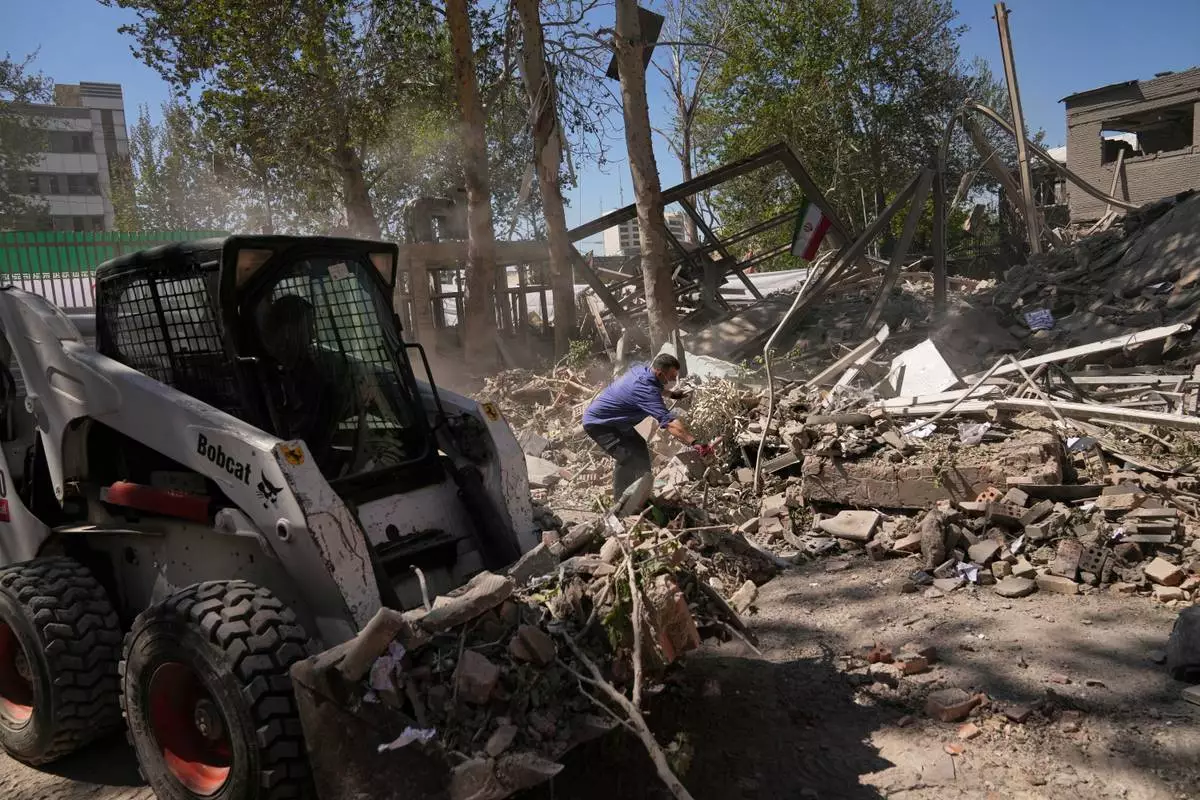
Workers remove debris at Tehran's Sharif University of Technology complex that Iranian authorities say was hit early Monday by a U.S.-Israeli strike, in Tehran, Iran, Monday, April 6, 2026. (AP Photo/Francisco Seco)
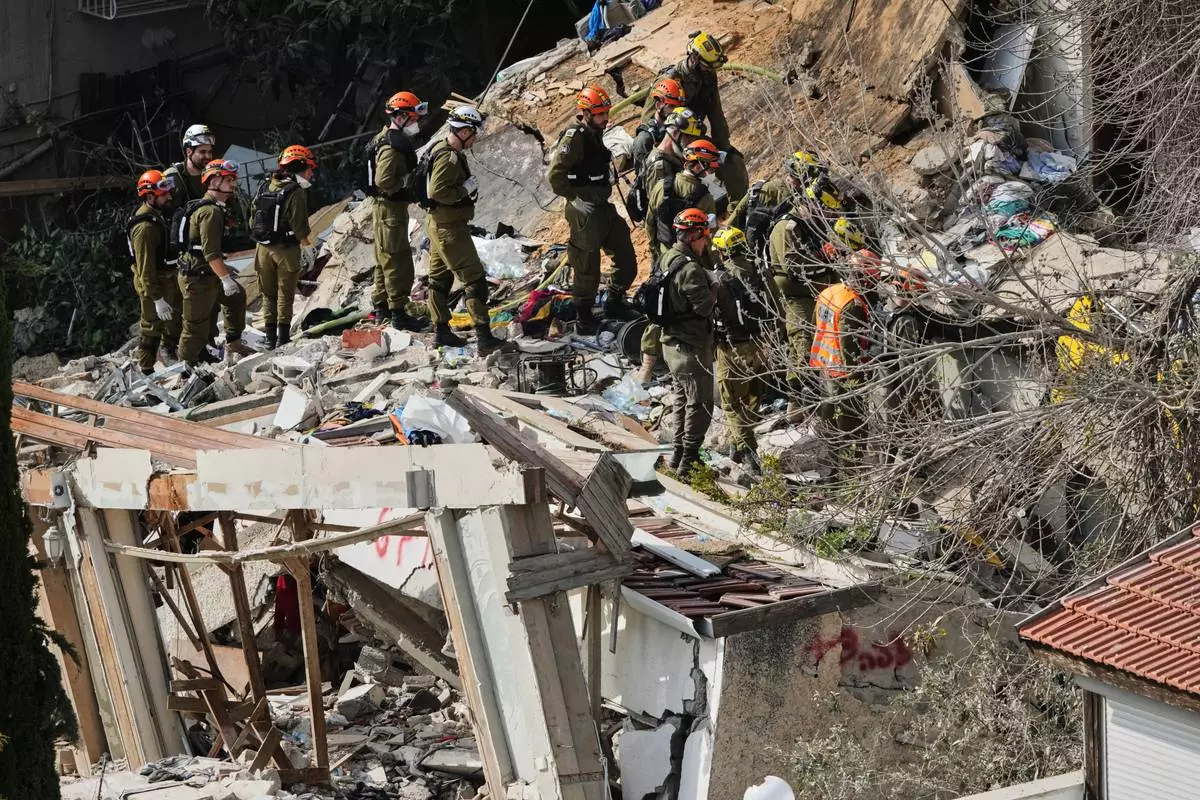
Israeli rescue teams search for missing people amid the rubble of a residential building a day after it was struck by an Iranian missile in Haifa, Israel, Monday, April 6, 2026. (AP Photo/Ariel Schalit)
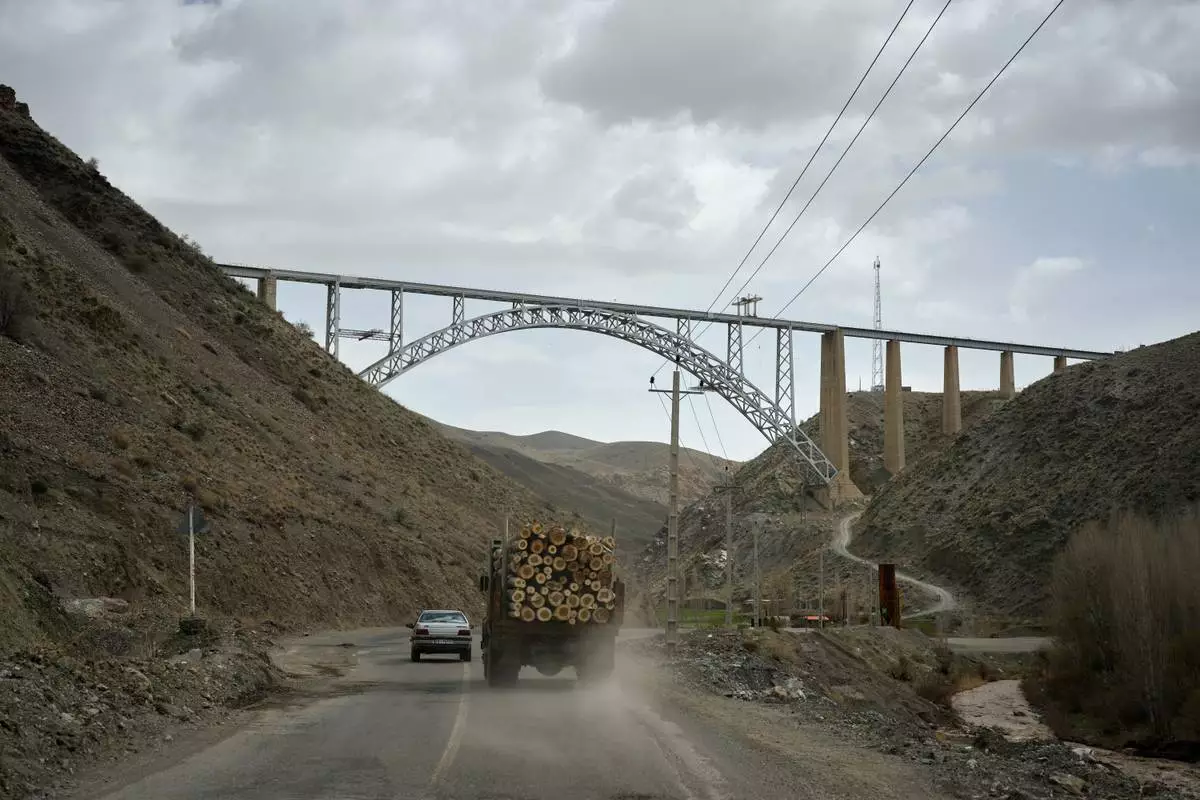
A truck loaded with logs and other vehicles drive along a road toward Tehran near the Turkish border on the outskirts of Razi, northwestern Iran, Saturday, April 4, 2026. (AP Photo/Francisco Seco)
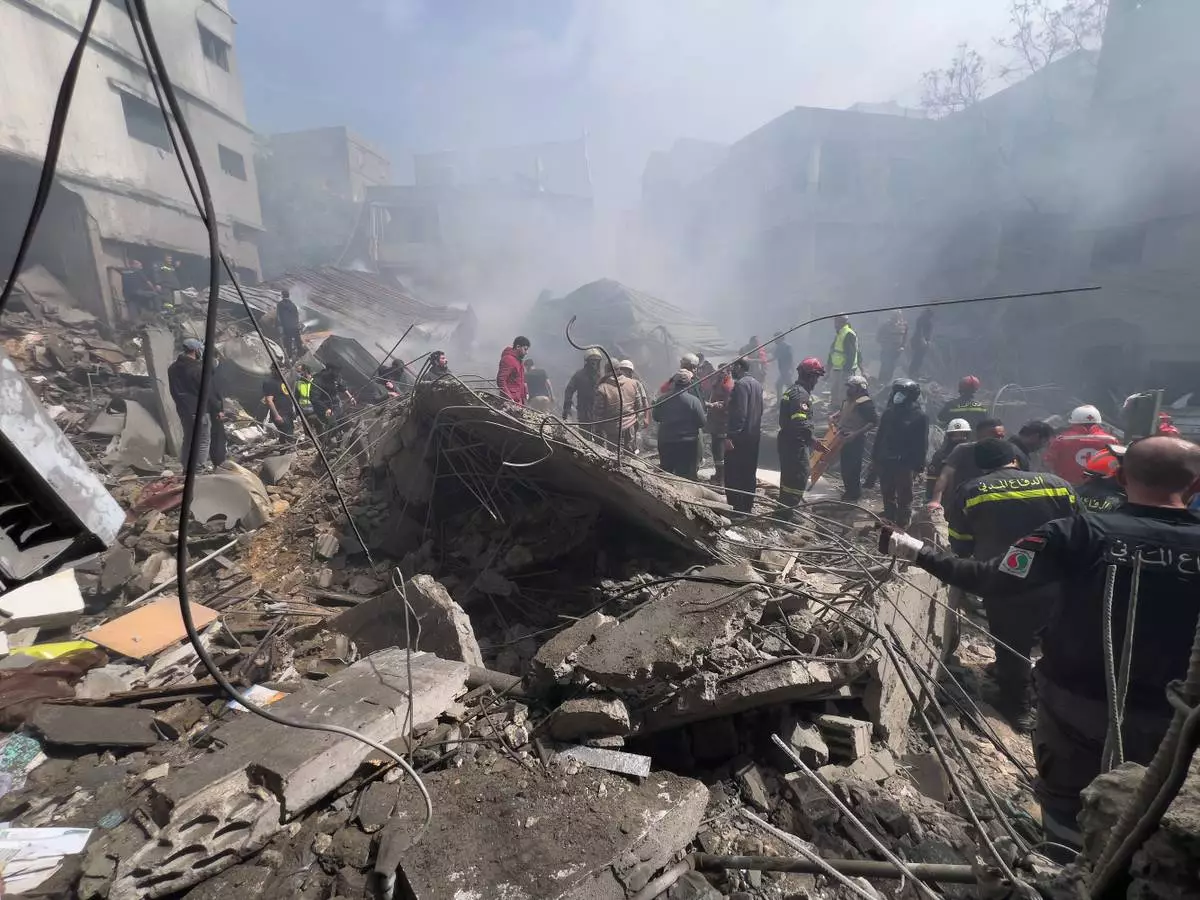
Rescue workers search for victims at the site of an Israeli airstrike that hit a crowded neighbourhood south of Beirut, Lebanon, Sunday, April 5, 2026. (AP Photo/Hussein Malla)
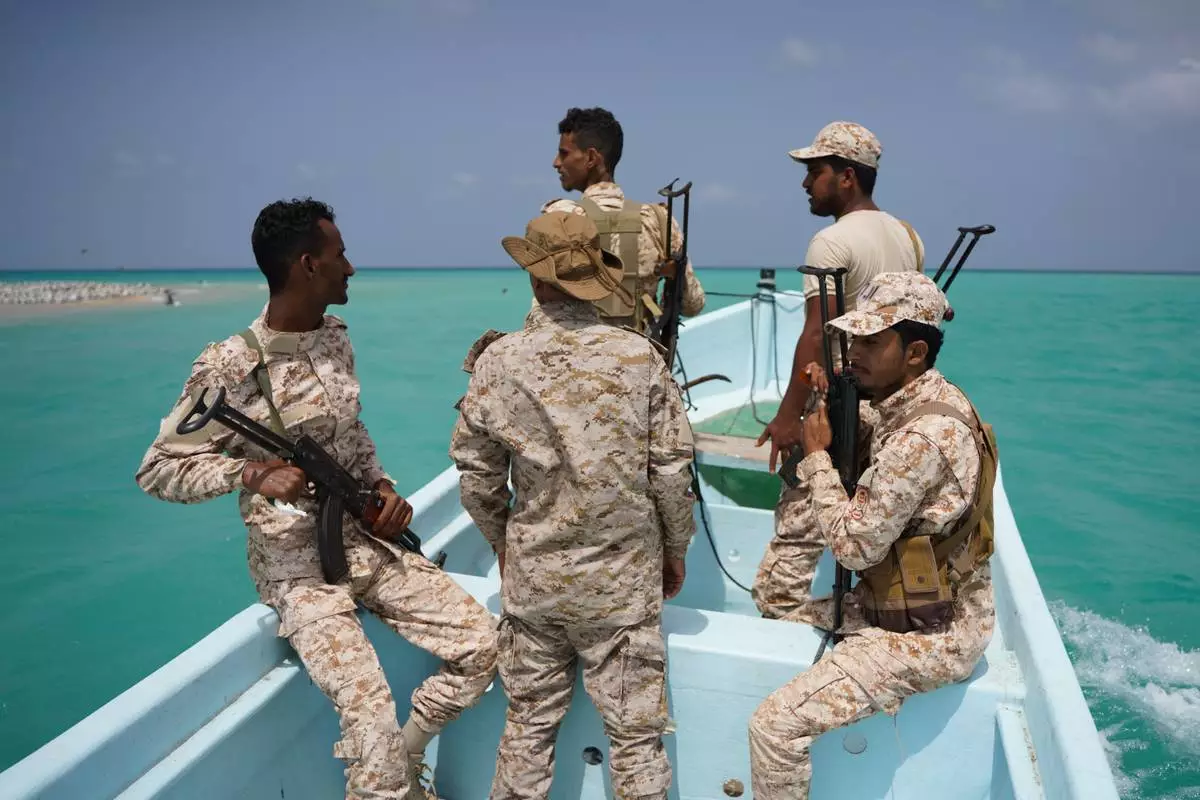
Yemeni soldiers patrol the strategic Bab el-Mandeb Strait, Yemen, Sunday, April 5, 2026. (AP Photo/Abdulnasser Alseddik)
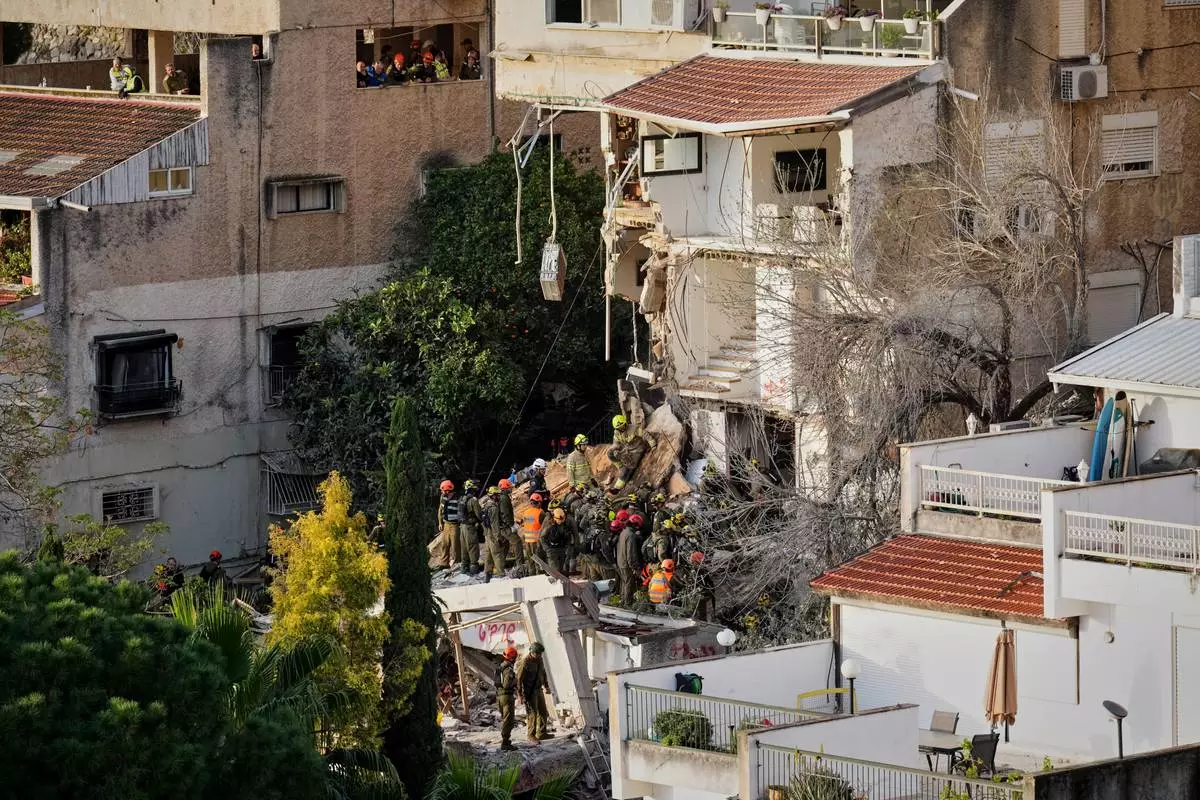
Israeli rescue teams search for missing people amid the rubble of a residential building a day after it was struck by an Iranian missile in Haifa, Israel, Monday, April 6, 2026. (AP Photo/Ariel Schalit)