More and more young holidaymakers are looking beyond traditional sightseeing, choosing instead to engage with Chinese culture through hands-on experiences, from tea ritual and kite-making to lacquer painting, during the just-concluded Qingming break.
Falling on April 5 this year, the Qingming Festival, or the Tomb-Sweeping Day, is a traditional Chinese festival for honoring the deceased and paying tributes to ancestors. The three-day holiday from Saturday to Monday also provides a short break for citizens across the nation.
Intangible cultural heritage (ICH) techniques, once just seen in museums and exhibitions, are now available as interactive holiday activities, offering visitors a new way to relax while reconnecting with tradition.
In Jingshan Village in Hangzhou, east China's Zhejiang Province, the Chinese tea-drinking art of "Dian Cha", a popular tea ritual dating back to the Song Dynasty (960-1279), has been well preserved.
During the holiday, tea instructors offered on-site classes, guiding children through the process of grinding tea leaves into powder and whisking the tea by hand, allowing them to experience the refined lifestyle from over 1,000 years ago.
"'Dian Cha' is a very important procedure in a tea banquet. I hope that more people can learn about Jingshan tea culture through the courses," said tea art specialist Fang Xiaoping.
Meanwhile, visitors were able not only to browse cultural and creative ICH products but also to participate in interactive activities at the Southern Song Dynasty Deshou Palace Ruins Museum and the Zhejiang Intangible Cultural Heritage Museum in Hangzhou.
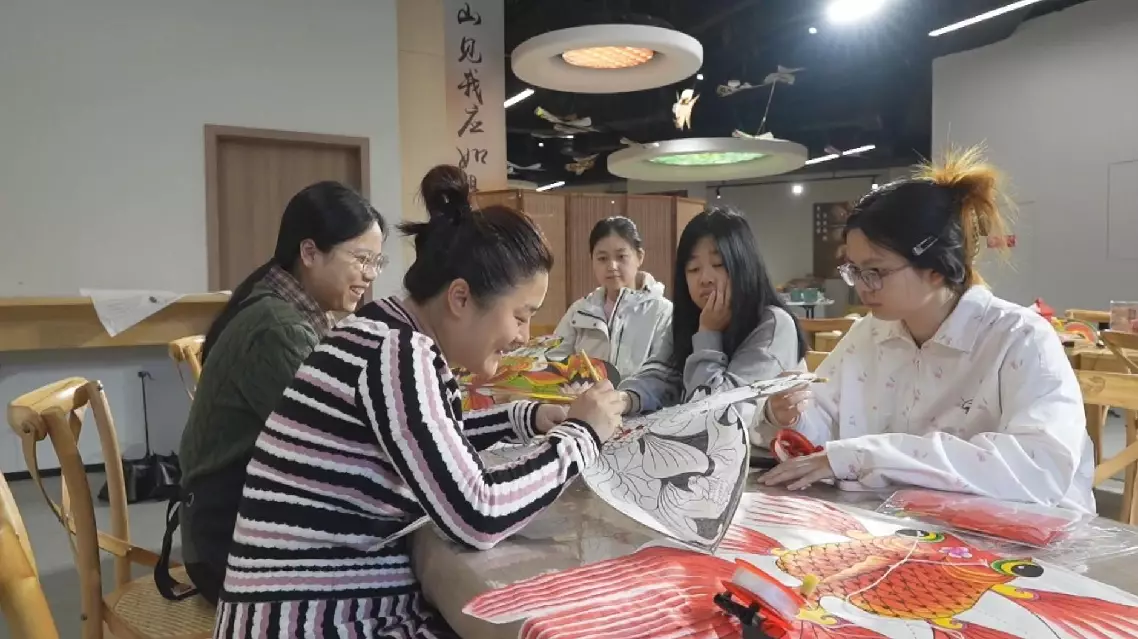
Many tried their hands at painting lacquer fans, making traditional paper-crafted kites, and creating souvenirs that brought intangible heritage traditions into their everyday lives.
"I think it's a lot of fun because we can experience the process rather than simply visiting, which helps us better understand this intangible cultural heritage technique," a tourist named Zhao Yuqing said.
"This ICH fever will definitely not be short-lived. It is a long-term trend resulting from the combined effects of rising cultural confidence, consumption upgrading, and changes in spiritual and cultural demand in our country. I think the key to maintaining young people's enthusiasm lies in two transformations. The first transformation is turning niche memories into something shared by the public. The second transformation is turning a cultural activity into a life scenario, so that intangible cultural heritage can be integrated into modern lifeThis ICH fever will definitely not be short-lived. It is a long-term trend resulting from the combined effects of rising cultural confidence, consumption upgrading, and changes in spiritual and cultural demand in our country. I think the key to maintaining young people's enthusiasm lies in two transformations. The first transformation is turning niche memories into something shared by the public. The second transformation is turning a cultural activity into a life scenario, so that intangible cultural heritage can be integrated into modern life," said Zheng Weigui, an official from the Zhejiang Intangible Cultural Heritage Museum.
Chinese intangible cultural crafts gain popularity during Qingming holiday