General manager Tom Fitzgerald is parting ways with the New Jersey Devils, the latest NHL team to make an abrupt late-season change in the front office or behind the bench.
Co-owner David Blitzer announced Monday that a decision had been made for Fitzgerald to leave the organization. Fitzgerald had been GM since January 2020 and got the title president of hockey operations early in 2024, along with a contract extension.
“Tom and I had a thoughtful conversation today and agreed it was time to move in a new direction,” Blitzer said. “Tom changed the trajectory of our team here, including setting a franchise record for points in a season and helping make New Jersey a hockey destination. He is a well-respected leader across the Devils’ organization and NHL, and I am grateful for our friendship."
Fitzgerald was responsible for building much of the core of the roster around top picks Nico Hischier and Jack Hughes, who were drafted when he was an assistant to Ray Shero. The 57-year-old endured criticism in recent months for signing players to contracts with restrictive no-trade clauses and for extending Jacob Markstrom early, before the goaltender's struggles.
“After talking with David Blitzer, it was apparent to everyone that the best course of action is to move on for the benefit of the team,” Fitzgerald said. “The Devils are fortunate to have a core of great players, vocal and passionate fans, but most importantly, tremendous people who worked with me toward a common goal. I’ve always said that New Jersey is a hidden gem, and I’m proud of the effort that we put in to raise the standard and make it a destination."
New Jersey made the playoffs twice in the five seasons with Fitzgerald in charge, losing in the second round in 2023 and bowing out in the first round last year.
“As we prepare to move forward, it is important I acknowledge our fans: I recognize we have not delivered in the way you expect and deserve and I understand and share in your frustration,” Blitzer said. "This is a critical offseason for our franchise, and we will explore all avenues that best position the Devils to compete for a Stanley Cup once again.”
It's unclear what this means for the future of coach Sheldon Keefe, who is nearing the end of his second season. Fitzgerald hired Keefe in May 2024.
Fitzgerald, who was part of USA Hockey's management group that constructed the roster that won gold at the Milan Cortina Olympics, could immediately become a candidate for one of the other GM vacancies around the league. The Nashville Predators with Barry Trotz retiring and Toronto Maple Leafs after firing Brad Treliving are currently searching for a new head of hockey operations.
“I am incredibly appreciative to David, Josh Harris, and the entire New Jersey Devils organization for being a part of my life for the past decade," Fitzgerald said. "I look forward to the next step in my hockey career and will always look back fondly on my time with the Devils.”
Fitzgerald spent time in Nashville and Toronto during his playing career. He was the first captain of the Predators, wearing the “C” from 1998-02 while Trotz was coaching the team and played two seasons with the Maple Leafs from '02-04.
After going into management, Fitzgerald was director of player development when Pittsburgh won the Stanley Cup in 2009. He joined the Devils in 2015.
AP NHL: https://apnews.com/hub/nhl

FILE - New Jersey Devils general manager Tom Fitzgerald speaks during an NHL hockey news conference, Tuesday, Nov. 30, 2021, in Newark, N.J. (AP Photo/Bill Kostroun, File)

New Jersey Devils goaltender Jacob Markstrom (25), Timo Meier (28) and Luke Hughes (43) celebrate their win over the Montreal Canadiens in an NHL hockey game in Montreal, Sunday, April 5, 2026. (Graham Hughes/The Canadian Press via AP)
HOUSTON (AP) — With the moon now filling their windows, the Artemis II astronauts sailed into their lunar flyby Monday, taking in magnificent views of the far side never before witnessed while setting a new distance record for humanity.
The six-hour flyby is the highlight of NASA’s first return to the moon since the Apollo era with three Americans and one Canadian — a step toward landing boot prints near the moon’s south pole in just two years.
First came a prize — and bragging rights — for Artemis II.
Less than an hour before kicking off the fly-around and intense lunar observations, the four astronauts surpassed the distance record of 248,655 miles (400,171 kilometers) set by Apollo 13 in April 1970.
They kept going, hurtling ever farther from Earth. Before it was over, Artemis II beat the old record by 4,101 miles (6,600 kilometers).
“It is blowing my mind what you can see with the naked eye from the moon right now. It is just unbelievable,” Canadian astronaut Jeremy Hansen radioed ahead of the flyby. He challenged “this generation and the next to make sure this record is not long-lived.”
Moments after breaking Apollo 13’s record, the astronauts asked permission to name two fresh lunar craters already observed. They proposed Integrity, their capsule’s name, and Carroll in honor of commander Reid Wiseman’s wife who died of cancer in 2020. Wiseman wept as Hansen put in the request to Mission Control, and all four astronauts embraced in tears.
“Such a majestic view out here,” Wiseman radioed once he regained his composure and started picture-taking. The astronauts called down that they managed to capture the moon and Earth in the same shot, and provided a running commentary to scientists back in Houston on what they were seeing.
Some peaks were so bright, pilot Victor Glover noted, that they looked as though they were covered in snow. Besides photographing the scenes with high-powered Nikon cameras, the astronauts also pulled out their iPhones for some impromptu shots.
Wiseman, Glover, Hansen and Christina Koch started the momentous day with the voice of Apollo 13 commander Jim Lovell, who recorded a wake-up message just two months before his death last August. “Welcome to my old neighborhood,” said Lovell, who also flew on Apollo 8, humanity’s first lunar visit. “It’s a historic day and I know how busy you’ll be, but don’t forget to enjoy the view.”
They took up with them the Apollo 8 silk patch that accompanied Lovell to the moon, and showed it off as the crucial flyby approached. “It’s just a real honor to have that on board with us,” said Wiseman. “Let’s go have a great day.”
Artemis II is using the same maneuver that Apollo 13 did after its “Houston, we’ve had a problem” oxygen tank explosion wiped out any hope of a moon landing.
Known as a free-return lunar trajectory, this no-stopping-to-land route takes advantage of Earth and the moon’s gravity, reducing the need for fuel. It’s a celestial figure-eight that put the astronauts on course forhome, once they emerged from behind the moon Monday evening.
The Artemis II crew ducked behind the moon more than halfway through the lunar flyby. During the 40-minute communication blackout, they made their closest approach to the moon — 4,067 miles (6,545 kilometers) — and reached their maximum distance of 252,756 miles (406,771 kilometers) from Earth. At that point, they were homeward bound, taking four days to get back with a Pacific splashdown concluding their test flight on Friday.
Their estimated speed at closest approach to the moon: 3,139 mph (5,052 kph).
Wiseman and his crew spent years studying lunar geography to prepare for the big event, adding solar eclipses to their repertoire during the past few weeks. By launching last Wednesday, they ensured themselves of a total solar eclipse from their vantage point behind the moon, courtesy of the cosmos.
Topping their science target list: Orientale Basin, a sprawling impact basin with three concentric rings, the outermost of which stretches nearly 600 miles (950 kilometers) across.
Other sightseeing goals: the Apollo 12 and 14 landing sites from 1969 and 1971, respectively, as well as fringes of the south polar region, the preferred locale for future touchdowns. Farther afield, Mercury, Venus, Mars and Saturn — not to mention Earth — will be visible.
Their moon mentor, NASA geologist Kelsey Young, expects thousands of pictures.
“People all over the world connect with the moon. This is something that every single person on this planet can understand and connect with,” she said on the eve of the flyby, wearing eclipse earrings.
Artemis II is NASA’s first astronaut moonshot since Apollo 17 in 1972. It sets the stage for next year’s Artemis III, which will see another Orion crew practice docking with lunar landers in orbit around Earth. The culminating moon landing by two astronauts near the moon’s south pole will follow on Artemis IV in 2028.
While Artemis II may be taking Apollo 13’s path, it’s most reminiscent of Apollo 8 and humanity’s first lunar visitors who orbited the moon on Christmas Eve 1968 and read from the Book of Genesis.
Glover said flying to the moon during Christianity’s Holy Week brought home for him “the beauty of creation.” Earth is an oasis amid “a whole bunch of nothing, this thing we call the universe” where humanity exists as one, he observed over the weekend.
“This is an opportunity for us to remember where we are, who we are, and that we are the same thing and that we’ve got to get through this together,” Glover said, clasping hands with his crewmates.
The Associated Press Health and Science Department receives support from the Howard Hughes Medical Institute’s Department of Science Education and the Robert Wood Johnson Foundation. The AP is solely responsible for all content.
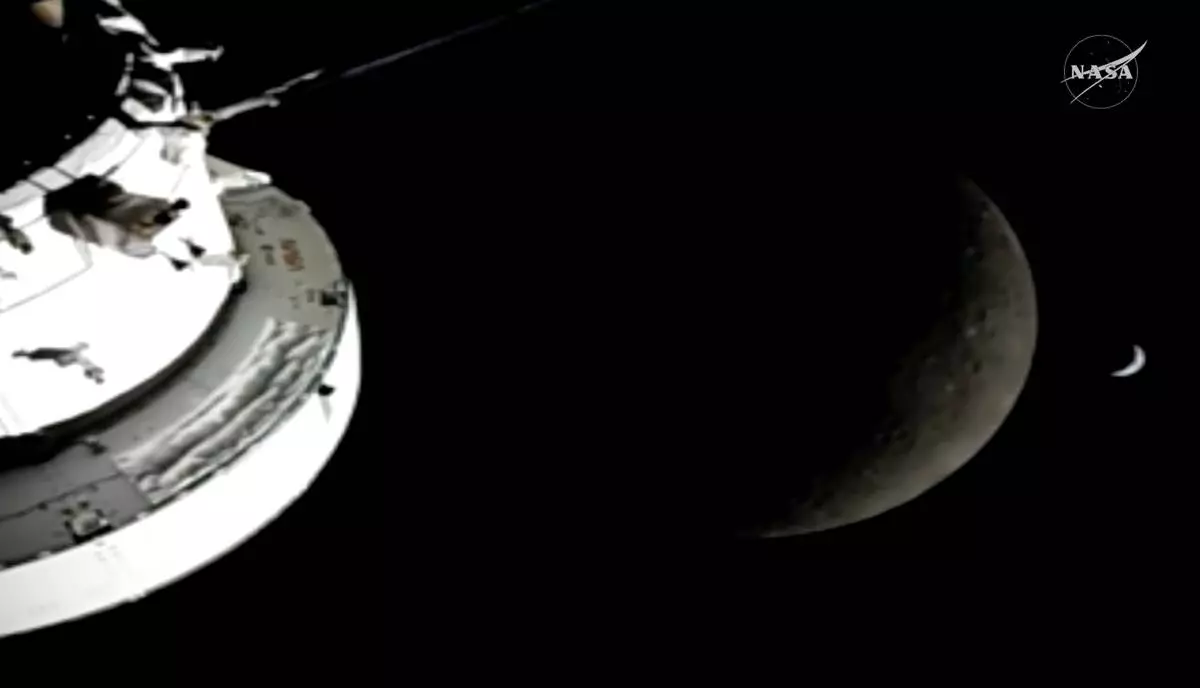
In this image from video provided by NASA, the Orion Spacecraft, the Earth and the Moon are seen from a camera as the Artemis II crew and spacecraft travel farther into Space, Monday, April 6, 2026. (NASA via AP)
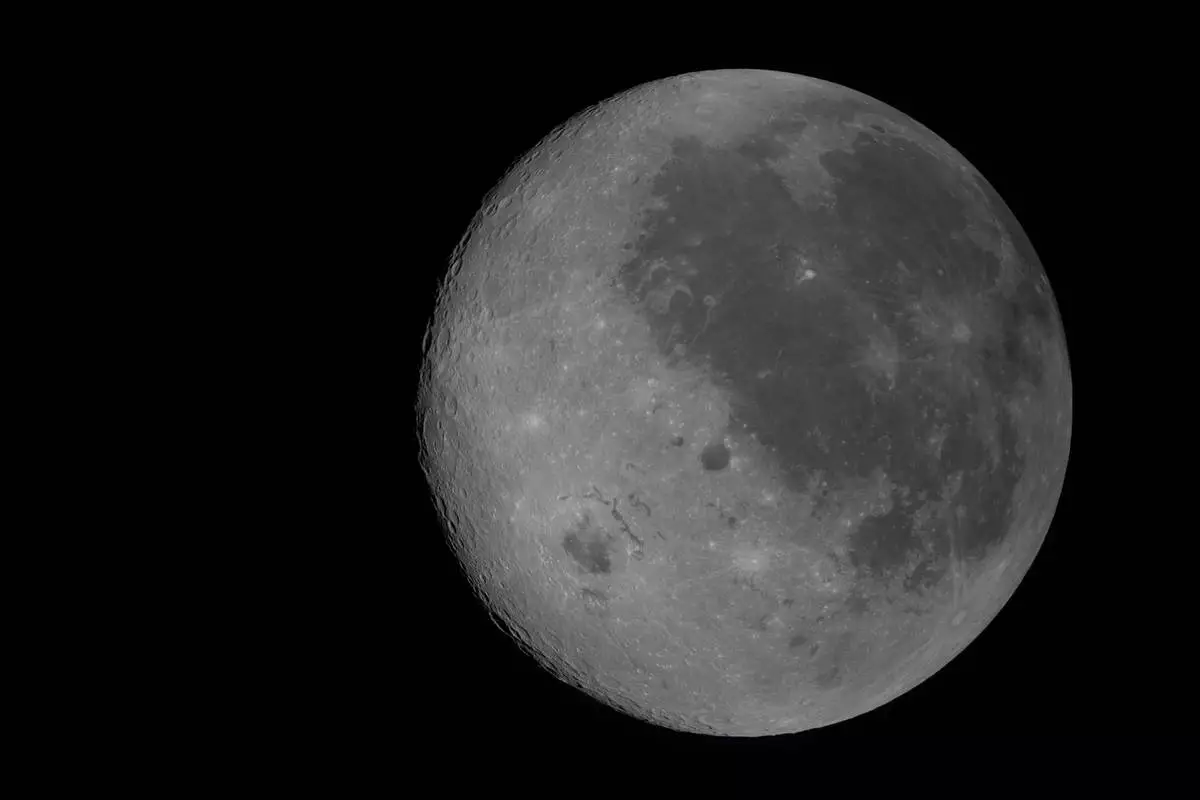
This image provided by NASA Monday, April 6, 2026, shows the Moon, the near side (the hemisphere we see from Earth) visible at the right side of the disk, identifiable by the dark splotches. At lower left is Orientale basin, a nearly 600-mile-wide crater that straddles the Moon’s near and far sides. Everything to the left of the crater is the far side. (NASA via AP)
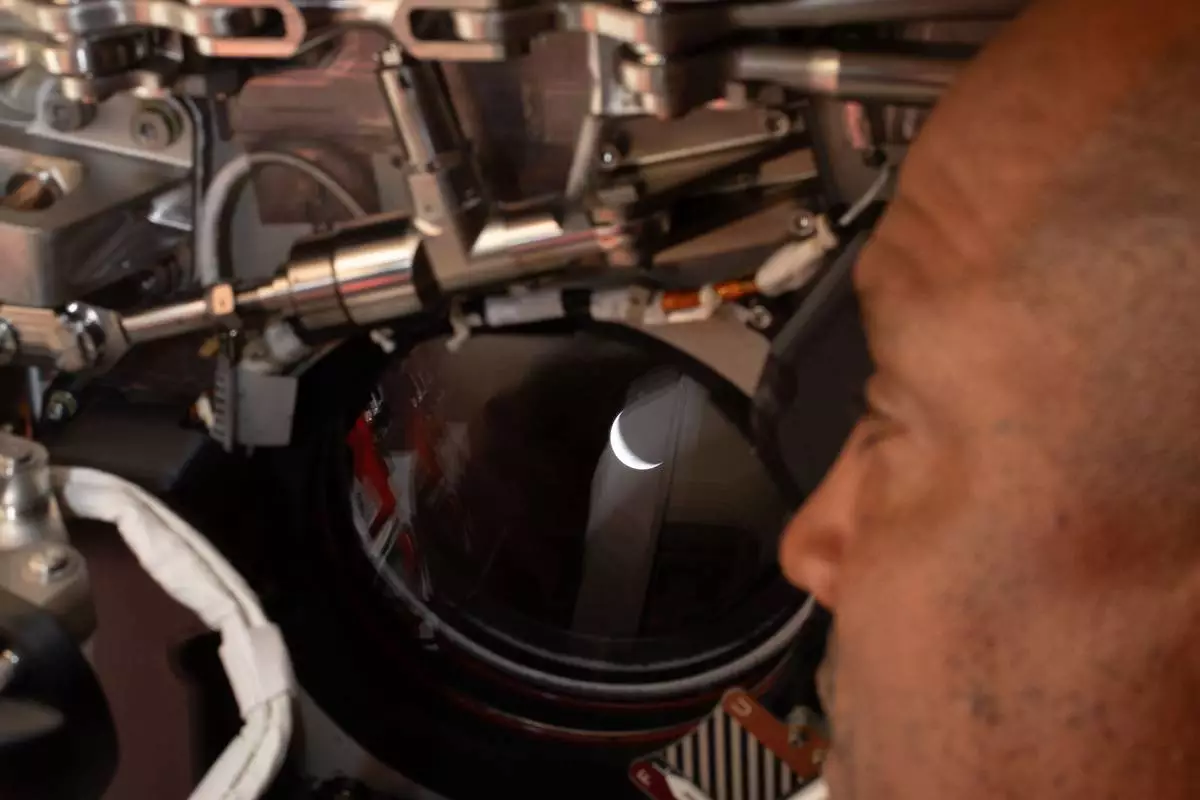
In this photo provided by NASA, Artemis II pilot and NASA astronaut Victor Glover peers out one of the Orion spacecraft's windows looking back at Earth ahead of the crew's lunar flyby, Monday, April 6, 2026.(NASA via AP)
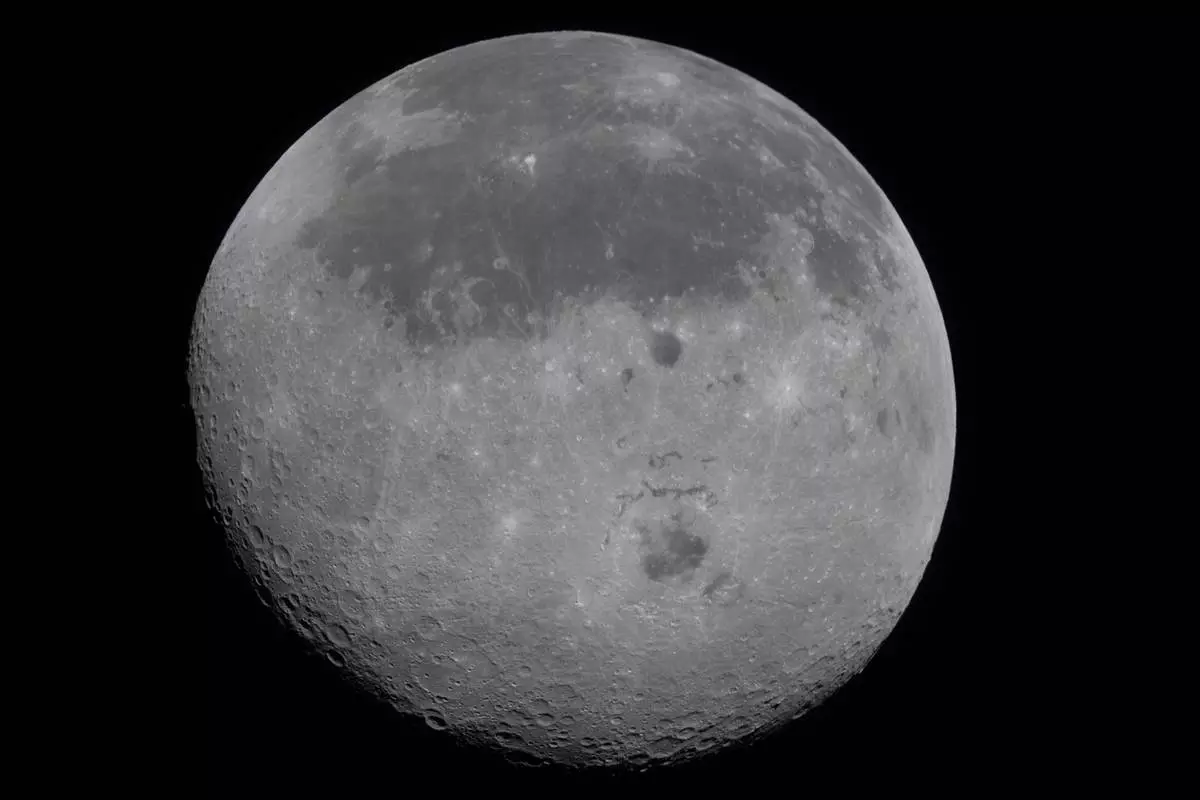
This image provided by NASA Monday, April 6, 2026, shows the Moon, the near side (the hemisphere we see from Earth) visible at the top half of the disk, identifiable by the dark splotches. At the lower center is Orientale basin, a nearly 600-mile-wide crater that straddles the Moon’s near and far sides. Everything below the crater is the far side. (NASA via AP)
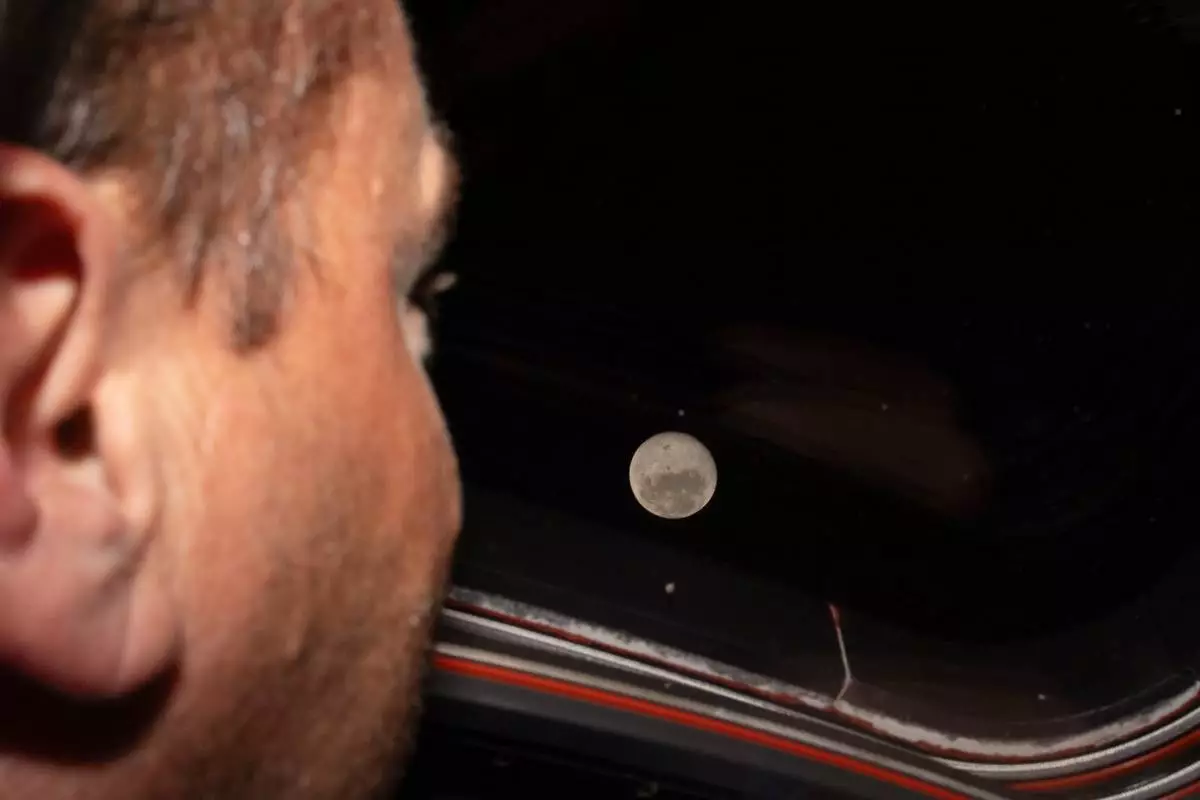
In this photo provided by NASA, Artemis II commander and NASA astronaut Reid Wiseman looks out one of the Orion spacecraft's main cabin windows at the Moon ahead of the crew's lunar flyby on April 6, 2026. (NASA via AP)
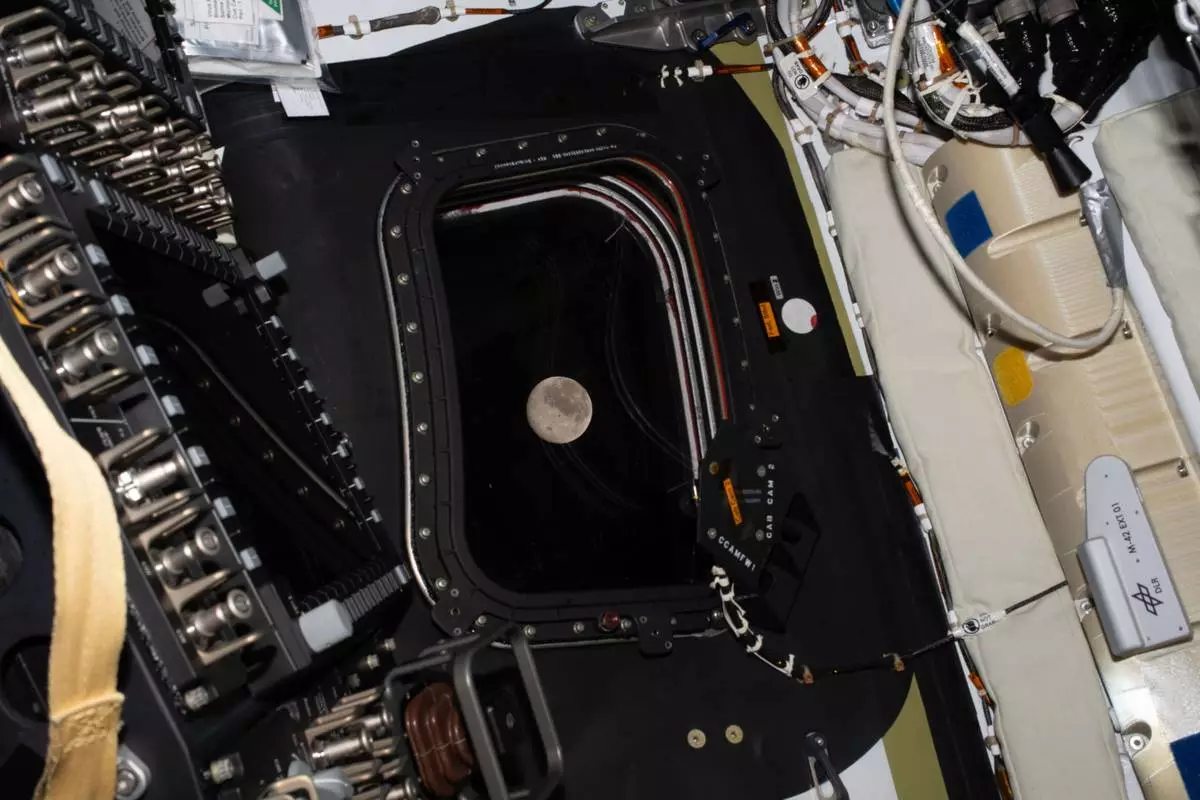
In this photo provided by NASA, the Moon is seen in the window of the Orion spacecraft, photo taken by The Artemis II crew, at the end of day 5 of journey to the Moon on Monday, April 6, 2026. (NASA via AP)

In this photo provided by NASA, astronaut Christina Koch is pictured on the fourth day of the mission, prepping for lunar flyby activities after completing aerobic exercise on the flywheel device, during the The Artemis II crew's journey to the Moon, Saturday, April 4, 2026. (NASA via AP)
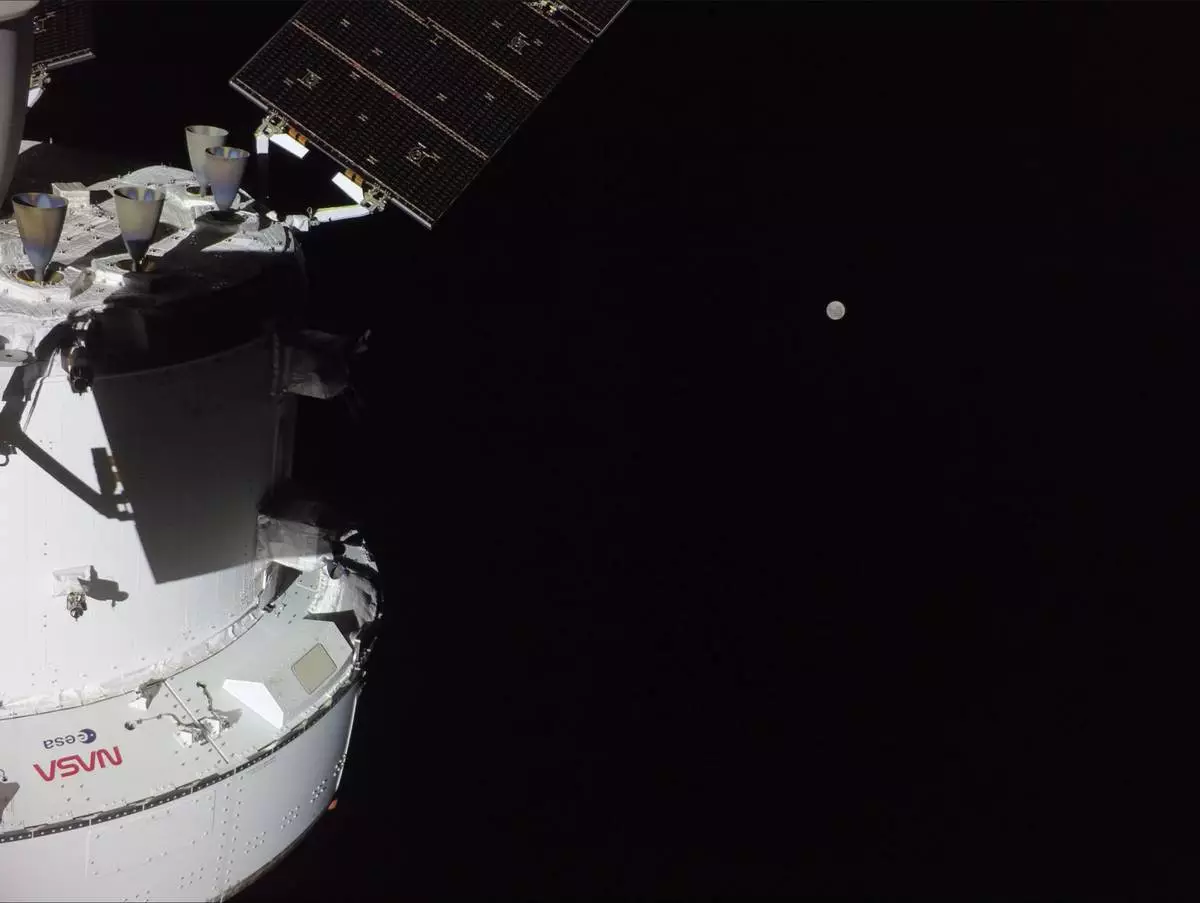
This image provided by NASA shows the Orion spacecraft with the Moon in the distance, as captured by a camera on the tip of one of its solar array wings, April 3, 2026. (NASA via AP)
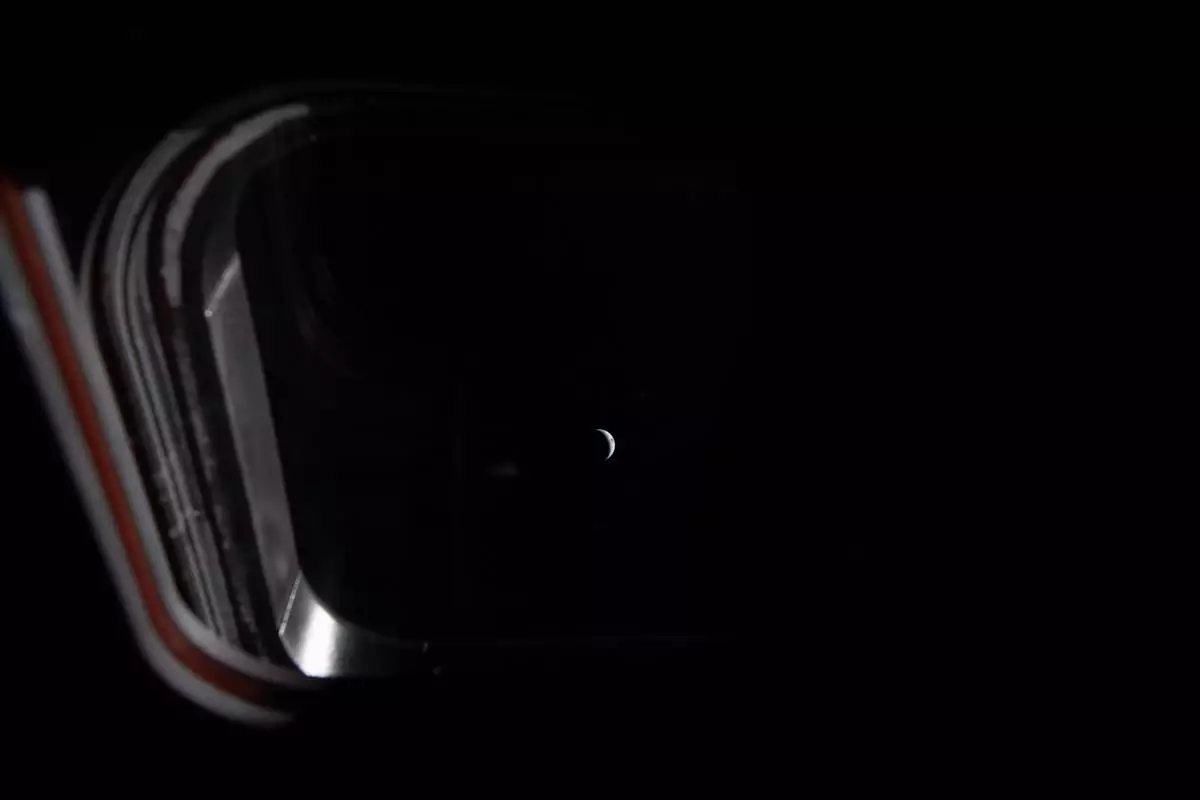
This photo provided by NASA shows the Earth seen from a window on the Orion spacecraft Integrity during the Artemis II mission, Sunday, April 5, 2026. (NASA via AP)
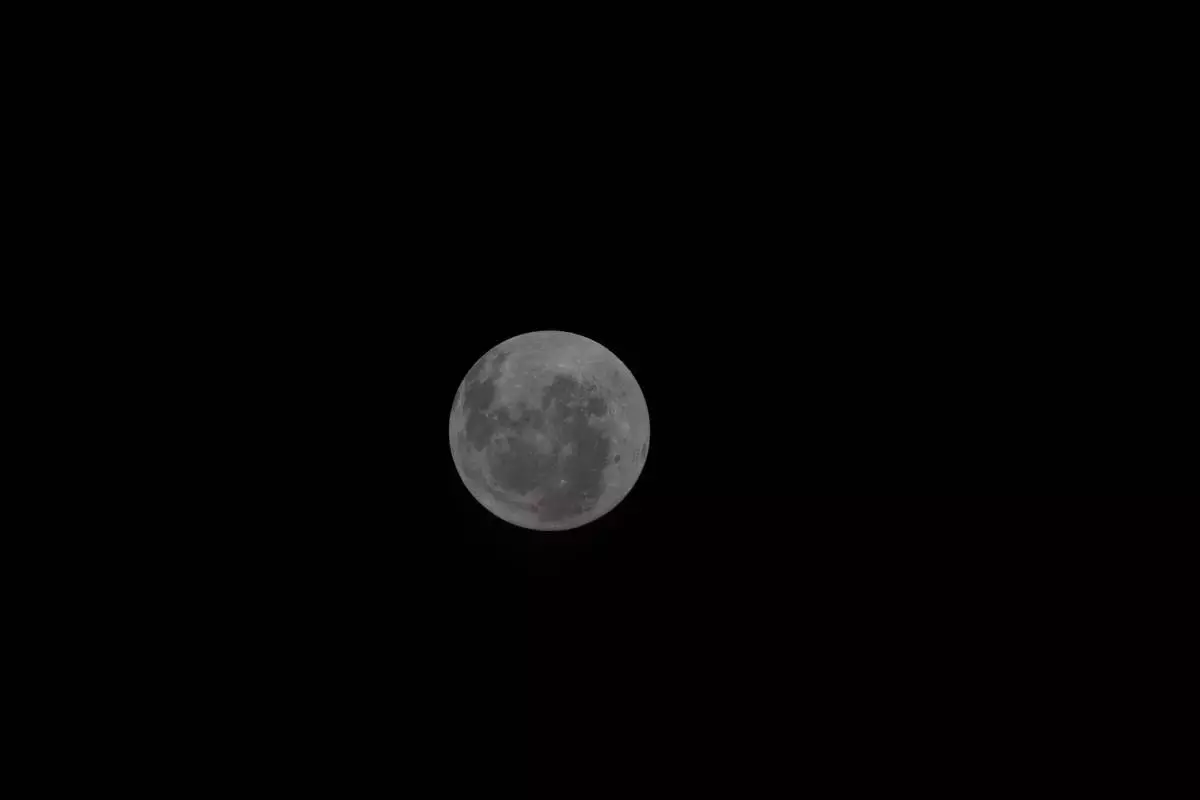
This image provided by NASA shows the moon from a photo taken by The Artemis II crew on day 4 of their journey to the Moon on Saturday, April 4, 2026. (NASA via AP)
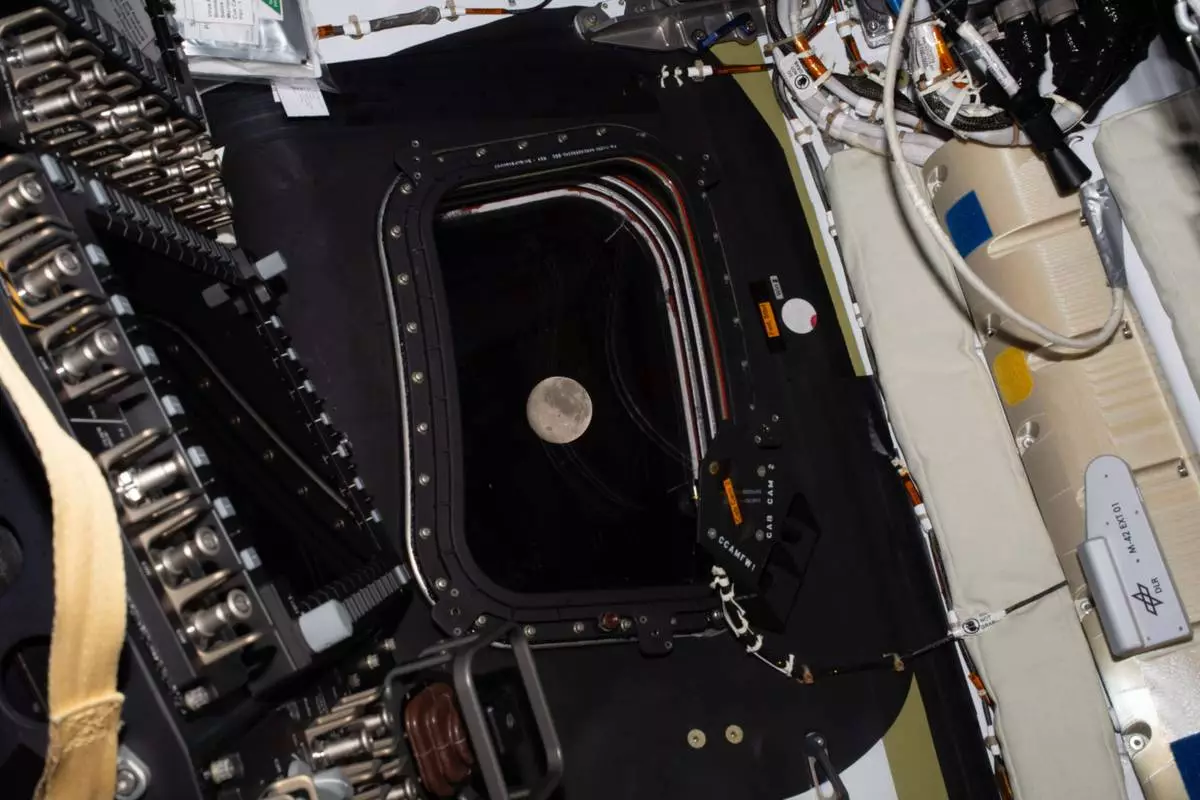
This image provided by NASA on Monday, April 6, 2026, shows a view of the moon taken by the Artemis II crew before going to sleep on flight day 5. (NASA via AP)