BUFFALO, N.Y. (AP) — Jason Zucker tipped in Bowen Byram’s shot for the go-ahead goal 7:38 into the second period, and the Buffalo Sabres beat the Tampa Bay Lightning 4-2 on Monday night, further tightening the race for the Atlantic Division title.
Jack Quinn, with an assist from goalie Ukko-Pekka Luukkonen, sealed the win by scoring into an empty net with 1:54 left. Josh Norris and Alex Tuch also scored. Buffalo snapped a minor 2-3-2 slump to tie the Lightning atop the division with 102 points, and two ahead of idle Montreal entering the final 10 days of the season.
Click to Gallery
Buffalo Sabres goaltender Ukko-Pekka Luukkonen (1) makes a stick save during the second period of an NHL hockey game against the Tampa Bay Lightning Monday, April 6, 2026, in Buffalo, N.Y. (AP Photo/Jeffrey T. Barnes)
Tampa Bay Lightning left wing Nick Paul, second from left, is separated from Buffalo Sabres left wing Beck Malenstyn (29) during the first period of an NHL hockey game Monday, April 6, 2026, in Buffalo, N.Y. (AP Photo/Jeffrey T. Barnes)
Tampa Bay Lightning goaltender Andrei Vasilevskiy (88) looks for the puck in traffic during the first period of an NHL hockey game against the Buffalo Sabres, Monday, April 6, 2026, in Buffalo, N.Y. (AP Photo/Jeffrey T. Barnes)
Tampa Bay Lightning right wing Mitchell Chaffee (41) grabs Buffalo Sabres left wing Beck Malenstyn (29) during the first period of an NHL hockey game Monday, April 6, 2026, in Buffalo, N.Y. (AP Photo/Jeffrey T. Barnes)
Buffalo Sabres right wing Alex Tuch, center, celebrates after his goal with defenseman Luke Schenn (5) and center Ryan McLeod (71) during the first period of an NHL hockey game against the Tampa Bay Lightning, Monday, April 6, 2026, in Buffalo, N.Y. (AP Photo/Jeffrey T. Barnes)
Luukkonen stopped 23 shots to improve to 10-2-1 in his past 14 appearances and strengthen his hold on the starting job.
Jake Guentzel, with a goal and assist, and Nikita Kucherov also scored, and the Lightning lost in regulation for just the third time in 14 games (9-3-2). Kucherov became the NHL’s eighth Russian-born and second Lightning player to score 400 goals, and also tied Connor McDavid for the points lead with 126.
Andrei Vasilevskiy made 25 saves in falling to 7-2-1 in his past 10 outings.
The Sabres never trailed and were greeted by a standing ovation upon returning home since clinching their first playoff berth in 15 seasons on Saturday.
Darren Raddysh prevented a Sabres clearing attempt to set up Guentzel's goal to tie the game at 2 at the 3:56 mark of the second period. Zucker scored less than four minutes later by deflecting in Byram’s shot from the blue line.
The game on Monday had its chippy moments between two budding division rivals, but nothing matching the ferocious intensity of the teams’ memorable outing a month ago. Buffalo squandered a three-goal lead before rallying from a two-goal deficit to win 8-7 in an outing that featured more than 100 penalty minutes.
Lightning: At Ottawa on Tuesday.
Sabres: At New York Rangers on Wednesday.
AP NHL: https://apnews.com/hub/nhl

Buffalo Sabres goaltender Ukko-Pekka Luukkonen (1) makes a stick save during the second period of an NHL hockey game against the Tampa Bay Lightning Monday, April 6, 2026, in Buffalo, N.Y. (AP Photo/Jeffrey T. Barnes)

Tampa Bay Lightning left wing Nick Paul, second from left, is separated from Buffalo Sabres left wing Beck Malenstyn (29) during the first period of an NHL hockey game Monday, April 6, 2026, in Buffalo, N.Y. (AP Photo/Jeffrey T. Barnes)

Tampa Bay Lightning goaltender Andrei Vasilevskiy (88) looks for the puck in traffic during the first period of an NHL hockey game against the Buffalo Sabres, Monday, April 6, 2026, in Buffalo, N.Y. (AP Photo/Jeffrey T. Barnes)

Tampa Bay Lightning right wing Mitchell Chaffee (41) grabs Buffalo Sabres left wing Beck Malenstyn (29) during the first period of an NHL hockey game Monday, April 6, 2026, in Buffalo, N.Y. (AP Photo/Jeffrey T. Barnes)

Buffalo Sabres right wing Alex Tuch, center, celebrates after his goal with defenseman Luke Schenn (5) and center Ryan McLeod (71) during the first period of an NHL hockey game against the Tampa Bay Lightning, Monday, April 6, 2026, in Buffalo, N.Y. (AP Photo/Jeffrey T. Barnes)
HOUSTON (AP) — After traveling deeper into space than any other humans, the Artemis II astronauts pointed their moonship toward home Monday night, wrapping up a lunar cruise that revealed views of the far side never beheld by eyes until now.
Their flyby of the moon even included some celestial sightseeing besides yielding rich science — a significant step toward landing boot prints near the moon’s south pole in just two years.
A total solar eclipse greeted the three Americans and one Canadian as the moon temporarily blocked the sun from their perspective. Mercury, Venus, Mars and Saturn nodded at them from the black void. The landing sites of Apollo 12 and 14 also were visible, poignant reminders of NASA’s first age of exploration more than half a century ago.
In an especially riveting retro throwback, Artemis II shattered the distance record set by Apollo 13 in 1970. NASA’s Orion capsule reached a maximum distance of 252,756 miles (406,771 kilometers) from Earth before hanging a U-turn behind the moon, 4,101 miles (6,600 kilometers) farther than Apollo 13.
“It is blowing my mind what you can see with the naked eye from the moon right now. It is just unbelievable,” Canadian astronaut Jeremy Hansen radioed. He challenged “this generation and the next to make sure this record is not long-lived.”
Apollo 13 commander Jim Lovell wished the crew well in a recording made two months before his death last August. Mission Control beamed up his message to commander Reid Wiseman, pilot Victor Glover, Christina Koch and Hansen, before their fly-around began.
“Welcome to my old neighborhood,” said Lovell, who also flew on Apollo 8, humanity’s first lunar visit. “It’s a historic day and I know how busy you’ll be, but don’t forget to enjoy the view.”
The Artemis II astronauts carried up with them the Apollo 8 silk patch that accompanied Lovell to the moon. “It’s just a real honor to have that on board with us,” Wiseman said.
Artemis II is using the same maneuver that Apollo 13 did after its “Houston, we’ve had a problem” oxygen tank explosion wiped out any hope of a moon landing.
Known as a free-return lunar trajectory, this no-stopping-to-land route takes advantage of Earth and the moon’s gravity, reducing the need for fuel. It’s a celestial figure-eight that put the astronauts on course for home once they emerged from behind the moon Monday evening.
Artemis II’s lunar fly-around and intense observation period lasted seven hours, by far the highlight of the nearly 10-day test flight that will end with a splashdown in the Pacific on Friday.
Venturing as close as 4,067 miles (6,545 kilometers) to the gray dusty surface, the astronauts zipped through a list of more than two dozen targets, using powerful Nikon cameras as well as their iPhones to zoom in on impact craters and other intriguing lunar features.
Before getting started, they requested permission to name two bright, freshly carved craters. They suggested Integrity, the name of their capsule, and Carroll, commander Wiseman’s wife, who died of cancer in 2020.
Wiseman wept as Hansen put in the request to Mission Control, and all four astronauts embraced in tears.
“Such a majestic view out here,” Wiseman radioed once he regained his composure and started picture-taking. The astronauts called down that they managed to capture the moon and Earth in the same shot, and they provided a running commentary to scientists back in Houston on what they were seeing.
At one point, Koch reported an overwhelming sensation of emotion for a second or two while zooming in on the moon. “Something just drew me in suddenly to the lunar landscape and it became real,” she said.
The Artemis II astronauts made their closest approach to the moon and reached their maximum distance from Earth while they were out of contact. Their speed at closest approach: 3,139 mph (5,052 kph). The spacecraft accelerated as it appeared from behind the moon and the planned communications blackout and made tracks for Earth.
An Earthrise came into view showing Asia, Africa and Oceania as Mission Control called out: “We are Earthbound and ready to bring you home.” Flight controllers in Houston flipped their mission patches over to signify the return leg.
Wiseman and his crew spent years studying lunar geography to prepare for the big event, adding solar eclipses to their repertoire during the past few weeks. By launching last Wednesday, they ensured themselves of a total solar eclipse from their vantage point behind the moon, courtesy of the cosmos.
Topping their science target list: Orientale Basin, a sprawling impact basin with three concentric rings, the outermost of which stretches nearly 600 miles (950 kilometers) across.
Their moon mentor, NASA geologist Kelsey Young, expects thousands of pictures.
Artemis II is NASA’s first astronaut moonshot since Apollo 17 in 1972. It sets the stage for next year’s Artemis III, which will see another Orion crew practice docking with lunar landers in orbit around Earth. The culminating moon landing by two astronauts near the moon’s south pole will follow on Artemis IV in 2028.
While Artemis II may be taking Apollo 13’s path, it’s most reminiscent of Apollo 8 and humanity’s first lunar visitors who orbited the moon on Christmas Eve 1968 and read from the Book of Genesis.
Glover said flying to the moon during Christianity’s Holy Week brought home for him “the beauty of creation.” Earth is an oasis amid “a whole bunch of nothing, this thing we call the universe” where humanity exists as one, he observed over the weekend.
“This is an opportunity for us to remember where we are, who we are, and that we are the same thing and that we’ve got to get through this together,” Glover said, clasping hands with his crewmates.
The Associated Press Health and Science Department receives support from the Howard Hughes Medical Institute’s Department of Science Education and the Robert Wood Johnson Foundation. The AP is solely responsible for all content.
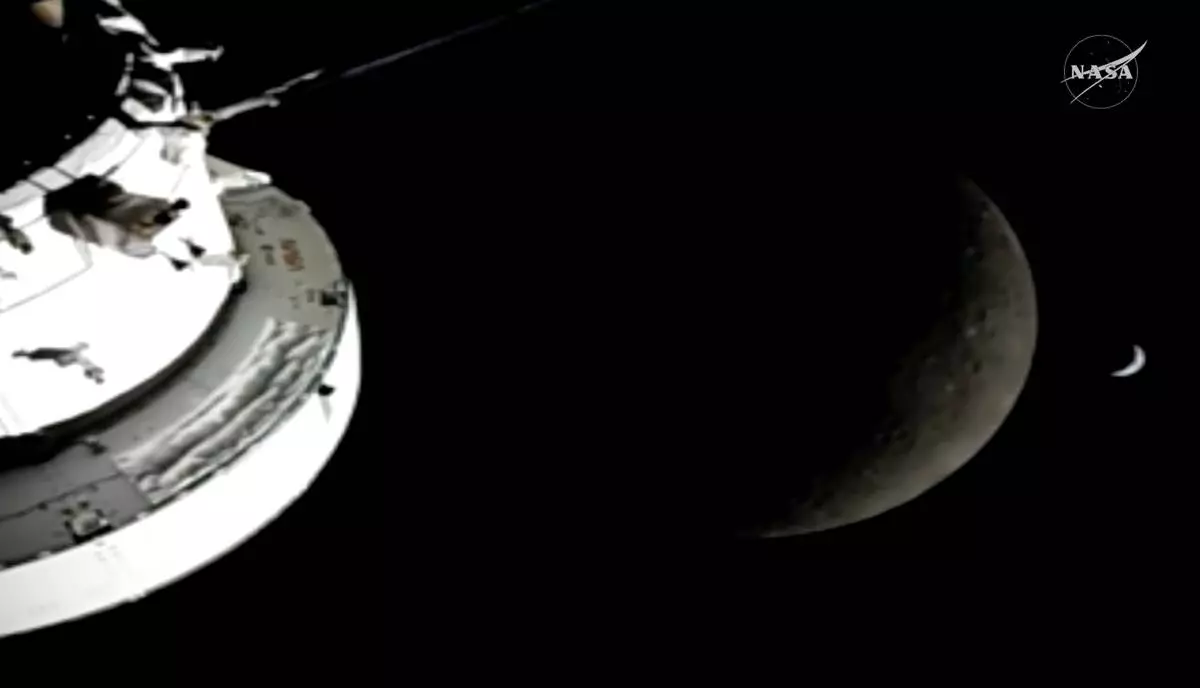
In this image from video provided by NASA, the Orion Spacecraft, the Earth and the Moon are seen from a camera as the Artemis II crew and spacecraft travel farther into Space, Monday, April 6, 2026. (NASA via AP)
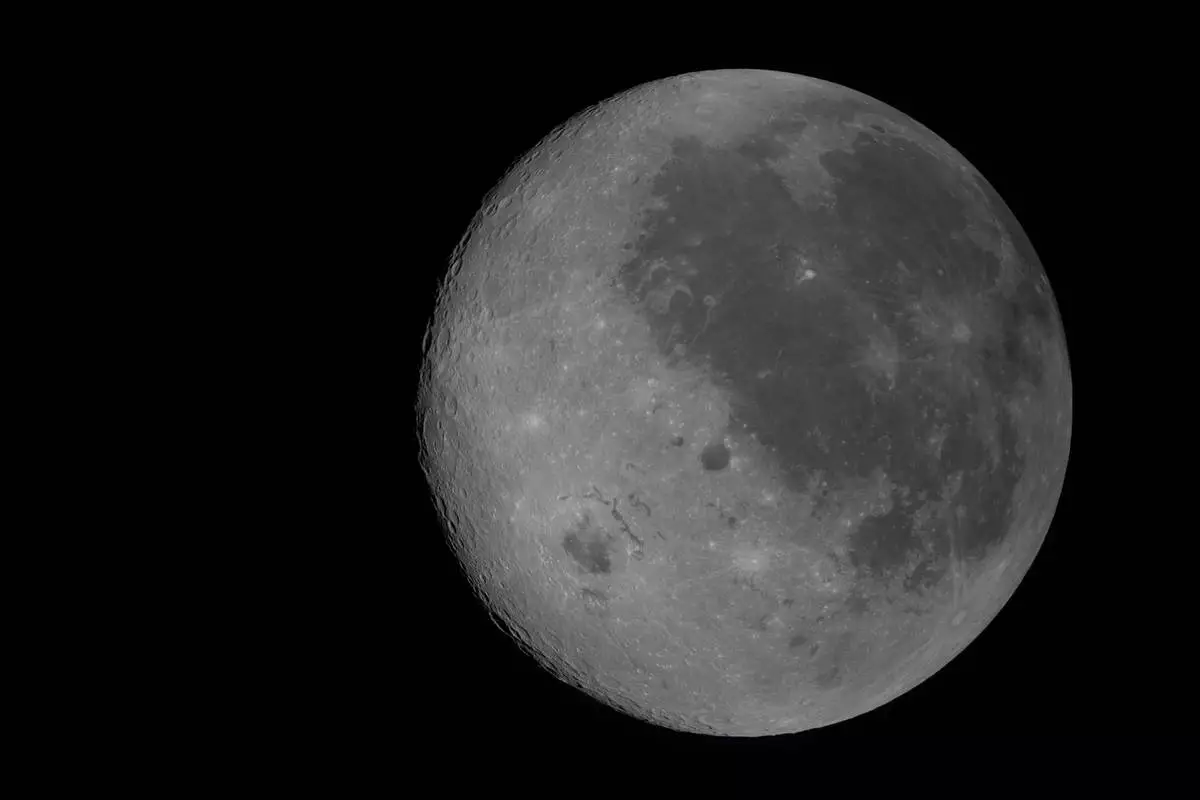
This image provided by NASA Monday, April 6, 2026, shows the Moon, the near side (the hemisphere we see from Earth) visible at the right side of the disk, identifiable by the dark splotches. At lower left is Orientale basin, a nearly 600-mile-wide crater that straddles the Moon’s near and far sides. Everything to the left of the crater is the far side. (NASA via AP)
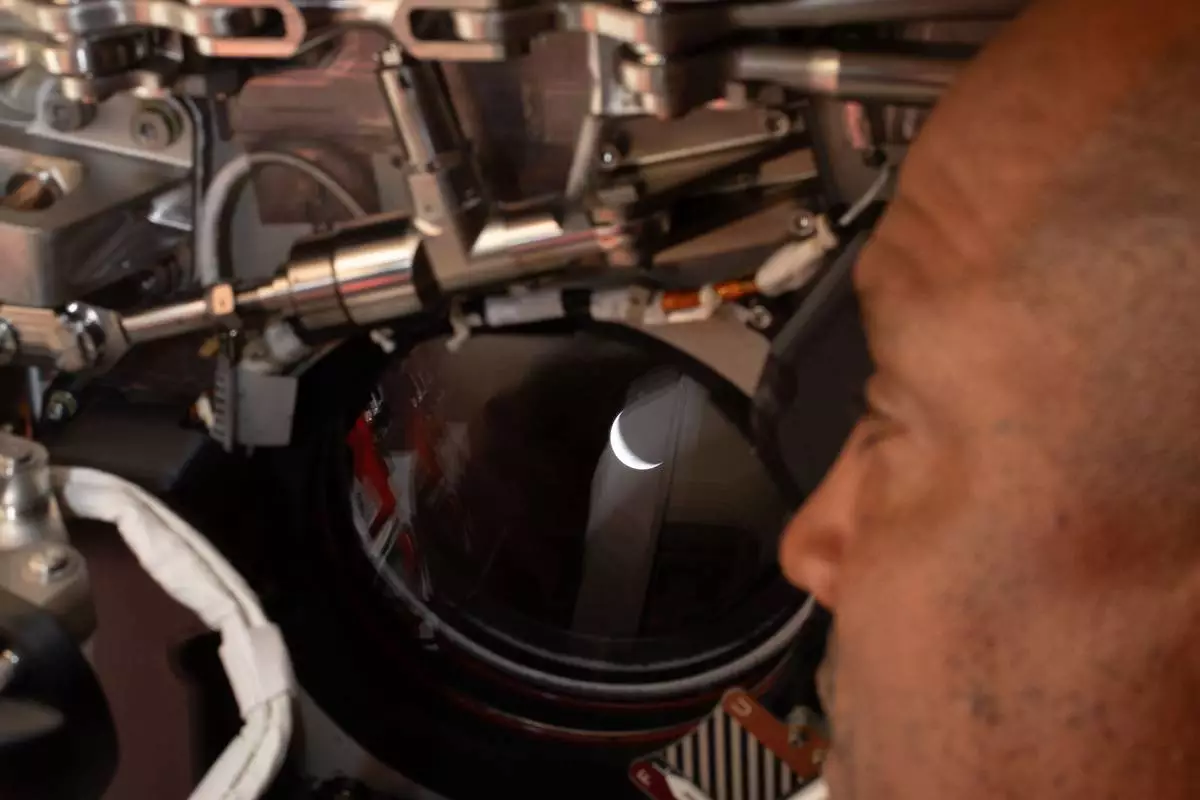
In this photo provided by NASA, Artemis II pilot and NASA astronaut Victor Glover peers out one of the Orion spacecraft's windows looking back at Earth ahead of the crew's lunar flyby, Monday, April 6, 2026.(NASA via AP)
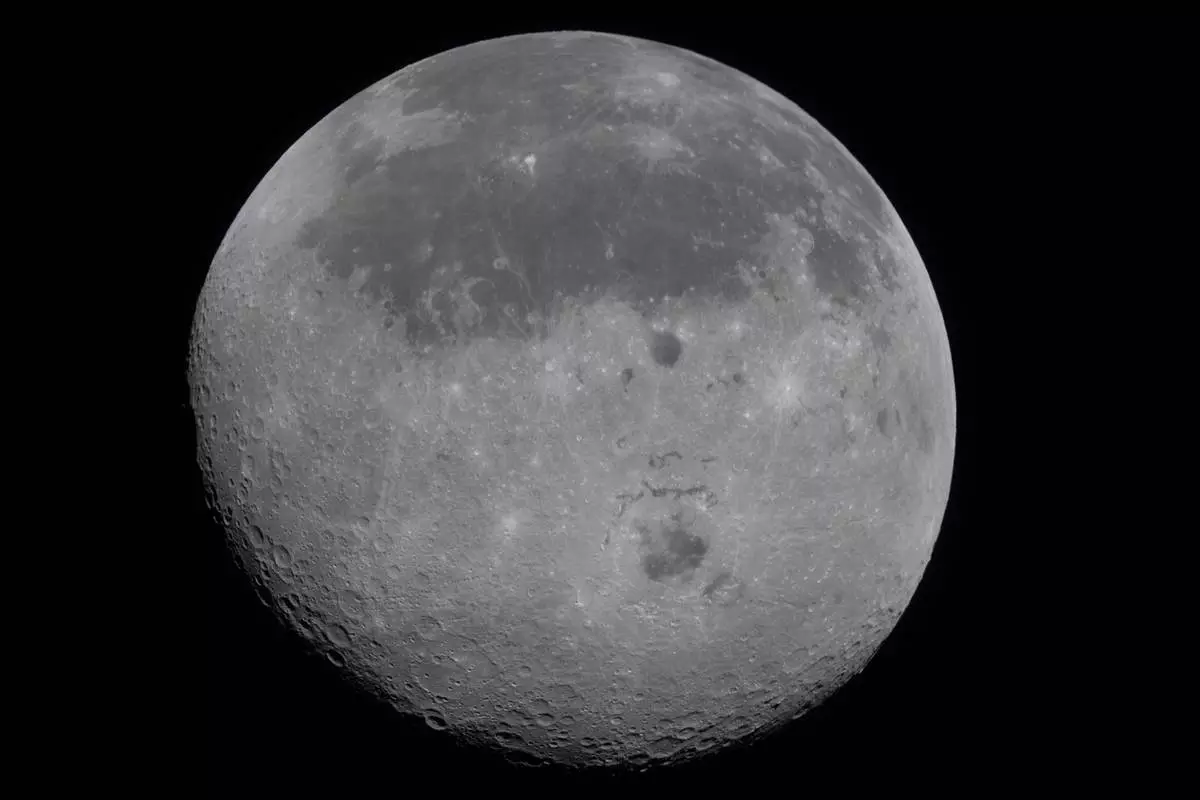
This image provided by NASA Monday, April 6, 2026, shows the Moon, the near side (the hemisphere we see from Earth) visible at the top half of the disk, identifiable by the dark splotches. At the lower center is Orientale basin, a nearly 600-mile-wide crater that straddles the Moon’s near and far sides. Everything below the crater is the far side. (NASA via AP)
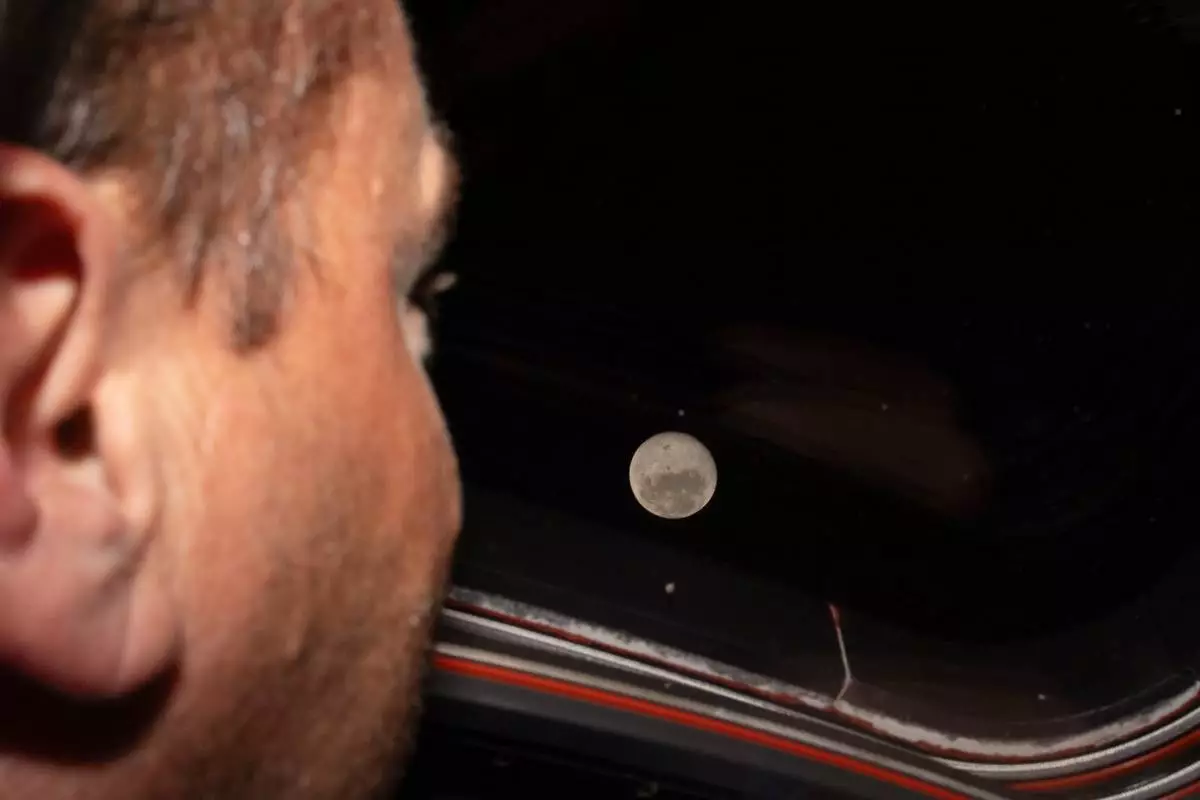
In this photo provided by NASA, Artemis II commander and NASA astronaut Reid Wiseman looks out one of the Orion spacecraft's main cabin windows at the Moon ahead of the crew's lunar flyby on April 6, 2026. (NASA via AP)
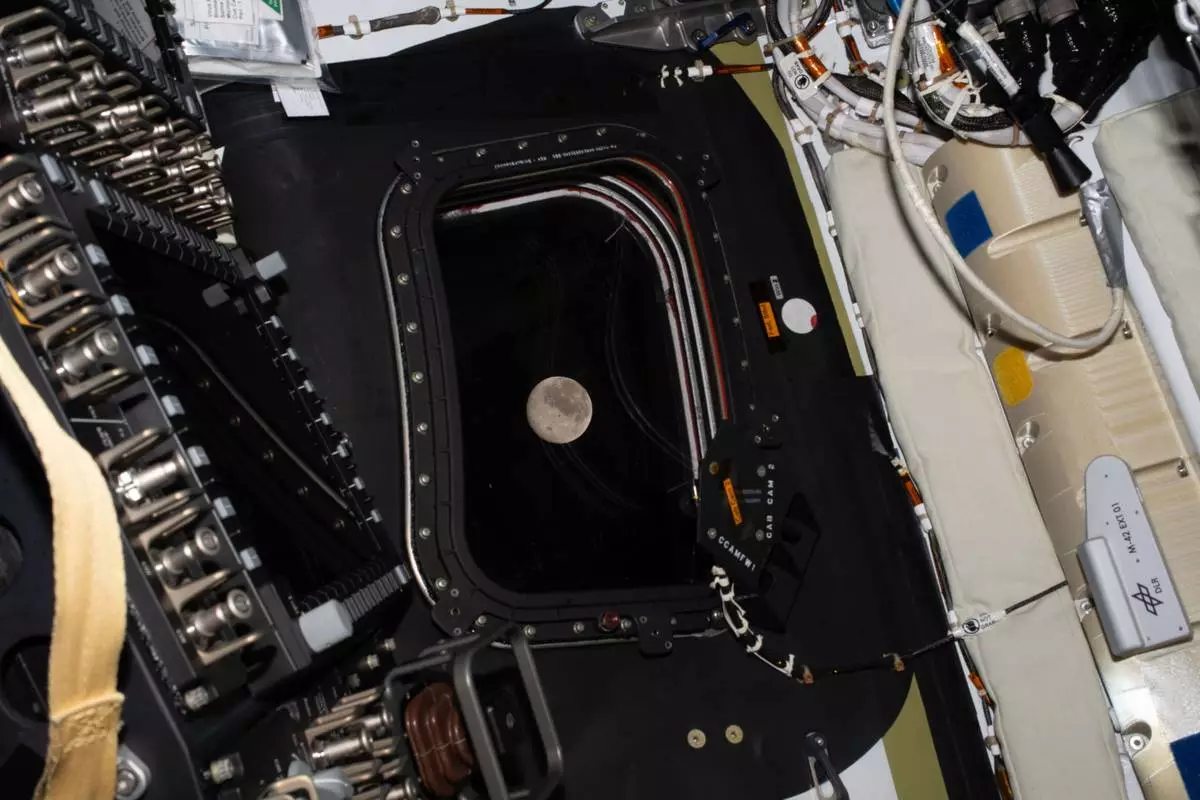
In this photo provided by NASA, the Moon is seen in the window of the Orion spacecraft, photo taken by The Artemis II crew, at the end of day 5 of journey to the Moon on Monday, April 6, 2026. (NASA via AP)

In this photo provided by NASA, astronaut Christina Koch is pictured on the fourth day of the mission, prepping for lunar flyby activities after completing aerobic exercise on the flywheel device, during the The Artemis II crew's journey to the Moon, Saturday, April 4, 2026. (NASA via AP)
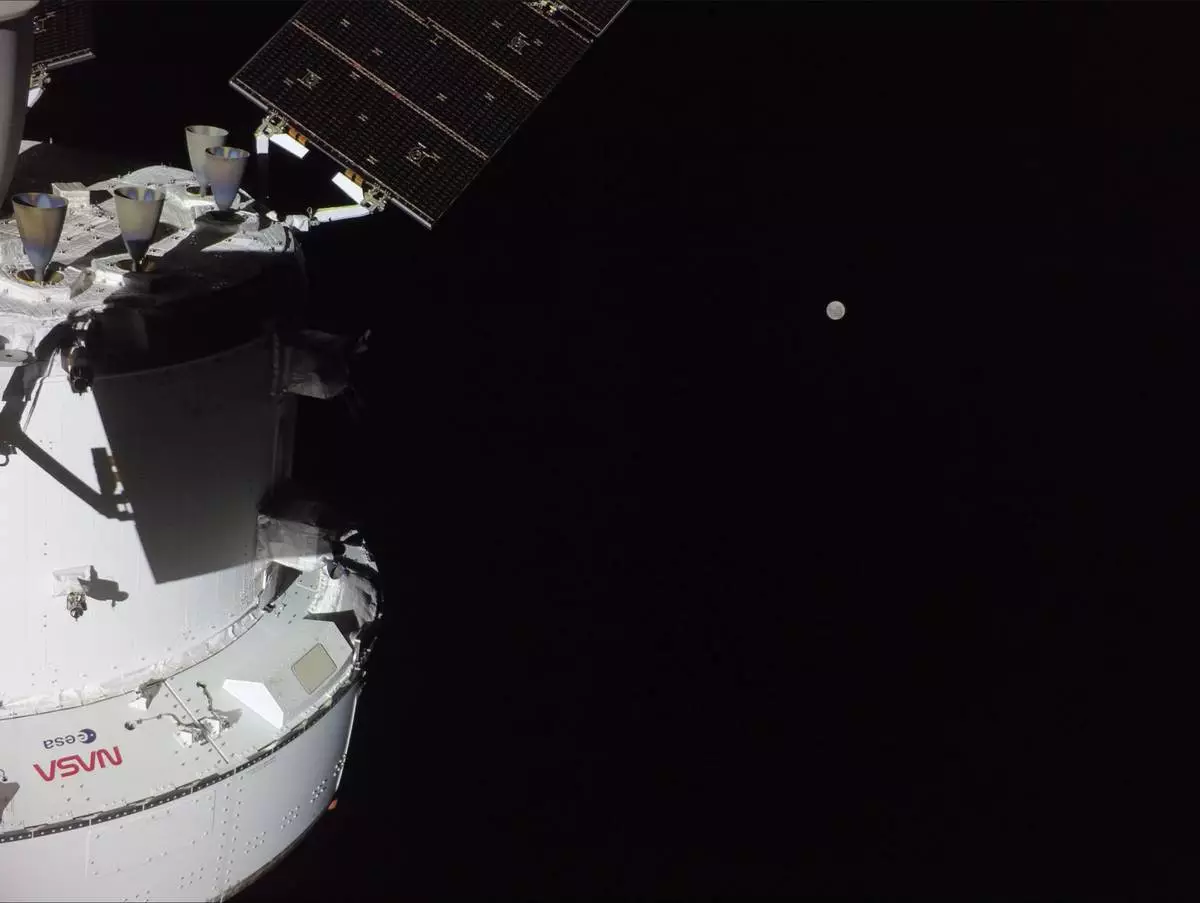
This image provided by NASA shows the Orion spacecraft with the Moon in the distance, as captured by a camera on the tip of one of its solar array wings, April 3, 2026. (NASA via AP)
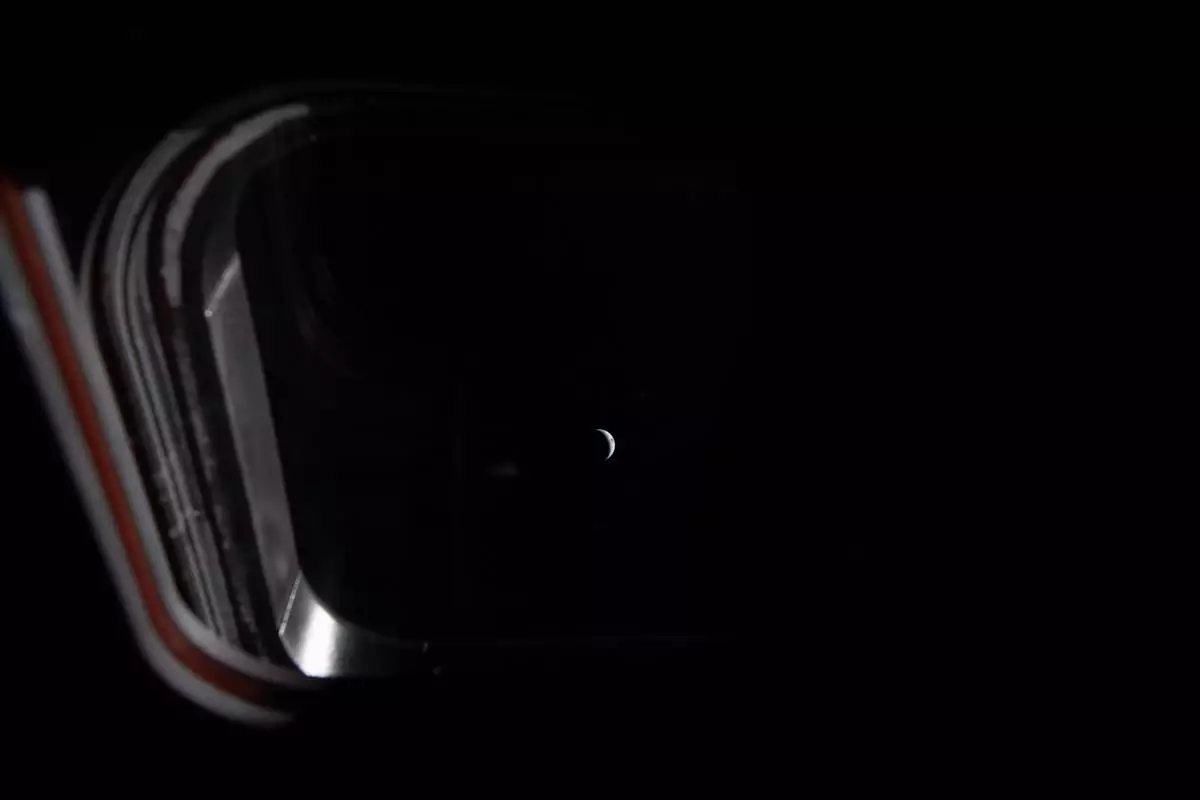
This photo provided by NASA shows the Earth seen from a window on the Orion spacecraft Integrity during the Artemis II mission, Sunday, April 5, 2026. (NASA via AP)
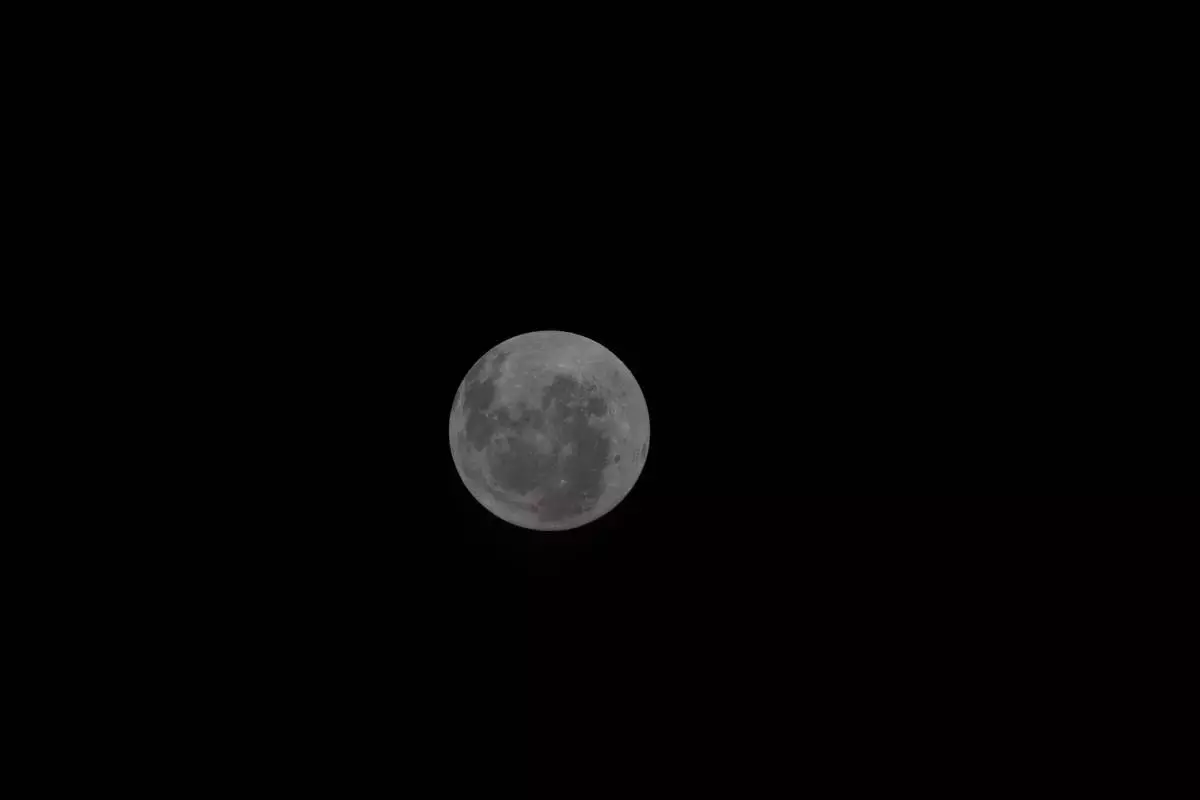
This image provided by NASA shows the moon from a photo taken by The Artemis II crew on day 4 of their journey to the Moon on Saturday, April 4, 2026. (NASA via AP)
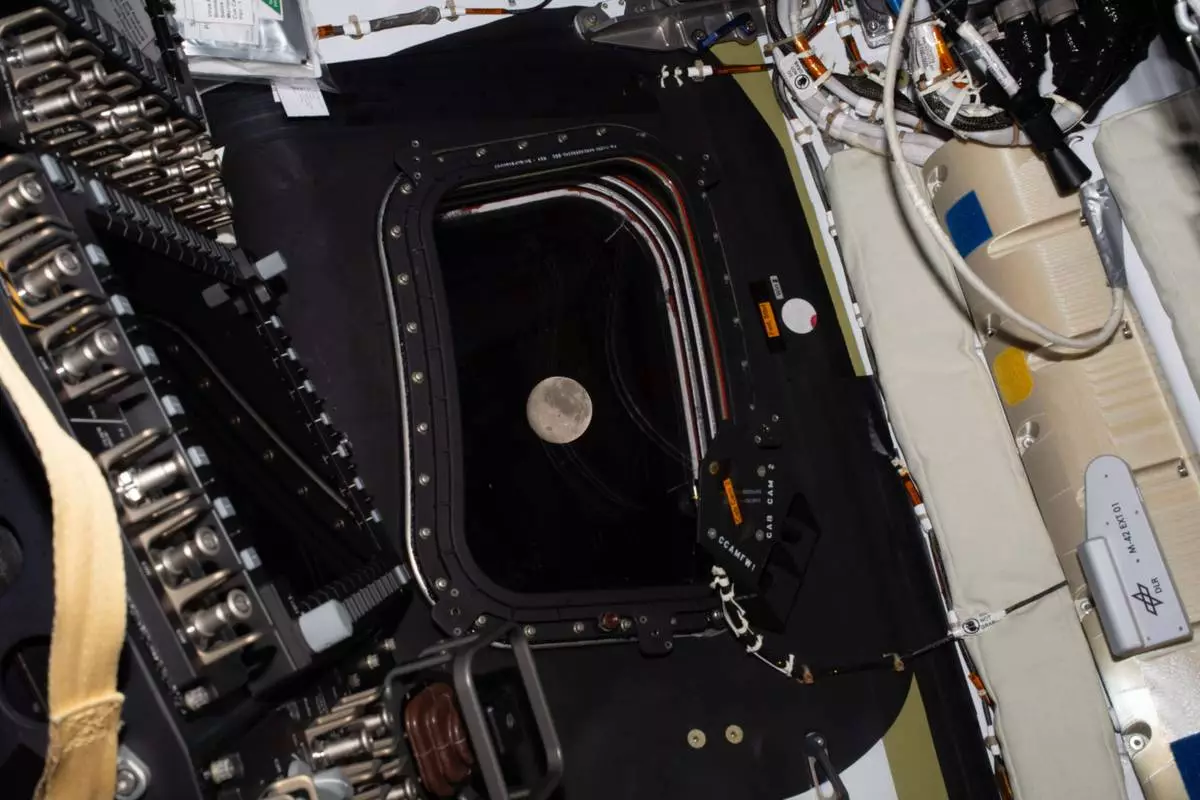
This image provided by NASA on Monday, April 6, 2026, shows a view of the moon taken by the Artemis II crew before going to sleep on flight day 5. (NASA via AP)